

Mouse spiders are fascinating burrowing arachnids belonging to the genus Missulena, found mainly across Australia. Known for their glossy bodies, powerful fangs, and trapdoor burrows, these spiders often resemble funnel-webs but are less aggressive. There are several distinct species, each adapted to specific regions and climates, displaying unique colors, behaviors, and habitats. Understanding these types helps identify them accurately and appreciate their ecological role in Australia’s natural environment.
1. Eastern Mouse Spider (Missulena bradleyi)
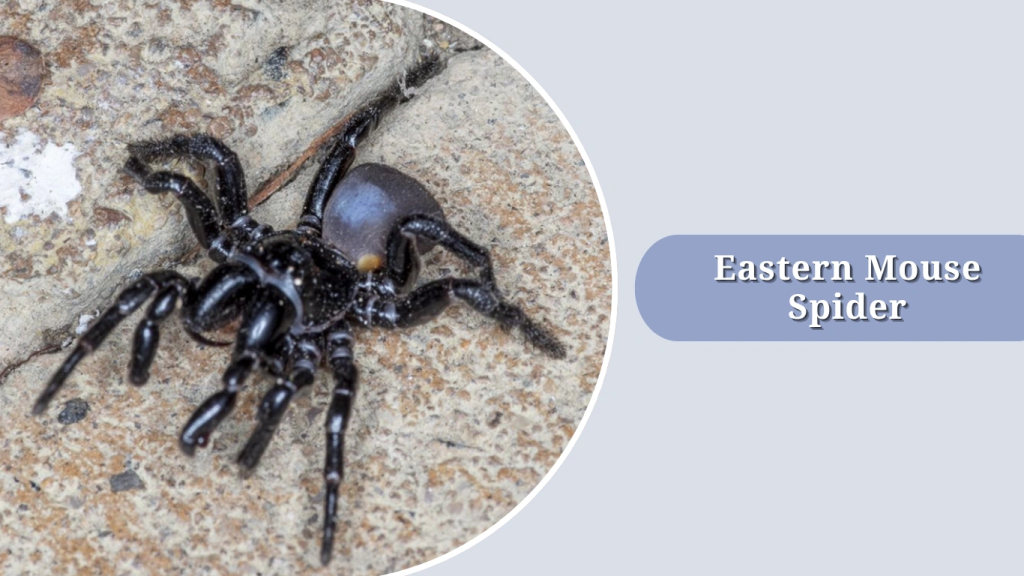
The Eastern Mouse Spider is one of Australia’s most recognized and fascinating arachnids, belonging to the genus Missulena. Known for its robust body and large fangs, it is often mistaken for the Sydney funnel-web spider. Despite its intimidating appearance, bites are rare and usually occur when the spider is provoked or disturbed.
Identification
- Color: Males are black with a shiny blue sheen, while females are dark brown to black.
- Size: Adults typically range from 10 to 35 mm in body length.
- Fangs: Prominent and downward-facing, designed for powerful bites.
- Distinct Feature: Males have a bright blue patch on the front of their heads.
Habitat
Eastern Mouse Spiders are primarily found along the eastern coast of Australia, especially in Queensland and New South Wales. They favor open forests, gardens, and burrow-rich environments where they construct deep, silk-lined burrows with a hinged trapdoor to protect against predators and environmental extremes.
Behavior
These spiders are mostly nocturnal hunters, emerging at night to capture prey. During the day, they remain hidden in their burrows. Males are more active during the mating season and may wander into homes or yards in search of females. Despite their venom, they are not aggressive unless handled.
Diet and Lifecycle
Eastern Mouse Spiders feed mainly on insects and small arthropods. They ambush prey near their burrow entrance, using their venom to subdue it. The female’s lifespan can exceed 10 years, while males typically live for only a few months after reaching maturity. Mating occurs in the warmer months, and females guard their egg sacs within the burrow until the spiderlings hatch.
2. Red-Headed Mouse Spider (Missulena occatoria)
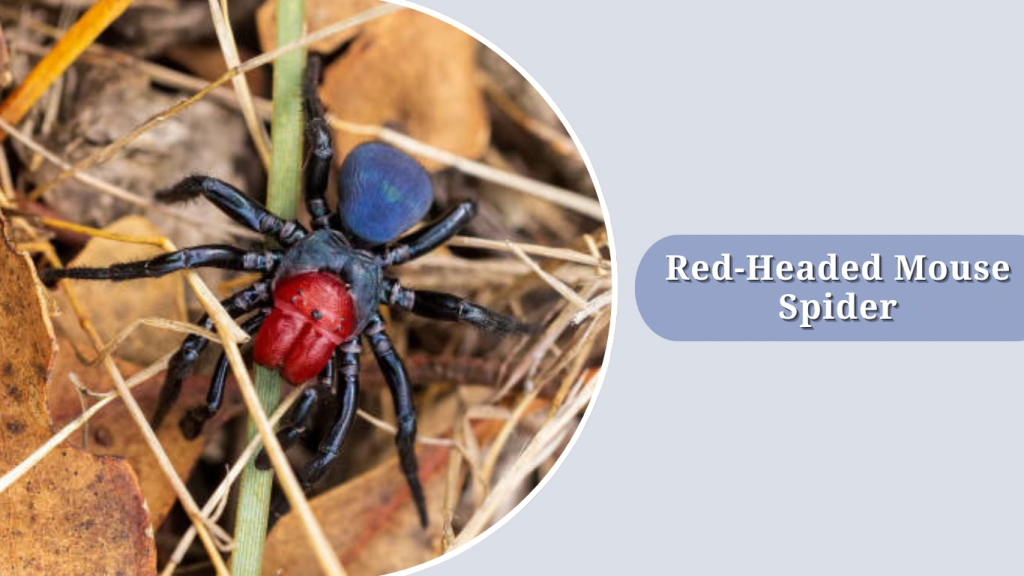
The Red-Headed Mouse Spider is among the most striking members of the Missulena genus, easily identified by the vivid red coloring on the male’s head and jaws. It is native to Australia and found across various regions, often mistaken for the more dangerous funnel-web spider due to its similar build and shiny appearance.
Identification
- Color: Males have a bright red head and jaws with a dark blue to black body; females are entirely black or dark brown.
- Size: Typically ranges from 10 to 35 mm in body length.
- Fangs: Large and strong, capable of delivering a potent bite.
- Distinct Feature: Male’s red cephalothorax makes it one of the easiest mouse spiders to identify.
Habitat
The Red-Headed Mouse Spider inhabits open forests, scrublands, and grasslands throughout mainland Australia. It prefers dry environments and constructs deep, silk-lined burrows with trapdoors. These burrows are often found in clay or sandy soil near waterways or open fields.
Behavior
This spider is solitary and primarily nocturnal, spending most of its life inside its burrow. Males wander during the mating season, particularly after rainfall. Despite possessing venom similar to the funnel-web’s, bites are extremely rare, and few medical cases have been recorded. The species tends to avoid confrontation and retreats quickly when disturbed.
Diet and Lifecycle
Red-Headed Mouse Spiders prey on insects and small ground-dwelling invertebrates. They ambush their prey from the burrow entrance using speed and strong fangs. Females live several years, remaining in the same burrow for most of their life, while males die shortly after mating. Eggs are laid in a silk sac, and spiderlings stay protected until ready to disperse.
3. Male Mouse Spider
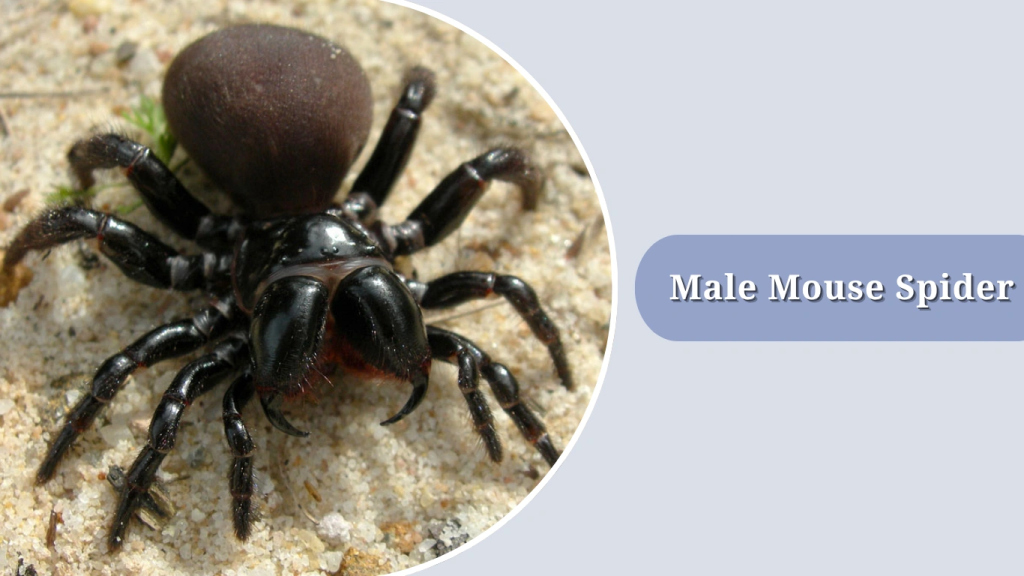
The Male Mouse Spider is the roaming member of the Missulena species, most often encountered by humans during the mating season. Recognized for its glossy body and occasional bright coloring, this spider plays a key role in reproduction but has a much shorter lifespan than the female.
Identification
- Color: Usually glossy black or dark blue; some species have bright red or blue markings on the head.
- Size: Typically 10–20 mm in body length.
- Fangs: Large and downward-facing, used to subdue prey or for defense.
- Distinct Feature: Slender body with longer legs compared to the female.
Habitat
Male Mouse Spiders inhabit the same areas as females, often in burrow-dense regions like forests, bushlands, and gardens. However, they are seen more frequently outside burrows, especially after rain when searching for mates.
Behavior
Males are active wanderers, often spotted crossing roads or entering homes during the mating season. Though capable of biting, they are generally non-aggressive unless provoked. Their venom can cause symptoms similar to that of a funnel-web spider, but serious cases are uncommon.
Diet and Lifecycle
Male Mouse Spiders feed on insects and small invertebrates. They mature around 4–5 years of age and typically die soon after mating. Their brief adult phase focuses primarily on locating and mating with females before the end of their life cycle.
4. Female Mouse Spider
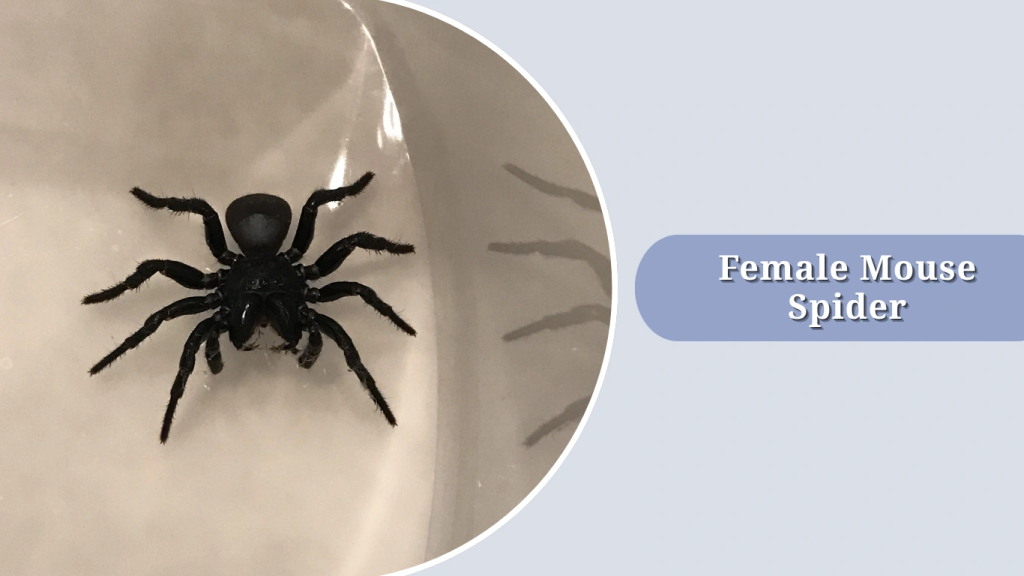
The Female Mouse Spider is a robust and long-lived member of the Missulena genus, spending most of her life in the safety of a silk-lined burrow. She rarely ventures outside, making her less visible but essential for the continuation of the species.
Identification
- Color: Glossy black or deep brown with a heavy-set body.
- Size: Larger than males, typically 20–35 mm in body length.
- Fangs: Prominent and powerful, capable of delivering a strong bite.
- Distinct Feature: Shorter legs and a broader body compared to males.
Habitat
Females are found throughout Australia, preferring habitats with loose or clay soil for burrow construction. Their burrows are deep, equipped with a trapdoor for concealment and protection. They can remain in the same burrow for several years.
Behavior
Female Mouse Spiders are sedentary and rarely leave their burrows except to capture prey or protect their young. They exhibit defensive behavior when threatened, raising their front legs and exposing their fangs. Despite their venom’s potency, bites are infrequent due to their reclusive nature.
Diet and Lifecycle
Females primarily feed on beetles, ants, and small ground-dwelling insects. They can live up to 10 years or more. After mating, they lay eggs in a silk sac inside the burrow, where the spiderlings develop until they are ready to emerge and disperse.
5. Northern Mouse Spider (Missulena pruinosa)
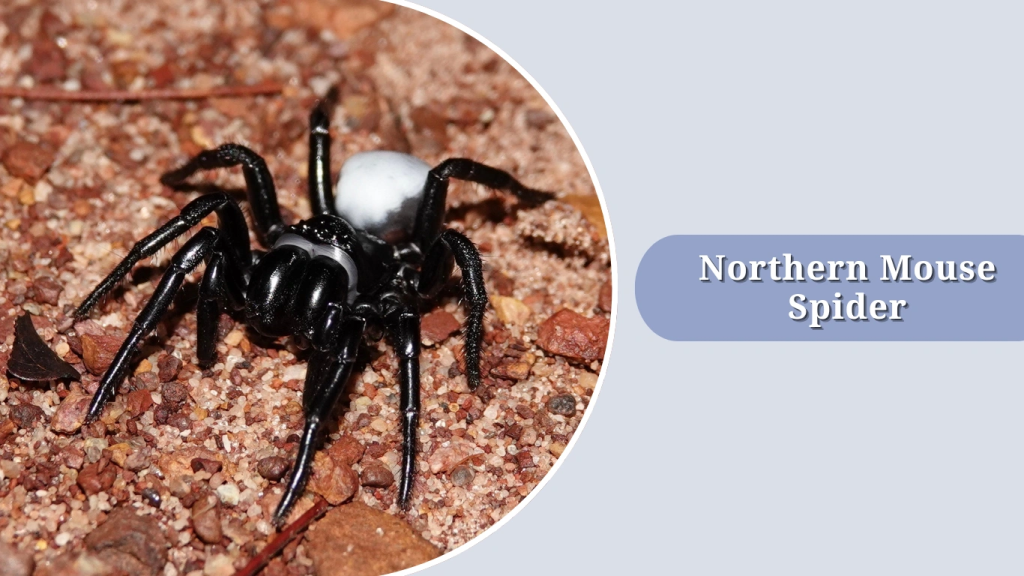
The Northern Mouse Spider is a lesser-known but striking species native to northern parts of Australia. Recognized for its metallic sheen and burrow-dwelling lifestyle, it shares many traits with other Missulena species but adapts well to hotter, drier climates.
Identification
- Color: Males often display a bluish or purplish gloss, while females are typically dark brown or black.
- Size: Adults usually range from 10 to 30 mm in length.
- Fangs: Strong and curved, ideal for piercing tough prey.
- Distinct Feature: Slightly longer spinnerets and more slender legs compared to southern species.
Habitat
This species thrives in arid and semi-arid regions across northern Australia, particularly in the Northern Territory and parts of Queensland. They build deep silk-lined burrows with a well-camouflaged trapdoor that helps retain moisture and deter predators.
Behavior
Northern Mouse Spiders are primarily nocturnal and spend most of their lives within their burrows. Males emerge during the wet season in search of females. Though capable of biting, their temperament is shy, and they generally avoid confrontation.
Diet and Lifecycle
Their diet mainly consists of beetles, ants, and other small arthropods. Females can live for over a decade, maintaining and expanding their burrows over time. Males, in contrast, live only a few months after mating.
6. Western Mouse Spider (Missulena sp. – Western Australia)
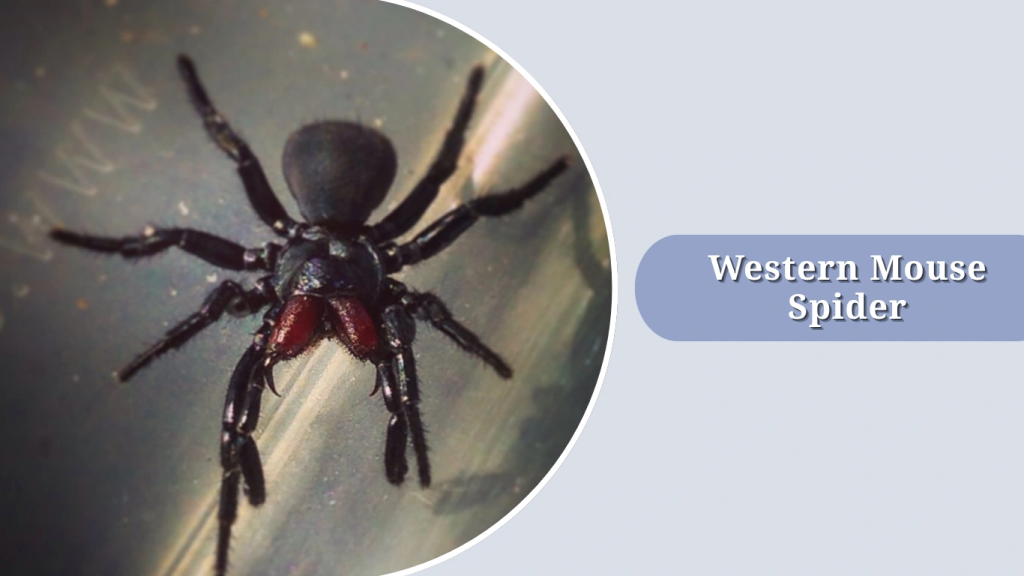
The Western Mouse Spider is found mainly in Western Australia and is often confused with the Red-Headed Mouse Spider due to overlapping features. It is an impressive ground-dwelling species known for its burrowing habits and calm demeanor.
Identification
- Color: Dark brown or jet black, sometimes with a faint reddish hue.
- Size: Typically 15–30 mm in body length.
- Fangs: Large and shiny, capable of delivering venom efficiently.
- Distinct Feature: Smooth carapace and robust body structure.
Habitat
This species is widespread across Western Australia, inhabiting sandy and clay-rich soils. It constructs deep burrows lined with silk, featuring a trapdoor for concealment and moisture retention. Burrows are often found near watercourses or under rocks.
Behavior
Western Mouse Spiders are non-aggressive and prefer to retreat into their burrows when threatened. Males are more visible during the mating season, usually after rainfall. Their venom resembles that of other Missulena species but causes few serious reactions in humans.
Diet and Lifecycle
Their diet consists mainly of insects, beetles, and small invertebrates. Females may live up to 12 years, remaining within their burrow for most of their lives, while males live briefly after reproducing. Females guard their egg sacs until spiderlings hatch and disperse into the surrounding area.
7. Mallee Mouse Spider (Missulena dipsaca)
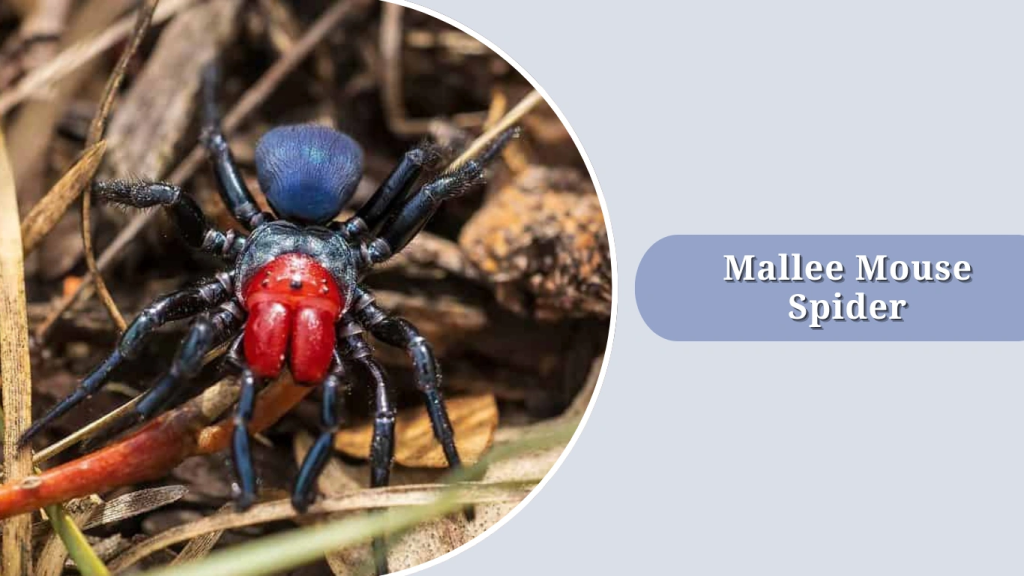
The Mallee Mouse Spider is a rare and distinctive species found primarily in the Mallee regions of southern Australia. Known for its glossy black body and burrow-dwelling habits, it plays a vital ecological role in controlling insect populations in its native arid landscapes.
Identification
- Color: Females are glossy black, while males may show a subtle blue or grey sheen.
- Size: Usually ranges between 12–30 mm in length.
- Fangs: Prominent and strong, capable of delivering deep bites.
- Distinct Feature: Slightly more elongated body and thicker legs than most Missulena species.
Habitat
This species thrives in dry, sandy areas across South Australia, Victoria, and parts of New South Wales. It prefers open woodland or scrub environments, creating deep silk-lined burrows with tight-fitting trapdoors to regulate temperature and humidity.
Behavior
Mallee Mouse Spiders are mostly nocturnal and rarely aggressive. They spend most of their lives underground, emerging at night to hunt or during the mating season. Males wander during warm, wet periods in search of females, occasionally entering human dwellings.
Diet and Lifecycle
Their diet includes ants, beetles, and small arthropods captured near the burrow entrance. Females can live for over a decade, maintaining a single burrow throughout their lives. Males, however, have a short lifespan after mating. Eggs are laid within a silk sac and guarded carefully until hatching.
8. Giant Mouse Spider (Missulena occatoria – Large Form)
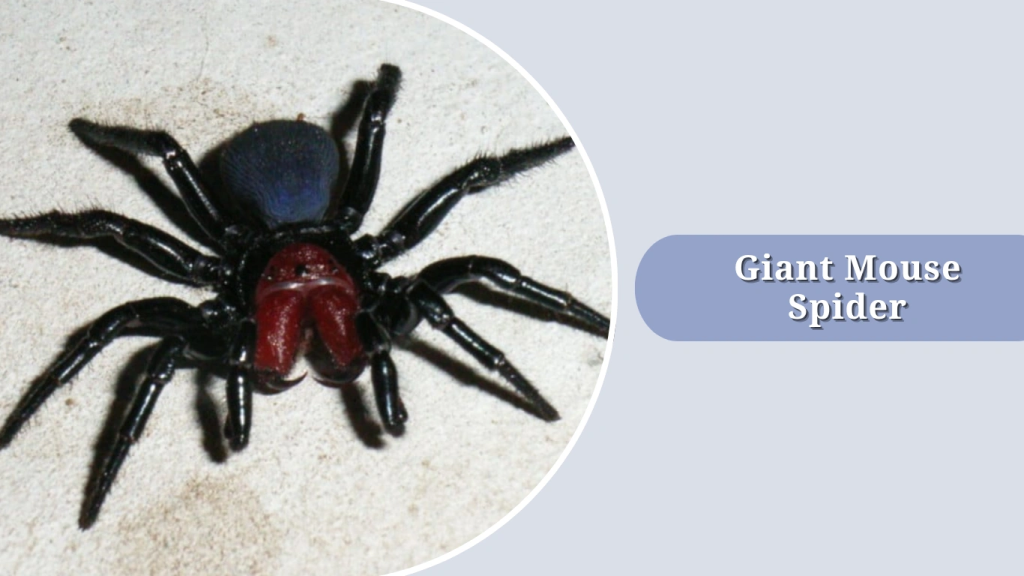
The Giant Mouse Spider is an imposing arachnid known for its size and strength. It’s a large variation of the Red-Headed Mouse Spider species (Missulena occatoria), recognized by its massive fangs and vivid coloring. Despite its fearsome appearance, it’s generally non-aggressive.
Identification
- Color: Males have a bright red head with a deep blue-black body; females are uniformly black and larger.
- Size: Can grow up to 35 mm or more in body length.
- Fangs: Extremely large and powerful, used for defense and subduing prey.
- Distinct Feature: Heavy body with a glossy carapace, making it appear larger than other species.
Habitat
The Giant Mouse Spider inhabits open grasslands, woodlands, and dry forests across mainland Australia, particularly in New South Wales, Queensland, and South Australia. Its burrows are deep, moisture-retaining structures often lined with silk for insulation.
Behavior
This species is solitary and mostly nocturnal. Males are seen more frequently during the mating season when they leave their burrows to find females. Despite their strong venom, they are not considered highly dangerous, as they tend to avoid human interaction.
Diet and Lifecycle
The Giant Mouse Spider feeds on insects, beetles, and small invertebrates, ambushing them from its burrow. Females live for over a decade, while males die shortly after mating. Females produce egg sacs during late spring, and spiderlings remain in the burrow until they are ready to disperse.
9. Black Mouse Spider (Missulena nigroventris)
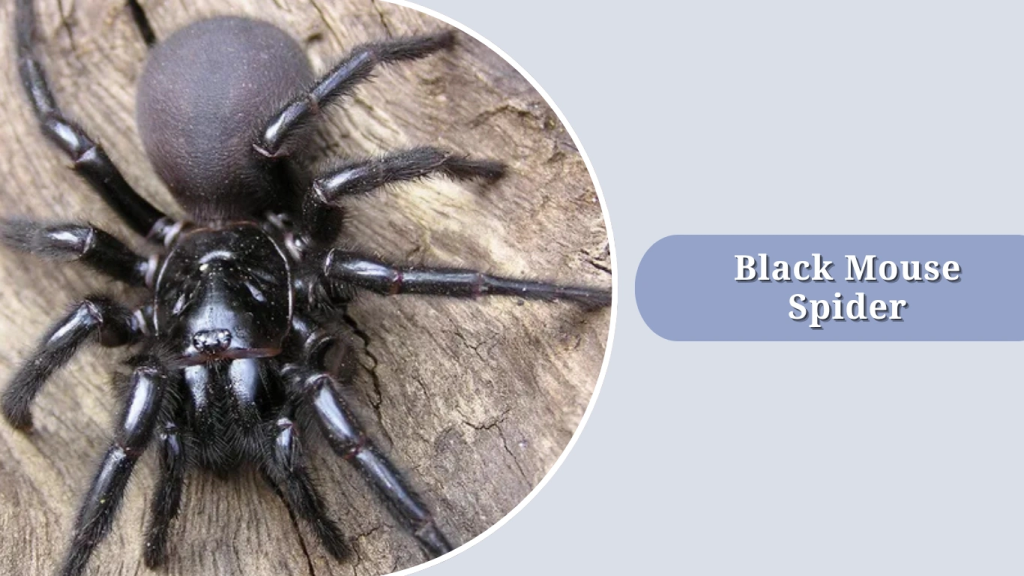
The Black Mouse Spider is one of the most widely distributed and recognized members of the Missulena genus. Known for its glossy, jet-black body and powerful venom, it’s often mistaken for the funnel-web spider. Despite its fearsome look, it is generally shy and rarely poses a danger to humans.
Identification
- Color: Both males and females are shiny black, though males may have a faint bluish sheen.
- Size: Typically 15–30 mm in body length.
- Fangs: Prominent and glossy black, adapted for deep puncturing.
- Distinct Feature: Smooth, shiny cephalothorax and stout legs with fine hair.
Habitat
This spider is found throughout mainland Australia, especially in Queensland, New South Wales, and Victoria. It prefers clay or loamy soils for its burrows, often near creeks or forested areas. Burrows are silk-lined and fitted with a secure trapdoor that helps regulate temperature and moisture.
Behavior
Black Mouse Spiders are sedentary and prefer to remain in their burrows during the day. Males are more mobile during the breeding season and are sometimes found wandering after rain. They rarely bite, and despite their venom’s strength, serious medical cases are uncommon.
Diet and Lifecycle
Their diet mainly includes beetles, ants, and small ground insects. They ambush prey near the burrow entrance. Females live for up to 10–12 years, maintaining their burrows for life, while males live briefly after reaching maturity and mating.
10. Sydney Mouse Spider (Missulena bradleyi – Sydney Region)
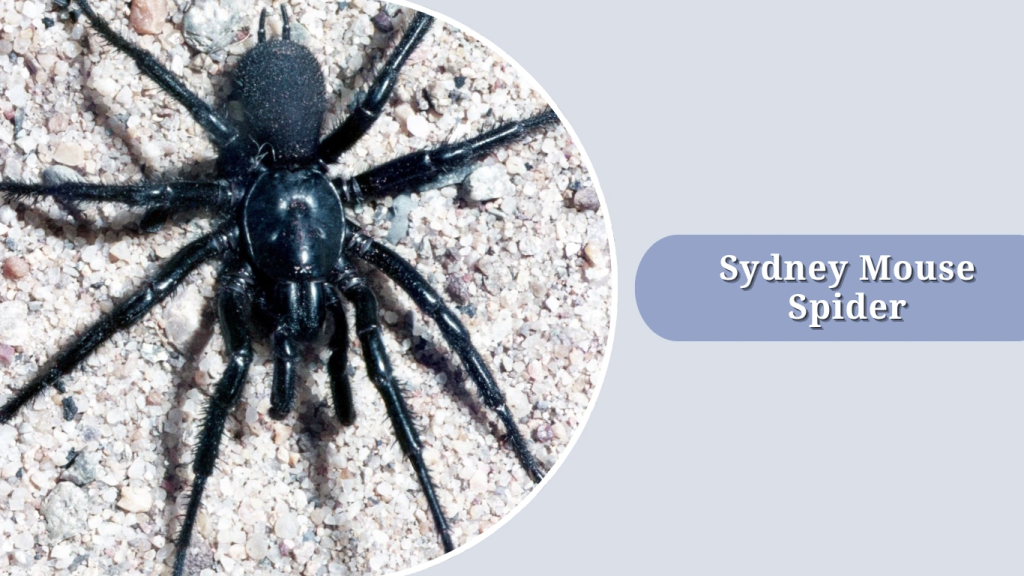
The Sydney Mouse Spider is one of the most familiar and well-studied species in eastern Australia. Commonly found around Sydney and nearby regions, it is known for its shiny appearance and trapdoor burrows. Although its venom is potent, recorded bites are extremely rare.
Identification
- Color: Males have a glossy blue-black body; females are dark brown or black.
- Size: Around 20–30 mm in body length.
- Fangs: Large and downward-facing, similar to funnel-web spiders.
- Distinct Feature: Males display a bright metallic blue sheen on the front of the cephalothorax.
Habitat
The Sydney Mouse Spider inhabits the eastern coastal strip of Australia, primarily in New South Wales. It favors open forests, gardens, and areas with moist soil suitable for burrow construction. Burrows are silk-lined, deep, and covered by a distinctive trapdoor.
Behavior
This spider is nocturnal and emerges from its burrow at night to hunt. Males are more likely to be seen during the breeding season, especially after heavy rain. While their venom is toxic, they are non-aggressive and usually bite only when handled.
Diet and Lifecycle
Sydney Mouse Spiders feed on insects, small beetles, and ground-dwelling arthropods. They rely on ambush tactics rather than web traps. Females can live more than a decade, staying in one burrow, while males typically live for a few months after mating. Eggs are laid in silk sacs, with spiderlings remaining protected until mature enough to disperse.
11. American Mouse Spider (Common Misidentification)
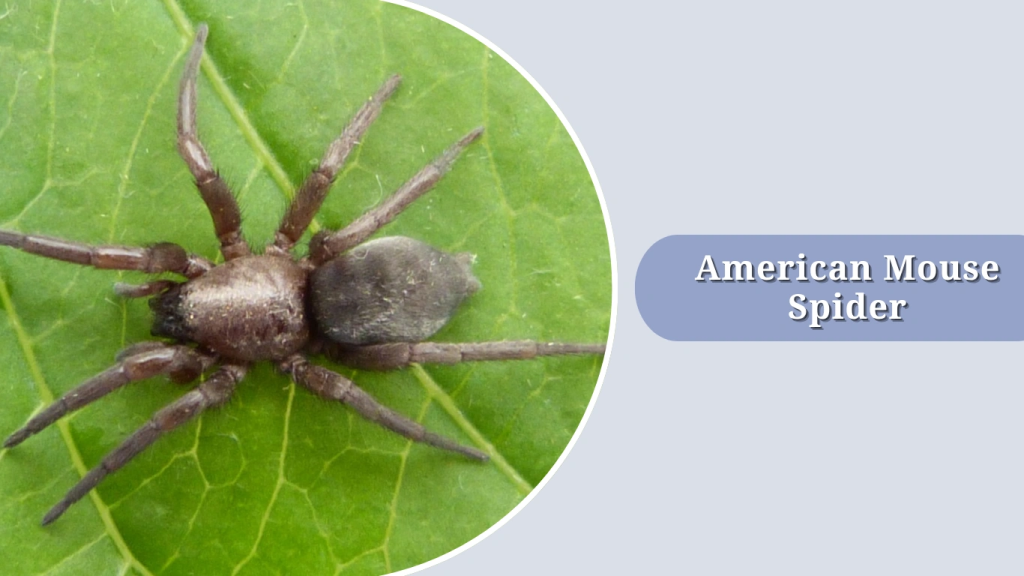
The so-called “American Mouse Spider” is not a true member of the Missulena genus but rather a misidentification of similar-looking mygalomorph spiders found in North America. These spiders share some visual traits with Australian Mouse Spiders, such as their robust bodies and burrowing habits, but they belong to entirely different families.
Identification
- Color: Usually dark brown to black, with a dull or glossy carapace.
- Size: Between 10–25 mm in body length.
- Fangs: Prominent, downward-facing, but smaller than those of Missulena.
- Distinct Feature: Absence of the distinctive trapdoor-building behavior typical of true Mouse Spiders.
Habitat
These spiders are found across the United States, particularly in warm, arid regions such as the Southwest. They live in shallow burrows, under rocks, or within leaf litter rather than in the deep silk-lined trapdoors seen in Australian species.
Behavior
Unlike true Mouse Spiders, these North American lookalikes are not highly venomous and are considered harmless to humans. They are mostly nocturnal and prefer to flee rather than confront threats.
Diet and Lifecycle
Their diet primarily includes beetles, crickets, and small arthropods. They ambush prey near their shelters. Lifespans range from 3–7 years, shorter than those of Australian Mouse Spiders, with males dying soon after mating.
12. British Mouse Spider (Scotophaeus blackwalli)
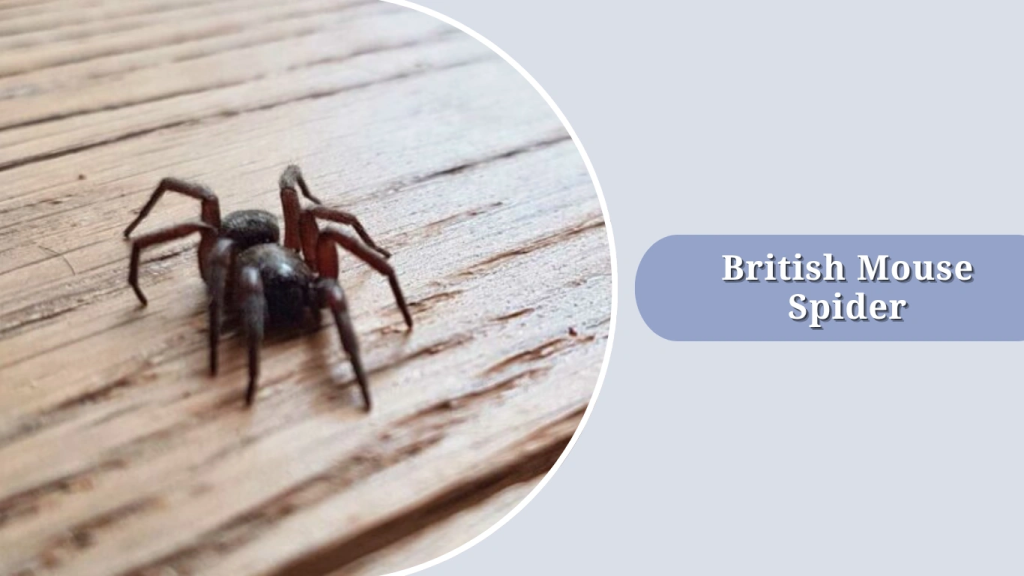
The British Mouse Spider, scientifically known as Scotophaeus blackwalli, is not a true Mouse Spider but a common house spider species native to Europe. Its nickname arises from its mouse-like, velvety appearance and fast movements rather than any taxonomic relation to Missulena.
Identification
- Color: Greyish-brown with a velvety texture resembling mouse fur.
- Size: 6–12 mm in body length.
- Fangs: Small and non-dangerous to humans.
- Distinct Feature: Covered in fine, dense hairs giving it a soft, mouse-like look.
Habitat
This spider is widespread across the United Kingdom and Europe, commonly found in homes, garages, and walls. It does not create burrows but spins small silk retreats in corners or crevices.
Behavior
British Mouse Spiders are nocturnal hunters that move quickly across walls and floors. They are entirely harmless and help control household pest populations. They do not exhibit the burrowing or trapdoor behaviors characteristic of Missulena spiders.
Diet and Lifecycle
Their diet consists of small insects such as flies and moths. They rely on stealth and speed to catch prey. Females can live for several years indoors, while males have shorter lifespans, dying soon after mating. Their silk egg sacs are often hidden in wall cracks or furniture corners.
13. Australian Mouse Spider (Genus Missulena)
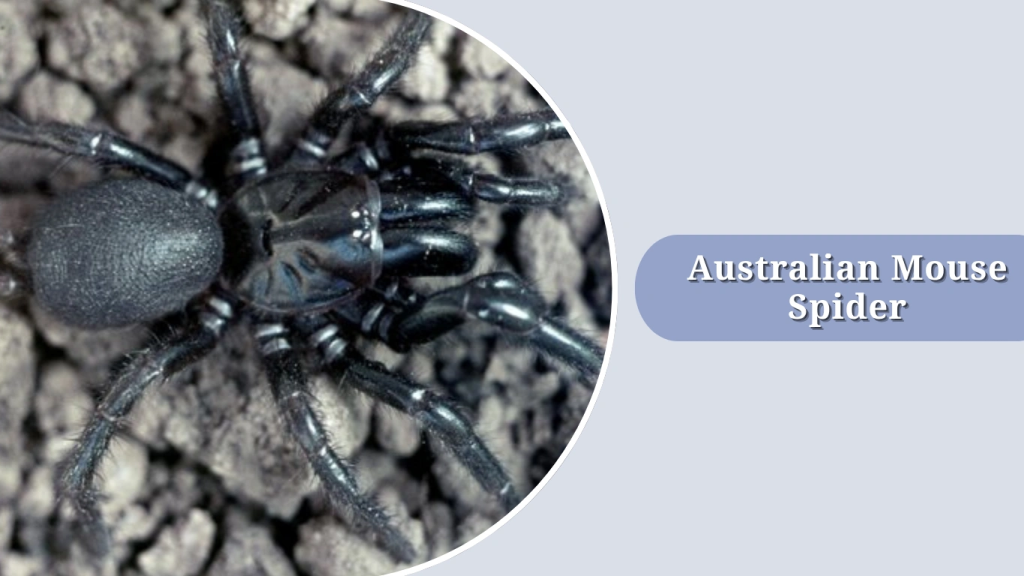
The Australian Mouse Spider represents the entire Missulena genus, which includes over a dozen species found across the Australian continent. These spiders are known for their robust build, glossy appearance, and burrow-dwelling behavior. Although venomous, they are rarely aggressive and play an important ecological role in controlling insect populations.
Identification
- Color: Typically black, brown, or dark blue; males of some species have red or blue markings on the head.
- Size: Varies between 10–35 mm in body length depending on species.
- Fangs: Large, downward-pointing, capable of delivering potent venom.
- Distinct Feature: Shiny carapace and strong front legs adapted for digging burrows.