
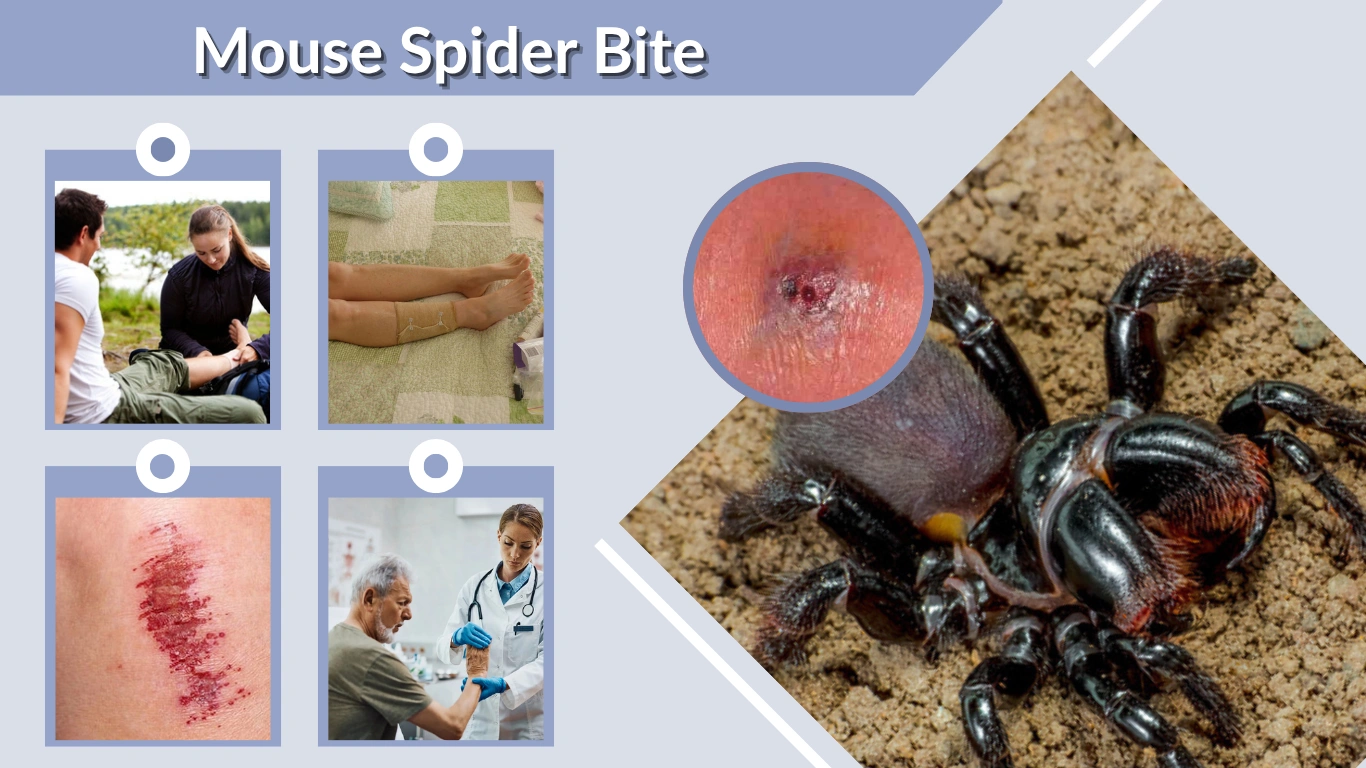
Mouse spiders (Missulena species) are among Australia’s most venomous spiders, sometimes mistaken for the deadly funnel-web. Their bites can be dangerous to both humans and pets, though severe cases are rare thanks to quick medical response. Recognizing their appearance, bite symptoms, and the right treatment is crucial for safety—especially in regions like Australia, California, and the UK, where sightings are occasionally reported.
What Is a Mouse Spider?
Mouse spiders belong to the genus Missulena, known for their shiny, thick bodies and burrowing habits. They are native to Australia but have been spotted in isolated parts of California and Oregon. While there are about twelve known species, the red-headed mouse spider is the most recognizable, thanks to its striking red cephalothorax.
These spiders often live in silk-lined burrows with trapdoors and hunt mostly at night. Though they are venomous, they rarely bite unless provoked. Misidentification with funnel-web spiders is common because of their similar appearance and aggressive stance when threatened.
Appearance and Identification

Mouse spiders are medium-to-large in size, typically ranging from 10 to 35 millimeters. Their glossy bodies and powerful fangs make them look intimidating. Color variations depend on the species and gender, but the most common types include:
- Red-headed mouse spider – Males have a bright red head and jaws with a dark blue-black abdomen.
- Black mouse spider – Entirely black with a shiny finish, resembling a miniature tarantula.
- Brown mouse spider – Lighter in color, often mistaken for other common spiders in urban areas.
Female mouse spiders are generally larger and darker than males. Males tend to roam during the mating season, increasing the risk of encounters with humans and pets.
Types of Mouse Spider Bites

Not all mouse spider bites are equally dangerous. Their venom can vary depending on the species and region.
- Australian mouse spider bite: The most medically significant, capable of causing severe envenomation if not treated promptly.
- California and Oregon mouse spider bites: Rare and usually mild, often due to misidentification with other species.
- UK mouse spider bites: Generally harmless, as the species found there, Scotophaeus blackwalli, is not a true mouse spider but can be confused with one.
Most bites occur when the spider is accidentally handled or trapped in clothing or bedding.
What Does a Mouse Spider Bite Look Like?

The bite site often shows clear puncture marks from the spider’s large fangs. Redness, swelling, and local pain appear quickly after the bite. In some cases, a mouse spider bite may look similar to an insect sting at first, but it can worsen within an hour.
Mouse spider bite pictures typically show:
- Red, inflamed skin.
- Swelling around the puncture.
- Sometimes bruising or blistering.
If untreated, symptoms may spread to other parts of the body as the venom circulates through the bloodstream.
Mouse Spider Bite Symptoms
Mouse spider bites can produce a range of symptoms depending on the victim’s reaction and the amount of venom injected. Common signs include:
- Immediate, intense pain at the bite site.
- Redness and swelling that spreads rapidly.
- Headache, dizziness, or blurred vision.
- Tingling or numbness around the mouth and limbs.
- Muscle twitching or spasms.
- Nausea and vomiting in severe cases.
In rare circumstances, victims may experience confusion, breathing difficulty, or paralysis if the venom affects the nervous system. Children, the elderly, and pets are particularly at risk of severe reactions.
Female vs. Male Mouse Spider Bites

Male mouse spiders are responsible for most recorded bites. During mating season, they wander from their burrows in search of females, sometimes entering homes. Male bites are also considered more dangerous, as their venom is similar to that of the Sydney funnel-web spider, one of the world’s most toxic species.
Female mouse spiders, on the other hand, are less aggressive and remain underground most of the time. Although their venom is also potent, bites from females are extremely rare because they seldom come into contact with humans.
Mouse Spider Bite in Humans and Dogs
Humans and pets can both be affected by mouse spider venom. In humans, pain, sweating, and muscle weakness are early warning signs. For dogs, the symptoms often include drooling, trembling, vomiting, and in severe cases, paralysis.
Quick treatment is essential—delayed care can lead to dangerous complications. If a dog is bitten, immediate veterinary attention is necessary, as the venom can be fatal to small animals without prompt intervention.
Mouse Spider Bite Treatment & First Aid
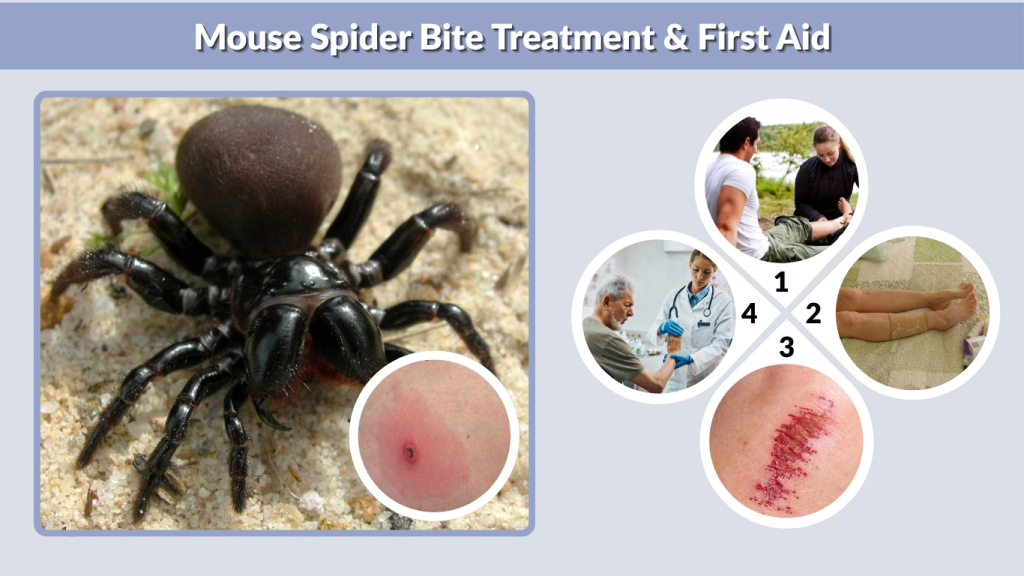
If bitten, stay calm and act quickly. Applying proper first aid can make a significant difference before reaching medical help.
First Aid Steps:
- Apply a pressure immobilization bandage around the bite area and limb to slow venom spread.
- Keep the victim still and calm, as movement can accelerate venom absorption.
- Call emergency services immediately or go to the nearest hospital.
- Do not wash the bite site—the venom can help doctors identify the spider species.
- Avoid cutting or sucking the wound, as this increases infection risk.
Antivenom for funnel-web spiders is also effective for mouse spider bites, and recovery is usually quick with medical care.
Regional Focus: Australia, UK & California
Australia
Australia is home to the majority of mouse spider species, and most serious bites occur here. The eastern mouse spider (Missulena bradleyi) and red-headed mouse spider (Missulena occatoria) are the most well-known. They inhabit moist areas, gardens, and burrows lined with silk. Although bites can be extremely painful, antivenom treatments are effective, and fatalities are exceptionally rare due to fast medical response.
United Kingdom
In the UK, reports of mouse spider bites often involve misidentified species like Scotophaeus blackwalli, commonly called the “mouse spider” because of its velvety gray color. These spiders are harmless and not venomous. UK residents concerned about spider bites should note that true Missulena species are not native to the region, and any symptoms are likely mild or allergic reactions rather than envenomation.
California and Oregon
Occasional sightings of spiders resembling mouse spiders have been recorded in California and Oregon, though most are unrelated species. Bites are rarely harmful and generally result in mild irritation or swelling. Unlike their Australian counterparts, American “mouse spiders” do not produce medically significant venom.
Prevention and Safety Tips
Because mouse spiders tend to dwell in burrows or dark, sheltered areas, simple precautions can greatly reduce the risk of bites.
- Wear gloves and boots when gardening or working outdoors.
- Check shoes, clothing, and bedding before use, especially in rural areas.
- Seal cracks and holes near windows, doors, and walls to prevent spiders from entering.
- Avoid handling or provoking spiders—most bites occur when the spider feels threatened.
- Educate children on recognizing and respecting spiders found near homes or gardens.
Keeping your surroundings clean and clutter-free also limits hiding places for these ground-dwelling species.
FAQs
What are the symptoms of a mouse spider bite?
A mouse spider bite usually causes sharp pain, redness, and swelling at the site. Other symptoms can include nausea, headache, blurred vision, and muscle spasms. In severe cases, breathing difficulty and confusion occur. Immediate first aid and medical attention ensure a faster recovery and prevent complications.
How dangerous is a mouse spider bite?
Mouse spider venom is extremely potent and comparable to that of the Sydney funnel-web spider. However, not every bite injects venom. When envenomation occurs, it can cause serious systemic effects, especially in children or pets. With prompt medical attention and antivenom, recovery is quick and complete.
What should I do if bitten by a mouse spider?
Apply a pressure immobilization bandage immediately and keep the affected limb as still as possible. Seek emergency medical care right away. Do not wash the bite site, as medical teams can use venom traces to identify the spider. Avoid home remedies or cutting the wound.
Can a mouse spider bite kill a dog?
Yes, a severe mouse spider bite can be fatal to small pets if left untreated. Dogs may display symptoms such as trembling, drooling, vomiting, or weakness. Veterinary attention is crucial, as treatment may include antivenom or supportive care to prevent respiratory paralysis.
Are mouse spiders found in the UK or USA?
True mouse spiders (Missulena) are native to Australia. Species found in the UK or USA are usually look-alikes and are not medically dangerous. In the UK, Scotophaeus blackwalli is harmless, while American “mouse spiders” cause only mild local reactions without significant health risks.
