
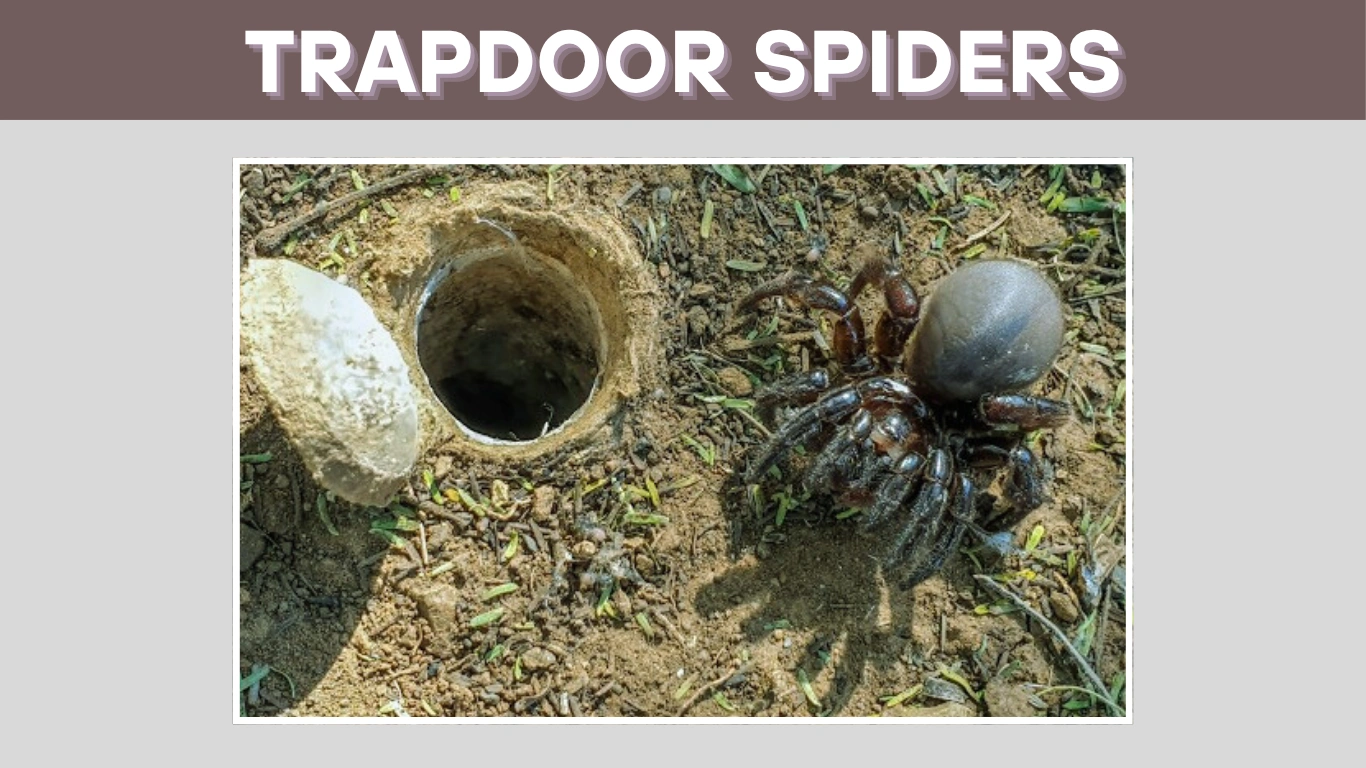
When people think of spiders, they usually imagine short-lived creatures that scurry around for a season or two. But the trapdoor spider is an exception. Hidden beneath the soil in cleverly designed burrows, these spiders live lives of quiet longevity. In fact, some can live longer than cats or dogs. This article takes a closer look at the average lifespan of trapdoor spiders and what makes them such long-living arachnids.
Trapdoor Spiders
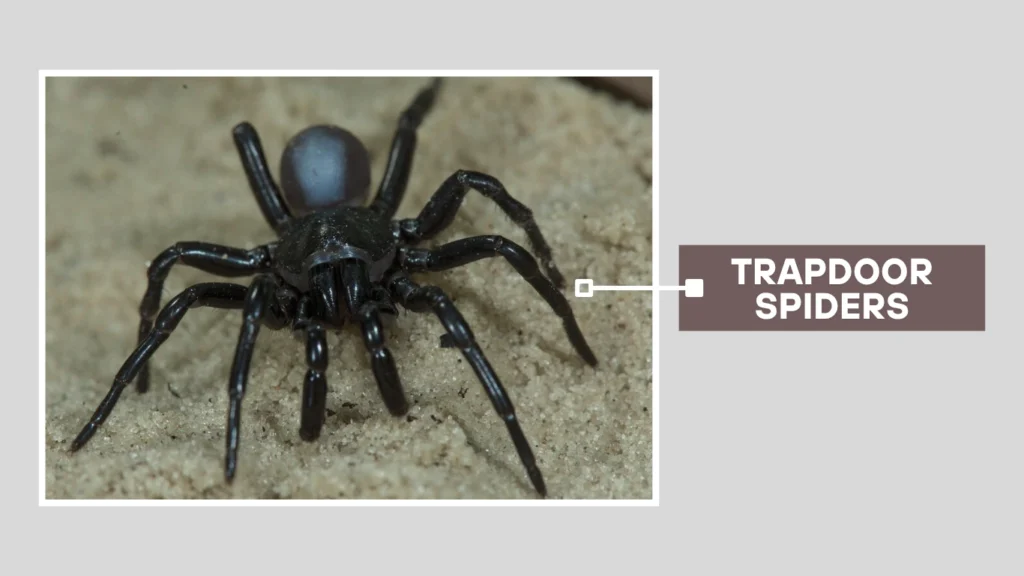
Trapdoor spiders are part of several spider families, including Ctenizidae, Idiopidae, and Halonoproctidae. They get their name from the clever way they build burrows underground and cover them with a hinged “trapdoor” made of silk, dirt, and plant matter. This door helps them stay hidden from predators and gives them an advantage when ambushing prey.
Average Lifespan of Trapdoor Spiders
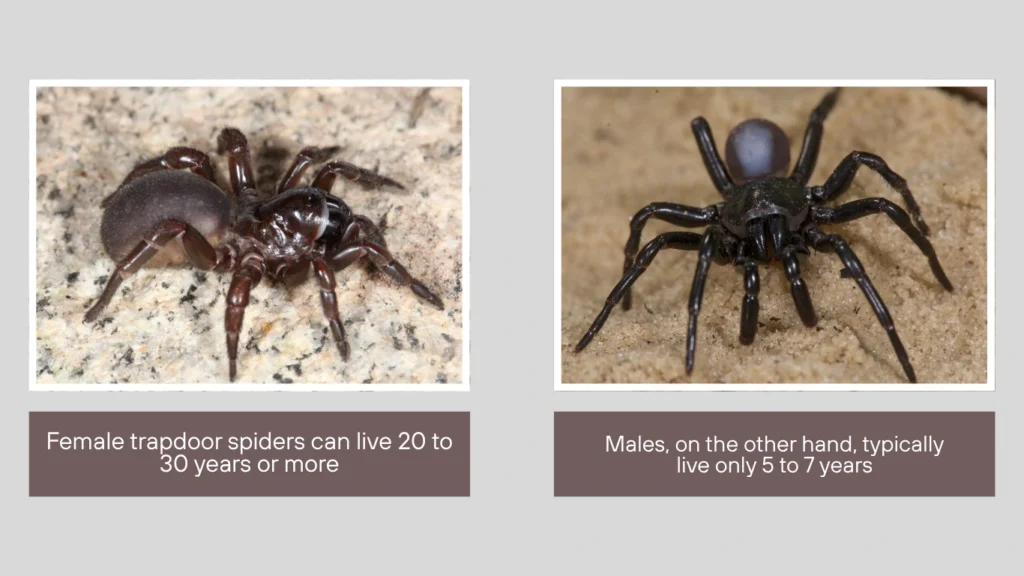
Trapdoor spiders are among the longest-living spiders in the world. While many common spiders live only one to two years, female trapdoor spiders can live 20 to 30 years or more. Males, on the other hand, typically live only 5 to 7 years, and they usually die shortly after reaching maturity and mating.
A famous example of their longevity is “Number 16,” an Australian trapdoor spider that lived for an astonishing 43 years. She was monitored by arachnologist Dr. Barbara York Main as part of a long-term field study. Number 16 died not of age, but likely from a parasitic wasp attack. Her story stunned scientists and helped cement the trapdoor spider’s reputation as one of the longest-living arachnids.
Factors Affecting Lifespan
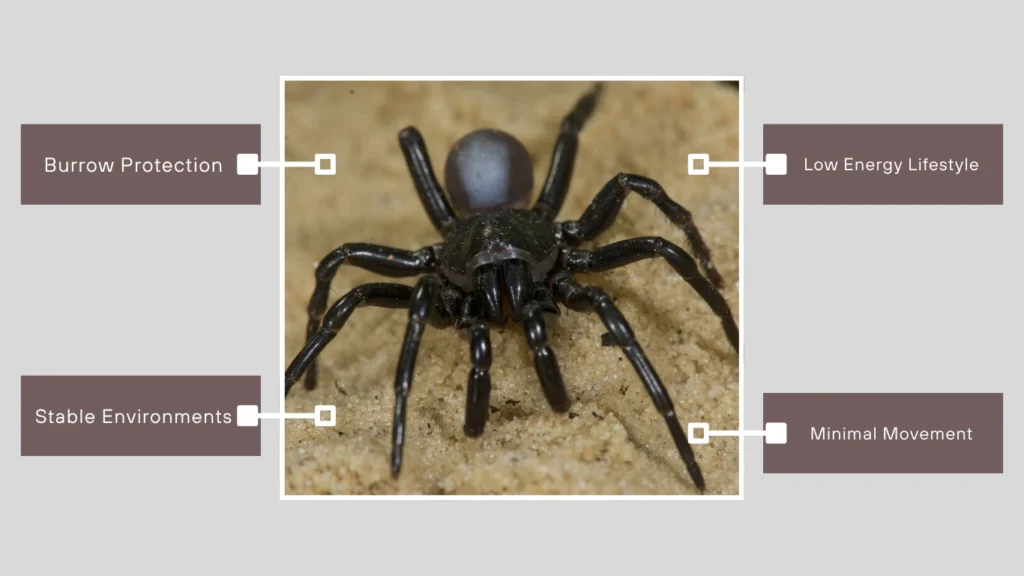
Several factors contribute to the long lifespan of trapdoor spiders:
- Burrow Protection: Living in a secure underground burrow minimizes the risk of predation and environmental stress.
- Low Energy Lifestyle: These spiders are ambush predators. They don’t waste energy chasing prey and can go weeks or months without eating.
- Stable Environments: Because they live underground, they’re less affected by temperature fluctuations, storms, or wildfires.
- Minimal Movement: They rarely leave their burrows, reducing their exposure to predators, parasites, or injury.
This combination of safety, efficiency, and stability helps trapdoor spiders conserve energy and avoid danger, key factors for a long life.
Male vs. Female Lifespan
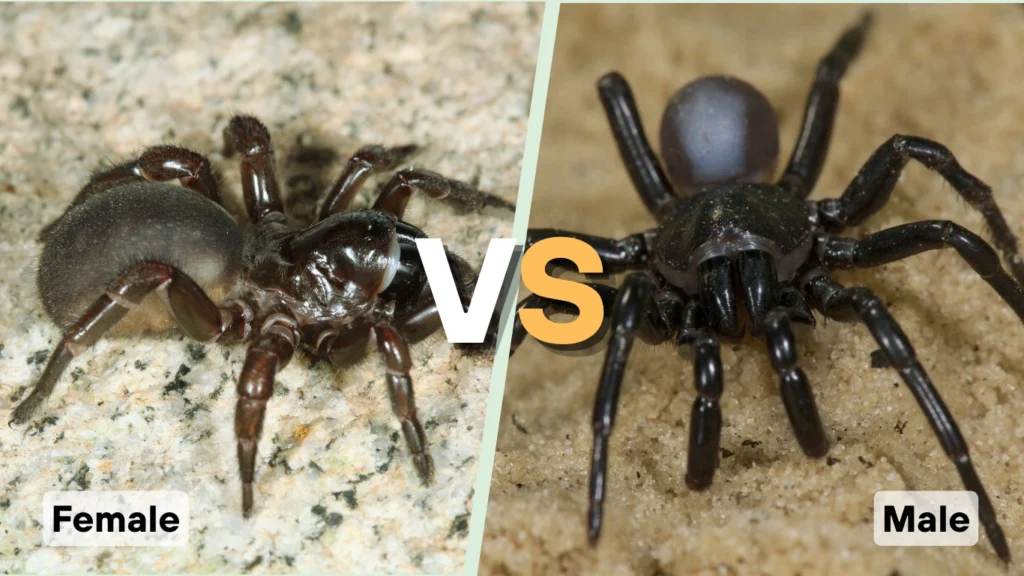
There’s a dramatic difference between the lifespans of male and female trapdoor spiders. Females are homebodies. Once they build a burrow, they often stay there for decades. Males, however, leave their burrows once they reach adulthood to search for females to mate with. This journey exposes them to predators, environmental hazards, and the risk of starvation. After mating, many males die within a few months.
This reproductive strategy means that while females might live over 20 years, males typically survive just long enough to pass on their genes.
Lifespan of Trapdoor Spiders vs Other Spiders

To understand how unique trapdoor spiders are, let’s compare their lifespan to other common spider species:
| Spider Species | Average Lifespan (Female) | Average Lifespan (Male) |
| Trapdoor Spider | 20–30+ years | 5–7 years |
| Tarantula | 15–25 years | 3–6 years |
| Orb-Weaver Spider | 1–2 years | 1 year |
| Wolf Spider | 1–3 years | 1 year |
As seen in the table, only tarantulas come close to trapdoor spiders in terms of longevity. Most spiders, especially those found indoors or in gardens, rarely live more than a couple of years.
Scientific Studies and Records
Long-term studies on trapdoor spiders are rare because of their secretive lifestyle. However, one of the most well-known is the decades-long research by Dr. Barbara York Main, who tracked trapdoor spiders in the Australian outback from the 1970s. Her research gave the world an unprecedented look into their lives, including the record-setting lifespan of Number 16.
Dr. Main’s work showed that a stable environment, minimal disturbance, and the spiders’ own behavior contributed heavily to their longevity. She also discovered that these spiders rarely leave their burrows, and when they do, it’s usually due to extreme conditions or mating behavior in males.
How to Observe Trapdoor Spiders in the Wild
If you’re interested in seeing a trapdoor spider in nature, you’ll need patience and sharp eyes. Here are a few tips:
- Look for Camouflaged Burrow Doors: Their trapdoors are often hidden with dirt, twigs, or moss, so they blend in with the ground.
- Go at Night: Trapdoor spiders are nocturnal. They’re more likely to sit near the entrance of their burrow after sunset.
- Do Not Disturb Their Habitat: These spiders are delicate and easily stressed. Never dig up a burrow or try to capture one.
- Best Regions: Australia is home to many trapdoor species. Some species are also found in California, Texas, and parts of Asia.
FAQs
How long do male trapdoor spiders live?
Male trapdoor spiders usually live 5–7 years. After reaching maturity, they leave their burrows to find a mate and often die shortly after mating.
Can trapdoor spiders be kept as pets?
They can be kept in captivity, but they’re not common in the pet trade due to their reclusive nature and long lifespan. They require deep substrate and minimal disturbance.
Are trapdoor spiders dangerous to humans?
No, their venom is not harmful to humans. They are shy and rarely bite unless provoked.
Why do trapdoor spiders live so long?
Their underground lifestyle protects them from predators and environmental stress. Females rarely move and use energy efficiently, allowing them to live for decades.
Final Thoughts
The average lifespan of a trapdoor spider is a fascinating topic in the world of arachnology. While most spiders live fast and die young, trapdoor spiders play the long game—especially females who may spend decades quietly waiting beneath the soil. Their remarkable longevity, combined with their secretive habits, make them one of nature’s more mysterious and enduring creatures.