
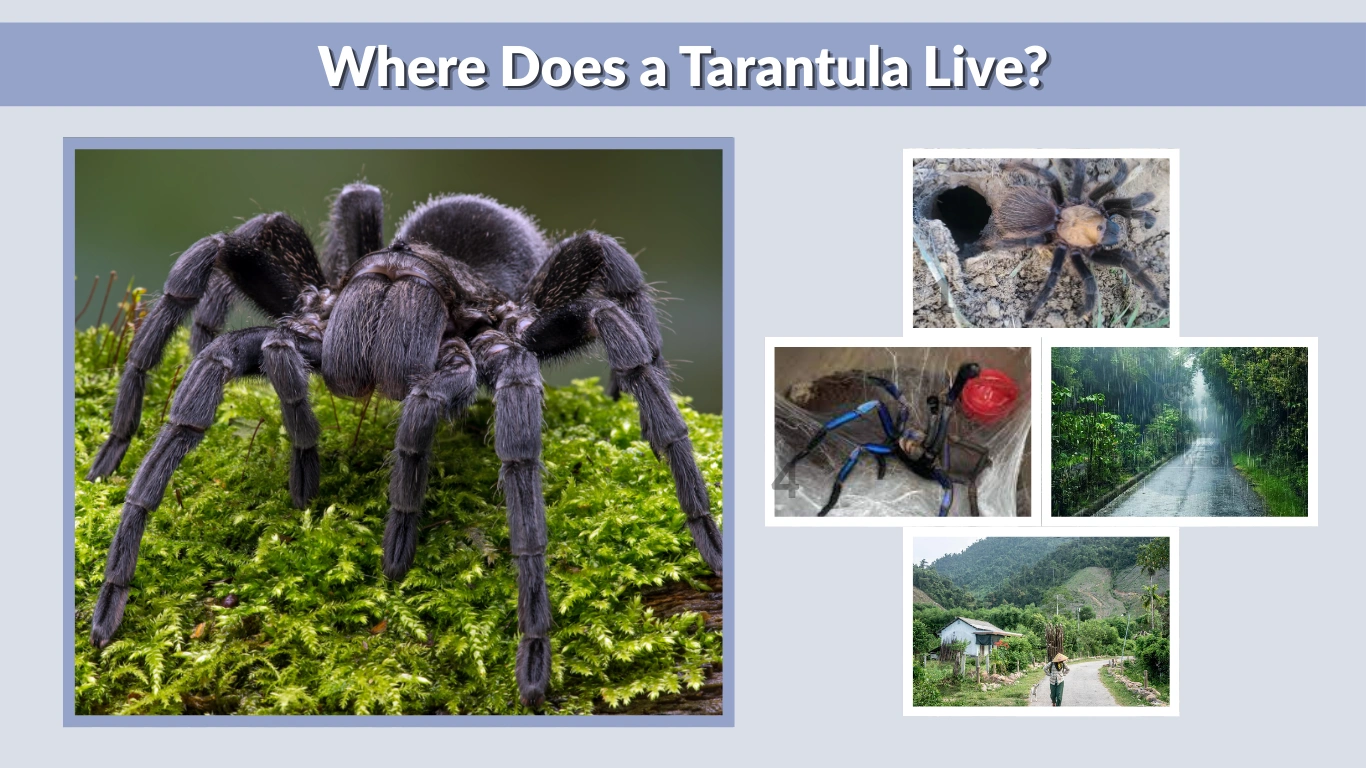
Tarantulas are among the most fascinating creatures in the arachnid world. Known for their large, hairy bodies and slow, deliberate movements, they capture attention wherever they are found. These spiders have adapted to thrive in diverse environments across the globe. From lush rainforests to dry deserts, tarantulas have carved out a niche that highlights their resilience and ability to adjust to varying conditions. Understanding where tarantulas live provides a window into their survival strategies and ecological significance.
Natural Habitats of Tarantulas

Tarantulas are highly adaptable and inhabit several distinct environments. In tropical rainforests, they make their homes under dense vegetation where humidity remains high. They dig deep burrows to escape predators and maintain a cool, moist retreat. These burrows are often lined with silk to prevent collapse and provide additional protection.
In stark contrast, deserts and arid regions also host tarantulas. Here, they face extreme temperatures and scarce water. To cope, tarantulas create shallow burrows or take shelter in rocky crevices. Their nocturnal behavior helps them avoid the harsh daytime heat. Grasslands and savannas offer yet another habitat, where tarantulas take advantage of tall grasses and soft soil to dig effective hiding spots.
Geographic Distribution
Tarantulas are not confined to one part of the world; their range is remarkably wide. In North and South America, they are especially abundant. Species like the Mexican red-knee tarantula thrive in Mexico, while Brazil is home to colorful species such as the Brazilian salmon pink birdeater. The United States, particularly the southwestern deserts, also provides a suitable habitat.
Across Africa, tarantulas are well adapted to savanna and desert ecosystems. Their burrows provide safety from predators like birds and reptiles. In Asia, countries including India, Sri Lanka, and regions of Southeast Asia support large populations. These tarantulas are often arboreal, making their homes in tree hollows or woven silk retreats above ground. Some isolated island ecosystems also host unique tarantula species that highlight their adaptability.
Burrows and Shelters

Burrows are central to the lifestyle of ground-dwelling tarantulas. These structures serve as both a refuge and a hunting base. Lined with silk, the burrows are more stable and sometimes even feature a silk “door” that helps conceal the spider from predators. For arboreal species, tree cavities and silk retreats replace burrows. They create tube-like structures along tree trunks or within foliage, which serve the same protective function as underground shelters.
Environmental Factors
The environment strongly influences tarantula behavior and survival. Temperature and humidity are vital, with each species adapting to its local climate. In rainforests, high humidity supports molting and growth, while desert species rely on cooler nights to remain active. Seasonal changes also affect their activity; many tarantulas retreat deeper into burrows during extreme heat or cold. Soil type, vegetation, and prey availability further determine where a tarantula chooses to settle.
Human Influence on Tarantula Habitats

Human activity significantly affects tarantula populations worldwide. Deforestation removes vital rainforest habitats, forcing tarantulas to relocate or perish. Expanding urbanization often destroys burrows and natural shelters. Another major factor is the exotic pet trade. While tarantulas are popular among collectors, over-harvesting from the wild has put pressure on some species. Conservation programs now aim to regulate trade and protect habitats to maintain healthy populations.
Tarantulas in Captivity
Tarantulas have become increasingly popular as pets, admired for their unique appearance and low-maintenance lifestyle. In captivity, their enclosures must replicate natural conditions. Ground-dwelling species require soil for burrows, while arboreal species need vertical structures like branches or cork bark for climbing. Humidity and temperature must match the environment they come from. Ethical concerns also arise, emphasizing the importance of captive breeding rather than capturing wild tarantulas.
Interaction with Ecosystem
Tarantulas play a vital role in balancing ecosystems. They act as natural pest controllers, feeding on insects, small lizards, and occasionally rodents. This predatory behavior prevents overpopulation of certain species and supports ecological stability. However, tarantulas themselves face threats from predators such as snakes, owls, and larger mammals. Their survival strategy of burrowing or climbing trees is a direct response to these challenges. Overall, tarantulas are essential in maintaining biodiversity across their habitats.
Conclusion
Tarantulas are masters of adaptation, living in a wide range of environments, from tropical forests to deserts. Their reliance on burrows, shelters, and environmental cues demonstrates their resilience. Human influence has brought both challenges and opportunities for conservation. By understanding their habitats and roles in the ecosystem, we gain deeper respect for these fascinating spiders. Protecting their homes ensures the continuation of their vital ecological contributions.
FAQs
What types of environments do tarantulas prefer?
Tarantulas live in diverse environments, including rainforests, deserts, savannas, and mountains. Ground-dwelling species prefer burrows in soil, while arboreal tarantulas thrive in tree hollows. Their adaptability allows them to survive in regions with different climates, as long as they can find shelter, humidity balance, and sufficient prey to support their needs.
Do tarantulas make their own homes?
Yes, most tarantulas construct burrows or shelters. Ground-dwelling species dig deep into soil, lining the tunnels with silk for stability. Arboreal tarantulas create silk retreats in tree trunks or foliage. These homes serve as protection from predators, resting places, and hunting bases, ensuring their survival across varied habitats.
Are tarantulas affected by human activity?
Absolutely. Deforestation, agriculture, and urbanization directly reduce tarantula habitats. The exotic pet trade also impacts wild populations, as some species are over-collected. Conservation efforts, including habitat protection and captive breeding programs, aim to preserve species diversity. Awareness among pet owners helps minimize harmful practices, ensuring sustainable tarantula populations.
Can tarantulas live in captivity?
Yes, tarantulas adapt well to captivity when their needs are met. Proper enclosures must replicate natural conditions with soil, branches, or burrow spaces depending on species type. Temperature and humidity must be maintained carefully. Captive breeding programs are encouraged to reduce reliance on wild populations, supporting ethical tarantula keeping practices.
Why are tarantulas important to the ecosystem?
Tarantulas are crucial predators that help regulate insect and small vertebrate populations. By controlling these prey species, they prevent ecological imbalance. Additionally, they provide food for larger predators, linking them to wider food chains. Their presence highlights the delicate balance within ecosystems, where every creature contributes to biodiversity and stability.