
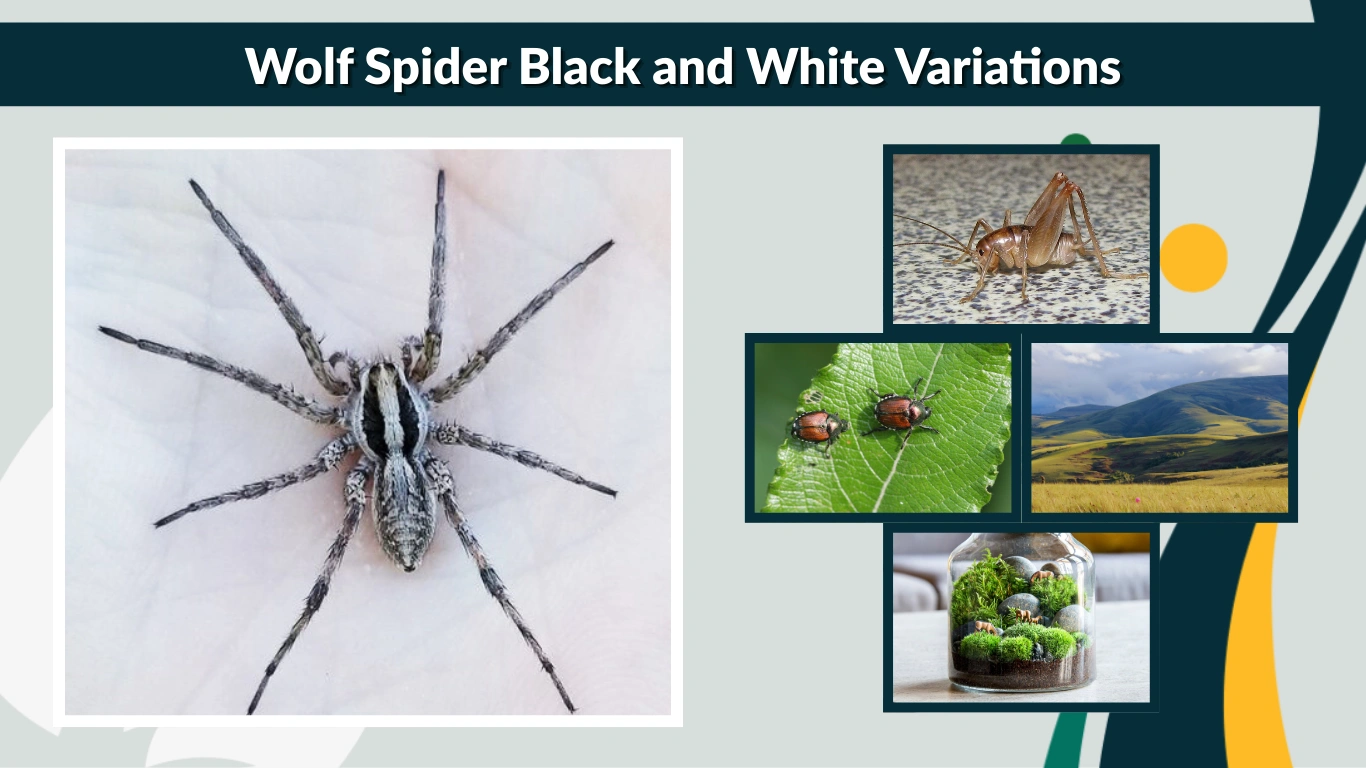
Wolf spiders (family Lycosidae) are some of the most commonly seen spiders around homes, gardens, and outdoor landscapes. They are ground hunters with excellent eyesight, known for their speed and ability to carry their egg sacs on their backs. Because of their varied colors and markings, wolf spiders are often mistaken for other species. Among these, black-and-white variations—including spiders with white stripes, spots, or pale coloring—draw the most attention.
In this guide, we’ll explore how to identify these striking wolf spider variations, compare them with other look-alike species, discuss their behavior, and address myths about their venom and appearance.
Identification of Black and White Wolf Spiders
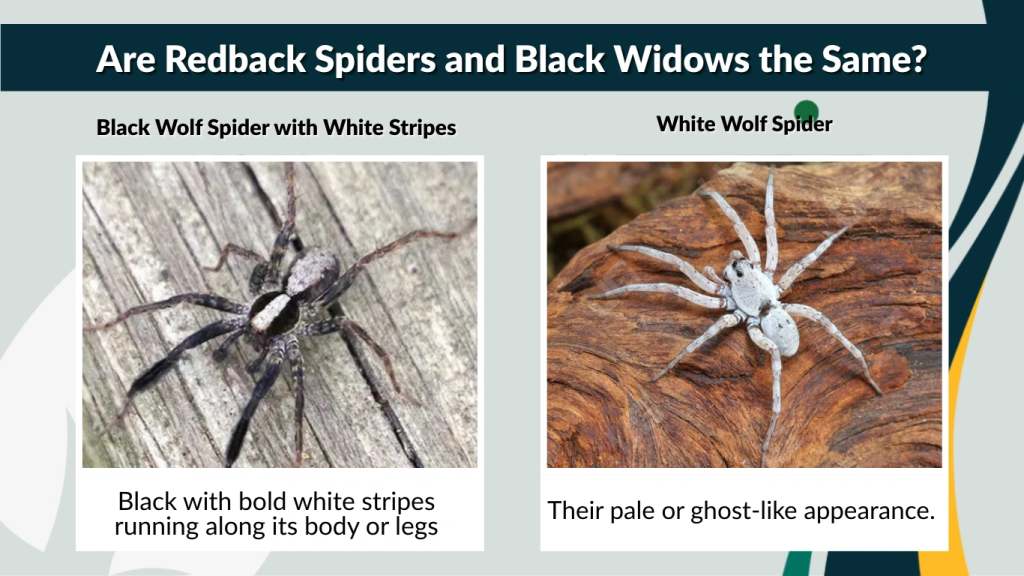
Black Wolf Spider with White Stripes
One of the most recognizable variations is the wolf spider that appears black with bold white stripes running along its body or legs. This pattern is often confused with jumping spiders, which also display striped markings. However, wolf spiders are larger, have a more elongated body, and lack the jerky, hopping movement of jumping spiders. These striped wolf spiders are found in both rural and urban settings, often blending into bark, stones, or garden soil.
White Wolf Spider
Some wolf spiders are referred to as “white wolf spiders” because of their pale or ghost-like appearance. This may occur naturally in certain species, especially those adapted to sandy or desert habitats, where lighter coloration provides camouflage. In other cases, spiders appear temporarily pale right after molting, when their new exoskeleton hasn’t darkened yet. People sometimes mistake these pale spiders for albino wolf spiders, but true albino cases are extremely rare.
Wolf Spider with White Spot or White Stripe on Back
Another commonly reported variation is the black wolf spider with a distinct white spot or stripe on its back. These markings are usually natural patterns in the spider’s cuticle and vary by species. Some individuals may have one bold white patch, while others show multiple spots or thin striping. Because of these markings, they are often mistaken for venomous species, but wolf spiders are not medically dangerous to humans.
Grey and White Wolf Spider
Grey-and-white wolf spiders combine mottled shades that help them camouflage on rocky surfaces or sandy soil. Their coloration makes them excellent ambush hunters. Unlike spiders with bold striping, these individuals often have a softer, more blended pattern that resembles gravel or wood ash, which makes them difficult to spot.
Confusions and Comparisons
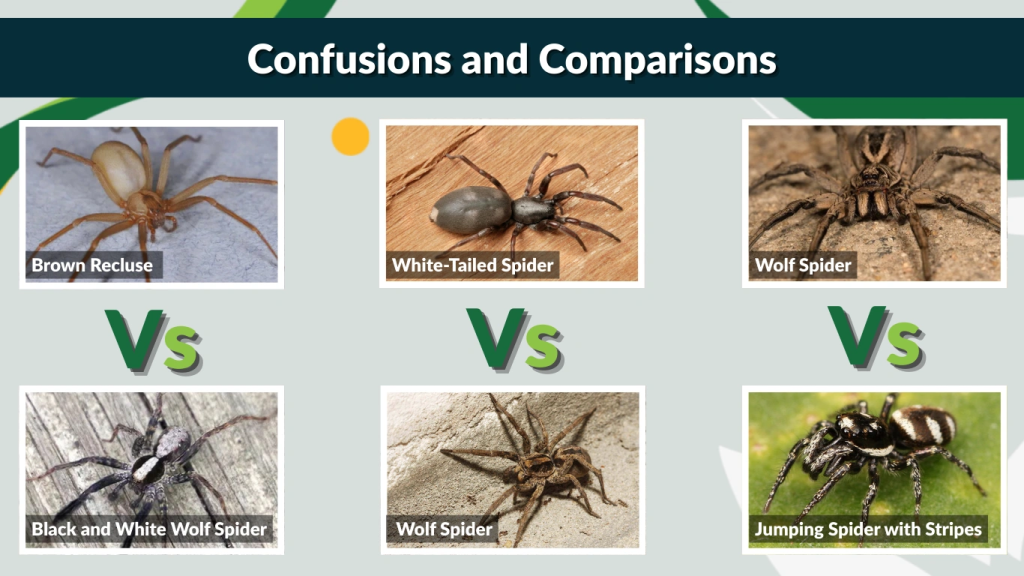
Brown Recluse vs. Black and White Wolf Spider
Wolf spiders are frequently mistaken for brown recluse spiders. A recluse has a violin-shaped mark on its cephalothorax, long thin legs, and prefers hiding in dark corners. Wolf spiders, however, are much larger, carry egg sacs attached to their abdomen, and roam in the open while hunting. While recluse bites can cause serious tissue damage, wolf spider bites usually result in only mild pain, swelling, or itching.
White-Tailed Spider vs. Wolf Spider
White-tailed spiders, common in parts of Australia and New Zealand, are named for the pale patch at the end of their abdomen. Because wolf spiders can also appear with white markings, they are sometimes confused with them. However, white-tailed spiders have narrower bodies and a more cylindrical shape, whereas wolf spiders are stocky, broad, and hairy. Importantly, wolf spiders are not linked to necrotic bites, while white-tailed spider bites remain debated in terms of their effects.
Wolf Spider vs. Jumping Spider with Stripes
Jumping spiders are small, compact spiders with large forward-facing eyes and a tendency to leap on prey. Many species of jumping spiders are black with vivid white stripes, which makes them look similar to striped wolf spiders. The key difference is in size and movement: wolf spiders are larger, move quickly on the ground, and rarely jump, while jumping spiders are smaller, agile, and often found on walls, plants, and windowsills.
Behavior and Habitat
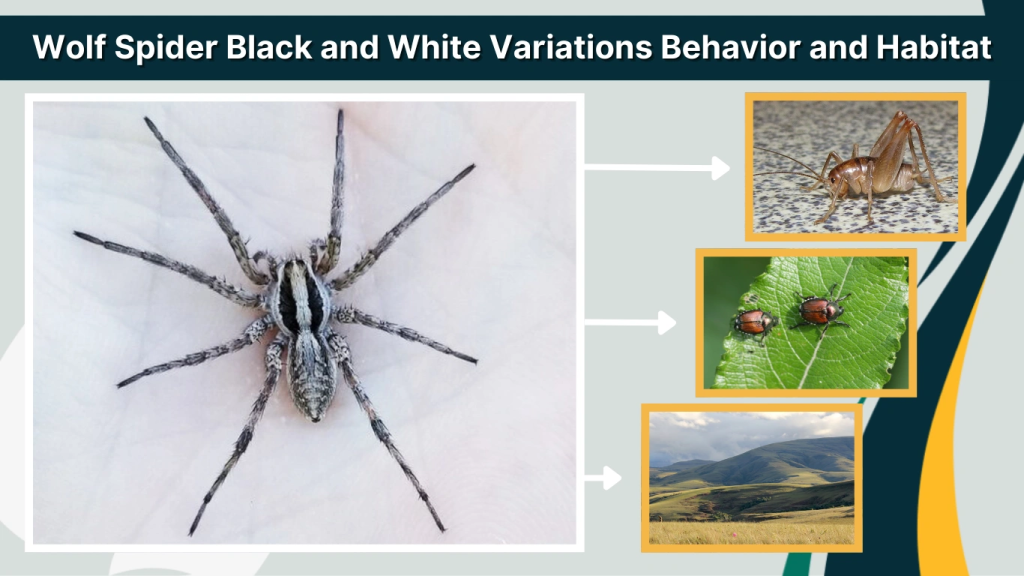
Wolf spiders are nocturnal hunters, actively seeking prey such as crickets, beetles, and ants. They do not spin webs to trap food but rely on speed and stealth. These spiders are commonly found in grasslands, forests, deserts, and even inside houses when searching for warmth or prey. A unique feature is the way females carry their white egg sacs attached to their spinnerets. Once hatched, baby wolf spiders climb onto the mother’s back, staying there until they are strong enough to survive alone.
Size and Appearance
Wolf spiders come in a wide range of sizes, from small juveniles just a few millimeters long to giant species with bodies over an inch and leg spans reaching nearly 4 inches. Variations like the giant white tiger wolf spider are especially striking, with pale coloring contrasted by darker bands.
- Baby white wolf spiders: Hatchlings are tiny, pale, and often mistaken for different species until they mature.
- Large white wolf spiders: In sandy or desert environments, large pale individuals can appear almost ghostly, blending perfectly into their surroundings.
- Wolf spider with white butt or white liquid: The white “butt” is usually an egg sac carried by a female. The “white liquid” sometimes reported is actually spider silk or internal fluids released when injured.
These color variations don’t indicate a different species but rather natural diversity within the wolf spider family.
Are Black-and-White Wolf Spiders Poisonous?
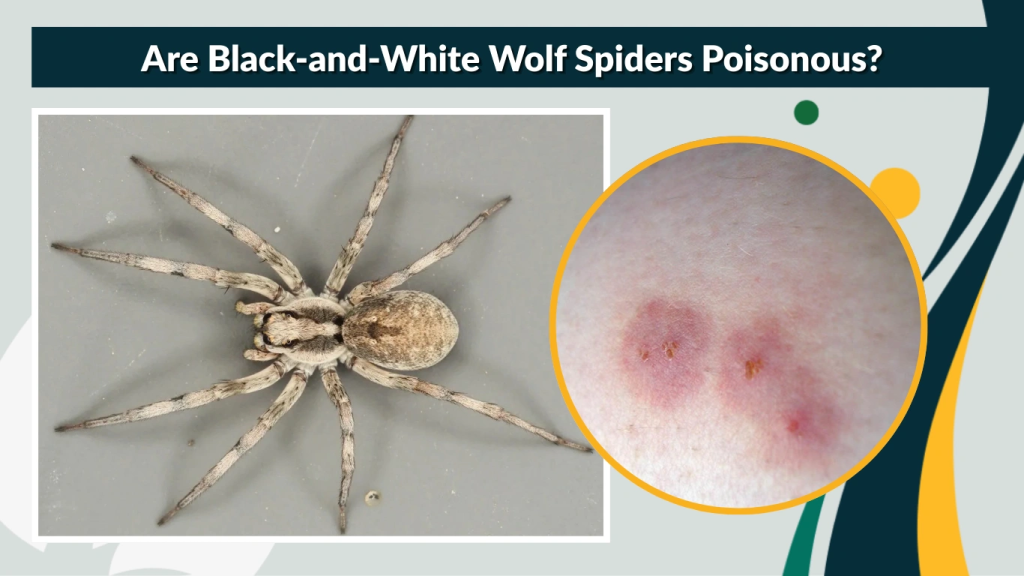
Many people worry when they see a black spider with bold white stripes or spots. Wolf spiders do have venom, which they use to subdue their prey, but they are not considered medically dangerous to humans.
- Bite effects: Pain, mild swelling, itching, or redness.
- Danger level: Not fatal, and serious reactions are rare.
- Pets: Dogs or cats may experience mild reactions but are not at high risk unless bitten multiple times.
The label “poisonous wolf spider black spider with white stripes” is more myth than fact. Unlike black widows or brown recluses, wolf spiders are not associated with severe envenomation.
Wolf Spider Care and Pet Trade
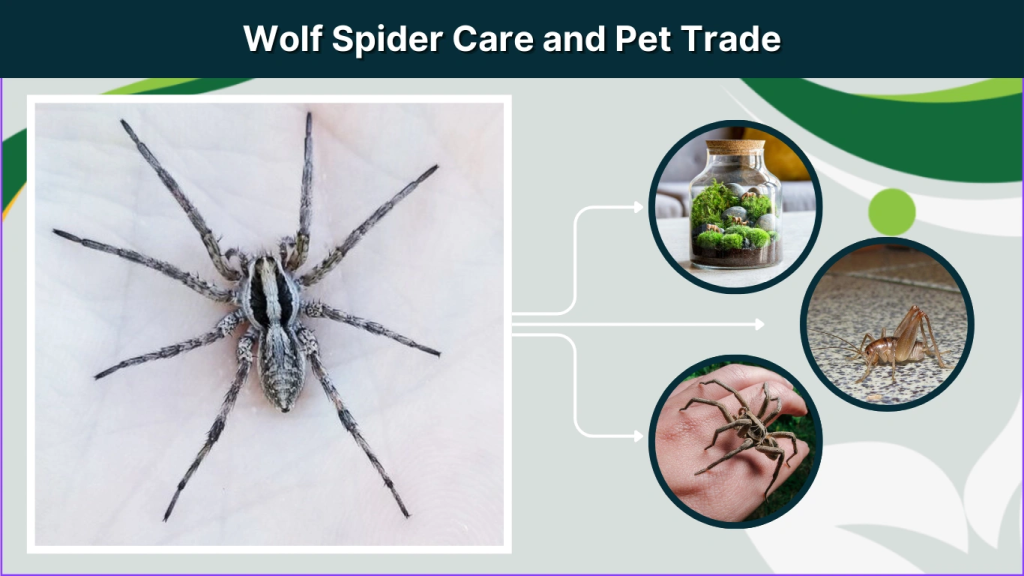
Some enthusiasts keep wolf spiders as pets. The “white wolf spider for sale” trend has grown online, though true albino specimens are extremely rare.
- Housing: A small terrarium with soil, rocks, and hiding spaces.
- Diet: Crickets, mealworms, and other live insects.
- Handling: Not recommended, as wolf spiders are fast and can bite if provoked.
Caring for wolf spiders requires attention to their hunting needs and space to roam. While not dangerous, they are still wild predators and should be respected.
Unique Species and Variants
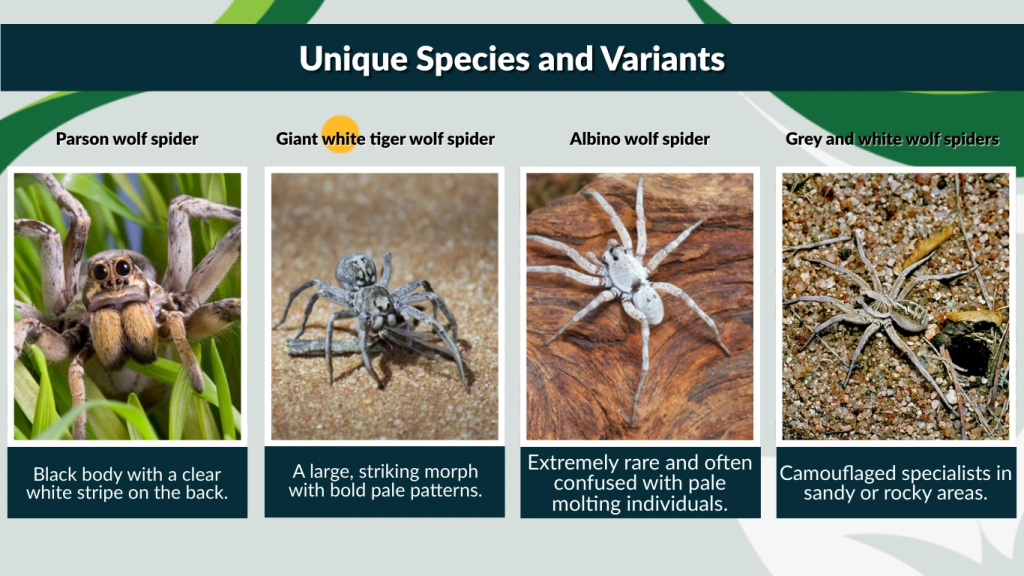
A few wolf spider species and morphs stand out due to their markings:
- Parson wolf spider: Black body with a clear white stripe on the back.
- Giant white tiger wolf spider: A large, striking morph with bold pale patterns.
- Albino wolf spider: Extremely rare and often confused with pale molting individuals.
- Grey and white wolf spiders: Camouflaged specialists in sandy or rocky areas.
These variations make wolf spiders some of the most visually diverse arachnids in the world.
Myths and Misconceptions
Wolf spiders have inspired myths and legends due to their size and appearance.
- Albino wolf spider myth: Most “albino” reports are simply pale post-molt individuals.
- Were-spider tales: Some cultures associate pale wolf spiders with shapeshifting legends.
- Confusion with black widows: Because some wolf spiders have white spots, they are mistaken for widow spiders. However, widows have glossy round bodies, while wolf spiders are hairy and robust.
These myths persist because wolf spiders often surprise people in their homes or gardens, but in reality, they are beneficial hunters that reduce insect pests.
FAQs
What is a black wolf spider with white stripes?
It is a wolf spider with natural body striping, sometimes mistaken for jumping spiders. These stripes are part of normal variation within the species.
Are white wolf spiders real or just myths?
Yes, pale wolf spiders exist, especially in sandy habitats or right after molting. However, true albino wolf spiders are extremely rare.
Can wolf spiders with white spots be dangerous?
No, wolf spiders with white spots are not dangerous. Their venom only causes mild symptoms in humans, unlike black widows or brown recluses.
How do I identify a wolf spider vs. a brown recluse?
Wolf spiders are larger, hairy, and carry egg sacs. Brown recluses have a violin-shaped marking and thin legs, and they prefer dark hiding spots.
Is it safe to keep a white wolf spider as a pet?
Yes, with proper care, wolf spiders can be kept as pets. However, they are fast, not suitable for handling, and best appreciated in their enclosure.