

Wolf spiders are some of nature’s most skilled hunters. Unlike web-building spiders, they chase down and overpower their prey using speed, stealth, and excellent eyesight. This leads many people to ask: What does a wolf spider eat? From ants to roaches and even other spiders, their diet is as diverse as the environments they live in.
In this guide, we’ll explore 10 common foods wolf spiders love to eat, including some surprising prey you may not expect.
1. Wolf Spider Eating Ants
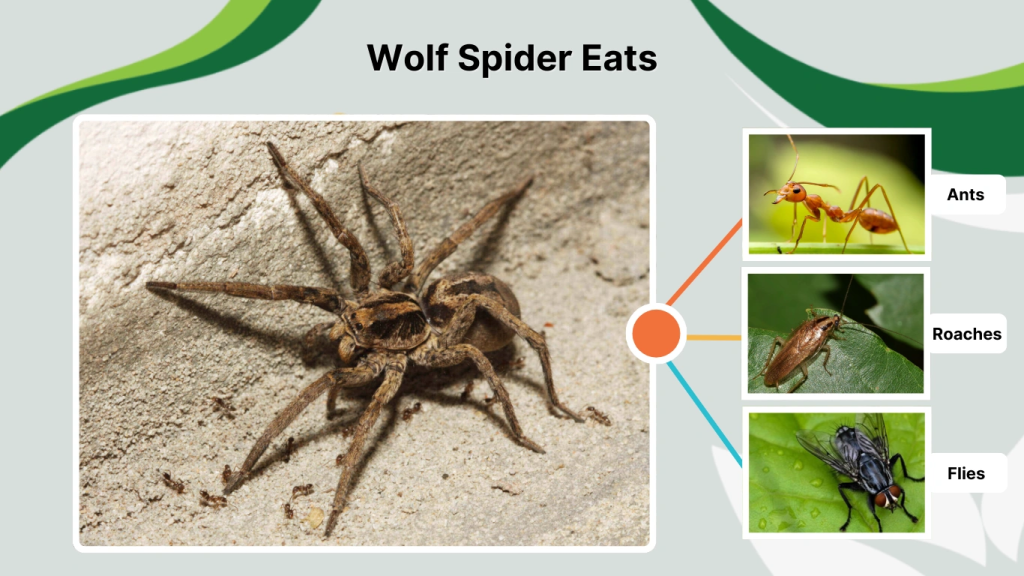
Ants are among the most common foods wolf spiders eat. Found nearly everywhere, ants make an easy and plentiful target. Wolf spiders often lurk near anthills or trails, waiting to pounce. Their hunting method involves injecting venom into the ant, which liquefies the tissues so the spider can consume it. Because ants are so abundant in gardens and homes, wolf spiders play a helpful role in controlling their populations.
2. Wolf Spider Eating Roaches
Many homeowners wonder if wolf spiders eat cockroaches, and the answer is yes. Cockroaches are a preferred prey item due to their size and availability in human environments. Wolf spiders ambush smaller roaches with ease, making them natural pest controllers. While they cannot wipe out a full infestation, spotting a wolf spider hunting roaches in your home is usually a sign that nature’s pest control is at work.
3. Wolf Spider Eating Mosquitoes and Flies
Another frequent part of the wolf spider diet includes mosquitoes and flies. These flying insects are abundant, especially around water sources, gardens, and trash bins. Wolf spiders rely on their speed to capture mosquitoes and flies when they land. This helps reduce mosquito populations in outdoor areas, making wolf spiders beneficial to people as well. While they may not actively chase flying prey in the air, they are quick to snatch them once grounded.
4. Wolf Spider Eating Other Spiders

One fascinating aspect of wolf spider behavior is their willingness to eat other spiders. They are opportunistic predators and will not hesitate to attack smaller or equally sized species.
- Wolf spider eat black widow – Though rare, wolf spiders have been observed overpowering black widows.
- Wolf spider eat brown recluse – Many ask, will a wolf spider eat a brown recluse? Yes, but such encounters are uncommon.
- Wolf spider eat other spiders generally – They often prey on house spiders or small orb-weavers they encounter.
This cannibalistic tendency shows just how adaptable and fearless wolf spiders can be when it comes to securing a meal.
5. Wolf Spider Eating Scorpions and Dangerous Prey

In desert habitats, wolf spiders sometimes encounter scorpions and other dangerous arthropods. While it is not their primary food source, wolf spiders have been documented attacking smaller scorpions. They rely on speed to avoid the sting while delivering a paralyzing bite. Such behavior highlights their ability to eat risky prey when the opportunity arises. This category also includes centipedes and other venomous invertebrates that many other predators avoid.
6. Wolf Spider Eating Small Insects and Beetles
For most wolf spiders, beetles, crickets, and grasshoppers make up the bulk of their diet. These insects provide a high-energy meal and are often abundant in fields, gardens, and forests. Wolf spiders chase them down or ambush them from behind rocks and leaf litter. Because these insects are agricultural pests, wolf spiders again prove their ecological importance by keeping populations under control.
7. Wolf Spider Eating Caterpillars and Moths
Caterpillars and moths are another group of insects wolf spiders eat regularly, especially at night. Caterpillars are soft-bodied and easier to subdue, while moths often fall prey when resting on surfaces. This makes wolf spiders useful allies in protecting crops and plants from leaf damage. Their ability to hunt across multiple insect groups explains why they thrive in so many environments.
8. Wolf Spider Eating Small Vertebrates (Rare Cases)
Although wolf spiders mostly consume insects, there have been rare reports of them tackling tiny vertebrates. Keywords like “wolf spider eat mice” highlight these unusual cases. Larger wolf spiders may occasionally attack newborn mice, small frogs, or lizards if they can overpower them. While this is not common behavior, it demonstrates the extreme adaptability of wolf spiders when food is scarce.
9. Wolf Spider Babies: What Do They Eat?
One of the most frequently asked questions is, do wolf spider babies eat their mother? This idea is largely a myth. Unlike some spider species known for extreme cannibalism, wolf spider babies do not consume their mother once they hatch. Instead, baby wolf spiders rely on very small insects such as springtails, tiny flies, or soft-bodied larvae when they begin to hunt independently.
The truth is that the mother wolf spider protects her young by carrying them on her back until they are strong enough to disperse. During this time, she may stop feeding to avoid drawing attention from predators. While isolated cases of cannibalism can occur under starvation conditions, it is not normal behavior. So, what do wolf spider babies eat? They eat the smallest insects they can overpower, not their mother.
10. Rabid and Arctic Wolf Spider Diets

Rabid Wolf Spider Eat
The rabid wolf spider, known for its fast movements and aggressive hunting style, eats the same foods as other wolf spiders—ants, beetles, roaches, and small insects. Its name comes from its erratic movements, not because it spreads rabies. This species is an excellent example of how wolf spiders dominate their environment with speed and power.
Arctic Wolf Spider Eat
The Arctic wolf spider has adapted to harsh, cold environments. Its diet mainly consists of other arthropods like flies and midges that survive in the tundra. In regions where food is scarce, the Arctic wolf spider can go long periods without eating, showing its resilience in extreme habitats.
Can Humans or Pets Eat Wolf Spiders?
Some keywords raise unusual but interesting questions like “can you eat a wolf spider?” Technically, yes, humans can eat wolf spiders, just like other edible insects, but it is not a common practice due to their venom and defensive nature. Cooking would neutralize venom, but they are not considered a safe or desirable food.
Cats and Dogs
Many pet owners wonder, can my cat eat a wolf spider or can a dog eat a wolf spider? Most of the time, pets will be fine if they eat one. The venom is designed for small insects, not large mammals. At worst, a pet may experience mild stomach irritation. However, it is better to prevent them from eating spiders, as allergic reactions can occur in rare cases.
Bearded Dragons
A frequent reptile keeper question is, can a bearded dragon eat a wolf spider? While bearded dragons can technically eat one, it is not recommended. The spider’s venom and defensive bite may harm the reptile, and safer feeder insects like crickets or mealworms are preferred.
How Often Does a Wolf Spider Eat?
Wolf spiders do not eat daily like humans. Instead, they eat whenever they successfully capture prey.
- Frequency: Usually once every few days.
- Food size: A larger meal like a cricket can sustain them longer.
- Fasting: They can survive weeks without food if necessary.
Understanding this helps explain why wolf spiders sometimes appear in homes—they are simply seeking new hunting grounds.
How Does a Wolf Spider Eat?
The process of feeding is fascinating. When a wolf spider catches prey, it injects venom that paralyzes and liquefies the inside of the insect. The spider then uses its mouthparts to suck out the liquid meal. This method allows them to feed efficiently without chewing.
Conclusion
Wolf spiders are opportunistic hunters that thrive in many environments. From ants and roaches to flies, beetles, and even other spiders, their diet is wide-ranging. They occasionally take on risky prey like scorpions and may even eat tiny vertebrates. Despite myths, wolf spider babies do not eat their mother—they eat small insects once independent.
Their role in controlling pest populations makes them beneficial to humans, even if their appearance can be intimidating. Understanding what wolf spiders eat helps us appreciate their place in the ecosystem.
FAQs
What do wolf spider babies eat?
Wolf spider babies eat tiny insects like fruit flies, springtails, and soft-bodied larvae once they leave their mother’s back. Despite common myths, they do not eat their mother under normal conditions. The female protects her young until they are ready to disperse, ensuring they find suitable prey for themselves.
Will a wolf spider eat a brown recluse?
Yes, wolf spiders may eat a brown recluse if they encounter one. As opportunistic hunters, they do not hesitate to attack other spiders. While such encounters are rare, wolf spiders can overpower recluses due to their size and strength. This shows how adaptable they are when food opportunities arise in their environment.
Can a wolf spider eat a black widow?
Wolf spiders can eat black widows in certain cases, though it is uncommon. Both species are strong predators, but wolf spiders rely on speed and ambush tactics. If the opportunity is right, they may kill and consume a black widow. However, they generally prefer more accessible insect prey rather than dangerous competitors.
Can my cat eat a wolf spider safely?
Most cats are safe if they eat a wolf spider, as the venom is not harmful to mammals. A cat may experience mild stomach upset or irritation, but serious health issues are unlikely. Still, it’s better to discourage pets from eating spiders to avoid potential allergic reactions or defensive bites during the process.
How does a wolf spider eat its prey?
Wolf spiders use venom to paralyze their prey and break down internal tissues. They then consume the liquefied insides by sucking the fluids through their mouthparts. This method allows them to digest food without chewing. It’s a highly efficient way of feeding, making them effective predators in controlling insect populations around their habitats.