



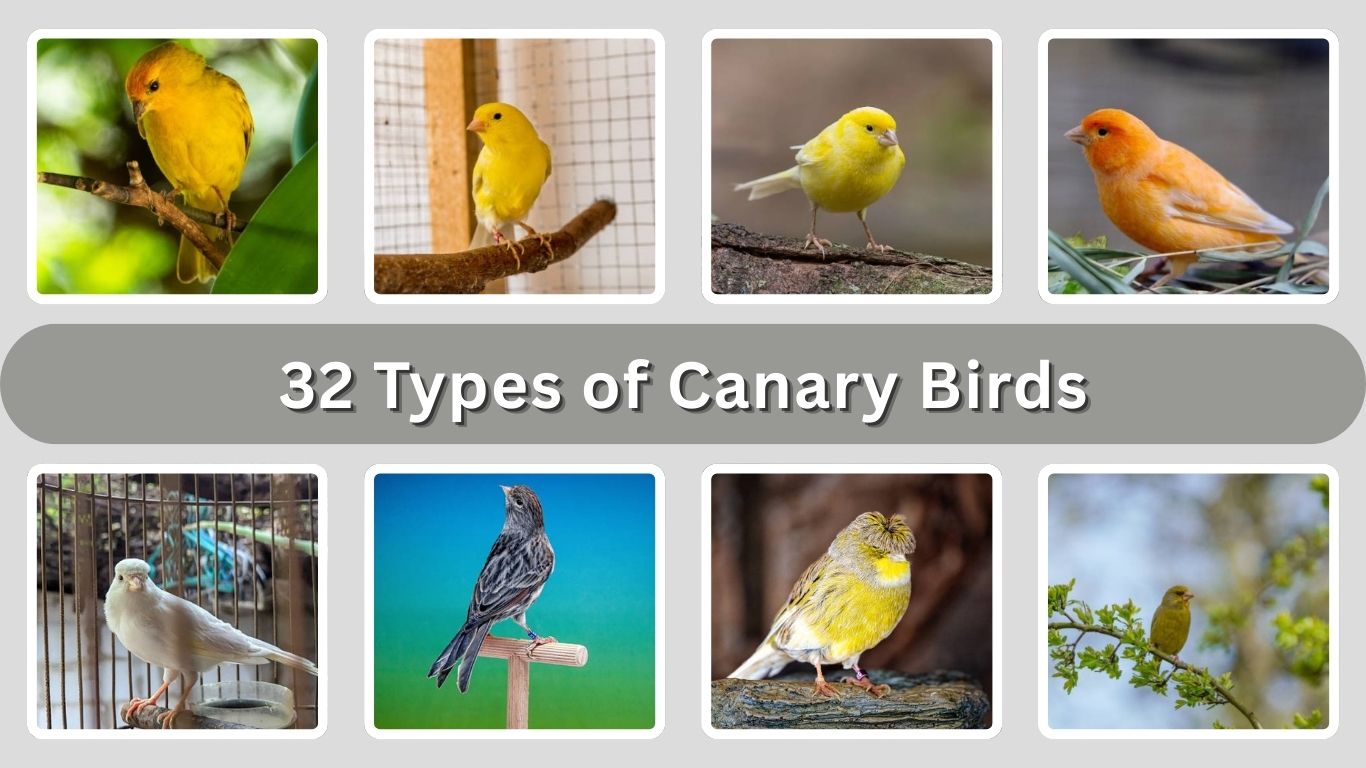
Canary birds are among the most popular cage birds in the world, admired for their beautiful colors, unique body forms, and pleasant songs. Over centuries of selective breeding from the wild Atlantic Canary, experts have developed dozens of distinct canary types. Some are famous for powerful singing, others for elegant posture or decorative feathering. In this guide, we explore 32 different types of canary birds, helping you understand their diversity, appearance, and special qualities.
1. Atlantic Canary (Serinus canaria)
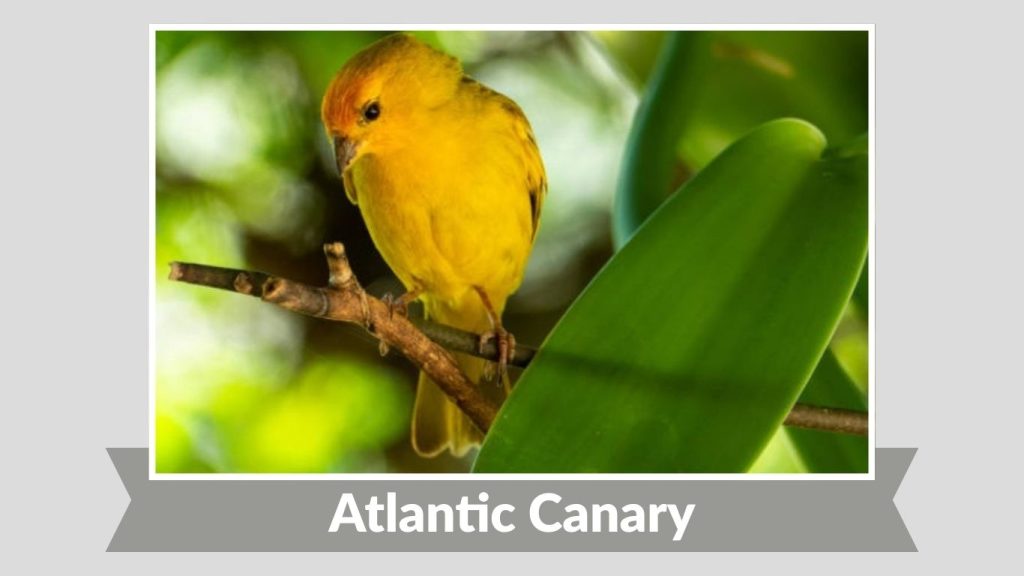
The Atlantic Canary is the original wild ancestor of all domestic canary breeds. Native to the Macaronesian Islands (Canary Islands, Madeira, and the Azores), this small finch is known for its greenish-yellow plumage, lively behavior, and pleasant natural song. It plays a major role in aviculture history, as centuries of selective breeding began from this species.
Identification
- Small finch-sized bird, about 12–13 cm long
- Greenish-yellow body with darker streaks on the back
- Pale yellow underparts and throat
- Short, conical, pale horn-colored beak
- Dark eyes with a slim, delicate head shape
- Males are usually brighter than females
Habitat
Atlantic Canaries naturally live in open woodlands, orchards, coastal scrublands, and gardens. They prefer areas with shrubs and scattered trees where they can easily find seeds and insects. In the wild, they are often seen in small flocks, especially outside the breeding season.
Behavior
These birds are active, social, and alert. Atlantic Canaries spend much of their day foraging, flying between bushes, and communicating with soft calls. Males sing frequently, especially during breeding season, using songs to attract mates and defend small territories.
Diet and Lifespan
In the wild, Atlantic Canaries mainly eat seeds, grasses, buds, and small insects. During the breeding season, insects become more important for protein. Their average lifespan in nature is about 5–8 years, while in protected environments they may live significantly longer.
2. Domestic Canary (Serinus canaria domestica)
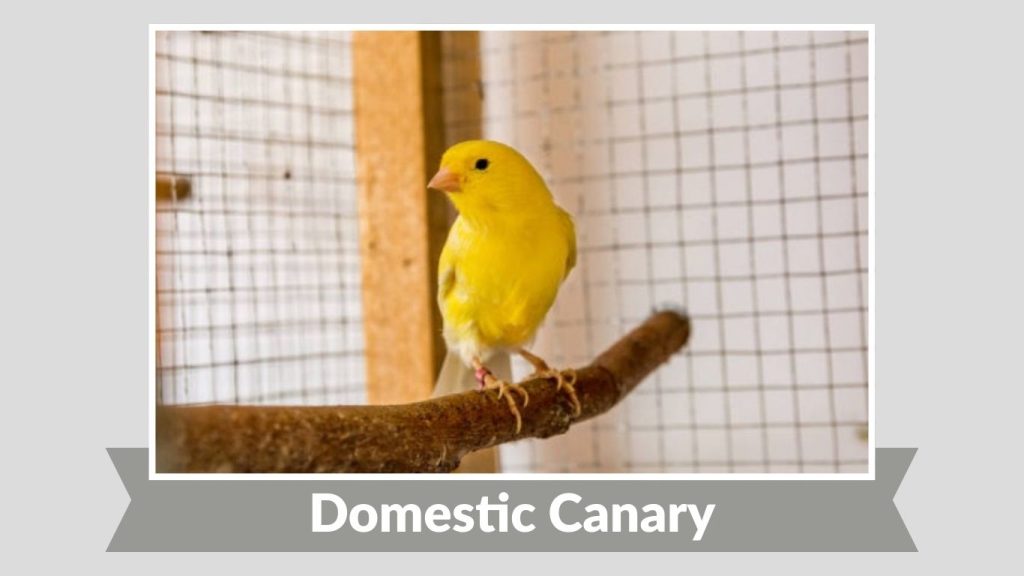
The Domestic Canary is the well-known cage bird developed from the Atlantic Canary through centuries of selective breeding. It is kept worldwide for its bright colors, attractive body forms, and beautiful song. Today, domestic canaries are divided into color canaries, type (shape) canaries, and song canaries.
Identification
- Small, slim-bodied finch, usually 12–15 cm long
- Plumage varies widely (yellow, red, white, orange, mosaic, and mixed colors)
- Rounded head with bright, alert eyes
- Short, cone-shaped beak adapted for seeds
- Smooth, tight feathers in most standard types
- Males are often brighter and better singers than females
Habitat
Domestic canaries do not live in the wild and are fully dependent on human care. They are commonly kept in cages or aviaries inside homes, breeding facilities, and bird rooms. They thrive in clean, dry, well-ventilated spaces with access to natural light.
Behavior
Domestic canaries are active, cheerful, and curious birds. Males are known for their frequent singing, especially in the morning and during breeding season. They enjoy hopping, short flights, and exploring perches, toys, and feeders within their space.
Diet and Lifespan
Their diet mainly consists of canary seed mix, fresh greens, soft foods, and occasional fruits. Cuttlebone and mineral blocks are important for health. With proper care, domestic canaries commonly live 8–12 years, and some may live even longer.
3. Yellow Canary
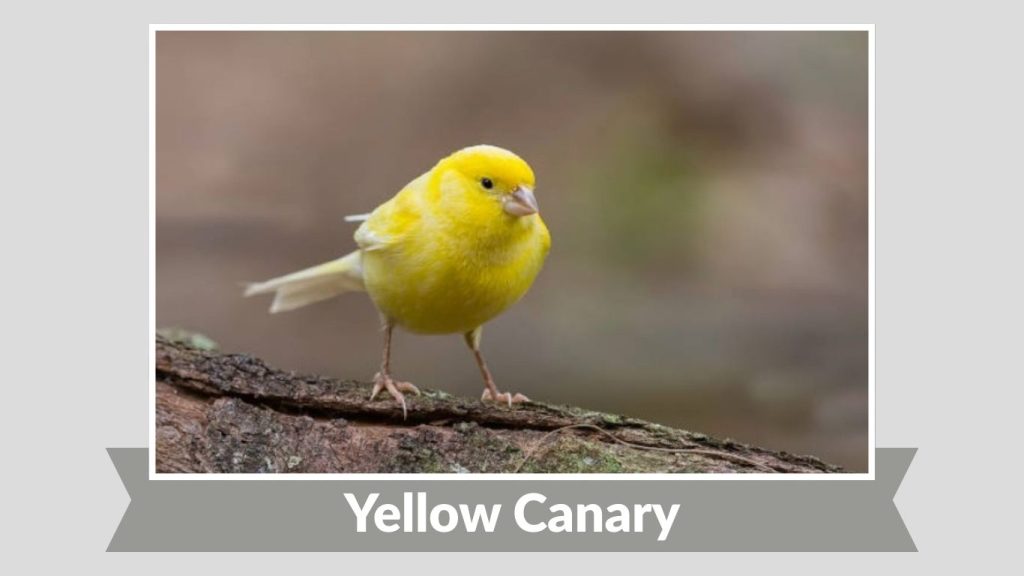
The Yellow Canary is one of the most popular and recognizable canary types in the world. It is a color-bred variety of the domestic canary, famous for its bright, cheerful yellow plumage and lively personality. Because of its beauty and pleasant song, it is commonly kept as a pet and exhibition bird.
Identification
- Small, slim-bodied bird, about 12–15 cm long
- Bright yellow plumage, ranging from pale lemon to deep gold
- Smooth, close-fitting feathers
- Short, pale, cone-shaped beak
- Dark, round eyes with a neat head shape
- Males are usually slightly brighter than females
Habitat
Yellow canaries are not found in the wild. They live in cages and aviaries in homes, bird rooms, and breeding centers. They prefer clean, well-lit environments with fresh air, moderate temperature, and space to hop and fly short distances.
Behavior
They are active, gentle, and alert birds. Males sing frequently, producing clear, pleasant melodies, especially during daylight hours. Yellow canaries enjoy perching, bathing, and observing their surroundings, and they usually do well when housed individually or in pairs.
Diet and Lifespan
Their diet includes high-quality canary seed mix, leafy greens, vegetables, soft foods, and calcium sources like cuttlebone. With good nutrition and care, Yellow Canaries typically live 8–12 years, and sometimes longer.
4. Red Factor Canary
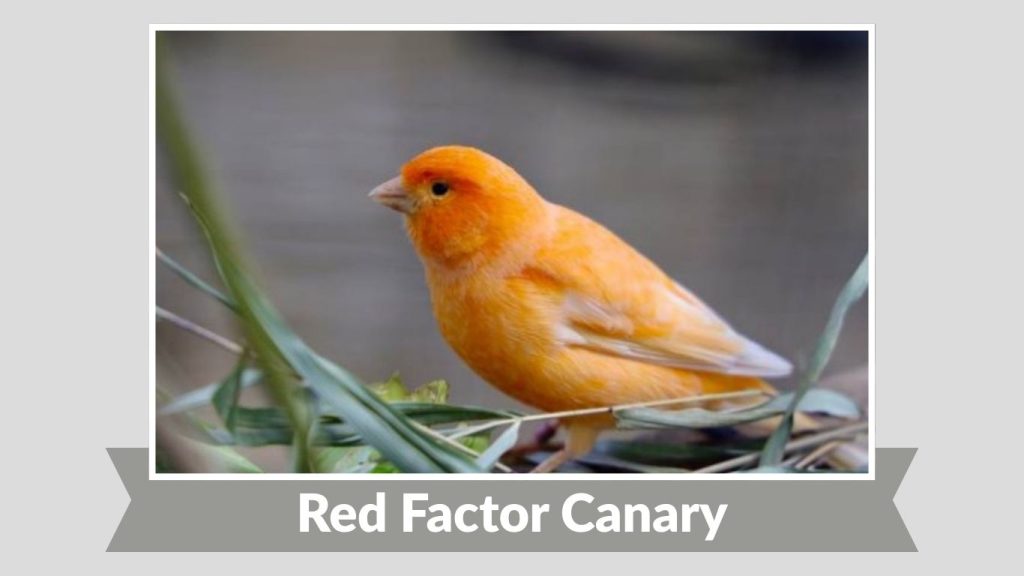
The Red Factor Canary is a striking color variety of the domestic canary, developed through selective breeding to produce red, orange, and deep copper tones. Its vibrant coloration makes it especially popular in bird shows and among aviculturists. The intensity of red often depends on genetics and diet.
Identification
- Small finch-sized bird, about 12–15 cm long
- Plumage ranges from orange-red to deep scarlet
- Color may appear on the whole body or in mosaic patterns
- Smooth, tight feathering with a sleek look
- Short, pale conical beak
- Males usually display stronger coloration
Habitat
Red Factor Canaries live only in captivity. They are kept in indoor cages, breeding rooms, and outdoor aviaries in suitable climates. They need clean housing, good airflow, natural or full-spectrum light, and protection from extreme temperatures.
Behavior
They are lively, alert, and generally calm birds. Males sing regularly, producing pleasant, rolling songs. Red Factor Canaries enjoy bathing, hopping between perches, and observing activity around them. They adapt well to solitary or paired living.
Diet and Lifespan
Their diet includes canary seed mix, greens, vegetables, and soft foods. To maintain red color, breeders often provide carotenoid-rich foods. With proper care, they commonly live 8–12 years.
5. White Canary
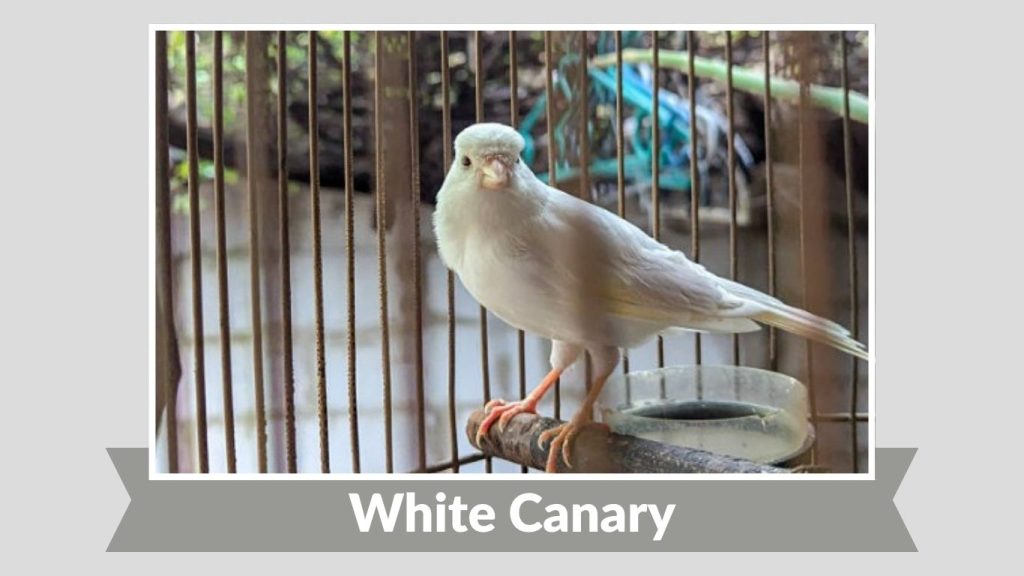
The White Canary is a beautiful color variety of the domestic canary, admired for its clean, pure white plumage and elegant appearance. It is commonly bred in two main forms—dominant white and recessive white—and is popular both as a pet and as a show bird.
Identification
- Small, slender bird, about 12–15 cm long
- Pure white plumage, sometimes with a slight ivory tone
- Smooth, soft feathers lying close to the body
- Short, pale cone-shaped beak
- Dark, round eyes that contrast with the white feathers
- Males may appear slightly larger and sing more often
Habitat
White canaries are strictly captive birds and live in cages and aviaries. They thrive in bright, clean environments with good ventilation, stable temperatures, and access to natural or full-spectrum light.
Behavior
They are active, gentle, and alert birds. Males are frequent singers, especially in the morning and during breeding season. White canaries enjoy flying short distances, perching, bathing, and watching their surroundings.
Diet and Lifespan
Their diet consists of canary seed mix, fresh greens, vegetables, and soft foods. Recessive white canaries especially benefit from vitamin-A-rich foods. With proper care, they usually live between 8 and 12 years.
6. Mosaic Canary
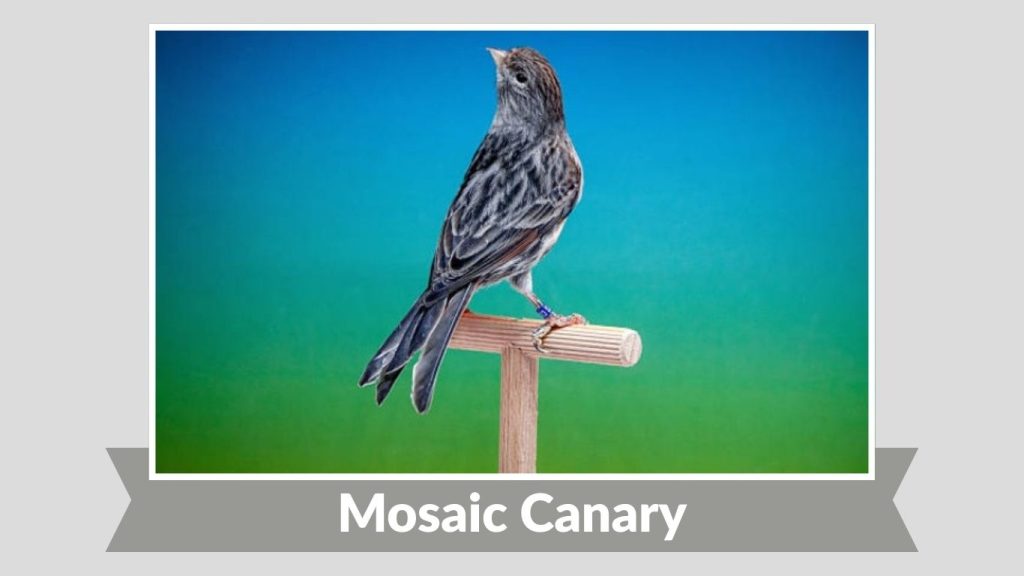
The Mosaic Canary is a distinctive color-bred variety of the domestic canary, known for its patterned coloration where bright pigment appears in specific areas of the body. Instead of being evenly colored, mosaic canaries display controlled patches of color, making them especially popular in exhibitions.
Identification
- Small, slim-bodied bird, about 12–15 cm long
- White or light base color with colored patches
- Color concentrated on mask, shoulders, chest, and rump
- Clear difference between male and female patterning
- Short, conical beak and dark, alert eyes
- Smooth, tight feather structure
Habitat
Mosaic canaries are captive birds and are kept in cages and aviaries. They do best in clean, calm spaces with good airflow, natural light, and protection from drafts and temperature extremes.
Behavior
They are lively, observant, and generally gentle. Males sing regularly, especially during daylight hours and breeding season. Mosaic canaries enjoy perching, bathing, short flights, and exploring their enclosure.
Diet and Lifespan
Their diet includes high-quality seed mix, vegetables, leafy greens, soft foods, and mineral supplements. With good care, mosaic canaries usually live around 8–12 years.
7. Gloster Canary
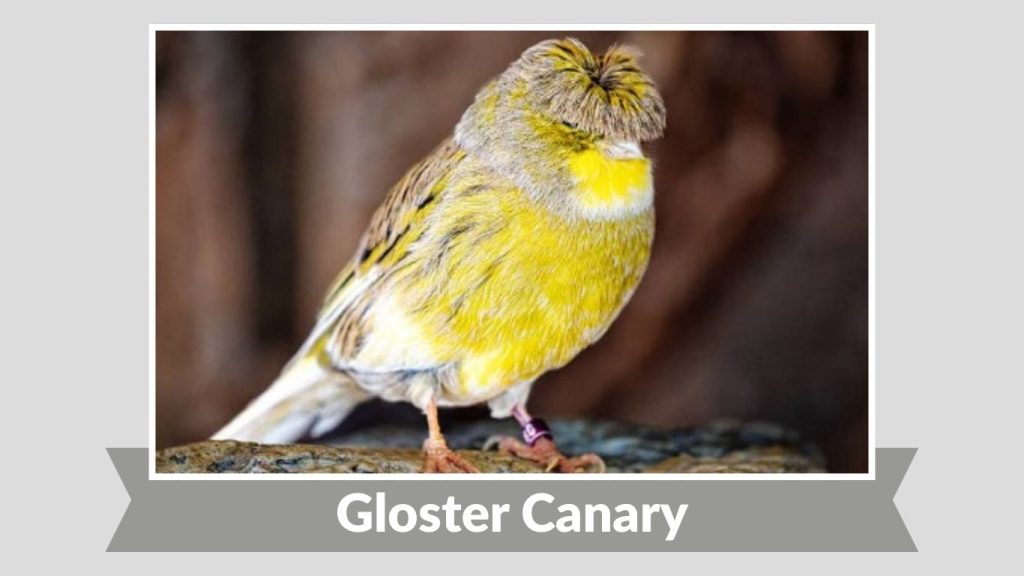
The Gloster Canary is a small, charming type canary developed in England and is famous for its compact body and, in some varieties, a distinctive round crest. It is widely kept as both a pet and an exhibition bird due to its cute appearance and active nature.
Identification
- Very small, compact canary, about 11 cm long
- Rounded body with a short neck
- Smooth, close-fitting feathers
- Some have a circular crest (Corona), others have smooth heads (Consort)
- Short, conical beak with dark, bright eyes
- Comes in many color varieties
Habitat
Gloster canaries live only in captivity and are housed in cages or aviaries. They prefer clean, quiet environments with good ventilation, moderate temperatures, and soft natural or artificial lighting.
Behavior
They are energetic, friendly, and curious birds. Males often sing softly and pleasantly. Glosters enjoy hopping between perches, exploring their space, and bathing. They adapt well to indoor living and are often kept singly or in pairs.
Diet and Lifespan
Their diet consists of canary seed mix, fresh greens, vegetables, soft foods, and calcium sources. With proper care, Gloster canaries usually live 8–12 years.
8. Yorkshire Canary
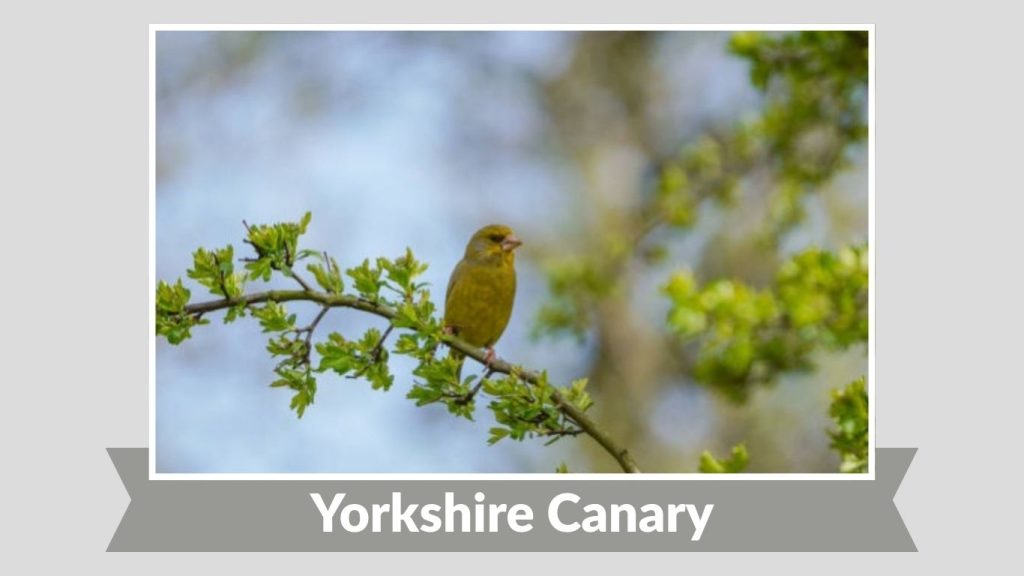
The Yorkshire Canary is one of the largest and most elegant type canaries, often called the “Gentleman of the Canary World.” It is specially bred for its tall, slender posture, smooth feathering, and graceful appearance, making it a classic exhibition bird.
Identification
- Large canary, usually 16–19 cm long
- Tall, upright, slim body with a straight stance
- Narrow shoulders and full, rounded chest
- Smooth, tight feathers lying close to the body
- Small, refined head with dark eyes and a neat beak
- Found in many color varieties
Habitat
Yorkshire canaries are kept only in captivity. They are usually housed in spacious cages or show aviaries that allow short flights and upright perching. Clean surroundings, good airflow, and stable temperatures are important for their health.
Behavior
They are calm, alert, and relatively gentle birds. Males sing softly and pleasantly. Yorkshire canaries enjoy perching high, light flying, and observing their surroundings, and they generally adapt well to quiet indoor environments.
Diet and Lifespan
Their diet includes quality canary seed mix, leafy greens, vegetables, soft foods, and mineral supplements. With good care and proper nutrition, Yorkshire canaries commonly live 8–12 years.
9. Border Fancy Canary
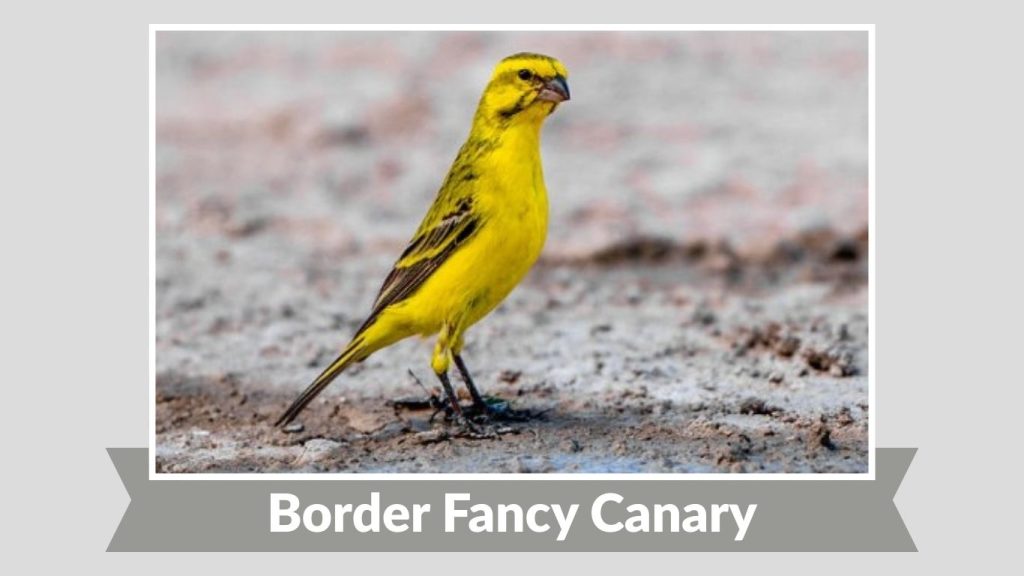
The Border Fancy Canary is a classic exhibition canary known for its balanced shape, smooth feathering, and neat appearance. Originating from the border region between England and Scotland, it is often called the “Model Canary” because of its ideal proportions.
Identification
- Small to medium-sized canary, about 13–14 cm long
- Rounded, well-balanced body shape
- Smooth, tight feathers giving a polished look
- Small, neat head with bright dark eyes
- Short, conical beak
- Bred in many different color varieties
Habitat
Border Fancy canaries are captive birds kept in indoor cages and aviaries. They thrive in clean, well-lit environments with good ventilation and protection from drafts, heat, and cold.
Behavior
They are active, gentle, and alert birds. Males sing regularly with soft, pleasant songs. Border Fancies enjoy perching, short flights, and bathing, and they adapt well to both individual and pair housing.
Diet and Lifespan
Their diet consists of canary seed mix, fresh greens, vegetables, soft foods, and calcium supplements. With proper care, Border Fancy canaries usually live around 8–12 years.
10. Fife Fancy Canary
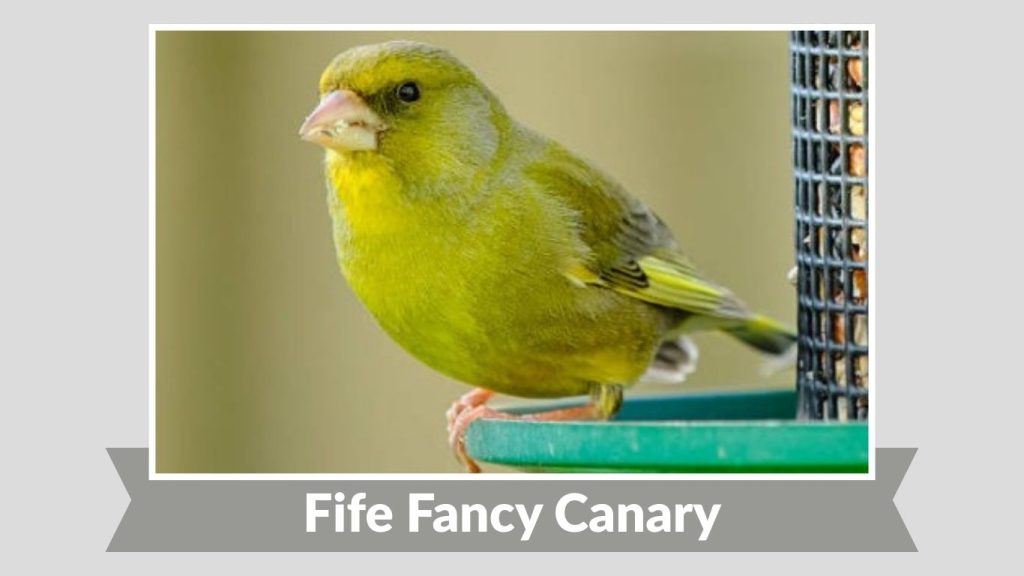
The Fife Fancy Canary is a smaller relative of the Border Fancy Canary and is prized for its rounded shape, lively nature, and attractive appearance. It originated in Scotland and is commonly bred as a show bird as well as a companion canary.
Identification
- Small canary, usually 11–12 cm long
- Rounded, compact body with full chest
- Smooth, close-fitting feathers
- Small, neat head with bright, dark eyes
- Short, pale, conical beak
- Available in many color varieties
Habitat
Fife Fancy canaries live only in captivity. They are kept in cages or aviaries and prefer clean, well-ventilated environments with natural or full-spectrum light and stable temperatures.
Behavior
They are energetic, friendly, and alert birds. Males sing frequently with light, pleasant tones. Fife Fancy canaries enjoy hopping between perches, short flights, and bathing, and they usually adapt well to indoor living.
Diet and Lifespan
Their diet includes high-quality seed mix, greens, vegetables, soft foods, and mineral sources. With proper care, they typically live between 8 and 12 years.
11. Norwich Canary
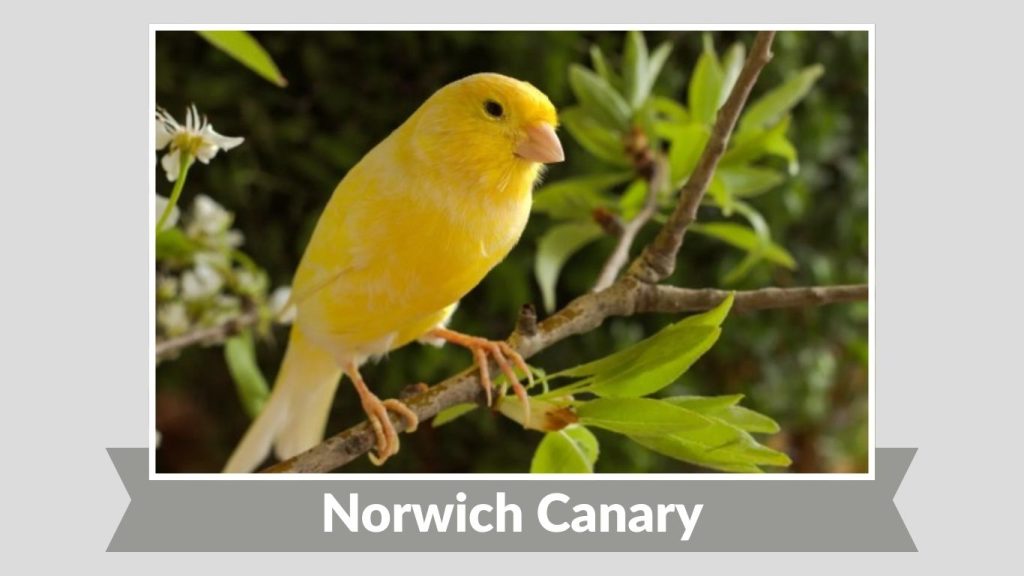
The Norwich Canary is a well-known type canary admired for its thick, fluffy plumage and strong, rounded body. It is one of the oldest exhibition canary breeds and is valued for its bold appearance and calm temperament.
Identification
- Medium to large canary with a broad, rounded body
- Thick, soft, and slightly loose feathering
- Full chest and wide shoulders
- Short, thick neck with a rounded head
- Short, strong, conical beak
- Comes in both crested and non-crested forms
Habitat
Norwich canaries are kept only in captivity and are usually housed in spacious cages or indoor aviaries. They need clean, dry housing with good ventilation, moderate light, and protection from drafts and sudden temperature changes.
Behavior
They are calm, steady, and gentle birds. Males sing softly and steadily rather than loudly. Norwich canaries enjoy perching, light flying, and bathing, and they generally adapt well to quiet home environments.
Diet and Lifespan
Their diet includes canary seed mix, leafy greens, vegetables, soft foods, and mineral supplements. With good care, Norwich canaries typically live about 8–12 years.
12. Lancashire Canary
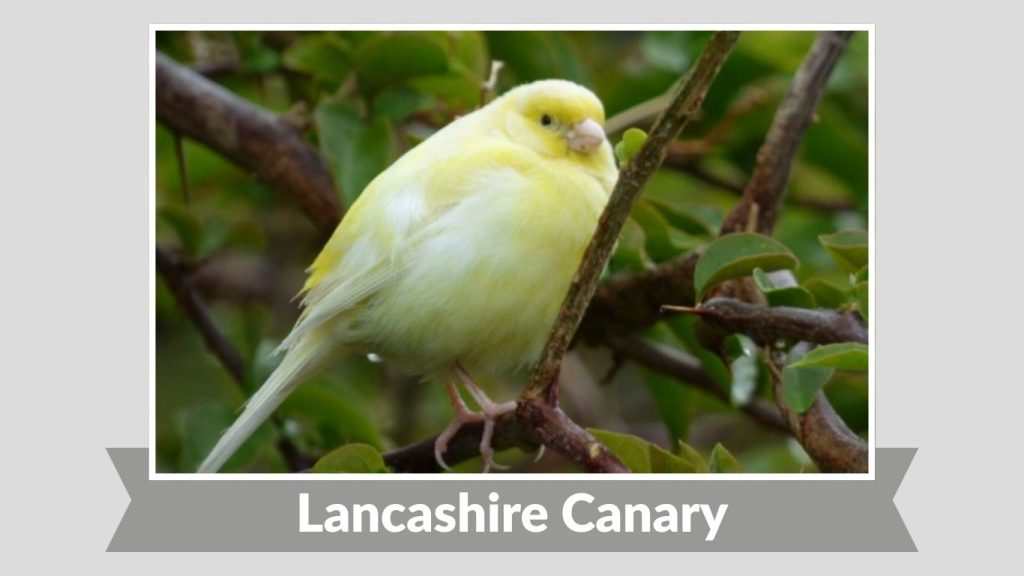
The Lancashire Canary is one of the largest canary breeds in the world and is famous for its tall, powerful stance and impressive size. It was developed in England and is mainly kept as a show bird because of its striking appearance.
Identification
- Very large canary, often 20–23 cm long
- Tall, upright body with strong legs
- Broad shoulders and full, deep chest
- Smooth or lightly crested head varieties
- Tight, close-fitting feathers
- Long tail giving an elegant outline
Habitat
Lancashire canaries are fully domesticated and live only in captivity. They require large cages or aviaries to accommodate their size and movement. A clean environment, good airflow, and stable temperatures are essential.
Behavior
They are calm, confident, and alert birds. Males sing softly but are not mainly bred for song. Lancashire canaries enjoy perching high, light flying, and observing their surroundings, and they usually tolerate quiet handling environments well.
Diet and Lifespan
Their diet consists of canary seed mix, greens, vegetables, soft foods, and mineral supplements. With good care and enough space, Lancashire canaries commonly live 8–12 years.
13. Stafford Canary
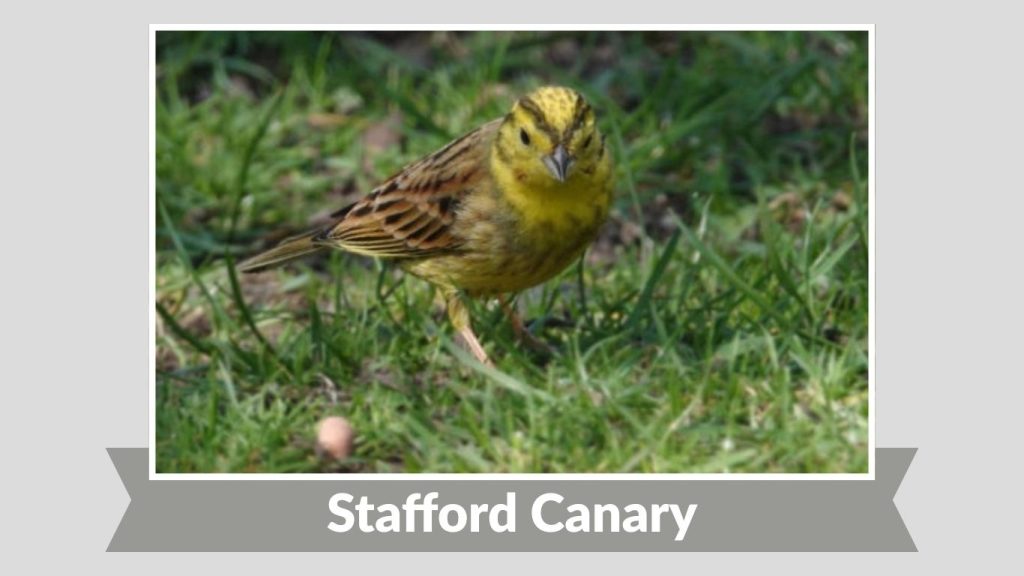
The Stafford Canary is a rare and striking type canary developed in England, best known for its deep red or pink eye coloration combined with rich body color. It was bred mainly as an exhibition bird and is prized for its unique genetic traits and elegant appearance.
Identification
- Medium-sized canary with a slim, balanced body
- Distinctive red or pink eyes
- Plumage often red, bronze, yellow, or variegated
- Smooth, close-fitting feathers
- Neat, rounded head with a short conical beak
- Upright, alert stance
Habitat
Stafford canaries are fully domesticated and live only in captivity. They are kept in clean indoor cages or aviaries with good airflow, moderate temperatures, and adequate lighting. Calm, draft-free environments are important for their comfort.
Behavior
They are active, alert, and generally gentle birds. Males sing regularly, producing soft, pleasant songs. Stafford canaries enjoy perching, short flights, bathing, and quietly observing their surroundings.
Diet and Lifespan
Their diet includes quality canary seed mix, leafy greens, vegetables, soft foods, and mineral sources. With proper care and nutrition, Stafford canaries usually live between 8 and 12 years.
14. Lizard Canary
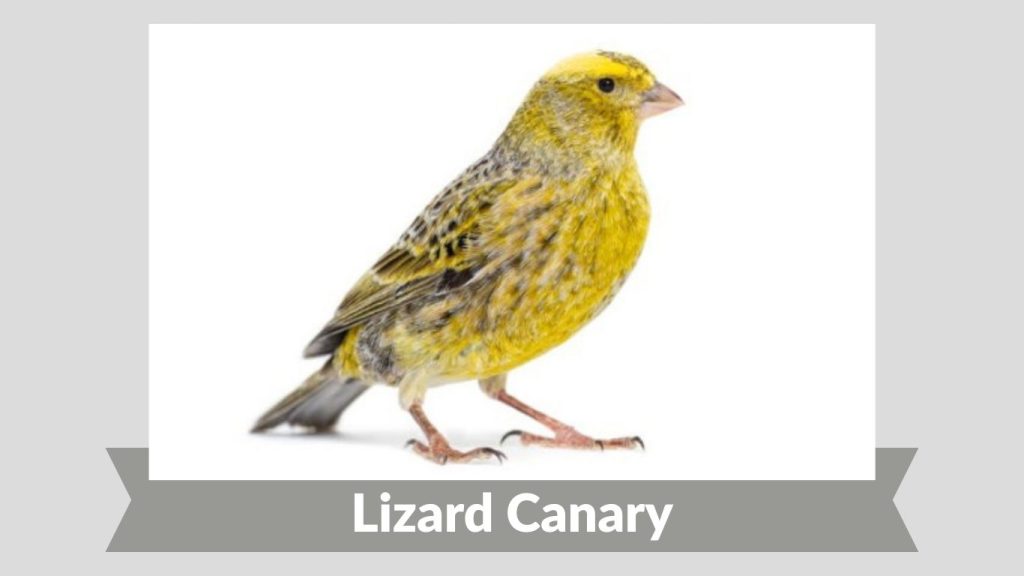
The Lizard Canary is one of the oldest and most distinctive canary varieties, famous for its unique “spangled” feather pattern and contrasting cap on the head. Its unusual markings make it highly valued among breeders and exhibition enthusiasts.
Identification
- Medium-sized canary with a slim, neat body
- Distinctive spangled or scale-like feather pattern
- Clear “cap” of solid color on the head
- Metallic sheen to the plumage
- Short, conical beak with dark, alert eyes
- Comes mainly in gold and silver varieties
Habitat
Lizard canaries are captive birds and are kept in cages or aviaries. They prefer clean, well-lit spaces with good ventilation and protection from temperature extremes and drafts.
Behavior
They are active, curious, and generally calm birds. Males sing pleasantly, though they are mainly bred for appearance. Lizard canaries enjoy hopping between perches, light flying, and bathing.
Diet and Lifespan
Their diet includes canary seed mix, fresh greens, vegetables, soft foods, and mineral supplements. With good care, Lizard canaries commonly live around 8–12 years.
15. Crested Canary
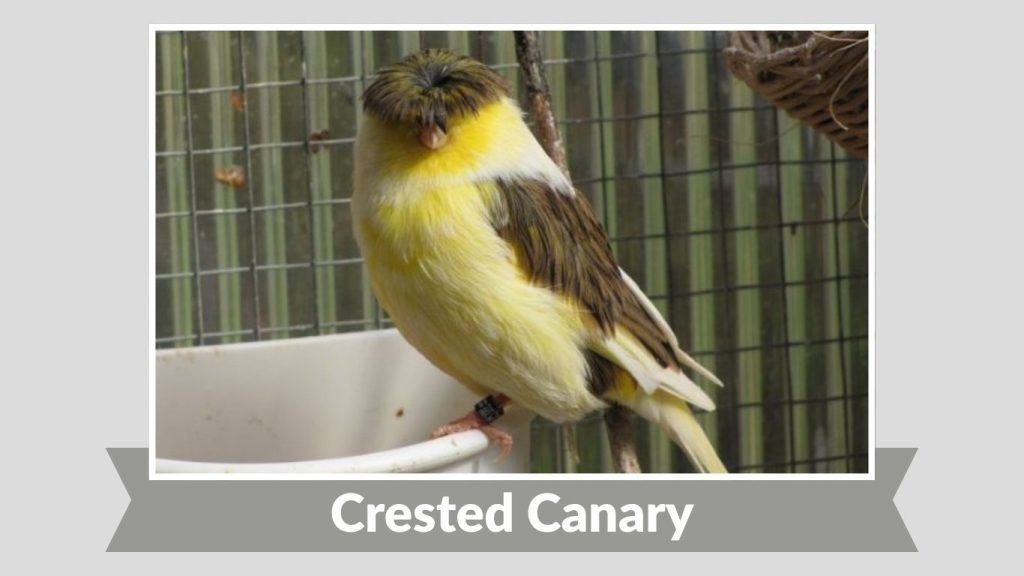
The Crested Canary is a classic type canary recognized by the circular crest of feathers on top of its head, which forms a neat “cap.” It is one of the oldest established canary breeds and is highly valued in exhibitions for its symmetrical crest and balanced body shape.
Identification
- Medium-sized canary with a rounded, well-balanced body
- Distinctive circular crest covering the crown
- Crest feathers radiate evenly from a central point
- Smooth, close-fitting body feathers
- Short, conical beak with bright, dark eyes
- Bred in many different color varieties
Habitat
Crested canaries live only in captivity and are kept in cages or aviaries. They do best in clean, draft-free environments with good airflow, moderate temperatures, and adequate lighting to maintain feather quality.
Behavior
They are calm, alert, and gentle birds. Males sing regularly with soft, pleasant tones. Crested canaries enjoy perching, short flights, and bathing, and they usually adapt well to quiet home or aviary conditions.
Diet and Lifespan
Their diet consists of quality canary seed mix, leafy greens, vegetables, soft foods, and mineral sources. With proper care, Crested canaries typically live between 8 and 12 years.
16. Scotch Fancy Canary
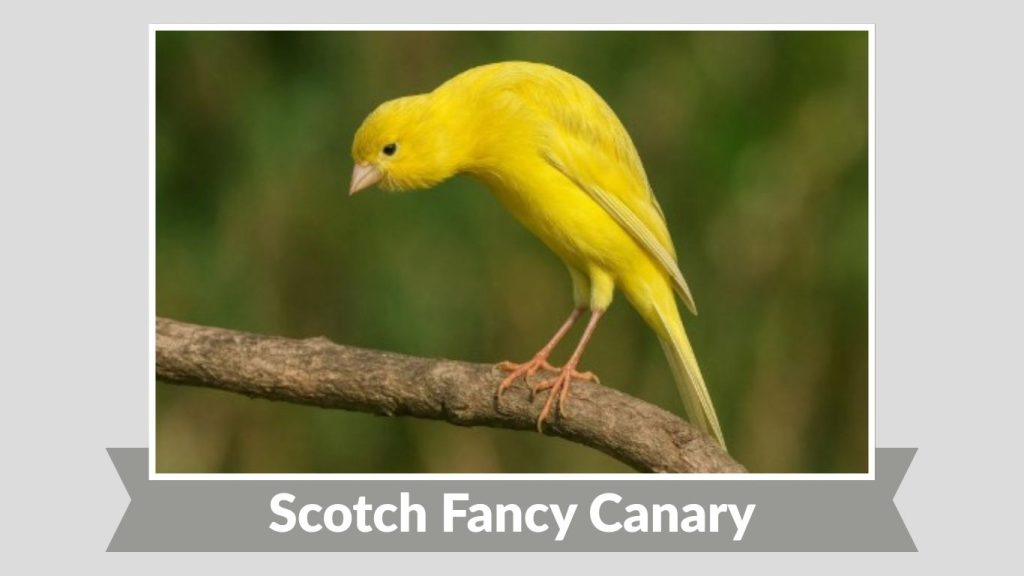
The Scotch Fancy Canary is a distinctive posture canary known for its dramatic curved stance, where the body forms a deep crescent shape. It is bred mainly for exhibition and is admired for its unusual form rather than color or song.
Identification
- Medium-sized canary with a slim build
- Strongly curved, crescent-shaped posture
- Long, narrow body with a dropped tail
- Tight, smooth feathering
- Small head held low and forward
- Short, fine, conical beak
Habitat
Scotch Fancy canaries are fully domesticated and kept in cages or aviaries. They require clean, calm environments with good ventilation, steady temperatures, and enough space to perch and move comfortably.
Behavior
They are active, alert, and slightly more sensitive than some other canary types. Males sing softly but are mainly valued for form. Scotch Fancy canaries enjoy perching, short flights, and observing their surroundings.
Diet and Lifespan
Their diet includes canary seed mix, fresh greens, vegetables, soft foods, and mineral supplements. With good care, Scotch Fancy canaries usually live about 8–12 years.
17. Belgian Fancy Canary
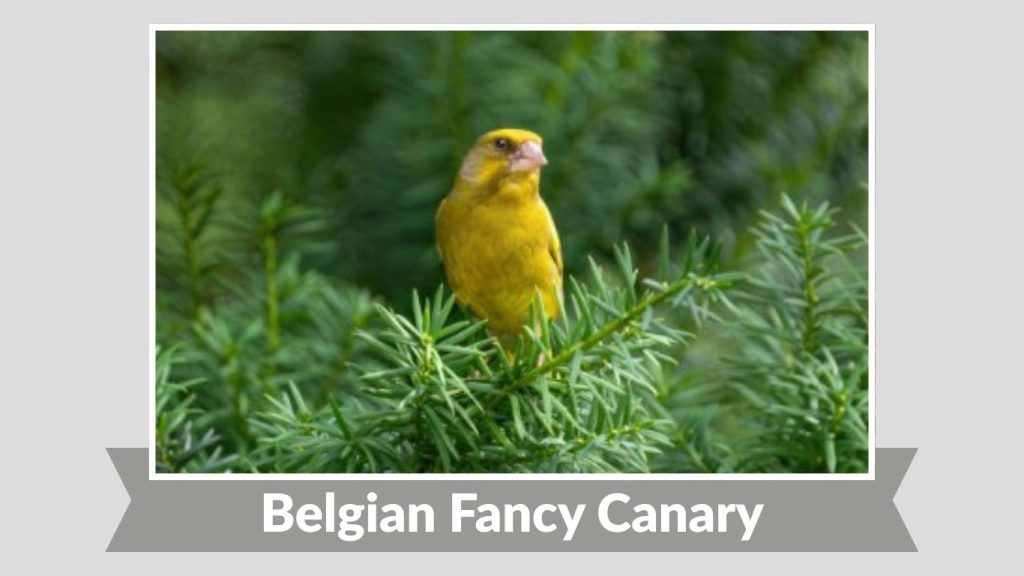
The Belgian Fancy Canary is an elegant posture canary known for its tall, slender body and graceful, curved stance. It is one of the oldest posture breeds and is mainly kept for exhibition due to its refined outline and distinctive appearance.
Identification
- Medium to large canary with a tall, slim body
- Graceful, slightly curved posture
- Long legs giving a stilted appearance
- Narrow shoulders and slim chest
- Smooth, tight feathering
- Small head with a short, neat beak
Habitat
Belgian Fancy canaries live only in captivity and are kept in cages or aviaries. They do best in spacious, clean enclosures with good airflow, stable temperatures, and perches set to allow upright posture.
Behavior
They are alert, active, and somewhat delicate birds. Males sing lightly, but they are mainly bred for posture. Belgian Fancy canaries enjoy perching high, light flying, and observing their surroundings.
Diet and Lifespan
Their diet consists of canary seed mix, leafy greens, vegetables, soft foods, and mineral sources. With good care, Belgian Fancy canaries commonly live 8–12 years.
18. Spanish Timbrado Canary
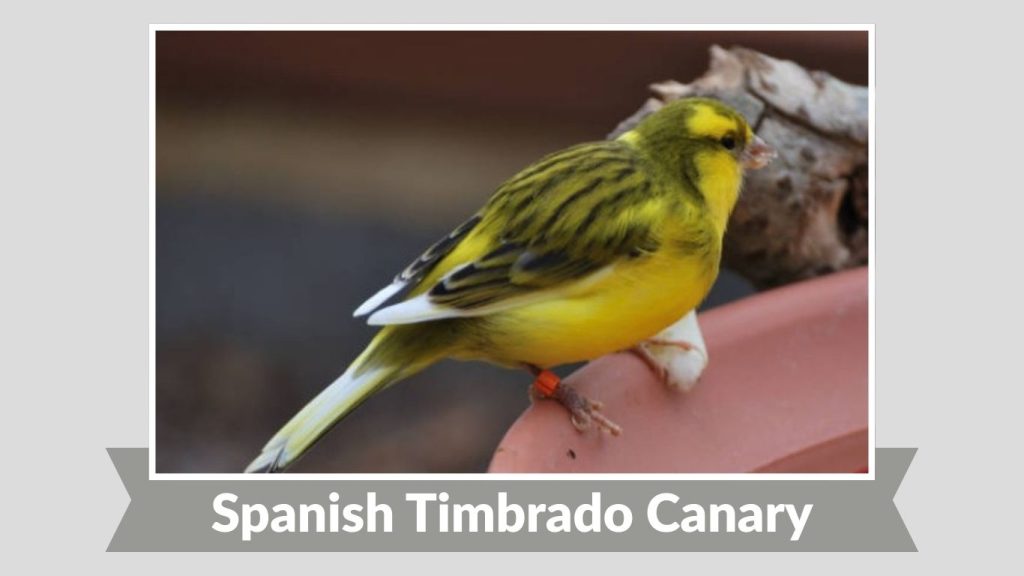
The Spanish Timbrado Canary is a famous song canary developed in Spain and prized for its loud, metallic, bell-like song. Unlike many other canaries, it is bred mainly for vocal performance rather than body shape or color.
Identification
- Medium-sized canary with a slim, athletic build
- Smooth, close-fitting feathers
- Plumage often green, yellow, or variegated
- Small, rounded head with dark eyes
- Short, conical beak
- Upright, alert posture
Habitat
Spanish Timbrado canaries are kept only in captivity. They are housed in indoor cages or aviaries with good ventilation, natural or full-spectrum light, and protection from noise stress, drafts, and extreme temperatures.
Behavior
They are lively, alert, and energetic birds. Males are powerful, frequent singers and perform complex songs, especially during breeding season. They enjoy active movement, hopping between perches, and responding to surrounding sounds.
Diet and Lifespan
Their diet includes high-quality canary seed mix, leafy greens, vegetables, soft foods, and mineral supplements. With good care, Spanish Timbrado canaries typically live between 8 and 12 years.
19. German Roller Canary
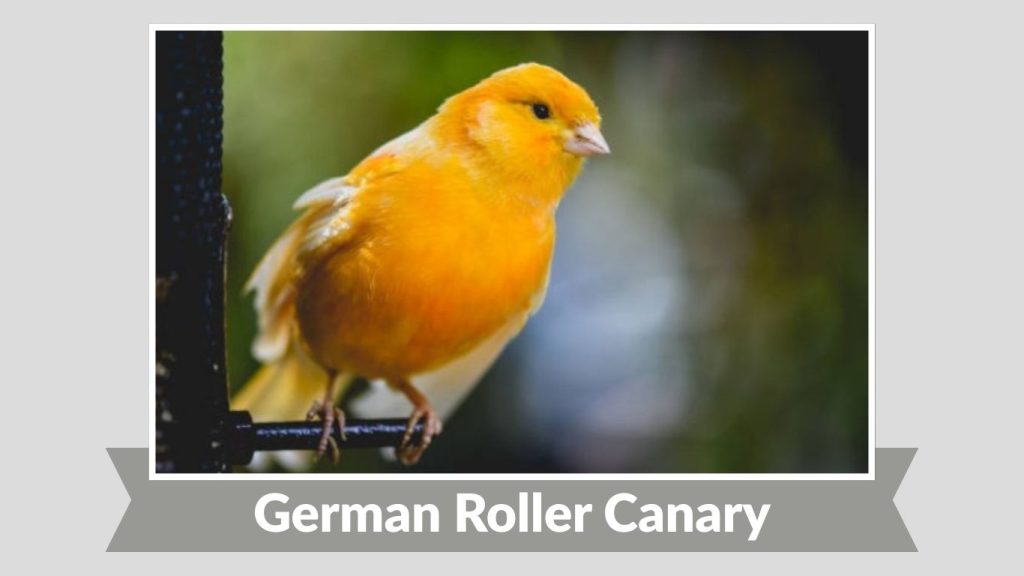
The German Roller Canary, also known as the Harz Roller, is one of the most famous song canaries in the world. It is specially bred for its soft, rolling, melodious song, which is usually sung with a closed beak, giving it a unique, flute-like quality.
Identification
- Medium-sized canary with a compact, well-balanced body
- Smooth, tight feathering
- Plumage commonly yellow, green, or variegated
- Rounded head with dark, expressive eyes
- Short, conical beak
- Calm, upright stance
Habitat
German Roller canaries are captive birds and are usually kept in individual singing cages or aviaries. They prefer quiet, clean environments with good airflow, moderate lighting, and protection from sudden temperature changes.
Behavior
They are calm, gentle, and focused singers. Males are known for long, continuous song sessions, especially when kept in peaceful surroundings. German Rollers enjoy perching, light hopping, and listening to other birds.
Diet and Lifespan
Their diet consists of canary seed mix, fresh greens, vegetables, soft foods, and mineral supplements. With good care, German Roller canaries commonly live 8–12 years.
20. Waterslager Canary
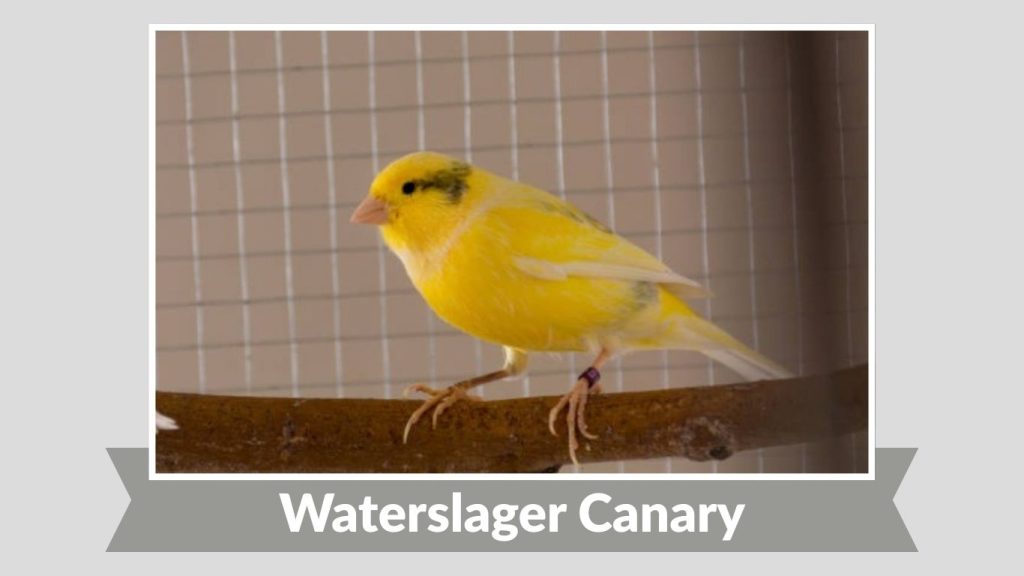
The Waterslager Canary is a traditional song canary originally developed in Belgium and the Netherlands. It is famous for its deep, bubbling, water-like notes that resemble the sound of running streams, making it one of the most unique singing canary varieties.
Identification
- Medium-sized canary with a sturdy, rounded body
- Smooth, close-fitting feathers
- Plumage usually yellow or yellow-green
- Rounded head with dark eyes
- Short, pale conical beak
- Strong chest and balanced posture
Habitat
Waterslager canaries live only in captivity. They are kept in quiet indoor cages or aviaries where sound quality can be appreciated. Clean housing, good ventilation, and stable, moderate temperatures are essential.
Behavior
They are calm, gentle, and focused singers. Males are well known for long, rich songs featuring gurgling and rolling notes. Waterslager canaries enjoy perching, light movement, and peaceful surroundings.
Diet and Lifespan
Their diet includes canary seed mix, leafy greens, vegetables, soft foods, and mineral supplements. With good care, Waterslager canaries usually live between 8 and 12 years.
21. American Singer Canary
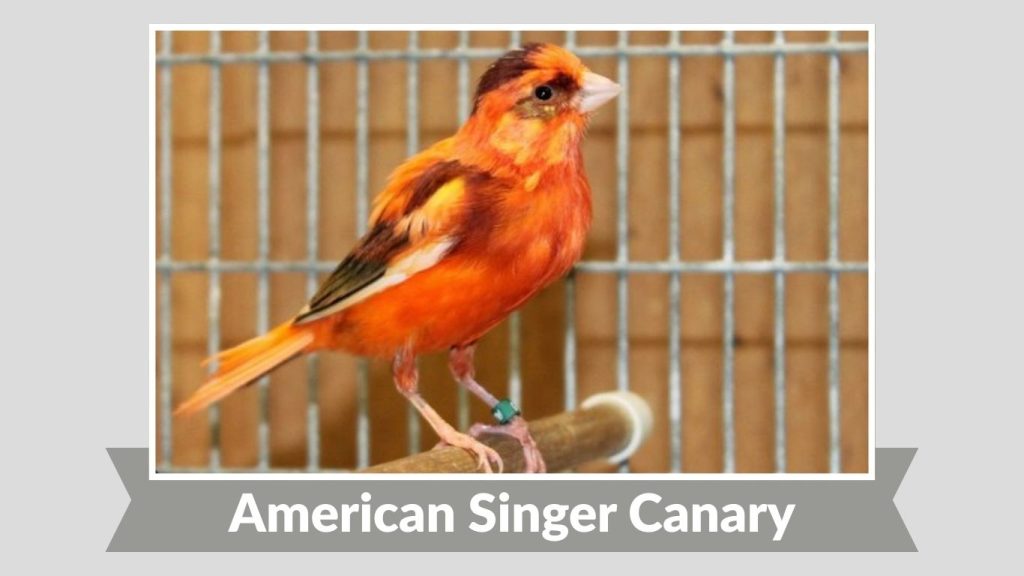
The American Singer Canary is a popular song canary developed in the United States by crossing German Roller canaries with Border Fancy canaries. It is bred to combine a beautiful, melodic song with an attractive, well-balanced body shape.
Identification
- Medium-sized canary with a well-proportioned, rounded body
- Smooth, tight feathering
- Plumage found in yellow, green, white, and variegated forms
- Neat, rounded head with dark eyes
- Short, conical beak
- Upright, alert posture
Habitat
American Singer canaries live only in captivity. They are kept in cages or aviaries in homes and breeding rooms. They prefer clean, quiet environments with good airflow, natural or full-spectrum light, and stable temperatures.
Behavior
They are active, friendly, and excellent singers. Males are known for long, pleasant, and varied songs. American Singers enjoy hopping between perches, short flights, bathing, and responding to sounds around them.
Diet and Lifespan
Their diet includes quality canary seed mix, fresh greens, vegetables, soft foods, and mineral sources. With proper care, American Singer canaries typically live 8–12 years.
22. Harz Roller Canary
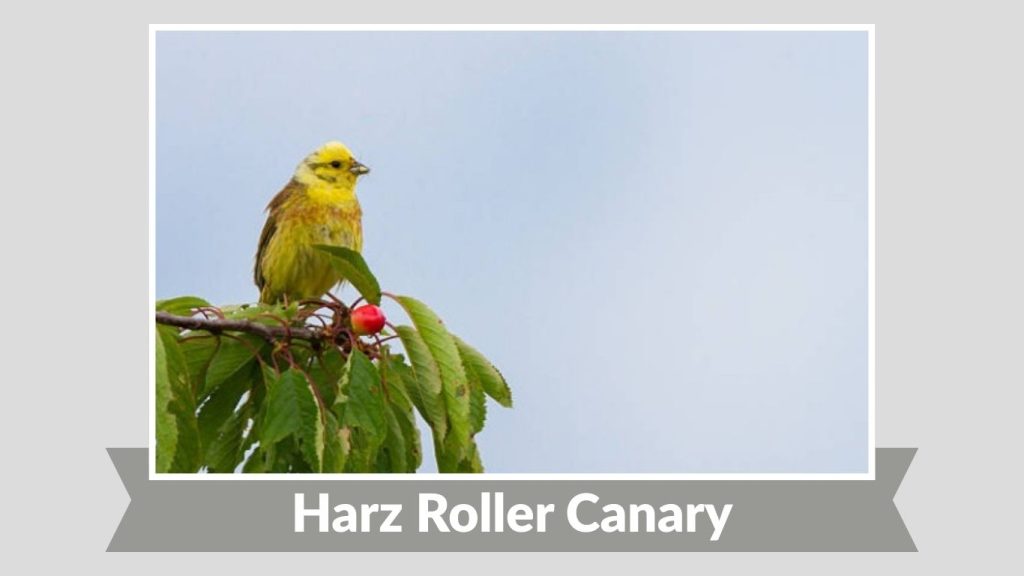
The Harz Roller Canary is a famous traditional song canary from the Harz Mountains of Germany. It is closely related to the German Roller and is celebrated for its deep, smooth, rolling song delivered softly and often with a closed beak.
Identification
- Medium-sized canary with a compact, rounded body
- Smooth, close-fitting feathers
- Plumage often yellow, green, or variegated
- Rounded head with dark eyes
- Short, conical beak
- Calm, balanced posture
Habitat
Harz Roller canaries are fully domesticated and live only in captivity. They are usually kept in individual singing cages or quiet aviaries where their song quality can be appreciated. Clean housing and good ventilation are essential.
Behavior
They are calm, gentle, and focused singers. Males sing long, continuous, soft songs, especially in peaceful surroundings. Harz Rollers enjoy perching, light hopping, and calm environments.
Diet and Lifespan
Their diet consists of canary seed mix, greens, vegetables, soft foods, and mineral supplements. With proper care, Harz Roller canaries usually live between 8 and 12 years.
23. Parisian Frill Canary
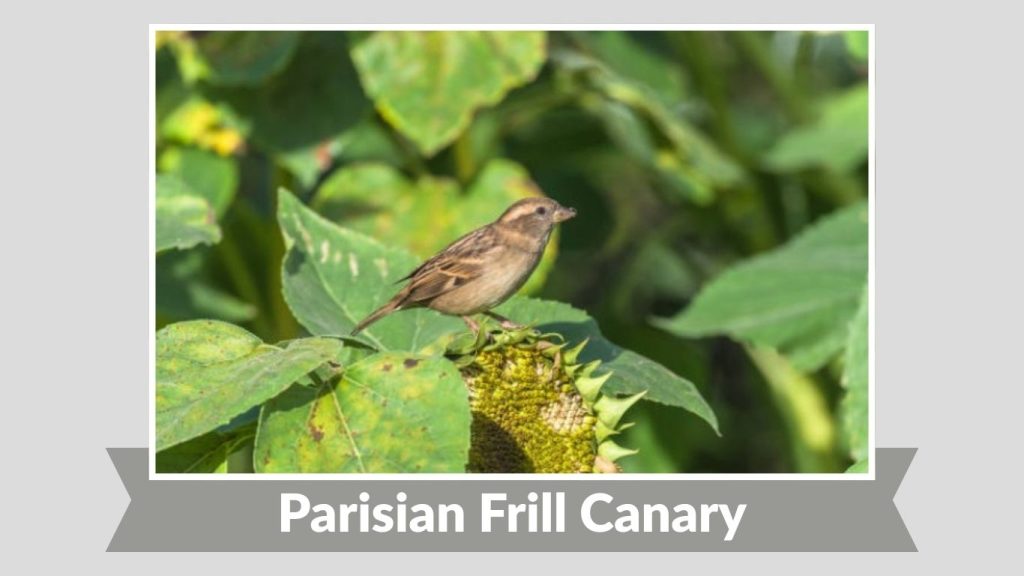
The Parisian Frill Canary is one of the largest and most spectacular frilled canary breeds, famous for its long, curled feathers that form decorative patterns over the body. Developed in France, it is mainly bred for exhibition due to its dramatic and elegant appearance.
Identification
- Large canary with a tall, powerful body
- Long, curled feathers forming frills on chest, back, and flanks
- Distinct feather patterns such as jabot and mantles
- Long legs and upright stance
- Small head with a neat beak
- Plumage found in many colors
Habitat
Parisian Frill canaries are fully domesticated and kept in spacious cages or aviaries. They require clean housing, good airflow, moderate temperatures, and enough space to protect their long, delicate feathers.
Behavior
They are calm, alert, and somewhat less active than smaller canaries. Males sing softly but are mainly valued for appearance. Parisian Frills enjoy perching, light movement, and quiet environments.
Diet and Lifespan
Their diet includes canary seed mix, leafy greens, vegetables, soft foods, and mineral supplements. With proper care, Parisian Frill canaries typically live 8–12 years.
24. Italian Gibber Italicus Canary
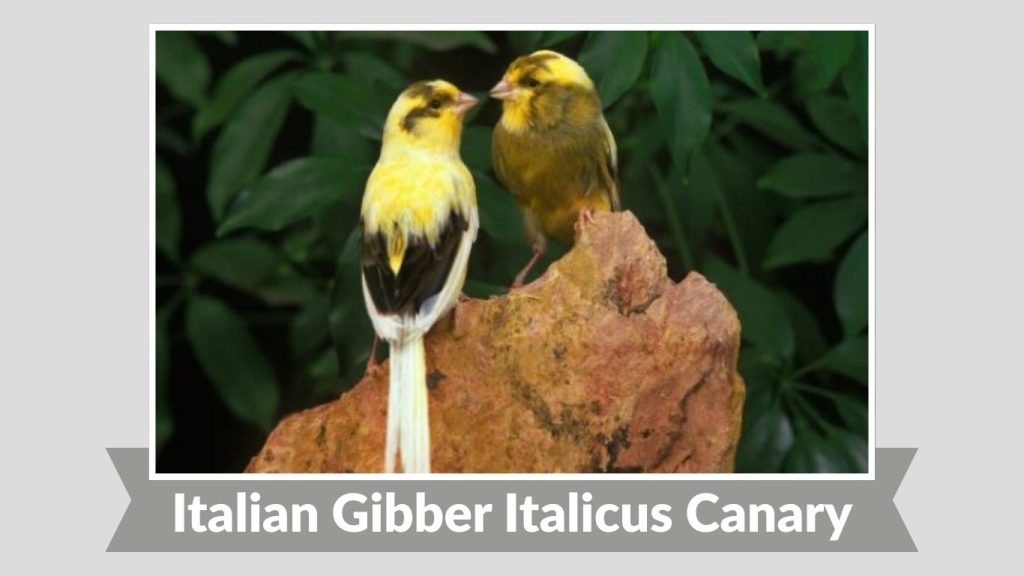
The Italian Gibber Italicus Canary is a rare posture canary developed in Italy and is known for its extremely upright stance and slender, elongated body. It is bred mainly for exhibition and admired for its elegant, almost vertical posture.
Identification
- Small to medium-sized canary with a very slim body
- Extremely upright, vertical stance
- Long legs and narrow shoulders
- Tight, smooth feathering
- Small head carried high
- Short, fine, conical beak
Habitat
Italian Gibber Italicus canaries live only in captivity. They are kept in clean, well-ventilated cages or aviaries with enough vertical space to support their posture. Calm surroundings and stable temperatures are important.
Behavior
They are alert, active, and somewhat delicate birds. Males sing lightly, but they are mainly bred for posture rather than song. They enjoy perching, light flying, and observing their surroundings.
Diet and Lifespan
Their diet consists of quality canary seed mix, fresh greens, vegetables, soft foods, and mineral supplements. With good care, Italian Gibber Italicus canaries usually live between 8 and 12 years.
25. Japanese Hoso Canary
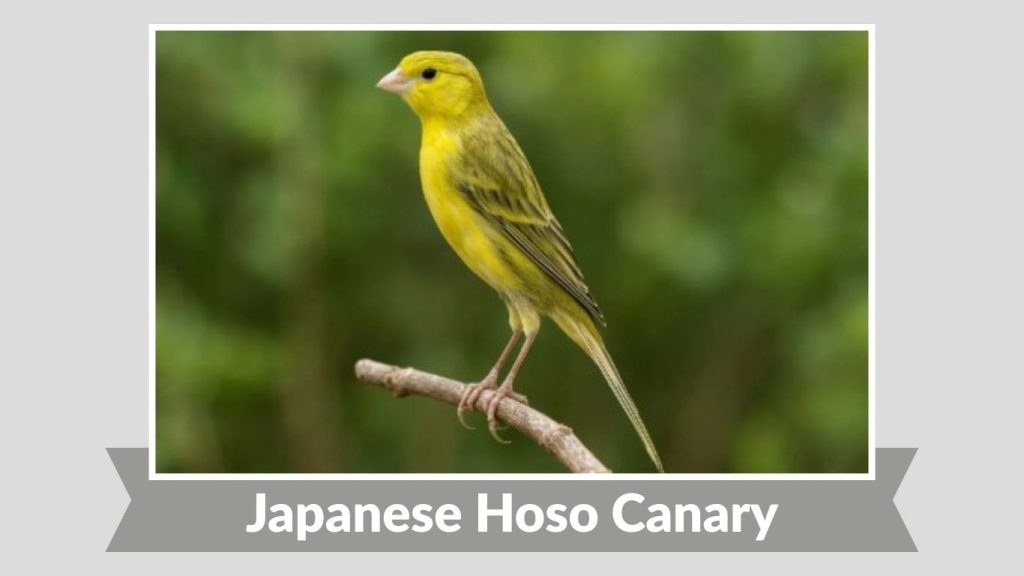
The Japanese Hoso Canary is a slender posture canary developed in Japan and influenced by European posture breeds. It is known for its very thin body, long neck, and elegant, upright stance, making it a distinctive exhibition bird.
Identification
- Small canary with an extremely slim, elongated body
- Long, narrow neck and legs
- Very tight, smooth feathering
- Upright, elegant posture
- Small head with dark eyes
- Short, fine, conical beak
Habitat
Japanese Hoso canaries are fully domesticated and kept only in captivity. They are housed in clean cages or aviaries with good ventilation, moderate temperatures, and perches arranged to support upright stance.
Behavior
They are active, alert, and somewhat sensitive birds. Males sing softly but are mainly valued for posture. Japanese Hoso canaries enjoy perching, light flying, and calm surroundings.
Diet and Lifespan
Their diet includes canary seed mix, leafy greens, vegetables, soft foods, and mineral supplements. With proper care, Japanese Hoso canaries usually live about 8–12 years.
26. Swiss Frill Canary
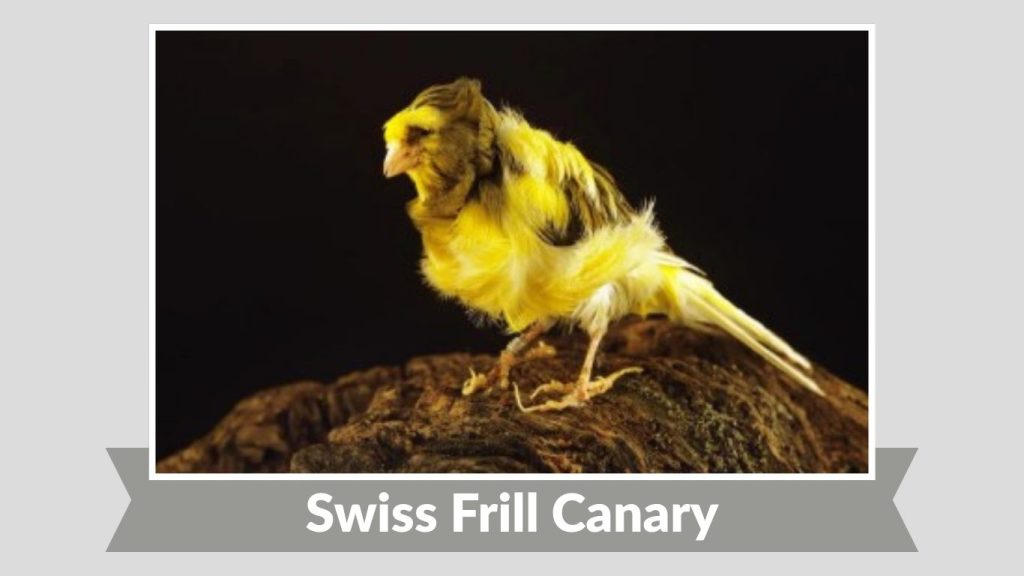
The Swiss Frill Canary is a decorative canary breed known for its elegant curled feathers and balanced body shape. Developed in Switzerland, it is prized in exhibitions for its neat frills and refined overall appearance.
Identification
- Medium-sized canary with a well-balanced body
- Curled or frilled feathers on chest and sides
- Smooth head and back with decorative feathering
- Upright, graceful stance
- Small head with dark eyes
- Short, conical beak
Habitat
Swiss Frill canaries live only in captivity and are kept in cages or aviaries. They need clean housing, good airflow, moderate temperatures, and enough space to prevent damage to their frilled feathers.
Behavior
They are calm, alert, and gentle birds. Males sing softly but are mainly kept for appearance. Swiss Frill canaries enjoy perching, light flying, and quiet environments.
Diet and Lifespan
Their diet consists of canary seed mix, fresh greens, vegetables, soft foods, and mineral supplements. With proper care, Swiss Frill canaries typically live between 8 and 12 years.
27. Fiorino Canary
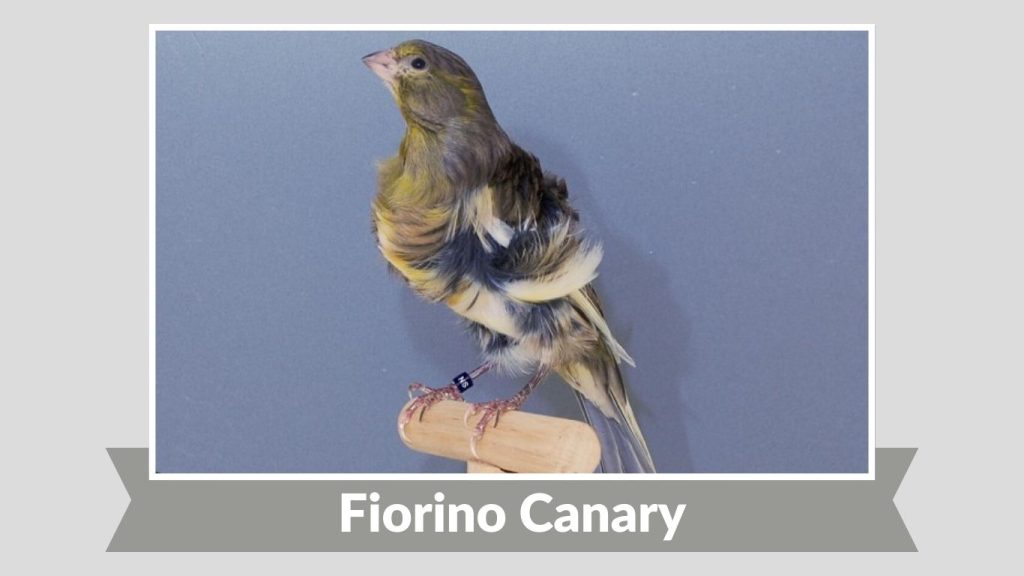
The Fiorino Canary is a small frilled canary breed developed in Italy. It is admired for its delicate curled feathers combined with a compact body, making it a refined and popular exhibition bird among frill-canary enthusiasts.
Identification
- Small canary with a compact, well-balanced body
- Fine, curled feathers forming light frills
- Decorative feathering on chest and flanks
- Smooth head and back
- Upright, neat stance
- Short, conical beak with dark eyes
Habitat
Fiorino canaries are fully domesticated and live only in captivity. They are kept in clean cages or aviaries with good ventilation, moderate temperatures, and enough space to protect their delicate feathering.
Behavior
They are active, alert, and gentle birds. Males sing softly, but Fiorinos are mainly valued for appearance. They enjoy perching, short flights, and calm surroundings.
Diet and Lifespan
Their diet includes canary seed mix, leafy greens, vegetables, soft foods, and mineral supplements. With proper care, Fiorino canaries usually live about 8–12 years.
28. Giboso Español Canary
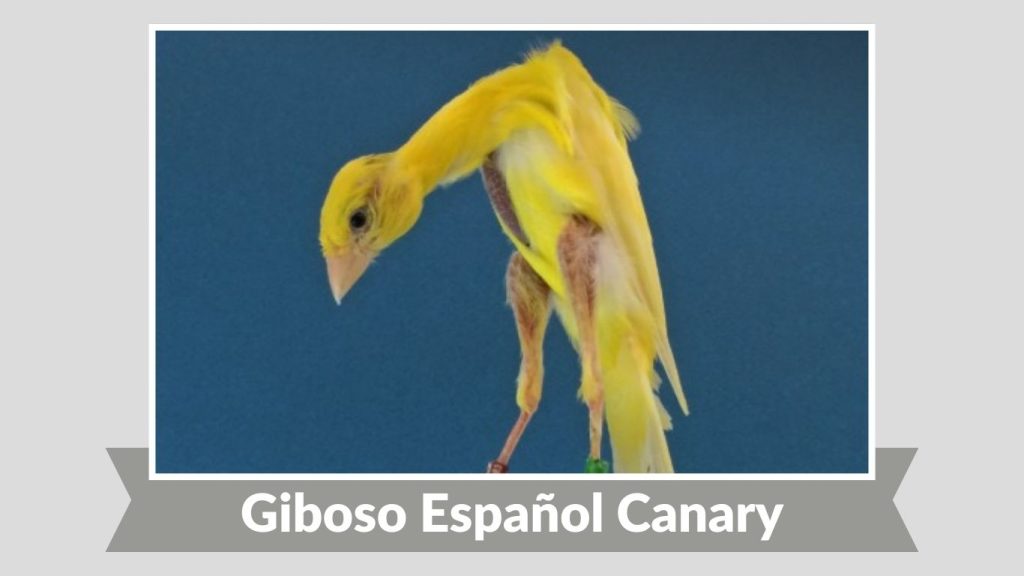
The Giboso Español Canary is a rare posture canary from Spain, bred for its extremely thin body, long legs, and sharply bent, upright stance. It is mainly an exhibition bird and is admired for its unusual, angular silhouette.
Identification
- Very slim, elongated body
- Strongly bent, angular posture
- Long, thin legs giving a stilted look
- Tight, smooth feathering
- Small head held forward
- Short, fine, conical beak
Habitat
Giboso Español canaries live only in captivity. They are kept in clean cages or aviaries with good airflow, moderate temperatures, and enough space to move without injury. Calm environments are important for this delicate breed.
Behavior
They are active, alert, and somewhat sensitive birds. Males sing lightly but are mainly valued for posture. Giboso Español canaries enjoy perching, light flying, and quiet surroundings.
Diet and Lifespan
Their diet consists of canary seed mix, greens, vegetables, soft foods, and mineral supplements. With good care, Giboso Español canaries typically live between 8 and 12 years.
29. Northern Dutch Frill Canary
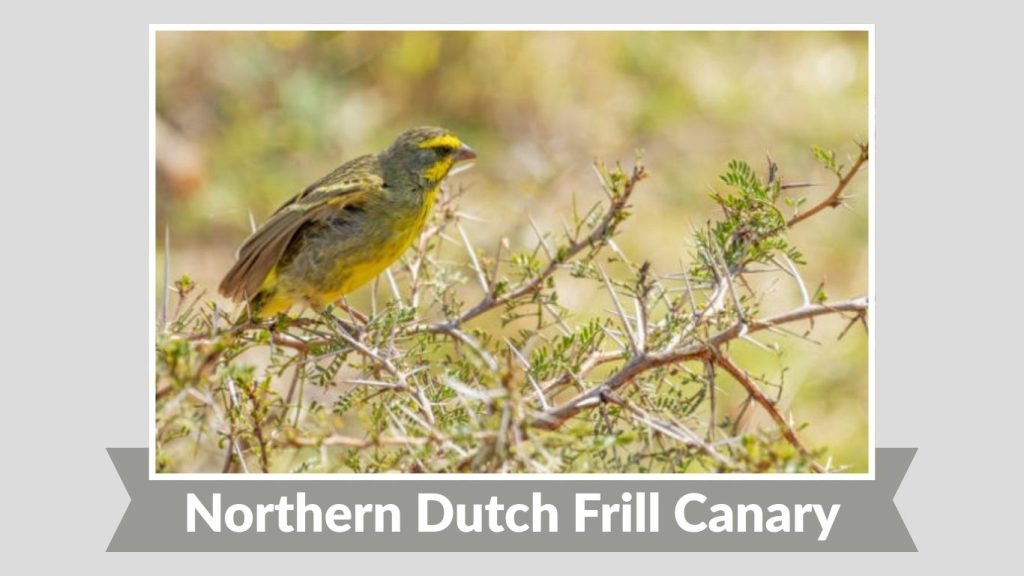
The Northern Dutch Frill Canary is a decorative frilled canary breed developed in the Netherlands. It is known for its symmetrical curled feathers and balanced body shape, making it a popular exhibition bird among frill-canary enthusiasts.
Identification
- Medium-sized canary with a strong, well-balanced body
- Curled and frilled feathers on chest, flanks, and back
- Distinct feather patterns forming neat frills
- Upright, steady stance
- Small head with dark eyes
- Short, conical beak
Habitat
Northern Dutch Frill canaries are fully domesticated and kept only in captivity. They are housed in clean cages or aviaries with good ventilation, stable temperatures, and enough space to protect their decorative feathers.
Behavior
They are calm, alert, and gentle birds. Males sing softly but are mainly kept for appearance. Northern Dutch Frills enjoy perching, light flying, and quiet, stress-free environments.
Diet and Lifespan
Their diet includes quality canary seed mix, fresh greens, vegetables, soft foods, and mineral supplements. With proper care, Northern Dutch Frill canaries usually live around 8–12 years.
30. Southern Dutch Frill Canary
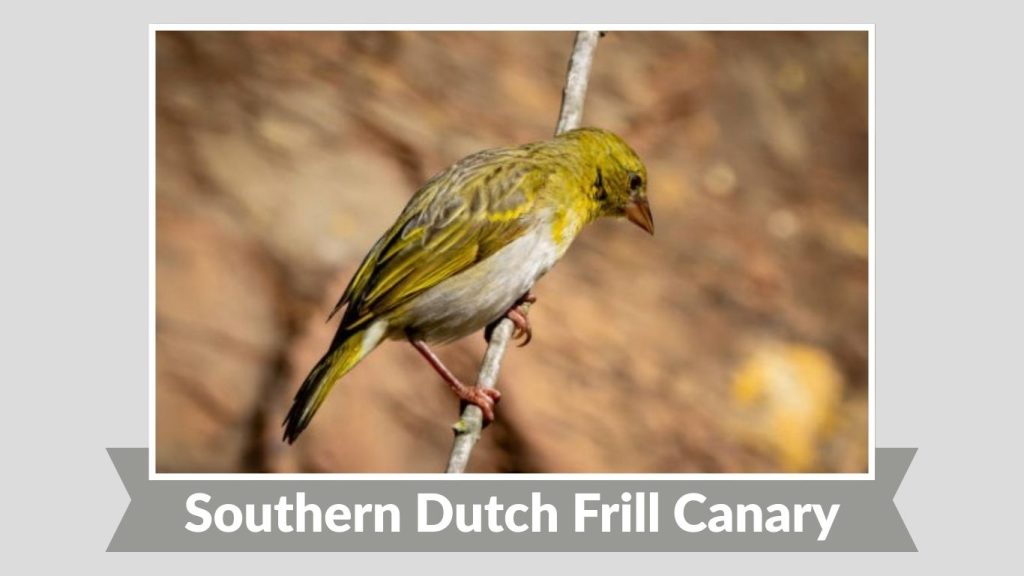
The Southern Dutch Frill Canary is a decorative frilled canary breed from the Netherlands, valued for its long, flowing curled feathers and elegant overall form. It is mainly bred for exhibition and is admired for its dramatic feather structure.
Identification
- Medium-sized canary with a slightly taller build
- Long, curled, flowing frilled feathers
- Decorative frills on chest, back, and flanks
- Upright, elegant stance
- Small head with dark eyes
- Short, neat conical beak
Habitat
Southern Dutch Frill canaries live only in captivity. They are kept in spacious, clean cages or aviaries with good ventilation, moderate temperatures, and perches that help protect their feathers.
Behavior
They are calm, observant, and gentle birds. Males sing lightly, but they are mainly valued for appearance. Southern Dutch Frill canaries enjoy perching, light flying, and peaceful environments.
Diet and Lifespan
Their diet consists of canary seed mix, leafy greens, vegetables, soft foods, and mineral supplements. With good care, Southern Dutch Frill canaries typically live between 8 and 12 years.
31. Spanish Giboso Canary
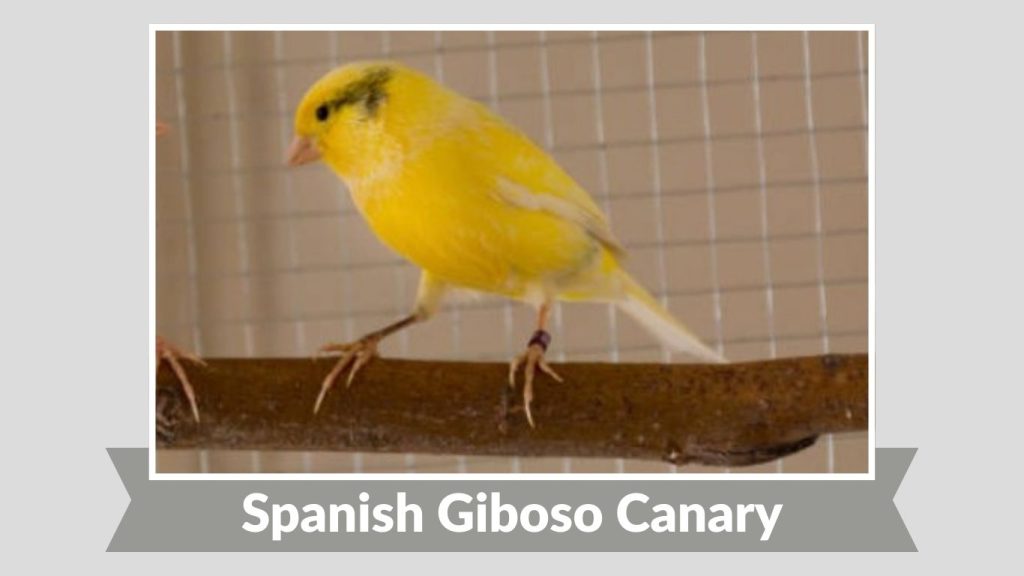
The Spanish Giboso Canary is an extreme posture canary developed in Spain and is known for its very thin body, long legs, and sharply curved stance. It is bred mainly for exhibition and admired for its dramatic, angular appearance.
Identification
- Extremely slim, elongated body
- Strongly bent, upright posture
- Very long, thin legs
- Tight, smooth feathering
- Small head held forward
- Short, fine conical beak
Habitat
Spanish Giboso canaries live only in captivity. They are kept in clean cages or aviaries with good ventilation, stable temperatures, and enough space to move without injury. Quiet, stress-free surroundings are important.
Behavior
They are active, alert, and sensitive birds. Males sing softly but are mainly valued for posture. Spanish Giboso canaries enjoy perching, light flying, and calm environments.
Diet and Lifespan
Their diet includes canary seed mix, fresh greens, vegetables, soft foods, and mineral supplements. With proper care, Spanish Giboso canaries usually live about 8–12 years.
32. Munich Fancy Canary
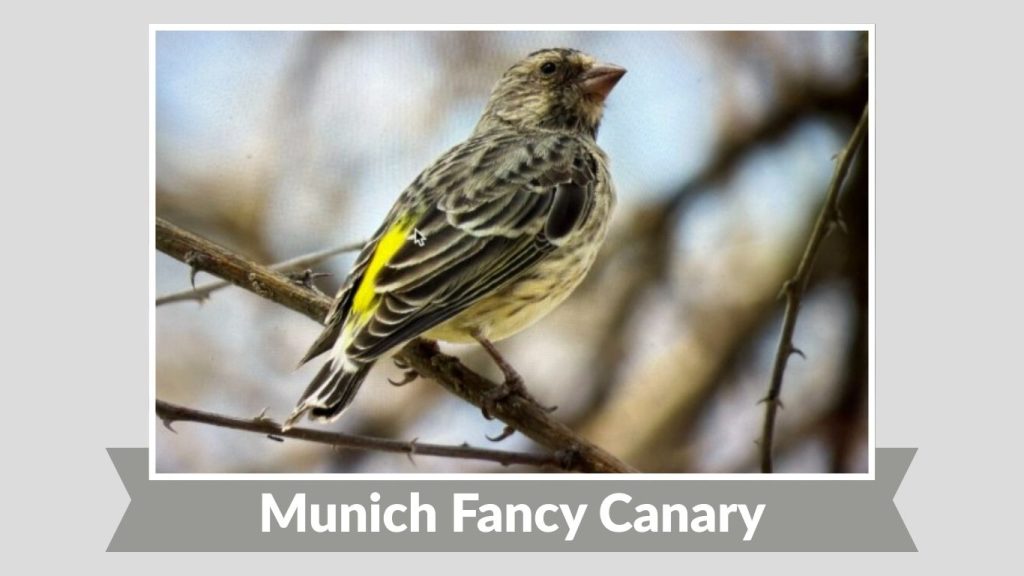
The Munich Fancy Canary is a type of canary developed in Germany and is known for its refined body shape, smooth feathering, and elegant overall appearance. It is mainly kept as an exhibition bird and is appreciated for its balanced form and attractive posture.
Identification
- Medium-sized canary with a slim, well-balanced body
- Smooth, close-fitting feathers
- Rounded chest with narrow shoulders
- Neat head with dark, bright eyes
- Short, conical beak
- Upright, elegant stance
Habitat
Munich Fancy canaries live only in captivity. They are kept in clean cages or aviaries with good ventilation, natural or full-spectrum light, and stable temperatures. Spacious housing helps maintain their posture and feather quality.
Behavior
They are active, alert, and gentle birds. Males sing softly, but they are mainly valued for appearance. Munich Fancy canaries enjoy perching, light flying, bathing, and observing their surroundings.
Diet and Lifespan
Their diet includes quality canary seed mix, leafy greens, vegetables, soft foods, and mineral supplements. With proper care, Munich Fancy canaries typically live between 8 and 12 years.
FAQs
What is the difference between wild canaries and domestic canaries?
Wild canaries, such as the Atlantic Canary, live naturally in the Canary Islands region and have greenish, streaked plumage. Domestic canaries are bred from them and now exist in many colors, shapes, and song types. Domestic forms are fully dependent on human care and do not survive in the wild.
How long do canary birds usually live?
Most healthy canaries live between 8 and 12 years when kept in clean conditions with a balanced diet and low stress. Some well-cared-for individuals may live even longer. Lifespan depends on genetics, nutrition, housing quality, and protection from disease and extreme temperatures.
Are all canaries good singers?
Not all canaries are bred mainly for singing. Song canaries like the German Roller, Harz Roller, and Spanish Timbrado are famous for their voices. Other types, such as frill and posture canaries, are bred mostly for appearance, although males of most varieties still sing.
Can different types of canaries live together?
Many canary types can live peacefully in pairs or small groups, especially in spacious aviaries. However, males may become territorial during breeding season. It is important to provide enough space, multiple perches, and separate feeding areas to reduce stress and prevent fighting.
What is the best basic diet for canary birds?
A good canary diet includes high-quality canary seed mix, fresh leafy greens, vegetables, and soft foods. Cuttlebone or mineral blocks help supply calcium. Clean water should always be available. A varied diet supports strong feathers, good color, healthy singing, and long life.