




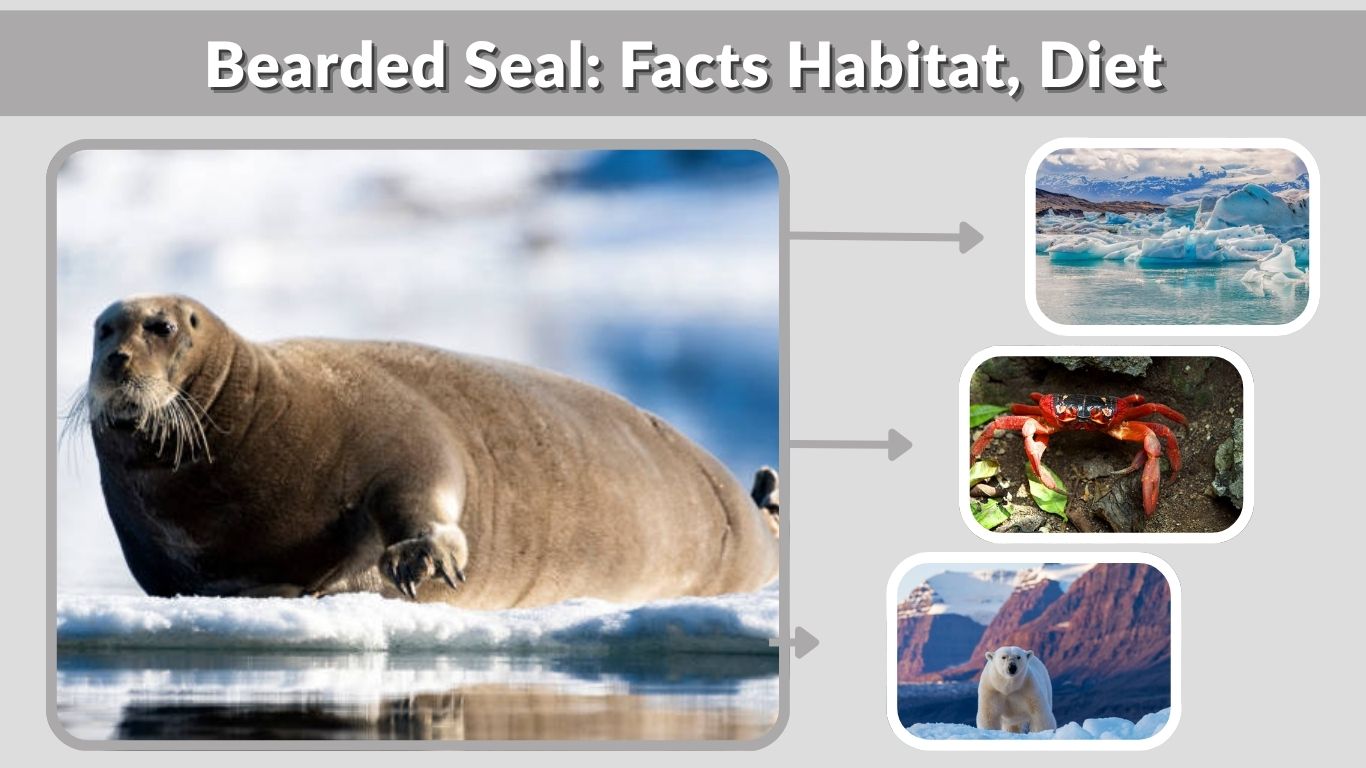
The bearded seal is a large and distinctive marine mammal found in the icy waters of the Arctic and sub-Arctic regions. Known for its long, thick whiskers that resemble a “beard,” this seal is well adapted to life on sea ice and shallow coastal waters. Bearded seals play an important role in the Arctic ecosystem, linking bottom-dwelling prey with larger predators. Their calm nature and unique feeding habits make them one of the most fascinating Arctic seal species.
What is a Bearded Seal?
The bearded seal (Erignathus barbatus) is a large species of earless seal belonging to the family Phocidae. It is the only species in its genus and is easily recognized by its size and prominent whiskers. Bearded seals are commonly found in Arctic regions and are often associated with drifting pack ice and shallow coastal waters.
Unlike some other seals, bearded seals prefer areas where the ocean floor is accessible, as they primarily feed on bottom-dwelling organisms. Their slow, graceful movements and relatively gentle behavior distinguish them from more aggressive marine mammals.
Bearded Seal Physical Characteristics
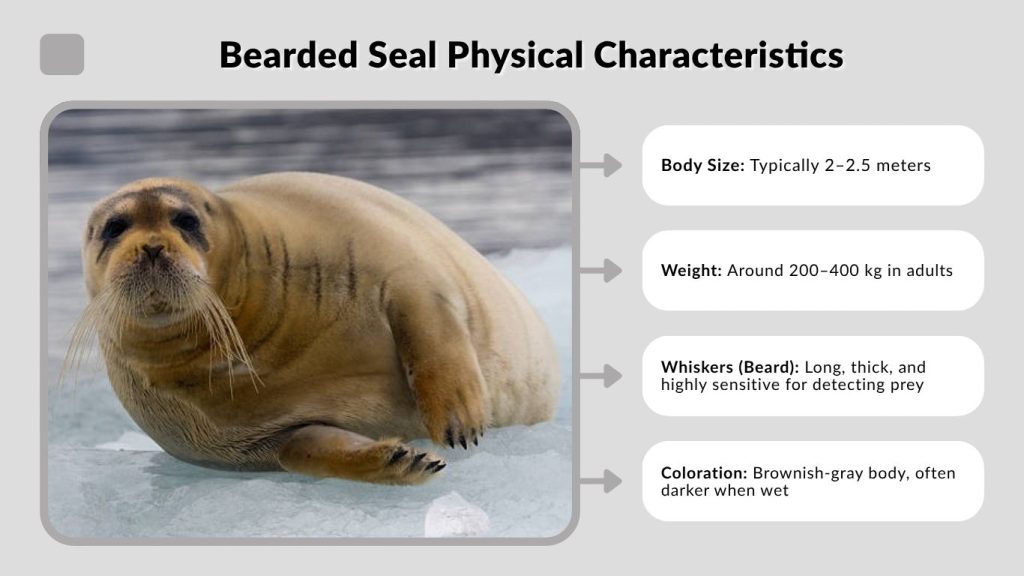
Bearded seals are large, sturdy marine mammals specially adapted to life in cold Arctic waters. Their bodies are built for both swimming and resting on sea ice, with thick insulation and strong limbs. One of their most noticeable features is their long, prominent whiskers, which give them their name and play a key role in finding food on the ocean floor.
Key Physical Features:
- Body Size: Typically 2–2.5 meters (6.5–8 feet) long
- Weight: Around 200–400 kg in adults
- Whiskers (Beard): Long, thick, and highly sensitive for detecting prey
- Coloration: Brownish-gray body, often darker when wet
- Blubber Layer: Thick fat layer for warmth and energy storage
- Flippers: Strong front flippers for movement on ice and in water
- Body Shape: Large, elongated, and well-suited for shallow-water diving
- Skin Texture: Loose skin around the neck and shoulders gives a wrinkled appearance
Bearded Seal Habitat
Geographic Distribution
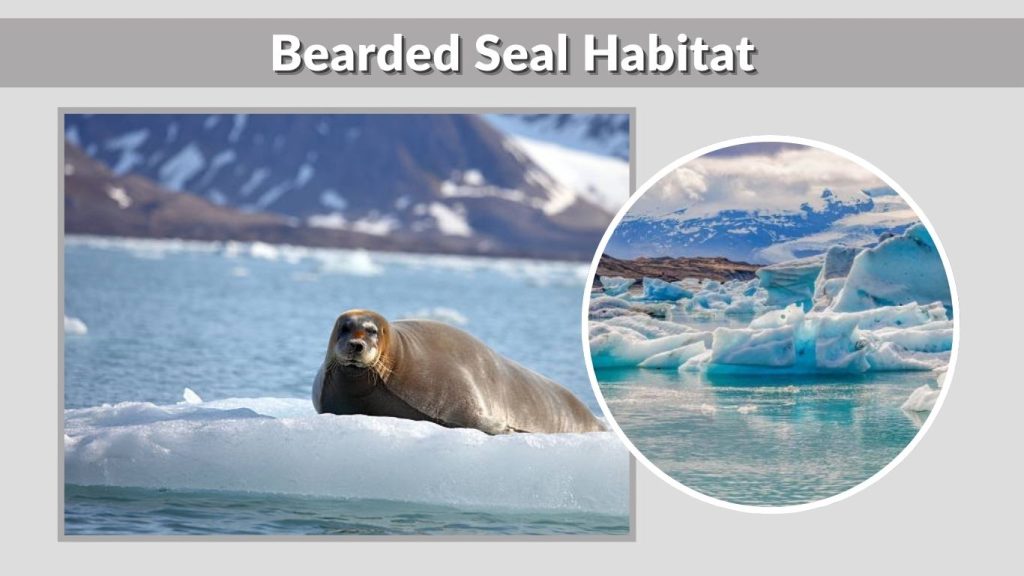
Bearded seals are widely distributed across the Arctic and sub-Arctic regions. They can be found near Alaska, northern Canada, Greenland, and parts of Russia. These seals remain in cold waters year-round and are closely tied to the presence of sea ice.
Preferred Environment
Unlike many other seals, bearded seals prefer shallow coastal waters where the sea floor is within reach. They are often found near the edges of pack ice, which provides easy access to both water and resting areas.
Seasonal Movement
Bearded seals may move seasonally depending on ice conditions. While they do not migrate long distances like some marine animals, they adjust their location to stay close to feeding grounds and suitable ice platforms.
Behavior and Adaptations
Solitary Lifestyle
Bearded seals are generally solitary animals, though they may occasionally be seen in small groups. They are known for their calm and less aggressive behavior compared to other seal species. This solitary lifestyle helps reduce competition for food in their habitat.
Vocal Communication
Bearded seals are famous for their underwater vocalizations, often described as songs or trills. These sounds are especially common during the breeding season and are used to communicate and attract mates. Their vocal abilities make them one of the more “musical” seal species.
Adaptations to Cold
These seals are highly adapted to freezing Arctic conditions. Their thick layer of blubber keeps them warm, while their ability to dive allows them to access food beneath the ice. They can remain underwater for extended periods, helping them hunt efficiently and avoid predators.
Bearded Seal Diet
Main Food Sources
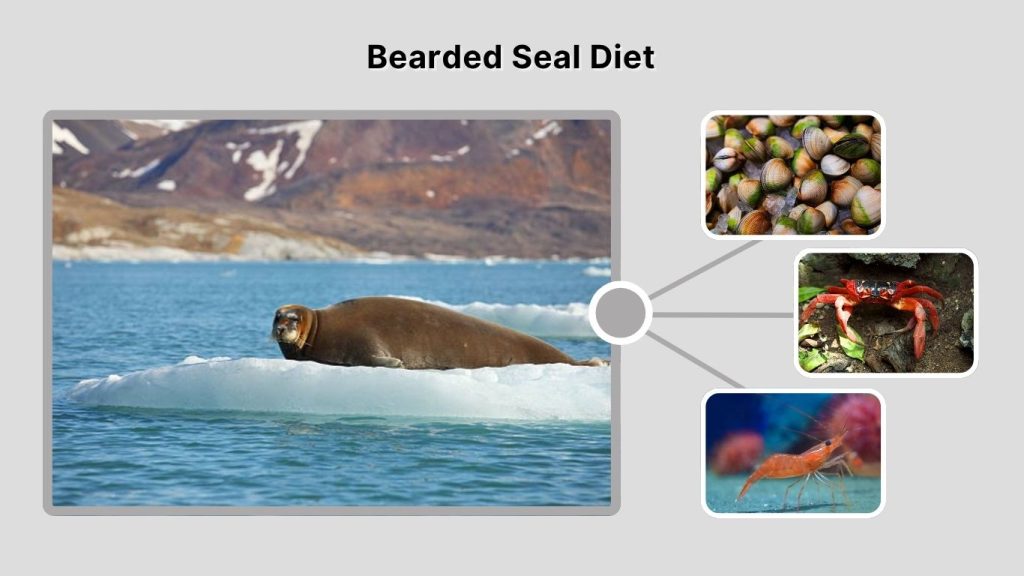
Bearded seals primarily feed on bottom-dwelling animals such as clams, crabs, shrimp, and other invertebrates. They also consume small fish when available, making their diet varied and adaptable.
Feeding Techniques
Unlike many seals that hunt in open water, bearded seals forage along the ocean floor. They use their highly sensitive whiskers to detect prey buried in sediment. Once located, they use suction to pull prey from the seabed.
Role in the Food Chain
Bearded seals play a key role in the Arctic ecosystem by connecting the ocean floor food web with larger predators. By feeding on benthic organisms and serving as prey for animals like polar bears, they help maintain ecological balance.
Reproduction and Life Cycle
Breeding Season
Bearded seals typically breed in the spring, when sea ice conditions are stable and suitable for giving birth. During this time, males use vocalizations to attract females, producing unique underwater calls that can travel long distances.
Birth and Pups
Female bearded seals give birth to a single pup on floating sea ice. Unlike some other seal species, bearded seal pups are relatively well-developed at birth and can swim within a few hours. They are covered in a soft coat that helps protect them from the cold.
Lifespan
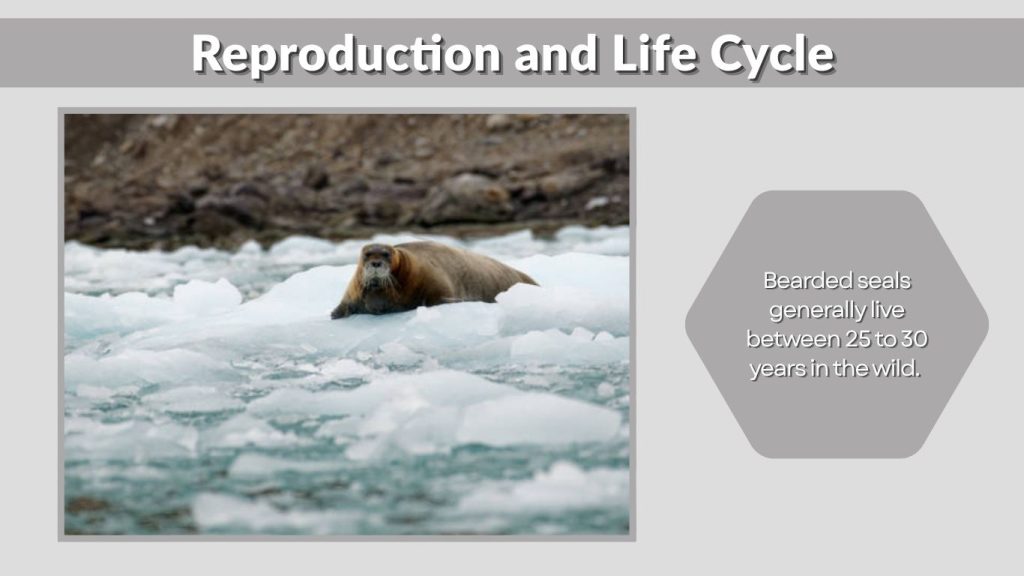
Bearded seals generally live between 25 to 30 years in the wild. Their longevity depends on environmental conditions, availability of food, and exposure to predators.
Predators and Threats
Natural Predators
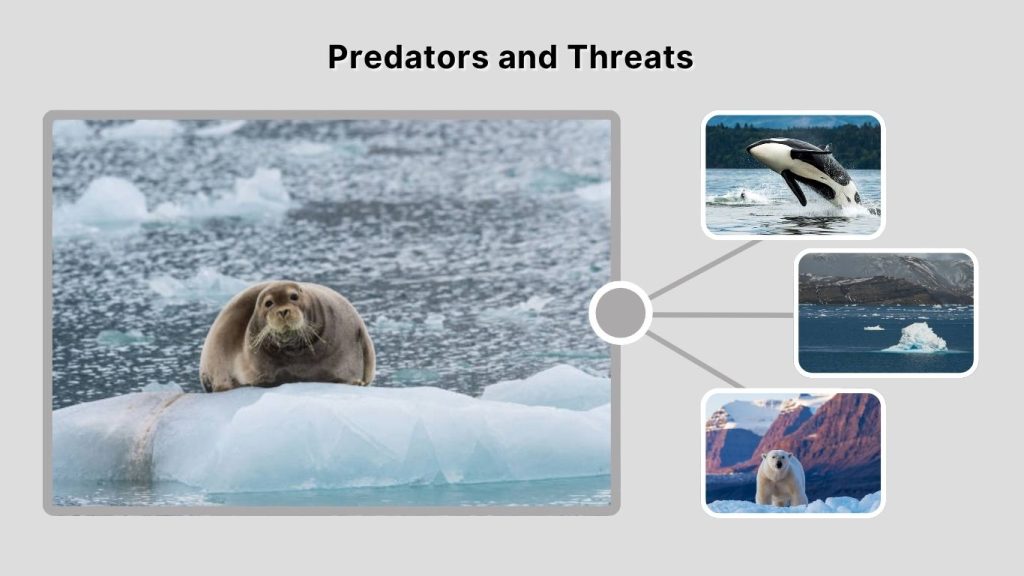
Bearded seals face threats from several Arctic predators. Polar bears are their main land-based predators, often hunting them on sea ice. Killer whales (orcas) are also a significant threat in open water, especially as ice levels decrease.
Environmental Threats
Climate change is one of the biggest challenges facing bearded seals. The loss of sea ice affects their ability to rest, breed, and find food. As ice continues to melt earlier each year, their habitat becomes increasingly unstable.
Human Impact
Bearded seals have traditionally been hunted by indigenous Arctic communities for food, clothing, and tools. While this hunting is generally sustainable, increasing human activity, pollution, and shipping in the Arctic pose additional risks.
Conservation Status
Bearded seals are currently classified as “Least Concern” by the IUCN, indicating that their population is relatively stable. However, ongoing environmental changes, particularly the decline in sea ice, could impact their future. Conservation efforts focus on monitoring populations and protecting Arctic habitats to ensure long-term survival.
Interesting Bearded Seal Facts
- Bearded seals are named for their long, thick whiskers.
- They are excellent swimmers and can dive to great depths while searching for food.
- Their underwater vocalizations are among the most complex of any seal species.
- They prefer shallow waters, unlike many other seals that hunt in deeper areas.
- Bearded seal pups can swim shortly after birth, giving them an early survival advantage.
Bearded Seal vs Other Marine Mammals
Bearded Seal vs Walrus
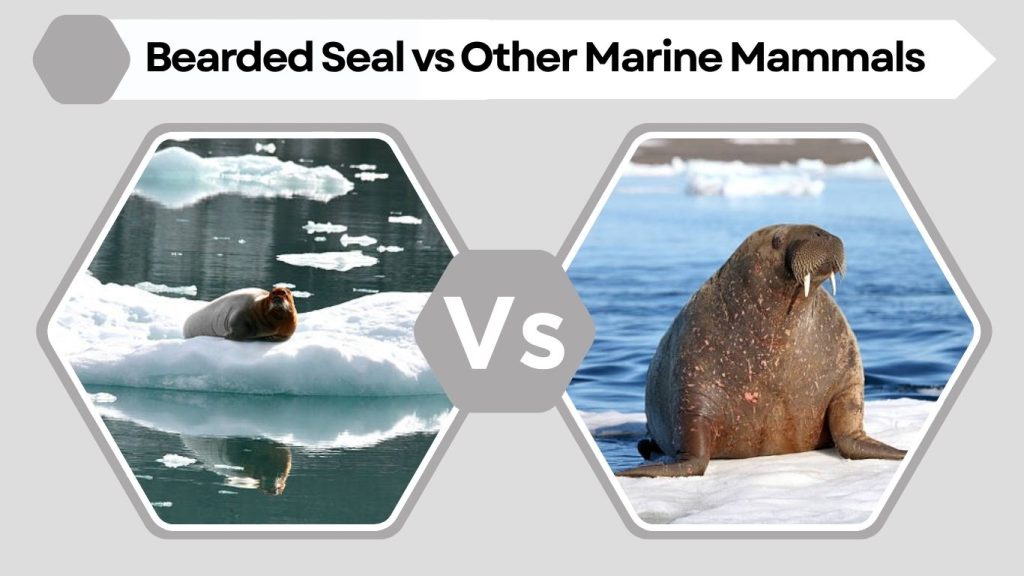
While both species live in Arctic regions and feed on bottom-dwelling organisms, walruses are much larger and have long tusks. Bearded seals rely on their whiskers instead of tusks to find food.
Bearded Seal vs Ringed Seal
Bearded seals are larger and prefer shallow coastal waters, whereas ringed seals are smaller and more closely associated with thick sea ice. Ringed seals also build snow dens, while bearded seals typically rest on open ice.
FAQs
What do bearded seals eat?
Bearded seals mainly eat clams, crabs, shrimp, and other bottom-dwelling marine animals.
Where do bearded seals live?
They live in Arctic and sub-Arctic regions, including areas around Alaska, Canada, Greenland, and Russia.
Why are they called bearded seals?
They are named for their long, thick whiskers that resemble a beard and help them detect prey.
Are bearded seals endangered?
They are currently listed as Least Concern, but climate change poses a potential future threat.
Conclusion
The bearded seal is a remarkable Arctic marine mammal known for its distinctive whiskers, calm behavior, and specialized feeding habits. Its ability to thrive in icy environments highlights its unique adaptations, while its role in the ecosystem makes it an important species in the Arctic food web. Although currently stable, the ongoing effects of climate change emphasize the need for continued conservation efforts to protect this fascinating species and its fragile habitat.