

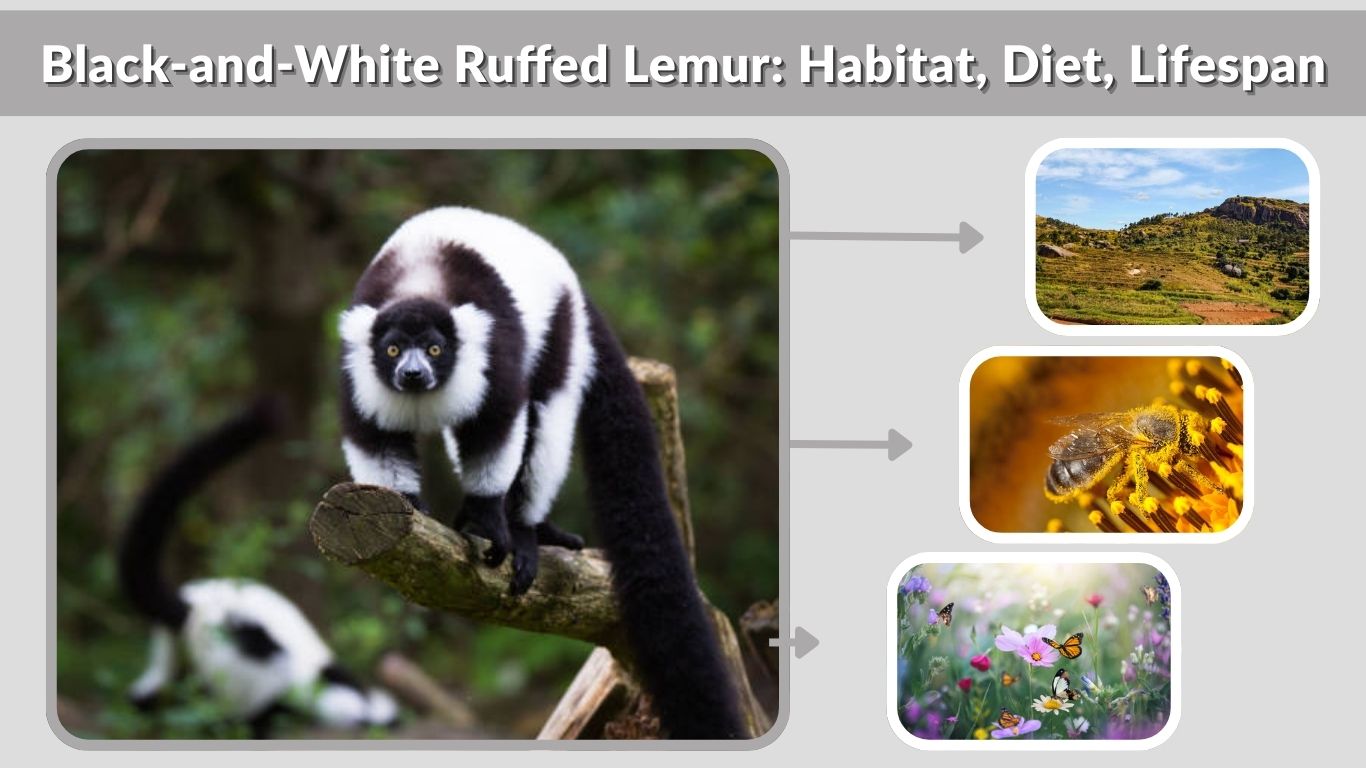
The black-and-white ruffed lemur is one of the most striking and fascinating primates found in Madagascar. Known for its bold black-and-white fur and fluffy ruff around the neck, this lemur is among the largest species in the lemur family. These animals are famous not only for their unique appearance but also for their loud calls and important role in forest ecosystems. Living mainly in Madagascar’s tropical rainforests, black-and-white ruffed lemurs spend most of their time in the treetops searching for fruit and other plant foods. In this article, we will explore key black-and-white ruffed lemur facts, including their appearance, habitat, diet, and behavior.
What Is a Black-and-White Ruffed Lemur?
Scientific Classification
The black-and-white ruffed lemur is scientifically known as Varecia variegata. It belongs to the primate order and is part of the lemur family, which includes several unique species found almost exclusively on the island of Madagascar. Lemurs are believed to have evolved on the island millions of years ago after their ancestors reached Madagascar from mainland Africa.
Within the lemur family, ruffed lemurs are considered some of the most specialized and largest members. Their distinctive features and behavior make them an important species for scientists studying primate evolution and biodiversity.
Physical Appearance
One of the most recognizable features of the black-and-white ruffed lemur is its bold coat pattern. Its body is covered with thick black and white fur arranged in unique patches that vary slightly between individuals. This striking coloration helps the animal stand out among other lemur species.
Another distinctive feature is the large fluffy ruff of fur around the neck, which gives the species its name. This ruff not only adds to their unique appearance but may also help protect the neck area while moving through branches.
The lemur also has a long bushy tail, which is usually completely black. Unlike some primates, the tail is not used for grabbing objects but instead helps with balance while moving through the trees.
Size and Weight
Black-and-white ruffed lemurs are among the largest lemur species. Adults typically measure about 20 to 24 inches (50–60 cm) in body length, while their tails can be nearly as long as their bodies.
Most adults weigh between 7 and 10 pounds (3–4.5 kg). Despite their relatively large size, these lemurs are agile climbers and can move quickly through the forest canopy.
Black-and-White Ruffed Lemur Habitat
Where Do Black-and-White Ruffed Lemurs Live?
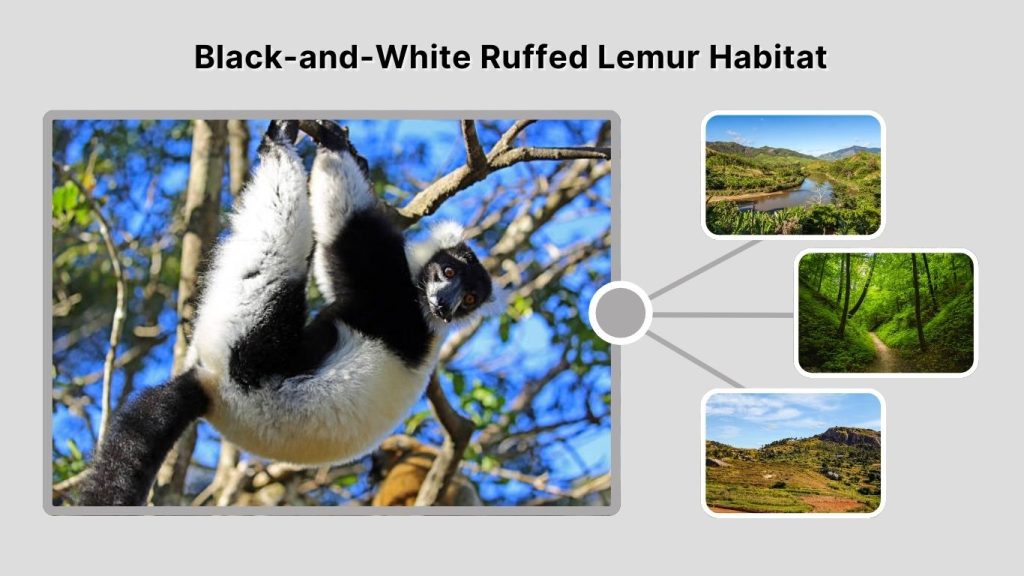
Black-and-white ruffed lemurs are native to the eastern rainforests of Madagascar. These tropical forests provide the dense canopy and abundant food sources that the species depends on.
Madagascar is known for its unique wildlife, and many of the animals found there exist nowhere else in the world. This makes the island one of the most important biodiversity hotspots on the planet.
Preferred Forest Environments
These lemurs mainly inhabit tropical rainforests with dense tree cover. The thick canopy provides protection from predators and easy access to fruits, flowers, and leaves.
They are often found in areas where tall trees grow close together, allowing them to move through the forest without descending to the ground.
Habitat Range and Distribution
Black-and-white ruffed lemurs are distributed along the eastern side of Madagascar, where rainforests stretch along the island’s mountainous regions.
Some of the best-known areas where they live include protected national parks and forest reserves. These areas help safeguard the remaining rainforest habitats that are critical for their survival.
Black-and-White Ruffed Lemur Diet
What Do Black-and-White Ruffed Lemurs Eat?
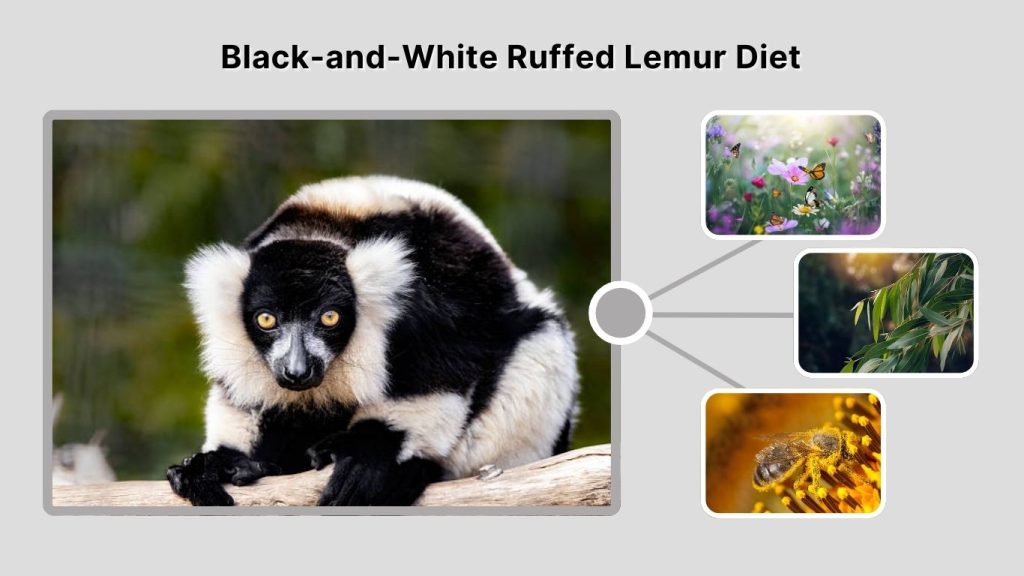
The black-and-white ruffed lemur has a diet that is largely based on fruit. In fact, fruit can make up more than half of their daily food intake. Because of this, they are often considered one of the most fruit-dependent lemur species.
They spend much of their day searching for ripe fruits in the forest canopy. Their strong climbing abilities allow them to reach fruits growing high in the trees. This fruit-rich diet provides the energy they need to remain active throughout the day.
Other Food Sources
Although fruit is their primary food source, black-and-white ruffed lemurs also eat a variety of other plant materials. These foods help supplement their diet when fruit is less available.
Other foods in their diet include:
- Leaves
- Flowers
- Nectar
- Seeds
They are also known to feed on nectar from flowering plants, which may help pollinate certain plant species. This behavior further highlights their importance in maintaining healthy forest ecosystems.
Feeding Behavior
Black-and-white ruffed lemurs are diurnal animals, meaning they are active during the daytime. They usually begin feeding in the morning and continue searching for food throughout the day.
Their feeding patterns often change depending on the season. During times when fruit is abundant, they rely heavily on it. When fruit becomes scarce, they shift to other plant foods such as leaves or flowers.
Because they travel through the treetops while feeding, they also play an important role in spreading seeds across the forest.
Black-and-White Ruffed Lemur Behavior
Social Structure
Black-and-white ruffed lemurs typically live in small social groups, although the size of these groups can vary. Some groups may contain just a few individuals, while others can form larger communities that share the same territory.
Group living helps the lemurs stay alert to potential threats and makes it easier to communicate within the forest.
Communication
Communication is an important part of their daily life. These lemurs use loud vocal calls to keep track of group members and defend their territory.
Their calls can travel long distances through the forest canopy, helping different groups avoid conflicts. They also use body language and scent signals to communicate with one another.
Daily Activity Patterns
Black-and-white ruffed lemurs are mostly active during daylight hours. They spend their time climbing, feeding, resting, and interacting with other members of their group.
Much of their activity takes place high in the trees, where they can safely move between branches while searching for food.
Black-and-White Ruffed Lemur Lifespan

Lifespan in the Wild
In the wild, black-and-white ruffed lemurs generally live around 15 to 20 years. Their lifespan can vary depending on factors such as habitat quality, food availability, and exposure to predators.
Young lemurs face the highest risks, especially during the early stages of life when they are most vulnerable.
Lifespan in Captivity
In protected environments such as zoos and wildlife reserves, black-and-white ruffed lemurs may live up to 25 years or more. Regular food supply, medical care, and protection from predators contribute to their longer lifespan in captivity.
Factors Influencing Longevity
Several factors influence how long these lemurs live, including:
- Habitat conditions
- Availability of food sources
- Disease and health problems
- Human-related threats such as deforestation
Protecting natural habitats plays a crucial role in helping these animals survive longer in the wild.
Black-and-White Ruffed Lemur Reproduction
Breeding Season
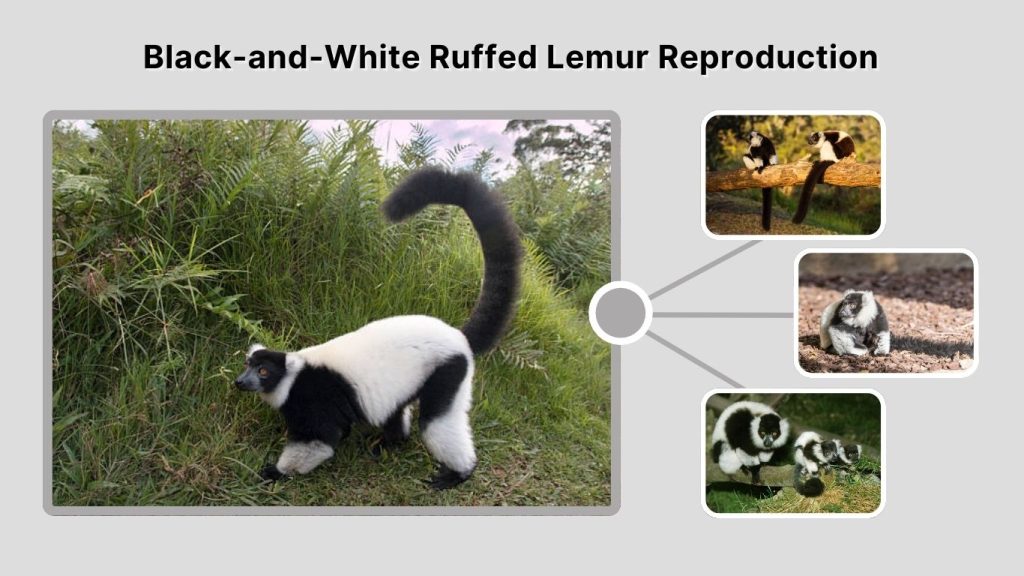
Black-and-white ruffed lemurs usually have a specific breeding season each year. During this time, males compete for mating opportunities, and females choose their partners.
The breeding season often aligns with environmental conditions that allow young lemurs to be born when food resources are plentiful.
Birth and Infant Development
The gestation period for a black-and-white ruffed lemur lasts about three months. Unlike many other primates that give birth to a single baby, females of this species often have two or three infants at once.
Another unique feature is that mothers build nests in trees where the babies remain during their earliest weeks of life. This behavior is unusual among primates.
Parenting Behavior
During the first weeks after birth, the mother cares for the infants in the nest while she gathers food nearby. As the babies grow stronger, they begin clinging to their mother and eventually start exploring the surrounding branches.
Other members of the group may also help watch over the young, which improves the survival chances of the infants.
Black-and-White Ruffed Lemur Facts
One of the Largest Lemur Species
Compared with many other lemurs, the black-and-white ruffed lemur is quite large. Their strong limbs and long tails allow them to leap between branches and travel efficiently through dense rainforest canopies.
Their size also helps them reach fruit in higher branches that smaller lemur species may not easily access.
Famous for Loud Vocalizations
Black-and-white ruffed lemurs are known for their extremely loud and powerful calls. Their vocalizations can be heard over long distances in the rainforest. These calls help members of the group communicate with each other and warn about potential threats.
Sometimes, groups of lemurs engage in what scientists describe as chorus calls, where several individuals vocalize together. These calls help maintain contact between groups and mark territory.
Important Seed Dispersers
These lemurs play a vital role in maintaining the health of Madagascar’s forests. Because their diet contains a large amount of fruit, they help disperse seeds throughout the forest.
As they eat fruit and travel through the canopy, they drop or pass seeds in different areas. This process helps new plants grow and supports the overall biodiversity of the rainforest.
Arboreal Lifestyle
Unlike some lemur species that spend time on the ground, black-and-white ruffed lemurs are highly arboreal, meaning they live almost entirely in trees.
They move through the forest canopy by climbing, leaping, and running along branches. Their strong limbs and excellent balance allow them to navigate the complex network of trees in their habitat.
Conservation Status
Are Black-and-White Ruffed Lemurs Endangered?
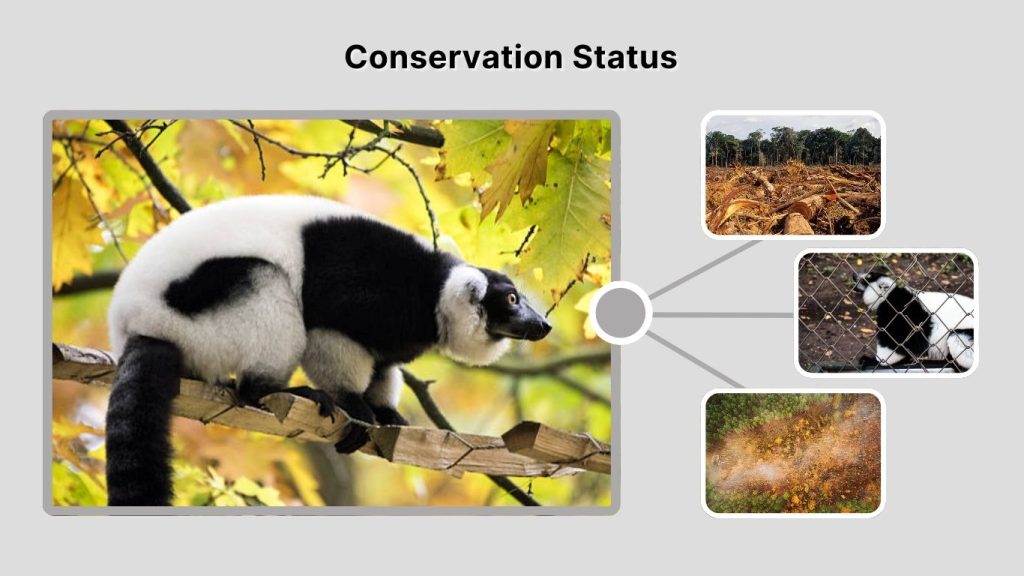
The black-and-white ruffed lemur is currently classified as critically endangered. This means the species faces an extremely high risk of extinction in the wild.
The population has declined significantly over the past several decades due to environmental and human-related pressures.
Major Threats
Several major threats contribute to the decline of this species, including:
- Deforestation caused by agriculture and logging
- Habitat fragmentation
- Hunting and illegal wildlife trade
- Human expansion into forest areas
These factors reduce the size of the forests where the lemurs live and make it harder for them to find food and shelter.
Conservation Efforts
Conservation organizations and researchers are working to protect black-and-white ruffed lemurs through various initiatives. These include:
- Establishing protected forest reserves
- Promoting sustainable land use practices
- Supporting conservation research and monitoring
- Educating local communities about wildlife protection
Zoos and breeding programs around the world also play a role in preserving the species and raising awareness about the importance of Madagascar’s biodiversity.
Conclusion
The black-and-white ruffed lemur is one of Madagascar’s most remarkable primates, known for its striking fur pattern, loud vocalizations, and important ecological role. From its fruit-based diet and tree-dwelling lifestyle to its unique nesting behavior during reproduction, this lemur species offers valuable insight into the diversity of Madagascar’s wildlife. However, habitat destruction and human activities continue to threaten its survival. Protecting the island’s rainforests and supporting conservation programs are essential steps toward ensuring that these extraordinary animals continue to thrive in the wild.