





The proboscis monkey (Nasalis larvatus) is one of the most unusual primates in the world, famous for its large, distinctive nose. Native to the island of Borneo in Southeast Asia, this monkey is known for its unique appearance, strong swimming abilities, and specialized diet. Proboscis monkeys mainly live in forests near rivers and coastal areas, where they spend most of their time in trees. Their unusual physical features, social behavior, and important role in forest ecosystems make them a fascinating species to study and protect.
What Is a Proboscis Monkey?
The proboscis monkey is a species of Old World monkey that belongs to the colobine group. These monkeys are known for their long noses, pot-bellied bodies, and reddish-brown fur. Male proboscis monkeys have extremely large noses, which are believed to help attract females and amplify vocal sounds.
Scientific Classification
The proboscis monkey belongs to the following biological classification:
- Kingdom: Animalia
- Phylum: Chordata
- Class: Mammalia
- Order: Primates
- Family: Cercopithecidae
- Genus: Nasalis
- Species: Nasalis larvatus
They are closely related to other leaf-eating monkeys in the colobine subfamily, which includes langurs and leaf monkeys.
Unique Features
Proboscis monkeys have several features that make them stand out among primates:
- Extremely large and long noses, especially in males
- Pot-bellied appearance due to a specialized stomach
- Excellent swimming ability
- Partially webbed feet and hands that help them swim
These characteristics help them survive in wet forest habitats near rivers and swamps.
Proboscis Monkey Physical Characteristics
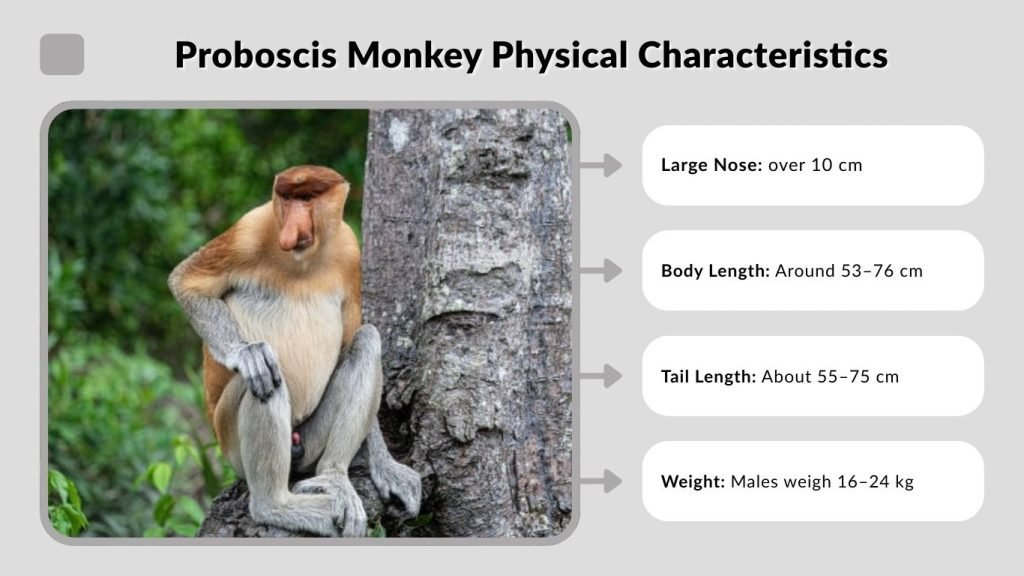
The proboscis monkey has one of the most distinctive appearances among primates. Its unusual body shape, large nose, and reddish-brown fur make it easy to recognize. These monkeys are also well adapted to life in trees and near rivers, with long limbs and strong bodies that help them climb, jump, and swim. Male proboscis monkeys are noticeably larger than females and have much bigger noses, which play an important role in communication and attracting mates.
Key physical characteristics include:
- Large Nose: Adult males have long, hanging noses that can grow over 10 cm (4 inches).
- Body Length: Around 53–76 cm (21–30 inches) from head to body.
- Tail Length: About 55–75 cm (22–30 inches), helping maintain balance in trees.
- Weight: Males weigh 16–24 kg, while females weigh 7–12 kg.
- Fur Color: Reddish-brown fur on the back with lighter gray or cream-colored fur on the belly.
- Pot Belly: Large stomach used for digesting leaves and plant material.
- Long Limbs: Strong arms and legs suited for climbing and moving through forest canopies.
- Webbed Feet: Partially webbed feet that help them swim across rivers.
These physical traits allow proboscis monkeys to thrive in mangrove forests and riverine habitats, where climbing, balancing, and swimming are essential for survival.
Proboscis Monkey Habitat
Where Do Proboscis Monkeys Live?
Proboscis monkeys are found only in Borneo, making them an endemic species of the island. This island is divided between three countries:
- Indonesia
- Malaysia
- Brunei
Because they exist only in this limited region, protecting their habitat is extremely important.
Preferred Habitat
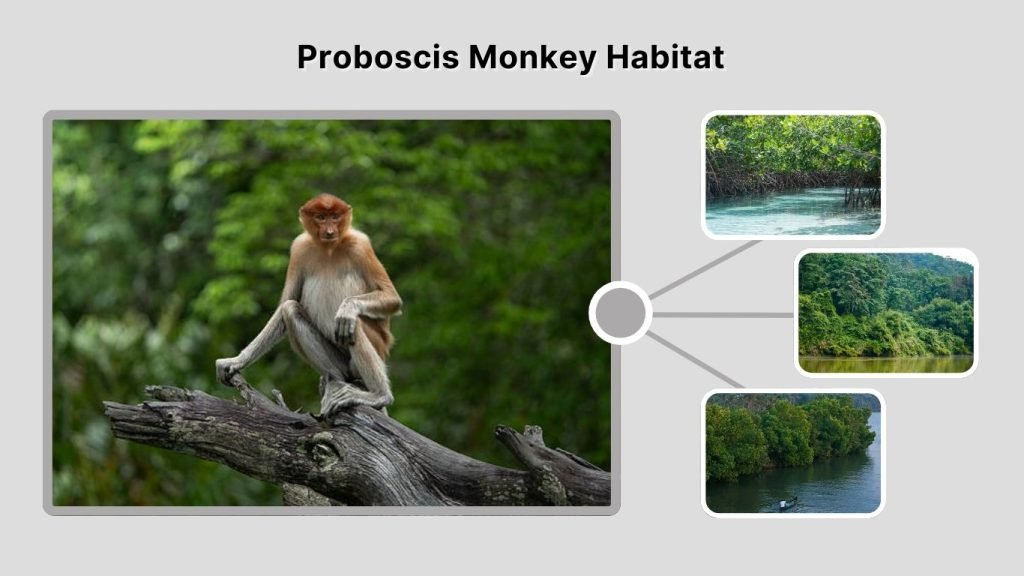
Proboscis monkeys prefer forest environments located close to water. The most common habitats include:
- Mangrove forests
- Riverine forests
- Coastal swamp forests
- Lowland rainforests
These habitats provide abundant leaves, fruits, and safe sleeping areas in tall trees.
Adaptations to Their Habitat
Proboscis monkeys are well adapted to living near rivers and wetlands. Unlike many other monkeys, they are excellent swimmers.
Some of their adaptations include:
- Partially webbed feet and hands
- Strong limbs for climbing and jumping
- Ability to swim across rivers to escape predators
They often leap from tree branches into the water and swim across rivers with ease.
Proboscis Monkey Diet
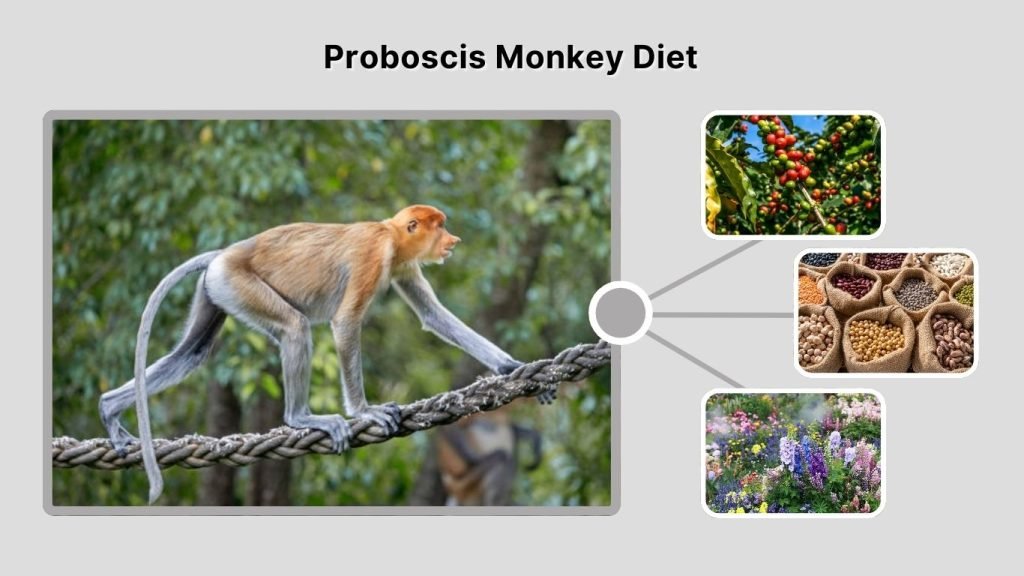
Proboscis monkeys are mainly herbivores, meaning they eat plant-based foods. Their diet consists mostly of leaves and other vegetation found in their forest habitats.
Primary Foods
The most common foods eaten by proboscis monkeys include:
- Young leaves
- Unripe fruits
- Seeds
- Flowers
Young leaves are especially important because they contain more nutrients and are easier to digest than mature leaves.
Digestive Adaptations
Proboscis monkeys have a specialized multi-chambered stomach that allows them to digest tough plant material.
Inside the stomach, bacteria help break down the fibers found in leaves. This fermentation process allows the monkeys to absorb nutrients from foods that many other animals cannot digest.
Because of this digestive system, proboscis monkeys avoid eating too many sweet fruits, which can disrupt the fermentation process.
Feeding Behavior
Proboscis monkeys typically spend a large part of their day feeding and resting. Their daily routine often includes:
- Searching for leaves and fruits in trees
- Eating for several hours throughout the day
- Resting between feeding periods to help digestion
Groups often travel through the forest canopy together while searching for food.
Behavior and Social Structure
Proboscis monkeys are social animals that live in organized groups and show interesting social behaviors. These monkeys spend most of their time in trees but often travel along riverbanks and forest edges. Living in groups helps them protect each other from predators and makes it easier to find food.
Social Groups
Proboscis monkeys usually live in two main types of groups:
- One-male groups: These groups consist of one adult male, several females, and their young.
- Bachelor groups: These groups are made up of young or adult males that do not currently lead a group.
A typical group may contain 10 to 20 individuals, although larger groups can sometimes form when several smaller groups gather in the same area.
Communication
Communication is very important for maintaining order within the group. Proboscis monkeys use several methods to communicate with one another, including:
- Vocal calls such as honking sounds
- Body movements and gestures
- Facial expressions
The large nose of male proboscis monkeys helps amplify their calls, allowing their voices to travel further through dense forests.
Swimming Ability
One of the most unique behaviors of proboscis monkeys is their excellent swimming ability. Unlike many other primates, they frequently swim across rivers.
They can swim long distances and even dive underwater when necessary. Their partially webbed feet and hands make them strong swimmers, helping them escape predators or move between feeding areas.
Proboscis Monkey Life Cycle
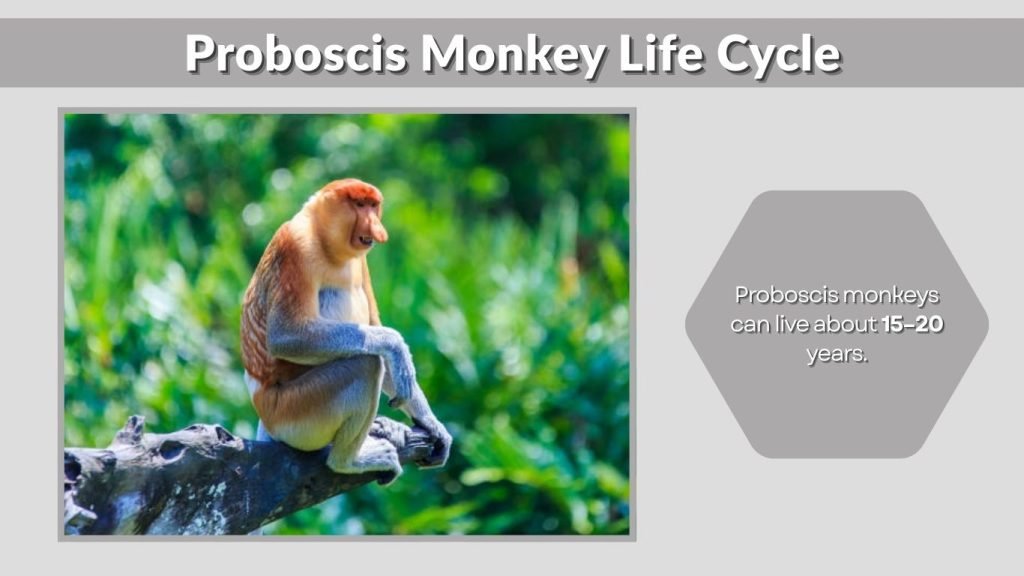
The life cycle of a proboscis monkey includes several stages, from birth to adulthood. Like many primates, they have a relatively slow reproduction rate.
Reproduction
Proboscis monkeys can breed throughout the year. The dominant male in a group usually mates with several females within the group.
After mating, the gestation period lasts around 166 days (about 5–6 months). Most females give birth to one baby at a time.
Proboscis Monkey Baby
Newborn proboscis monkeys look quite different from adults. Some key features of babies include:
- Blue-colored face at birth
- Dark fur that gradually changes as they grow
- Strong attachment to their mothers
Baby monkeys rely heavily on their mothers for food, protection, and transportation. The mother carries the infant while moving through the trees and while swimming across rivers.
Growth Stages
The development of a proboscis monkey usually follows several stages:
- Infant stage – dependent on the mother for survival
- Juvenile stage – begins exploring and learning social behaviors
- Adult stage – capable of reproduction and leadership roles
Young males eventually leave their birth group and may join bachelor groups until they are strong enough to compete for leadership.
Lifespan
Proboscis monkeys can live for a considerable amount of time compared to many animals.
- In the wild: about 15–20 years
- In captivity: sometimes up to 25 years with proper care
Their survival largely depends on habitat quality and protection from predators and human threats.
Predators and Threats
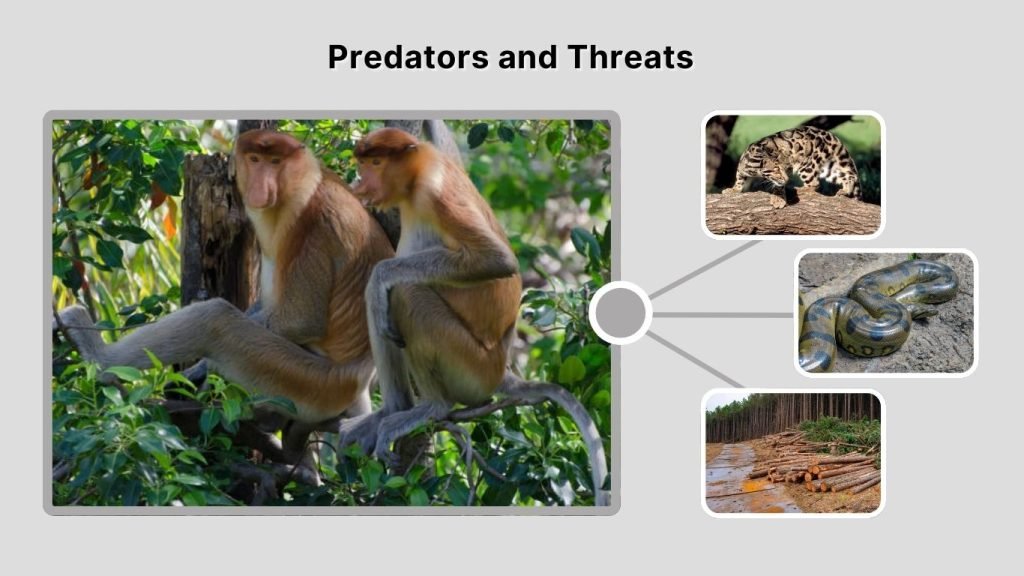
Although proboscis monkeys are agile and often live in trees, they still face several dangers in the wild.
Natural Predators
Some of the animals that prey on proboscis monkeys include:
- Clouded leopards
- Large snakes
- Saltwater crocodiles
Crocodiles are particularly dangerous when monkeys cross rivers or swim between forest areas.
Human Threats
Human activities are the biggest threat to proboscis monkey populations today. These threats include:
- Deforestation for agriculture and palm oil plantations
- Habitat fragmentation
- Illegal hunting
As forests disappear, these monkeys lose their food sources and safe places to live.
Conservation Status
The proboscis monkey is currently considered an endangered species according to the International Union for Conservation of Nature (IUCN).
Conservation Efforts
Many conservation programs are working to protect proboscis monkeys and their habitats. These efforts include:
- Establishing protected national parks and reserves in Borneo
- Enforcing wildlife protection laws
- Promoting environmental education and conservation awareness
Protected forests and wetlands are especially important because proboscis monkeys depend heavily on these ecosystems.
Importance of Conservation
Protecting proboscis monkeys is important for maintaining healthy ecosystems. These monkeys help forests by:
- Spreading seeds through their diet
- Supporting plant growth
- Contributing to biodiversity
Healthy forests support many other animal species and also help protect the environment.
Interesting Proboscis Monkey Facts
Here are some fascinating facts about proboscis monkeys:
- Male proboscis monkeys have extremely large noses, which can grow over 10 cm long.
- They are among the best swimming primates in the world.
- Their large stomach helps digest tough leaves through fermentation.
- Babies are born with blue faces that gradually change color as they grow.
- Proboscis monkeys are endemic to Borneo, meaning they are found nowhere else in the world.
These unique features make them one of the most recognizable monkeys on the planet.
FAQs
Where do proboscis monkeys live?
Proboscis monkeys live mainly on the island of Borneo in Southeast Asia, especially in mangrove forests, riverine forests, and coastal swamp areas.
What do proboscis monkeys eat?
Their diet mainly consists of leaves, fruits, seeds, and flowers, with young leaves being their primary food source.
Why do proboscis monkeys have large noses?
Male proboscis monkeys have large noses to attract female mates and amplify their vocal calls, which helps them communicate with other monkeys.
Conclusion
The proboscis monkey is one of the most fascinating primates in the animal kingdom. With its large nose, strong swimming ability, and specialized diet, it is perfectly adapted to life in the forests and wetlands of Borneo. However, habitat loss and human activities continue to threaten its survival. Protecting forests and supporting conservation efforts are essential to ensure that this remarkable species continues to exist for future generations.