





The dusky leaf monkey (Trachypithecus obscurus), also known as the spectacled langur, is a unique primate native to Southeast Asia. It is easily recognized by the distinctive white rings around its eyes that resemble spectacles. These tree-dwelling monkeys are mainly found in tropical forests and spend most of their lives in the canopy. Known for their leaf-based diet and social lifestyle, dusky leaf monkeys play an important role in maintaining forest ecosystems and biodiversity.
What Is a Dusky Leaf Monkey?
The dusky leaf monkey is a species of Old World monkey belonging to the langur group. These primates are known for their calm behavior, arboreal lifestyle, and specialized digestive systems that allow them to consume large amounts of leaves.
Scientific Classification
The dusky leaf monkey belongs to the following biological classification:
- Kingdom: Animalia
- Phylum: Chordata
- Class: Mammalia
- Order: Primates
- Family: Cercopithecidae
- Genus: Trachypithecus
- Species: Trachypithecus obscurus
This classification places the dusky leaf monkey among the colobine monkeys, a group known for their leaf-eating diet and specialized stomachs.
Other Names
The dusky leaf monkey is known by several names depending on the region. The most common alternative name is spectacled langur, which comes from the white circular markings around its eyes that look like eyeglasses. It is also sometimes called the dusky language.
Why It Is Unique
Several characteristics make this monkey stand out among primates:
- Distinct white rings around the eyes and mouth
- Bright orange fur in newborn babies
- A complex digestive system adapted for leaf consumption
- A mostly arboreal lifestyle, meaning they spend most of their time in trees
These traits help the species survive in dense forest environments.
Dusky Leaf Monkey Physical Characteristics
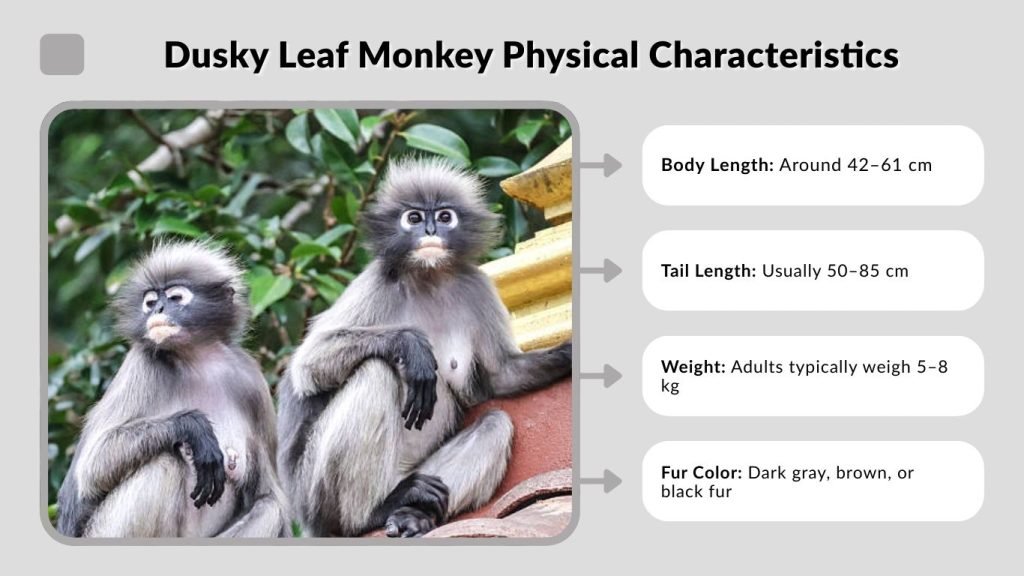
The dusky leaf monkey has several distinctive physical features that make it easy to recognize among other primates. Its body is well adapted for a life in the trees, with long limbs, a slender build, and a long tail that helps with balance while moving through the forest canopy. One of its most noticeable traits is the white rings around its eyes, which give it the nickname “spectacled langur.”
Key physical characteristics include:
- Body Length: Around 42–61 cm (16–24 inches) from head to body.
- Tail Length: Usually 50–85 cm (20–33 inches), longer than the body and useful for balance.
- Weight: Adults typically weigh 5–8 kg (11–18 pounds).
- Fur Color: Dark gray, brown, or black fur covering most of the body.
- Facial Markings: Distinct white rings around the eyes and mouth, creating a spectacled appearance.
- Body Shape: Slender body with long limbs suited for climbing and jumping between branches.
- Newborn Appearance: Babies are born with bright orange fur, which gradually changes to darker adult coloration after a few months.
These physical traits help the dusky leaf monkey move efficiently through trees and survive in dense tropical forest environments.
Dusky Leaf Monkey Habitat and Distribution
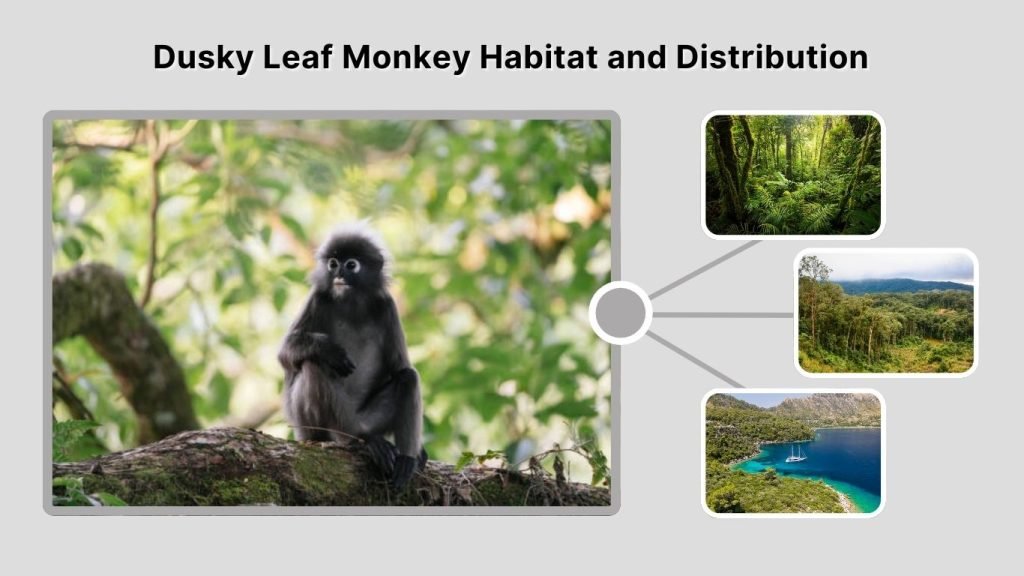
Dusky leaf monkeys are primarily found in the forests of Southeast Asia, where warm temperatures and dense vegetation provide ideal living conditions.
Geographic Range
These monkeys are native to several countries in Southeast Asia, including:
- Thailand
- Malaysia
- Myanmar
They are particularly common in southern Thailand and parts of Peninsular Malaysia.
Preferred Habitat
Dusky leaf monkeys inhabit a variety of forest environments, such as:
- Tropical rainforests
- Evergreen forests
- Coastal forests
- Mangrove forests
They prefer areas with tall trees and dense vegetation, which provide both food and protection from predators.
Tree-Dwelling Lifestyle
Dusky leaf monkeys are arboreal animals, meaning they spend most of their lives in trees. Their long limbs and strong grasping hands allow them to move quickly and efficiently through the forest canopy.
They rarely descend to the ground and instead travel, feed, and rest among the branches. This tree-dwelling lifestyle helps them avoid many ground predators.
Dusky Leaf Monkey Diet and Feeding Habits
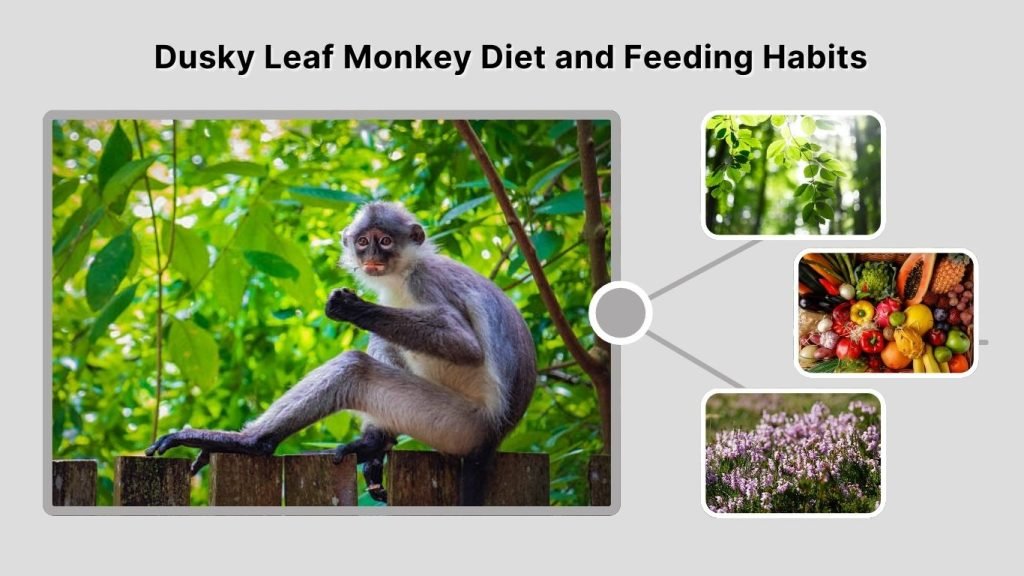
The dusky leaf monkey is primarily a herbivore, meaning its diet mostly consists of plant material.
Primary Diet
As their name suggests, leaves form the main part of their diet. However, they also eat other plant foods such as:
- Young leaves
- Fruits
- Seeds
- Flowers
- Occasionally unripe fruits
Young leaves are especially important because they are easier to digest and contain more nutrients.
Digestive Adaptations
Dusky leaf monkeys have a specialized multi-chambered stomach, similar to that of cows. This unique digestive system allows them to break down tough plant fibers found in leaves.
Bacteria in their stomach help ferment plant material, making it easier to absorb nutrients from otherwise difficult-to-digest foods.
Daily Feeding Behavior
These monkeys spend a large portion of their day feeding and resting. Because leaves are low in energy compared to fruits, dusky leaf monkeys must eat frequently throughout the day.
Their daily routine usually includes periods of:
- Feeding on leaves and fruits
- Resting to aid digestion
- Grooming other members of the group
This feeding strategy helps them conserve energy while still obtaining the nutrients they need.
Behavior and Social Structure
Dusky leaf monkeys are highly social animals that live in organized groups. Their behavior is generally calm and less aggressive compared to many other monkey species. Living in groups helps them protect each other from predators and allows them to share responsibilities such as caring for infants.
Group Living
Dusky leaf monkeys usually live in troops of about 5 to 20 individuals. A typical group structure includes:
- One dominant adult male
- Several adult females
- Their young offspring
The dominant male protects the group and may compete with other males for leadership. Female monkeys usually stay in the group where they were born, while males sometimes leave to join or form new groups.
Communication
Communication within the troop is important for maintaining social bonds and warning about potential dangers. Dusky leaf monkeys communicate through several methods, including:
- Vocal calls to alert others or maintain contact
- Body movements and gestures
- Facial expressions
- Grooming behavior
Grooming is especially important because it helps strengthen relationships among group members and reduces stress.
Daily Activities
Like many primates, dusky leaf monkeys follow a daily routine that includes several activities. Their typical day involves:
- Feeding on leaves and fruits
- Resting to digest food
- Grooming other members of the troop
- Traveling through trees
Because leaves take longer to digest, these monkeys spend a significant amount of time resting between feeding sessions.
Dusky Leaf Monkey Reproduction and Life Cycle
Reproduction plays an important role in maintaining the population of dusky leaf monkeys in the wild. Their reproductive behavior is similar to that of many other langur species.
Mating Behavior
Dusky leaf monkeys do not have a strict breeding season, which means they can reproduce throughout the year. However, the dominant male in the troop typically mates with the adult females.
Males may compete with one another to become the leader of a group. When a new male takes over, the group structure may change, which sometimes leads to conflicts among males.
Birth and Infant Care
The gestation period for a dusky leaf monkey is around 5 to 6 months. After this period, a female usually gives birth to a single baby.
One of the most fascinating aspects of their reproduction is the bright orange color of newborn babies. This bright color makes the infants very noticeable and encourages other females in the group to help care for them.
This shared care is called alloparenting, where multiple females help carry, groom, and protect the infant.
Lifespan
Dusky leaf monkeys can live for a relatively long time compared to many other small mammals.
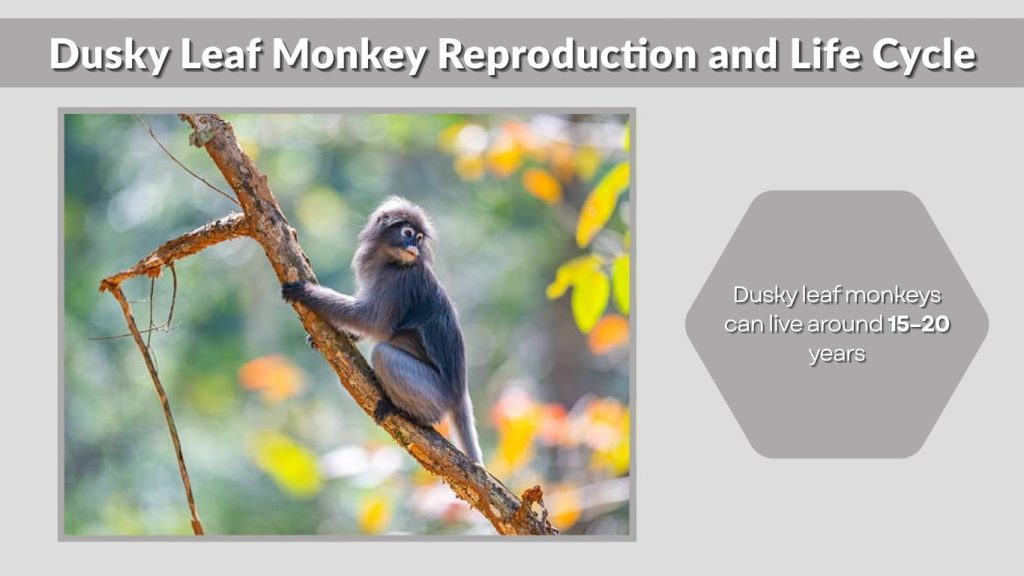
- In the wild: around 15–20 years
- In captivity: sometimes up to 25 years with proper care
Their lifespan depends on factors such as habitat conditions, food availability, and the presence of predators.
Predators and Threats
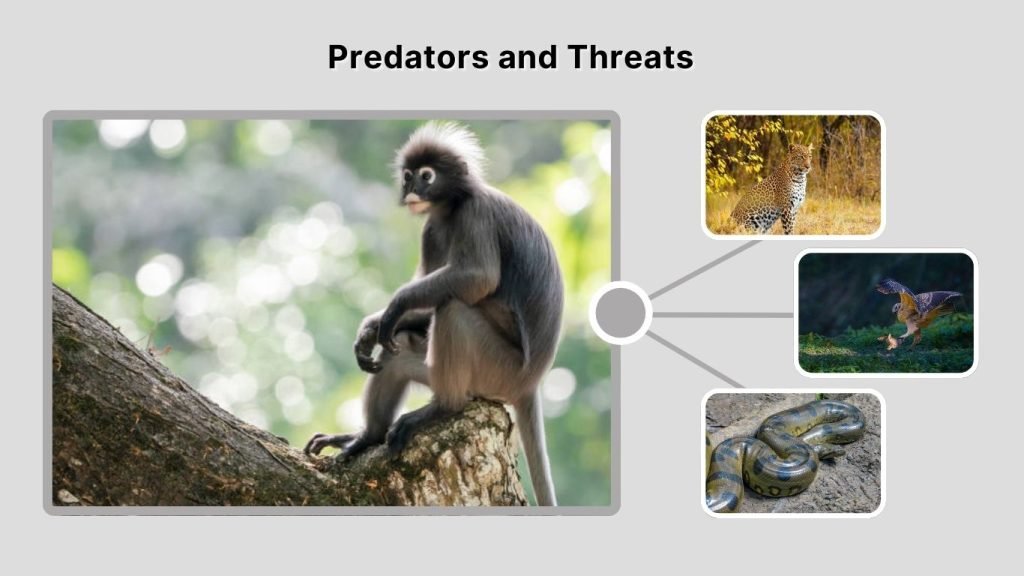
Although dusky leaf monkeys spend most of their time in trees, they still face several natural and human-related threats.
Natural Predators
Some animals that prey on dusky leaf monkeys include:
- Leopards
- Large birds of prey
- Large snakes
Living high in trees helps reduce the risk of predation, but young monkeys are still vulnerable.
Human Threats
The biggest threats to dusky leaf monkeys today come from human activities. These include:
- Deforestation for agriculture and urban development
- Habitat fragmentation, which isolates monkey populations
- Illegal hunting and wildlife trade
When forests are destroyed, these monkeys lose both their food sources and safe living areas.
Conservation Status
Due to habitat loss and other threats, conservation organizations closely monitor the population of dusky leaf monkeys.
IUCN Status
The International Union for Conservation of Nature (IUCN) currently lists the dusky leaf monkey as Near Threatened. This means the species is not yet endangered but could become at risk if current threats continue.
Conservation Efforts
Several efforts are underway to help protect these monkeys and their habitats. These efforts include:
- Creating protected forest reserves and national parks
- Enforcing wildlife protection laws
- Supporting conservation programs and research
Many wildlife organizations also work with local communities to promote forest conservation and sustainable land use.
Importance of Protection
Protecting dusky leaf monkeys is important not only for the species itself but also for the entire ecosystem. These monkeys help maintain forest health by:
- Spreading plant seeds
- Supporting plant growth
- Contributing to biodiversity
Healthy forests benefit many other animals and even human communities.
Interesting Facts About Dusky Leaf Monkeys
There are many fascinating facts about these unique primates:
- Babies are born bright orange, which helps adults easily recognize them.
- Their white eye rings give them the nickname “spectacled langur.”
- They spend almost their entire lives in trees.
- Their special stomach helps digest tough leaves.
- They are generally quiet and shy animals, avoiding conflict whenever possible.
These traits make dusky leaf monkeys one of the most interesting primates in Southeast Asia.
Dusky Leaf Monkey vs Other Langurs
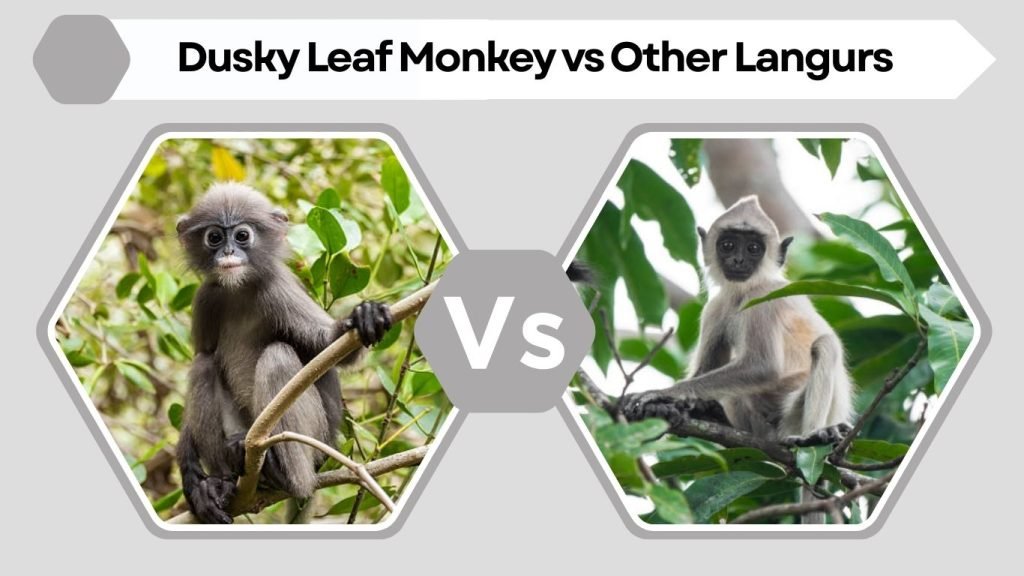
Although dusky leaf monkeys belong to the langur group, they have several differences compared to other langur species.
Appearance Differences
The most noticeable difference is the white rings around their eyes, which are not present in many other langurs. Their darker fur also makes them visually distinct.
Habitat Differences
While many langur species live in different parts of Asia, dusky leaf monkeys are mainly found in Southeast Asia, particularly in Thailand and Malaysia.
FAQs
What is the scientific name of the dusky leaf monkey?
The scientific name of the dusky leaf monkey is Trachypithecus obscurus.
Where do dusky leaf monkeys live?
They mainly live in tropical forests of Southeast Asia, including Thailand, Malaysia, and Myanmar.
Why are baby dusky leaf monkeys orange?
Baby dusky leaf monkeys are born with bright orange fur so that adult monkeys can easily recognize and care for them.
Conclusion
The dusky leaf monkey is a fascinating primate known for its spectacled appearance, leaf-based diet, and social lifestyle. Living mainly in the forests of Southeast Asia, these monkeys play an important role in maintaining healthy ecosystems. However, threats such as deforestation and habitat loss continue to affect their populations. Protecting their natural habitats and supporting conservation efforts are essential to ensure that this unique species continues to thrive in the wild.