



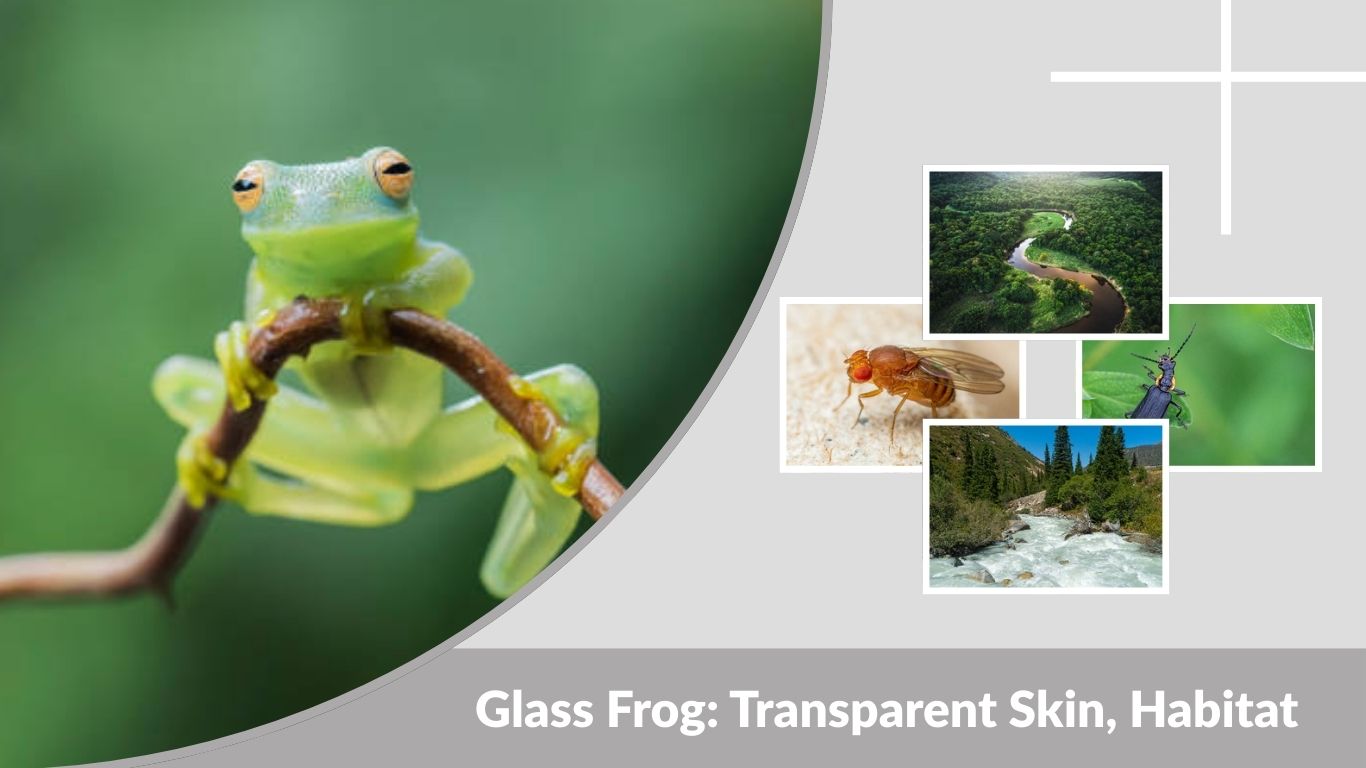
Glass frogs are some of the most fascinating amphibians in the world. Known for their translucent skin and visible internal organs, these small rainforest frogs look almost unreal. Native to Central and South America, glass frogs are admired for their unique appearance, tree-dwelling lifestyle, and unusual parental care behaviors. In this guide, we’ll explore their habitat, diet, life cycle, lifespan, and what makes them so extraordinary.
Glass Frog Overview
Glass frogs belong to a family of amphibians famous for their transparent undersides. While they may look delicate, they are well-adapted to life in humid rainforest environments.
Scientific Classification
Glass frogs belong to the family Centrolenidae, which includes more than 150 species. One of the most well-known species is Hyalinobatrachium fleischmanni, commonly called Fleischmann’s glass frog.
They are true frogs (order Anura) and are closely related to other tree frogs, although they have distinct anatomical differences that set them apart.
Why Are They Called Glass Frogs?
Glass frogs get their name from their transparent abdominal skin. In many species, you can clearly see internal organs such as:
- The heart
- The liver
- The digestive tract
Some species are so transparent that their beating heart is visible from below. This remarkable feature is rare in land vertebrates and is one of the main reasons they attract scientific interest.
Quick Facts
- Average Size: 1–3 inches long
- Habitat: Tropical rainforests near streams
- Diet: Small insects and arthropods
- Activity: Nocturnal
- Family: Centrolenidae
Despite their fragile appearance, glass frogs are agile climbers and efficient hunters.
Glass Frog Appearance
The appearance of a glass frog is what makes it truly unforgettable. Their semi-transparent bodies and leaf-like coloring provide both beauty and survival advantages.
Transparent Belly Explained
The most distinctive feature of glass frogs is their translucent underside. Unlike most frogs, their abdominal skin lacks heavy pigmentation. This allows light to pass through, making their organs visible.
Scientists believe this transparency may help with camouflage. When resting on leaves, their see-through lower body reduces shadows, making them harder for predators to detect from below.
Interestingly, recent research suggests that glass frogs can make themselves less transparent while sleeping by hiding red blood cells in their liver. This reduces visibility and may protect them from predators.
Body Color & Camouflage
On top, glass frogs are usually bright lime green. This matches the color of rainforest leaves, helping them blend seamlessly into their environment.
Some species have:
- Tiny yellow or white spots
- Pale edges along their limbs
- Slightly bluish or mint-green tones
Their coloration makes them nearly invisible when sitting motionless on foliage.
Size & Physical Characteristics
Glass frogs are relatively small. Most species measure between 1 and 3 inches in length.
They also have:
- Large, forward-facing eyes
- Horizontal pupils
- Sticky toe pads for climbing
Their toe pads allow them to grip smooth leaves and branches, even in wet conditions.
Glass Frog Habitat
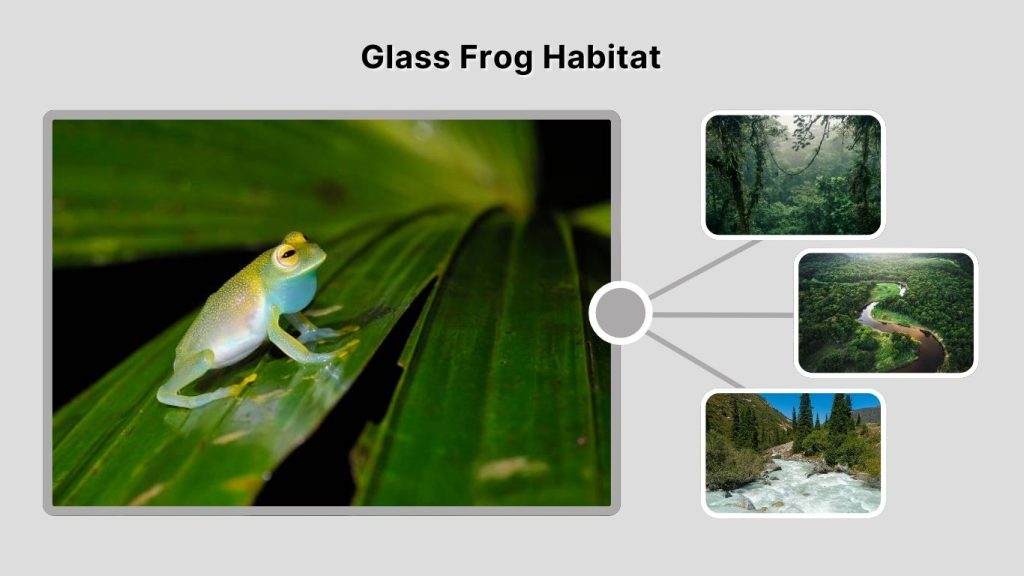
Glass frogs are highly dependent on rainforest ecosystems. Their survival depends on moisture, vegetation, and clean freshwater sources.
Natural Habitat
Glass frogs are found primarily in:
- Tropical rainforests
- Cloud forests
- Mountain forests near streams
They prefer areas with flowing water because their reproduction depends on it. Clean streams are essential for their tadpoles.
Geographic Distribution
Glass frogs live in parts of:
- Costa Rica
- Panama
- Colombia
- Ecuador
- Peru
- Venezuela
- Other regions of Central and South America
Most species inhabit humid, mid- to high-elevation forests.
Ideal Environmental Conditions
Glass frogs require:
- High humidity (often above 70%)
- Warm temperatures between 70–80°F
- Dense vegetation for cover
- Access to freshwater streams
Because they are sensitive to environmental changes, they are often considered indicators of ecosystem health.
Glass Frog Behavior
Glass frogs have unique behaviors that set them apart from many other frog species.
Nocturnal Lifestyle
Glass frogs are primarily active at night. During the day, they rest motionless on the underside of leaves. At night, they become active hunters and breeders.
Their nighttime activity helps them avoid daytime predators such as birds and snakes.
Arboreal Nature
These frogs are arboreal, meaning they spend most of their lives in trees and shrubs. They rarely come down to the forest floor unless necessary.
Their strong toe pads and lightweight bodies make them excellent climbers.
Parental Care
One of the most fascinating behaviors of glass frogs is male parental care. After a female lays eggs on the underside of a leaf above water, the male often stays behind to guard them.
He protects the eggs from:
- Insects
- Parasites
- Predators
This behavior increases the survival rate of the offspring and is uncommon among many frog species.
Glass Frog Diet
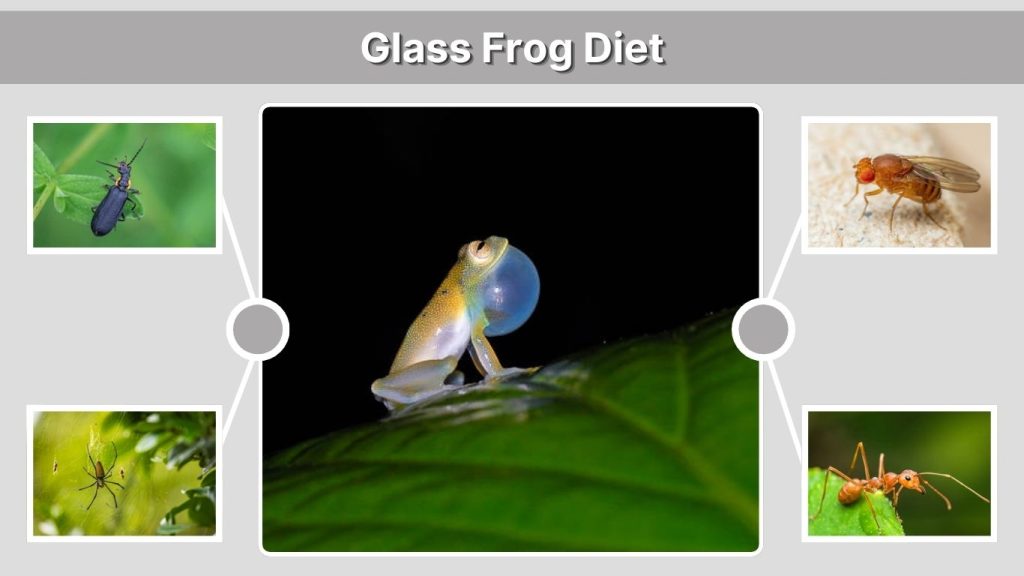
Glass frogs are carnivorous insectivores that rely on small invertebrates for survival. Their diet is simple but essential for maintaining energy in their active, humid environment.
What Do Glass Frogs Eat?
In the wild, glass frogs feed on small insects and arthropods, including:
- Fruit flies
- Ants
- Small beetles
- Spiders
- Moths
Because of their small size, they target prey that is easy to capture and swallow whole.
Hunting Behavior
Glass frogs are ambush predators. They typically remain still on leaves and wait for insects to come within range. Once prey is close enough, they use their long, sticky tongue to capture it quickly.
Their excellent night vision helps them locate movement in low-light rainforest conditions.
Glass Frog Life Cycle

Like all amphibians, glass frogs undergo metamorphosis. Their life cycle is closely tied to freshwater streams.
Mating Season
Glass frogs usually breed during the rainy season when humidity levels are high and water sources are abundant. Males call at night to attract females, producing soft, high-pitched chirping sounds.
Egg Laying
Females lay small clusters of jelly-like eggs on the underside of leaves hanging over streams. This location provides protection from aquatic predators while keeping the eggs moist.
The male often remains nearby to guard the eggs from insects and other threats.
Tadpole Stage
After hatching, tadpoles drop into the water below. In this stage:
- They breathe through gills
- They live entirely in water
- They feed on organic matter and algae
The tadpole stage can last several weeks to months depending on environmental conditions.
Metamorphosis
As development continues:
- Hind legs form first
- Front legs develop
- The tail gradually shrinks
- Lungs replace gills
Eventually, the young frog leaves the water and begins life in the trees.
Glass Frog Lifespan
Glass frog lifespan varies depending on environmental factors and species.
Lifespan in the Wild
In the wild, glass frogs generally live 5–10 years. However, survival depends on:
- Predator presence
- Habitat stability
- Water quality
- Climate conditions
Because they are sensitive to environmental changes, polluted habitats can significantly shorten their lifespan.
Lifespan in Captivity
Glass frogs are rarely kept in captivity compared to other tree frogs. When properly cared for in specialized environments, they may live around 8–14 years.
However, maintaining high humidity, clean water systems, and appropriate live food makes them challenging for inexperienced keepers.
Are Glass Frogs Poisonous?
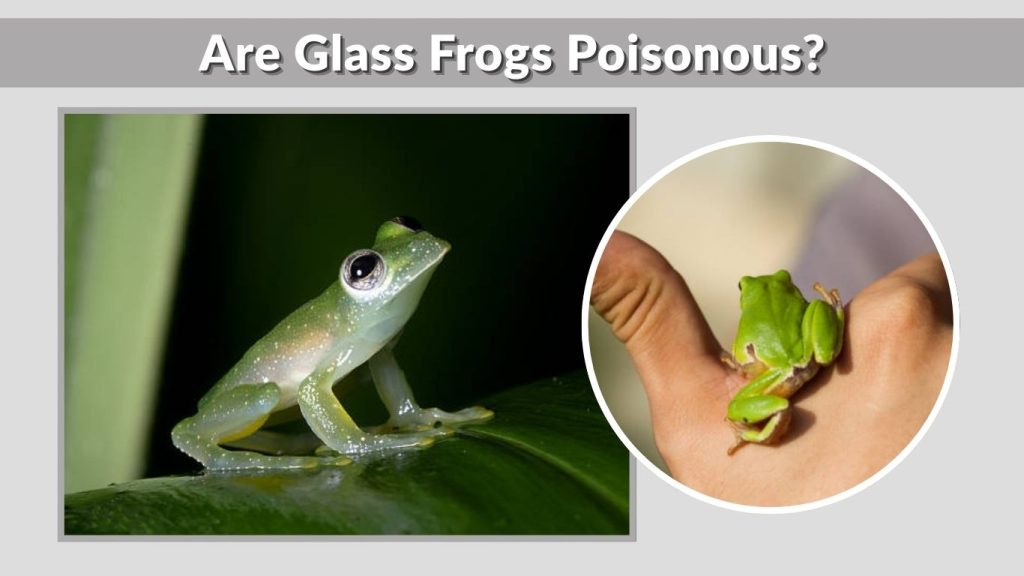
Many people assume that brightly colored frogs are poisonous, but glass frogs are generally harmless.
Toxicity Level
Glass frogs are not poisonous to humans. They do not possess the powerful toxins found in poison dart frogs. Their skin secretions are mild and primarily serve as protection against bacteria.
Defense Mechanisms
Instead of relying on toxins, glass frogs depend on:
- Transparency
- Camouflage
- Stillness
By blending into leaves and reducing visible shadows, they avoid detection from predators.
Can You Keep a Glass Frog as a Pet?
Although fascinating, glass frogs are not ideal beginner pets.
Legal Considerations
In some countries, certain species may be protected by wildlife regulations. Always check local laws before considering ownership.
Care Requirements
Glass frogs require a carefully maintained enclosure that mimics a rainforest environment, including:
- High humidity (70–90%)
- Live plants
- Vertical climbing space
- Clean, filtered water
They also need a steady supply of small live insects.
Difficulty Level
Due to their specialized needs, glass frogs are best suited for experienced amphibian keepers. Maintaining proper environmental conditions can be challenging.
Threats & Conservation Status
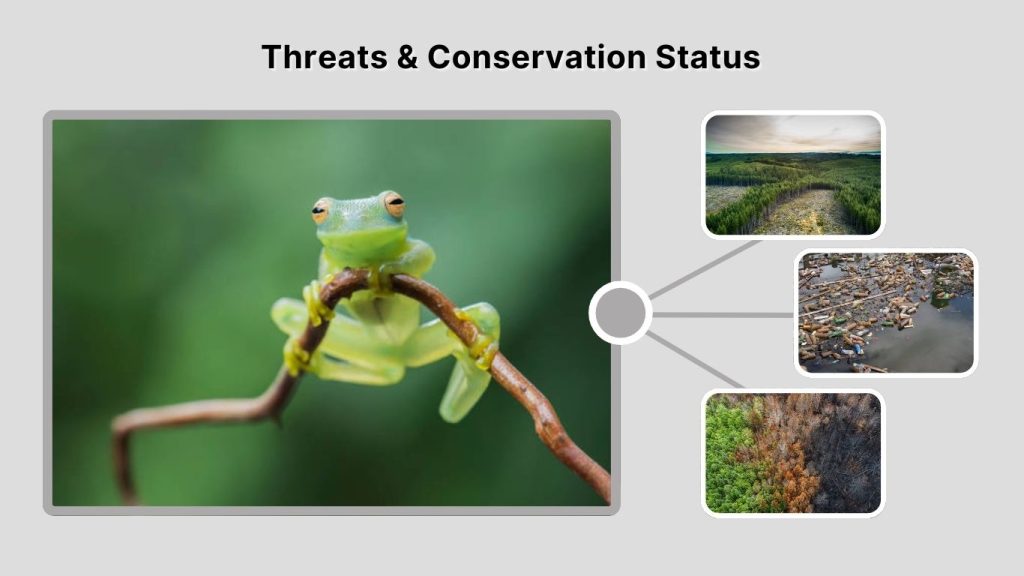
Glass frogs face increasing environmental pressures.
Habitat Loss
Deforestation for agriculture, logging, and development reduces rainforest habitats. Because glass frogs depend on specific ecosystems near clean streams, habitat destruction poses a serious threat.
Pollution
Water pollution affects tadpole survival. Contaminated streams can harm both developing young and adult frogs.
Climate Change
Changes in rainfall patterns and temperature can disrupt breeding cycles and habitat stability.
Many species of glass frogs are considered vulnerable or endangered, making conservation efforts critical.
Fascinating Glass Frog Facts
Glass frogs have several remarkable traits that make them stand out in the amphibian world.
Amazing Facts
- You can see a glass frog’s beating heart through its belly.
- Over 150 species of glass frogs have been identified.
- Males often guard eggs until they hatch.
- Some species can partially conceal red blood cells while resting.
- They are considered bioindicators of healthy ecosystems.
Their unique biology continues to attract researchers studying transparency and camouflage in animals.
FAQs
Why are glass frogs transparent?
Glass frogs have translucent abdominal skin that allows light to pass through their bodies. This reduces shadows when they rest on leaves, helping them avoid predators. Transparency acts as a camouflage adaptation rather than a decorative trait.
Where do glass frogs live?
Glass frogs live in tropical rainforests and cloud forests of Central and South America. They are commonly found in countries like Costa Rica, Panama, Colombia, and Ecuador, usually near clean, flowing streams.
Are glass frogs poisonous?
No, glass frogs are not poisonous to humans. Unlike poison dart frogs, they do not produce strong toxins. Their primary defense mechanisms are camouflage, transparency, and remaining motionless to avoid detection.
How big do glass frogs get?
Most glass frogs grow between 1 and 3 inches long. They are relatively small compared to many other frog species. Their lightweight bodies help them move easily among thin leaves and branches.
Can you see a glass frog’s heart?
Yes, in many species you can see the heart through their transparent underside. The visibility depends on the species and lighting conditions, but the beating heart is one of their most fascinating features.