



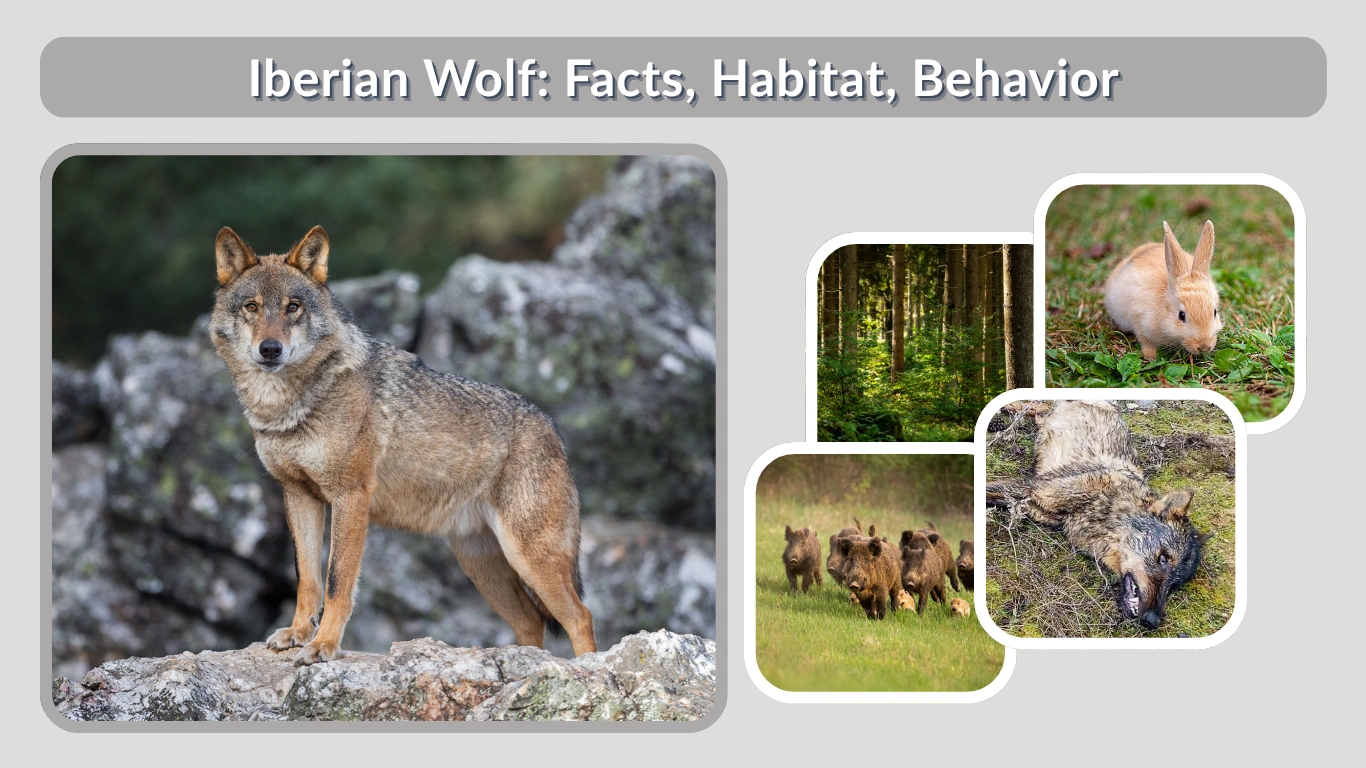
The Iberian wolf (Canis lupus signatus) is a unique subspecies of the gray wolf found exclusively in the Iberian Peninsula, primarily across Spain and Portugal. Known for its distinct markings and adaptability, this wolf plays a crucial role in maintaining ecological balance within its habitat.
Unlike many other wolf populations in Europe, the Iberian wolf has managed to survive despite centuries of human pressure, including hunting and habitat loss. Today, it stands as both a symbol of wilderness and a subject of ongoing conservation debate. Understanding this animal is essential, not only for wildlife enthusiasts but also for those interested in biodiversity and environmental sustainability.
What is the Iberian Wolf?
Scientific Classification
The Iberian wolf belongs to the species Canis lupus, which includes all gray wolves worldwide. Its subspecies name, signatus, refers to the distinctive markings on its body that set it apart from other wolves. It is part of the Canidae family, closely related to domestic dogs, foxes, and other wild canids.
Key Identifying Features
This wolf is smaller than many other European wolf subspecies. One of its most recognizable traits is the dark stripes on its front legs and a black mark along its tail, often referred to as “signs,” which inspired its scientific name. Its coat typically ranges from gray to brown, helping it blend into forested and mountainous environments.
Iberian Wolf Habitat and Distribution
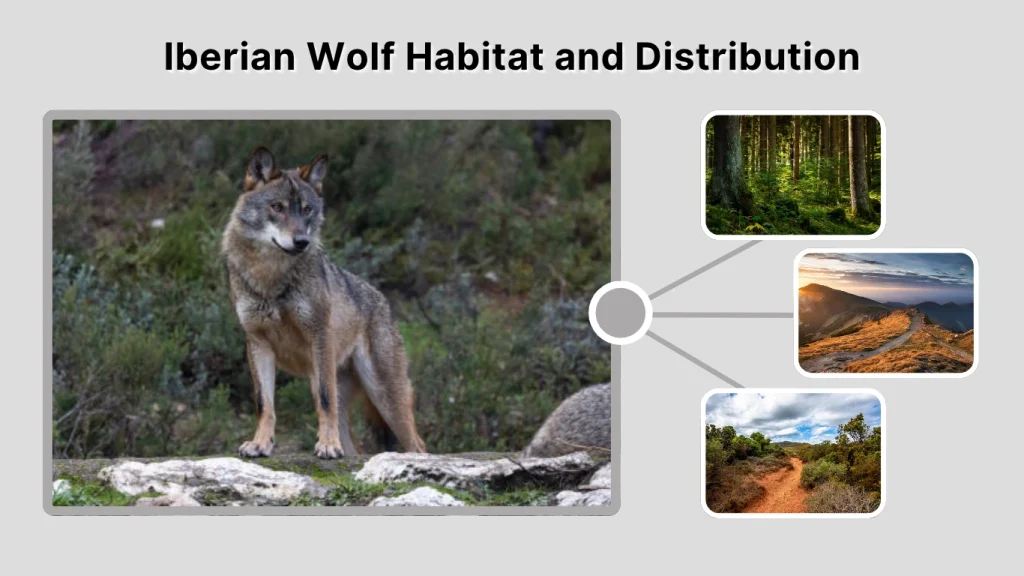
Where Do Iberian Wolves Live?
The Iberian wolf is mainly found in the northwestern regions of Spain, particularly in areas such as Castilla y León, Galicia, and Asturias. Smaller populations also exist in northern Portugal. These regions provide the necessary conditions for survival, including prey availability and suitable terrain.
Preferred Environment
Iberian wolves are highly adaptable and can thrive in a variety of habitats, including forests, mountains, and open scrublands. Interestingly, they are also capable of living near human settlements, provided there is enough food and shelter. This adaptability has been key to their survival in a landscape increasingly shaped by human activity.
Iberian Wolf Physical Characteristics
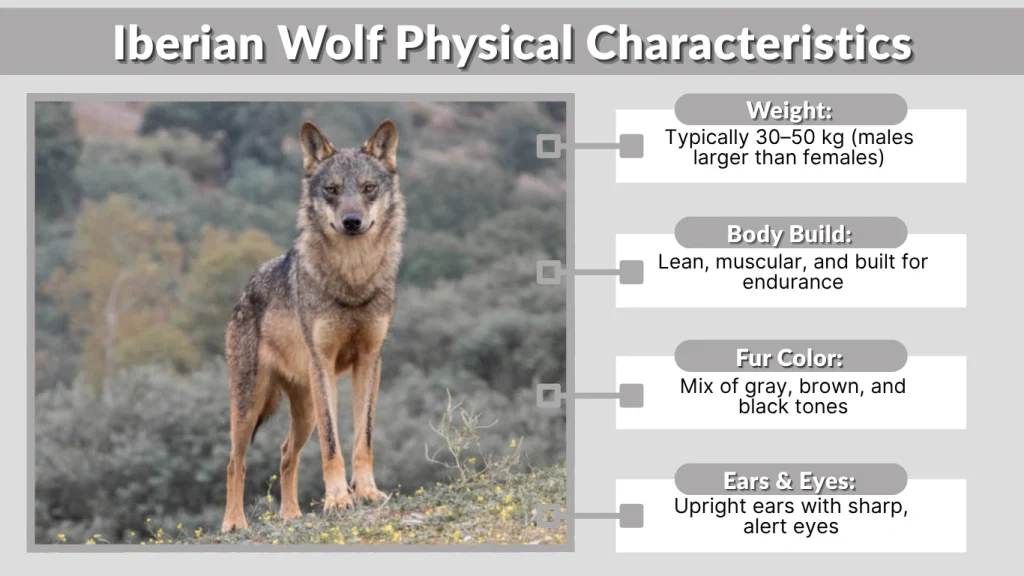
The Iberian wolf is a medium-sized subspecies of the gray wolf, well adapted to the diverse landscapes of the Iberian Peninsula. Its physical traits help it survive in forests, mountains, and open terrains. Compared to other wolves, it has distinctive markings and a slightly more compact build.
Key Characteristics:
- Size: Medium-sized; smaller than many European wolf subspecies
- Weight: Typically 30–50 kg (males larger than females)
- Body Build: Lean, muscular, and built for endurance
- Fur Color: Mix of gray, brown, and black tones
- Distinct Markings: Dark stripes on front legs and a black tail tip
- Coat Texture: Thick and coarse, especially in winter
- Ears & Eyes: Upright ears with sharp, alert eyes
- Adaptation: Strong legs for long-distance travel and hunting
Iberian Wolf Diet and Hunting Behavior
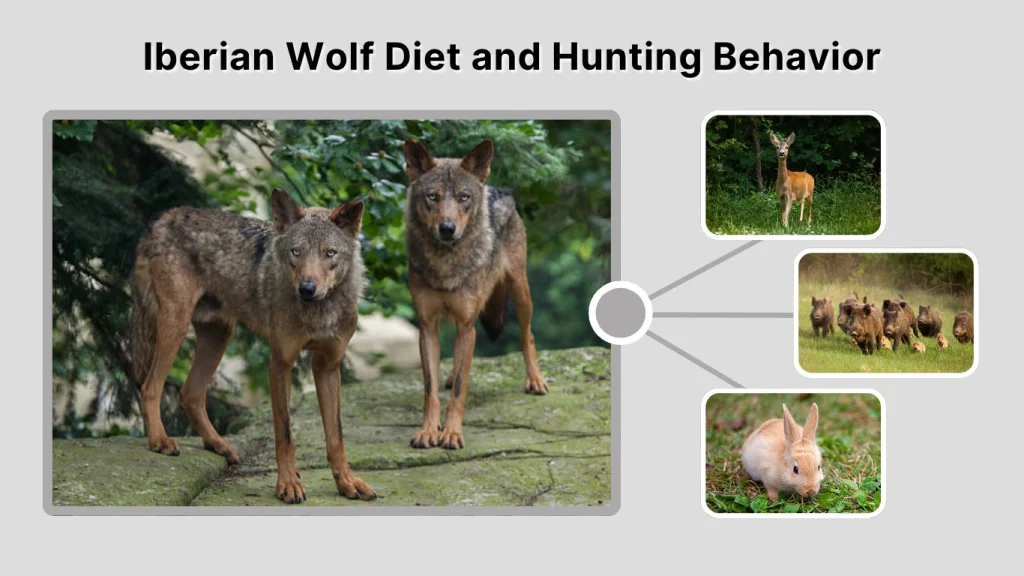
What Do Iberian Wolves Eat?
The Iberian wolf is a carnivore with a varied diet. Its primary prey includes wild animals such as deer, wild boar, and small mammals like rabbits. In some areas, especially where wild prey is scarce, wolves may also prey on livestock, which can lead to conflict with farmers.
Hunting Techniques
These wolves are skilled hunters that rely on both teamwork and strategy. When hunting in packs, they coordinate to chase and exhaust their prey over long distances. This method increases their chances of success, especially when targeting larger animals.
However, Iberian wolves are also capable of hunting alone, particularly when targeting smaller prey. Their intelligence and adaptability allow them to adjust their hunting strategies depending on the situation and available resources.
Iberian Wolf Behavior and Social Structure
Pack Life
Iberian wolves are highly social animals that live in structured packs. A typical pack consists of an alpha male and female, along with their offspring. This hierarchy ensures order and cooperation, particularly during hunting and raising young.
Each member of the pack has a specific role, and teamwork is essential for survival. Strong social bonds help maintain stability within the group and improve overall success in the wild.
Communication Methods
Communication plays a vital role in the life of Iberian wolves. They use howling to communicate over long distances, often to locate pack members or warn rival groups.
In addition to vocalizations, they rely on body language and scent marking. These methods help define territory, establish dominance, and maintain social relationships within the pack.
Iberian Wolf Reproduction and Life Cycle
The breeding season of the Iberian wolf typically occurs between late winter and early spring. During this period, the alpha male and female are usually the only ones in the pack that reproduce, ensuring controlled population growth within the group.
After a gestation period of about 63 days, the female gives birth to a litter of 4 to 6 pups in a den, often located in a secluded forest or mountainous area. At birth, the pups are blind and completely dependent on their mother.
As they grow, other pack members assist in feeding and protecting them. This cooperative care increases the survival rate of the young. By the time they are several months old, the pups begin to accompany adults on hunts, gradually learning the skills necessary for survival.
Iberian Wolf Threats to the Iberian Wolf
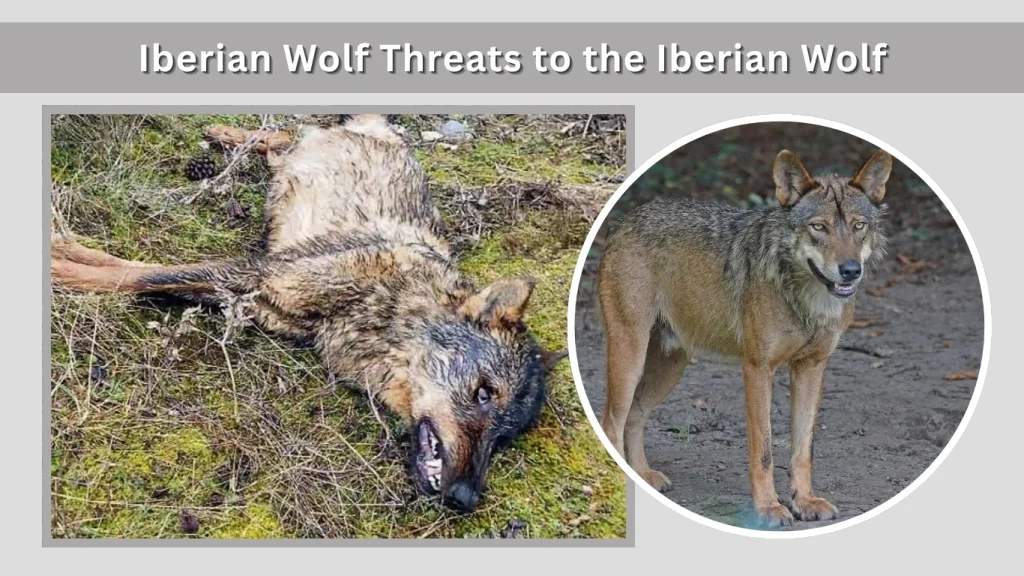
Human-Wildlife Conflict
One of the biggest threats to the Iberian wolf is conflict with humans, particularly farmers. When wolves prey on livestock, it can lead to economic losses, prompting retaliatory killings. This conflict remains a major challenge for conservation efforts.
Habitat Loss
Urban expansion, agriculture, and infrastructure development have reduced and fragmented the natural habitats of the Iberian wolf. This fragmentation limits their movement, reduces access to prey, and increases encounters with humans.
Illegal Hunting
Despite legal protections in some areas, poaching and illegal hunting still occur. Wolves are sometimes killed due to fear, misunderstanding, or as a response to livestock predation. These activities continue to threaten population stability.
Conservation Status and Efforts
The Iberian wolf population is considered relatively stable compared to other European wolf populations, but it still faces significant risks. Most individuals are found in Spain, while Portugal hosts a smaller and more vulnerable population.
Legal protection varies between regions. In Portugal, the Iberian wolf is strictly protected, while in parts of Spain, management policies have historically allowed controlled hunting, though this has been subject to change and debate.
Conservation efforts focus on reducing human-wolf conflict, protecting habitats, and promoting coexistence. Organizations and governments are working together to implement compensation programs for farmers, improve livestock protection methods, and raise public awareness about the importance of wolves.
Role in the Ecosystem
The Iberian wolf plays a vital role as an apex predator. By controlling populations of herbivores such as deer and wild boar, it helps maintain ecological balance. Without predators like wolves, prey populations can grow unchecked, leading to overgrazing and environmental degradation.
This natural regulation supports biodiversity by allowing vegetation to recover and providing habitats for other species. In this way, the Iberian wolf contributes to the overall health and stability of its ecosystem.
Cultural Significance
The Iberian wolf has long been a part of the cultural landscape of Spain and Portugal. Historically, it has been featured in folklore, myths, and rural traditions, often portrayed as both a feared predator and a symbol of strength and resilience.
In modern times, perceptions are gradually shifting. While some communities still view wolves as a threat, others recognize their ecological importance and cultural value. This evolving perspective plays an important role in conservation efforts.
Conclusion
The Iberian wolf is more than just a subspecies of the gray wolf—it is a key component of the Iberian Peninsula’s natural heritage. From its unique physical traits to its crucial role in maintaining ecological balance, this animal represents both the beauty and complexity of the wild.
However, its future depends on finding a balance between human needs and wildlife conservation. Continued efforts to protect habitats, reduce conflict, and raise awareness are essential to ensure that the Iberian wolf continues to thrive for generations to come.
FAQs
What makes the Iberian wolf different from other wolves?
The Iberian wolf is distinguished by unique dark markings on its legs and tail, along with a slightly smaller size compared to other gray wolves. These features, along with its geographic isolation in the Iberian Peninsula, make it a distinct subspecies.
Do Iberian wolves live alone or in groups?
Iberian wolves usually live in packs that consist of a dominant breeding pair and their offspring. However, some individuals may live alone temporarily, especially when searching for territory or a mate.
How far can Iberian wolves travel?
Iberian wolves are capable of traveling long distances, often covering dozens of kilometers in a single day while hunting or patrolling their territory. This endurance helps them find food and maintain large territories.
What time of day are Iberian wolves most active?
They are primarily nocturnal or crepuscular, meaning they are most active during the night or at dawn and dusk. This behavior helps them avoid human activity and increases their hunting success.
Can Iberian wolves coexist with humans?
Yes, coexistence is possible with proper management strategies. Measures such as livestock protection, compensation programs, and public awareness can reduce conflict and allow both humans and wolves to share the same landscape.