
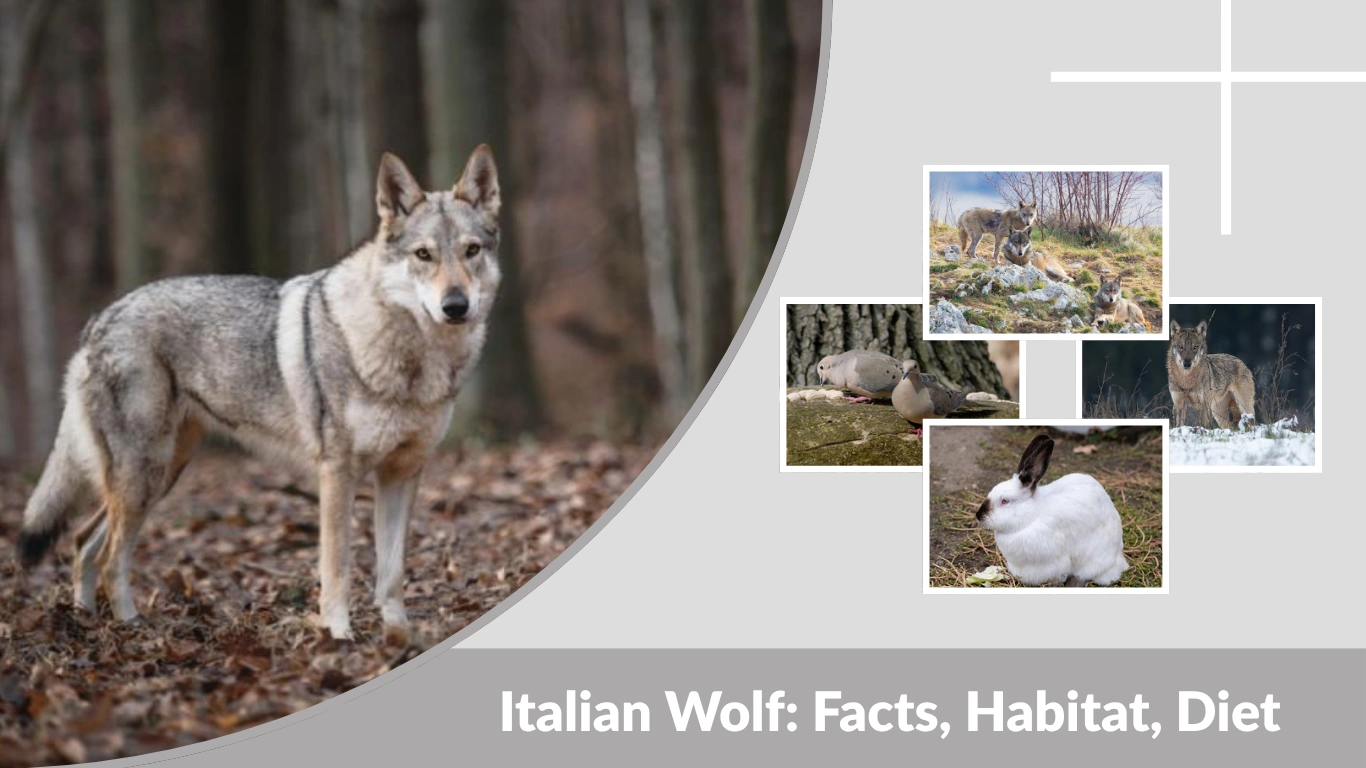
The Italian wolf (Canis lupus italicus), also known as the Apennine wolf, is a fascinating subspecies of the gray wolf native to Italy. Once on the brink of extinction, this resilient predator has made a strong comeback thanks to conservation efforts. Today, it plays a vital role in maintaining ecological balance across its habitat.
Unlike larger northern wolves, the Italian wolf is uniquely adapted to Mediterranean environments, making it an important subject of study for wildlife enthusiasts and researchers alike. In this guide, we’ll explore key facts about the Italian wolf, including its identification, habitat, diet, and lifespan.
What Is the Italian Wolf?
The Italian wolf is a distinct subspecies of the gray wolf that evolved in the Italian Peninsula. Scientifically known as Canis lupus italicus, it is genetically and physically different from other European wolf populations.
It is commonly referred to as the Apennine wolf because of its strong association with the Apennine Mountains, where it historically survived even during periods of heavy human persecution. Over time, this wolf has adapted to diverse environments, from rugged mountains to forested hills.
Despite being isolated for centuries, the Italian wolf has expanded its range in recent decades and is now found beyond Italy in parts of neighboring countries. Its recovery is often considered one of Europe’s most successful wildlife conservation stories.
Italian Wolf Identification
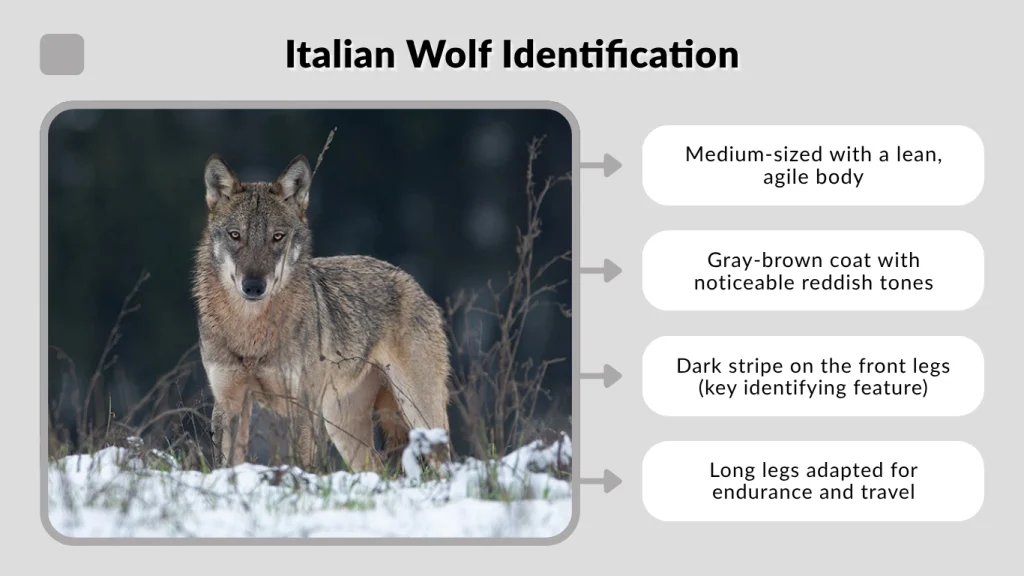
The Italian wolf can be recognized by its distinct physical features and adaptations to mountainous and forested environments. Compared to other gray wolves, it has a slimmer build and unique coat coloration that helps it blend into its surroundings.
- Medium-sized with a lean, agile body
- Gray-brown coat with noticeable reddish tones
- Dark stripe on the front legs (key identifying feature)
- Narrow head with a long muzzle
- Bushy tail, often with a darker tip
- Long legs adapted for endurance and travel
- Smaller and lighter than northern gray wolves
This combination of features makes the Italian wolf relatively easy to distinguish from other wolf subspecies.
Size and Physical Features
The Italian wolf is considered medium-sized when compared to other wolves. Adult individuals typically stand between 50 and 70 centimeters at the shoulder and can reach a total length of 100 to 140 centimeters, including the tail.
In terms of weight, they usually range from 20 to 35 kilograms. Their long legs and lean body structure allow them to travel long distances in search of food. Their strong jaws and sharp teeth make them efficient predators capable of taking down relatively large prey.
Differences from Other Wolves
The Italian wolf differs from northern gray wolves in several important ways. It is generally smaller and more slender, which helps it adapt to warmer climates and rugged terrains.
Its coat is also lighter and often contains reddish hues, unlike the thicker and darker fur seen in wolves from colder regions. Additionally, the Italian wolf has evolved to survive in environments with less snow and more human presence, making it more adaptable than some other subspecies.
Italian Wolf Habitat
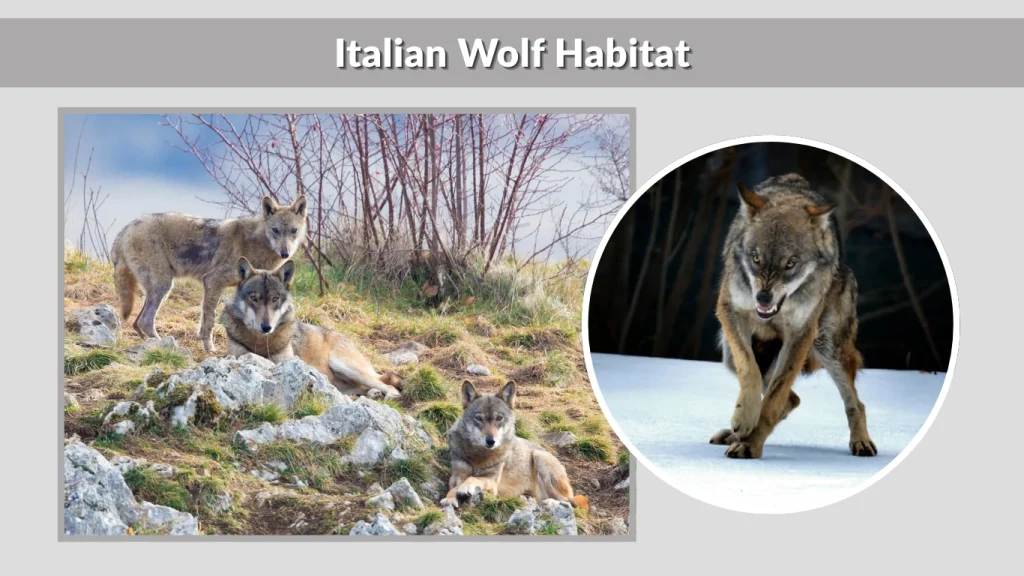
The habitat of the Italian wolf has changed significantly over time. Historically, it was found throughout the Italian Peninsula, but due to hunting and habitat loss, its range became limited to remote mountainous areas.
Where Does the Italian Wolf Live?
Today, the Italian wolf is primarily found in the Apennine Mountains, which run along the length of Italy. These mountains provide the ideal combination of cover, prey, and reduced human disturbance.
In recent years, the species has expanded its territory beyond Italy. Small populations have been recorded in parts of France and Switzerland, showing its ability to recolonize former habitats.
This expansion is a positive sign of recovery and demonstrates the effectiveness of conservation measures.
Preferred Environment
Italian wolves prefer environments that offer both shelter and access to prey. Forested areas and mountainous regions are ideal because they provide cover for hunting and denning.
They are also known to inhabit hills and rural landscapes, especially in areas where human activity is limited. While they generally avoid heavily populated regions, their adaptability allows them to survive in proximity to human settlements when necessary.
Their ability to adjust to different habitats has been a key factor in their survival and population growth.
Italian Wolf Diet
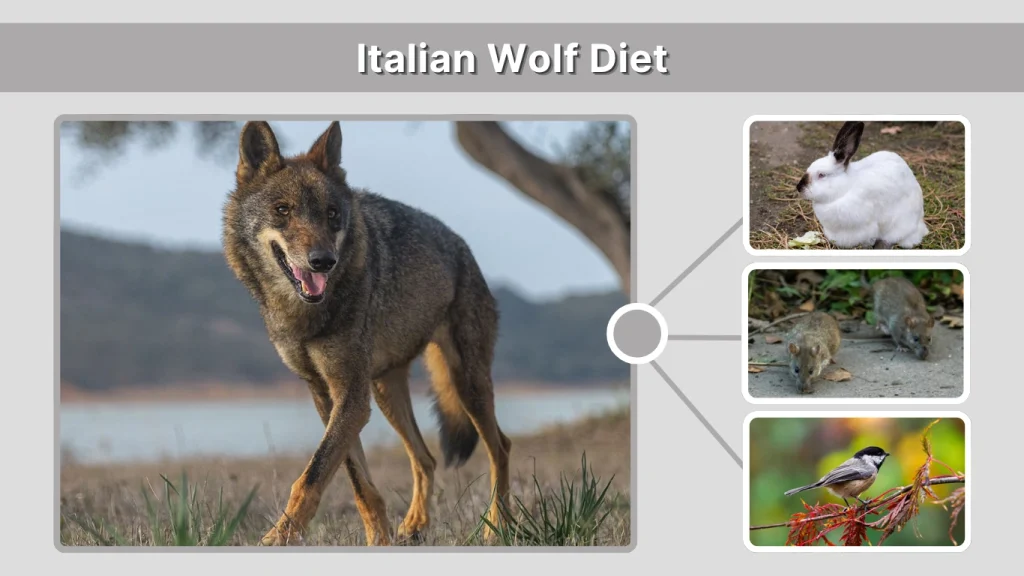
The Italian wolf is a carnivorous predator with a diet that mainly depends on the availability of wild prey in its habitat. As an opportunistic hunter, it adapts its feeding habits based on what is accessible in its environment.
What Do Italian Wolves Eat?
The primary food source of the Italian wolf is wild ungulates. Wild boar is considered its most important prey, followed by deer species such as roe deer and red deer. These animals provide the necessary nutrients and energy required for survival.
In addition to large prey, Italian wolves also consume smaller animals like rabbits, rodents, and birds. In some cases, especially when natural prey is scarce, they may prey on livestock, which can lead to conflicts with farmers.
Despite this, wild prey remains the preferred food source whenever it is available.
Hunting Behavior
Italian wolves typically hunt in packs, which increases their chances of success. Pack members work together using coordination, endurance, and strategy to chase and capture prey.
They often target weak, injured, or young animals, which helps maintain healthy prey populations. Their hunting style involves long pursuits rather than short bursts of speed, making them highly efficient endurance predators.
Italian Wolf Lifespan
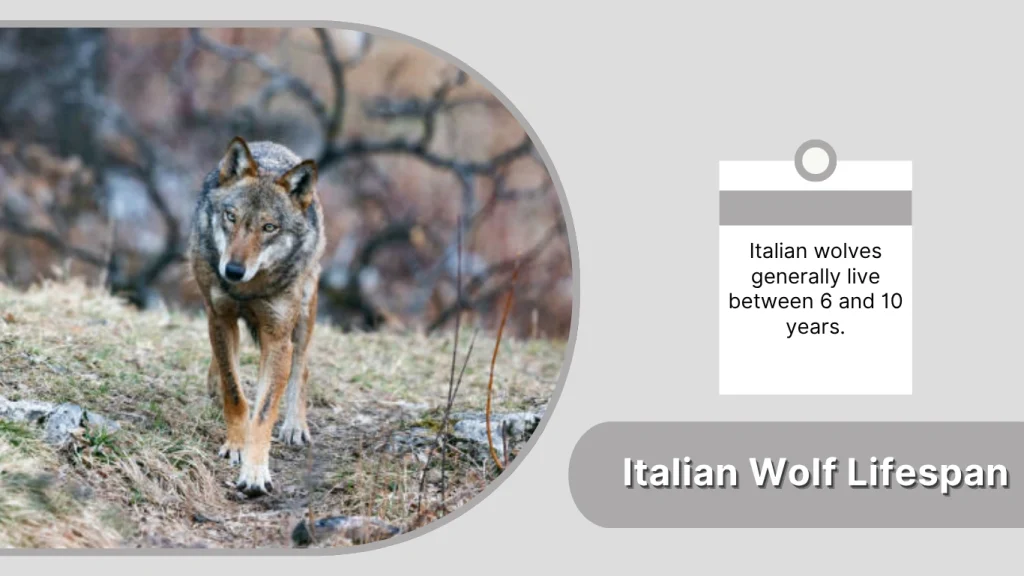
The lifespan of an Italian wolf varies depending on environmental conditions and threats.
In the wild, Italian wolves generally live between 6 and 10 years. Factors such as food availability, disease, and human-related threats can influence their survival.
In captivity, where threats are minimal and food is consistent, they can live longer, often reaching 13 to 15 years. This difference highlights the challenges wolves face in natural environments.
Behavior and Social Structure
Italian wolves are highly social animals that live in organized groups known as packs. These packs are usually family units consisting of a dominant breeding pair and their offspring.
Pack Structure
The pack is typically led by an alpha male and female, who are responsible for breeding and leading group activities. Other members assist in hunting, protecting territory, and raising young.
This cooperative system increases survival chances and strengthens social bonds within the group.
Communication
Communication plays a key role in the life of Italian wolves. They use howling to communicate over long distances, especially to locate pack members or warn rival wolves.
In addition, they rely on body language, facial expressions, and scent marking to establish dominance, signal intentions, and define territory boundaries.
Italian Wolf Facts
The Italian wolf has several interesting characteristics that make it unique.
- It is native to the Italian Peninsula
- It survived near extinction in the 20th century
- It is now a protected species
- It has a highly adaptable nature
- It plays a key role as a top predator
These facts highlight both its resilience and ecological importance.
Conservation Status
The Italian wolf was once critically endangered due to hunting, habitat destruction, and human conflict. By the 1970s, its population had dropped to dangerously low levels.
Today, thanks to strict legal protection and conservation efforts, the population has significantly recovered. It is now considered a conservation success story in Europe.
Threats
Despite its recovery, the Italian wolf still faces several threats:
- Habitat fragmentation due to human development
- Conflict with farmers over livestock
- Illegal hunting and poaching
Continued conservation efforts are essential to ensure its long-term survival.
Importance in Ecosystem
The Italian wolf plays a crucial role in maintaining ecological balance. As a top predator, it helps regulate populations of herbivores such as deer and wild boar.
By controlling these populations, wolves prevent overgrazing and support the health of vegetation and ecosystems. This, in turn, benefits other wildlife species and promotes biodiversity.
Their presence is often seen as an indicator of a healthy and functioning ecosystem.
Conclusion
The Italian wolf is a remarkable example of resilience and adaptation. From near extinction to recovery, it has proven its importance in the natural world.
Understanding its habitat, diet, and behavior helps us appreciate its role in maintaining ecological balance. Protecting this species is not only important for wildlife conservation but also for preserving the health of ecosystems across Europe.
FAQs
What is the scientific name of the Italian wolf?
The scientific name of the Italian wolf is Canis lupus italicus. It is a subspecies of the gray wolf that is native to the Italian Peninsula and is genetically distinct from other European wolf populations.
How big is an Italian wolf?
Italian wolves are medium-sized compared to other wolves. They typically weigh between 20 and 35 kilograms and stand about 50–70 cm tall at the shoulder, with a body length of up to 140 cm including the tail.
Are Italian wolves endangered?
Italian wolves were once endangered, especially in the 20th century. However, due to conservation efforts and legal protection, their population has recovered significantly, though they still face threats like habitat loss and poaching.
Do Italian wolves live alone or in groups?
Italian wolves usually live in packs, which are family-based groups led by a dominant pair. Living in packs helps them hunt more effectively, protect territory, and raise their young cooperatively.
Why are Italian wolves important to the ecosystem?
Italian wolves play a key role as top predators. They help control populations of animals like deer and wild boar, which prevents overgrazing and supports healthy ecosystems and biodiversity.