




The Bengal tiger (Panthera tigris tigris) is one of the most powerful and iconic big cats in the world. Native to South Asia, it is known for its striking orange coat with black stripes and its role as a top predator in the wild. The Bengal tiger is not only the national animal of India and Bangladesh but also a symbol of strength, courage, and biodiversity.
Despite its dominance in the animal kingdom, the Bengal tiger faces serious threats from habitat loss, poaching, and human conflict. Understanding its habitat, diet, hunting behavior, and life cycle is essential for appreciating its importance and ensuring its survival. In this guide, we’ll explore everything you need to know about this magnificent animal.
What Is the Bengal Tiger?
The Bengal tiger is a subspecies of tiger found primarily in the Indian subcontinent. Its scientific name is Panthera tigris tigris, and it is one of the largest tiger subspecies in the world.
Bengal tigers are apex predators, meaning they sit at the top of the food chain in their ecosystems. They play a crucial role in maintaining ecological balance by controlling populations of herbivores.
These tigers are found in several countries, including India, Bangladesh, Nepal, and Bhutan. The Sundarbans mangrove forest, shared by India and Bangladesh, is one of their most unique habitats, where they have adapted to life in swampy and coastal environments.
Bengal Tiger Identification
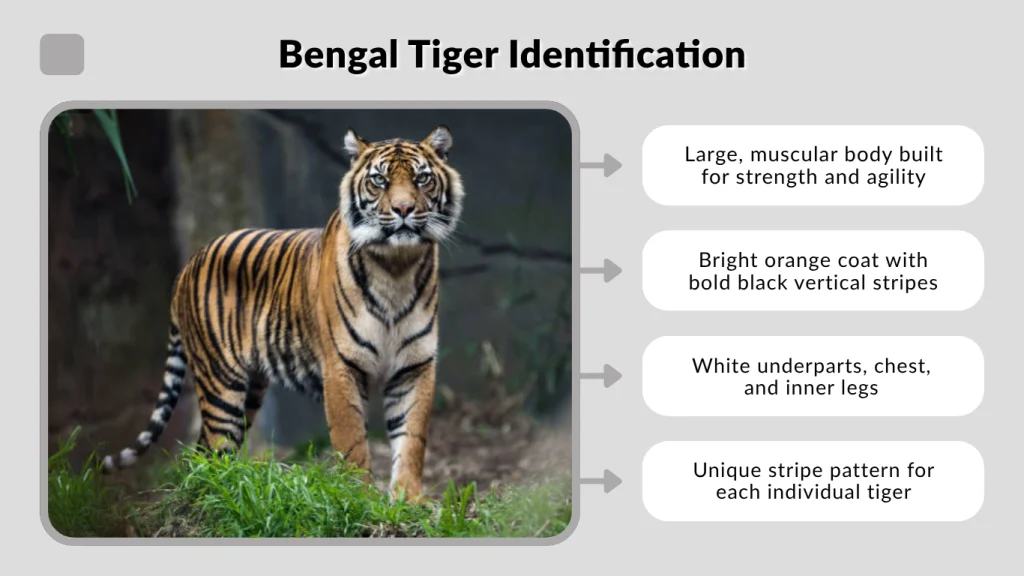
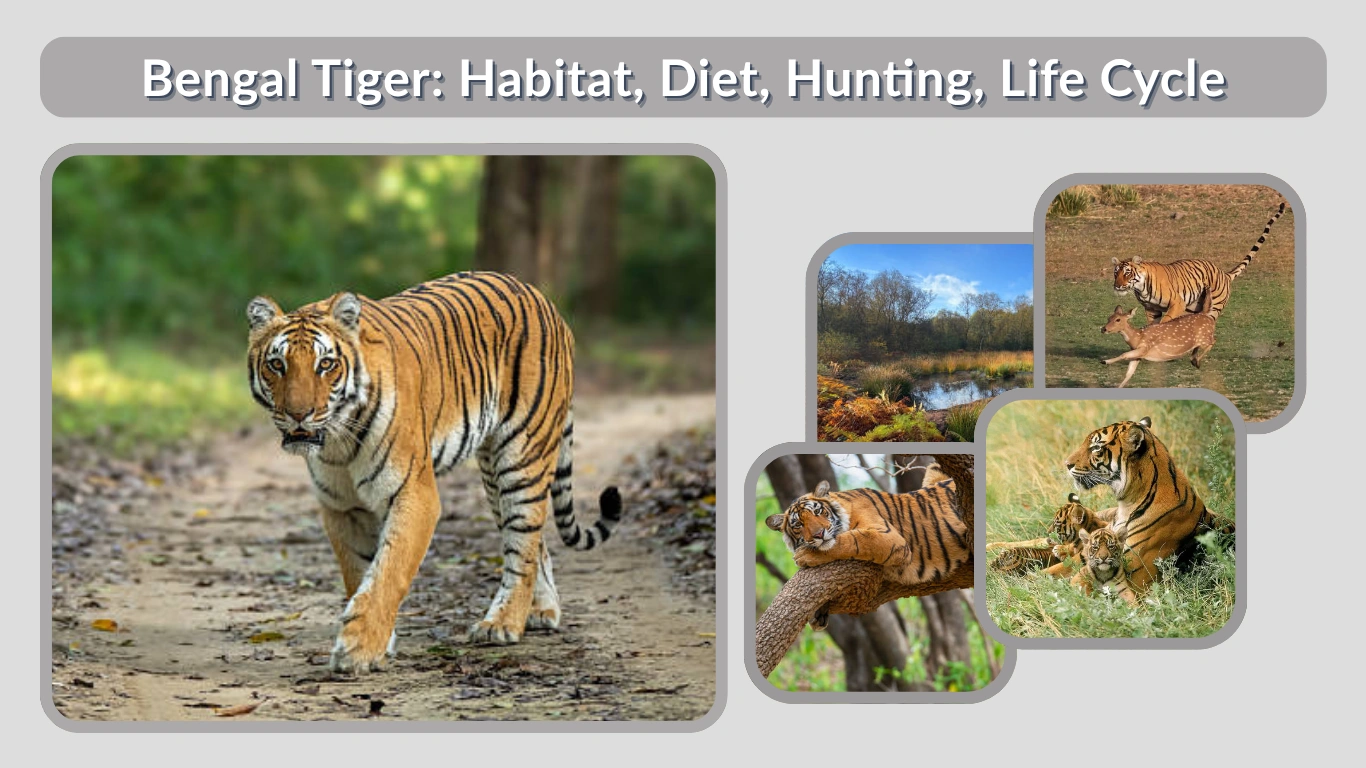
The Bengal tiger is one of the most recognizable big cats in the world due to its striking appearance and powerful build. Its physical features are specially adapted for hunting and survival in dense forests and grasslands.
- Large, muscular body built for strength and agility
- Bright orange coat with bold black vertical stripes
- White underparts, chest, and inner legs
- Unique stripe pattern for each individual tiger
- Broad head with strong jaws and long canine teeth
- Sharp retractable claws for gripping prey
- Long tail for balance and movement
- Excellent eyesight and hearing for hunting
These distinctive features make the Bengal tiger easy to identify and highly effective as a top predator.
Bengal Tiger Habitat
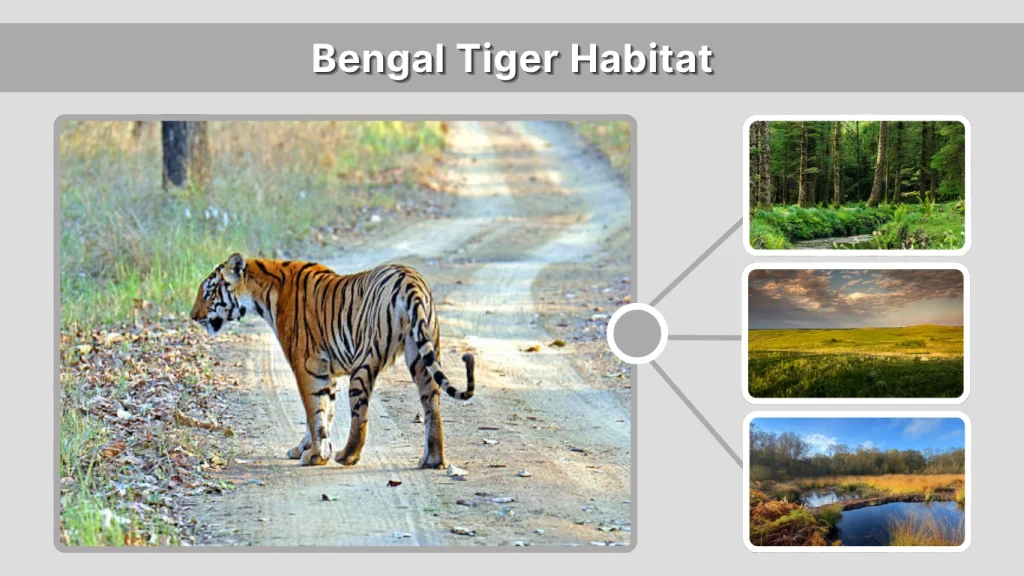
The Bengal tiger lives in a wide range of habitats across South Asia, showing remarkable adaptability to different environments.
Where Does the Bengal Tiger Live?
Bengal tigers are mainly found in India, which holds the largest population. They are also present in Bangladesh, Nepal, and Bhutan.
One of the most famous habitats is the Sundarbans, the largest mangrove forest in the world. Tigers in this region are uniquely adapted to living in swampy conditions and are known to swim frequently.
Preferred Environment
Bengal tigers prefer areas that provide dense cover, access to water, and abundant prey. These include tropical rainforests, grasslands, mangrove swamps, and deciduous forests.
Water sources are especially important, as tigers are strong swimmers and often cool off in rivers and lakes. Dense vegetation helps them stay hidden while stalking prey.
Bengal Tiger Diet
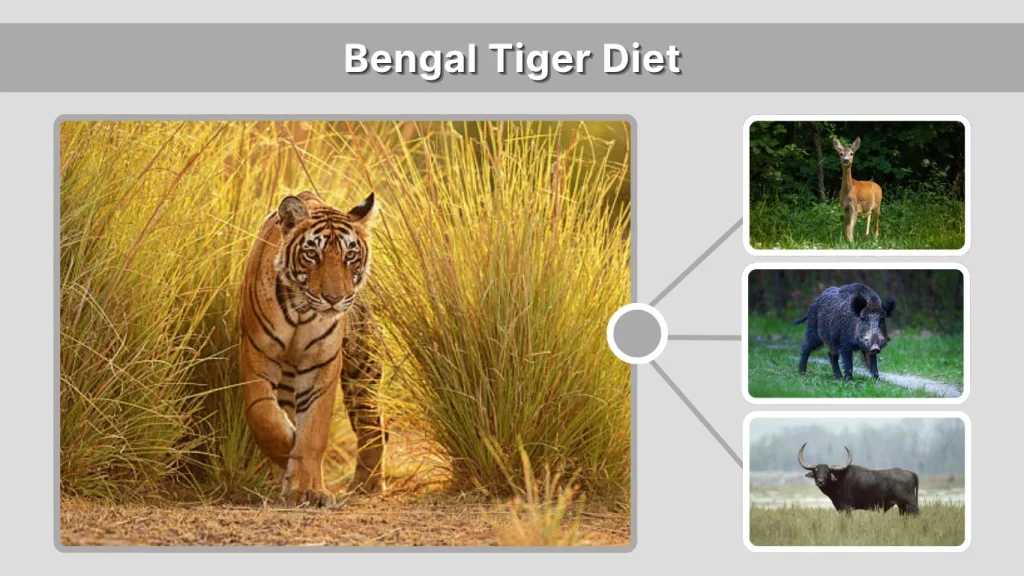
The Bengal tiger is a carnivore, meaning it feeds entirely on meat. Its diet mainly consists of large herbivores found in its habitat.
What Do Bengal Tigers Eat?
Bengal tigers primarily prey on animals such as deer (chital and sambar), wild boar, and buffalo. These animals provide the energy needed to sustain such a large predator.
They may also hunt smaller animals like monkeys, birds, and reptiles when larger prey is scarce. In rare cases, they may attack livestock, which can lead to conflict with humans.
Feeding Behavior
Bengal tigers are capable of consuming large amounts of meat in a single meal. After a successful hunt, they may eat up to 18–20 kilograms of meat at once.
They often drag their prey to a secluded area to avoid scavengers. After feeding, they may rest and can survive for several days before needing to hunt again.
Bengal Tiger Hunting
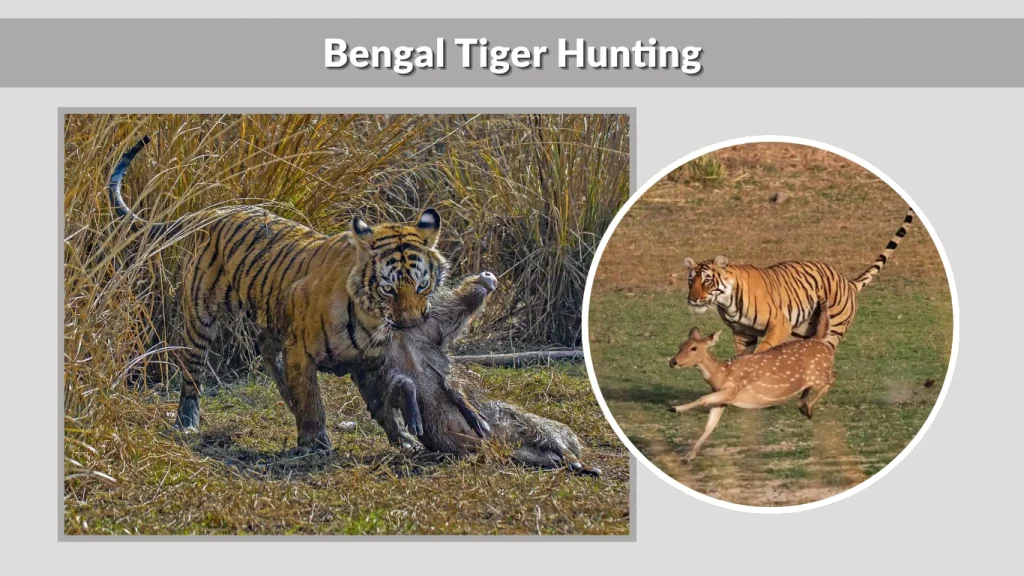
The Bengal tiger is a highly skilled and powerful hunter. Unlike many predators, it hunts alone and relies on stealth, patience, and strength to capture its prey.
Hunting Techniques
Bengal tigers use ambush tactics rather than chasing prey over long distances. They quietly stalk their target, using their striped coat as camouflage to blend into grass and forest shadows.
Once close enough, they launch a sudden and powerful attack, usually aiming for the neck or throat to quickly bring down the prey. Their strong jaws and sharp teeth allow them to deliver a fatal bite.
Tigers are also excellent swimmers and may hunt near water, especially in regions like the Sundarbans.
Hunting Success Rate
Despite their strength, Bengal tigers have a relatively low hunting success rate, often around 5–10%. This means they must attempt multiple hunts before securing a meal.
They typically target weak, injured, or isolated animals, which increases their chances of success. Their patience and ability to remain hidden are key factors in their hunting strategy.
Bengal Tiger Life Cycle
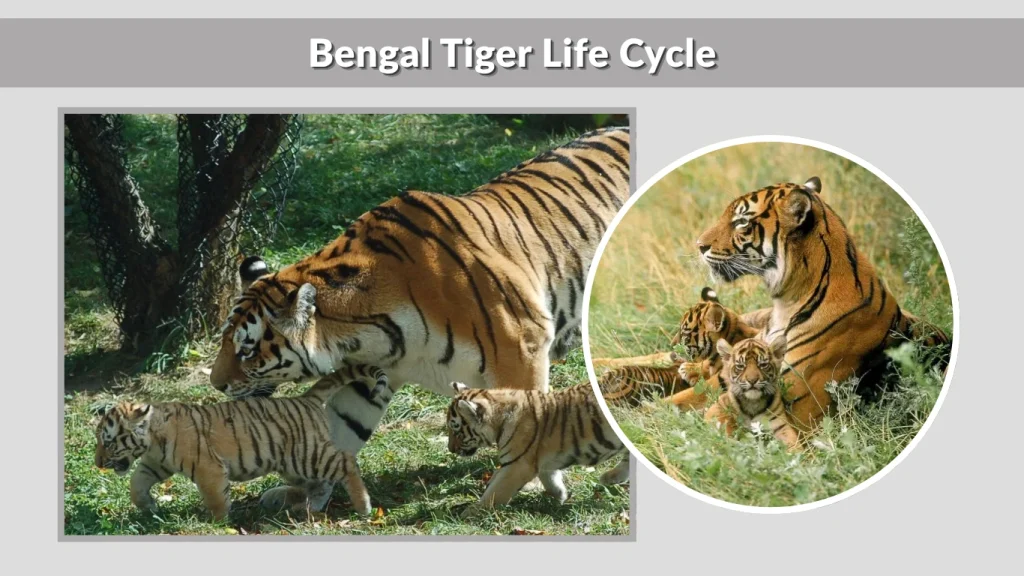
The life cycle of a Bengal tiger includes several stages, from birth to adulthood, each critical for survival.
Birth and Cubs
The gestation period of a Bengal tiger is about 3.5 months. A female tiger usually gives birth to 2–4 cubs in a safe, hidden den.
At birth, cubs are blind and completely dependent on their mother for food and protection. The mother raises them alone and is highly protective during this stage.
Growth and Development
Tiger cubs begin to open their eyes after about one to two weeks. As they grow, they start eating meat at around 2 months old and gradually learn hunting skills by observing their mother.
They typically stay with their mother for up to two years, during which they develop the skills needed to survive independently.
Lifespan
In the wild, Bengal tigers usually live between 10 and 15 years. However, in captivity, where they are protected and well-fed, they can live up to 20 years.
Their lifespan depends on factors such as food availability, habitat conditions, and human-related threats.
Bengal Tiger Facts
The Bengal tiger has many remarkable traits that make it one of the most fascinating animals in the world.
- It is the national animal of India and Bangladesh
- Each tiger has a unique stripe pattern
- It is an excellent swimmer
- Its roar can be heard up to 3 kilometers away
- It is one of the largest big cats on Earth
These facts highlight the tiger’s strength, uniqueness, and ecological importance.
Interesting Facts About Bengal Tigers
Here are some engaging and lesser-known facts about Bengal tigers:
- They can leap over 6 meters in a single jump
- They are mostly nocturnal hunters
- They can drag prey heavier than their own body weight
- They mark territory using scent and scratch marks
- They prefer living alone rather than in groups
These interesting facts show how adaptable and powerful Bengal tigers are in the wild.
Behavior and Adaptations
Bengal tigers have evolved several behaviors and physical adaptations that help them survive in different environments.
Social Behavior
Bengal tigers are solitary animals and prefer to live alone. Each tiger maintains its own territory, which it marks using scent and visual signs.
They usually come together only for mating or when a mother is raising her cubs. This solitary lifestyle reduces competition for food.
Adaptations
Their striped coat acts as natural camouflage, helping them blend into their surroundings while hunting. Their strong muscles and sharp claws allow them to overpower large prey.
They also have excellent night vision and hearing, which helps them hunt effectively in low-light conditions.
Conservation Status
The Bengal tiger is classified as an endangered species due to declining population numbers.
Although conservation efforts have helped stabilize populations in some areas, the species still faces serious threats.
Threats
- Habitat loss due to deforestation
- Poaching for skin and body parts
- Human-wildlife conflict
- Reduction in prey availability
Protecting habitats and enforcing anti-poaching laws are essential for ensuring the survival of Bengal tigers.
Importance in Ecosystem
Bengal tigers play a crucial role as apex predators. They help control populations of herbivores such as deer and wild boar.
By doing so, they prevent overgrazing and maintain the balance of vegetation in forests. This supports biodiversity and keeps ecosystems healthy.
Their presence is often considered a sign of a well-balanced and thriving environment.
Conclusion
The Bengal tiger is a symbol of strength, beauty, and ecological importance. From its powerful hunting abilities to its vital role in maintaining ecosystem balance, it stands out as one of the most remarkable animals on Earth.
However, its survival depends on continued conservation efforts and human awareness. Protecting the Bengal tiger means protecting entire ecosystems and the biodiversity they support.
FAQs
What is the scientific name of the Bengal tiger?
The scientific name of the Bengal tiger is Panthera tigris tigris. It is one of the most well-known subspecies of tiger and is native to the Indian subcontinent.
How big is a Bengal tiger?
Bengal tigers are among the largest big cats. Males can weigh between 180 and 260 kg, while females are smaller. They can grow up to 3 meters in length, including the tail.
What makes Bengal tigers unique?
Bengal tigers are unique due to their distinctive orange coat with black stripes, powerful build, and ability to adapt to different habitats such as forests, grasslands, and mangrove swamps.
Do Bengal tigers live alone or in groups?
Bengal tigers are solitary animals. They prefer to live and hunt alone, except during mating or when a mother is raising her cubs.
What is the biggest threat to Bengal tigers?
The biggest threats to Bengal tigers include habitat loss, poaching, and human-wildlife conflict. These factors continue to impact their population despite ongoing conservation efforts.