





The Northwestern wolf (Canis lupus occidentalis), also known as the Mackenzie Valley wolf or Alaskan wolf, is the largest subspecies of the gray wolf. It inhabits the remote wilderness of Alaska and western Canada, where it thrives in some of the harshest environments on Earth.
Known for its strength, endurance, and impressive size, the Northwestern wolf plays a vital role as an apex predator in its ecosystem. Unlike some other wolf populations, it has maintained relatively stable numbers due to its presence in less densely populated regions. However, it still faces challenges related to human activity and environmental changes.
Understanding the Northwestern wolf provides insight into how large predators survive and maintain balance in wild ecosystems.
What is the Northwestern Wolf?
Taxonomy and Classification
The Northwestern wolf belongs to the species Canis lupus, which includes all gray wolves worldwide. Its subspecies name, occidentalis, distinguishes it from other wolves in North America. It is part of the Canidae family, making it closely related to domestic dogs, coyotes, and foxes.
Why It’s Known as the Largest Wolf Subspecies
The Northwestern wolf is widely regarded as the largest gray wolf subspecies. Its large body size is an adaptation to cold climates, allowing it to conserve heat and survive in freezing temperatures. This follows a biological principle known as Bergmann’s rule, where animals in colder regions tend to be larger.
Northwestern Wolf Habitat and Distribution
Geographic Range
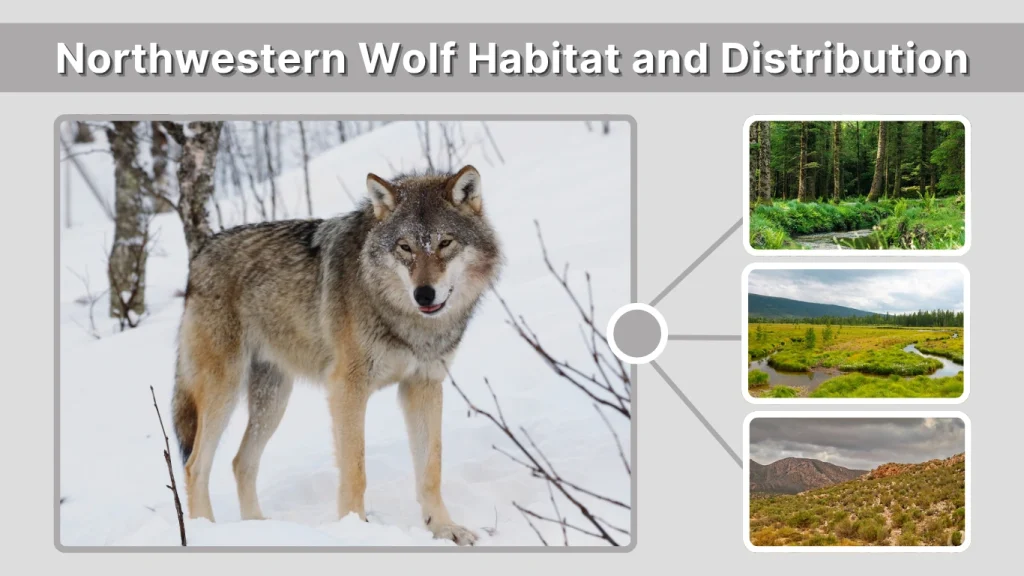
The Northwestern wolf is primarily found in Alaska and western Canada, including regions such as British Columbia, Yukon, and parts of Alberta. These areas provide vast, undisturbed landscapes that are ideal for large predators.
Preferred Ecosystems
This subspecies thrives in boreal forests, tundra, and mountainous regions. These habitats offer abundant prey and cover, allowing wolves to hunt effectively and establish territories.
Climate Adaptations
Northwestern wolves are highly adapted to cold environments. Their thick fur provides insulation against extreme temperatures, while their large bodies help retain heat. They are capable of traveling long distances across snow-covered terrain in search of food.
Northwestern Wolf Physical Characteristics
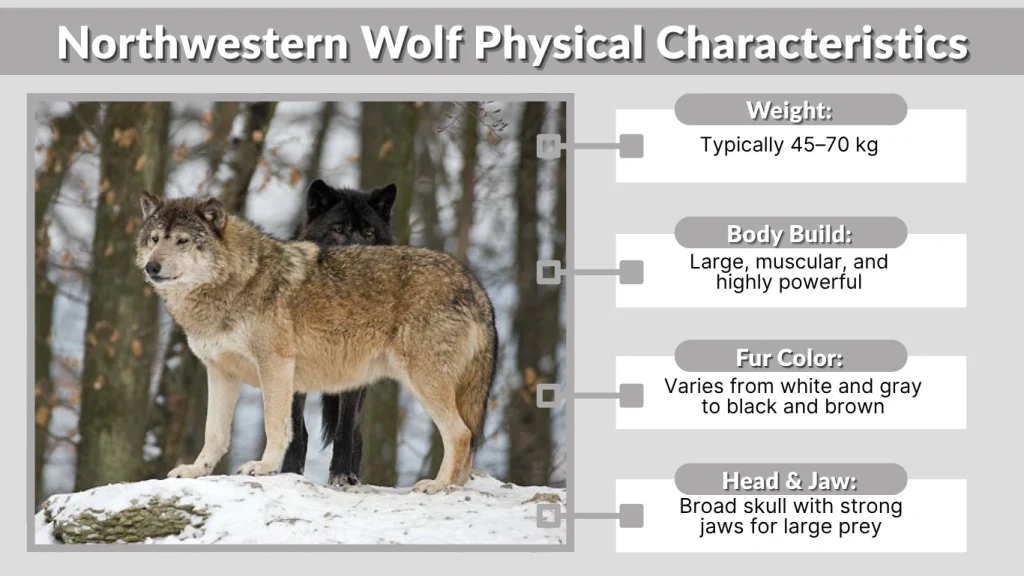
The Northwestern wolf is a powerful and robust animal, built for survival in extreme northern climates. Its physical features reflect both its size and its ability to endure harsh environmental conditions.
Key Characteristics:
- Size: Largest gray wolf subspecies
- Weight: Typically 45–70 kg, with some individuals exceeding this range
- Body Build: Large, muscular, and highly powerful
- Fur Color: Varies from white and gray to black and brown
- Coat Thickness: Extremely dense and insulating
- Head & Jaw: Broad skull with strong jaws for large prey
- Leg Strength: Long, strong legs for traveling through snow
- Adaptation: Built for cold climates and hunting large animals
Northwestern Wolf Diet and Hunting Behavior
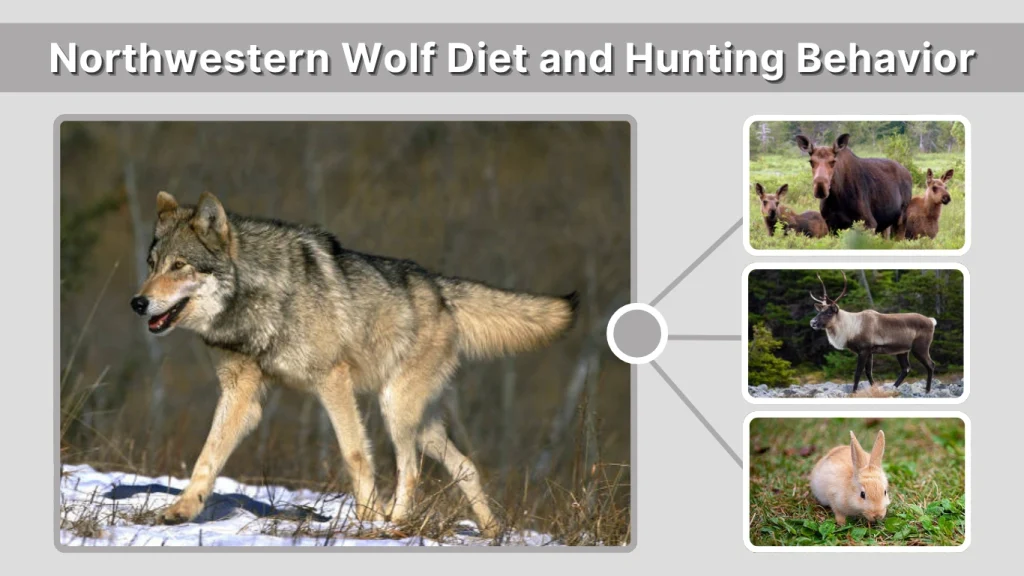
Main Prey Species
The Northwestern wolf primarily feeds on large ungulates such as moose, caribou, and elk. These animals provide the high energy intake needed to sustain such a large predator.
In addition to large prey, they may also consume smaller animals like hares or rodents when necessary. Their diet can vary depending on availability and environmental conditions.
Hunting Techniques
Northwestern wolves are highly skilled hunters that rely on teamwork. They hunt in coordinated packs, using endurance and strategy to chase down large prey over long distances.
Rather than relying on speed alone, they wear down their prey until it becomes exhausted. This method is particularly effective in snowy environments, where wolves have a mobility advantage.
Northwestern Wolf Behavior and Social Structure
Pack Organization
Northwestern wolves live in structured social groups known as packs. A typical pack consists of a dominant breeding pair and their offspring. Larger prey availability often allows these packs to be bigger than those of other wolf subspecies.
Each member has a role within the group, contributing to hunting, territory defense, and raising young. Cooperation is essential for survival in their challenging environment.
Communication
Communication is vital for maintaining pack cohesion. Northwestern wolves use howling to communicate over long distances, helping them locate each other and defend their territory.
They also rely on body language and scent marking to express dominance, establish boundaries, and maintain social order within the pack.
Northwestern Wolf Reproduction and Life Cycle
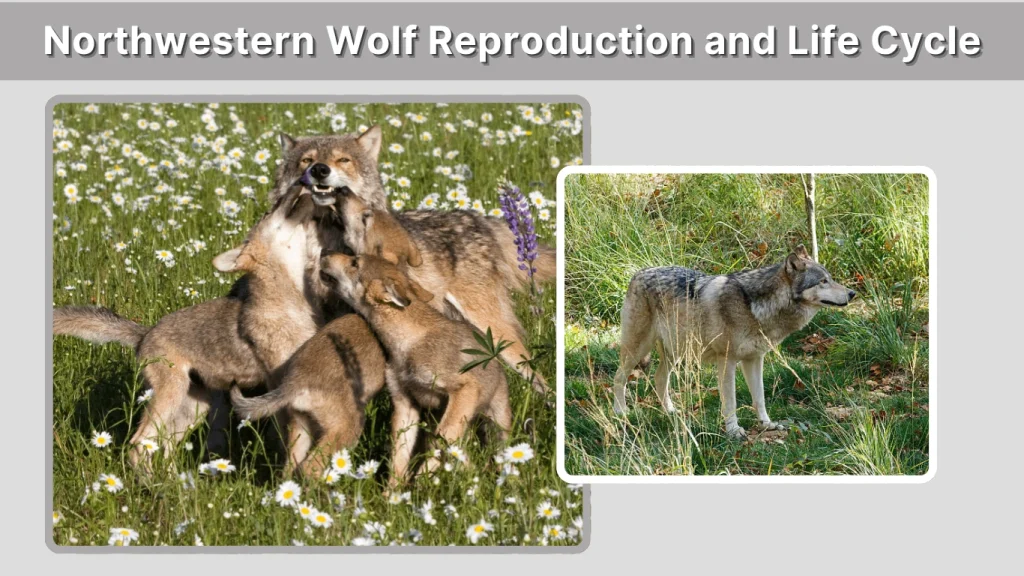
The breeding season for the Northwestern wolf typically occurs between January and March. During this time, only the dominant male and female in the pack usually reproduce, helping maintain stability within the group.
After a gestation period of about 63 days, the female gives birth to a litter of 4 to 6 pups in a den, often located in a sheltered area such as a forest clearing or hillside. The pups are born blind and depend entirely on their mother for survival during the early weeks.
As they grow, other pack members assist in feeding and protecting them. This cooperative care increases survival rates. By the time they are a few months old, the pups begin learning essential skills such as hunting and social behavior.
Conservation Status of the Northwestern Wolf
The Northwestern wolf is not currently considered endangered and maintains relatively stable populations across much of its range. Its presence in remote and less populated regions has helped protect it from many of the threats faced by other wolf subspecies.
However, its conservation status varies depending on location. In some areas, wolves are protected, while in others, they are managed through regulated hunting and wildlife control programs. These management practices aim to balance ecological needs with human interests.
Threats to the Northwestern Wolf
Human Hunting and Control Programs
In certain regions, wolves are hunted or controlled to manage populations and reduce conflicts with livestock or game species. While regulated, these activities can still impact local populations.
Climate Change Impact
Climate change poses a growing threat by altering habitats and affecting prey availability. Changes in snow patterns and vegetation can influence hunting conditions and ecosystem dynamics.
Habitat Disturbance
Industrial activities such as logging, mining, and road construction can disrupt natural habitats. Increased human presence also raises the likelihood of conflicts and reduces wilderness areas.
Role in the Ecosystem
As an apex predator, the Northwestern wolf plays a crucial role in maintaining ecological balance. By regulating populations of large herbivores like moose and caribou, it prevents overgrazing and supports healthy vegetation.
This balance benefits a wide range of species and contributes to overall biodiversity. The presence of wolves is often an indicator of a well-functioning and resilient ecosystem.
Northwestern Wolf vs Other Wolf Subspecies
Size Comparison
The Northwestern wolf is significantly larger than most other gray wolf subspecies, making it uniquely adapted to hunting large prey in cold environments.
Habitat Differences
While many wolf subspecies live in varied climates, the Northwestern wolf is specifically adapted to northern regions with cold temperatures, snow, and vast wilderness areas.
Behavioral Differences
Due to the availability of large prey, Northwestern wolves often form larger packs and exhibit highly coordinated hunting strategies compared to smaller subspecies.
Cultural and Historical Significance
The Northwestern wolf has long been part of the cultural traditions of Indigenous peoples in North America. It is often seen as a symbol of strength, intelligence, and cooperation.
Historically, wolves have also been misunderstood and persecuted due to their perceived threat to livestock. Over time, perspectives have begun to shift, with greater recognition of their ecological importance.
Conclusion
The Northwestern wolf stands as a powerful example of nature’s adaptability and resilience. As the largest gray wolf subspecies, it plays a vital role in maintaining balance within northern ecosystems.
Although it currently enjoys relatively stable populations, ongoing challenges such as climate change and human activity highlight the need for continued management and conservation. Protecting this species ensures the health of entire ecosystems and preserves an important part of the natural world.
FAQs
How big is a Northwestern wolf?
The Northwestern wolf is the largest gray wolf subspecies, with individuals typically weighing between 45 and 70 kilograms. Some exceptionally large wolves may exceed this range.
Where do Northwestern wolves live?
They are primarily found in Alaska and western Canada, inhabiting forests, tundra, and mountainous regions with abundant prey and minimal human disturbance.
What do Northwestern wolves eat?
Their diet mainly consists of large animals such as moose, caribou, and elk. They may also eat smaller prey when larger animals are not available.
Are Northwestern wolves endangered?
No, they are not currently endangered. Their populations are relatively stable, although they are managed in some areas through conservation and control programs.
How do Northwestern wolves survive extreme cold?
They have thick insulating fur, large bodies that retain heat, and strong legs for traveling through snow. These adaptations allow them to thrive in harsh northern climates.