

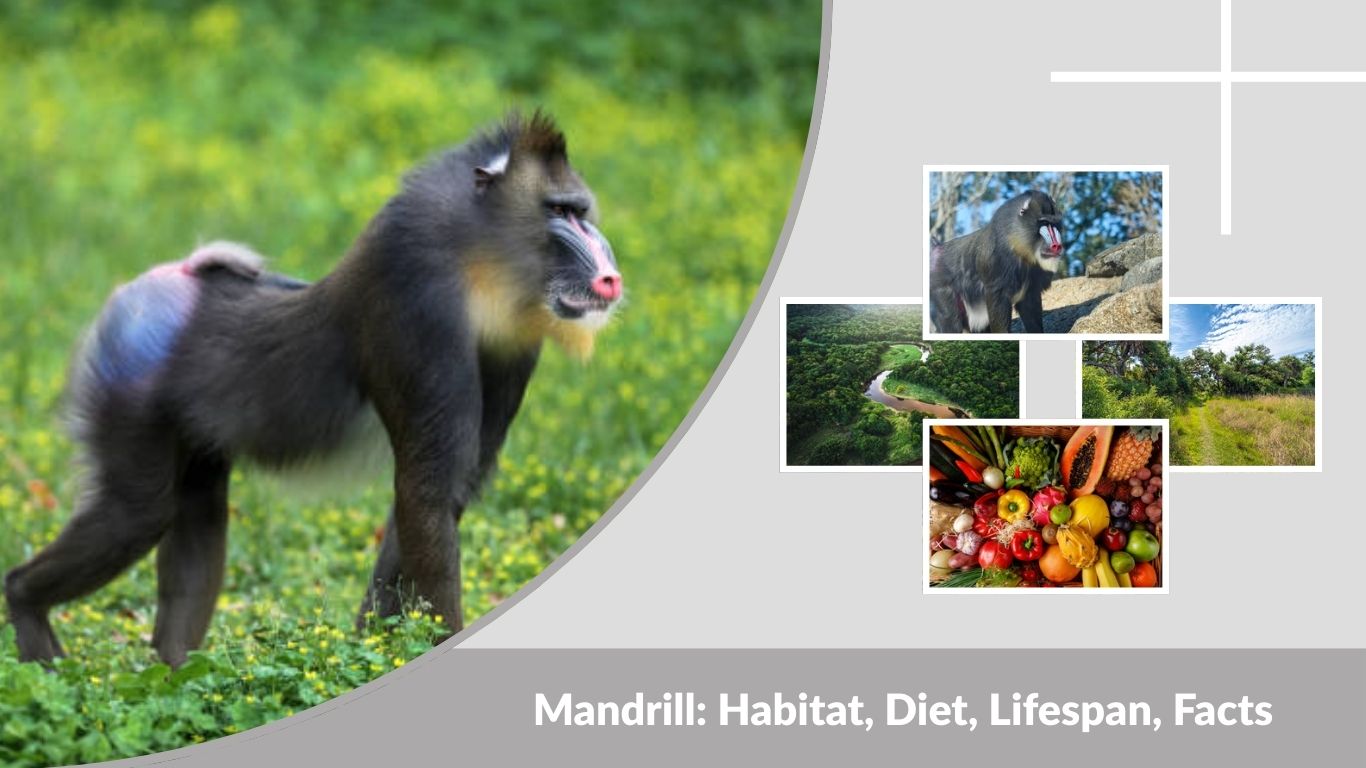
The mandrill is one of the most striking and colorful primates in the animal kingdom. Known for its bright blue and red facial markings and powerful body, the mandrill is also the largest monkey species in the world. These fascinating animals live mainly in the dense rainforests of Central and West Africa. Mandrills are highly social creatures that live in large groups and display complex behaviors. In this article, we explore mandrill identification, habitat, diet, baby development, and interesting facts about this remarkable primate.
What Is a Mandrill?
The mandrill is a large Old World monkey belonging to the genus Mandrillus. Its scientific name is Mandrillus sphinx. Although they resemble baboons in appearance, mandrills are actually more closely related to another species called the drill.
Scientific Classification
- Scientific name: Mandrillus sphinx
- Family: Cercopithecidae
- Order: Primates
- Genus: Mandrillus
Mandrills belong to the Old World monkey family, which includes many species found across Africa and Asia.
Overview of the Species
Mandrills are native to Central and West Africa, particularly in countries such as Gabon, Cameroon, Congo, and Equatorial Guinea. They are known for their unique appearance, especially the colorful patterns on their faces.
These monkeys are highly social and live in large groups sometimes called hordes. These groups can contain dozens or even hundreds of individuals. Living in large groups helps them find food more efficiently and stay safe from predators.
Mandrills are also famous for their intelligence and strong social hierarchy within their groups.
Mandrill Identification
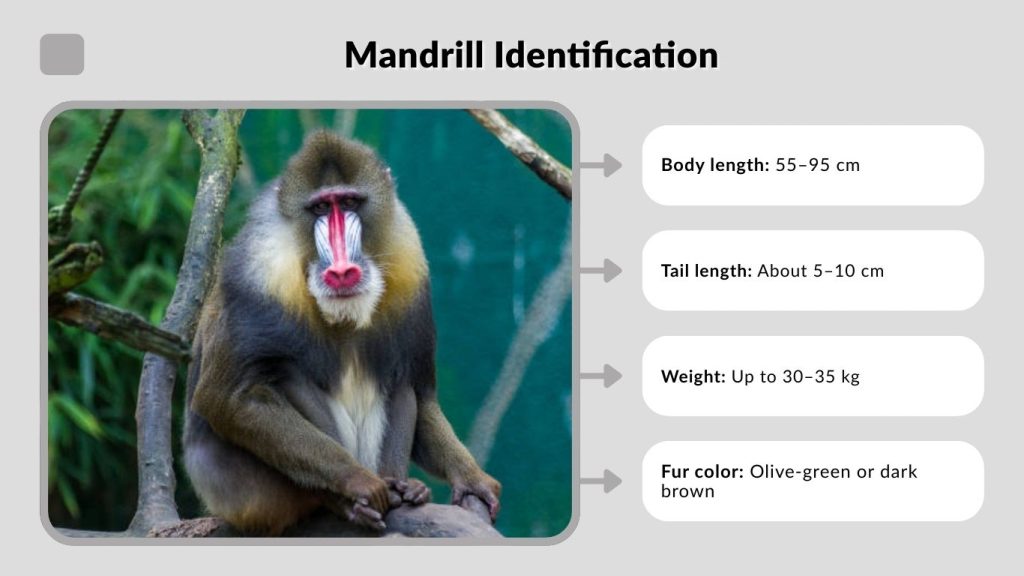
Mandrills are easily recognized because of their unique and colorful physical features.
Physical Characteristics
Mandrills are large monkeys with strong bodies and distinctive facial colors.
Typical characteristics include:
- Body length: 55–95 cm
- Tail length: Short tail (about 5–10 cm)
- Weight: Up to 30–35 kg for large males
- Fur color: Olive-green or dark brown
- Face: Bright blue and red ridges on the nose
Their colorful face is one of the most distinctive features of any mammal.
Size and Weight
Mandrills show a strong difference in size between males and females.
Typical measurements include:
- Male weight: 20–35 kg
- Female weight: 10–15 kg
Adult males are much larger than females and also have brighter facial colors.
Distinctive Features
Mandrills have several remarkable features that make them unique among primates.
Important traits include:
- Bright blue and red facial ridges
- Yellow beard beneath the chin
- Short tail
- Colorful rump with red and blue shades
The colors of a male mandrill often become brighter as it grows older and gains dominance within its group.
Mandrill Habitat

Mandrills mainly live in dense tropical forests where food and shelter are abundant.
Where Do Mandrills Live?
Mandrills are found in several countries in Central and West Africa, including:
- Gabon
- Cameroon
- Republic of the Congo
- Equatorial Guinea
Gabon is believed to contain the largest populations of mandrills.
Natural Habitat Types
Mandrills prefer habitats that provide plenty of vegetation and food sources.
Their natural habitats include:
- Tropical rainforests
- Dense jungle areas
- River valleys
- Forest floors
Although they are capable climbers, mandrills spend much of their time on the ground searching for food.
Adaptations to Forest Environments
Mandrills have several adaptations that help them survive in forest environments.
Key adaptations include:
- Strong limbs for climbing and walking
- Sharp teeth for eating tough foods
- Excellent sense of smell for locating food
These traits allow them to thrive in the dense forests where they live.
Mandrill Diet

Mandrills are omnivores, meaning they eat both plant and animal foods. Their diet is varied and depends on what is available in the forest.
What Do Mandrills Eat?
Mandrills eat a wide variety of foods such as:
- Fruits
- Seeds
- Roots
- Leaves
- Insects
- Small animals
Their flexible diet allows them to survive even when certain food sources are scarce.
Omnivorous Feeding Behavior
Mandrills are opportunistic feeders, meaning they eat whatever food sources are available.
They may also eat:
- Eggs
- Small reptiles
- Birds or rodents
This diverse diet helps them maintain their large body size and energy levels.
Foraging Behavior
Mandrills usually search for food in groups on the forest floor.
Common feeding behaviors include:
- Digging for roots and insects
- Collecting fallen fruits from trees
- Using their hands to pick up and hold food
Young mandrills learn these feeding habits by observing older members of the group.
Mandrill Baby
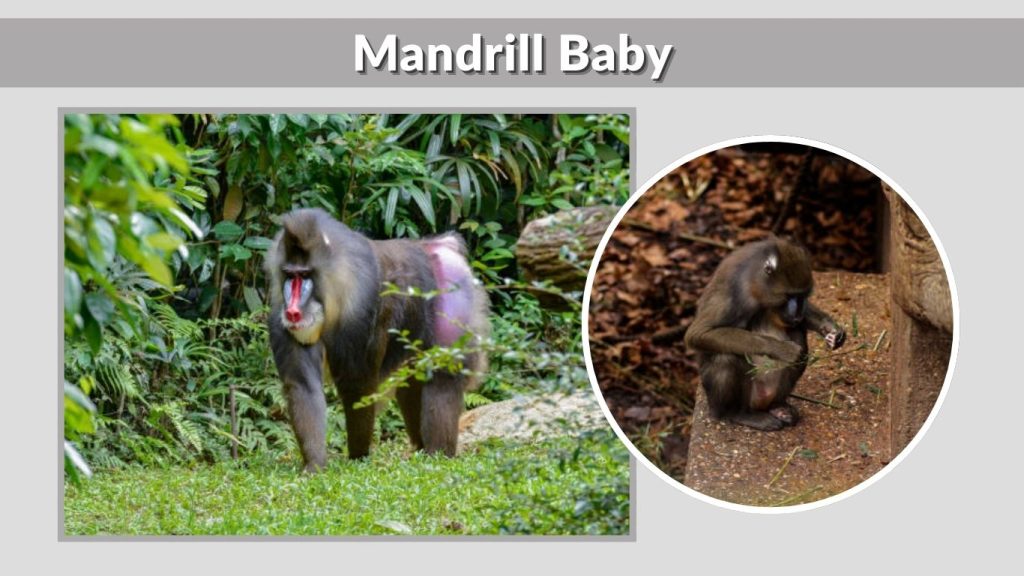
Baby mandrills are called infants and depend heavily on their mothers during the early stages of life.
Birth and Infant Development
Female mandrills usually give birth to one baby at a time after a gestation period of about 175 days.
After birth:
- Infants cling closely to their mothers
- Mothers provide milk and protection
- The troop helps watch over the young
The bond between mother and infant is very strong during the early months.
Appearance of Baby Mandrills
Baby mandrills look different from adults.
Typical features include:
- Darker fur
- Small face without bright colors
- Tiny body size
As they grow older, their facial colors gradually develop, especially in males.
Mandrill Life Cycle
The life cycle of a mandrill includes several stages of development, from infancy to adulthood. Each stage is important for learning survival skills and social behaviors within the group.
Life Stages
Mandrills typically go through four main stages during their life:
1. Infant Stage (0–1 year)
Newborn mandrills rely entirely on their mothers for milk, protection, and warmth. Infants cling closely to their mothers and begin learning basic movements and social interactions.
2. Juvenile Stage (1–4 years)
Young mandrills become more independent and start exploring their surroundings. They spend much of their time playing with other juveniles, which helps them develop coordination and social skills.
3. Adult Stage (4–8 years)
At this stage, mandrills reach maturity. Females may begin reproducing, while males grow larger and compete for higher social ranks within the group.
4. Mature Adult Stage
Older adults play an important role in maintaining the stability of the group and guiding younger members.
Social Learning
Young mandrills learn many important behaviors by observing adult members of their troop. These behaviors include:
- Finding food
- Recognizing predators
- Communicating with others
- Understanding the group hierarchy
Play, grooming, and interaction with other group members help young mandrills develop these skills.
Mandrill Lifespan
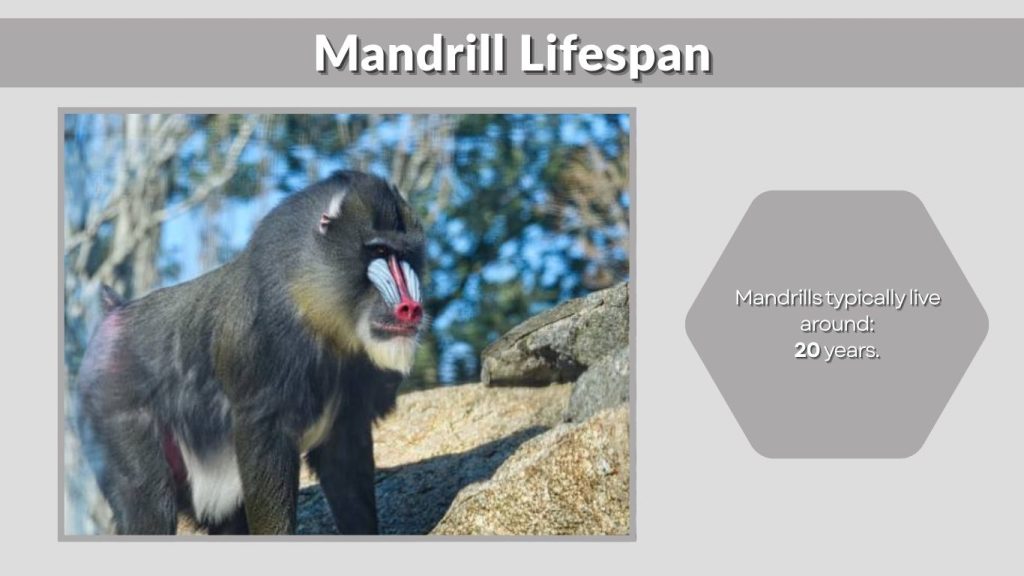
The lifespan of a mandrill depends on environmental conditions and access to food and shelter.
Lifespan in the Wild
In natural habitats, mandrills typically live around:
20 years
However, survival may be affected by predators, disease, and habitat conditions.
Lifespan in Captivity
Mandrills often live longer in zoos and wildlife reserves where they receive proper care.
Their lifespan in captivity may reach:
30–40 years
Factors Affecting Lifespan
Several factors influence how long mandrills live, including:
- Habitat quality
- Food availability
- Predators and disease
- Human activities such as hunting and deforestation
Healthy forest ecosystems help support longer lifespans.
Mandrill Social Structure
Mandrills are extremely social animals that live in large groups.
Troop Organization
Mandrill groups are often called hordes, and they can contain hundreds of individuals. These groups usually include:
- Adult males
- Adult females
- Juveniles and infants
Female mandrills usually remain in their birth group for life, while males may leave the group when they reach maturity.
Dominance Hierarchy
Mandrill societies have a clear dominance hierarchy. A dominant male, often called the alpha male, leads the group and has the brightest facial colors.
Dominant males usually have better access to food and mating opportunities.
Communication and Behavior
Mandrills communicate using several methods, including:
- Facial expressions
- Vocal calls
- Body posture
- Grooming interactions
These communication signals help maintain order and cooperation within the group.
Mandrill Facts
Mandrills are fascinating primates with many remarkable characteristics.
Interesting Facts
Here are some interesting facts about mandrills:
- Mandrills have the most colorful faces of any mammal.
- They are considered the largest monkey species in the world.
- The bright colors on a male mandrill’s face often indicate strength and dominance.
- Mandrills spend much of their time on the forest floor searching for food.
Behavioral Facts
Mandrills show complex behaviors that help them survive in the wild.
Important behaviors include:
- Strong social relationships within the group
- Cooperative living in large groups
- Grooming to strengthen social bonds
These behaviors help maintain stability within their large social groups.
Conservation Status
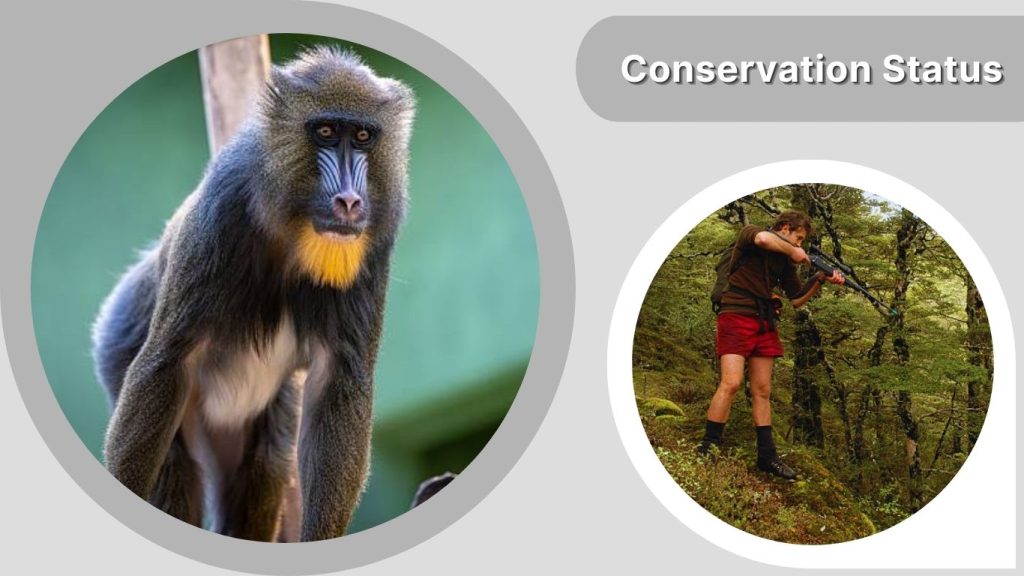
Mandrills face several environmental challenges that threaten their populations.
Population Status
The mandrill is currently classified as Vulnerable, meaning its population is declining in some areas.
Major Threats
The biggest threats to mandrills include:
- Habitat loss due to deforestation
- Hunting for bushmeat
- Human expansion into forest areas
These factors have reduced mandrill populations in some regions.
Conservation Efforts
Several conservation programs are working to protect mandrills. These efforts include:
- Protecting forest habitats
- Creating wildlife reserves and national parks
- Raising awareness about wildlife conservation
Conservation initiatives are essential for ensuring the long-term survival of this species.
FAQs
Are mandrills dangerous?
Mandrills are generally not aggressive toward humans, but they can become dangerous if threatened due to their strong bodies and sharp teeth.
Why are mandrills so colorful?
The bright colors of mandrills, especially in males, are related to social status and health. Stronger and more dominant males usually display brighter colors.
Are mandrills related to baboons?
Mandrills look similar to baboons, but they are actually more closely related to another primate called the drill.
Conclusion
Mandrills are remarkable primates known for their colorful appearance, powerful bodies, and complex social structures. Living mainly in the tropical forests of Central and West Africa, these monkeys play an important role in forest ecosystems. From their varied diet and large social groups to their unique facial colors, mandrills remain one of the most fascinating monkey species in the world. Protecting their habitats and supporting conservation efforts will help ensure that future generations can continue to observe these incredible animals in the wild.