

At first glance, you might think you’ve spotted a tiny hummingbird buzzing from flower to flower—but look again. That fast-fluttering visitor is likely a hummingbird moth, an incredible insect that mimics birds in both speed and style. In this article, we’ll explore the types, features, and places where you can spot this fascinating moth.
What Is the Hummingbird Moth?
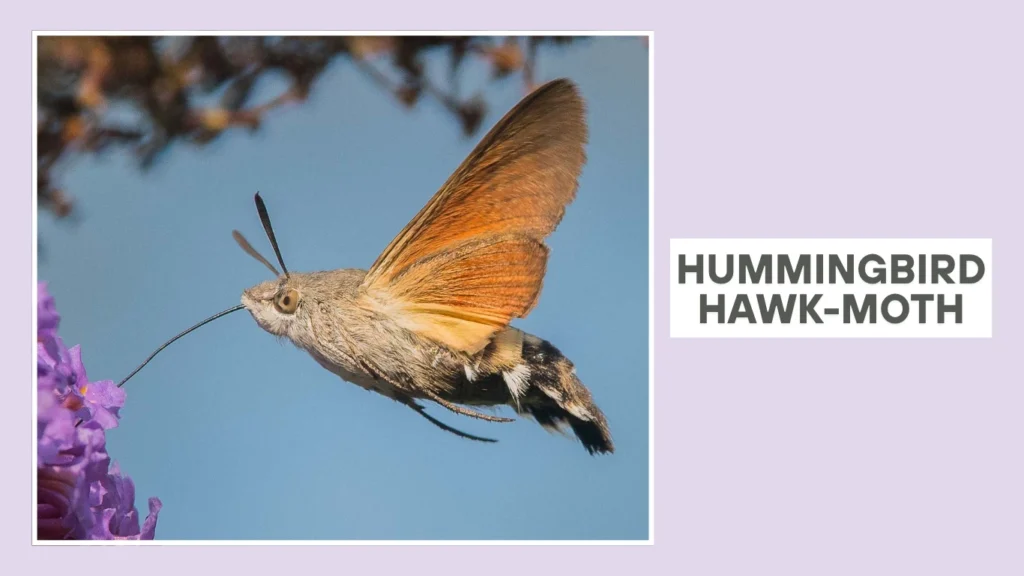
The hummingbird moth is a day-flying insect from the Sphingidae family that closely mimics a hummingbird in both appearance and behavior. It hovers in midair while feeding on nectar with its long proboscis, flapping its wings rapidly like a bird.
Unlike most moths, it’s active during the day and often seen darting between flowers. Its thick body, wing blur, and humming sound make it easy to mistake for a real hummingbird.
These moths are important pollinators and a delight to watch in gardens and meadows, especially during warm months.
Key Characteristics That Make It Look Like a Hummingbird

One of the most fascinating traits of the hummingbird moth is its ability to hover in place while feeding. Using powerful wing muscles, it beats its wings so fast that they appear as a blur, just like a hummingbird. This hovering behavior, combined with their darting flight patterns, makes them incredibly convincing mimics.
Another striking feature is their long, coiled proboscis. When feeding, they extend it to reach deep into flowers—much like a hummingbird using its beak. The proboscis remains hidden when not in use, adding to the illusion that they’re birds rather than insects.
Their body shape also contributes to the confusion. Hummingbird moths have plump, furry bodies that are similar in size and shape to small hummingbirds. Some species even display reddish or golden colors on their wings and body, further enhancing the illusion from a distance or in motion.
Most Common Hummingbird Moth Species
Across the globe, several moth species imitate hummingbirds in flight, feeding habits, and appearance. Here are four of the most recognized types, each broken down with essential identification details.
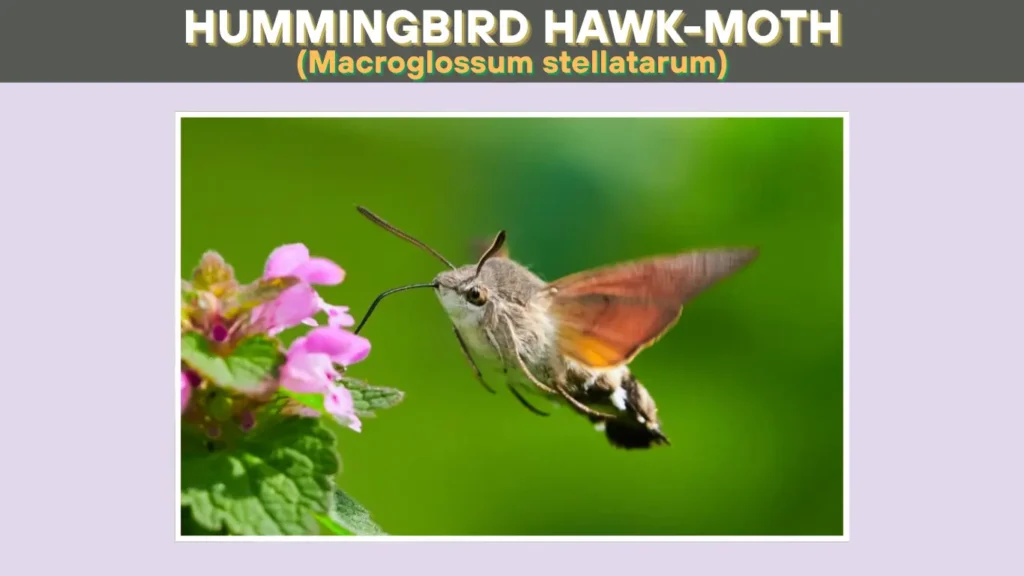
1. Hummingbird Hawk-Moth (Macroglossum stellatarum)
Identification:
This moth has a thick, furry body and distinct orange hindwings with brown-grey forewings. Its wings beat so rapidly they appear blurred in flight, just like a hummingbird.
Habitat:
Native to Europe, Asia, and North Africa, it thrives in gardens, meadows, and open countryside. It is also frequently seen in the UK during summer months, especially in warm weather.
Behavior:
Unlike most moths, it is day-active, especially during sunny afternoons. It hovers steadily in front of flowers, darting from bloom to bloom with speed and precision, creating a faint hum.
2. Hummingbird Clearwing (Hemaris thysbe)

Identification:
This North American moth features transparent wings with reddish-brown borders and a fuzzy green to yellowish body. Its wings are mostly clear, giving it a light and airy appearance in flight.
Habitat:
Common in Eastern North America, it favors suburban gardens, forest edges, and areas rich in nectar flowers like bee balm and phlox.
Behavior:
Often seen during daylight hours, it hovers calmly and feeds with a long proboscis. It is very approachable and commonly mistaken for a young hummingbird.
3. Snowberry Clearwing (Hemaris diffinis)

Identification:
Sometimes mistaken for a bumblebee, this moth has a black and yellow banded body and semi-transparent wings with dark edges.
Habitat:
It is widespread in Central and Western North America and often found in wildflower fields, gardens, and near honeysuckle vines.
Behavior:
Snowberry clearwings are fast and agile. They buzz loudly while feeding and are diurnal, meaning they’re most active during the day.
4. White-Lined Sphinx Moth (Hyles lineata)

Identification:
This large moth has a brown body with white lines along the sides and bold, white-striped forewings. Its hindwings often reveal pinkish or rosy tones when spread.
Habitat:
It lives across North, Central, and South America, thriving in deserts, gardens, and meadows. It adapts well to both wild and urban environments.
Behavior:
One of the few that flies during both day and night, this species is powerful in flight and often seen during dusk or after rain when flowers are abundant.
How Common Are Hummingbird Moths?

| Species | Abundance | Regions Found | Peak Visibility | Common Sightings |
| Hummingbird Hawk-Moth | Very Common | Europe, Asia, North Africa, UK (especially South) | Summer (June–August) | Flower gardens, countryside, urban parks |
| Hummingbird Clearwing | Common | Eastern North America | Late Spring to Early Fall | Gardens, woodland edges, near nectar flowers |
| Snowberry Clearwing | Common to Frequent | Central and Western North America | Summer | Meadows, suburban gardens, wildflower zones |
| White-Lined Sphinx Moth | Extremely Common | North, Central, and South America | Spring to Fall (esp. post-rain) | Deserts, fields, urban green areas |
Where to Spot Them
If you’re hoping to catch a glimpse of a hummingbird moth in action, the good news is—they’re not that rare once you know where to look. These fascinating moths frequent areas with abundant flowers and are especially active during warm, sunny days.
Best Locations
Hummingbird moths are commonly found in gardens, meadows, parks, and along woodland edges. They’re particularly drawn to areas with plenty of nectar-rich flowers. If you have a pollinator-friendly garden or live near a natural wildflower zone, you’re likely to spot them between spring and early fall.
Flowers They Love
To attract hummingbird moths, plant flowers with tubular blooms and strong fragrances. Some of their favorites include:
- Bee balm
- Phlox
- Honeysuckle
- Petunia
- Verbena
- Evening primrose
- Butterfly bush
These flowers make it easier for the moths to hover and sip nectar using their long proboscis.
Time of Day
Most species are day-active, especially from mid-morning to dusk, though some like the white-lined sphinx moth are active during twilight and even at night. For daytime watchers, late afternoon is one of the best times to see them hovering just inches above flower clusters.
How to Attract Them
Avoid pesticides, which can harm both moths and their caterpillars. Keep your garden blooming from late spring through summer, and consider adding host plants like honeysuckle, snowberry, or bedstraw for caterpillars to thrive on. A quiet, flower-filled corner of your yard can easily become a hummingbird moth haven.
Final Thoughts
Hummingbird moths are one of nature’s most convincing mimics—buzzing, hovering, and sipping nectar just like tiny birds. But behind their birdlike behavior lies a unique species of moth with its own ecological role. They not only bring beauty to gardens but also serve as important pollinators across different habitats.
