
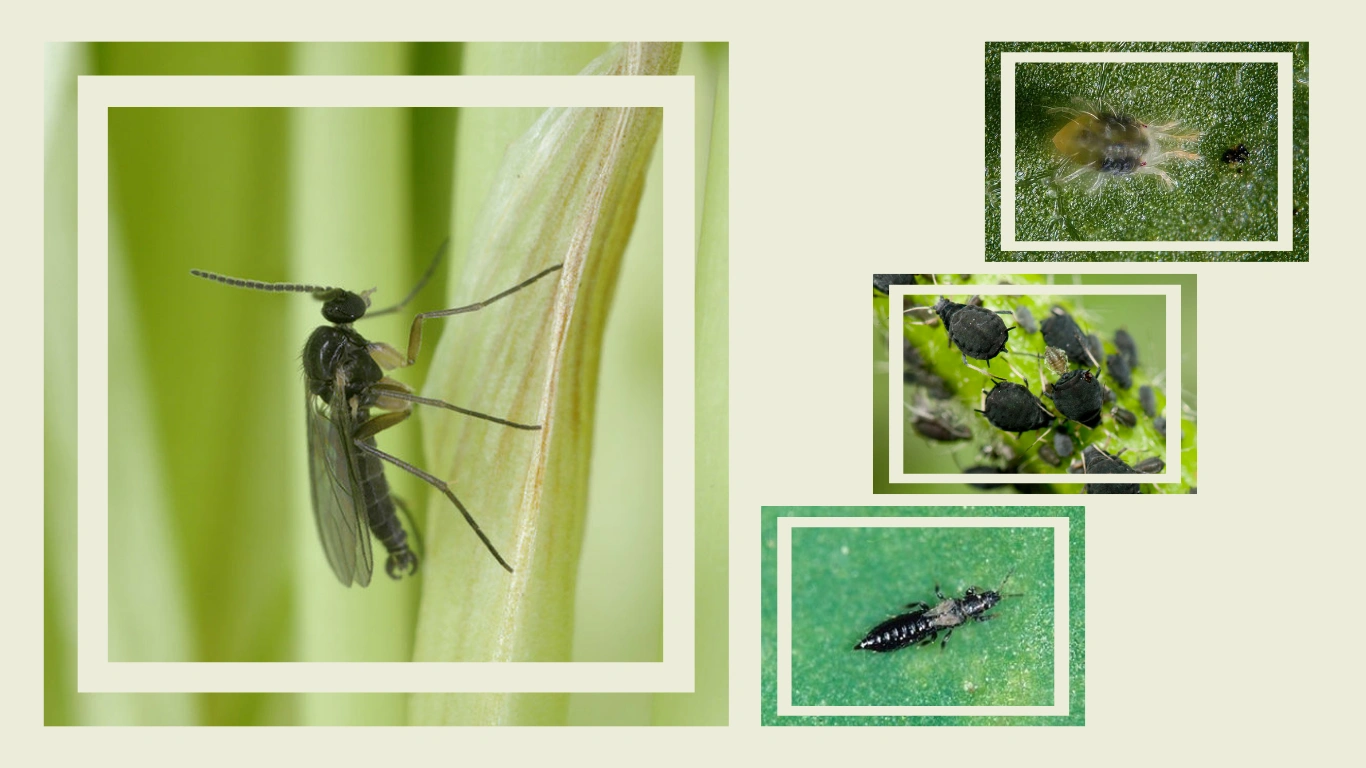
Ever spotted tiny black specks crawling on your plants, floor, or food and thought they looked like poppy seeds? You’re not alone. Many small insects resemble poppy seeds due to their size, shape, and dark color but identifying them correctly is key to handling them. Some are harmless, while others can damage plants, infest food, or cause skin irritation. In this guide, we’ll explore seven common bugs that match this description and explain where they’re found and what risks they pose.
1. Fungus Gnat

Fungus gnats are tiny, delicate black insects that often resemble poppy seeds in size and shape when resting on soil or leaves. They’re commonly found indoors around houseplants, especially in moist or overwatered soil. Although they can be a nuisance, they are generally harmless to humans.
Identification
- Size: 1.5 to 3 mm long (similar to a poppy seed)
- Color: Dark gray to black body with transparent wings
- Shape: Slender, mosquito-like body
- Movement: Weak fliers, often seen hovering near plant pots or soil
- Habitat: Moist potting soil, decaying plant matter, and organic debris
Behavior and Risks
Adult fungus gnats don’t bite or sting, but their larvae can damage plant roots, especially in seedlings and young houseplants. A heavy infestation can cause poor plant growth and yellowing leaves.
2. Spider Mites (Black Variety)
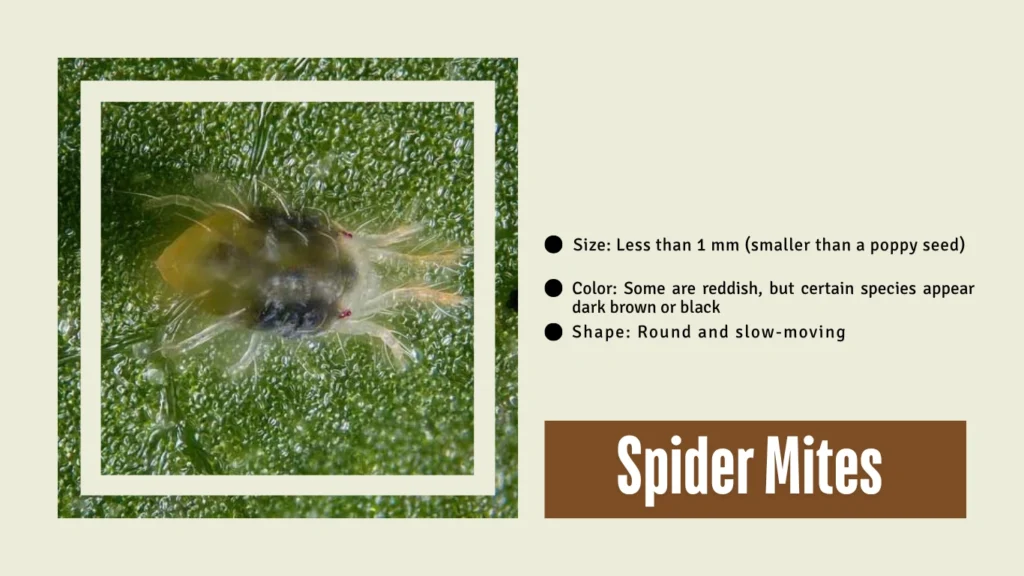
Spider mites are microscopic arachnids, but some species—especially the darker ones—can appear like tiny black specks or poppy seeds to the naked eye. They often infest the undersides of plant leaves and can be hard to spot until damage appears.
Identification
- Size: Less than 1 mm (smaller than a poppy seed)
- Color: Some are reddish, but certain species appear dark brown or black
- Shape: Round and slow-moving
- Signs: Fine webbing, tiny speckles on leaves, yellow or browning foliage
- Habitat: Undersides of plant leaves, especially in warm, dry environments
Behavior and Risks
Spider mites suck sap from plant tissue, causing stippling and leaf damage. If untreated, they can kill houseplants, crops, or garden plants. They don’t bite humans but spread quickly.
3. Carpet Beetle Larvae

Carpet beetle larvae are often mistaken for tiny black bugs due to their dark bristled bodies and tiny size. Though adult carpet beetles are more colorful, the larvae stage can resemble poppy seeds crawling across floors or fabric.
Identification
- Size: 2–5 mm (similar to a poppy seed in size)
- Color: Brown to black with bristly hairs
- Shape: Oval, segmented, and fuzzy-looking
- Movement: Slow crawling on floors, furniture, or fabrics
- Habitat: Carpets, clothing, upholstered furniture, and dark corners
Behavior and Risks
These larvae feed on natural fibers like wool, silk, feathers, and leather. Infestations can cause damage to clothing, rugs, or stored items. They don’t bite but can trigger skin irritation in some people due to their tiny hairs.
4. Black Aphids
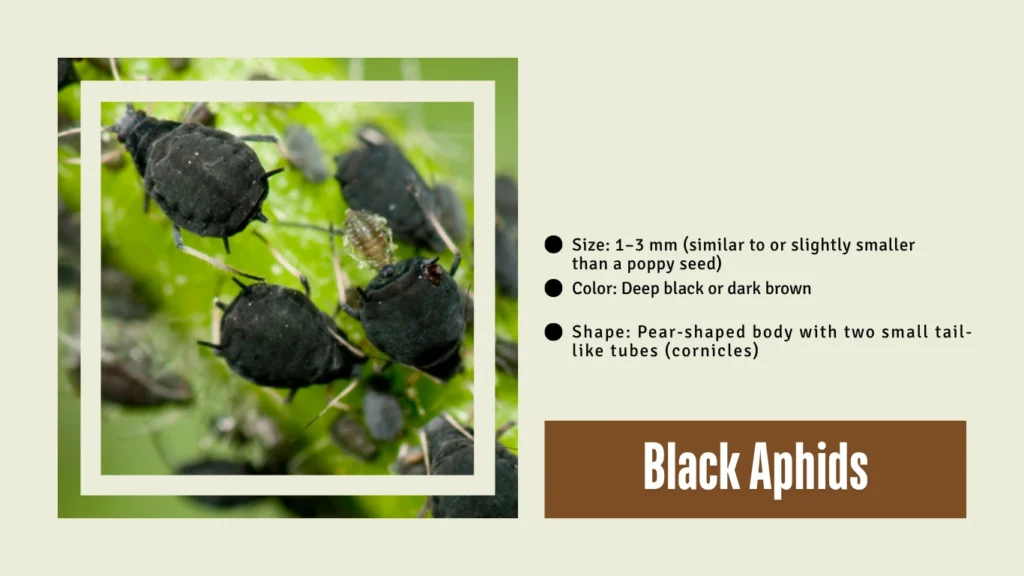
Black aphids are soft-bodied, sap-sucking insects that can resemble tiny black dots or poppy seeds, especially when gathered in large groups on plant stems or leaves. They are often seen in clusters and can multiply rapidly.
Identification
- Size: 1–3 mm (similar to or slightly smaller than a poppy seed)
- Color: Deep black or dark brown
- Shape: Pear-shaped body with two small tail-like tubes (cornicles)
- Habitat: Stems, leaf undersides, buds of garden and houseplants
- Movement: Slow-moving, often stay in dense groups
Behavior and Risks
Black aphids suck plant sap, weakening the plant and causing curling or yellowing leaves. They also excrete sticky honeydew, which can lead to sooty mold. Though they don’t harm humans, they can cause major plant health issues.
5. Booklice (Dark-Colored)
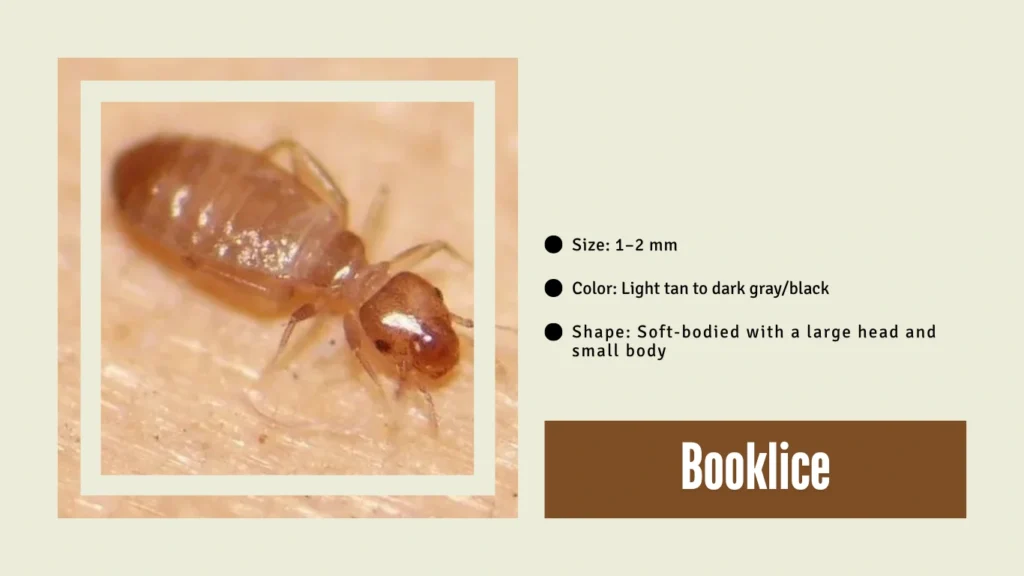
Booklice are extremely small insects that thrive in humid environments. Though usually pale or translucent, some species or older individuals may appear dark gray to black, resembling tiny moving poppy seeds.
Identification
- Size: 1–2 mm
- Color: Light tan to dark gray/black
- Shape: Soft-bodied with a large head and small body
- Habitat: Damp areas—bookshelves, wallpaper, cardboard, stored food
- Movement: Very small and fast-moving
Behavior and Risks
Booklice feed on mold and fungi, not books themselves. They don’t bite or sting and pose no danger to humans, but can be a sign of excess moisture or mold in your home. Large populations may contaminate food or stored goods.
6. Thrips (Black Species)
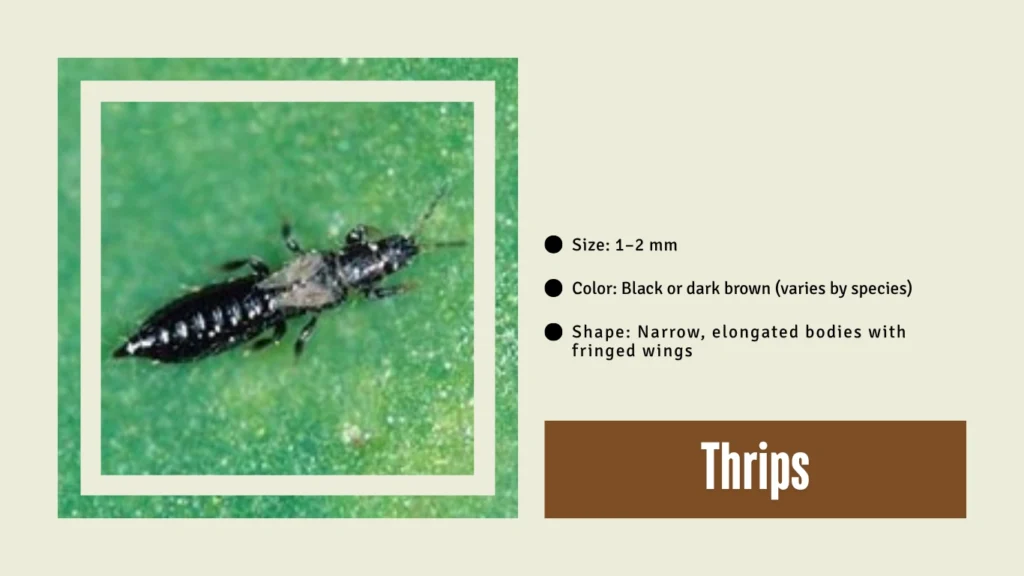
Thrips are slender, fast-moving insects that can look like tiny black slivers or poppy seeds, especially when crawling across plant leaves. Some species are yellow or brown, but several appear dark brown to black and are barely visible without close inspection.
Identification
- Size: 1–2 mm
- Color: Black or dark brown (varies by species)
- Shape: Narrow, elongated bodies with fringed wings
- Habitat: Leaves, flower buds, fruits, and vegetables
- Movement: Quick crawlers; may leap when disturbed
Behavior and Risks
Thrips pierce plant cells to feed on juices, causing silver streaks, spots, or curling on leaves. They can damage flowers, fruits, and vegetables. Some species may bite humans, causing mild skin irritation, but they do not transmit disease.
7. Grain Beetles
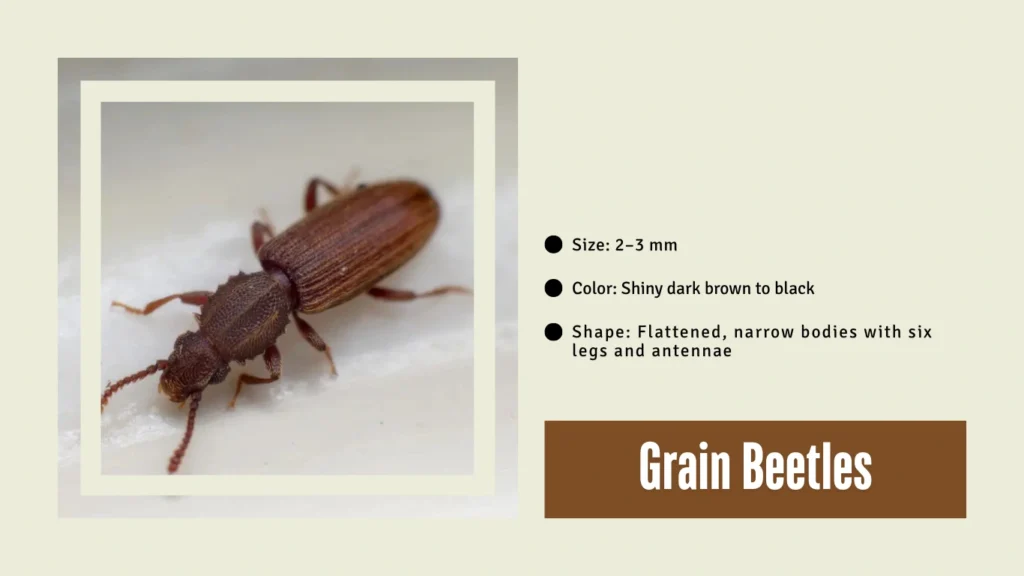
Grain beetles are common pantry pests that may look like tiny black seeds when spotted in flour, rice, or cereals. Two main types—sawtoothed grain beetles and merchant grain beetles—are often mistaken for small black dots due to their shiny bodies.
Identification
- Size: 2–3 mm
- Color: Shiny dark brown to black
- Shape: Flattened, narrow bodies with six legs and antennae
- Habitat: Stored grains, flour, dry pasta, and pet food
- Movement: Active and fast-moving on dry food surfaces
Behavior and Risks
Grain beetles don’t bite or sting, but they infest and spoil stored food by laying eggs inside packaging. Infested items may contain live bugs, larvae, or fine powdery residue. Keeping dry goods sealed can help prevent infestations.
Here’s a comparison table of the 7 tiny black bugs that look like poppy seeds:
| # | Insect Name | Size | Color | Common Habitat | Risks / Issues |
| 1 | Fungus Gnat | 1.5–3 mm | Black | Moist soil, potted plants | Larvae damage roots, nuisance indoors |
| 2 | Spider Mite (Black) | < 1 mm | Black/Dark brown | Undersides of leaves | Plant damage, fast spread |
| 3 | Carpet Beetle Larva | 2–5 mm | Black/Brown | Carpets, clothes, furniture | Damages fabrics, can irritate skin |
| 4 | Black Aphid | 1–3 mm | Deep black | Plant stems and leaves | Plant sap-sucking, causes sooty mold |
| 5 | Booklouse (Dark Type) | 1–2 mm | Gray to black | Damp books, wallpaper, stored food | Sign of moisture, minor food contamination |
| 6 | Thrips (Black Species) | 1–2 mm | Black or dark brown | Flowers, vegetables, leaves | Plant damage, occasional skin irritation |
| 7 | Grain Beetle | 2–3 mm | Shiny black or brown | Stored grains, cereals, dry goods | Food contamination, pantry pest |
