

Carpenter ants are destructive pests known for hollowing out wood to build their nests—not eating it like termites. They can silently damage walls, decks, and furniture, leading to costly repairs. The right carpenter ant killer can help eliminate colonies at the source and prevent further infestation. In this guide, we’ll explore 9 highly rated products, how they work, and which one might be best for your needs.
Before we dive into the reviews, it’s important to understand where carpenter ants live and why timely action is crucial.
Where Do Carpenter Ants Live?

Carpenter ants typically build their nests in damp, decaying, or hollow wood, often found in:
- Wall voids and ceiling spaces
- Attics and basements
- Window and door frames
- Wooden decks, sheds, or tree stumps
- Under roof shingles or insulation
These ants prefer moist environments, so any leaky pipes, poor ventilation, or water-damaged wood can attract them. If you spot sawdust-like debris (frass), it’s likely there’s a nest nearby.
Why It Matters to Kill Carpenter Ants Quickly

Unlike termites, carpenter ants don’t consume wood—but they excavate tunnels for nesting. This structural damage can go unnoticed for months until it becomes severe. Ignoring the infestation may lead to:
- Expensive home repairs
- Weakened structural beams and support frames
- Spread of colonies to other parts of the house
- Increased risk of mold and rot due to moisture
Fast action is essential. Using a targeted carpenter ant killer helps wipe out the nest, not just surface-level ants. Some products use bait systems to attract worker ants who carry poison back to the colony, while others offer contact kill sprays for immediate action.
1. Shot Ant Killer Plus4 Aerosol – Unscented

Shot Ant Killer Plus4 is a dry-fog aerosol specifically made to target ants in hard-to-reach spaces. It’s designed for indoor use and works well in attics, wall voids, behind baseboards, and under furniture. With no lingering smell or residue, it’s a safe choice around fabric and heat sources like pilot lights.
This product is highly effective for carpenter ants because it doesn’t just kill what you see—it reaches into wood structures where ants tunnel and nest. For anyone dealing with ants inside wooden walls or moist, hidden areas, this is a fast and practical solution.
How It Works
- Releases a fine dry fog that spreads into cracks, voids, and hidden spaces
- Kills carpenter ants and other pests on contact
- Does not require turning off pilot lights or moving furniture
- Leaves no stain or lingering odor
Why It’s Perfect for Carpenter Ants
Carpenter ants often hide deep inside wood and wall cavities. Surface sprays usually can’t reach their nesting sites. This product solves that issue by delivering insecticide directly into areas they inhabit. Its fogging action helps wipe out visible ants and potentially hit the nest, making it a strong defense against early or mid-level infestations. It’s especially effective in garages, attics, closets, and other enclosed spots with wooden structures.
Pros and Cons
Pros
- Reaches deep into hidden areas
- Fast contact kill
- No chemical odor or residue
- Safe around fabrics and open flames
Cons
- Doesn’t kill the colony if queen isn’t reached
- May need multiple cans for larger infestations
- No long-term residual effect
Best Use Case Recommendations
Use this product in indoor areas where carpenter ants are suspected to nest but are hard to reach—such as wall cavities, ceiling voids, wooden beams, under stairs, or around windows. It’s ideal for single-room fogging or isolated infestations where precision and non-staining application are important. For larger or recurring issues, pair it with baits or perimeter sprays to eliminate the colony completely.
2. Terro Indoor Multi‑Surface Liquid Ant Baits (4‑Count)
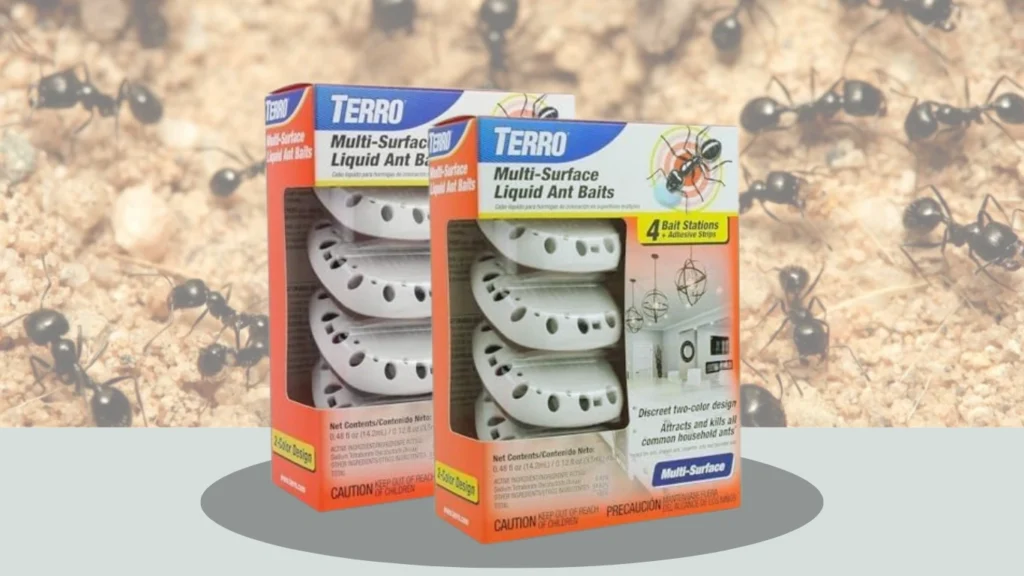
Overview
Terro Indoor Multi‑Surface Liquid Ant Baits are pre-filled bait stations containing a borax-sugar liquid designed to attract ants. The unique design allows placement flat on counters or adhered vertically under cabinets, along baseboards, or even on walls. Once placed in active ant trails, worker ants are drawn in by the sweet bait, then carry it back to their colony, targeting unseen nest members.
How It Works
- Borax-infused sweet liquid attracts and poisons foraging ants slowly
- Worker ants transport the bait to the colony, leading to mass elimination
- Multi-surface adhesive strips allow flexible placement
- Disposable and discreet design, blending into home decor
Why It Works for Carpenter Ants
Carpenter ants occasionally feed on sugary substances, especially during certain phases. Terro’s borax formula can attract them when sugar attraction is high . The slow-acting borax ensures ants don’t die before sharing with nestmates—essential for colony-wide control. Versatile placement enables targeting known trails and nesting hubs, making it easier to intercept ants between foraging and nesting zones.
Pros and Cons
Pros
- Kills entire colony, not just individual ants
- Versatile placement: flat or vertical surfaces
- Discreet appearance, no need to move furniture
- Up to 2–4 weeks to complete elimination
Cons
- Effectiveness depends on capturing ants during sweet-feeding phase
- Reports of packaging issues: hard-to-open tabs, weak adhesives
- Liquid may leak if disturbed
- Not always effective against carpenter ants — protein baits may work better
Best Use Case Recommendations
Ideal for moderate indoor infestations, especially kitchen, pantry, and baseboard areas. Use when sugar-feeding carpenter ants are active—these baits lure them out to spread poison throughout the colony. Place multiple stations along trails; expect visible reduction within days and full control in 2–4 weeks. For large or persistent infestations, pair with a granular or protein-based bait to cover all feeding preferences and ensure colony eradication.
3. Catchmaster Reusable Ant Stations (for Liquid Baits)
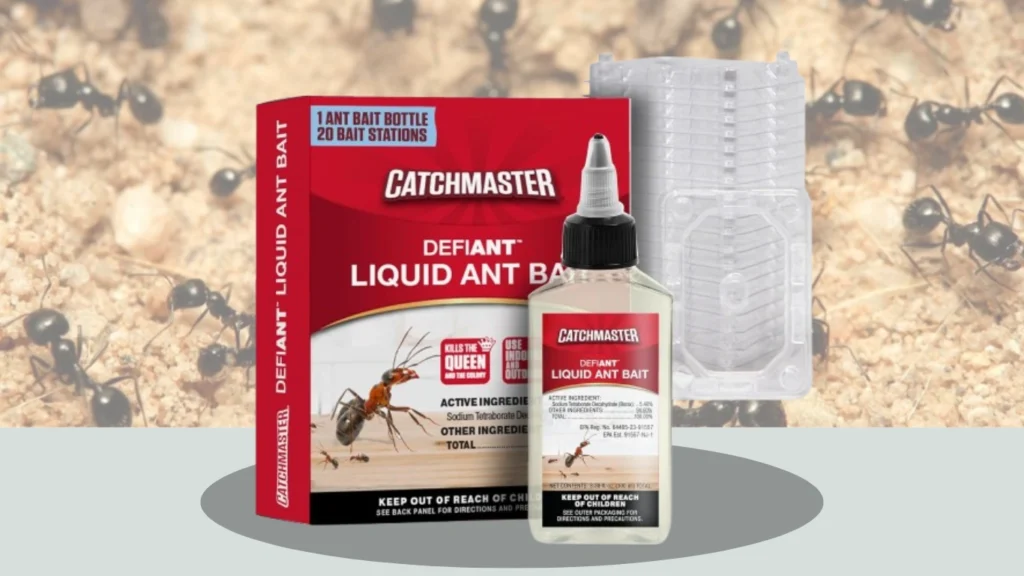
Overview
Catchmaster’s Reusable Ant Stations are durable plastic enclosures designed to hold liquid ant bait safely and accessibly. With multiple openings and a transparent, low-profile design, they allow ants to enter, feed, and carry bait back to the colony—while keeping bait contained and out of reach of children and pets. The stations are refillable and reusable, making them a cost-effective, eco-friendly approach.
How It Works
- Place your preferred liquid bait (typically borax or comparable formula) inside the station.
- Six strategically positioned access points let multiple ants feed simultaneously.
- Worker ants find the station, ingest the bait, and transport it back to the nest.
- Transparent casing lets you monitor activity and replace bait when needed.
Why It Works for Carpenter Ants
Carpenter ants, especially mature colonies, may not respond to surface sprays. They forage extensively but hide their nests in inaccessible spots. These reusable stations provide continuous bait access along foraging routes. Their slow-acting poison enables transfer among workers and to the queen, targeting the entire colony rather than just visible ants.
Pros and Cons
Pros
Cons
- Plastic housing durability varies—some report flexing or breakage
- Requires separate liquid bait purchase—adds to cost
- Slower to eliminate colony compared to fast-acting sprays
Best Use Case Recommendations
These stations are ideal for long-term, indoor or patio use in kitchens, baseboards, utility rooms, or near foundations. Place them along known trails or nesting areas. Monitor activity and refresh bait as needed. For full colony elimination, use them in tandem with a targeted spray or fog to knock down current activity while bait stations work on the nest.
4. Cutter Backyard Bug Control Spray Concentrate (Twin Pack)
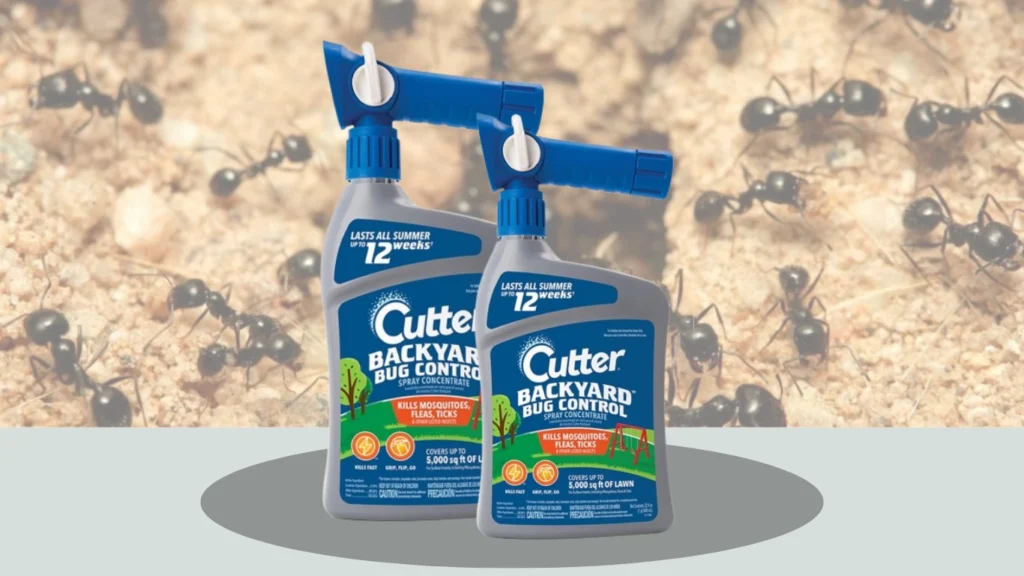
Overview
Cutter Backyard Bug Control is a hose-end concentrate that zaps a broad range of outdoor pests—mosquitoes, fleas, ticks, and importantly, listed ants including carpenter ants. A single 32 oz bottle treats up to 5,000 sq ft and offers up to 12 weeks of protection per application.
How It Works
- Flip the QuickFlip sprayer to mix concentrate with water as it flows through the hose
- Evenly coats turf, shrubs, foundations, and patios
- Kills ants and insects on contact with residual protection up to 12 weeks
Why It’s Recommended for Carpenter Ants
Carpenter ants often forage outdoors before nesting inside homes. Treating the perimeter—lawn edges, foundation cracks, entry points—helps intercept worker ants before they enter. The residual effect ensures ongoing control, keeping ant populations suppressed and reducing the likelihood of new colonies.
Pros and Cons
Pros
- Covers large outdoor areas (up to 5,000 sq ft)
- Long-lasting residual—up to 12 weeks per treatment
- Quick, no-mix formula with easy hose-end sprayer
Cons
- Not for indoor use—outdoor perimeter only
- Can kill beneficial insects and pollinators
- Needs reapplication if it rains heavily or over-diluted
Best Use Case Recommendations
Use this product when carpenter ants are visible outdoors or around foundations. Spray around shrub beds, along walls, patios, and any soil-to-wood contact points. It’s best applied early in the season before ant colonies expand. To protect pollinators, wait until evening and avoid direct flower contact. Pairing with indoor bait or station treatments can provide a full “outside-in” defense—stop ants before they enter, then eliminate any that get inside.
5. Max Force FLEET RapidShield Ant Bait Gel

Overview
Max Force FLEET RapidShield is a thick, precision gel bait infused with fipronil and designed for fast-acting ant control. Its paste-like consistency adheres well to vertical and horizontal surfaces, making it ideal for application in cracks, crevices, and along baseboards. Popular for both indoor and outdoor usage, this product specifically targets tough species such as carpenter ants.
How It Works
- Precision gel dispensed via built-in plunger directly onto trails and nests
- Ants ingest the gel and share it within the colony through trophallaxis
- Fipronil disrupts the ant’s nervous system, leading to colony-wide elimination
- Thick gel resists drying and remains effective for several days
Why It’s Perfect for Carpenter Ants
Carpenter ants respond well to fipronil-based gels. The bait’s moisture-rich gel attracts workers deeper, and slow-acting poison ensures they transport it back to the queen—essential for last-of-nest control . Field reports highlight full colony wipeout within a week in many cases . Its ability to adhere to vertical surfaces lets you target hard-to-reach galleries and nesting voids, a common hideout for carpenter ants.
Pros and Cons
Pros
- Rapid control, often reducing activity in 3–5 days
- Precise plunger delivery minimizes mess
- Sticks to walls, wood, and baseboards for persistent effectiveness
- Kills full colony, including queen, through bait transfer
Cons
- Higher cost per tube than some liquid baits
- Gel may attract non-target creatures (e.g. ants, rodents) if left exposed
- Requires patience—results typically take several days
- Some users report missing applicator gloves in packaging
Best Use Case Recommendations
This gel bait is ideal when you’ve located active carpenter ant trails or suspected nesting sites inside walls, under floors, or along baseboards. Apply small beads in several locations along ant paths—carpenter ants quickly find and consume the gel, carrying it back to eliminate colonies . Monitor and reapply every few days until no more ants appear. For full protection, pair this with perimeter treatments to block future colonies from entering.
6. Qualirey Reusable Ant Bait Stations (16‑pack)
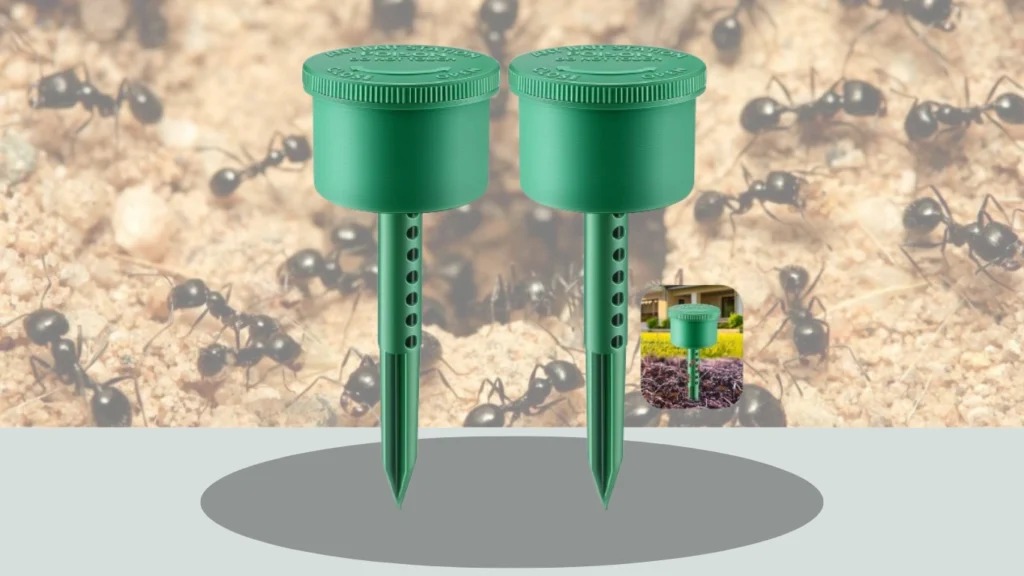
Overview
Qualirey offers 16 reusable plastic bait stations designed to hold liquid or granular ant baits (bait not included). Each station features six openings to allow multiple ants to enter, feed, and carry poison back to the colony. The transparent top lets you easily monitor bait consumption, and the reusable design offers cost savings over time.
How It Works
- Load baits (liquid or granular) into stations.
- Ants enter through six strategically placed holes.
- Worker ants feed, then carry poison back to their colony (trophallaxis).
- Monitor activity via clear plastic top and replace bait when needed.
Why It’s Effective for Carpenter Ants
Carpenter ants forage over wide areas but hide nests in hidden wood voids. Placing multiple bait points along trails increases the chance that workers find and carry poison back to the nest. The reusable stations create a stable, long-term feeding environment that supports full colony elimination—not just surface worker control.
Pros and Cons
Pros
- Reusable – eco-friendly and cost-effective
- Six entrances enhance access for multiple ants
- Transparent – easy to monitor bait levels
- Suitable for indoor and outdoor placement
Cons
- Poor locking mechanism – tops may detach, risking spills
- Flimsy plastic – not very weather-resistant
- Bait not included – requires purchasing separately
- Not child or pet-proof if station breaks open
Best Use Case Recommendations
Ideal for homeowners dealing with moderate indoor or outdoor carpenter ant activity. Place several stations along ant trails near baseboards, wall junctions, doors, and outdoor entry points. Monitor activity and refill bait frequently until no more ants are seen—typically over 1–3 weeks. For robust infestations, use in combination with a precision gel or perimeter spray to knock down active workers while the bait works on the colony.
7. PIC Homeplus Ant Killer Stations (Pack of 4)
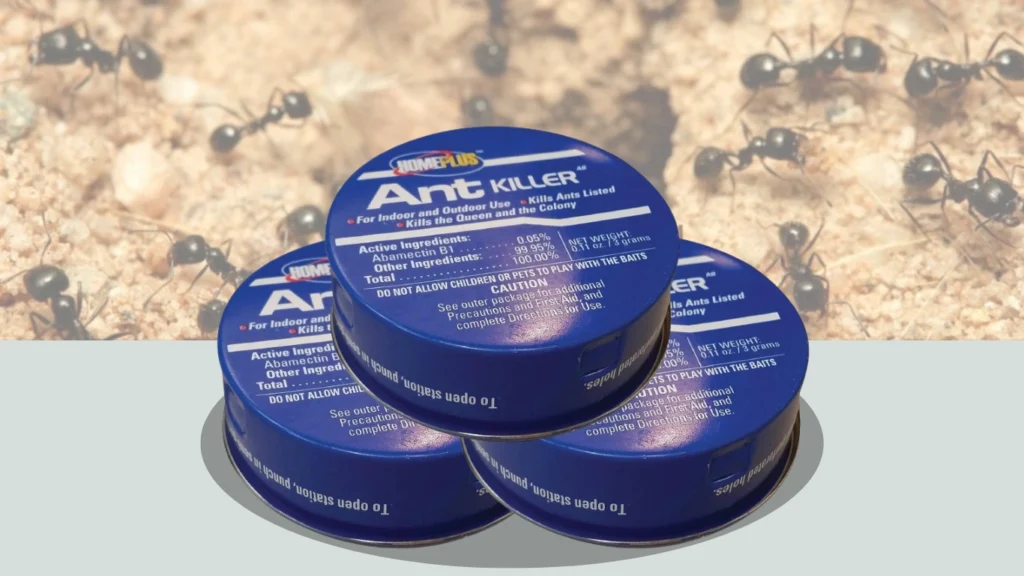
Overview
PIC Homeplus Ant Killer Stations are compact, child-resistant bait stations filled with abamectin. Each station includes four distinct food-based lures (no peanut), appealing to a wide variety of ants—including carpenter ants. Designed for both indoor and outdoor use, they claim to kill the entire colony within 24 hours.
How It Works
- Punch tabs to open feeding ports
- Ants enter through perforated holes and consume the bait
- Abamectin acts slowly, allowing ants to transport poison back to the queen and nestmates
- Stations are sealed to reduce exposure to children and pets
Why It’s Great for Carpenter Ants
Carpenter ant colonies often nest out of sight and workers forage far from the nest. These bait stations provide long-term feeding sites along their trails. The multiple attractants increase the chance of appealing to ants regardless of their current food preference. The abamectin bait is designed to eliminate the queen, making it a true colony control solution.
Pros and Cons
Pros
- Claims colony-wide elimination in ~24 hours
- Four lure types boost attractiveness across species
- Child-resistant design—safer for households with kids or pets
- Works both indoors and outdoors along foundations
Cons
- Some users report empty or defective bait stations
- Plastic durability and locking mechanisms may be subpar
- Results vary—some see quick elimination, others report slow or inconsistent outcomes
Best Use Case Recommendations
Use these stations in areas with observed ant trails or near entry points—along baseboards, window sills, or just outside door thresholds. They’re excellent for sustained baiting and colony eradication without frequent replacement. For best results, place multiple units, monitor bait access, and replace stations after 30 days. In severe infestations, pair with a targeted gel or spray for rapid knockdown and colony elimination.
8. Advance Carpenter Ant Bait (8 oz Granules)

Overview
Advance Carpenter Ant Bait is a protein-based granular bait containing abamectin B1 (0.011%) formulated for both indoor and outdoor use. Workers collect the granules and carry them back to the colony, where the delayed-acting poison is shared, targeting the entire nest—even the queen. The bait is effective in cracks, around foundations, inside wall voids, or scattered near tree stumps.
How It Works
- Worker ants forage, ingesting protein-rich granules.
- Poison is carried back to the nest through trophallaxis.
- Abamectin disrupts the nervous system, reducing egg production and killing the queen.
- Delayed effect allows colony-wide spread before death occurs.
Why It’s Perfect for Carpenter Ants
Carpenter ants often cycle between protein and sugar feeding. This protein-based bait meets that need directly. It’s highly attractive and accepted quickly: users report bait retrieval within hours and significant reductions in ant activity in 4–7 days. Do‑It‑Yourself pest controllers with decades of experience praise it as the most reliable carb‑ant bait. Its delayed action ensures the queen and larvae are eliminated, so the colony doesn’t rebound.
Pros and Cons
Pros
- High acceptance and efficacy—colony collapse in 3–10 days
- Targets entire colony, not just surface foragers
- Suitable for indoor and outdoor use around foundations and in voids
- No odors or sprays required
Best Use Case Recommendations
Ideal as the primary bait for carpenter ant infestations in and around homes. Place granules along trails, near entry points, and around suspected nest sites such as wall cracks, baseboards, tree stumps, or decks. Begin with protein bait and, if foraging remains active, switch or supplement with a sugar-based gel like MaxForce FLEET for broader coverage. Typical results are visible ant reduction within days and full colony elimination in 1–2 weeks. For outdoor prevention, treat around foundations and lawn perimeters to intercept ants before entry.
9. Savitri Ant Gel Bait by Atticus (4 × 30 g)

Overview
Savitri is a gel bait formulated with 0.5% indoxacarb—comparable to premium products like Advion—and designed to attract sweet-feeding ants. Supplied in four syringe-style tubes, it lets you apply neat lines or dots into cracks, crevices, and along ant trails, both indoors and outdoors.
How It Works
- Supplied gel is placed in small beads or lines near active ant areas
- Worker ants consume and carry bait back to the nest
- Indoxacarb acts slowly, allowing transfer to queen and colony
- Begins controlling ants within 24 hours and often eliminates colonies in under two weeks
Why It’s Perfect for Carpenter Ants
Carpenter ants seek out carbohydrate-rich baits at certain stages. Savitri’s sweet gel is specifically attractive to them and effective across 17 species, including carpenter ants . Reviews and data show 93% of users saw quick results, and 95% rated it positively. Its delayed-action formula ensures colony elimination—not just worker kills.
Pros and Cons
Pros
- Highly effective: colonies often collapse within days
- Easy, precise application via syringe
- Odorless gel leaves no mess behind
- Works outdoors and indoors—applied in cracks or outdoor entry zones
Cons
- Pricier than generic gel options
- Some variability in effectiveness depending on ant species
- Requires protected placement to avoid pets or children accessing it
Best Use Case Recommendations
Apply Savitri gel directly along known trails, near wall junctures, window frames, or within wall cracks. Use pea-sized spots or thin lines, and place multiple applications in active areas. For large infestations, reapply every few days until ant activity ceases. Combine with a perimeter spray to intercept foragers and ensure full colony disruption. Ideal for homeowners seeking a premium, effective bait with minimal odor or mess.
Tips Before Applying Any Product
Before you start using any carpenter ant killer—whether it’s bait, spray, or granules—it’s important to prepare the environment. These simple but critical steps will boost product effectiveness and prevent future infestations.
Seal Entry Points
Inspect your home’s exterior for cracks, gaps, and holes—especially near windows, doors, siding, vents, and the foundation. Use caulk, weather stripping, or expanding foam to seal off any openings that ants could use to enter. Blocking their access helps trap ants inside with the bait and prevents new colonies from getting in.
Eliminate Water Sources
Carpenter ants are drawn to moisture. Fix leaky pipes, dripping faucets, or roof leaks promptly. Check areas under sinks, around dishwashers, bathrooms, and basements for signs of damp wood or standing water. A dry environment makes your home far less attractive to ants and helps the poison baits stand out as a food source.
Trim Trees and Shrubs Near the House
Carpenter ants often enter homes from tree branches or shrubs touching the siding or roof. Keep vegetation trimmed back at least 12–18 inches from your home to reduce access points. Also inspect tree stumps, firewood piles, and mulch beds, which can serve as nesting sites near your foundation.
Clean Up Food Crumbs and Spills
Even though carpenter ants prefer nesting in wood, they still forage for food—especially sugary or protein-based scraps. Keep counters, floors, and pantry shelves clean. Store food in sealed containers, and take out the trash regularly. Reducing food competition helps ensure ants go straight for your bait.
