

Willowflies, belonging to the family Taeniopterygidae, are a group of winter stoneflies known for their unique emergence during late winter and early spring. Found in clean, oxygen-rich streams, they play a vital role in nutrient cycling and serve as indicators of freshwater health. This list explores 25 types of willowflies, highlighting their identification, behavior, habitat, and ecological importance in sustaining healthy aquatic ecosystems.
1. Taeniopteryx burksi
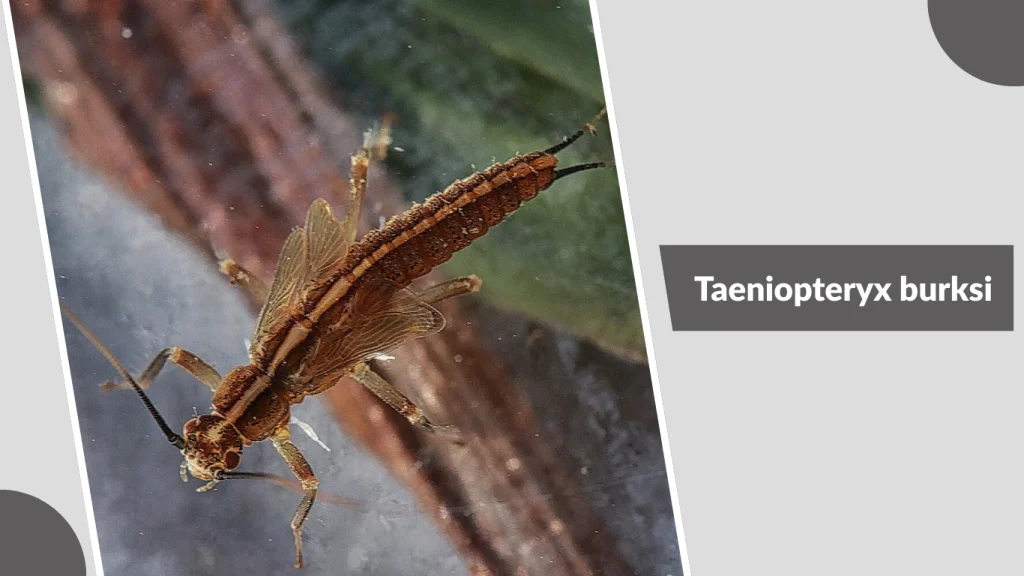
Taeniopteryx burksi is a species of willowfly belonging to the family Taeniopterygidae. Like other willowflies, it is a winter-emerging stonefly, often appearing in late winter or early spring when snow may still cover the ground. Because of this early activity, it plays a special role in aquatic ecosystems, filling a gap when few other insects are present. It is widely distributed in North America, especially in regions with cold, clean streams.
Identification
- Medium-sized stonefly, usually 10–15 mm in length
- Body coloration is dark brown to nearly black, helping with camouflage against wet stones and leaf litter
- Wings held flat over the body when at rest, slightly smoky and veined, extending just beyond the abdomen
- Antennae long, threadlike, and often longer than the body
- Legs slender with spiny segments, adapted for clinging to rocks in running water
- Nymphs (immature stages) are aquatic, flattened, with dark bodies, two long cerci (tail filaments), and well-developed legs
Behavior
Unlike many insects that emerge in warmer months, Taeniopteryx burksi adults are cold-adapted and emerge in late winter or early spring. They are weak fliers, often seen crawling on snow banks, rocks, or low vegetation near streams. Mating occurs shortly after emergence, with females depositing eggs directly into the water. The eggs sink and hatch into aquatic nymphs that continue the cycle. Nymphs feed on detritus such as decaying leaves and plant material, making them essential decomposers.
Habitat
This species is tightly linked to freshwater ecosystems. Nymphs thrive in clean, well-oxygenated streams and small rivers, especially where the substrate is rocky and covered with leaf litter. They avoid polluted or stagnant waters, as oxygen levels are crucial for survival. Adults remain close to the riparian zone, rarely dispersing far from water sources, since reproduction requires aquatic habitats.
Importance
Taeniopteryx burksi serves as a biological indicator of water quality. Because nymphs require clean, oxygen-rich streams, their presence signals a healthy ecosystem with little pollution. Ecologically, they contribute to nutrient cycling by breaking down organic matter and releasing nutrients back into the water, which supports algae and other microorganisms. They are also an important food source for fish such as trout and other stream-dwelling species, linking aquatic insects with higher levels of the food web. For researchers and anglers alike, willowflies like T. burksi are considered vital to both ecosystem monitoring and sport fisheries.
2. Taeniopteryx metequi
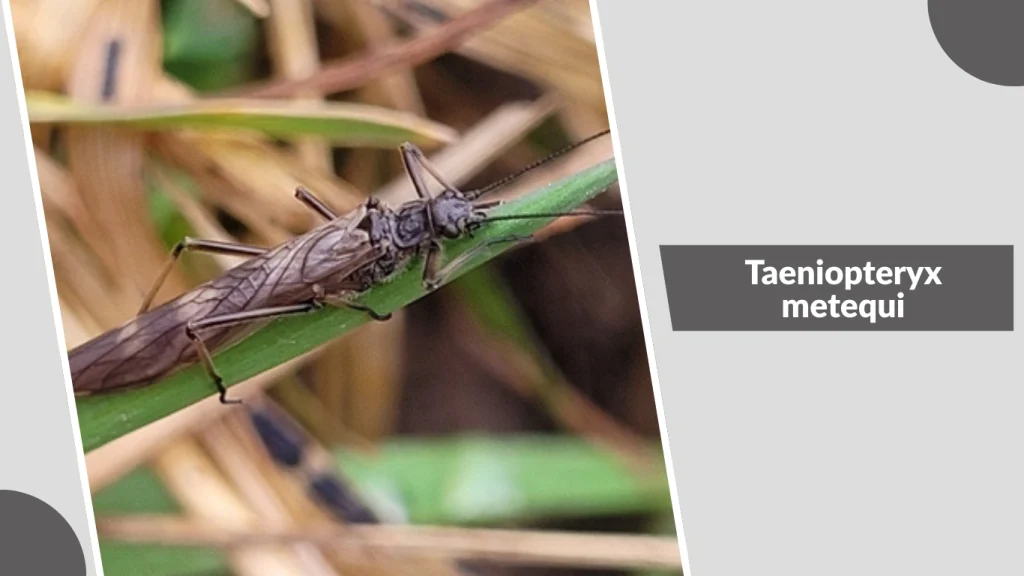
Taeniopteryx metequi is another willowfly species within the family Taeniopterygidae. Like its relatives, it is an early-spring stonefly, active in colder months when very few insects emerge. Its presence is strongly tied to clean, flowing water systems, where it plays a role in nutrient cycling and aquatic food webs.
Identification
- Medium-sized willowfly, generally dark brown to black in coloration
- Wings are flat over the back, smoky or translucent with distinct venation
- Long, threadlike antennae extending well beyond the head
- Slender body with spiny legs, aiding in gripping rocks and submerged debris
- Aquatic nymphs feature two cerci (tail filaments) and robust legs with well-developed claws
Behavior
Adults of T. metequi emerge in late winter to early spring, sometimes appearing while snow is still present along stream banks. They are weak fliers, staying close to water edges, and can often be observed crawling over stones and leaf litter. Mating occurs soon after emergence, with females releasing eggs directly into the current. Nymphs consume decomposing organic matter, contributing to the breakdown of leaves that accumulate in streambeds.
Habitat
This species inhabits cool, well-oxygenated streams and small rivers. Nymphs are most often found under stones, in leaf packs, and in other debris-rich areas where water flow ensures sufficient oxygen. Adults stay near riparian zones and rarely move far from aquatic habitats.
Importance
Taeniopteryx metequi is considered an ecological indicator of freshwater quality. Its survival depends on unpolluted streams with stable oxygen levels, so populations decline quickly in degraded waters. By recycling organic material, the species helps maintain healthy stream ecosystems. Additionally, its nymphs provide a food source for fish and other aquatic predators, reinforcing its importance in the food web.
3. Taeniopteryx nivalis
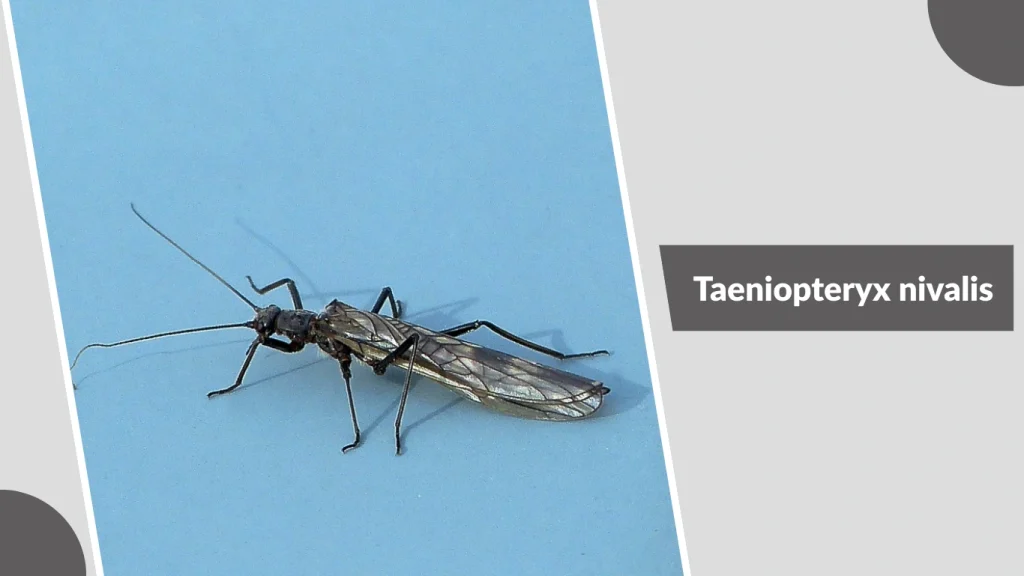
Taeniopteryx nivalis is a willowfly species within the family Taeniopterygidae. Its name “nivalis,” meaning “snow,” reflects its emergence during late winter and early spring, often when snow is still on the ground. This adaptation to cold seasons allows it to occupy an ecological niche with little insect competition.
Identification
- Size: medium, ranging from 10–15 mm in body length
- Body is dark brown to nearly black, blending with streamside stones
- Wings fold flat over the abdomen, usually smoky or translucent with visible venation
- Long, slender antennae often exceeding body length
- Nymphs aquatic, flattened, with two cerci (tail filaments) and sturdy legs for gripping rocks
Behavior
Taeniopteryx nivalis adults are most often seen crawling on rocks, stream banks, or even snow during their early spring emergence. They are weak fliers, rarely moving far from the water where they developed. After mating, females deposit eggs into streams, ensuring nymphs hatch in suitable aquatic habitats. Nymphs are primarily detritivores, consuming decaying plant matter and helping recycle nutrients in cold stream ecosystems.
Habitat
This species favors small to medium-sized streams with strong oxygen levels and cool temperatures. Nymphs live beneath stones, among leaf packs, and in clean, fast-flowing sections of rivers. Adults remain close to these waterways, rarely dispersing into upland areas.
Importance
Taeniopteryx nivalis is an important bioindicator of water quality. Its reliance on clean, oxygen-rich streams makes it highly sensitive to pollution and habitat degradation. Ecologically, it contributes to the breakdown of organic matter, supporting the nutrient cycle in freshwater systems. It is also a key prey item for fish species such as trout, connecting aquatic insect life to higher predators in stream food webs.
4. Taeniopteryx lita
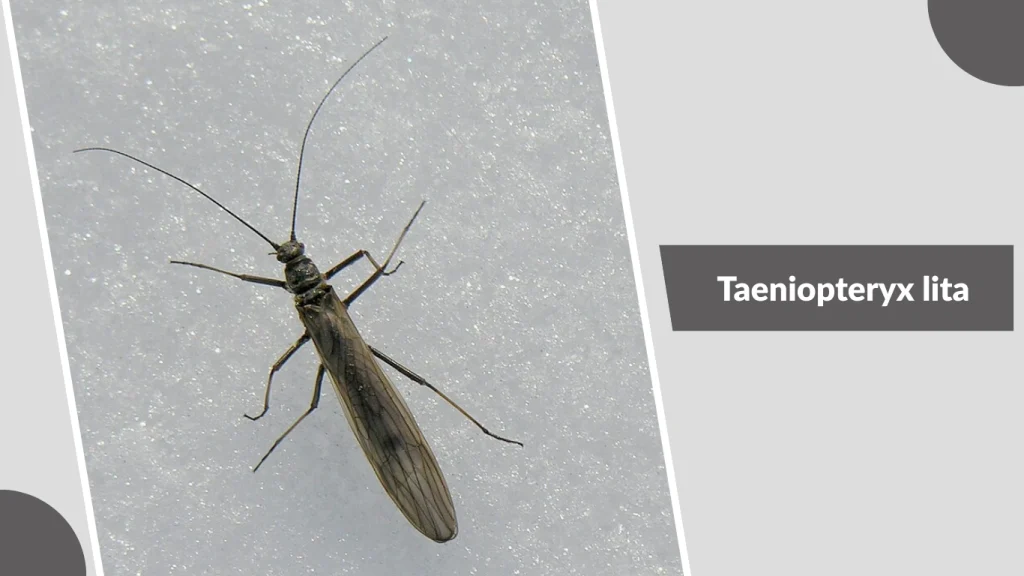
Taeniopteryx lita is a willowfly species belonging to the family Taeniopterygidae. Like other willowflies, it emerges during late winter and early spring, often when few other insects are active. Its life cycle and presence in cold, clean streams make it a valuable component of freshwater ecosystems.
Identification
- Medium-sized willowfly with dark brown to nearly black body
- Wings smoky or translucent, held flat over the abdomen when at rest
- Long, threadlike antennae extending well beyond the head
- Legs slender with small spines for gripping rocky surfaces
- Nymphs are aquatic, flattened, with two long cerci (tail filaments) and strong legs adapted for running water
Behavior
Adults of T. lita are weak fliers and typically remain close to their natal streams. They are most active during the cooler months, crawling over rocks, streamside vegetation, or even snow. Shortly after emergence, mating occurs, and females deposit eggs into the water, where they sink to the streambed. Nymphs feed on decaying leaves and organic material, supporting nutrient recycling in freshwater ecosystems.
Habitat
This species inhabits small rivers and streams with cool, well-oxygenated waters. Nymphs prefer rocky substrates and areas with leaf litter, where water flow remains steady. Adults rarely move away from riparian zones, relying on aquatic habitats for reproduction.
Importance
Taeniopteryx lita plays an ecological role as both a detritivore and a food source. Its nymphs help break down organic debris in streams, supporting nutrient cycling. Additionally, they serve as prey for fish and aquatic invertebrates. Because of their sensitivity to water quality, their presence indicates healthy, unpolluted streams.
5. Taeniopteryx parvula
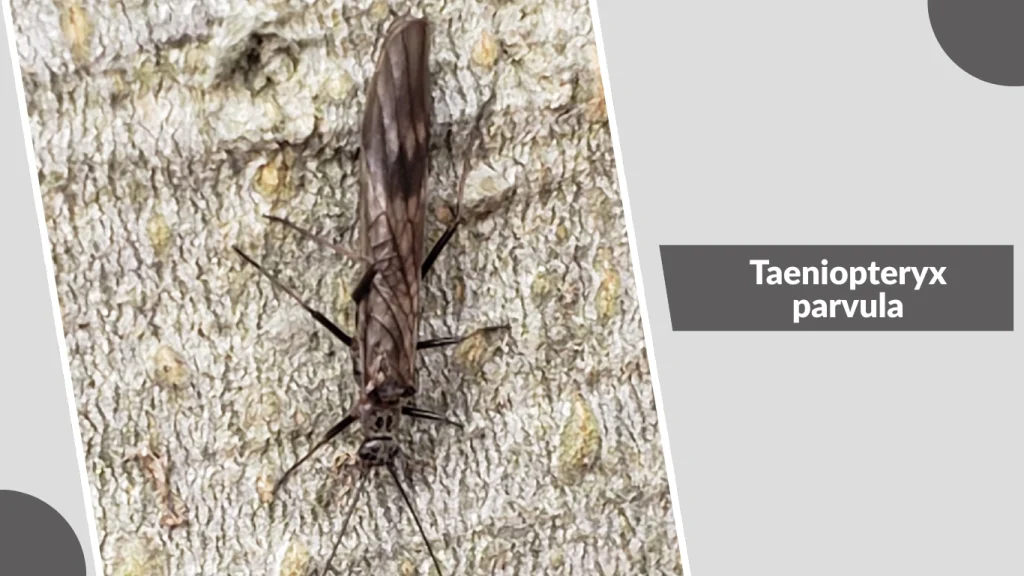
Taeniopteryx parvula is a small willowfly species in the family Taeniopterygidae. It is one of the early-emerging stoneflies that appear in late winter and early spring, often active along streams while snow and ice are still present. Its role in aquatic ecosystems highlights the importance of cold-adapted insects in nutrient cycling.
Identification
- Generally smaller than other willowflies, averaging 8–12 mm in length
- Dark brown to black body with fine venation on the smoky wings
- Wings fold flat over the abdomen when resting
- Long, thin antennae nearly the length of the body
- Nymphs aquatic, flattened, with two distinct cerci (tail filaments) and strong legs adapted to fast currents
Behavior
Adults of T. parvula are weak fliers and stay close to streams. They emerge in cooler months and are often found crawling over stones, logs, or snow patches. Mating occurs soon after emergence, with females laying eggs directly into the water. Nymphs are detritivores, consuming leaf litter and contributing to the breakdown of organic material in streams.
Habitat
This species prefers cold, clean, and well-oxygenated streams with rocky or gravelly substrates. Nymphs are commonly found under stones or buried in packs of submerged leaves. Adults remain near riparian zones, rarely dispersing far from aquatic habitats.
Importance
Taeniopteryx parvula is an ecological indicator of freshwater health. Its presence signals good water quality and stable oxygen levels. The species is also crucial to food webs, as its nymphs provide prey for fish such as trout, while their detritus-feeding behavior recycles nutrients back into the ecosystem.
6. Taeniopteryx maura
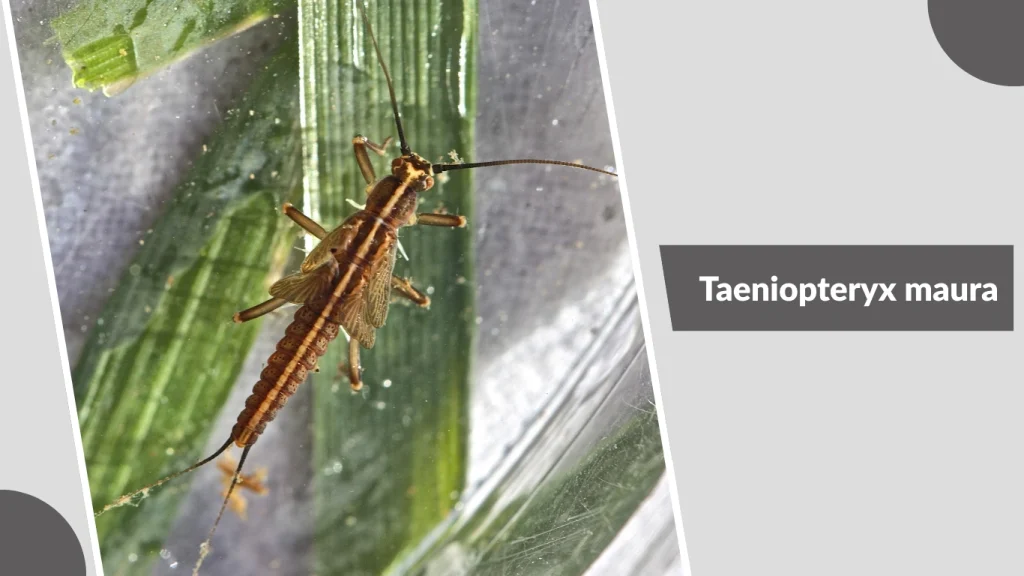
Taeniopteryx maura is a willowfly species within the family Taeniopterygidae. Like other members of its group, it emerges in late winter and early spring, often before many other aquatic insects become active. Its life cycle makes it an important part of cold-water stream ecosystems, contributing to nutrient cycling and serving as prey for fish.
Identification
- Medium-sized willowfly, generally 10–15 mm in length
- Body dark brown to nearly black, blending with wet rocks and stream banks
- Smoky to translucent wings folded flat over the abdomen when resting
- Long, threadlike antennae well exceeding the head length
- Nymphs are aquatic, flattened, with two long cerci (tail filaments) and strong legs for gripping in current
Behavior
Adults of T. maura are poor fliers and prefer to crawl over rocks, vegetation, or even snow along stream banks. They emerge during cooler months, usually late winter, when few competing insects are present. After emergence, they quickly mate, and females deposit eggs into the water. Nymphs feed on detritus, such as decomposing leaves, which helps process organic matter within streams.
Habitat
This species is found in cool, clean, and oxygen-rich streams or small rivers. Nymphs typically inhabit rocky substrates, submerged wood, or packs of leaf litter where water flow remains steady. Adults stay close to riparian zones and rarely disperse far from water bodies.
Importance
Taeniopteryx maura is a valuable indicator of freshwater health, as its presence is linked to unpolluted, oxygenated streams. Nymphs help break down organic material, supporting nutrient recycling and stream productivity. They also serve as a significant food source for fish species, particularly trout, connecting aquatic insect populations with higher levels of the food chain.
7. Taeniopteryx ugola
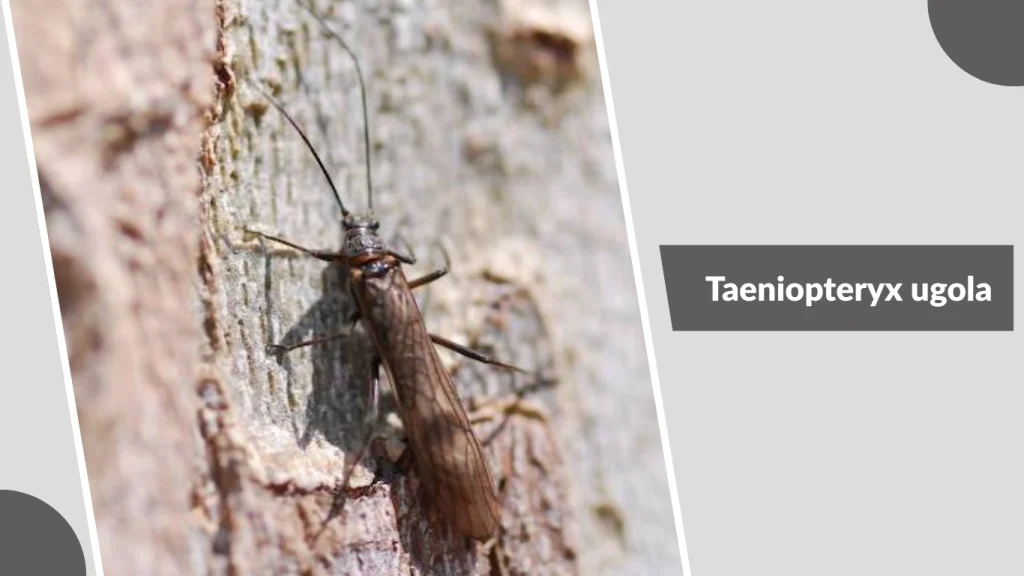
Taeniopteryx ugola is a willowfly species belonging to the family Taeniopterygidae. Like its relatives, it is one of the earliest-emerging stoneflies, appearing in late winter or early spring when streams are still cold. Its presence is strongly tied to clean, well-oxygenated freshwater systems.
Identification
- Medium-sized willowfly, typically 10–14 mm in length
- Body dark brown to black, providing camouflage against rocks and stream banks
- Wings smoky, folded flat over the abdomen when at rest
- Antennae long and slender, often longer than the body
- Aquatic nymphs with two cerci (tail filaments), dark bodies, and strong legs suited for running water
Behavior
Adults of T. ugola are weak fliers and spend most of their time crawling over streamside rocks, logs, and vegetation. They emerge in colder months, sometimes seen on snow along riverbanks. Soon after emergence, mating occurs, and females deposit eggs into streams. Nymphs live under stones and in leaf packs, where they feed on decaying organic matter, contributing to decomposition and nutrient cycling.
Habitat
This species inhabits cool, clean, and oxygen-rich streams or small rivers with rocky substrates. Nymphs prefer areas with leaf litter and submerged debris, where flowing water ensures constant oxygen supply. Adults remain close to riparian zones and rarely disperse far from their aquatic origins.
Importance
Taeniopteryx ugola is considered a reliable bioindicator species. Its survival depends on unpolluted, oxygen-rich freshwater, making its presence a positive sign of healthy streams. Nymphs contribute to the breakdown of organic material, while also serving as prey for fish such as trout. Thus, the species helps maintain both nutrient balance and food web connections in aquatic ecosystems.
8. Taeniopteryx caucasica
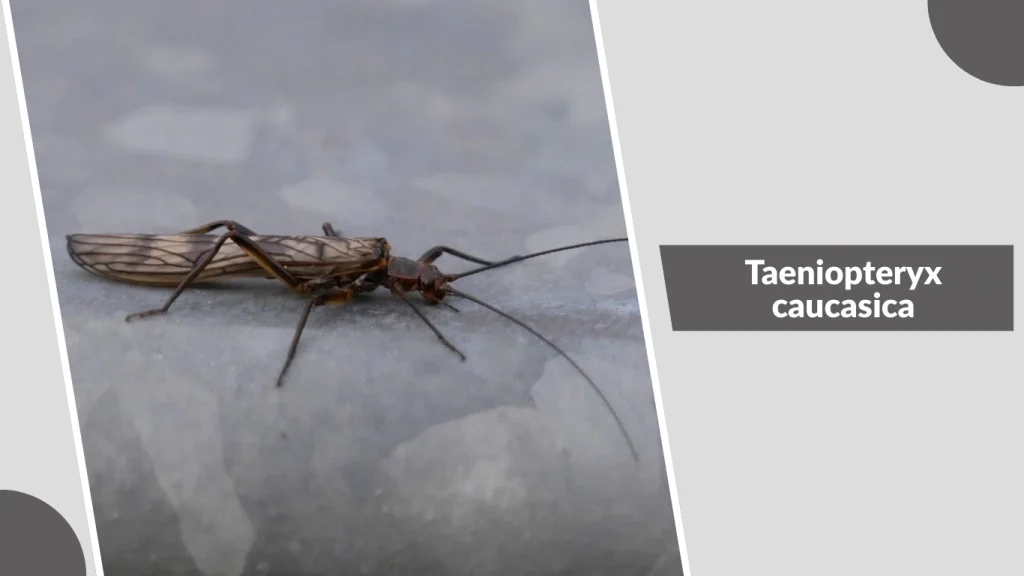
Taeniopteryx caucasica is a willowfly species from the family Taeniopterygidae. As with other willowflies, it emerges during the colder months of late winter and early spring, when snow may still cover stream banks. Its life cycle is closely tied to clean, running freshwater systems, making it an important ecological indicator.
Identification
- Medium-sized willowfly, usually 10–15 mm in length
- Dark brown to nearly black body, aiding in camouflage against rocks and soil
- Wings smoky and translucent, folded flat over the abdomen when resting
- Long, thin antennae extending well beyond the head
- Aquatic nymphs with two long cerci (tail filaments) and strong legs adapted to fast-flowing water
Behavior
Adults of T. caucasica are poor fliers and mostly crawl over rocks, vegetation, and snowbanks along streams. They emerge early in the year, often when temperatures are still low. Soon after emergence, mating occurs, and females deposit eggs into streams. The nymphs feed primarily on detritus, such as decomposing leaves, playing a role in organic matter breakdown.
Habitat
This species is found in cold, clean, oxygen-rich rivers and streams, often in mountainous or upland regions. Nymphs prefer habitats with rocky substrates and leaf litter, where water flow keeps oxygen levels high. Adults stay close to the riparian zone and rarely move far from water bodies.
Importance
Taeniopteryx caucasica is an important bioindicator, as its populations thrive only in unpolluted, oxygenated waters. Ecologically, it contributes to the recycling of nutrients in streams and provides food for fish such as trout. Its early seasonal activity ensures that aquatic ecosystems remain functional even in colder months when other insect activity is limited.
9. Taeniopteryx araneoides
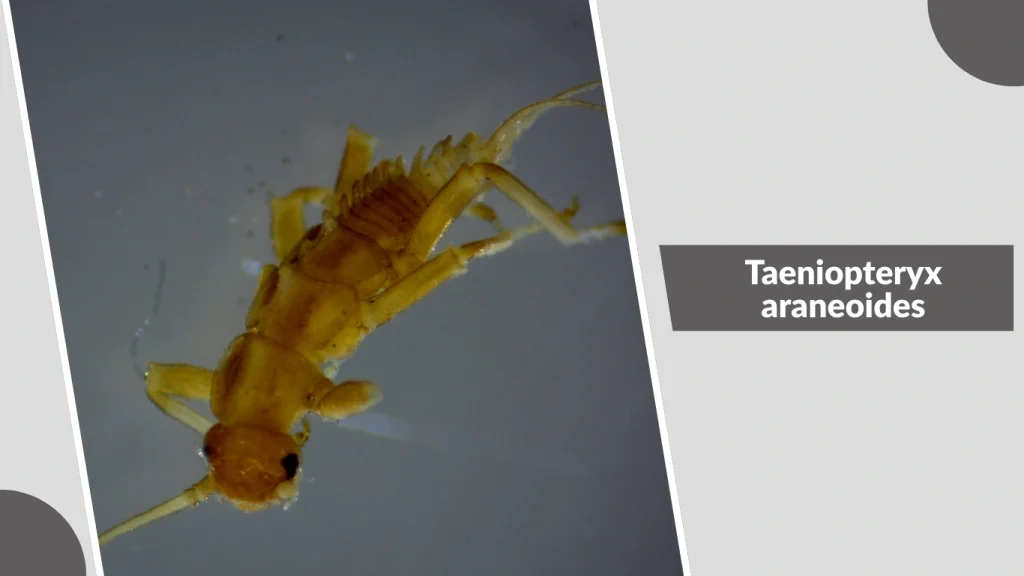
Taeniopteryx araneoides is a willowfly species belonging to the family Taeniopterygidae. Like others in its group, it is a winter stonefly, appearing in late winter to early spring when streams are still cold and often bordered by snow. Its presence highlights the resilience of aquatic insects adapted to cold environments.
Identification
- Medium-sized willowfly, about 10–15 mm in length
- Body coloration ranges from dark brown to almost black
- Wings smoky or translucent, folded flat across the abdomen at rest
- Long, slender antennae, often longer than the body
- Nymphs aquatic, with two cerci (tail filaments), strong legs, and flattened bodies for clinging to rocks
Behavior
Adults of T. araneoides emerge in cooler months and are usually seen crawling on stream banks, stones, or snow patches. They are weak fliers and rarely travel far from the water. After emergence, mating takes place quickly, and females drop their eggs directly into flowing streams. Nymphs feed on organic detritus such as decomposing leaves, supporting nutrient cycling within aquatic systems.
Habitat
This species favors clean, oxygen-rich streams and small rivers. Nymphs live under stones, logs, and within submerged leaf packs where water flow remains steady. Adults remain within riparian zones, depending on the proximity of streams for survival and reproduction.
Importance
Taeniopteryx araneoides serves as a bioindicator of freshwater quality, since it requires unpolluted, well-oxygenated streams to thrive. Its nymphs play a role in breaking down organic debris, which helps maintain the ecological balance of streams. Additionally, it provides a food source for fish, particularly trout, during a time of year when other aquatic insects are scarce.
10. Taeniopteryx schoenemundi
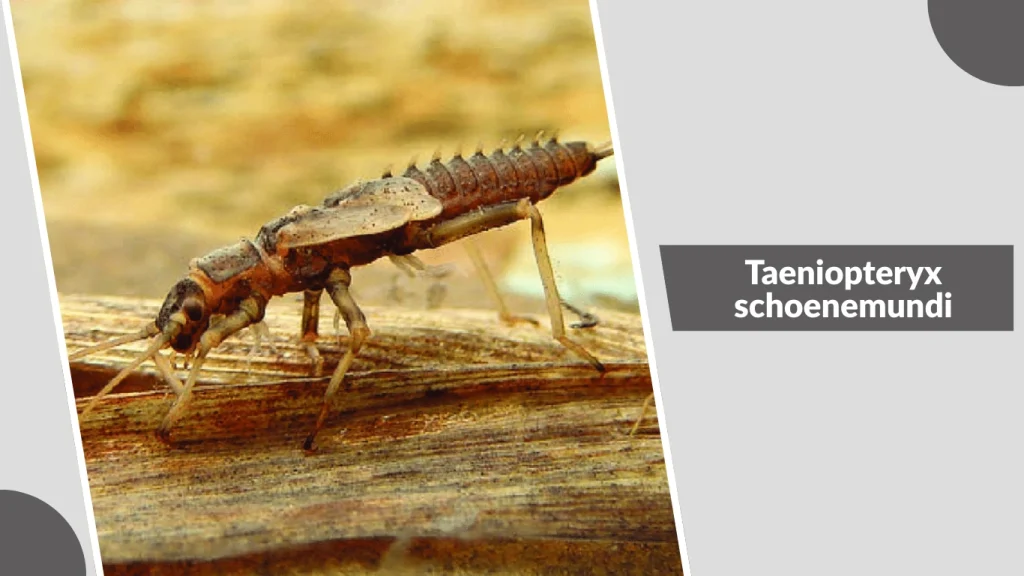
Taeniopteryx schoenemundi is a willowfly species in the family Taeniopterygidae. Like other willowflies, it is among the earliest stoneflies to emerge, often active in late winter and early spring while snow and ice still cover much of its habitat. Its life cycle makes it well adapted to cold environments and vital for stream ecology during seasons when few insects are present.
Identification
- Medium-sized willowfly, measuring around 10–14 mm in length
- Dark brown to black body coloration, blending with streamside rocks and leaf litter
- Wings smoky or translucent, folded flat over the abdomen when resting
- Long, threadlike antennae extending well beyond the head
- Aquatic nymphs flattened with two long cerci (tail filaments) and strong legs for gripping surfaces in flowing water
Behavior
Adults of T. schoenemundi are weak fliers, mostly crawling along snowbanks, stones, and streamside vegetation. They emerge during cooler months and quickly engage in mating. Females deposit eggs into flowing water, where they sink and develop into aquatic nymphs. These nymphs feed primarily on decaying organic matter, contributing to nutrient recycling in freshwater ecosystems.
Habitat
This species is associated with clean, oxygen-rich rivers and streams, often in cooler upland or mountainous regions. Nymphs inhabit rocky substrates, submerged wood, or accumulations of wet leaves where water flow provides a steady oxygen supply. Adults remain close to riparian zones, rarely dispersing away from water.
Importance
Taeniopteryx schoenemundi is ecologically significant as an indicator of water quality. Its sensitivity to pollution and oxygen depletion makes its presence a sign of healthy streams. The species contributes to the breakdown of organic matter and provides prey for fish species like trout, maintaining critical links in the food chain during colder months.
11. Taeniopteryx hubaulti
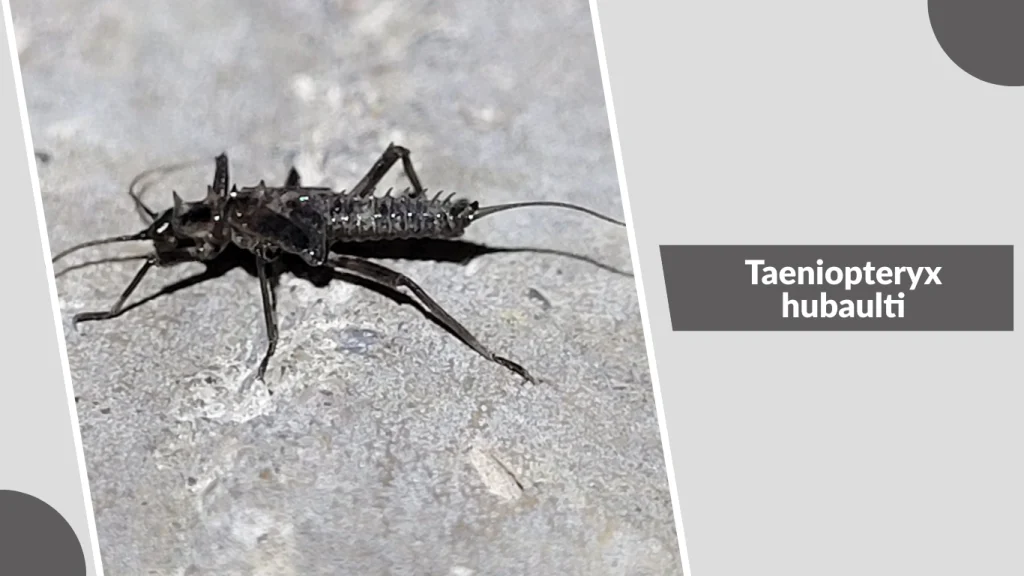
Taeniopteryx hubaulti is a willowfly species in the family Taeniopterygidae. True to the group’s traits, it emerges during the colder months of late winter and early spring, often seen along stream banks when snow and ice still linger. Its early seasonal presence makes it an important part of freshwater ecosystems during times when insect activity is otherwise minimal.
Identification
- Medium-sized willowfly, generally 10–15 mm in length
- Body dark brown to black, blending with wet stones and vegetation
- Smoky to translucent wings held flat over the abdomen at rest
- Long, slender antennae extending beyond the head length
- Nymphs aquatic, flattened, with two long cerci (tail filaments) and robust legs suited to fast-flowing streams
Behavior
Adults of T. hubaulti are poor fliers and spend much of their time crawling over rocks, snowbanks, and riparian vegetation. They emerge in cold months, often while snow is still present. Shortly after emergence, mating occurs, and females deposit eggs into flowing water. Nymphs consume decaying leaves and plant matter, which helps break down organic material in streams and supports nutrient recycling.
Habitat
This species inhabits small rivers and streams with cool, clean, and oxygen-rich waters. Nymphs are usually found beneath stones, in leaf packs, or among submerged debris, where current flow keeps oxygen levels stable. Adults remain close to water edges and rarely disperse far from aquatic environments.
Importance
Taeniopteryx hubaulti is ecologically valuable as a bioindicator of stream health. Its reliance on clean, oxygenated water makes its presence a positive sign of environmental quality. Nymphs help recycle nutrients by processing organic matter and provide prey for fish such as trout, linking aquatic insects to higher food chains.
12. Taeniopteryx nebulosa
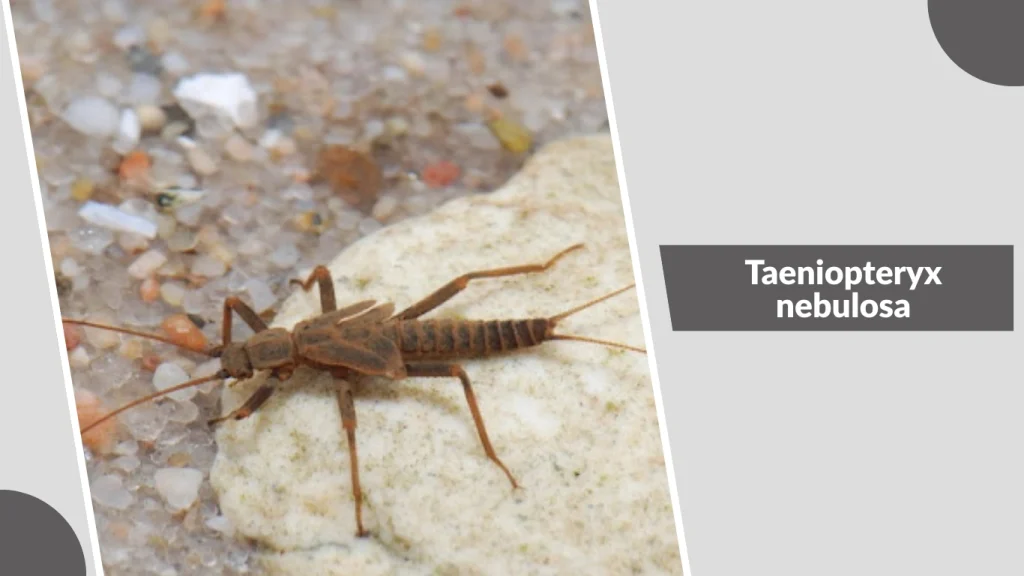
Taeniopteryx nebulosa is one of the most widespread willowfly species in the family Taeniopterygidae. It is a classic winter stonefly, often seen during late winter and early spring, making it one of the first insects to be active along cold streams. Because of its wide distribution, it is often studied as a representative willowfly species.
Identification
- Medium-sized willowfly, typically 10–16 mm long
- Dark brown to nearly black body with subtle mottling
- Wings translucent to smoky, folded flat over the abdomen with visible venation
- Antennae long and thin, extending well past the head
- Nymphs aquatic, flattened, with two long cerci (tail filaments) and strong legs for holding to rocks in currents
Behavior
Adults of T. nebulosa emerge in late winter, sometimes while snow still covers stream banks. They are weak fliers and generally crawl on snow, stones, or riparian vegetation. Mating takes place soon after emergence, and females release eggs into streams, where they sink to the bottom. Nymphs are detritivores, feeding on decomposing organic material and contributing to nutrient cycling in freshwater ecosystems.
Habitat
This species inhabits clean, oxygen-rich rivers and streams, often in lowland as well as upland regions. Nymphs prefer rocky streambeds, leaf packs, and submerged organic debris, where water flow maintains oxygenation. Adults remain close to the riparian zone and do not stray far from aquatic habitats.
Importance
Taeniopteryx nebulosa is a key bioindicator species for freshwater monitoring. Its dependence on clean, unpolluted streams means its presence reflects good environmental conditions. Ecologically, it plays a dual role: recycling organic matter and serving as prey for fish such as trout, especially during early spring when food sources are limited.
13. Taeniopteryx stankovitchi
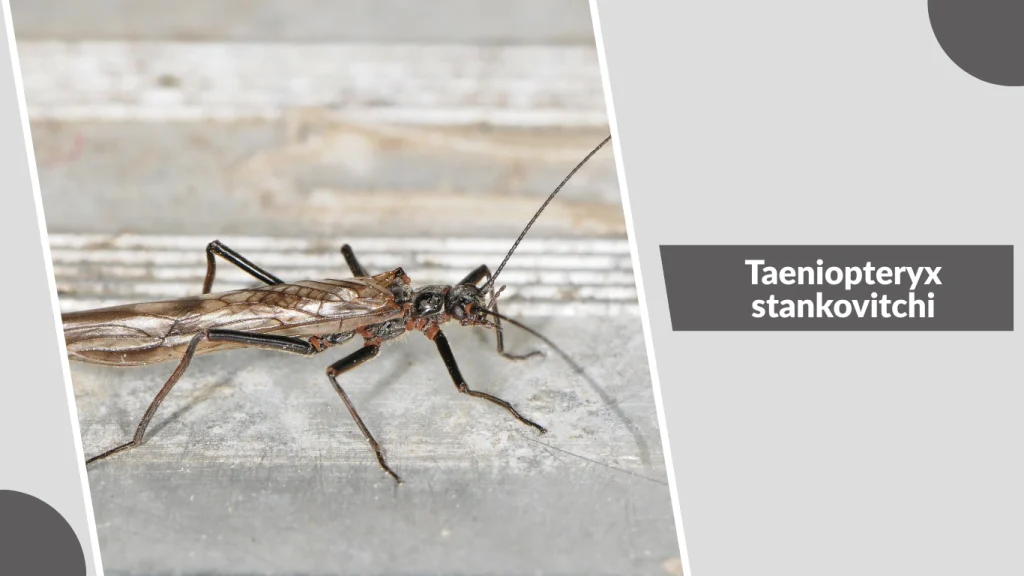
Taeniopteryx stankovitchi is a willowfly species in the family Taeniopterygidae. Like other willowflies, it is adapted to cold environments and emerges in late winter or early spring, often when snow still covers stream banks. Its presence is closely tied to freshwater quality and ecosystem health.
Identification
- Medium-sized willowfly, generally 10–14 mm in length
- Dark brown to almost black body with fine surface texture
- Wings smoky and translucent, folded flat over the abdomen at rest
- Long, threadlike antennae, sometimes longer than the body itself
- Nymphs are aquatic, with two cerci (tail filaments), strong legs, and flattened bodies well-suited to life in currents
Behavior
Adults of T. stankovitchi emerge during cold months and are most often seen crawling across snow, rocks, or streamside vegetation. They are weak fliers and remain close to their natal streams. Shortly after emergence, mating occurs, and females deposit eggs directly into flowing water. Nymphs feed on decomposing plant material, especially submerged leaves, contributing to organic matter breakdown.
Habitat
This species inhabits cold, well-oxygenated rivers and streams, often in upland or mountainous areas. Nymphs are found beneath stones, in leaf packs, and among submerged wood, where steady currents supply oxygen. Adults stay in riparian zones and depend on aquatic habitats for reproduction.
Importance
Taeniopteryx stankovitchi is ecologically important as both a nutrient recycler and an indicator of water quality. Its sensitivity to pollution means that its presence signals healthy freshwater systems. Nymphs also play a role in food webs, serving as prey for stream-dwelling fish such as trout and other insectivorous species.
14. Taeniopteryx tenuis
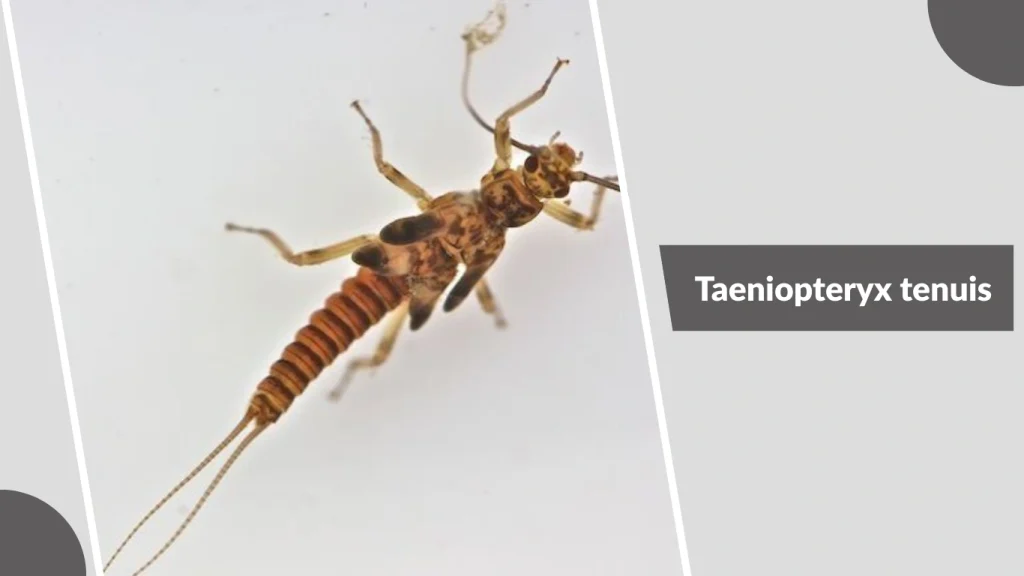
Taeniopteryx tenuis is a willowfly species within the family Taeniopterygidae. It is part of the winter stonefly group, emerging during the colder months of late winter and early spring. Its life cycle is tightly connected to freshwater ecosystems, where it contributes to nutrient cycling and serves as prey for fish.
Identification
- Medium-sized willowfly, measuring about 9–14 mm in length
- Body dark brown to black, slender in appearance
- Wings smoky or translucent, folded flat over the abdomen when resting
- Antennae long and thin, extending beyond the body length
- Nymphs aquatic, flattened, with two cerci (tail filaments) and strong legs adapted for life in running water
Behavior
Adults of T. tenuis are weak fliers and are most often seen crawling across rocks, snowbanks, and streamside vegetation. They emerge during colder months when insect activity is minimal. After emergence, mating takes place quickly, with females releasing eggs into streams. Nymphs feed primarily on detritus, including decomposing leaves, aiding in the breakdown of organic material within freshwater habitats.
Habitat
This species inhabits cool, clean, and oxygen-rich streams and rivers. Nymphs are typically found in rocky substrates, leaf packs, and submerged organic debris, where water currents maintain high oxygen levels. Adults remain close to the riparian zone, rarely moving far from aquatic habitats.
Importance
Taeniopteryx tenuis is an important bioindicator of freshwater quality. Its survival depends on unpolluted, well-oxygenated water, so its presence reflects a healthy ecosystem. Nymphs play a critical ecological role in recycling nutrients, while also serving as prey for fish, especially trout, during early spring when food sources are scarce.
15. Taeniopteryx mickeli
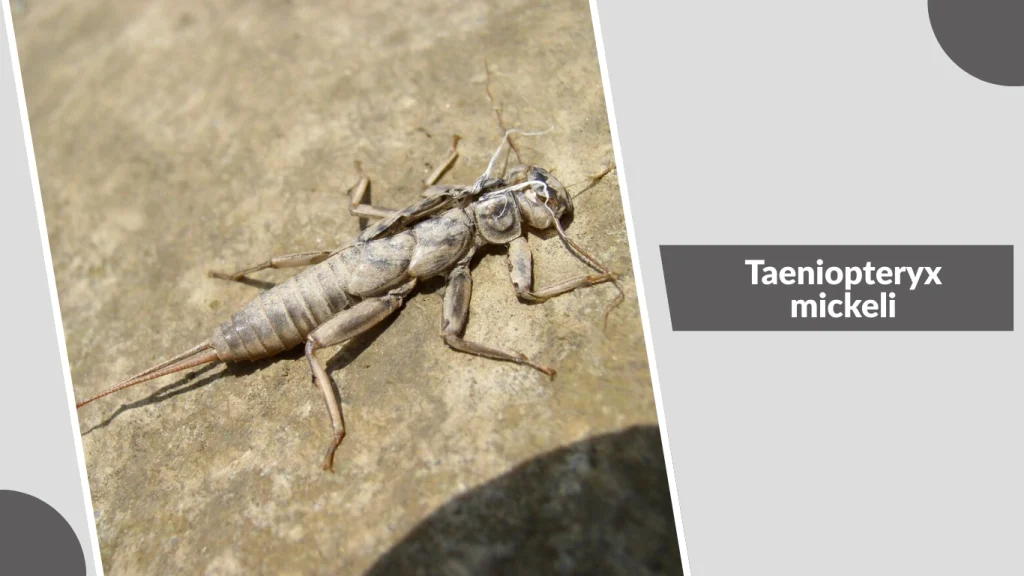
Taeniopteryx mickeli is a willowfly species in the family Taeniopterygidae. Like its close relatives, it emerges in late winter to early spring, filling an important ecological role at a time when insect activity is generally low. Its life cycle is closely tied to freshwater environments, where clean, oxygen-rich water is essential for development.
Identification
- Medium-sized willowfly, around 10–15 mm in length
- Dark brown to black body with a slender build
- Wings smoky or lightly translucent, folded flat across the abdomen at rest
- Antennae long and threadlike, often exceeding body length
- Nymphs aquatic, flattened, with two cerci (tail filaments) and strong, clawed legs suited for running water
Behavior
Adults of T. mickeli emerge in cooler months, often appearing on snow, rocks, and vegetation near streams. They are weak fliers and spend much of their time crawling rather than flying. After emergence, they quickly mate, and females deposit eggs directly into streams, where they sink to the substrate. Nymphs feed mainly on decomposing plant matter, breaking down organic debris in aquatic habitats.
Habitat
This species is typically found in cool, clean, and well-oxygenated streams or small rivers. Nymphs inhabit rocky streambeds, submerged leaf packs, and woody debris, where they can cling to surfaces in steady current. Adults remain in riparian zones, rarely dispersing far from water.
Importance
Taeniopteryx mickeli plays a significant role as both an ecological recycler and a bioindicator. Its nymphs decompose organic matter, contributing to nutrient cycling, while also serving as prey for fish such as trout. Because it requires unpolluted, oxygen-rich water, its presence signals healthy freshwater ecosystems.
16. Taeniopteryx lonicera
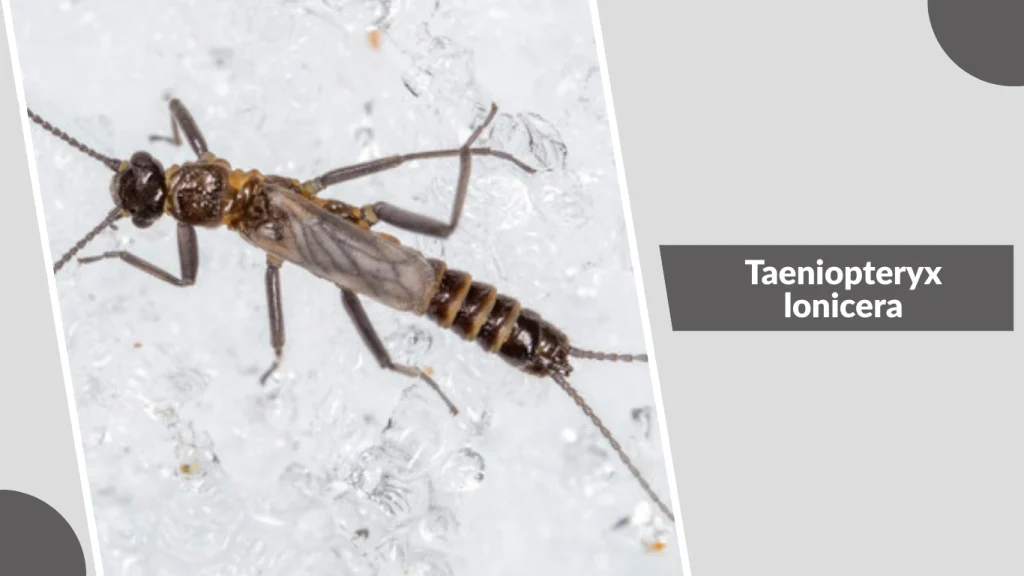
Taeniopteryx lonicera is a willowfly species in the family Taeniopterygidae. Like other willowflies, it belongs to the group of winter stoneflies that emerge in late winter or early spring, often before most other insects are active. Its presence in streams highlights its adaptation to cold conditions and reliance on high-quality freshwater.
Identification
- Medium-sized willowfly, about 9–14 mm long
- Dark brown to nearly black body, slender and elongated
- Wings translucent to smoky, folded flat over the abdomen at rest
- Long, thin antennae that usually exceed the length of the body
- Nymphs aquatic, flattened, with two long cerci (tail filaments) and strong legs for gripping substrates in currents
Behavior
Adults of T. lonicera are weak fliers, preferring to crawl over snowbanks, stones, and riparian vegetation near streams. They emerge early in the year during colder months, sometimes seen while snow is still present. After emergence, mating occurs quickly, and females release eggs into streams, ensuring that nymphs hatch in suitable aquatic habitats. Nymphs feed on decaying leaves and organic matter, playing a role in decomposition.
Habitat
This species inhabits cool, well-oxygenated streams and small rivers. Nymphs thrive in rocky streambeds, submerged leaf litter, and woody debris, where current flow maintains oxygen levels. Adults remain close to riparian zones and do not disperse far from water.
Importance
Taeniopteryx lonicera serves as a useful bioindicator of freshwater quality, as it requires clean and oxygen-rich streams for survival. Ecologically, its nymphs help recycle nutrients by processing organic material and serve as prey for stream-dwelling fish such as trout, making them an essential part of aquatic food webs.
17. Taeniopteryx harperi
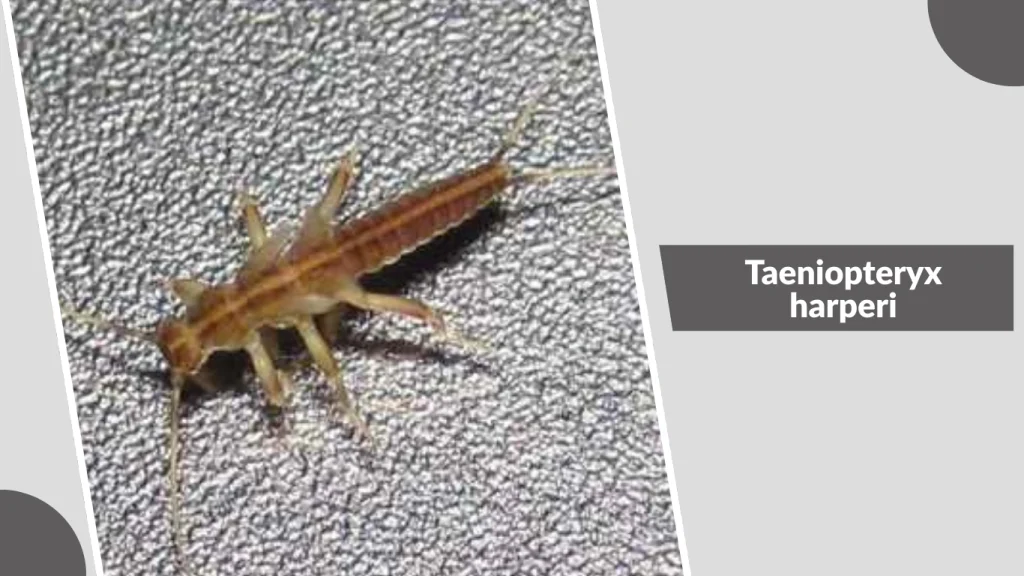
Taeniopteryx harperi is a willowfly species in the family Taeniopterygidae. Like its relatives, it is part of the winter stonefly group that emerges during late winter and early spring, when most insect activity is low. Its cold-season emergence and dependence on freshwater ecosystems make it important for nutrient cycling and food webs in streams.
Identification
- Medium-sized willowfly, generally 10–15 mm in length
- Dark brown to black body with a slender profile
- Wings smoky or lightly translucent, folded flat along the abdomen when resting
- Long, threadlike antennae extending beyond the body length
- Nymphs aquatic, flattened, with two distinct cerci (tail filaments) and strong legs adapted for clinging to rocks in running water
Behavior
Adults of T. harperi emerge in the colder months, often seen crawling on snow, rocks, and riparian vegetation near streams. They are poor fliers, usually remaining close to the water. After emergence, mating occurs quickly, with females depositing eggs into flowing streams. The eggs hatch into aquatic nymphs, which feed on decaying leaves and organic matter, aiding in decomposition.
Habitat
This species inhabits cold, clean, and oxygen-rich streams and rivers. Nymphs are found under stones, within leaf packs, and among woody debris in well-oxygenated areas with steady current. Adults remain in riparian zones, staying close to the aquatic environments where reproduction takes place.
Importance
Taeniopteryx harperi is considered a key indicator of stream health due to its sensitivity to water quality and oxygen levels. Its nymphs help break down organic material, recycling nutrients that sustain freshwater ecosystems. They are also an important prey source for fish such as trout, maintaining connections in the food chain during early spring.
18. Taeniopteryx issykkulensis
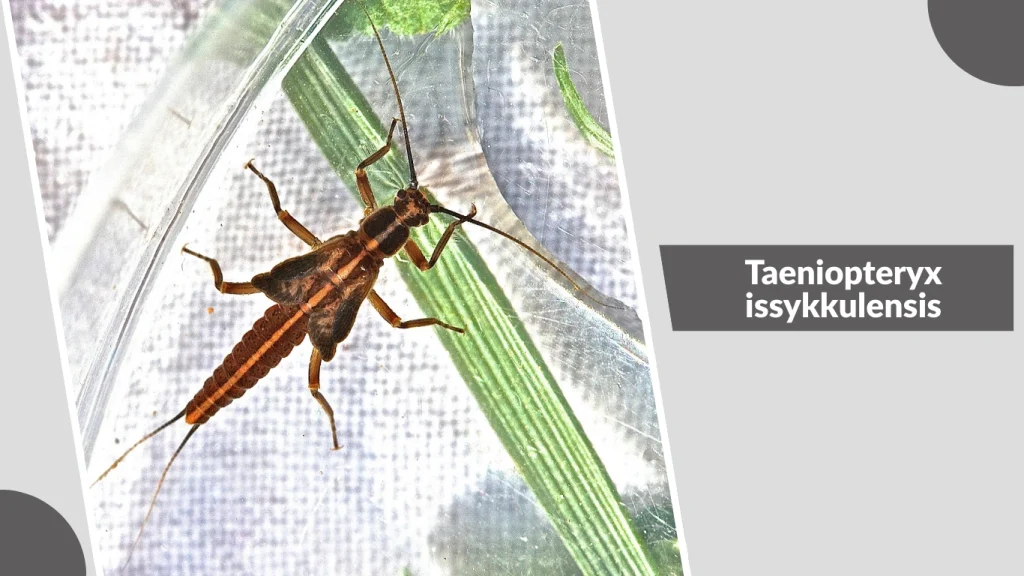
Taeniopteryx issykkulensis is a willowfly species in the family Taeniopterygidae. Like other willowflies, it is adapted to cold environments and is one of the earliest-emerging stoneflies in late winter and early spring. Its presence reflects the ecological health of freshwater systems, as it thrives only in clean, oxygen-rich waters.
Identification
- Medium-sized willowfly, usually 10–15 mm in length
- Body dark brown to nearly black, slender and elongated
- Wings smoky or translucent, folded flat over the abdomen when at rest
- Antennae long and threadlike, extending well beyond the body
- Nymphs aquatic, flattened, with two long cerci (tail filaments) and strong legs built for clinging in fast-flowing currents
Behavior
Adults of T. issykkulensis emerge during late winter, often appearing on snowbanks, streamside vegetation, and rocks. They are weak fliers, usually staying close to their natal streams. Mating takes place soon after emergence, with females depositing eggs directly into streams. Nymphs feed on decomposing organic matter, playing an important role in processing leaf litter and other plant material.
Habitat
This species inhabits clean, cool, and oxygenated streams or small rivers, often in mountainous or upland areas. Nymphs are typically found in rocky substrates, submerged wood, and leaf packs, where flowing water keeps oxygen levels high. Adults remain near riparian zones and seldom move far from aquatic habitats.
Importance
Taeniopteryx issykkulensis is valuable as a bioindicator of water quality. Its reliance on oxygen-rich streams means its presence signals unpolluted, healthy freshwater ecosystems. Ecologically, the species contributes to nutrient recycling and provides prey for fish such as trout, supporting aquatic food webs during early spring when food availability is low.
19. Taeniopteryx major
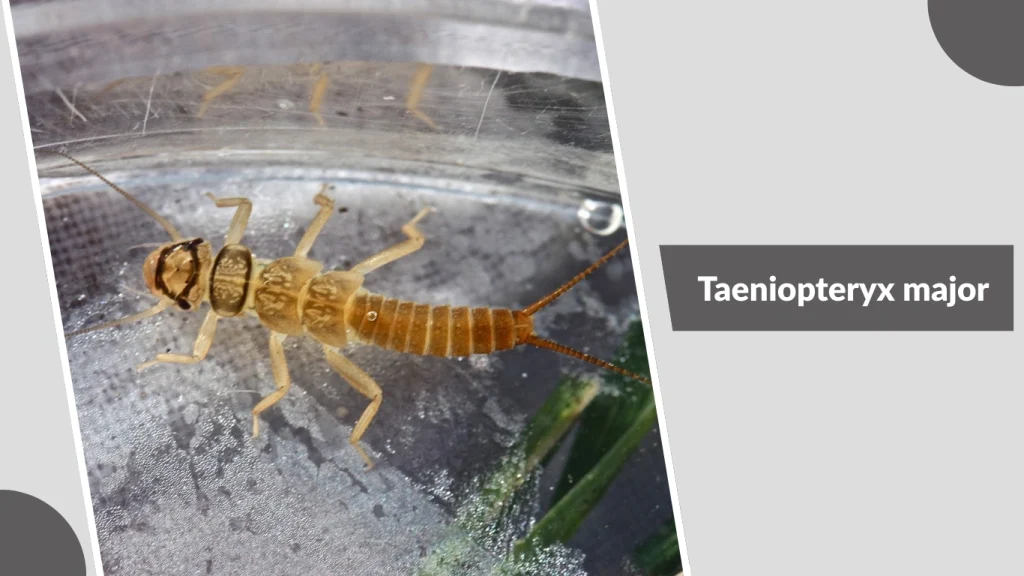
Taeniopteryx major is a willowfly species in the family Taeniopterygidae. True to its name, it is generally larger than many other willowflies and follows the same winter-emerging pattern. Active in late winter to early spring, it is an important cold-season insect in freshwater habitats.
Identification
- Larger-sized willowfly, typically 12–18 mm in length
- Body dark brown to black, with a more robust build compared to smaller willowflies
- Wings smoky or translucent, folding flat across the abdomen at rest
- Antennae long, threadlike, often longer than the body length
- Nymphs aquatic, flattened, with two long cerci (tail filaments) and strong legs designed for gripping substrates in current
Behavior
Adults of T. major emerge during late winter, sometimes seen crawling on snowbanks, rocks, and streamside vegetation. They are poor fliers and generally remain close to their streams of origin. Shortly after emergence, mating occurs, and females drop eggs into flowing water. The aquatic nymphs feed on decomposing leaves and plant matter, playing a role in organic matter processing within streams.
Habitat
This species favors cold, clean, and oxygen-rich streams and small rivers. Nymphs occupy rocky substrates, submerged leaf litter, and woody debris where oxygen levels are high and current is steady. Adults rarely stray far from riparian zones, staying close to water sources for survival and reproduction.
Importance
Taeniopteryx major is ecologically significant as an indicator of stream health. Its requirement for clean, well-oxygenated water makes it a reliable sign of good freshwater conditions. The nymphs contribute to nutrient recycling and are an essential prey source for fish, particularly trout, during early spring.
20. Taeniopteryx kurla
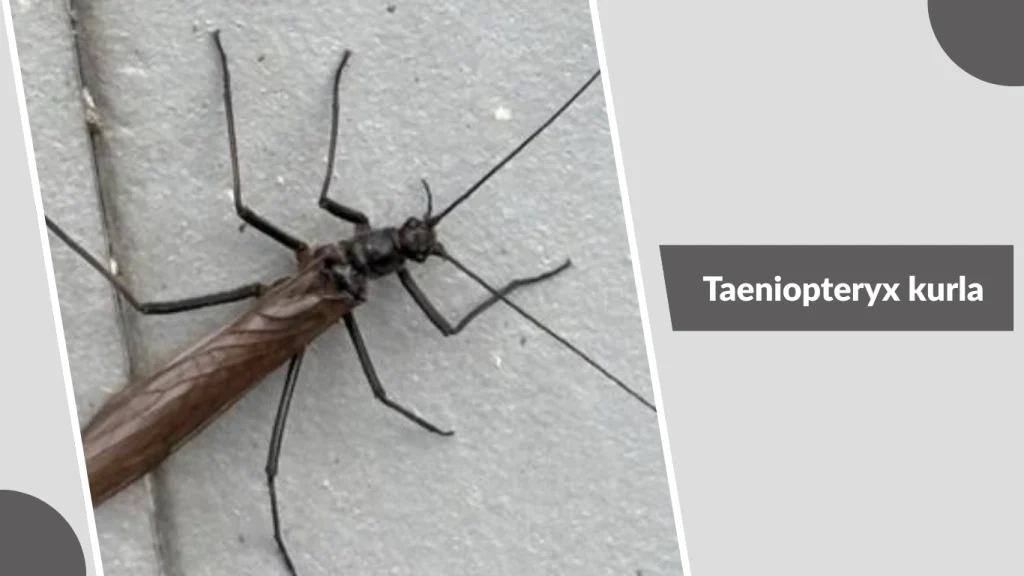
Taeniopteryx kurla is a willowfly species in the family Taeniopterygidae. Like its relatives, it is a winter stonefly that emerges during the colder months, making it one of the few insects active in late winter and early spring. Its presence in streams highlights its importance as both a bioindicator and a participant in nutrient cycling.
Identification
- Medium-sized willowfly, generally 10–15 mm in length
- Dark brown to black body, slender and elongated
- Wings smoky or translucent, folded flat over the abdomen when resting
- Antennae long, threadlike, extending beyond the body length
- Nymphs aquatic, flattened, with two long cerci (tail filaments) and well-developed legs for holding to rocks in current
Behavior
Adults of T. kurla emerge early in the year, often visible on snow, stones, and riparian vegetation near streams. They are poor fliers and mostly crawl rather than fly. Shortly after emergence, mating occurs, and females release eggs into streams. Nymphs act as detritivores, feeding on decomposing plant material, which helps in organic matter breakdown.
Habitat
This species is found in clean, oxygen-rich freshwater habitats, including streams and small rivers. Nymphs live under stones, within submerged leaf packs, and among woody debris where water currents ensure a constant oxygen supply. Adults remain close to riparian zones and do not disperse far from aquatic habitats.
Importance
Taeniopteryx kurla is important for freshwater ecosystems as an ecological recycler and bioindicator. Its reliance on unpolluted streams makes it a strong marker of water quality. The nymphs contribute to nutrient cycling and provide prey for fish such as trout, helping maintain aquatic food webs during colder seasons.
21. Taeniopteryx issa
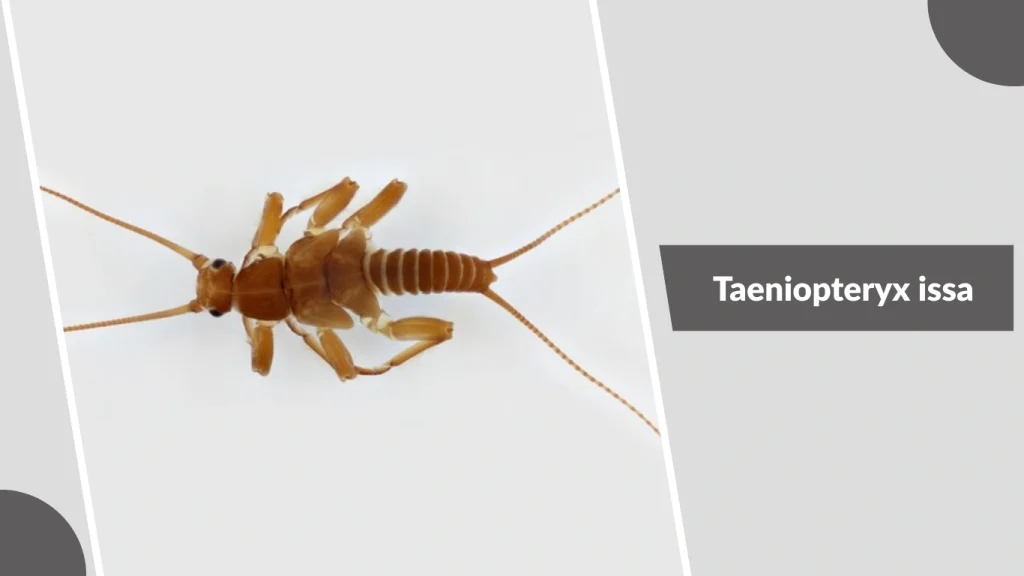
Taeniopteryx issa is a willowfly species in the family Taeniopterygidae. Like other willowflies, it is adapted to emerge in late winter and early spring, when few other insects are active. Its early-season presence and reliance on clean streams make it ecologically important in cold freshwater habitats.
Identification
- Medium-sized willowfly, about 10–14 mm long
- Body dark brown to nearly black, slender in shape
- Wings smoky or translucent, folded flat over the abdomen when resting
- Long, thin antennae extending well beyond the head
- Nymphs aquatic, flattened, with two long cerci (tail filaments) and strong legs adapted for fast-moving streams
Behavior
Adults of T. issa appear in cooler months, often crawling on snowbanks, stones, and riparian vegetation near streams. They are weak fliers and stay close to their aquatic environment. After emergence, mating occurs quickly, and females deposit eggs directly into streams. Nymphs act as detritivores, consuming decaying organic matter, including submerged leaves, which helps recycle nutrients.
Habitat
This species inhabits cold, clean, and oxygen-rich freshwater systems, such as small rivers and streams. Nymphs prefer rocky streambeds, leaf packs, and submerged debris, where steady water flow provides sufficient oxygen. Adults remain near riparian zones and rarely move far from aquatic habitats.
Importance
Taeniopteryx issa is a useful indicator of water quality. Its sensitivity to pollution and oxygen depletion means its presence reflects healthy, unpolluted streams. Ecologically, it plays an important role in breaking down organic matter and provides a food source for fish like trout, linking insect life to higher predators in stream ecosystems.
22. Taeniopteryx mongolica
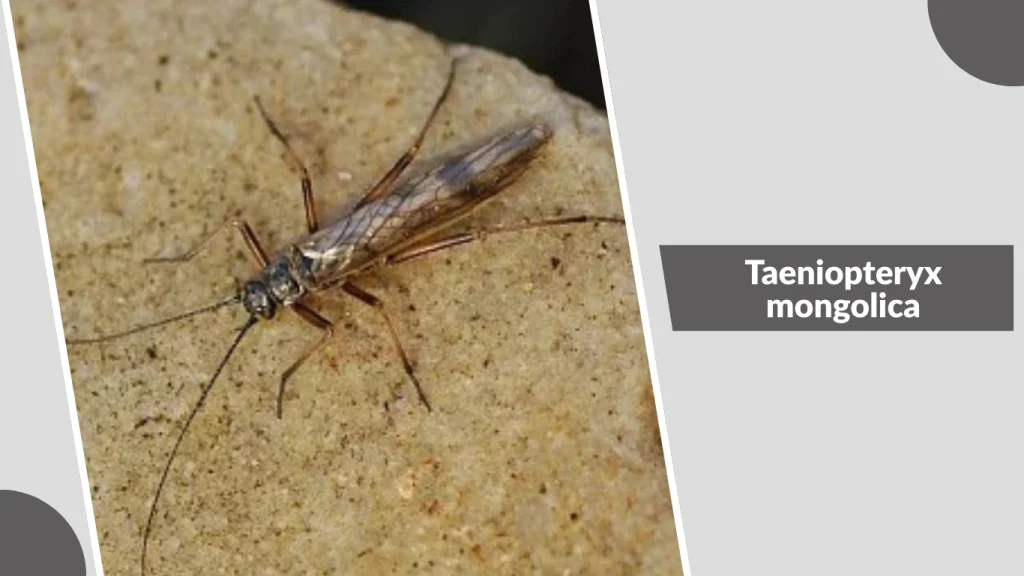
Taeniopteryx mongolica is a willowfly species in the family Taeniopterygidae. As with its relatives, it belongs to the group of winter stoneflies, emerging during late winter and early spring when temperatures are still low. Its life cycle is strongly tied to the health of freshwater ecosystems.
Identification
- Medium-sized willowfly, about 10–15 mm in length
- Dark brown to almost black body, slim and elongated
- Wings smoky or translucent, held flat across the abdomen when resting
- Long, threadlike antennae extending beyond the body length
- Nymphs aquatic, flattened, with two cerci (tail filaments) and strong legs built for fast-flowing water
Behavior
Adults of T. mongolica are weak fliers, usually found crawling on snow, rocks, and streamside vegetation during cold months. They emerge early in the season, when insect activity is minimal. Mating occurs shortly after emergence, and females deposit eggs directly into streams. Nymphs are detritivores, feeding on decomposing organic matter, helping to recycle nutrients within aquatic habitats.
Habitat
This species inhabits clean, well-oxygenated freshwater systems such as streams and small rivers, often in mountainous or upland areas. Nymphs are found beneath stones, among submerged leaves, and in woody debris, where currents keep oxygen levels high. Adults remain near riparian zones and rarely move away from their aquatic environment.
Importance
Taeniopteryx mongolica is considered an important bioindicator due to its dependence on unpolluted, oxygen-rich waters. Its role in breaking down organic material supports nutrient cycling, and its nymphs provide a vital food source for fish such as trout. Its presence ensures balance in aquatic food webs during colder seasons.
23. Taeniopteryx tenuicercus
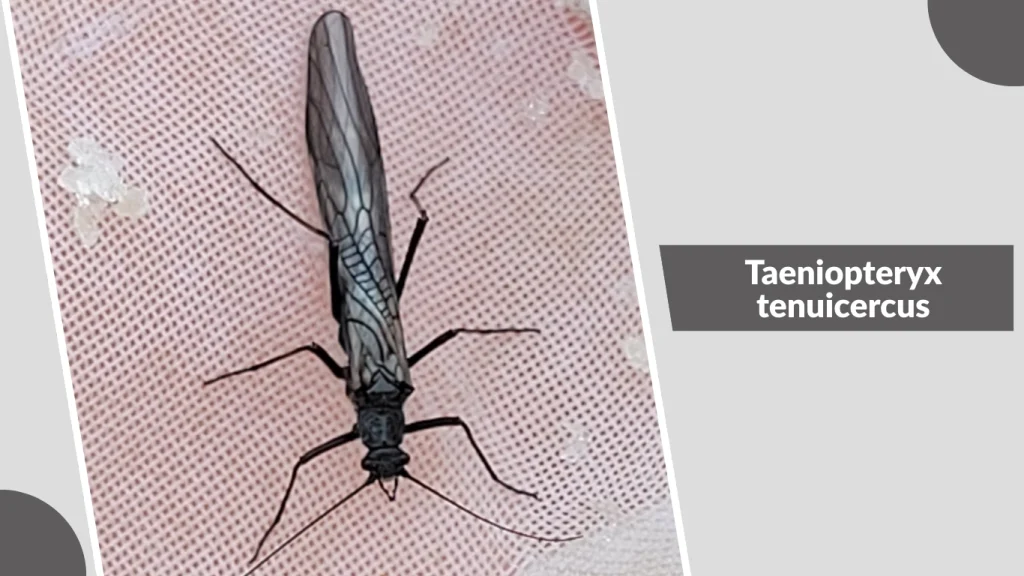
Taeniopteryx tenuicercus is a willowfly species in the family Taeniopterygidae. Like its relatives, it is an early-emerging stonefly that becomes active in late winter and early spring, making it one of the few insects visible during snowy or icy conditions. Its presence is closely tied to clean, flowing water.
Identification
- Medium-sized willowfly, around 10–14 mm in length
- Dark brown to nearly black body, slender in appearance
- Wings smoky or translucent, folding flat over the abdomen at rest
- Long, threadlike antennae longer than the body
- Nymphs aquatic, flattened, with two cerci (tail filaments) and strong legs adapted for clinging in running water
Behavior
Adults of T. tenuicercus emerge during late winter and are commonly observed crawling across snowbanks, stones, and vegetation along streams. They are weak fliers and generally stay close to their aquatic habitat. After emergence, mating occurs quickly, and females release eggs into flowing water. Nymphs feed on detritus such as decaying leaves, playing an important role in breaking down organic material.
Habitat
This species inhabits cool, clean, and oxygen-rich streams and small rivers. Nymphs live beneath stones, in submerged leaf packs, and within woody debris where current flow provides sufficient oxygen. Adults remain in riparian zones, rarely dispersing far from water bodies.
Importance
Taeniopteryx tenuicercus is a valuable ecological indicator, as it can only thrive in healthy, unpolluted freshwater habitats. Its nymphs recycle nutrients by processing organic debris and also serve as prey for fish such as trout, helping sustain stream food webs during early spring.
24. Taeniopteryx fuscata
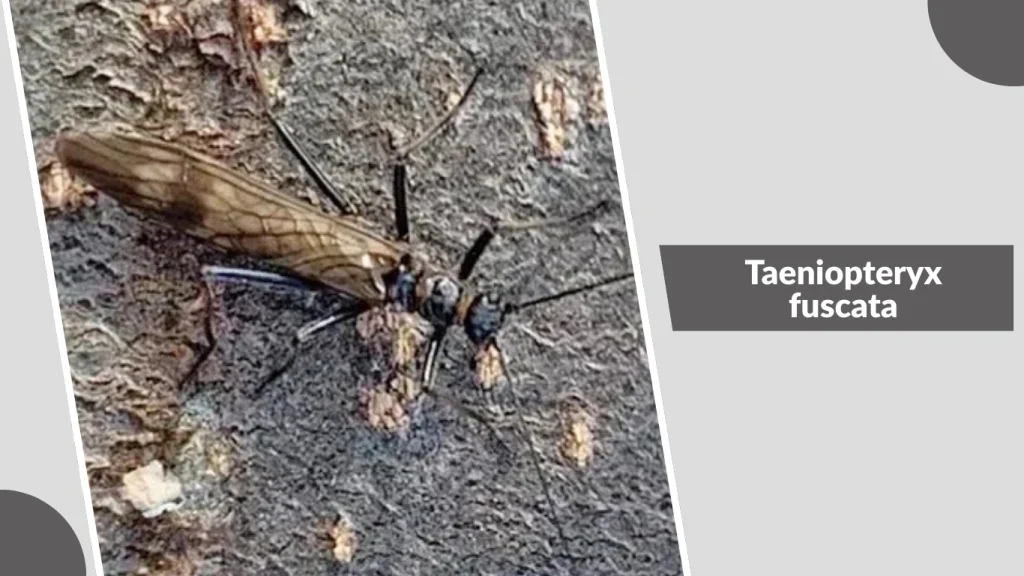
Taeniopteryx fuscata is a willowfly species in the family Taeniopterygidae. Like other willowflies, it is part of the winter stonefly group, emerging in late winter or early spring when temperatures are still low and snow may be present. Its seasonal activity and habitat needs make it a reliable species for studying stream health.
Identification
- Medium-sized willowfly, measuring 10–15 mm in length
- Body dark brown to black, often slightly lighter on the underside
- Wings smoky to translucent, folded flat over the abdomen at rest
- Antennae long and threadlike, exceeding the length of the body
- Nymphs aquatic, flattened, with two distinct cerci (tail filaments) and strong legs built for gripping rocky surfaces
Behavior
Adults of T. fuscata emerge early in the year and are commonly seen crawling across snow, rocks, and riparian vegetation. They are weak fliers and stay close to their natal streams. Mating occurs soon after emergence, and females deposit eggs directly into flowing water. Nymphs live in aquatic habitats, feeding on decomposing leaves and organic matter, contributing to stream nutrient cycles.
Habitat
This species inhabits cold, clean, and oxygen-rich freshwater systems, particularly small rivers and streams. Nymphs are found beneath stones, in submerged wood, and in leaf packs where current flow ensures high oxygen availability. Adults remain within riparian zones, rarely moving far from water.
Importance
Taeniopteryx fuscata is ecologically important as both a decomposer and a bioindicator. Its sensitivity to pollution makes its presence a clear sign of healthy, unpolluted streams. Its nymphs process organic debris, recycling nutrients, while also serving as a key prey source for fish like trout in early spring.
25. Taeniopteryx vicina
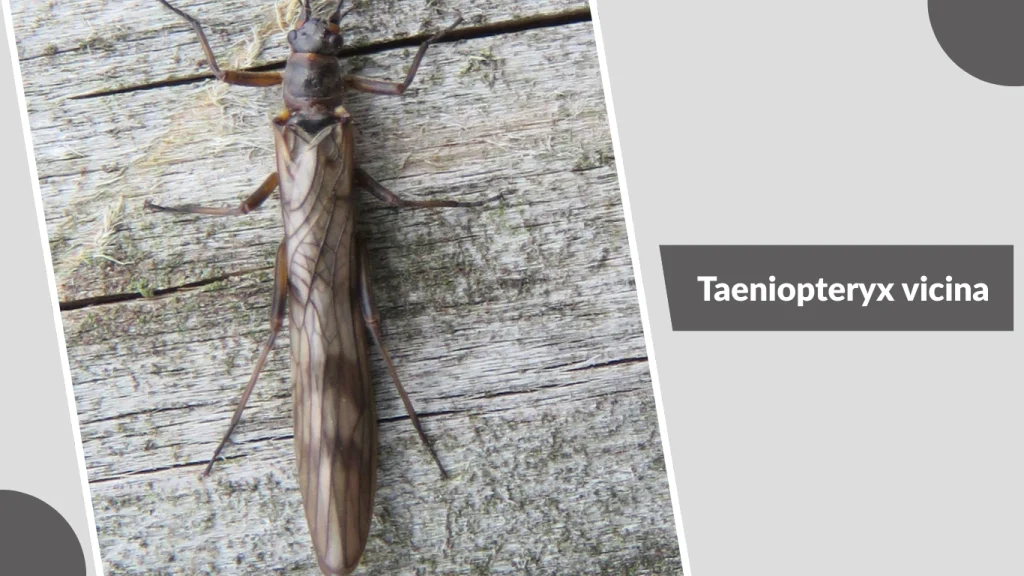
Taeniopteryx vicina is a willowfly species within the family Taeniopterygidae. Like other willowflies, it emerges in late winter and early spring, often when snow and ice are still present along stream banks. Its cold-season activity and dependence on clean water make it an essential insect for freshwater ecosystems.
Identification
- Medium-sized willowfly, about 10–15 mm in length
- Body dark brown to nearly black, slim and elongated
- Wings smoky or translucent, folded flat over the abdomen at rest
- Long, threadlike antennae often longer than the body
- Nymphs aquatic, with a flattened body, two long cerci (tail filaments), and strong legs adapted for fast-flowing water
Behavior
Adults of T. vicina are weak fliers, staying close to their stream habitats. They are often seen crawling across rocks, snowbanks, and riparian vegetation during colder months. Shortly after emergence, they mate, and females release eggs directly into streams. The nymphs feed on detritus such as decaying plant material, contributing to the breakdown of organic matter in streams.
Habitat
This species inhabits cool, clean, oxygen-rich streams and small rivers, often in upland or mountainous regions. Nymphs are commonly found beneath stones, in submerged leaf litter, or in woody debris where water flow keeps oxygen levels stable. Adults remain close to riparian zones and do not disperse far from aquatic habitats.
Importance
Taeniopteryx vicina is an important ecological indicator due to its dependence on unpolluted, oxygen-rich water. Its presence signals good stream health. Nymphs play a key role in nutrient recycling by processing organic debris and also serve as prey for fish such as trout, maintaining food web balance during the early spring season.
