

Fuzzy, striking, and often misunderstood, the Garden Tiger Moth caterpillar (Arctia caja) is one of the most fascinating larvae found across gardens, meadows, and woodlands. Known for its long hairs and vivid markings, this caterpillar has intrigued both scientists and nature lovers for centuries. Sometimes mistaken for the famous woolly bear caterpillars, it plays a unique role in ecosystems and later transforms into the spectacular Garden Tiger Moth, an adult with boldly patterned wings.
Identification of Garden Tiger Moth Caterpillar

The Garden Tiger Moth caterpillar is instantly recognizable thanks to its dense coat of long hairs. These hairs, often black or dark brown, give it a fuzzy appearance. Beneath the bristles, patches of bright orange or reddish coloration run along the sides, providing a striking contrast. As the caterpillar matures, it develops a more vibrant appearance, warning predators to stay away.
Young larvae appear smaller and less hairy but quickly gain their thick coat of protective bristles. At full size, they can reach around 6 centimeters in length. A closer look reveals small white dots on the body and banded sections of hair, making them different from other fuzzy caterpillars commonly spotted in gardens.
This caterpillar is sometimes confused with the woolly bear caterpillar found in North America, but it is actually a European species with its own unique traits. Unlike the woolly bear, which is entirely black or rusty brown, the Garden Tiger Moth caterpillar has distinct patches of bright orange.
Are Garden Tiger Moth Caterpillars Poisonous?
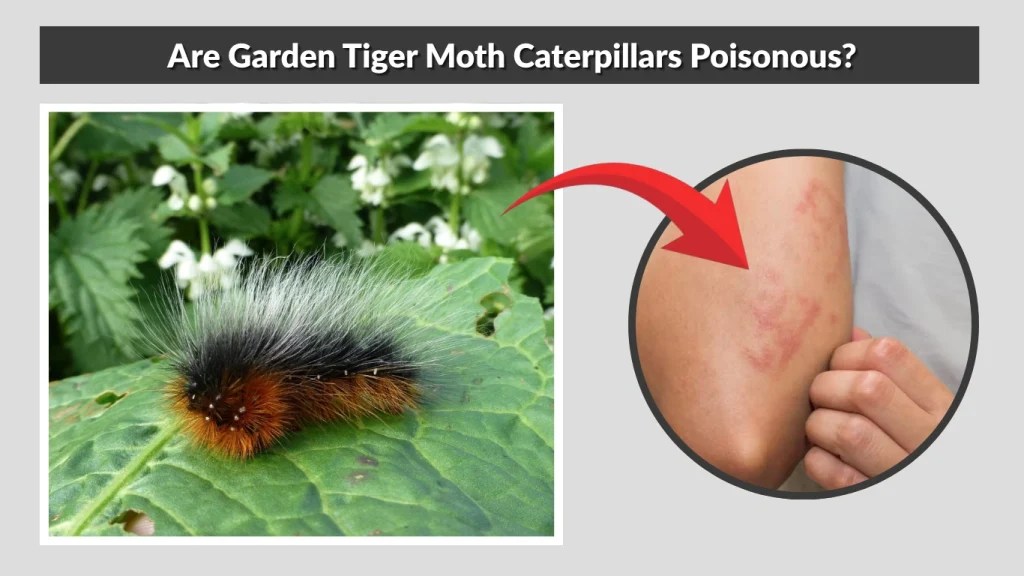
A common question people ask is whether the Garden Tiger Moth caterpillar is poisonous. The truth is that it isn’t poisonous in the deadly sense, but its hairs are a defense mechanism designed to discourage predators. These bristles can cause mild skin irritation, itching, or rashes in humans if handled directly.
For most people, the reaction is minor and temporary, but those with sensitive skin or allergies may experience stronger irritation. The hairs are not toxic when ingested, but because they can be irritating, it is best to avoid direct contact.
In nature, the bristles serve as an effective deterrent. Birds and small mammals often avoid eating these caterpillars because the hairs are unpleasant to swallow. Combined with their warning colors, the caterpillar signals to predators that it is not worth the risk.
Host Plants and Diet

The Garden Tiger Moth caterpillar is not a picky eater. It feeds on a wide variety of herbaceous plants, which explains its ability to thrive in different environments. Some of its most common host plants include:
- Nettles
- Dandelions
- Dock
- Clover
- Plantains
This generalist diet allows the caterpillar to survive in gardens, meadows, and even disturbed habitats where plant diversity is limited. By feeding on such a wide range of plants, they not only support their own growth but also play a part in balancing plant populations.
Unlike specialist caterpillars that depend on a single plant species, the Garden Tiger Moth caterpillar adapts easily. This flexibility has made it a widespread and resilient species.
Habitat and Distribution
The Garden Tiger Moth caterpillar is commonly found across Europe, especially in the United Kingdom, where it is a familiar sight in gardens and countryside meadows. It is also present in parts of North America and Asia, though with more limited distribution.
These caterpillars thrive in habitats that provide both food plants and safe spaces to hide. Gardens, hedgerows, woodland edges, and grassy meadows are all suitable environments. They prefer areas with plenty of moisture, as dry conditions make it harder for plants to grow and for caterpillars to survive.
Interestingly, their range has declined in some regions due to climate change and habitat loss. Warmer winters and agricultural practices have reduced their populations in certain parts of the UK, making them less common than in the past.
Life Cycle of Garden Tiger Moth Caterpillar
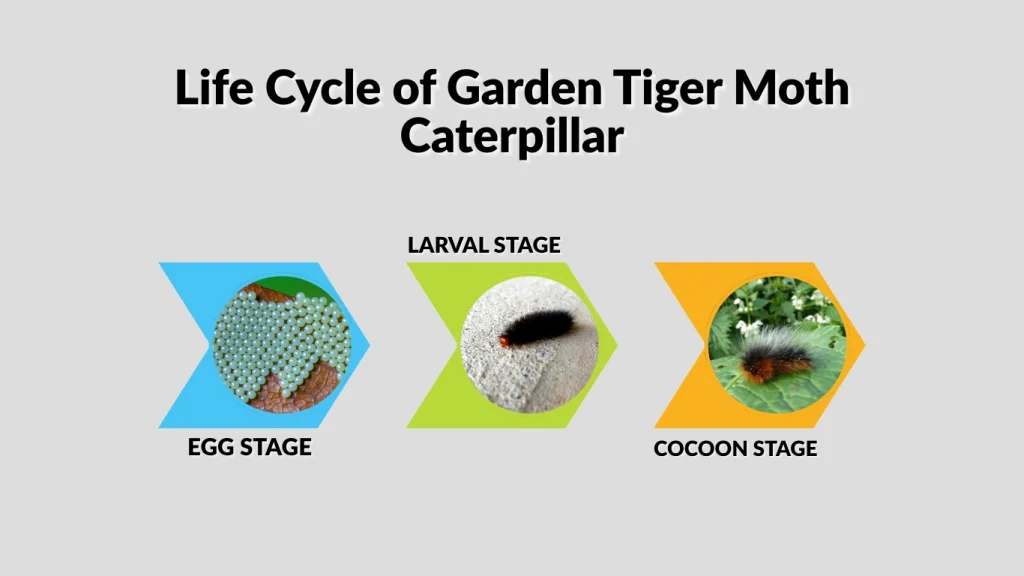
Like all moths, the Garden Tiger Moth undergoes complete metamorphosis, moving through four distinct stages: egg, larva, pupa, and adult moth.
Egg Stage
The cycle begins when the female Garden Tiger Moth lays her eggs on the leaves of suitable host plants. These eggs are tiny and often laid in clusters. Within a few weeks, the eggs hatch into small caterpillars that immediately begin feeding.
Larval Stage
This is the longest and most visible stage. The caterpillars grow rapidly, shedding their skin several times in a process called molting. Each molt brings more hair growth and stronger coloration. During this period, they consume large amounts of plant material to store energy for metamorphosis.
In colder climates, the caterpillars often overwinter in their larval stage, curling up in sheltered spots under leaves or in grass tufts. They resume feeding in spring before finally pupating.
Cocoon Stage
When the caterpillar is fully grown, it spins a cocoon using silk and incorporates its own hairs for extra protection. This hairy cocoon provides a safe environment while the caterpillar transforms into a pupa. Inside, dramatic changes take place as the larva restructures into the adult moth.
The cocoon stage usually lasts several weeks, though the exact timing depends on temperature and environmental conditions. In colder regions, the pupa may remain dormant through the winter and hatch the following summer.
Garden Tiger Moth Cocoon

The cocoon of the Garden Tiger Moth is an impressive structure. Unlike the smooth cocoons of some butterflies, this one appears rough and hairy because it uses both silk and caterpillar bristles. This additional layer discourages predators and parasitic insects from attacking the vulnerable pupa inside.
The cocoon is usually hidden in leaf litter, soil, or under vegetation. Once sealed inside, the caterpillar undergoes metamorphosis, reorganizing its body into the adult form. When the transformation is complete, the fully developed Garden Tiger Moth emerges, displaying its spectacular patterned wings.
Behavior and Adaptations
The Garden Tiger Moth caterpillar has developed several fascinating adaptations that help it survive in the wild. Its most obvious defense is the thick coat of bristles, which protects it from predators and environmental stress. When threatened, the caterpillar curls into a tight ball, exposing its hairs and hiding its softer underside. This behavior makes it difficult for predators to eat without being irritated.
Another adaptation is its warning coloration. The bright orange patches along its body serve as aposematic signals, warning birds and mammals that it may be unpleasant or harmful to consume. Many animals instinctively avoid brightly colored prey, and this gives the caterpillar an advantage in survival.
These caterpillars are generally solitary feeders but may sometimes be seen in small groups if food is abundant. They are active mainly during the day, although their activity level can vary depending on temperature and season.
Importance in Ecosystem
The Garden Tiger Moth caterpillar plays an essential role in ecosystems as both herbivore and prey. By feeding on a wide variety of herbaceous plants, it helps regulate plant growth, contributing to biodiversity. While heavy feeding can sometimes damage garden plants, in natural habitats their grazing maintains balance.
They are also an important food source for other animals. Birds, bats, and small mammals may attempt to eat them, although the bristles make them less appealing. Parasitoid wasps, however, can sometimes bypass their defenses and lay eggs inside the caterpillar’s body.
When they metamorphose into moths, adults provide additional ecological benefits. Garden Tiger Moths are pollinators, visiting flowers at night and contributing to the reproductive cycle of many wild plants. Thus, from larva to adult, they serve as key contributors to the food web.
Garden Tiger Moth Caterpillar vs. Other Fuzzy Caterpillars
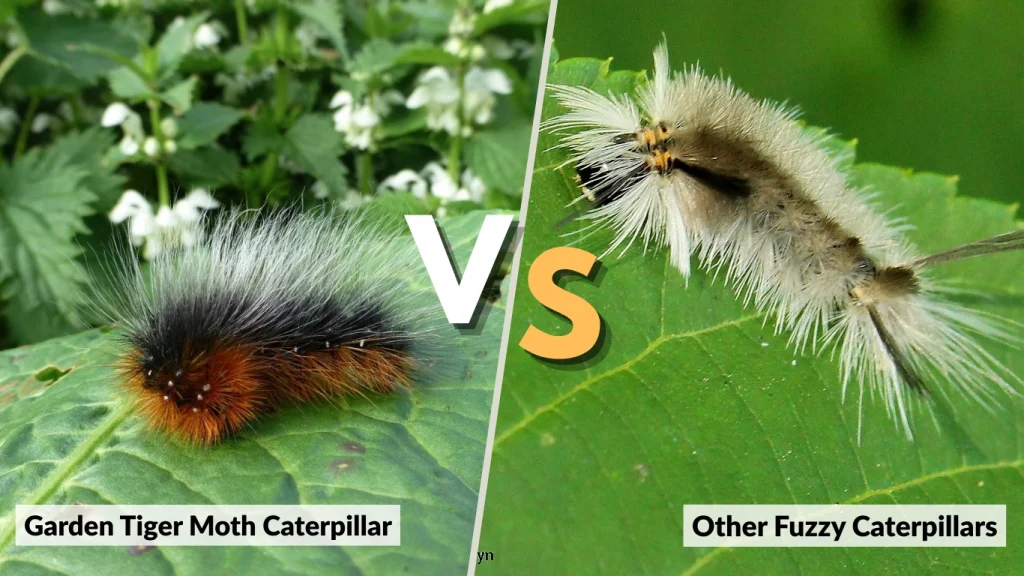
Because of their hairy bodies, Garden Tiger Moth caterpillars are often mistaken for other fuzzy species. One of the most common comparisons is with the woolly bear caterpillar, famous in North America. While both are bristly and dark-colored, woolly bears usually appear black and rusty brown without the bright orange side patches seen in Garden Tiger caterpillars.
Another lookalike is the black fuzzy caterpillar frequently seen in Texas. These caterpillars, however, belong to different moth species and have different dietary preferences. Similarly, species like the Jersey Tiger Moth caterpillar and the Scarlet Tiger Moth caterpillar may resemble the Garden Tiger but can be distinguished by subtle differences in coloration and habitat preference.
Being able to tell them apart is useful not only for gardeners but also for researchers tracking the distribution and population changes of these moths.
Predators and Threats
Although the Garden Tiger Moth caterpillar has strong defenses, it is not immune to predation and environmental threats. Birds such as cuckoos and some ground-feeding species have been known to tolerate the bristles and consume them anyway. Small mammals like shrews may also eat them during times of food scarcity.
Parasitoid wasps and flies pose another danger, laying their eggs inside the caterpillar. Once hatched, the larvae feed on the caterpillar from within, eventually killing it. This natural control prevents caterpillar populations from overwhelming ecosystems.
On a larger scale, habitat loss and climate change are significant threats. In the UK and parts of Europe, Garden Tiger Moth numbers have declined sharply over the last few decades. Warmer winters and drier summers have disrupted their life cycles, reducing survival rates. Agricultural intensification, which reduces wildflower diversity, has also limited the availability of host plants.
Interaction with Humans
Garden Tiger Moth caterpillars are often encountered in gardens, where they feed on common plants. For nature enthusiasts, they are a welcome sign of biodiversity, but for some gardeners, their feeding can be seen as a nuisance. Still, their impact is generally minor compared to other pest species.
Handling these caterpillars should be avoided, as their bristles may cause itching or skin irritation. Children and pets are especially prone to touching them, so awareness is important. However, they are not dangerous in a serious sense, and observing them from a distance can be both safe and educational.
Their decline has raised conservation concerns, and in some regions, efforts are being made to preserve wildflower-rich habitats that support their survival. For gardeners who want to help, planting nectar-rich flowers and reducing pesticide use can create safe spaces for both caterpillars and moths.
Fun Facts About Garden Tiger Moth Caterpillars
The Garden Tiger Moth caterpillar has inspired folklore and fascination for centuries. In some traditions, fuzzy caterpillars were believed to predict the coming winter. The thickness of their coat or the intensity of their colors was thought to signal how harsh the season would be.
The adult moth is equally remarkable. Its forewings are patterned with brown and white, providing camouflage when resting. But when disturbed, it flashes its bright orange hindwings marked with blue-black spots, startling predators into retreat. This sudden display of color is a classic survival tactic known as startle coloration.
Another fun fact is that these caterpillars are highly adaptable. Their ability to feed on a wide range of plants means they can survive in gardens, meadows, and even disturbed urban areas. This flexibility has allowed them to persist even as other specialist species decline.
FAQs
What do Garden Tiger Moth caterpillars eat?
Garden Tiger Moth caterpillars eat a wide variety of herbaceous plants, including nettles, clover, dandelions, dock, and plantains. They are generalist feeders, meaning they do not rely on one specific plant species. This adaptability makes them more resilient and widespread compared to caterpillars that specialize in just one type of food plant.
Are Garden Tiger Moth caterpillars poisonous to humans?
They are not poisonous in the sense of delivering toxins, but their bristles can cause mild skin irritation, rashes, or allergic reactions. This is a defensive adaptation meant to discourage predators. While generally harmless, it is best to avoid direct handling and simply observe them in their natural environment.
Where can you find Garden Tiger Moth caterpillars?
These caterpillars are commonly found in Europe, especially in the UK, as well as parts of North America and Asia. They thrive in gardens, meadows, woodland edges, and hedgerows. They prefer moist habitats where food plants are abundant, although they can also adapt to urban areas with enough greenery.
How long does it take for them to become a moth?
The transformation from caterpillar to moth depends on climate and season. After feeding for several weeks or months, they spin a cocoon and pupate. In warmer conditions, adults may emerge within a few weeks, but in cooler climates, pupae may overwinter and emerge the following summer as fully formed moths.
