
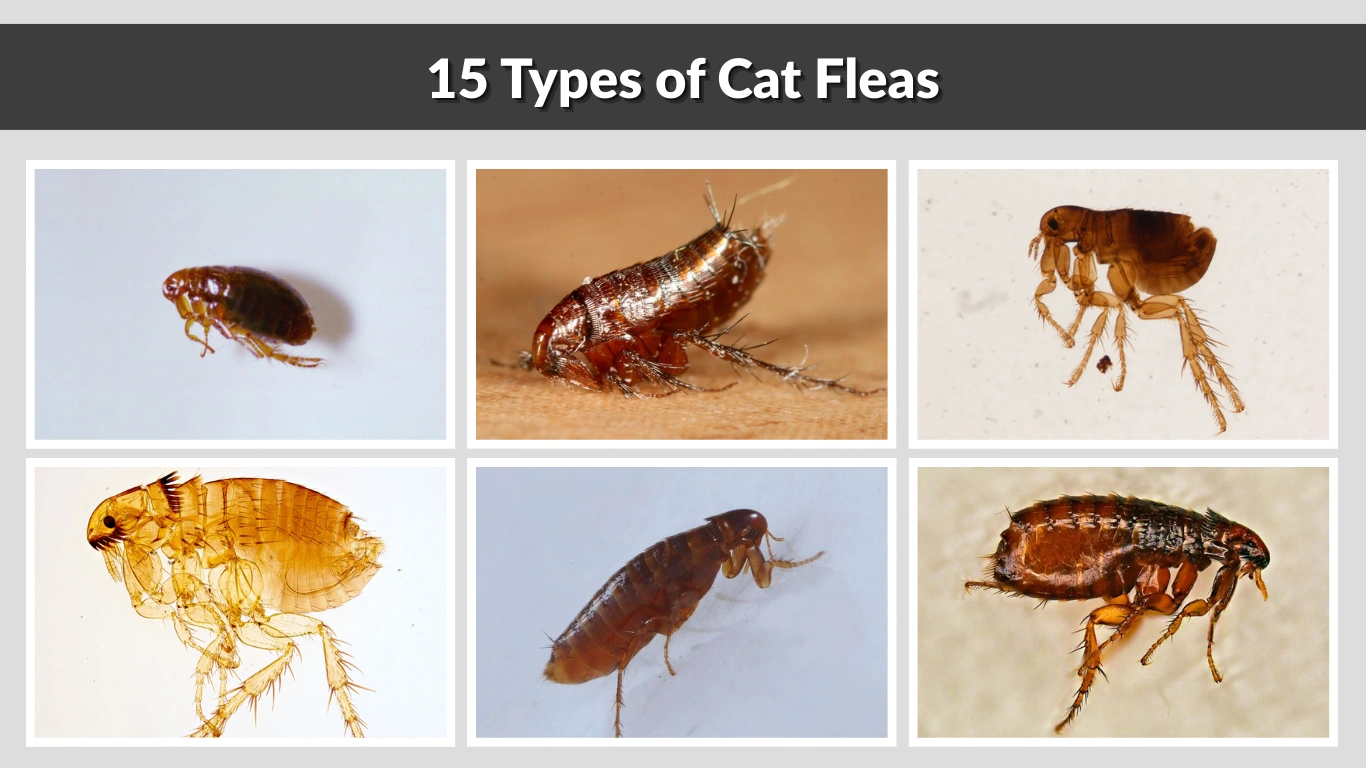
Fleas are among the most common parasites that affect cats, causing irritation, allergic reactions, and sometimes spreading diseases. While the cat flea (Ctenocephalides felis) is the most widespread, many other flea species can also infest cats depending on their environment and exposure to wildlife or rodents. In this guide, we’ll explore 15 different types of fleas that may affect cats, covering their identification, habitats, diets, and life cycles.
1. Cat Flea (Ctenocephalides felis)

The cat flea is the most widespread flea species found on cats worldwide. It is the primary cause of flea infestations in domestic cats and can also infest dogs, humans, and other mammals. Known for causing intense itching, allergic reactions, and transmitting diseases, the cat flea plays a major role in veterinary and household pest problems.
Identification
- Reddish-brown, wingless body
- About 1–3 mm long
- Laterally flattened shape for moving through fur
- Long hind legs adapted for jumping
- Dark spines on the head and legs for gripping
Habitat
Cat fleas thrive in warm, humid environments. They are commonly found on domestic cats but can also live in household carpets, bedding, and upholstery where pets rest.
Diet
They are blood-feeding parasites that feed on cats primarily, but will also bite humans, dogs, and other nearby animals if necessary.
Life Cycle
The life cycle includes four stages: egg, larva, pupa, and adult. Eggs fall off the cat’s fur into the environment, larvae develop in carpets and soil, pupae form cocoons, and adults emerge to seek a host. Under favorable conditions, the cycle can complete in as little as 2–3 weeks.
2. Dog Flea (Ctenocephalides canis)

Although primarily associated with dogs, the dog flea can also infest cats, humans, and other mammals. It is less common on cats compared to the cat flea but still plays a role in parasitic infestations where dogs and cats share the same environment. Dog fleas are also known carriers of tapeworms and certain bacterial diseases.
Identification
- Brownish-black, wingless body
- Slightly larger than the cat flea (2–3.5 mm)
- Longer head compared to Ctenocephalides felis
- Strong legs designed for powerful jumping
- Pronotal and genal combs (rows of spines) present
Habitat
Dog fleas prefer living on dogs but can be found on cats in multi-pet households. They can also survive in bedding, carpets, and areas where pets sleep.
Diet
They feed on the blood of their primary hosts (dogs), but will readily bite cats and humans if available.
Life Cycle
The dog flea undergoes the same four-stage life cycle as the cat flea: egg, larva, pupa, and adult. Eggs are laid on the host and fall into the environment, where larvae develop before pupating. Adults emerge and seek a new host to continue the cycle.
3. Human Flea (Pulex irritans)
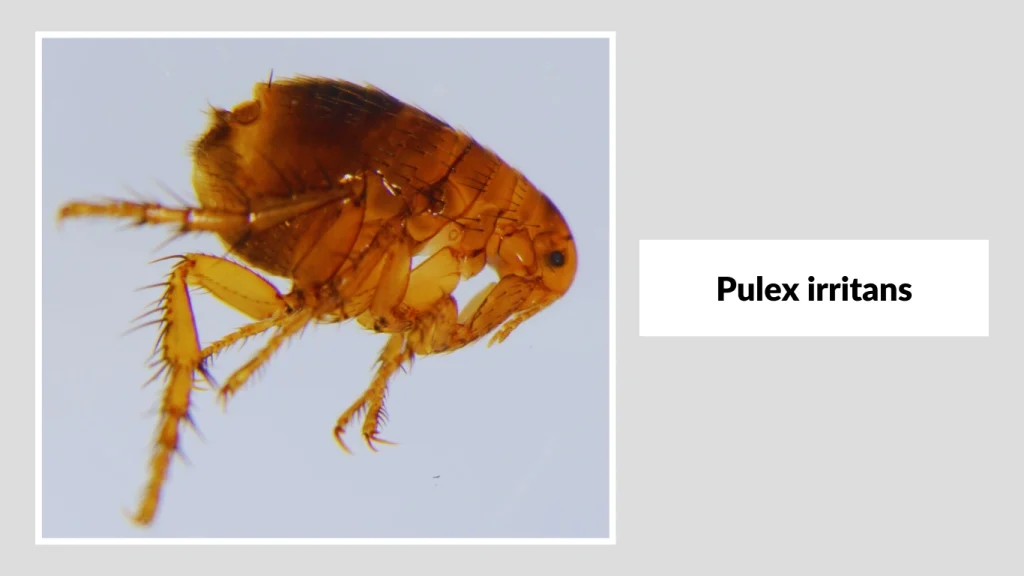
The human flea is a cosmopolitan species that occasionally infests cats, dogs, and other mammals besides humans. While it is not as common on cats as the cat flea, it can still be found in multi-host environments, especially in rural areas. This flea is known for causing skin irritation and for its role in transmitting pathogens.
Identification
- Dark brown, wingless body
- Size ranges from 2–4 mm
- Lacks both genal and pronotal combs (distinguishing feature from cat and dog fleas)
- Rounder head compared to Ctenocephalides species
- Long legs for effective jumping
Habitat
Human fleas are found in human dwellings, animal shelters, and areas where multiple host animals live. They can survive in bedding, carpets, and barns, and are more common in less hygienic environments.
Diet
They primarily feed on human blood but will also bite cats, dogs, pigs, and other mammals when humans are not available.
Life Cycle
Like other fleas, they have four stages: egg, larva, pupa, and adult. Eggs are deposited on hosts but usually fall into the environment. Development time varies depending on temperature and humidity, with the cycle completing in about 3–4 weeks under favorable conditions.
4. Sticktight Flea (Echidnophaga gallinacea)
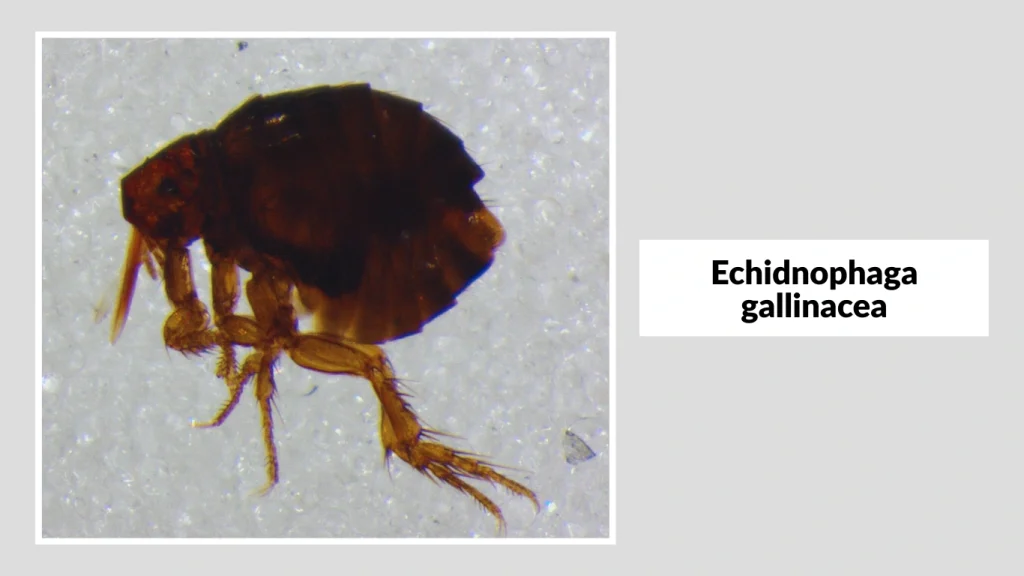
The sticktight flea is a parasitic flea that attaches firmly to the skin of its host. Unlike the cat flea, it embeds its mouthparts into the skin, often around the face, ears, and eyes of cats, dogs, poultry, and other animals. Infestations can cause severe irritation, swelling, and in some cases, secondary infections.
Identification
- Small, dark brown body (about 1–2 mm long)
- Wingless and less flattened than cat fleas
- Short head with sharp mouthparts for embedding into skin
- Antennae fit into grooves on the head
- Females often found clustered around the host’s eyes and ears
Habitat
They are commonly found in warm, rural, or farm-like environments where cats live near poultry or livestock. They prefer to remain attached to their host but may also be present in nesting and resting areas.
Diet
Sticktight fleas feed exclusively on blood. Once attached, they remain fixed in one spot, unlike cat fleas which move around the fur.
Life Cycle
Eggs are laid while females are attached to the host. The eggs fall to the ground, where larvae develop in soil or bedding. After pupation, adults seek a host and attach permanently, especially around thin-skinned areas.
5. Rabbit Flea (Spilopsyllus cuniculi)

The rabbit flea is primarily associated with wild and domestic rabbits but can also infest cats, particularly in rural or outdoor environments. It is notable for spreading myxomatosis among rabbit populations. When cats come into contact with infested rabbits, they may also carry these fleas.
Identification
- Small, dark brown body (around 1.5–2 mm)
- Narrower body than cat and dog fleas
- Distinct genal comb (row of spines on the cheek)
- Long, strong hind legs for jumping
- Found commonly around the head and ears of hosts
Habitat
Rabbit fleas prefer rabbits as their main hosts but can transfer to cats that hunt or interact with rabbits. They are usually found in outdoor environments, especially fields and woodland areas.
Diet
They are blood-feeding parasites, feeding primarily on rabbits but capable of biting cats, dogs, and even humans if necessary.
Life Cycle
The rabbit flea’s life cycle is influenced by its rabbit host’s breeding cycle. Eggs are laid on the host, but larvae develop in rabbit burrows or nesting areas. Adult fleas jump onto new hosts when available, sometimes transferring to cats.
6. Northern Rat Flea (Nosopsyllus fasciatus)
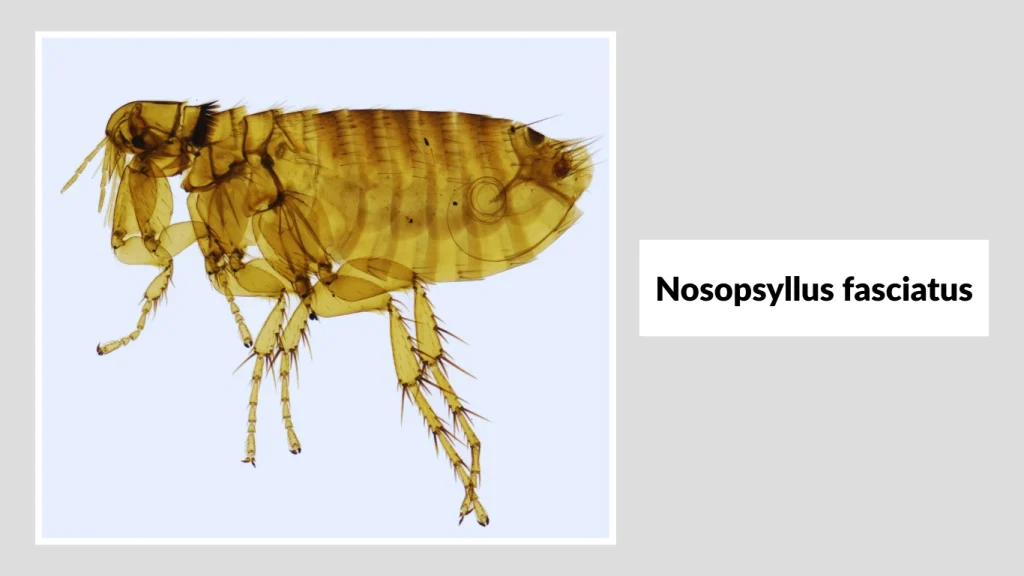
The northern rat flea is a widespread flea species commonly found on rats and other rodents. While its primary hosts are rodents, it can occasionally infest cats, especially those living near rodent populations. This flea is medically important as a potential vector of disease.
Identification
- Medium-sized, about 3–4 mm long
- Dark brown, wingless body
- Lacks genal and pronotal combs (unlike cat and dog fleas)
- Elongated body compared to other flea types
- Strong legs adapted for long jumps
Habitat
These fleas are mostly found in rodent burrows, nests, and infested buildings. Cats that hunt or live near rodents are more likely to pick them up.
Diet
They feed primarily on the blood of rats but will bite cats, dogs, and even humans if their main host is not available.
Life Cycle
Eggs are laid on the host but usually fall into rodent nesting areas. Larvae develop in organic debris, feeding on flea dirt. Pupation occurs in protected spots, and adults emerge to seek new hosts, occasionally jumping onto cats.
7. Oriental Rat Flea (Xenopsylla cheopis)

The oriental rat flea is one of the most significant flea species in medical history, known as the primary vector of the bubonic plague and murine typhus. Its main hosts are rats, but it can also infest cats, dogs, and humans when in close proximity to rodent populations.
Identification
- Medium-sized, around 2–3.5 mm long
- Reddish-brown, wingless body
- Lacks both genal and pronotal combs (smooth head and thorax)
- Rounded head with short antennae
- Powerful hind legs for jumping
Habitat
These fleas thrive in rodent-infested areas such as urban environments, warehouses, and seaports. Cats that hunt rats or live near infested areas can pick up infestations.
Diet
They feed primarily on the blood of rats but will bite cats, dogs, and humans when rats are unavailable.
Life Cycle
Eggs are laid on the host and fall into rodent nests or household environments. Larvae feed on organic debris and flea feces before pupating. Adults emerge and seek hosts, often transferring from rats to cats and other mammals.
8. Mouse Flea (Leptopsylla segnis)
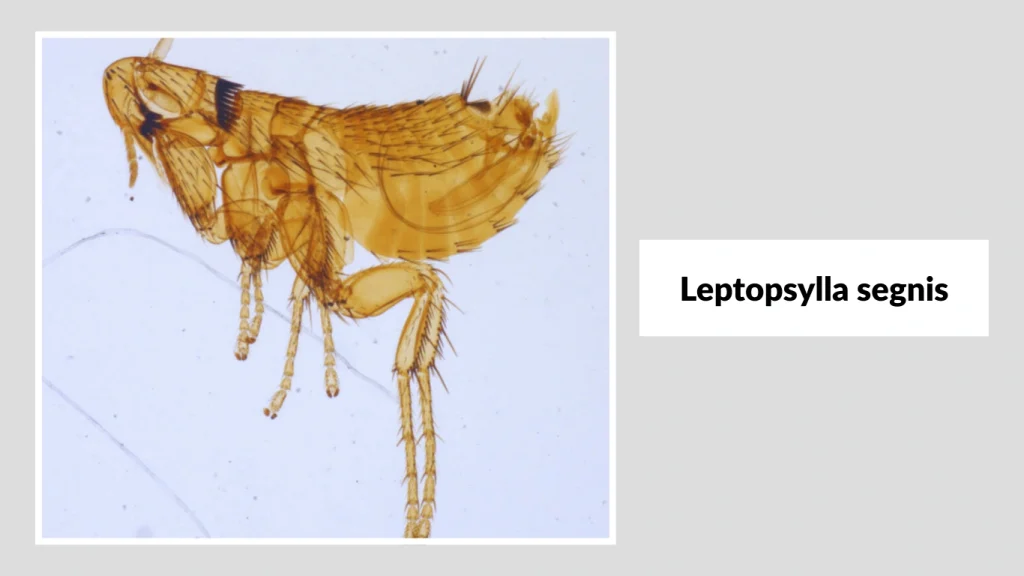
The mouse flea is mainly a parasite of house mice and other small rodents but can occasionally be found on cats, particularly those that hunt rodents. Though less common on cats, it is considered a potential carrier of pathogens due to its close association with rodents.
Identification
- Small, about 2–3 mm in length
- Dark brown, wingless body
- Lacks genal and pronotal combs
- Slim, elongated shape compared to cat fleas
- Long legs suited for quick jumping between hosts
Habitat
These fleas are most often found in rodent nests, burrows, and infested houses. Cats that live in areas with high mouse populations or that actively hunt mice are at higher risk of infestation.
Diet
The mouse flea primarily feeds on the blood of mice and other rodents, but it will bite cats, dogs, and humans if it transfers from its main host.
Life Cycle
Eggs are laid on the host but typically fall into nesting material or household environments. Larvae develop in organic debris, feeding on adult flea droppings. After pupation, adults emerge and seek out a rodent or, in some cases, a cat as a host.
9. European Chicken Flea (Ceratophyllus gallinae)

The European chicken flea is a common parasite of poultry but can also infest cats, dogs, and other mammals when they live near infested chicken coops or wild bird nests. Cats that roam outdoors in rural or farm settings are more likely to encounter this flea.
Identification
- Small to medium-sized, about 2–3 mm long
- Dark brown, wingless body
- Lacks genal and pronotal combs (smooth head and thorax)
- Rounded head with short mouthparts
- Strong hind legs for effective jumping
Habitat
These fleas are usually found in chicken houses, bird nests, and rural areas where poultry is raised. When cats rest near such environments, the fleas can transfer to them.
Diet
They primarily feed on the blood of chickens and other birds but will bite cats, dogs, and even humans when given the opportunity.
Life Cycle
Eggs are laid in poultry bedding or bird nests. Larvae feed on organic matter and adult flea droppings. Pupation occurs in cracks, crevices, or litter, and adults emerge to infest new hosts. Cats become incidental hosts when they share the environment.
10. Jigger Flea (Tunga penetrans)
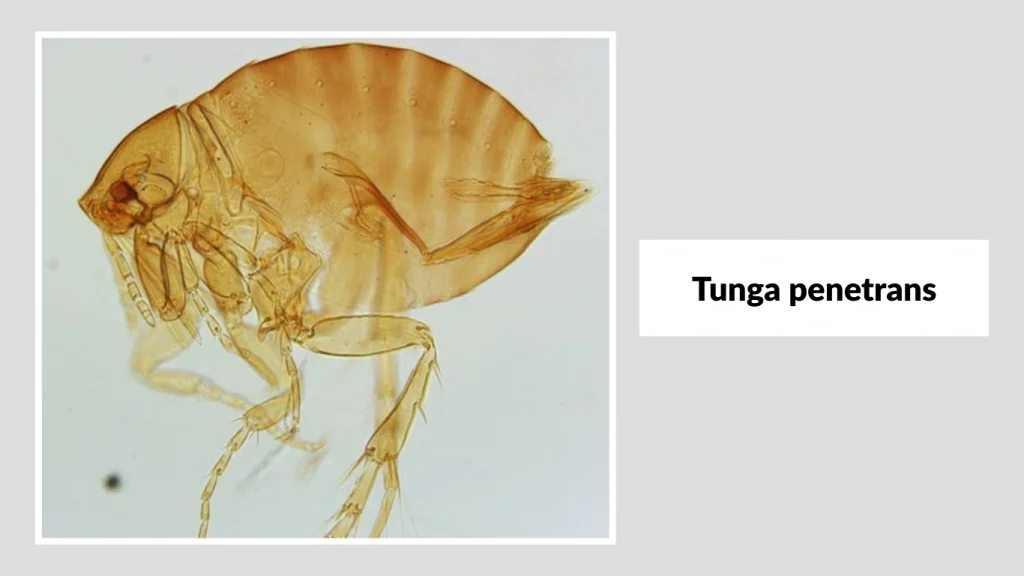
The jigger flea, also called the chigoe flea, is a parasitic flea mainly found in tropical and subtropical regions. It is unique because females burrow into the skin of their host, causing painful lesions. Though it primarily affects humans, it can also infest cats, dogs, and other animals in endemic areas.
Identification
- Very small, around 1 mm long (one of the smallest flea species)
- Dark brown, wingless body
- Female burrows into host skin, leaving only the tip of the abdomen exposed
- Causes visible swelling or nodules on the skin
- Limited jumping ability compared to other fleas
Habitat
Jigger fleas are found in sandy soil, animal pens, and areas with poor sanitation in warm climates. Cats in rural tropical areas are at risk, especially if they roam freely outdoors.
Diet
Both males and females feed on blood, but only females embed in the skin of the host. Once attached, they remain in place until eggs are laid.
Life Cycle
After burrowing, the female lays eggs that drop to the ground. Larvae hatch and develop in the soil, feeding on organic matter. They pupate and emerge as adults, seeking new hosts to infest.
11. Pulex simulans
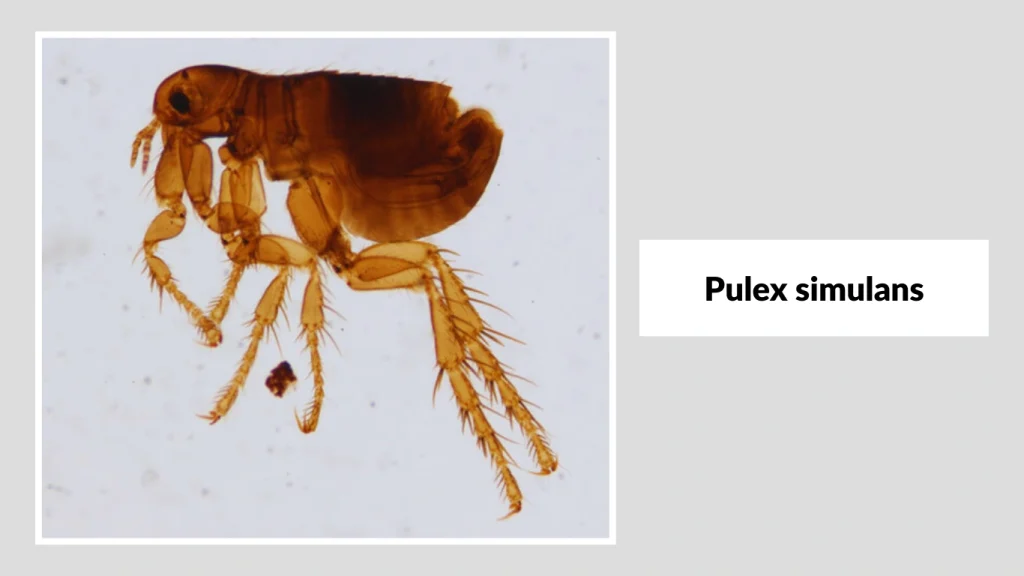
Pulex simulans is closely related to the human flea (Pulex irritans) and is often found in North America. While its primary hosts are wild animals like coyotes, foxes, and rodents, it can also infest cats and dogs when they come into contact with these animals.
Identification
- Medium-sized, about 2–4 mm long
- Dark brown, wingless body
- Lacks both genal and pronotal combs (like Pulex irritans)
- Rounded head with simple structure
- Very similar in appearance to Pulex irritans, requiring microscopic examination for proper identification
Habitat
This flea is found mainly in rural and wild areas where cats may encounter infested wildlife. It can also occur in barns, animal shelters, and outdoor resting places.
Diet
Feeds primarily on the blood of wild mammals but will readily bite cats, dogs, and humans if they are nearby.
Life Cycle
Eggs are laid on the host and fall into soil, bedding, or nests. Larvae feed on organic matter and flea dirt before pupating. Adults emerge and seek a host, sometimes jumping onto cats that cross into infested areas.
12. Field Flea (Ctenophthalmus agyrtes)

The field flea is primarily a rodent parasite found across Europe and parts of Asia. While it usually lives on field mice, voles, and shrews, it can occasionally infest domestic cats, particularly those that roam outdoors or hunt small mammals. Its role as a vector of pathogens makes it an important flea to recognize, even if it is less common on cats compared to Ctenocephalides felis.
Identification
- Small, around 2–3 mm in length
- Dark brown, wingless body
- Slender head with no genal or pronotal combs
- Long hind legs built for powerful jumping
- Best identified under magnification due to close resemblance with other rodent fleas
Habitat
Field fleas are usually found in rural, grassy, or woodland areas where rodents live. They inhabit rodent nests, burrows, and soil but can transfer to cats that prey on these rodents. Cats that spend a lot of time outdoors in fields and forests have a higher chance of contact.
Diet
Their primary diet is the blood of small rodents, but they will also bite cats, dogs, and humans when given the chance. While not a preferred host, cats can act as temporary carriers.
Life Cycle
The life cycle consists of egg, larva, pupa, and adult stages. Eggs are laid on rodent hosts or in nests, falling into the environment where larvae feed on organic debris. Pupae develop in protected soil or nest materials. Adults emerge and seek a rodent host but may jump onto cats when in close proximity.
13. Hedgehog Flea (Archaeopsylla erinacei)

The hedgehog flea is a species that primarily infests hedgehogs but can also transfer to cats, especially those that live in areas where hedgehogs are present. While not a common flea for domestic cats, it occasionally becomes a problem in rural gardens and outdoor spaces where cats and hedgehogs interact.
Identification
- Medium-sized, about 2–3.5 mm long
- Reddish-brown, wingless body
- No genal comb but has a short pronotal comb (row of spines behind the head)
- Rounded head with strong mouthparts
- Robust hind legs for jumping between hosts
Habitat
Hedgehog fleas are most often found in hedgehog nests, burrows, and garden habitats. Cats that roam outdoors or encounter hedgehogs may pick up these fleas while exploring or hunting.
Diet
Their primary food source is hedgehog blood, but they will also bite cats, dogs, and even humans if they come into contact with infested environments.
Life Cycle
Like other fleas, their cycle includes egg, larva, pupa, and adult stages. Eggs are laid in hedgehog nests, where larvae develop by feeding on organic matter and flea droppings. Pupae form in sheltered areas, and adults emerge to infest hedgehogs or occasionally jump to cats.
14. Mole Flea (Hystrichopsylla talpae)

The mole flea is one of the largest flea species, primarily parasitizing moles and other burrowing animals. Though rare on cats, it may infest them if they explore mole tunnels or hunt small mammals in infested areas. Its size and unusual host preference make it an uncommon but notable flea.
Identification
- Large compared to most fleas, reaching up to 6–7 mm in length
- Dark reddish-brown, wingless body
- Lacks both genal and pronotal combs
- Strong mouthparts adapted for piercing skin
- Powerful hind legs that allow long jumps despite its size
Habitat
Mole fleas live in mole runs, burrows, and underground nests. They are strongly associated with moles but may occasionally transfer to cats when they dig or hunt in such habitats.
Diet
Their main diet is mole blood, but they will opportunistically bite cats, dogs, and other mammals if they come into contact.
Life Cycle
The life cycle follows the typical flea stages: egg, larva, pupa, and adult. Eggs are deposited in mole nests, larvae feed on organic debris and flea feces, and adults emerge ready to parasitize moles or occasionally other animals like cats.
15. Small Rodent Flea (Typhlopsylla musculi)

The small rodent flea, as its name suggests, primarily infests mice and other small rodents. Though it is uncommon on cats, it can be transferred when cats hunt or live in areas heavily populated by rodents. Its presence on cats is usually accidental but still poses a risk of irritation and disease transmission.
Identification
- Very small in size, around 1.5–2.5 mm long
- Dark brown, slender, wingless body
- Lacks both genal and pronotal combs
- Narrow head and elongated body compared to cat fleas
- Hind legs well-developed for short, quick jumps
Habitat
This flea is most often found in rodent nests, barns, and household environments where mice are present. Cats that frequently prey on rodents or share close spaces with them are more likely to pick up infestations.
Diet
They mainly feed on the blood of small rodents but will opportunistically bite cats, dogs, and humans if they come into contact.
Life Cycle
Eggs are laid in rodent nests, where larvae develop by feeding on flea droppings and organic debris. Pupation occurs in sheltered spots within the nest. Adults emerge and attach to rodents but may temporarily infest cats when the opportunity arises.
