
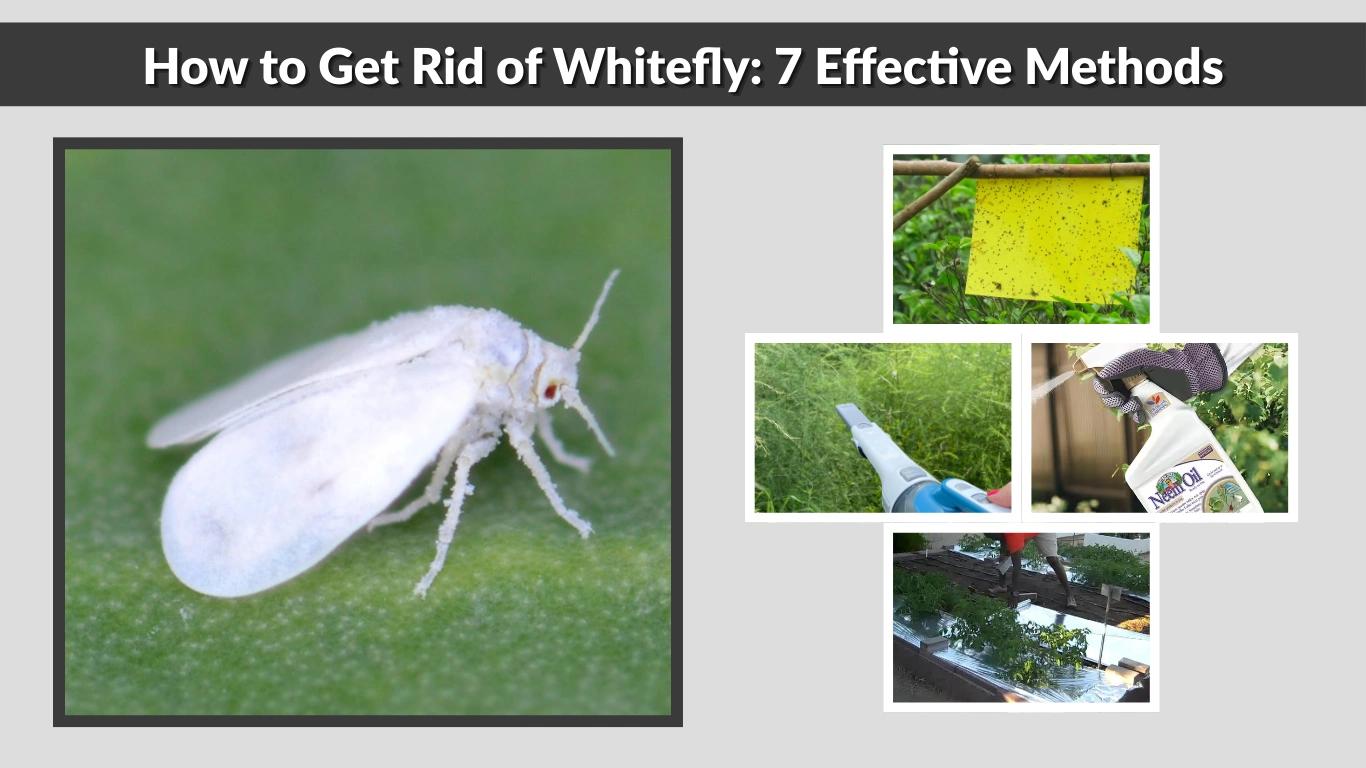
If your garden plants are suddenly looking weak, with yellowing leaves and a sticky coating that attracts ants, whiteflies might be the culprits. These tiny, moth-like pests gather in large groups on the undersides of leaves, sucking out plant sap and spreading diseases. Left unchecked, they can severely damage vegetables, flowers, and even houseplants. Fortunately, there are several effective methods to control and get rid of them without ruining your garden’s balance.
Understanding Whiteflies
Whiteflies are small, winged insects that thrive in warm environments. They multiply quickly, laying eggs in clusters that hatch within a week, making infestations difficult to control. They are not true flies but rather relatives of aphids and mealybugs. The biggest threats they pose are:
- Sap-sucking: Weakens plants by draining essential nutrients.
- Honeydew secretion: Leaves behind sticky residue that promotes sooty mold growth.
- Disease spreading: Can transmit plant viruses, especially in crops.
Recognizing their signs early is essential to preventing long-term plant damage.
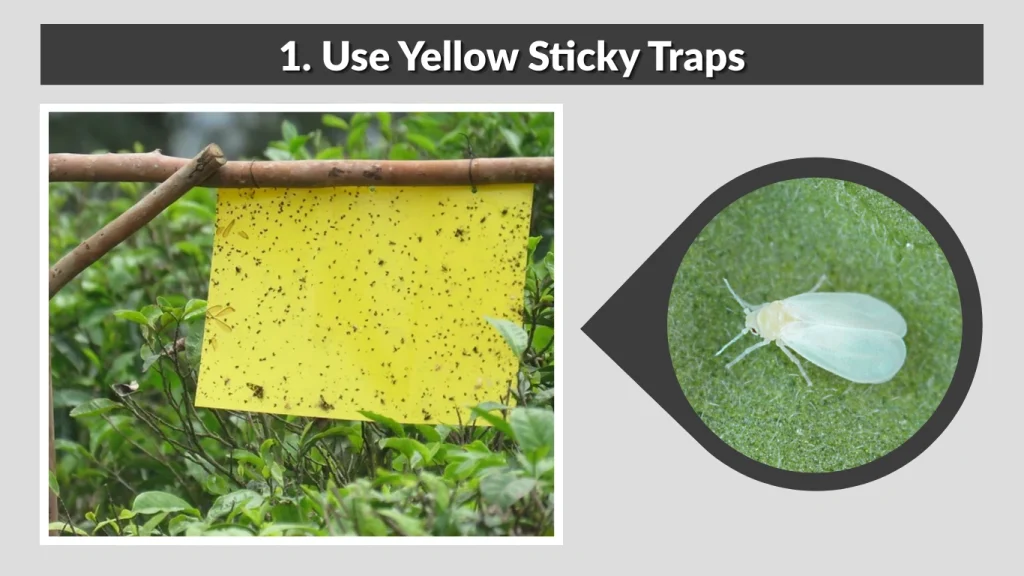
1. Use Yellow Sticky Traps
Identification of Effectiveness
Whiteflies are naturally drawn to the color yellow because it mimics tender new plant growth. Sticky traps take advantage of this attraction by luring adult whiteflies and trapping them before they can reproduce.
How to Set Them Up
Place yellow sticky cards or sheets near the tops of plants or in greenhouses where whiteflies are most active. For smaller infestations, a few traps may be enough. For larger areas, position multiple traps evenly throughout the garden.
Pros and Limitations
Sticky traps are affordable and non-toxic, making them a great first line of defense. However, they primarily control adult populations and don’t target eggs or larvae on the leaves, so they should be paired with other control measures.
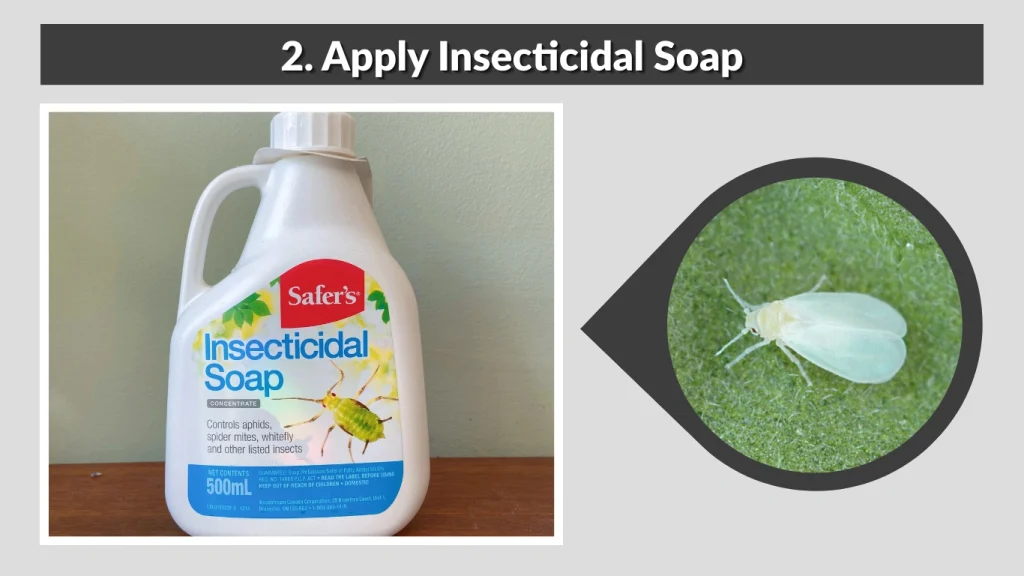
2. Apply Insecticidal Soap
How It Works
Insecticidal soap works by breaking down the protective outer layer of whiteflies, dehydrating and killing them on contact. It is especially effective against immature nymphs, which are otherwise difficult to manage.
Application Method
Mix the soap according to label instructions and spray directly on affected plants, especially under the leaves where whiteflies cluster. Repeat applications every few days may be needed until the infestation subsides.
Advantages and Cautions
Insecticidal soap is safe for humans, pets, and beneficial insects when applied carefully. However, spraying during hot, sunny hours can burn leaves, so early morning or late evening applications are best.
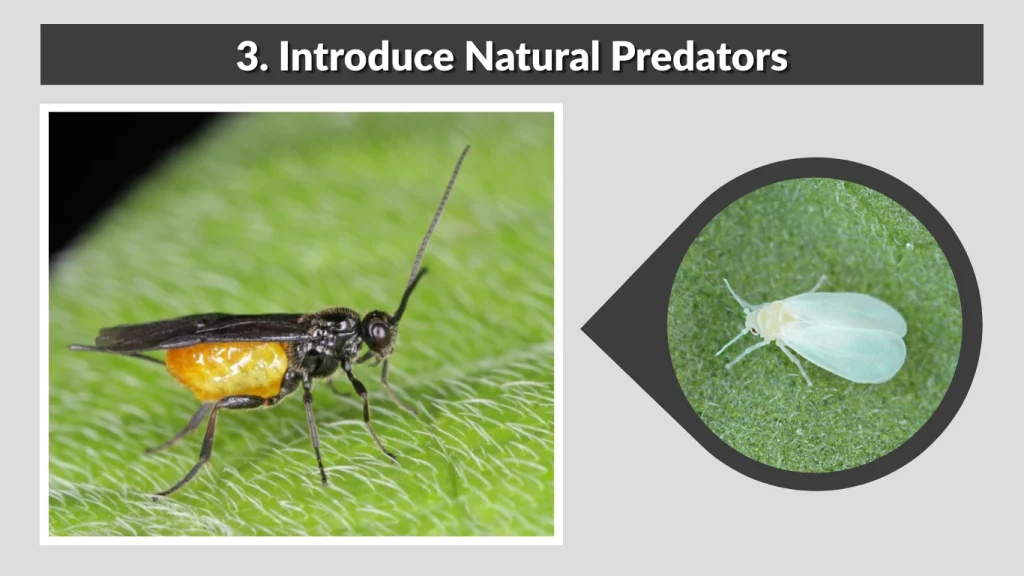
3. Introduce Natural Predators
Beneficial Insects Against Whiteflies
Nature offers its own pest control system. Ladybugs, lacewings, and predatory beetles actively feed on whiteflies and their eggs. Additionally, the tiny parasitic wasp Encarsia formosa lays eggs inside whitefly nymphs, effectively killing them from within.
How to Introduce Them
Beneficial insects can be purchased from garden suppliers and released directly into infested areas. Greenhouses are ideal environments since they keep these predators contained, but outdoor gardens can also benefit if conditions are right.
Why It Works
Unlike chemical methods, beneficial insects provide a sustainable, ongoing solution. Once established, they help keep whitefly populations under control as part of a natural ecosystem.
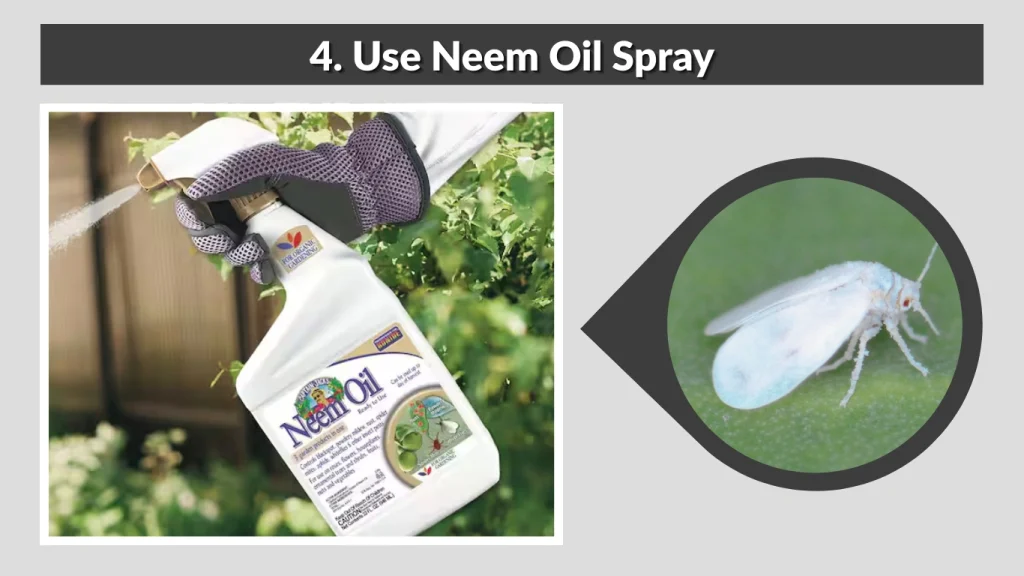
4. Use Neem Oil Spray
Why Neem Oil Works
Neem oil is derived from the seeds of the neem tree and acts both as a repellent and an insect growth regulator. It disrupts whiteflies’ feeding and reproduction, gradually reducing their population.
Application Tips
Dilute neem oil with water and a mild soap (to help it stick to leaves). Spray thoroughly on the undersides of leaves where whiteflies hide. Repeat every 7–10 days until signs of infestation decline.
Benefits and Risks
Neem oil is organic, safe for edible plants, and biodegradable, making it popular among gardeners. However, if overused, it may affect beneficial insects and pollinators, so careful application is essential.
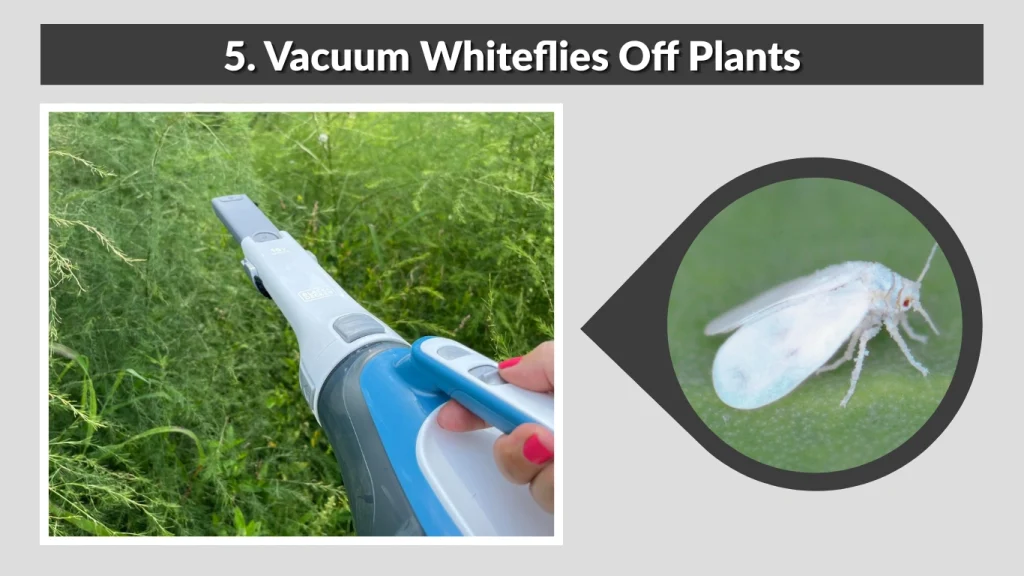
5. Vacuum Whiteflies Off Plants
Simple Manual Removal
For gardeners looking for an immediate reduction of whiteflies, a small handheld vacuum can do wonders. By gently vacuuming the undersides of leaves, you can suck up adult whiteflies before they escape into the air.
Disposal of Whiteflies
Empty the vacuum contents into a sealed plastic bag and dispose of it away from your garden. This ensures the insects don’t find their way back to your plants.
Strengths and Drawbacks
This method works best for smaller gardens or indoor plants. It provides instant results but is labor-intensive and does not address eggs or larvae. Pairing it with sprays or natural predators increases effectiveness.
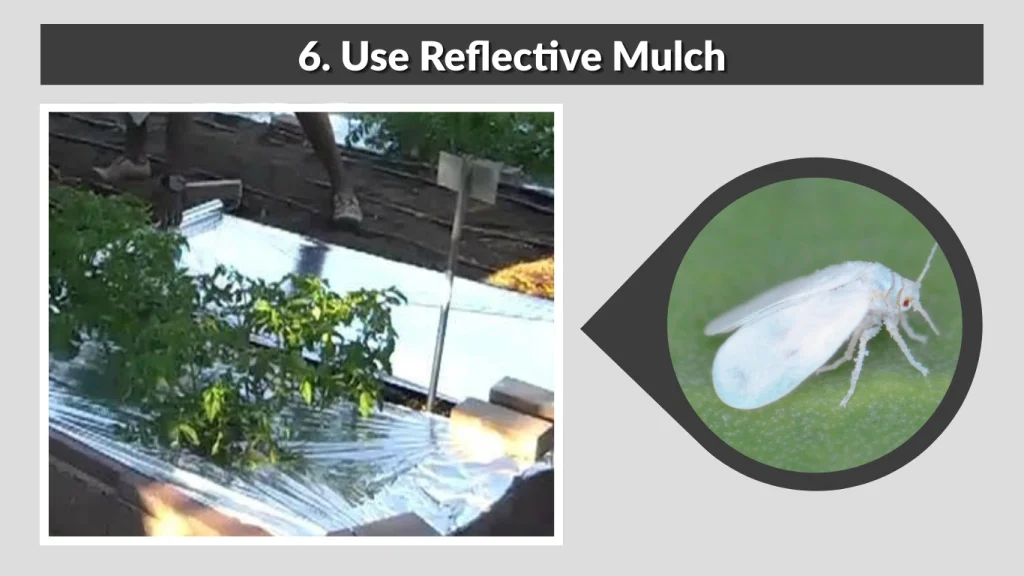
6. Use Reflective Mulch
How It Works
Whiteflies locate plants visually, and reflective mulch confuses them by reflecting light upwards. This disorients pests and makes it harder for them to land on host plants.
Application Method
Spread silver-colored or aluminum-coated plastic mulch around the base of plants or vegetable beds. Ensure full coverage for the best results.
Effectiveness
Reflective mulch not only reduces whitefly infestations but also deters other pests such as aphids and thrips. It is particularly effective in outdoor vegetable gardens like tomatoes, cucumbers, and peppers, which whiteflies often target.
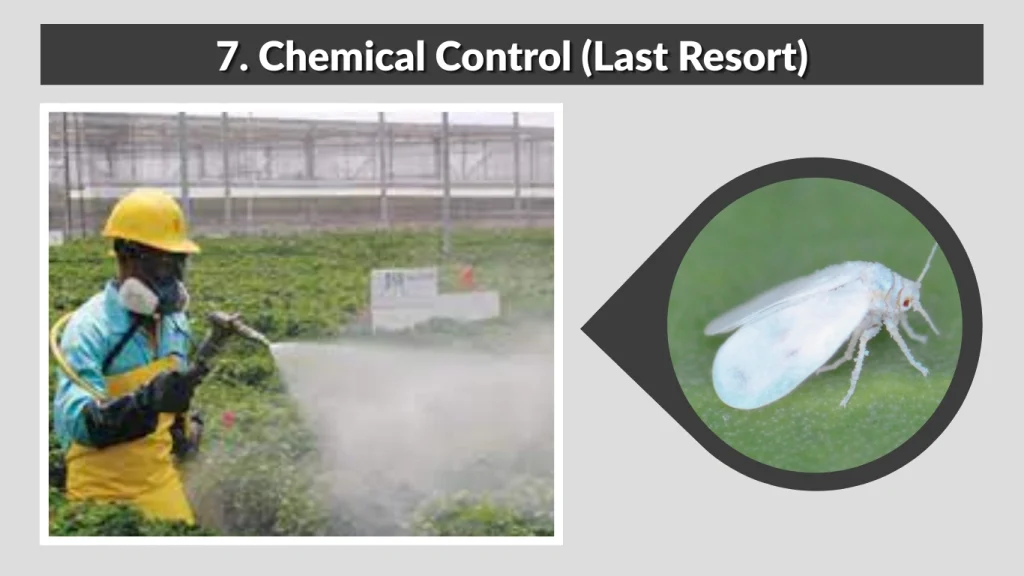
7. Chemical Control (Last Resort)
When to Use Chemicals
Chemical insecticides should only be used when all other methods fail and the infestation is too severe. They are more suited for large-scale greenhouses or agricultural use rather than home gardens.
Recommended Pesticides
Systemic insecticides like imidacloprid or contact sprays such as pyrethroids can reduce populations quickly. Always follow product instructions closely and avoid overuse to prevent resistance.
Risks and Precautions
Chemical use poses risks to pollinators like bees and to beneficial insects that naturally balance pests. It should be considered a last resort, and spot treatments are better than widespread spraying.
Preventing Future Whitefly Infestations
- Inspect plants regularly: Check new growth and leaf undersides weekly.
- Avoid over-fertilizing: Excess nitrogen leads to tender growth that attracts whiteflies.
- Maintain garden hygiene: Remove weeds, fallen leaves, and plant debris that can harbor pests.
- Promote biodiversity: Plant companion flowers that attract beneficial insects, creating a natural defense system.
- Rotate crops: Prevents whiteflies from building permanent populations in one area.
A combination of monitoring, natural controls, and good garden practices is the best long-term solution.
FAQs
What plants are most affected by whiteflies?
Whiteflies commonly attack vegetables like tomatoes, peppers, cucumbers, and leafy greens, as well as ornamentals such as hibiscus, poinsettia, and fuchsia.
Can whiteflies spread plant diseases?
Yes. They are known vectors of plant viruses, including Tomato Yellow Leaf Curl Virus, which can devastate crops.
How fast do whiteflies reproduce?
A female can lay up to 400 eggs in her lifetime, with eggs hatching in just a week. This rapid cycle makes infestations escalate quickly.
Are whiteflies harmful to humans or pets?
No, whiteflies don’t bite or transmit diseases to humans or pets. Their main impact is plant damage and the sticky honeydew they leave behind.
Can whiteflies survive indoors on houseplants?
Yes. Houseplants kept in warm indoor environments can host whiteflies. Regularly inspecting and cleaning leaves helps prevent infestations inside.
