

Mole crickets are fascinating burrowing insects found in many parts of the world, recognized for their spade-like forelegs and distinctive underground calls. While some species help aerate soil, many are destructive pests that damage turfgrass, crops, and gardens. From the Tawny Mole Cricket in the U.S. to the Asian Mole Cricket across Asia, each species has unique traits, habitats, and behaviors worth exploring in detail.
1. Tawny Mole Cricket

The Tawny Mole Cricket (Neoscapteriscus vicinus) is one of the most destructive mole cricket species in the southeastern United States. Known for its burrowing habits, it damages turf grass, pastures, and crops by feeding on roots and tunneling through the soil.
Identification
- Color: Light brown to tawny with darker mottling
- Size: About 30–35 mm long (1.2–1.4 inches)
- Forelegs: Strongly adapted for digging, shaped like spades
- Wings: Fully developed, allowing it to fly long distances
- Distinct Feature: Pronotum has mottled patterns resembling small spots
Habitat
Tawny mole crickets prefer sandy soils where digging is easier. They are commonly found in lawns, golf courses, agricultural fields, and pastures, particularly in warm climates.
Diet
This species feeds on the roots and shoots of grasses and other plants, making them highly damaging to turf and crops. Their tunneling also causes the soil to dry out, further stressing plants.
Behavior
They are nocturnal insects, emerging at night to feed and mate. Their tunneling behavior creates visible raised ridges in soil. Males produce loud, trilling calls from their burrows to attract females during the breeding season.
2. Southern Mole Cricket

The Southern Mole Cricket (Neoscapteriscus borellii) is another notorious pest of turfgrass and agricultural crops. Unlike the tawny mole cricket, this species causes most of its damage through burrowing and tunneling rather than direct feeding on plant roots. Its extensive galleries disturb the soil structure, making it harder for plants to grow.
Identification
- Color: Dark brown to grayish with less mottling than the tawny mole cricket
- Size: Typically 30–36 mm (1.2–1.5 inches) long
- Forelegs: Large and spade-like, built for digging deep tunnels
- Wings: Fully developed, with the ability to fly during dispersal periods
- Distinct Feature: The pronotum is smoother, with less visible markings compared to the tawny mole cricket
Habitat
The Southern Mole Cricket thrives in moist, sandy soils across the southeastern United States, particularly Florida, Georgia, and Alabama. It is often found in lawns, gardens, golf courses, and agricultural fields where grass is abundant.
Diet
Although it occasionally feeds on roots and shoots, the Southern Mole Cricket primarily consumes small soil invertebrates, making it partly predatory. This diet difference reduces direct root damage but still harms plants through soil disturbance.
Behavior
This species is an expert burrower, creating extensive underground galleries. These tunnels loosen and dry the soil, which disrupts plant growth and makes turf uneven. Males produce a deep, drumming song from their burrows to attract females during the mating season. They are most active at night and often fly during warm, humid evenings.
3. Short-Winged Mole Cricket

The Short-Winged Mole Cricket (Neoscapteriscus abbreviatus) is a flightless species found mainly in the southeastern United States. Unlike other mole crickets, it cannot disperse over long distances due to its short, underdeveloped wings. This species is considered one of the most destructive to turf grass because it feeds heavily on plant roots.
Identification
- Color: Brown to reddish-brown with fine mottling
- Size: About 25–30 mm (1–1.2 inches) long
- Forelegs: Strong, spade-shaped for digging
- Wings: Greatly reduced, extending only about halfway down the abdomen (not functional for flight)
- Distinct Feature: Stout body with a rounded head and very short wings compared to other mole crickets
Habitat
This mole cricket prefers sandy or loamy soils where digging is easy. It is frequently found in lawns, pastures, gardens, and golf courses across Florida and nearby states. Because it cannot fly, its spread is limited compared to other species.
Diet
The Short-Winged Mole Cricket is primarily herbivorous, feeding on roots, shoots, and seedlings. Its heavy feeding habits can destroy entire patches of turf and cause serious agricultural damage, especially in vegetable fields.
Behavior
Unlike the Southern Mole Cricket, which is partly predatory, the Short-Winged Mole Cricket is a persistent root-feeder. It tunnels near the surface, creating raised ridges in lawns and fields. Because it cannot fly, its dispersal occurs mostly through human activities like soil movement and landscaping. Males still produce mating calls, but they are less far-reaching due to limited mobility.
4. Northern Mole Cricket

The Northern Mole Cricket (Neocurtilla hexadactyla) is the most widespread mole cricket species in North America. Unlike the more destructive southern relatives, this species is not considered a major pest of turf or crops. It prefers moist soils near water and is more common in temperate regions than tropical ones.
Identification
- Color: Dark brown to almost black with a glossy body
- Size: Around 25–32 mm (1–1.3 inches) long
- Forelegs: Broad and toothed, well-adapted for digging
- Wings: Fully developed but shorter than body length; allows short flights
- Distinct Feature: Six spines (hexadactyla) on the tibia of the forelegs, a key trait for identification
Habitat
This species thrives in damp, loose soils, especially along riverbanks, streams, marshes, and gardens with good moisture. It is more commonly found in the eastern and midwestern United States, extending north into southern Canada.
Diet
The Northern Mole Cricket has an omnivorous diet. It feeds on plant roots, shoots, and small soil invertebrates, but its impact on turf and crops is relatively minor compared to tawny or short-winged mole crickets.
Behavior
These mole crickets are nocturnal and spend most of their time underground, using their burrows as protection from predators and environmental changes. During the breeding season, males call with a low, drumming sound to attract females. They are less destructive to lawns but still create visible soil ridges and loose tunnels.
5. West Indian Mole Cricket
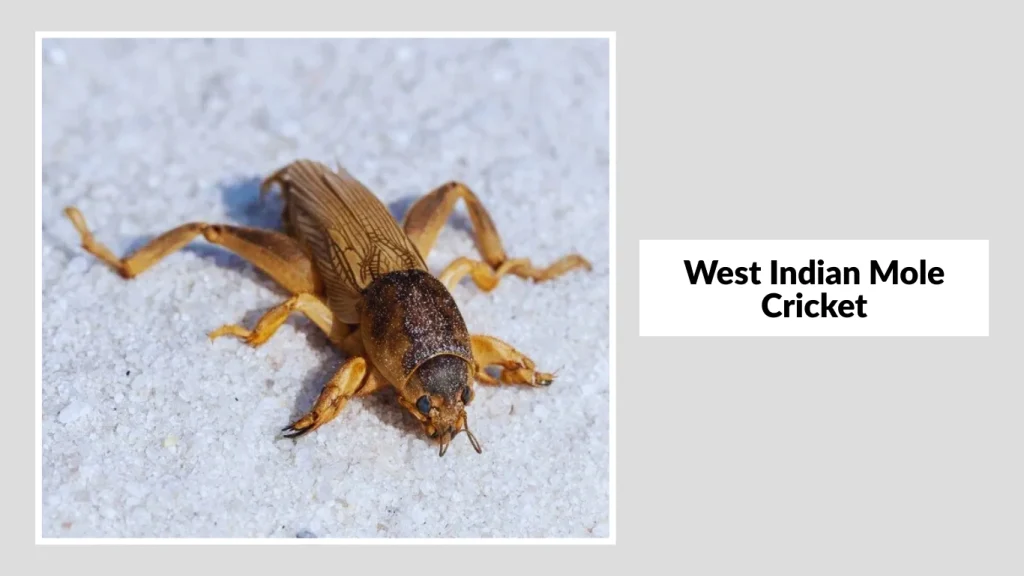
The West Indian Mole Cricket (Scapteriscus didactylus) is native to the Caribbean region and parts of South America. It is sometimes called the “changa” in Puerto Rico. Unlike some other mole crickets, it is not strictly a pest species because it can be beneficial by feeding on harmful soil insects. However, in large populations, it still damages turf and crops.
Identification
- Color: Light to dark brown with a slightly shiny body
- Size: About 28–35 mm (1.1–1.4 inches) long
- Forelegs: Equipped with two strong digging claws (didactylus = “two fingers”)
- Wings: Fully developed, extending beyond the abdomen, capable of flight
- Distinct Feature: Forelegs with only two large claws (most mole crickets have four or more smaller spines)
Habitat
This species prefers moist, sandy, and clay soils and is often found in agricultural fields, sugarcane plantations, lawns, and gardens across the West Indies, Puerto Rico, and northern South America.
Diet
The West Indian Mole Cricket is omnivorous. It feeds on plant material like roots and seedlings but also hunts small soil invertebrates such as worms and insect larvae. This partly predatory habit helps control pests but can still cause damage to turfgrass when populations are high.
Behavior
West Indian Mole Crickets are active at night and create complex underground tunnels. They fly during warm, humid evenings to disperse and find mates. Their burrowing aerates the soil, but in cultivated areas, it can uproot plants and weaken crops. Males produce calling songs from specially constructed burrows to attract females during the breeding season.
6. Australian Mole Cricket
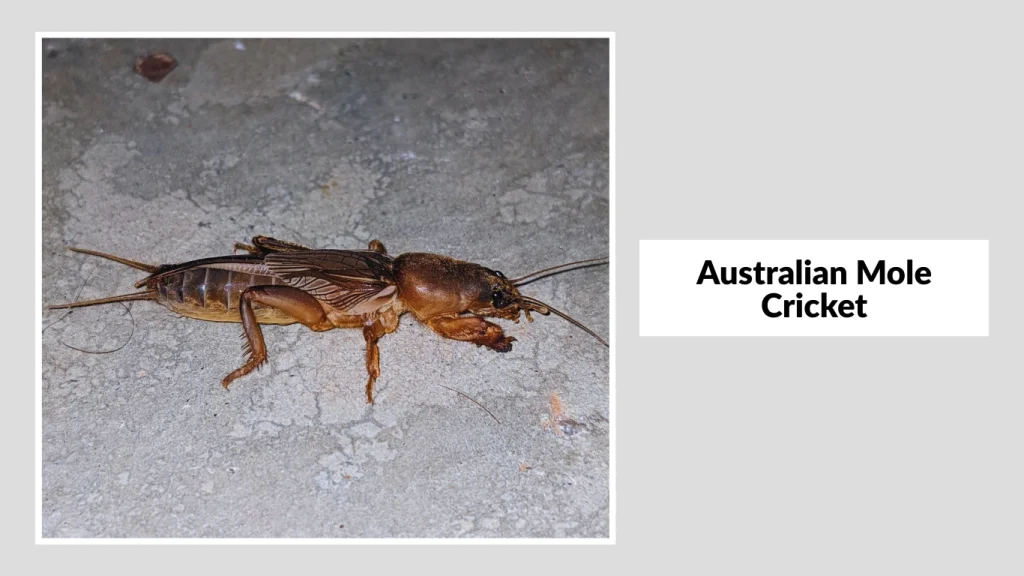
The Australian Mole Cricket (Gryllotalpa pluvialis) is a widespread species found across Australia and nearby Pacific regions. It is well adapted to wet conditions and is sometimes called the “rain cricket” because it often emerges after heavy rainfall. While it can damage crops and turf, it is generally less destructive than the notorious tawny and short-winged mole crickets of the Americas.
Identification
- Color: Dark brown to almost black with a velvety sheen
- Size: Around 30–40 mm (1.2–1.6 inches) long, slightly larger than many other species
- Forelegs: Broad, toothed, and powerful for digging
- Wings: Fully developed, longer than the abdomen, capable of strong flights
- Distinct Feature: Robust body with a slightly pointed head and large pronotum
Habitat
Australian Mole Crickets prefer moist soils near rivers, wetlands, and irrigated farmland. They are commonly found in lawns, pastures, and rice fields, where soil moisture is high. Their burrows often open with a distinctive circular hole at the soil surface.
Diet
This species is mainly herbivorous, feeding on roots, shoots, and seedlings of grasses and crops. In agricultural regions, it has been known to damage rice, sugarcane, and turfgrass.
Behavior
Australian Mole Crickets are nocturnal and highly active after rainstorms, when soil is soft and easier to dig. Males call from burrow openings, producing a deep, trilling sound to attract females. Their tunneling can improve soil aeration in natural ecosystems, but in managed lands, it causes serious plant stress.
7. African Mole Cricket

The African Mole Cricket (Gryllotalpa africana) is one of the most common mole cricket species found across sub-Saharan Africa. It is well known for its loud mating calls and extensive burrowing behavior. While it is not as destructive as the tawny or short-winged mole crickets, it can still harm crops, especially in moist agricultural soils.
Identification
- Color: Dark brown to reddish-brown with a shiny, smooth body
- Size: 30–45 mm (1.2–1.8 inches) long, making it one of the larger mole crickets
- Forelegs: Strong, broad, with multiple digging spines adapted for deep burrows
- Wings: Fully developed, extending beyond the abdomen, capable of flight
- Distinct Feature: Recognized by its very loud, continuous song, often heard at night near wetlands and farms
Habitat
This species prefers moist, loamy, or clay soils. It is commonly found in crop fields, gardens, and grasslands throughout Africa, particularly near irrigated farmland. Burrows are deep and may reach 30–40 cm underground.
Diet
The African Mole Cricket is omnivorous, feeding on both roots and shoots of plants as well as small soil insects and larvae. Farmers sometimes report losses in young crops like maize, vegetables, and groundnuts due to its feeding and burrowing activities.
Behavior
This mole cricket is highly active during warm, humid nights. Males produce loud, far-reaching calls that can be heard from long distances. They dig funnel-shaped burrows that amplify their calls. Their tunneling loosens soil, which can sometimes benefit soil aeration, but in cultivated areas, it weakens seedlings and causes uneven turf.
8. Oriental Mole Cricket
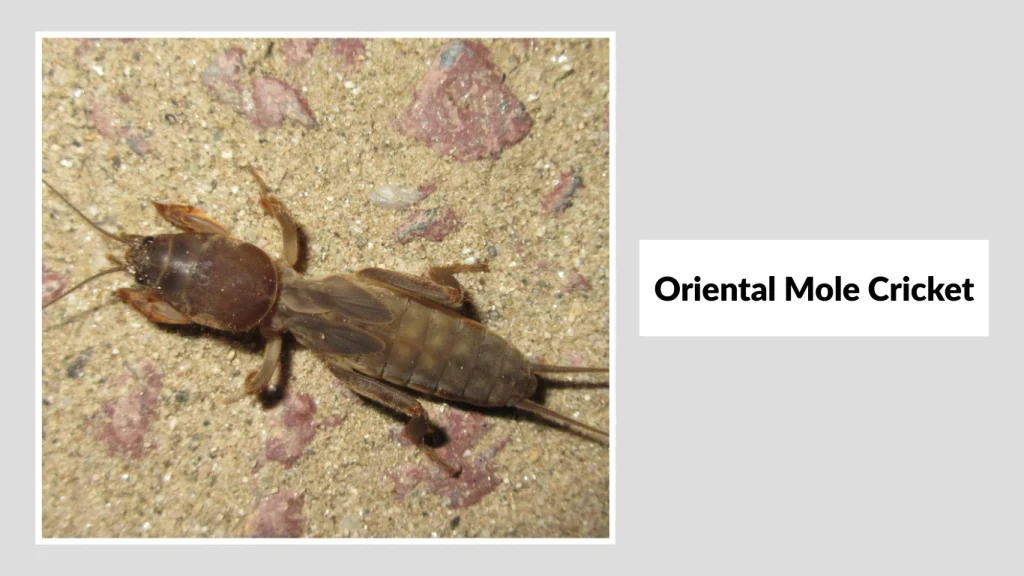
The Oriental Mole Cricket (Gryllotalpa orientalis) is a widespread species across Asia, including India, China, Japan, and Southeast Asia. It is one of the most studied mole crickets because of its agricultural impact, especially in rice fields and vegetable crops.
Identification
- Color: Dark brown to black with a glossy body
- Size: 30–40 mm (1.2–1.6 inches) long
- Forelegs: Strongly modified for digging, with four main spines on the tibia
- Wings: Fully developed, extending past the abdomen, enabling strong flight
- Distinct Feature: Forewing veins form a unique pattern, and males are known for producing a loud, buzzing mating call
Habitat
The Oriental Mole Cricket thrives in moist, cultivated soils, especially paddy fields, vegetable gardens, and pastures. It is commonly found in rural farmlands across Asia, where irrigation provides the damp conditions it prefers.
Diet
This species is omnivorous, feeding on both plant roots and shoots, as well as small soil invertebrates like worms and insect larvae. In rice-growing regions, it can cause major damage by uprooting seedlings.
Behavior
Oriental Mole Crickets are nocturnal and spend most of their lives underground. Their tunneling creates visible soil ridges, which can dry out fields and disturb crop growth. Males sing from specially constructed burrows, with their calls amplified by the burrow structure. They are also strong fliers, which allows them to disperse quickly and colonize new fields.
9. European Mole Cricket

The European Mole Cricket (Gryllotalpa gryllotalpa) is the most well-known mole cricket species in Europe. It has been recorded for centuries due to its distinctive nocturnal song and burrowing habits. While once widespread, populations have declined in some regions, and it is now considered rare or protected in parts of northern Europe.
Identification
- Color: Dark brown to black with a velvety appearance
- Size: 35–50 mm (1.4–2 inches) long, making it one of the largest mole crickets
- Forelegs: Broad, spade-shaped with four distinct digging teeth
- Wings: Fully developed; forewings short but hindwings long enough for flight
- Distinct Feature: Emits a loud, continuous trilling song, often mistaken for frogs at night
Habitat
European Mole Crickets inhabit damp soils, meadows, riverbanks, and agricultural lands. They prefer sandy or loamy soils for burrowing and are found throughout central and southern Europe, extending into western Asia and parts of North Africa.
Diet
This species is omnivorous, feeding on plant roots, shoots, and small soil invertebrates. It can damage vegetables, cereals, and young seedlings in fields, though it is less destructive than invasive species like the tawny mole cricket.
Behavior
European Mole Crickets are primarily nocturnal. Males construct large, horn-shaped burrows that serve as sound amplifiers for their mating songs. Their tunneling loosens soil and helps aeration, but in farmland, this can lead to uprooted plants. Breeding occurs in spring, with females laying eggs in underground chambers.
10. Brazilian Mole Cricket
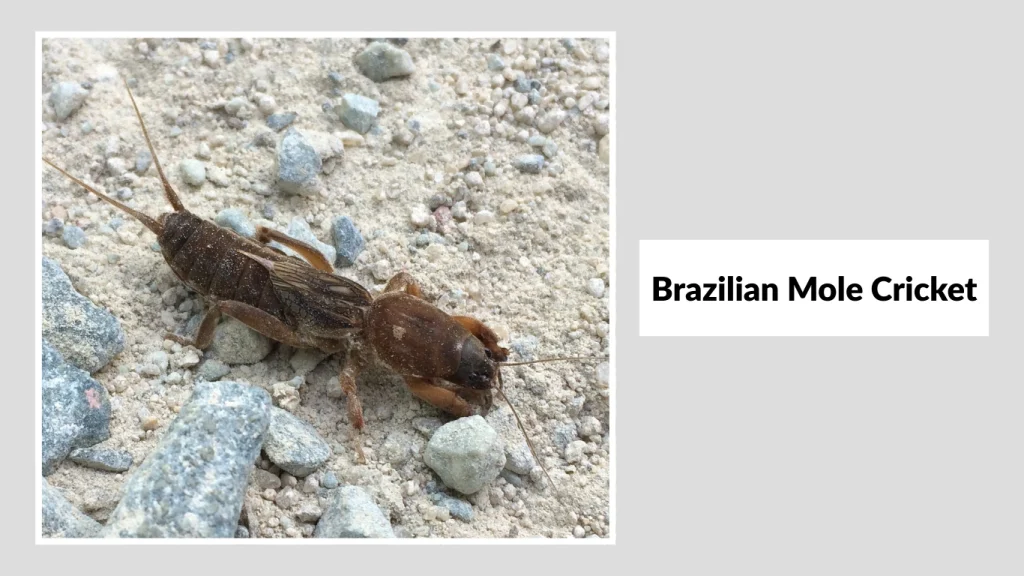
The Brazilian Mole Cricket (Scapteriscus borellii) is native to South America, especially Brazil, but has also spread to other regions through accidental introduction. In its home range, it plays a role in soil aeration, but in high numbers, it can become an agricultural pest.
Identification
- Color: Light to dark brown with fine mottling on the pronotum
- Size: 30–35 mm (1.2–1.4 inches) long
- Forelegs: Powerful digging appendages with spines adapted for soft tropical soils
- Wings: Fully developed, enabling dispersal flights during warm seasons
- Distinct Feature: Smooth, elongated body with relatively narrower forelegs than the tawny mole cricket
Habitat
This species thrives in tropical and subtropical regions, favoring moist, sandy soils. It is found in farmlands, pastures, gardens, and urban green areas throughout Brazil and neighboring countries.
Diet
The Brazilian Mole Cricket is mostly herbivorous, feeding on grasses, seedlings, and plant roots. In agricultural zones, it is known to damage sugarcane, maize, and turfgrass.
Behavior
It is a nocturnal burrower that creates extensive underground galleries, disturbing soil structure. Males produce loud, vibrating calls to attract females, with their burrows serving as natural amplifiers. While considered less aggressive feeders than the short-winged mole cricket, their populations can still cause noticeable damage to turf and crops.
11. Japanese Mole Cricket
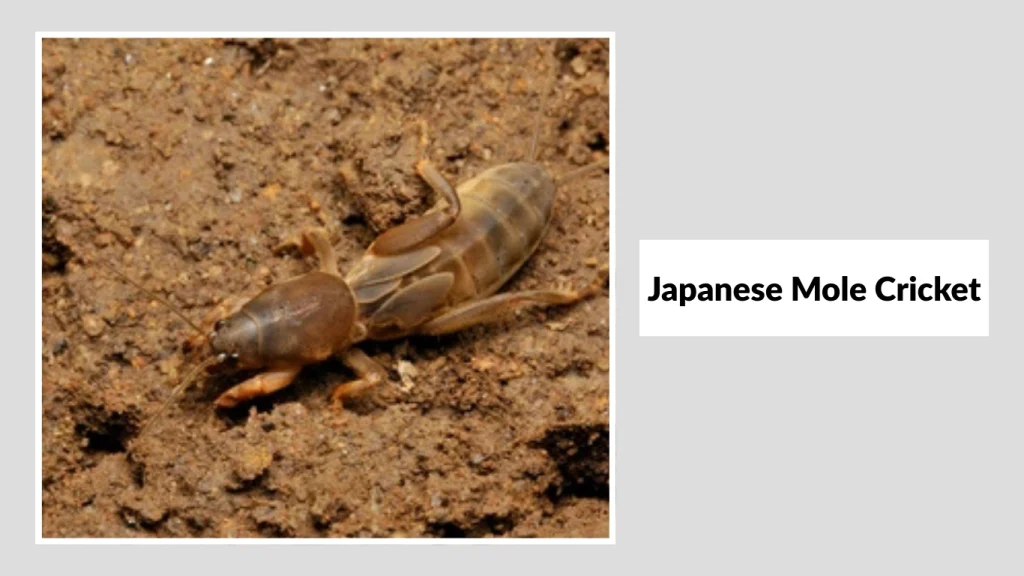
The Japanese Mole Cricket (Gryllotalpa japonica) is native to Japan and parts of East Asia. It is a well-known insect in Japanese culture due to its distinctive nighttime song, which is often associated with summer evenings. While it burrows and feeds underground, it is not considered as destructive as some invasive mole cricket species.
Identification
- Color: Dark brown to black with a glossy sheen
- Size: 30–40 mm (1.2–1.6 inches) long
- Forelegs: Strong, broad, and toothed, designed for digging
- Wings: Fully developed, allowing short flights but used mainly for calling displays
- Distinct Feature: Produces a distinctive, rhythmic chirping sound at night, often heard in rice fields and gardens
Habitat
The Japanese Mole Cricket prefers moist, cultivated soils such as rice paddies, vegetable gardens, and grassy fields. Its burrows are usually shallow and can be spotted by small mounds of soil near the entrance.
Diet
This species is primarily herbivorous, feeding on the roots and shoots of grasses, rice seedlings, and small garden plants. Occasionally, it may consume tiny soil invertebrates.
Behavior
Japanese Mole Crickets are nocturnal and spend most of their lives underground. Males sing from specially designed burrows, which amplify their sound to attract females. Unlike more destructive species, their population density is usually lower, so they cause limited agricultural damage. Their songs, however, make them one of the most culturally recognized mole crickets in Asia.
12. New Guinea Mole Cricket
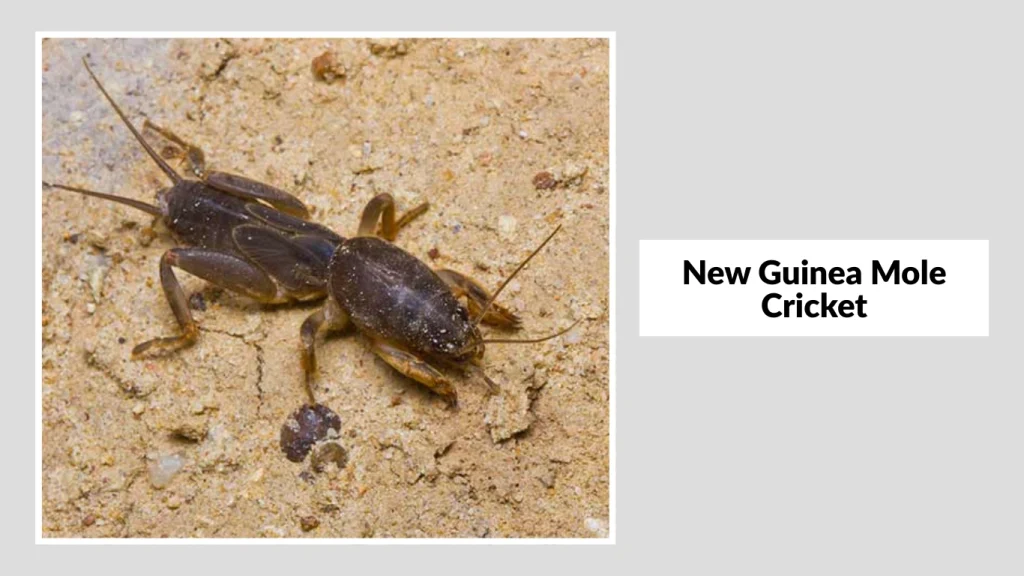
The New Guinea Mole Cricket (Gryllotalpa fulvipes) is native to Papua New Guinea and nearby Pacific islands. It is less studied compared to other mole cricket species but is known for its burrowing lifestyle and preference for moist, tropical soils.
Identification
- Color: Light to dark brown with reddish forelegs
- Size: Around 28–35 mm (1.1–1.4 inches) long
- Forelegs: Strong, spade-shaped with reddish or yellowish tinges on the tibia
- Wings: Fully developed, capable of flight in humid conditions
- Distinct Feature: Slightly narrower body compared to other mole crickets, with distinct reddish legs
Habitat
This species inhabits tropical, humid regions with loose soils, including agricultural fields, grassy areas, and gardens. It is commonly seen in moist lowland regions, particularly after heavy rainfall.
Diet
The New Guinea Mole Cricket is primarily herbivorous, feeding on plant roots, shoots, and seedlings. Farmers have reported it damaging root crops and rice plants in cultivated fields.
Behavior
These mole crickets are nocturnal and emerge at night to mate and occasionally forage above ground. Males create underground burrows that act as sound chambers to amplify their mating calls. After rainfall, they often become more active, dispersing through short flights. Their tunneling activity loosens soil, which benefits aeration but disrupts crops when populations are dense.
13. Madagascar Mole Cricket

The Madagascar Mole Cricket (Gryllotalpa madagascariensis) is native to Madagascar and nearby islands in the Indian Ocean. It is a relatively large species and, like others in its genus, is well adapted to life underground. Though not as heavily studied as mole crickets in Europe or the Americas, it plays a role in both agriculture and local ecosystems.
Identification
- Color: Dark brown to black with a slightly glossy surface
- Size: 35–45 mm (1.4–1.8 inches), making it a larger mole cricket species
- Forelegs: Broad and heavily toothed, adapted for deep burrowing
- Wings: Fully developed, extending beyond the abdomen, capable of flight
- Distinct Feature: Sturdier body structure with larger pronotum compared to many other mole crickets
Habitat
This species prefers moist soils in tropical and subtropical regions. It is commonly found in agricultural lands, rice paddies, gardens, and wetlands across Madagascar.
Diet
The Madagascar Mole Cricket is omnivorous, feeding on both plant roots and small soil invertebrates. In farming areas, it can cause damage to rice and vegetable crops, especially during peak population seasons.
Behavior
Like other mole crickets, it is nocturnal and spends most of its life in underground tunnels. Males produce loud, drumming calls from specially shaped burrows, particularly during humid nights. While beneficial in natural ecosystems by aerating soil, it can also harm cultivated land through root feeding and soil disruption.
14. Cuban Mole Cricket

The Cuban Mole Cricket (Scapteriscus cubensis) is native to the Caribbean, particularly Cuba, but it has spread to parts of Central America and southern Florida. It is considered an agricultural pest in regions where it becomes abundant, as its burrowing and feeding damage crops and turfgrass.
Identification
- Color: Light to medium brown with darker mottling on the thorax
- Size: About 28–34 mm (1.1–1.3 inches) long
- Forelegs: Strong, with two to three pronounced digging claws
- Wings: Fully developed, extending past the abdomen, capable of dispersal flights
- Distinct Feature: More slender body compared to the tawny and southern mole crickets, with smoother pronotum markings
Habitat
This species prefers warm, sandy soils and is often found in cultivated fields, sugarcane plantations, grassy lawns, and gardens. It thrives in both rural farmlands and urban landscapes where soil moisture is adequate.
Diet
The Cuban Mole Cricket is omnivorous. It feeds on roots, seedlings, and shoots of plants while also preying on small soil invertebrates. Its mixed diet makes it both a pest and, occasionally, a controller of harmful soil insects.
Behavior
Cuban Mole Crickets are nocturnal, spending daytime underground and emerging at night to mate and feed. Males produce trilling calls from burrows designed to amplify their sound. During dispersal flights, they can spread to new areas, which has led to their introduction outside their native range. Their tunneling loosens soil, but in agricultural areas, it disrupts young crops and turf.
15. Asian Mole Cricket
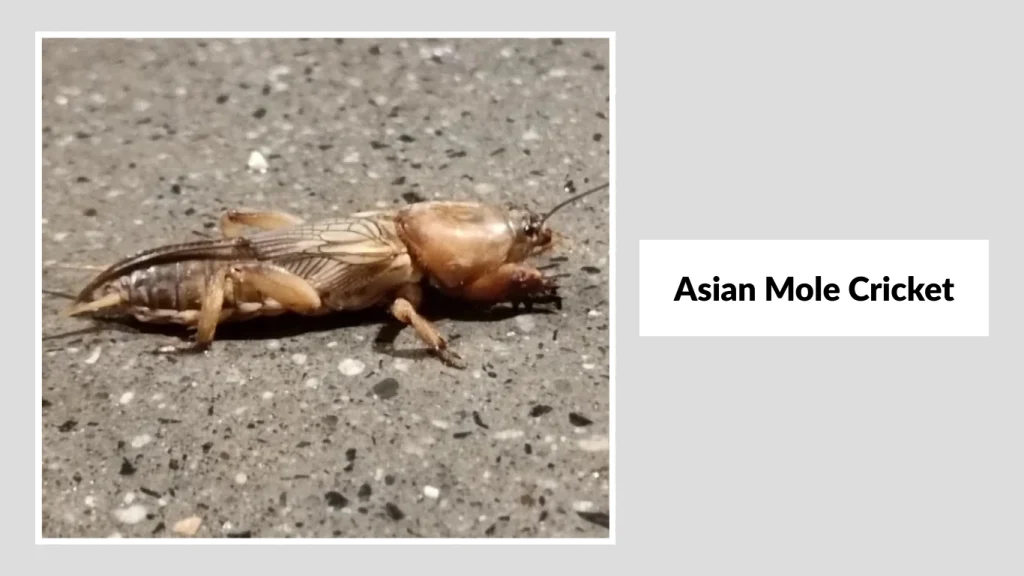
The Asian Mole Cricket (Gryllotalpa asiatica) is widely distributed across South and East Asia, including India, China, and parts of Southeast Asia. It is a well-adapted burrower and is known for its strong, resonant nighttime calls. In some agricultural regions, it is considered a pest of rice and vegetable crops.
Identification
- Color: Dark brown to black, often with a slightly shiny body
- Size: 30–40 mm (1.2–1.6 inches) long
- Forelegs: Strong and spade-shaped with multiple spines for digging
- Wings: Fully developed, capable of both short and long-distance flights
- Distinct Feature: Loud, resonant mating calls that can travel long distances in quiet, humid nights
Habitat
Asian Mole Crickets prefer moist, cultivated soils and are commonly found in rice paddies, vegetable gardens, and grassy fields. Their burrows are usually shallow but widespread, disrupting soil structure and crop stability.
Diet
This species is omnivorous, feeding on plant roots, shoots, and small soil invertebrates such as worms and larvae. In agricultural areas, it is notorious for damaging rice seedlings, young vegetables, and ornamental plants.
Behavior
These mole crickets are nocturnal and construct specialized acoustic burrows that amplify the male’s mating call. They are strong fliers, allowing them to disperse rapidly across wide areas. After rainfall or irrigation, they often become more active, leading to increased tunneling and plant damage.
