
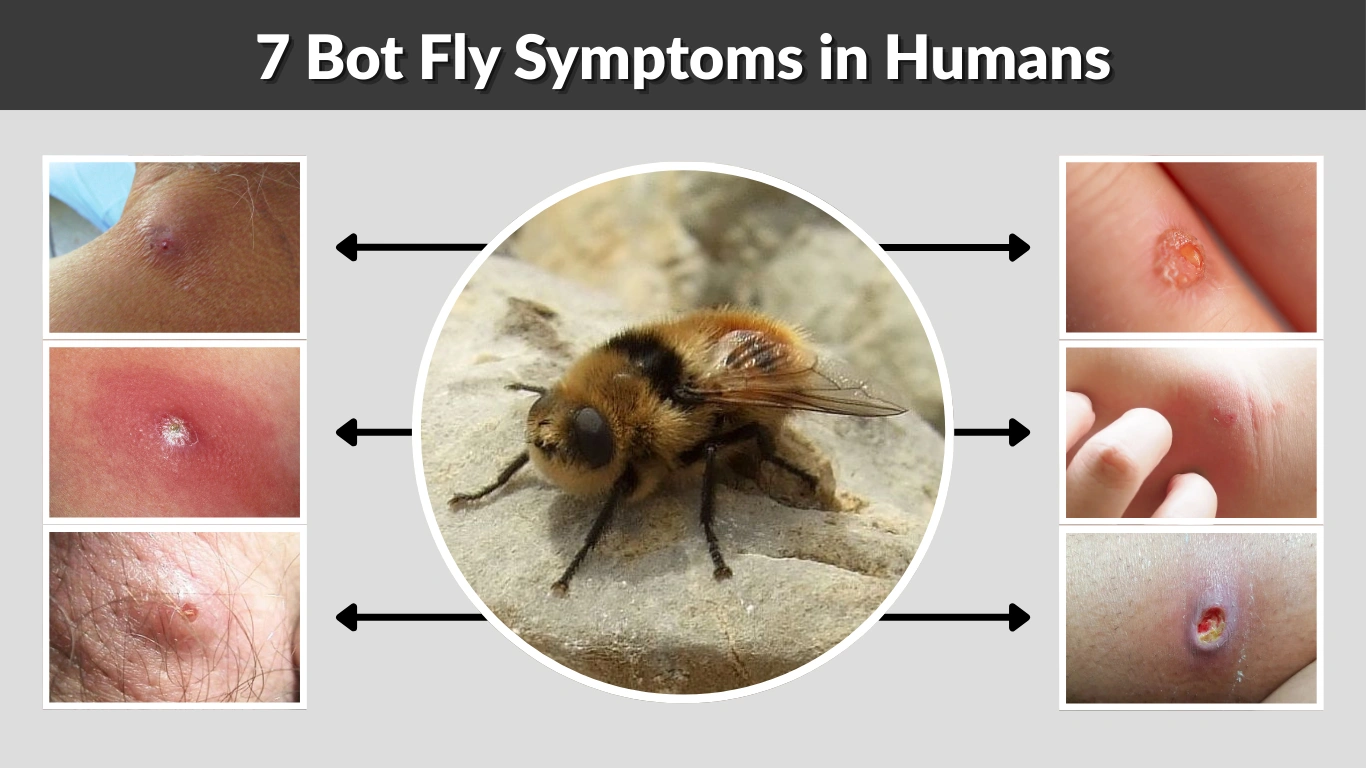
Botflies, especially Dermatobia hominis, are infamous for their unusual and disturbing way of reproducing. Instead of laying eggs directly on humans, the female botfly uses mosquitoes or other biting insects as carriers. When these carriers bite a person, the botfly’s eggs hatch, and the larvae burrow into the skin. This results in a painful condition called cutaneous myiasis. Recognizing the symptoms early is essential for proper treatment and preventing further complications.
What Are Botflies?
General Description
Botflies belong to the insect family Oestridae. While several species infest animals, the human botfly (Dermatobia hominis) is the one most associated with people. Adult flies are harmless and live only to reproduce, but their larvae are parasitic, feeding on living tissue beneath the skin.
How Humans Get Infested
Humans typically become infested indirectly. The female botfly glues her eggs onto a mosquito, tick, or fly. When the vector insect lands on a warm-blooded host, body heat triggers the eggs to hatch. The larvae then burrow into the skin through the bite wound or hair follicles, creating painful lesions.
7 Common Bot Fly Symptoms in Humans
1. Painful Boil-Like Lesion
The most recognizable symptom is the development of a raised, boil-like swelling on the skin. At first, it may resemble a mosquito bite or pimple, but it quickly becomes larger and more painful. A small central hole usually forms, which serves as the larva’s breathing pore. Unlike typical boils or abscesses, this lesion persists and worsens as the larva grows inside.
2. Sensation of Movement Under the Skin
One of the most unsettling symptoms is the feeling of movement beneath the skin. As the larva grows, it shifts inside the lesion, causing a crawling or wriggling sensation. Many patients describe this as the most disturbing part of the infestation. The sensation often becomes more noticeable at night, when the host is still and more aware of the movements.
3. Swelling and Inflammation
The skin around the lesion becomes swollen, red, and warm to the touch. This inflammation is caused by the immune system responding to the larva’s presence. Unlike ordinary skin infections, the swelling does not subside easily and may continue to increase in size. In severe cases, the lesion can resemble cellulitis, a bacterial infection, which sometimes leads to misdiagnosis.
4. Discharge from the Wound
As the larva breathes and develops, the lesion may release clear fluid, pus, or blood. The central pore, which the larva uses for oxygen, often oozes discharge, sometimes mixed with air bubbles. This symptom is a strong indicator of botfly infestation since most ordinary skin boils do not have a visible breathing hole with fluid seepage.
5. Itching and Irritation
Another common symptom is persistent itching around the lesion. The irritation is caused both by the larva’s movement and the body’s immune response. Unlike regular insect bites, the itching often increases over time, becoming more severe as the larva grows. Scratching may worsen the wound and increase the risk of infection.
6. Secondary Infections
The open breathing hole makes the wound more vulnerable to bacterial infections. Signs of secondary infection include pus buildup, spreading redness, fever, and increased pain. If left untreated, the infection can complicate the healing process and require antibiotics in addition to larva removal.
7. Psychological Distress
Beyond physical symptoms, botfly infestations often cause anxiety and stress. The idea of a live insect growing under the skin can be overwhelming. Many people experience disturbed sleep, obsessive inspection of the lesion, and heightened fear of insects after infestation. This psychological impact can sometimes last long after the larva has been removed.
How to Differentiate Bot Fly Symptoms from Other Skin Conditions
Botfly lesions can be mistaken for mosquito bites, cysts, or abscesses. The key differences include:
- A central breathing hole in the lesion.
- Sensation of movement under the skin.
- The lesion persists and worsens, unlike ordinary boils that eventually drain or heal.
Diagnosis
Medical Examination
Doctors can often diagnose botfly infestation by simply inspecting the lesion. The breathing hole and discharge are telltale signs.
Imaging Techniques
For deeper or unclear cases, ultrasound or dermoscopy can confirm the presence and position of the larva, ensuring safe extraction.
Treatment Options
Manual Extraction
- Doctors use forceps to carefully remove the larva.
- Care is taken not to rupture it, which may cause inflammation.
Suffocation Methods
- Applying petroleum jelly, adhesive tape, or even bacon strips over the breathing hole blocks oxygen.
- This forces the larva to emerge, making removal easier.
Medical Treatment
- Antibiotics are prescribed if infection is present.
- Pain relievers and anti-inflammatory drugs help with swelling and discomfort.
FAQs
How long can a bot fly larva stay in the skin?
A bot fly larva can stay under the skin for about six to twelve weeks. During this time, it grows and feeds on tissue before eventually dropping out to pupate in the soil. The duration depends on environmental conditions and the host’s immune response.
Are bot fly infestations dangerous?
Bot fly infestations are rarely fatal, but they can be very painful and lead to secondary infections if untreated. The main risks include tissue damage, pus buildup, and scarring. While not usually life-threatening, they require medical attention to ensure safe removal and proper wound care.
Can you remove a bot fly at home?
Yes, but it’s risky. Some people use petroleum jelly, adhesive tape, or bacon strips to block the larva’s air supply, forcing it to emerge. However, professional medical removal is recommended to avoid breaking the larva, which can cause inflammation and infection.
Do botflies only infect humans?
No, botflies infest a variety of mammals, including cattle, dogs, and wild animals. In fact, their agricultural impact on livestock is significant, leading to skin damage and economic losses. Humans are just one of many possible hosts for Dermatobia hominis larvae.
Where are human botflies most common?
Human botflies are found mainly in Central and South America. They thrive in tropical regions where mosquitoes and other biting insects are abundant. Travelers to rural areas in these regions are most at risk of infestation and should take precautions to prevent bites.
