

Horse botflies are a common parasite that affects equines worldwide, causing irritation, discomfort, and in severe cases, serious health complications. Scientifically known as Gasterophilus spp., these flies are not just pests buzzing around horses—they use horses as their primary host for their eggs and larvae. Understanding their biology, life cycle, and treatment methods is vital for horse owners to keep their animals healthy and stress-free.
Horse Botfly Scientific Name and Classification
The horse botfly belongs to the family Oestridae, which includes several species of parasitic flies. The most common types affecting horses are Gasterophilus intestinalis (common botfly), Gasterophilus nasalis (throat botfly), and Gasterophilus haemorrhoidalis (nose botfly). All species share similar parasitic behaviors but differ in where they deposit their eggs and how the larvae migrate through the horse’s body.
These flies are often mistaken for ordinary houseflies or horseflies, but their unique reproductive strategy makes them more harmful to horses than nuisance insects.
Horse Botfly Egg
One of the first visible signs of a botfly infestation is the presence of tiny yellow or cream-colored eggs attached to the horse’s coat. Female horse botflies lay hundreds of eggs, usually on the horse’s legs, shoulders, or around the lips. Each egg is glued tightly to the hair shaft, making it difficult to remove without proper tools like a botfly knife or grooming stone.
When a horse licks or bites the area where eggs are attached, the warmth and moisture trigger the eggs to hatch, releasing larvae that quickly enter the horse’s mouth.
Horse Botfly Life Cycle
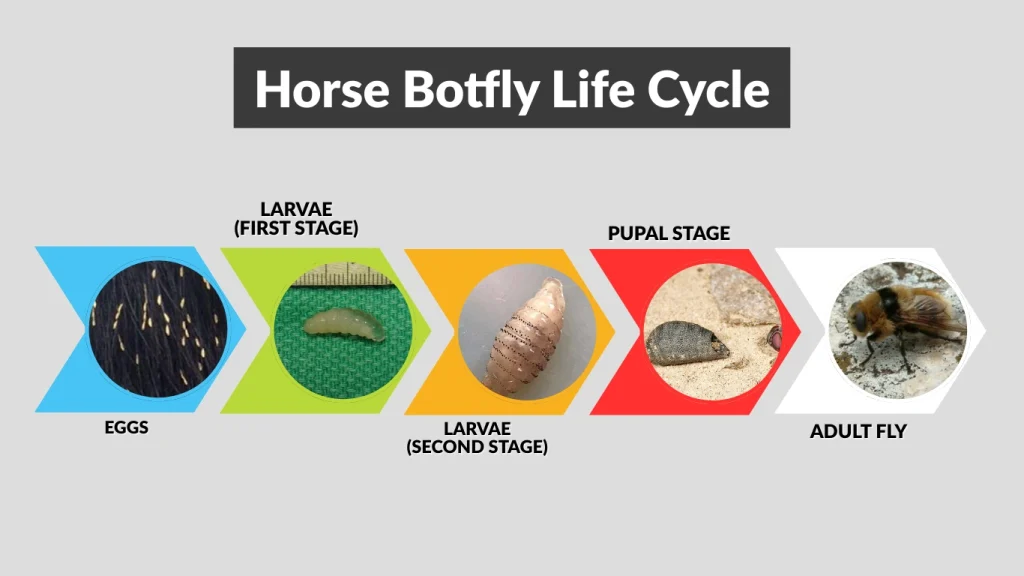
The horse botfly life cycle is fascinating yet harmful to its host. It follows these stages:
- Eggs – Laid on the horse’s coat, often in summer and fall.
- Larvae (First Stage) – Enter the horse’s mouth when the horse grooms itself, attaching to the tongue and gums.
- Larvae (Second Stage) – Travel through the digestive tract and attach to the stomach lining or intestines.
- Pupal Stage – Mature larvae are passed out in the horse’s manure and pupate in the soil.
- Adult Fly – After pupation, adult flies emerge to restart the cycle.
The entire process takes nearly a year, with larvae overwintering inside the horse’s stomach before emerging in spring.
Horse Botfly Larvae
The larvae are the most damaging stage of the horse botfly. Once inside the horse, they migrate to the stomach or intestinal lining and attach using mouth hooks. This attachment causes ulcers, irritation, and digestive disturbances. A heavy infestation can result in weight loss, colic, poor appetite, and general discomfort.
Interestingly, larvae can survive inside the horse’s digestive tract for up to 10 months before passing out into the environment to pupate.
Horse Botfly Bite & Symptoms
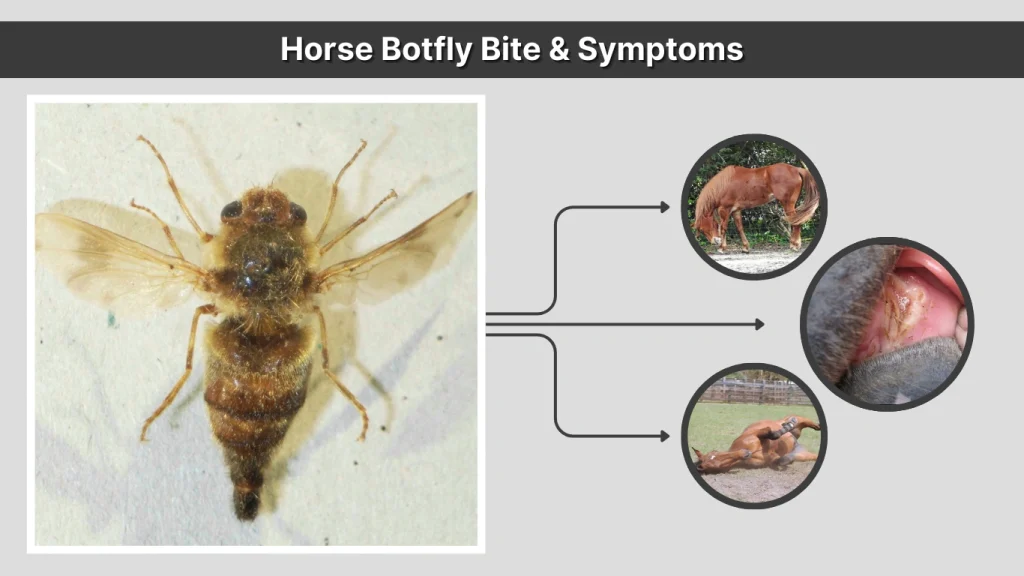
Horse Botfly Bite (Myth vs Reality)
Many horse owners believe botflies bite horses or humans, but this is a misconception. Unlike horseflies, botflies do not bite or feed on blood. Instead, their harm comes from egg-laying and the internal development of larvae.
For humans, the botfly associated with painful bites and larval infections is usually the human botfly (Dermatobia hominis), not the horse botfly.
Horse Botfly Symptoms in Horses
Recognizing symptoms early is key to preventing serious health issues. Common signs include:
- Constant licking or chewing of legs
- Irritation where eggs are laid
- Ulcers in the mouth or gums
- Restlessness or loss of appetite
- Digestive issues such as colic or diarrhea
If left untreated, botfly larvae can lead to stomach ulcers and chronic digestive problems.
Horse Botfly Human Cases
While rare, there are reports of horse botfly larvae affecting humans, though most cases are due to misidentification. The human botfly is the real culprit when it comes to skin infestations in people. However, handling horses with botfly eggs can sometimes cause irritation or accidental egg transfer.
For safety, horse owners should always wear gloves when removing eggs and use proper grooming tools to prevent direct skin contact.
Horse Stomach Botfly
The term “stomach botfly” refers to the stage when larvae have reached the horse’s stomach and attached to the lining. These larvae secrete substances that irritate the stomach wall, leading to lesions, ulcers, and in some cases, digestive blockages. Horses with stomach botflies may show signs of weight loss, poor coat condition, and chronic colic.
Veterinary diagnosis often involves endoscopy to confirm the presence of larvae in the stomach.
Horse Botfly in Different Regions
Horse Botfly in the UK
In the UK, horse botflies are most active during the summer and autumn months. Veterinary experts warn horse owners to check their horses daily for eggs during this time, especially after turnout. Due to the UK’s cooler winters, larvae typically overwinter in the horse’s stomach, re-emerging in spring when adult flies restart the cycle.
Horse Botfly vs Horsefly
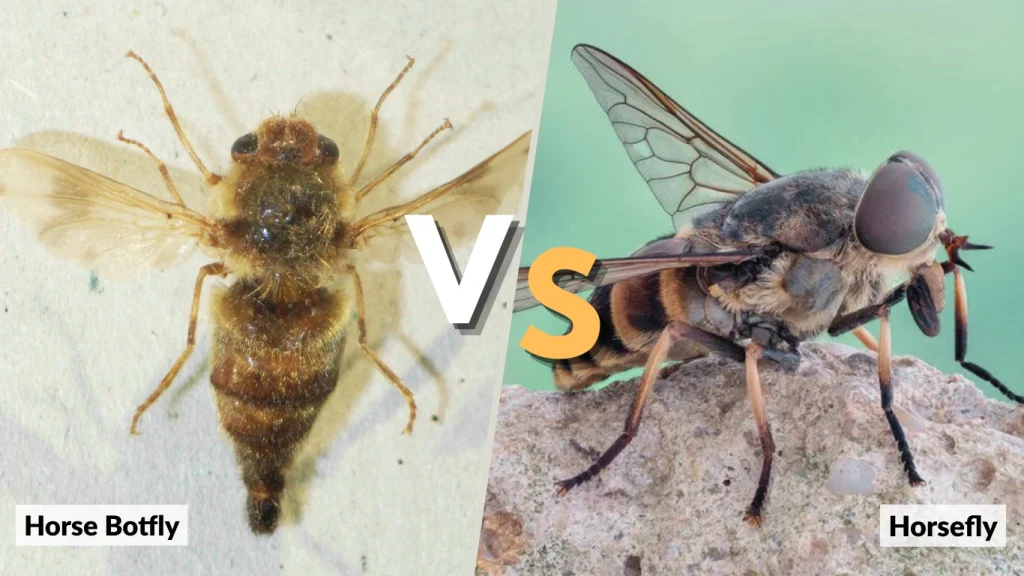
Many people confuse botflies with horseflies, but they are very different insects:
- Horsefly – A biting fly that feeds on blood, causing painful bites to horses and humans.
- Horse Botfly – A parasitic fly that lays eggs on horses, with harm coming from larvae inside the body.
Botflies do not bite, but their lifecycle makes them a more dangerous parasite than horseflies when it comes to horse health.
Horse Botfly Eggs on Horses
Horse botfly eggs are one of the easiest signs for horse owners to spot. They are small, yellow or cream-colored specks firmly attached to the hair shaft, often on the forelegs, shoulders, and around the mouth.
- Eggs are laid during warm months when adult flies are most active.
- A single female botfly can lay hundreds of eggs in a short time.
- Eggs hatch when triggered by warmth and moisture, such as the horse licking itself.
Leaving eggs untreated can quickly lead to a larval infestation, so daily grooming is crucial.
Horse Botfly Knife and Removal Methods
One of the most common tools for managing botfly eggs is the botfly knife, a specialized grooming blade designed to scrape eggs off the hair without injuring the horse.
Other Safe Removal Methods
- Pumice stones or grooming blocks – Effective for scraping eggs off the coat.
- Warm water and vinegar solutions – Can help loosen egg attachment.
- Clipping hair – Used in severe infestations around sensitive areas.
Daily inspection and egg removal greatly reduce the risk of larvae entering the horse’s body.
Botfly in Horses (General Impact)
When infestations are not managed, botflies cause:
- Continuous irritation during egg-laying season.
- Digestive problems due to larval migration.
- Increased stress and restlessness in horses.
- Long-term health issues, including ulcers and blockages.
Although a light infestation may only cause mild discomfort, heavy infestations can be life-threatening.
Botfly Larvae in Horses (Detailed Effects)
Once inside, larvae travel through the digestive system, attaching themselves to the stomach lining or intestines. This leads to:
- Ulcers – Caused by irritation at attachment sites.
- Inflammation – Triggered by larval hooks damaging tissues.
- Nutritional absorption problems – Horses may lose weight despite normal feeding.
- Colic and digestive disturbances – Severe infestations can mimic other gastrointestinal diseases.
Veterinarians often recommend deworming treatments during late autumn and winter, when larvae are already in the stomach.
Botfly Treatment in Horses
The most effective treatment is antiparasitic medication prescribed by a veterinarian.
Common Treatments
- Ivermectin – Kills stomach and intestinal botfly larvae.
- Moxidectin – Effective against multiple internal parasites, including botfly larvae.
These medications are usually given in paste or gel form as part of a regular deworming program.
Treating Botfly in Horses at Home
While veterinary treatment is essential, horse owners can take steps at home:
- Daily Grooming – Inspect legs, shoulders, and mane for eggs.
- Botfly Knife – Use grooming blades or pumice stones to remove eggs.
- Fly Repellents – Applying sprays helps discourage adult flies from landing.
- Pasture Management – Remove manure regularly to reduce pupae development in soil.
Combining veterinary dewormers with preventive care ensures the best protection against botflies.
Is a Botfly and a Horsefly the Same Thing?
No—horseflies and botflies are entirely different insects:
- Horsefly (Tabanidae family) – Known for painful bloodsucking bites, dangerous to both humans and horses.
- Horse Botfly (Gasterophilus spp.) – Parasitic fly that causes harm through larvae developing inside horses.
This common confusion is important to clear up because while horseflies are painful, botflies can be far more dangerous internally.
Symptoms of Botfly in Horses (Summary Section)
A quick checklist of symptoms includes:
- Yellow eggs visible on coat
- Excessive licking, biting, or stomping
- Weight loss and poor coat condition
- Restlessness or colic symptoms
- Mouth ulcers and digestive discomfort
If any of these signs are present, immediate egg removal and veterinary consultation are recommended.
Prevention and Horse Care
Preventing botflies requires consistent management:
- Seasonal Deworming – Timed in late autumn or early winter.
- Daily Grooming – Check and remove eggs before they hatch.
- Fly Sprays – Repellents reduce fly activity around horses.
- Manure Management – Breaking the life cycle by clearing paddocks.
- Pasture Rotation – Limits exposure to contaminated areas.
By combining these practices, horse owners can significantly reduce the risk of infestation.
FAQs
Are horse botflies dangerous to humans?
Horse botflies rarely infest humans. Human cases usually involve the human botfly (Dermatobia hominis). Still, gloves should be worn when removing eggs to avoid accidental contact.
How do I know if my horse has botflies?
Look for yellow eggs on the coat, signs of irritation, restlessness, or digestive issues such as colic. Endoscopy may confirm stomach larvae in severe cases.
When is botfly season for horses?
Botflies are most active in late summer and autumn, when females lay eggs on horses. Larvae overwinter in the stomach and emerge in spring.
Can botfly infestations kill a horse?
Yes, in extreme cases. Heavy infestations can cause severe ulcers, colic, and blockages that may become life-threatening if untreated.
What is the best treatment for horse botfly larvae?
Veterinary dewormers like Ivermectin or Moxidectin are the most effective treatments. Preventive grooming and fly control should also be part of regular care.
