

Mayfly larvae, also called nymphs or naiads, are the immature stage of insects belonging to the order Ephemeroptera. Unlike many insects that undergo complete metamorphosis, mayflies have an aquatic larval stage that lasts much longer than their brief adult life. While the adult mayfly may survive only a few hours to days, its larval stage can persist for months or even years, depending on the species.
These larvae play a vital role in freshwater ecosystems. They are responsible for breaking down organic matter, recycling nutrients, and serving as an important food source for fish, amphibians, and birds. Because of their sensitivity to pollutants, scientists often use mayfly larvae as a biological indicator of water quality.
Mayfly Larvae Identification
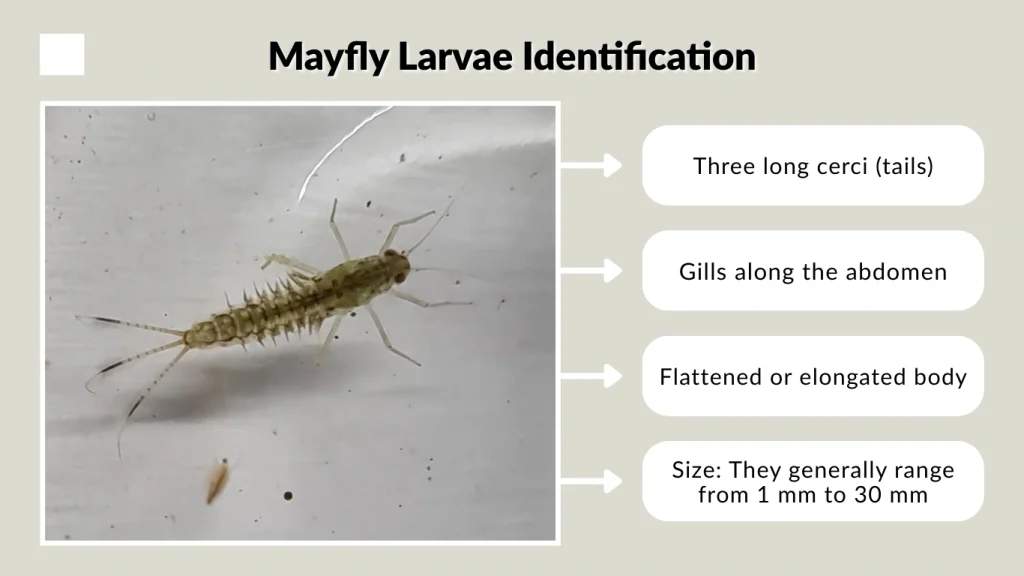
Identifying mayfly larvae can be confusing, especially since they resemble damselfly or stonefly larvae at first glance. However, there are several distinguishing features:
Key Features
- Three long cerci (tails): Most species have three thread-like tails at the end of their body, although some may have only two.
- Gills along the abdomen: Distinctive leaf-like or feathery gills are visible on the sides of the abdomen.
- Flattened or elongated body: Adapted to either clinging to rocks in fast-moving streams or burrowing in sediments.
- Size: They generally range from 1 mm to 30 mm, depending on the species and age.
Pictures & Images
Photographs of mayfly larvae usually highlight their three tails and gilled abdomen. When viewed from above, their segmented bodies and visible legs make them easy to distinguish from other aquatic insects.
Differences From Other Larvae
- Damselfly larvae vs. Mayfly larvae: Damselfly larvae have three leaf-like gills at the end of their body instead of along the abdomen, unlike mayflies.
- Stonefly larvae vs. Mayfly larvae: Stoneflies have two tails, while mayflies usually have three and distinct abdominal gills.
Mayfly Larvae Habitat
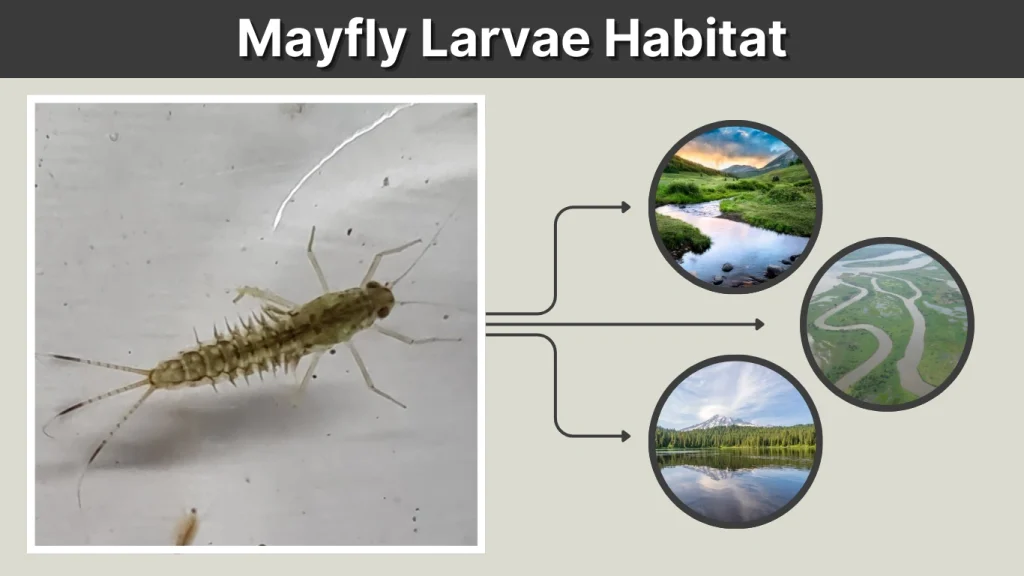
Mayfly larvae are almost always associated with freshwater ecosystems, and their habitat preferences vary depending on the species.
Freshwater Environment
They live in streams, rivers, ponds, and lakes, clinging to rocks, plants, or burrowing into sediments. Fast-flowing waters tend to have flattened mayfly larvae that can cling tightly to rocks, while those in muddy or sandy bottoms are usually burrowers.
Global Distribution
Mayfly larvae can be found worldwide, except in Antarctica. They are especially abundant in temperate regions with clean, oxygen-rich water. In the UK and North America, some rivers host dozens of different species.
Habitat Adaptations
- Burrowing mayfly larvae: These species dig into mud or sand, creating tunnels to feed and breathe.
- Swimming mayfly larvae: They have streamlined bodies and strong legs to move through the water column.
Mayfly Larvae Diet

Feeding habits vary between species, but most mayfly larvae are herbivores or detritivores, consuming microscopic plant material and organic matter.
What Do Mayfly Larvae Eat?
- Algae scraped from rocks
- Decaying leaves and plant debris
- Microorganisms found in sediments
Feeding Adaptations
Their mouthparts are adapted for scraping, shredding, or collecting food from their surroundings. Some species even filter fine particles suspended in the water.
What Eats Mayfly Larvae?
Mayfly larvae are a major part of aquatic food chains. Predators include:
- Fish such as trout and bass
- Amphibians like frogs and salamanders
- Aquatic insects including dragonfly larvae
- Birds feeding in shallow waters
Mayfly Larvae Lifecycle & Lifespan

The larval stage is the longest and most critical part of a mayfly’s life cycle.
From Egg to Nymph
Adult mayflies lay eggs directly into water. These hatch into larvae that immediately begin feeding and growing.
Duration of Larval Stage
Depending on the species, the larval stage can last a few weeks up to two years. During this time, they molt multiple times—sometimes more than 50 molts—before reaching maturity.
Transition to Adult
When ready, the larvae swim to the water surface or crawl onto rocks to emerge as a subimago (a winged but immature stage). After a short time, the subimago molts again into the imago (adult mayfly), ready to mate and reproduce. This unique two-stage adulthood is a rare trait among insects.
Mayfly Larvae Adaptations
Mayfly larvae have survived for millions of years thanks to a variety of specialized adaptations that allow them to thrive in different freshwater environments.
Breathing Through Gills
One of their most notable features is the abdominal gills. These thin, leaf-like or feathery structures are attached to the sides of their abdomen, enabling efficient oxygen absorption from the water. The constant fluttering of these gills helps maximize oxygen intake, which is vital in fast-moving streams where oxygen levels fluctuate.
Movement & Swimming
Depending on the species, larvae use different strategies for movement:
- Clingers flatten their bodies to resist currents and hold tightly to stones.
- Swimmers have streamlined bodies and strong legs that allow them to move freely in open water.
- Burrowers use their legs and jaws to dig tunnels in soft sediments, protecting themselves from predators.
Survival in Different Waters
Because mayfly larvae are highly sensitive to pollutants, only species adapted to clean, oxygen-rich waters survive well. This is why their presence in a stream or river is often a sign of excellent water quality. Conversely, their absence in a previously rich habitat can indicate pollution or habitat loss.
Mayfly Larvae as Indicator Species
Aquatic ecologists often refer to mayflies as indicator species because of their sensitivity to environmental changes.
Why They Show Water Quality
Mayfly larvae require high levels of dissolved oxygen to survive. Polluted waters, which often have reduced oxygen content, quickly drive them away or kill them. As a result, scientists can estimate water quality by simply monitoring the population and diversity of mayfly larvae in a given stream or river.
Used in Environmental Studies
Water management agencies worldwide, including in the UK and US, use mayfly larvae populations in biomonitoring programs. A river with multiple species of mayfly larvae generally indicates good ecological health, while their absence often points to pollution, eutrophication, or habitat disruption.
In short, the more mayfly larvae present, the cleaner the water.
Mayfly Larvae in Fishing & Bait

Mayfly larvae have a long-standing association with recreational fishing, especially in fly-fishing communities.
Live Mayfly Larvae for Sale
Many bait shops and online suppliers sell live mayfly larvae to anglers. These larvae are harvested from natural sources or bred in controlled environments. They are prized for their movement in the water, which attracts fish.
Mayfly Larvae Bait
Trout, bass, and other freshwater fish actively feed on mayfly larvae in the wild, making them an excellent bait option. Anglers often use larvae directly on hooks or mimic their appearance with artificial flies designed to look like wriggling nymphs.
Mayfly hatches also inspire some of the most famous fishing patterns in the world. Fly-fishers time their outings to coincide with hatches, when adult mayflies rise from the water and trigger feeding frenzies among fish.
Giant & Unique Types of Mayfly Larvae

Not all mayfly larvae are the same. Some species are unique in their size, shape, or behavior.
Giant Mayfly Larvae
Species like Hexagenia limbata are known as giant burrowing mayflies. Their larvae can grow up to 30 mm long and are found in soft, silty bottoms of lakes and rivers. Because of their abundance, they play a major role in freshwater food webs, feeding countless fish and birds.
Burrowing Mayfly Larvae
Burrowing species dig tunnels into mud or sand, creating U-shaped burrows. They use their gills to pump water through these tunnels, allowing them to breathe while safely hidden from predators. This adaptation also makes them an important part of sediment mixing, which helps keep aquatic ecosystems balanced.
Mayfly Larvae in the UK
In the UK, mayfly larvae are particularly significant, both ecologically and culturally.
Common Species Found in UK Waters
Several species of mayfly larvae inhabit rivers and lakes across the UK. Among the most famous is Ephemera danica, often called the “green drake mayfly.” This species is especially important to fly-fishing communities due to its predictable hatches.
Role in Local Ecosystems
In British rivers, mayfly larvae are a key food source for trout, grayling, and other fish species. Their presence also indicates clean, well-oxygenated waters, making them a valuable tool for conservation groups monitoring freshwater habitats.
Mayfly hatches in the UK are so iconic that they have influenced angling literature, traditions, and even seasonal fishing practices for centuries.
Mayfly Larvae Facts & Information

Mayfly larvae are fascinating creatures with many surprising traits that make them stand out among aquatic insects.
Size & Growth
Most mayfly larvae measure 5–20 mm in length, but some larger species such as the giant burrowing mayflies (Hexagenia) can reach up to 30 mm. They grow through repeated molting, sometimes shedding their exoskeleton over 40 times before reaching maturity.
Interesting Facts
- They spend up to 99% of their life underwater as larvae, with the adult stage lasting only hours to a few days.
- Mayflies are one of the oldest insect groups, dating back more than 300 million years.
- Unlike most insects, they experience a subimago stage (a winged but immature form) before becoming a full adult.
Role in Food Web
Mayfly larvae form the backbone of many aquatic food chains. They recycle organic matter and serve as prey for fish, amphibians, and birds. Without them, freshwater ecosystems would lose a critical energy source.
How to Catch Mayfly Larvae
Many researchers, anglers, and nature enthusiasts collect mayfly larvae for study or fishing.
Collecting Methods
- Kick Sampling: Standing in shallow streams and disturbing the sediment while holding a net downstream.
- Stone Turning: Gently lifting submerged rocks where larvae cling.
- Sediment Sieving: For burrowing species, scooping soft mud and filtering for larvae.
Ethical & Legal Considerations
It’s important to avoid over-harvesting and to check local regulations. Some conservation areas prohibit disturbing aquatic life. When collecting, larvae should be returned to the water unless being used responsibly for research or fishing.
Mayfly Larvae Around the World
Though they differ in species and behavior, mayfly larvae are found across the globe.
Scientific Importance
Globally, mayfly larvae are used in biological monitoring programs to evaluate river health. Countries like the US, UK, Japan, and Australia rely on them as standard organisms in water-quality assessments.
Regional Differences
- North America: Hosts large burrowing species like Hexagenia that support commercial and recreational fishing.
- Europe: Rich diversity, especially in clean rivers like the Danube and Thames.
- Asia: Species adapted to both tropical and temperate climates.
- Africa & South America: Less studied but equally important in maintaining aquatic ecosystems.
Their universal presence makes them one of the most studied groups of aquatic insects.
FAQs About Mayfly Larvae
What do mayfly larvae look like?
Mayfly larvae are small aquatic insects with three thin tails, visible gills along their abdomen, and six legs. Their bodies can be flattened for fast-flowing streams or elongated for burrowing in mud.
How long do mayfly larvae live?
Depending on the species, mayfly larvae can live from a few weeks up to two years. Their adult stage, however, usually lasts less than 24 hours.
What eats mayfly larvae?
Fish, frogs, birds, and aquatic insects are the main predators of mayfly larvae. They are an essential food source in freshwater food webs.
Are mayfly larvae harmful to humans?
No, mayfly larvae are completely harmless. They do not bite or sting and play a positive role in the environment.
Can you keep mayfly larvae in aquariums?
Yes, but they require clean, oxygen-rich water to survive. Because they are sensitive to pollution and water quality, they are difficult to maintain in standard aquariums.
