

Midges are tiny insects that often resemble mosquitoes, but their biology and behavior vary depending on the species. One of the most fascinating yet misunderstood parts of their life cycle is the egg stage. Midge eggs are the starting point of swarms that appear near water, gardens, and even inside homes. While most species are harmless, others, such as biting midges, cause irritation and spread discomfort. Understanding where midges lay eggs, what they look like, and how they develop can help in both identification and control.
What Are Midge Eggs?
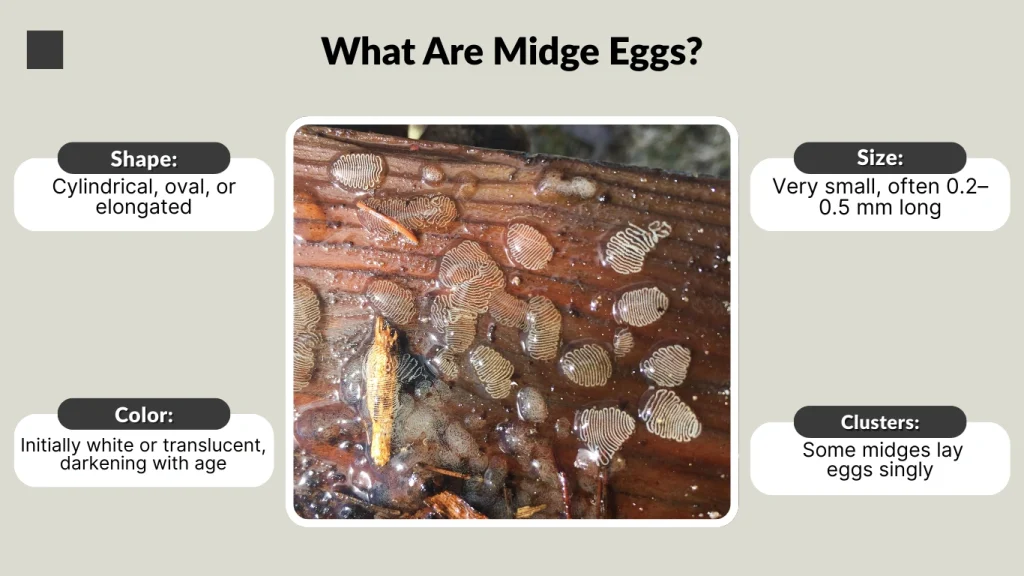
Midge eggs are the reproductive stage laid by female midges to continue their life cycle. Depending on the type of midge, eggs may be deposited in water, on plants, or in moist soil. These eggs are usually tiny, barely visible without close inspection, yet they play a major role in the rapid population growth of midges.
What Do Midge Eggs Look Like?
- Shape: Cylindrical, oval, or elongated
- Size: Very small, often 0.2–0.5 mm long
- Color: Initially white or translucent, darkening with age
- Clusters: Some midges lay eggs singly, while others create “rafts” that float on water
A common example is the midge egg raft, which looks like a small floating patch of jelly containing hundreds of eggs. This raft ensures survival in aquatic environments.
Midge Egg Pictures and Identification
Although difficult to see without magnification, midge eggs can be recognized by their smooth, shiny surface and clustering pattern. Non-biting midge eggs often form large jelly masses in water, while gall midge eggs are hidden within plant tissues such as rose buds or apple leaves.
Where Do Midges Lay Eggs?
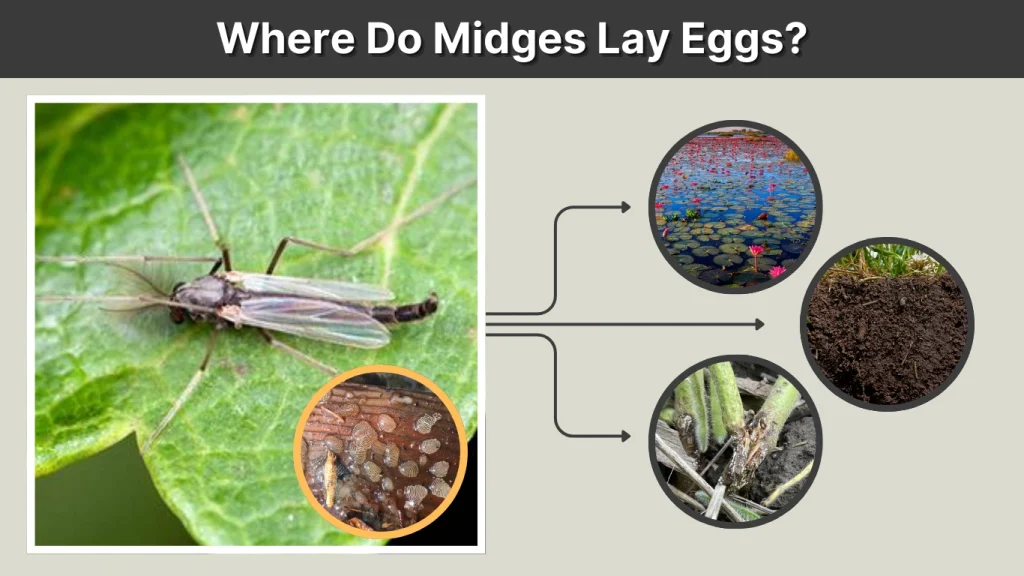
Different midge species select different egg-laying sites depending on their biology.
- Water bodies – Non-biting midges and many biting species lay eggs in ponds, lakes, rivers, and even swimming pools.
- Moist soil and decaying matter – Some species prefer damp soil or organic debris.
- Plants – Gall midges lay eggs on crops, ornamental plants, or leaves, leading to plant deformities.
Midge Eggs in Water & Pools
Pools and ponds are ideal egg-laying spots for midges. Females often deposit eggs on the water’s surface or in shallow areas. While these eggs themselves don’t harm humans, they quickly hatch into larvae that can cause nuisance swarms around water.
In swimming pools, chlorine may kill most larvae, but egg rafts can sometimes survive, especially if the pool is not well-maintained.
Plant-Related Midge Eggs
Several species of gall midges target plants:
- Rose midge eggs – cause damage to rose buds and shoots.
- Apple leaf curling midge eggs – lead to distorted leaves.
- Hibiscus gall midge eggs – attack hibiscus flowers and buds.
- Wheat midge eggs – laid in wheat florets, causing agricultural damage.
Another interesting example is the aphid midge, a beneficial species. Its eggs hatch into larvae that feed on aphids, making it a natural pest control ally.
Biting Midge Eggs – Facts and Myths
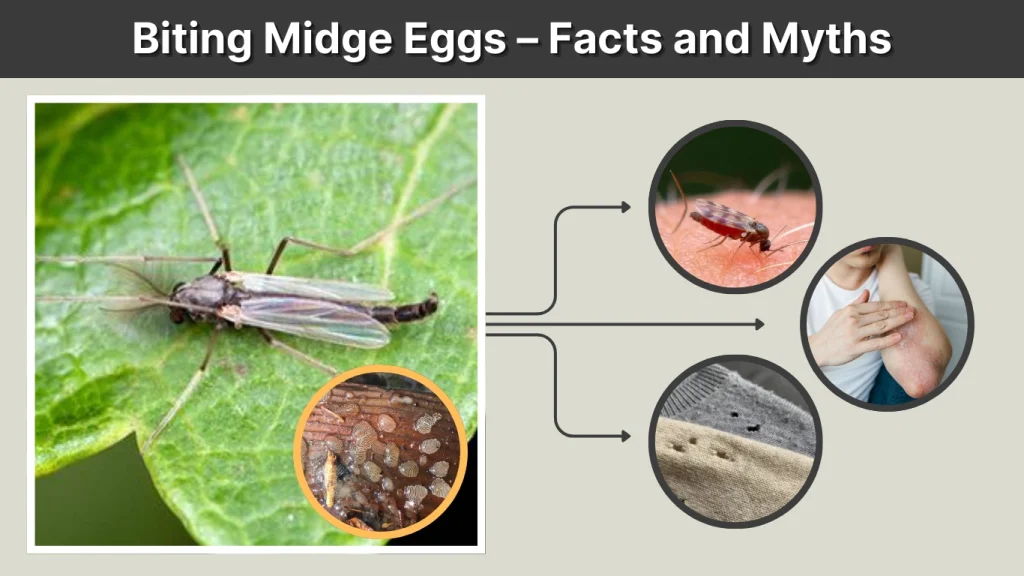
Biting midges (commonly called no-see-ums) require a blood meal before laying eggs. These eggs are laid in wet soil or water-rich areas.
Myths About Biting Midge Eggs
- Do biting midges lay eggs on humans? No, they only bite to feed on blood.
- Do midges lay eggs in your skin? No, midges cannot implant eggs in human skin. The confusion comes from the itchy welts that resemble skin infestations.
- Do midges use cotton or clothing to lay eggs? No, they need moist environments, not fabrics.
Egg-Laying Process of Female Midges
After feeding, the female midge finds a suitable moist site to deposit eggs. Depending on the species, one female may lay between 25 to 400 eggs at a time. Some blood-feeding species can produce eggs without blood meals, a process known as autogenic maturation of eggs.
Midge Egg Development and Incubation
Midge eggs typically hatch within 2 to 7 days, although temperature and humidity can alter this period. In warm and wet environments, eggs hatch faster, while cooler conditions delay the process.
Midge Eggs to Larvae
Once hatched, eggs release larvae, often referred to as bloodworms or phantom midges depending on the species. These larvae thrive in water or soil, feeding on organic matter. They form the primary food source for fish and other aquatic animals, making them ecologically significant.
Special Cases of Midge Eggs
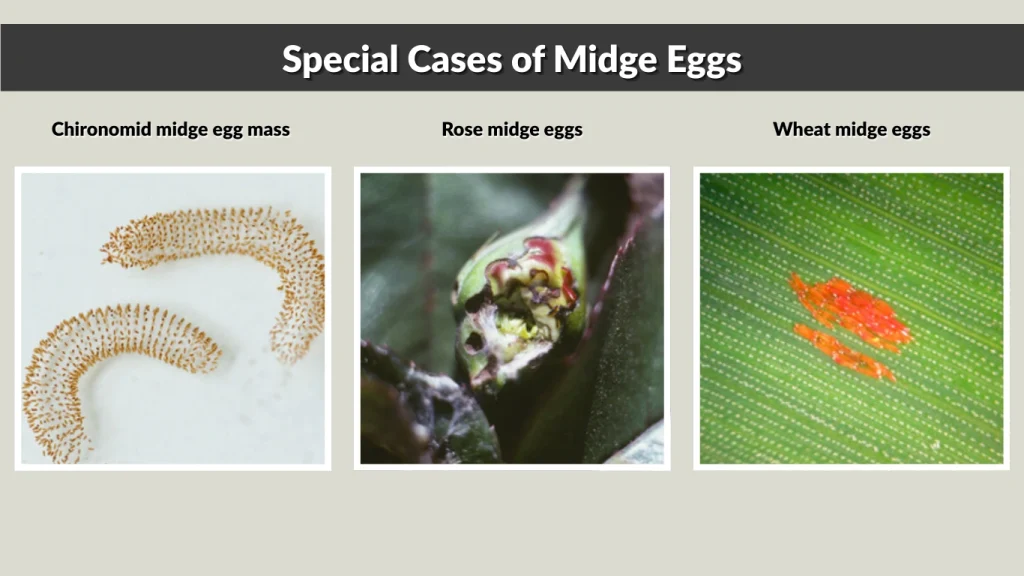
While many midges follow similar reproductive patterns, some species are unique in where and how they deposit eggs.
- Chironomid midge egg mass – Appears as a gelatinous string or clump floating in water, often mistaken for algae.
- Rose midge eggs – Extremely destructive for gardeners; they hatch into larvae that damage young rose shoots, leading to blackened buds.
- Wheat midge eggs – Deposited in wheat florets and can devastate crops by feeding on kernels after hatching.
- Hibiscus gall midge eggs – Cause flower buds to drop prematurely, reducing bloom quality in ornamental gardens.
These examples highlight why identifying midge eggs correctly is crucial for farmers and gardeners.
Human Interaction & Misconceptions
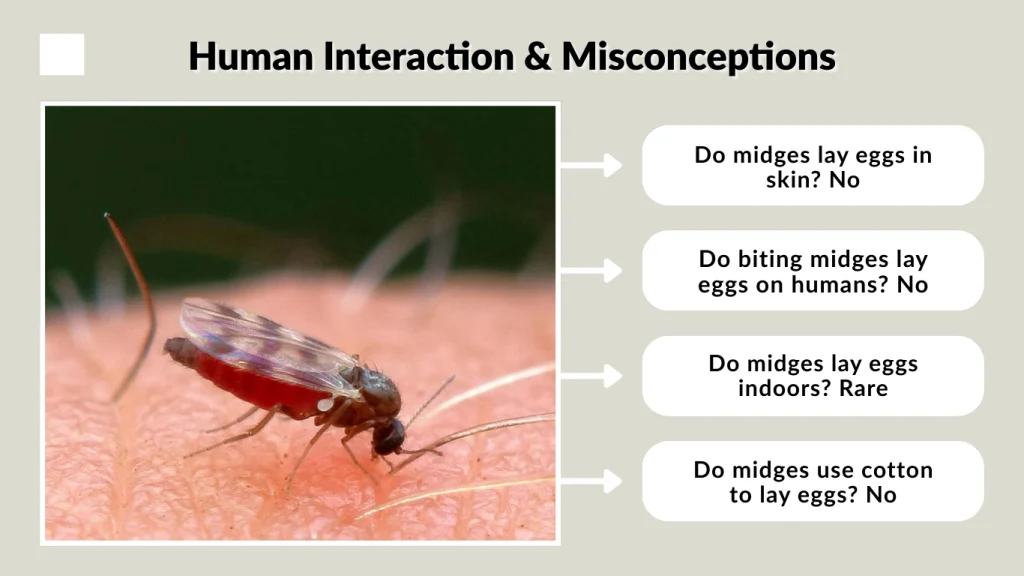
Midges are notorious for biting, but their eggs cause less direct trouble for humans. Still, myths often spread around egg-laying habits.
- Do midges lay eggs in skin? No, while the bites may itch and swell, eggs are never implanted in human tissue.
- Do biting midges lay eggs on humans? No, they need moist natural environments.
- Do midges lay eggs indoors? Rare, unless standing water or damp organic matter is present.
- Do midges use cotton to lay eggs? No scientific evidence supports this.
Indoor Bombs and Midge Eggs
Insect bombs (foggers) can kill adult midges indoors, but they are not very effective against eggs. Eggs are often protected in water or soil, so removing breeding grounds (standing water, damp soil, or decaying plant matter) is more effective than chemical sprays alone.
Control and Prevention of Midge Eggs

Since eggs are the first stage of infestation, prevention focuses on eliminating egg-laying opportunities.
- Water management – Clean pools regularly, maintain chlorine levels, and cover stagnant water sources.
- Garden care – Inspect plants like roses, hibiscus, and wheat crops for gall midges; prune affected parts early.
- Biological control – Introduce natural predators such as fish that eat midge larvae.
- Chemical control – Use larvicides and insect growth regulators in severe cases.
Indoors, sealing entry points, using fine mesh screens, and reducing moisture will keep midges from breeding inside.
Fly Fishing and Midge Eggs
Interestingly, “midge eggs” also have a role in fly fishing terminology. Anglers use egg to midge dropper rigs, where an egg imitation fly is combined with a midge pattern to attract fish. This setup mimics natural feeding patterns of fish that consume both eggs and emerging midges.
FAQs About Midge Eggs
What are midge eggs?
Midge eggs are the reproductive stage of midges, laid in clusters or rafts, usually in water or moist environments.
Where do midges lay their eggs?
They typically lay eggs in standing water, damp soil, or on plants. Gall midges deposit eggs in plant tissue, while non-biting midges prefer water.
Can midges lay eggs in human skin?
No. Midges bite for blood meals but cannot implant eggs in human tissue. The myth comes from skin irritation after bites.
How long does it take for midge eggs to hatch?
Depending on species and conditions, midge eggs hatch within 2 to 7 days. Warmer and wetter environments speed up the process.
Will indoor insect bombs kill midge eggs?
Not effectively. Bombs kill adult midges, but eggs often survive in water or soil. Removing breeding grounds is the best solution.
