

Flying carpenter ants are a common source of confusion and concern for homeowners. At first glance, they resemble termites because of their wings and swarming behavior. However, they are a distinct species that plays a role in colony reproduction. These ants can be alarming when spotted indoors, especially in large numbers, since they may signal a deeper infestation. Understanding their appearance, behavior, and potential risks is key to controlling them before they cause costly damage.
What Are Flying Carpenter Ants?
Flying carpenter ants are not a separate species but rather the winged reproductive members, known as alates, of carpenter ant colonies. Their main purpose is to leave the nest, mate, and start new colonies. These swarms often occur in spring and summer, particularly after rainfall when conditions are humid and favorable for reproduction.
When people notice large black ants with wings inside their homes, they are usually seeing these alates. While the swarm itself may only last a few days, its presence is an important warning: a carpenter ant colony is nearby, either indoors or in close proximity to the house.
Identification of Flying Carpenter Ants
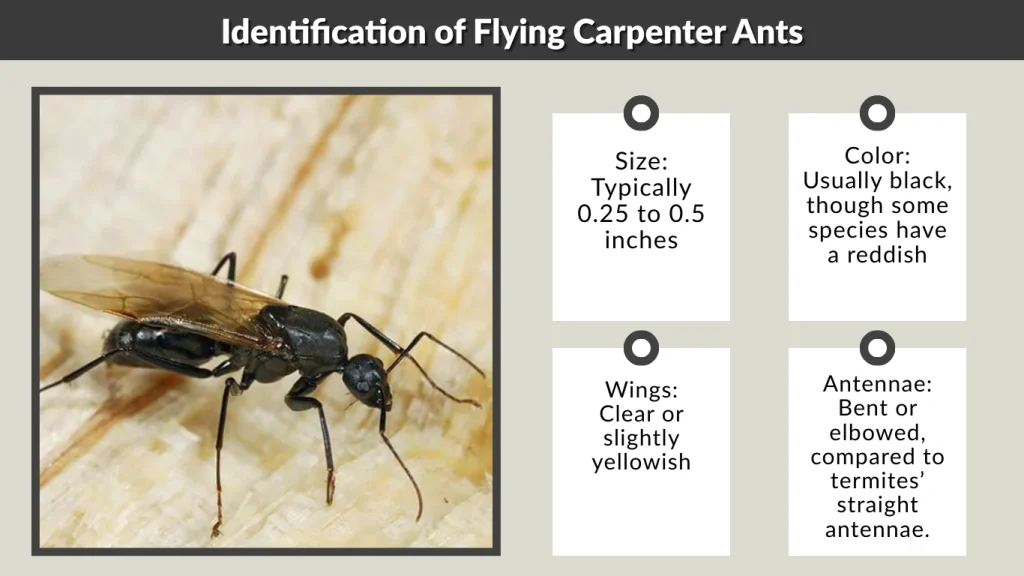
Proper identification is crucial because carpenter ants are often mistaken for termites. Here are key features:
- Size: Typically 0.25 to 0.5 inches, with queens growing up to 1 inch.
- Color: Usually black, though some species have a reddish or dark brown tint.
- Wings: Clear or slightly yellowish; the front wings are longer than the hind wings, unlike termites, where both pairs are equal.
- Antennae: Bent or elbowed, compared to termites’ straight antennae.
- Waist: Carpenter ants have a narrow, pinched waist, unlike the straight waist of termites.
- Thorax: Smooth and rounded, making them distinct when viewed closely.
These traits, along with behavioral clues, help in separating carpenter ants from other insects that swarm around homes.
Do Flying Carpenter Ants Bite or Sting?

Many people wonder whether flying carpenter ants bite or sting.
- Biting: Yes, they can bite with their strong mandibles. While not venomous, the bite may cause mild pain or redness.
- Stinging: They do not possess a functional stinger like wasps or bees. In rare cases, they can spray formic acid into a bite wound, intensifying irritation.
- Danger Level: Their bites are not considered dangerous to humans or pets, but they can be uncomfortable.
Thus, while they aren’t a health threat, their presence indoors is still problematic due to structural risks.
Are Flying Carpenter Ants Dangerous?
Flying carpenter ants are not dangerous in the sense of transmitting disease or delivering venomous stings. However, they are destructive to homes. Unlike termites, they don’t consume wood for nutrition. Instead, they excavate it to create smooth tunnels and nesting galleries.
The danger lies in the extent of the infestation. A few flying ants around lights may just mean outdoor swarms are nearby. But a swarm indoors, especially during colder months, suggests a mature colony exists within the house’s structure. Over time, this can lead to:
- Weakened beams and support structures.
- Increased repair costs.
- Difficulty in detecting colonies until damage is significant.
Behavior and Life Cycle

Flying carpenter ants are part of the reproductive cycle of their colony:
- Swarming: Occurs in spring or early summer, usually on warm days after rainfall.
- Mating Flights: Winged males and females leave the nest to mate mid-air.
- Queens: Fertilized females shed their wings and search for a suitable nesting site.
- Colony Growth: A queen starts laying eggs, producing workers who expand the nest.
- Longevity: Queens can live for over a decade, meaning colonies can persist and grow for many years.
This cycle explains why homeowners may suddenly see hundreds of flying ants at once—they are simply witnessing a colony’s natural reproductive stage.
Where Do Flying Carpenter Ants Come From?

Flying carpenter ants can originate from both outdoor and indoor colonies:
- Outdoors: Found in tree trunks, stumps, logs, firewood piles, and rotting fences.
- Indoors: They may establish nests in damp areas of houses such as bathrooms, kitchens, attics, and basements.
- Attraction Factors: Moisture-damaged wood is their primary target, making leaks, poor ventilation, or water damage prime entry points.
If you keep finding them inside, chances are there’s either a satellite nest within the walls or a parent colony nearby outside.
Signs of Flying Carpenter Ant Infestation
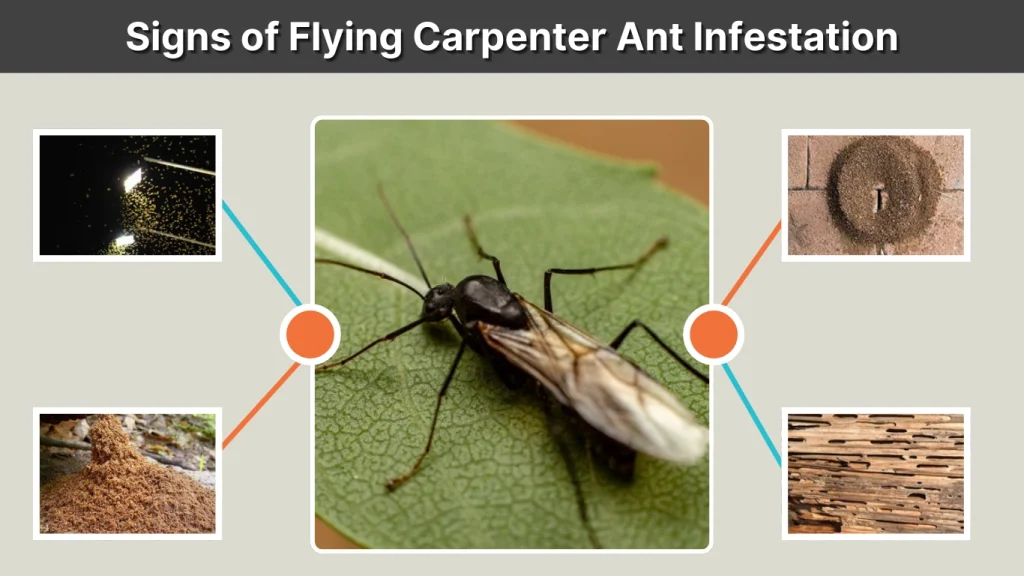
Recognizing the signs early helps prevent costly repairs. Look for:
- Swarms indoors: Especially near windows, lights, or vents.
- Frass piles: Sawdust-like debris beneath infested wood.
- Rustling noises: Ants moving inside hollow walls or wood beams.
- Smooth wood damage: Unlike termites, carpenter ant tunnels are clean and polished.
- Large black ants with wings: Spotting them repeatedly indoors is a red flag.
These signs together confirm whether you’re dealing with carpenter ants rather than harmless outdoor visitors.
Flying Carpenter Ants by Region
Carpenter ants with wings are found throughout the United States and many other countries, but their activity varies depending on climate:
- Florida: Warm, humid weather makes Florida a hotspot. Swarming occurs for longer periods, and many homeowners report infestations in spring and late summer.
- Texas: Large colonies thrive in the warm southern climate. They are often spotted in wooden decks and near water-damaged areas.
- Illinois & Midwest States: Swarming typically peaks in late spring when temperatures rise. Colonies often form in old trees and then expand to nearby homes.
- Montana & Northern States: Flying carpenter ants swarm in shorter seasonal windows, but colonies can survive cold winters inside heated homes.
- Ontario & Canada: Found across forests and suburban homes, swarms usually occur after snowmelt.
- UK and Europe: While less common than in North America, carpenter ants can still infest damp, wooden buildings.
- Oregon & Pacific Northwest: The damp climate creates ideal nesting conditions in rotting logs and house siding.
Wherever moisture and decaying wood exist, flying carpenter ants can establish thriving colonies.
Can Flying Carpenter Ants Do Damage to a Home?
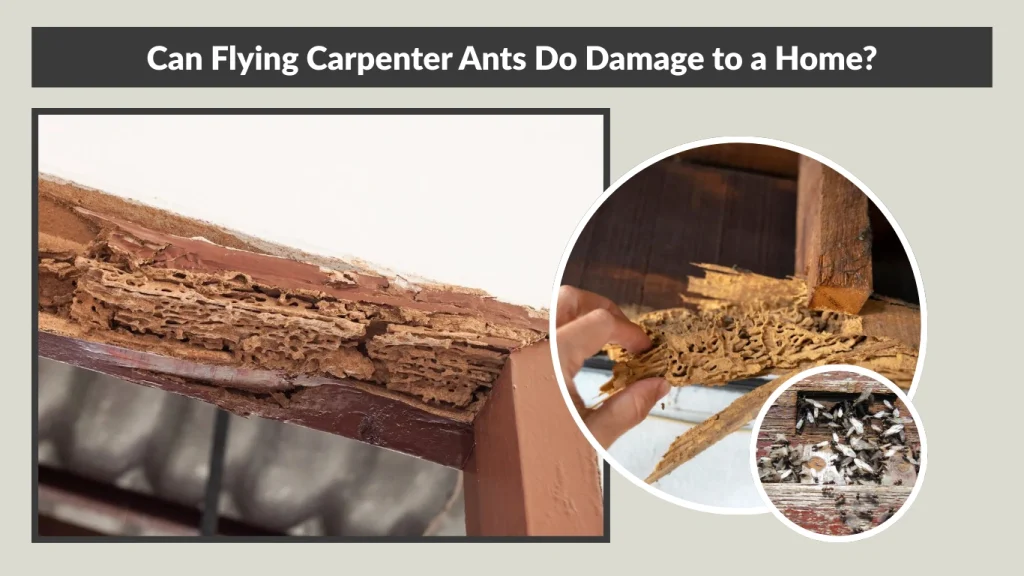
Yes. Flying carpenter ants indicate mature colonies, which can excavate large networks of galleries inside wooden beams, floors, or walls. Unlike termites, they don’t consume the wood but chew it out, weakening the structure over time.
- Damage signs: Sagging floors, hollow-sounding wood, and small piles of frass.
- Severity: A single queen may found a colony that grows into tens of thousands of ants.
- Cost: Structural repairs can cost hundreds to thousands of dollars if infestations remain undetected.
While not as devastating as termites, carpenter ants are still considered one of the most destructive household pests.
Flying Carpenter Ant Nests
Carpenter ants create two types of nests:
- Parent Nests
- Found outdoors in tree stumps, logs, or large decayed wood sources.
- Produce the winged reproductive ants that swarm.
- Found outdoors in tree stumps, logs, or large decayed wood sources.
- Satellite Nests
- Located inside houses, especially in damp wood near leaks or poorly ventilated areas.
- Contain workers and some brood but not the main queen.
- Located inside houses, especially in damp wood near leaks or poorly ventilated areas.
Common nesting spots include attics, bathrooms, hollow doors, insulation, and crawlspaces. If you see flying ants indoors, it usually means there’s a satellite nest inside your home.
What Attracts and Keeps Flying Carpenter Ants?
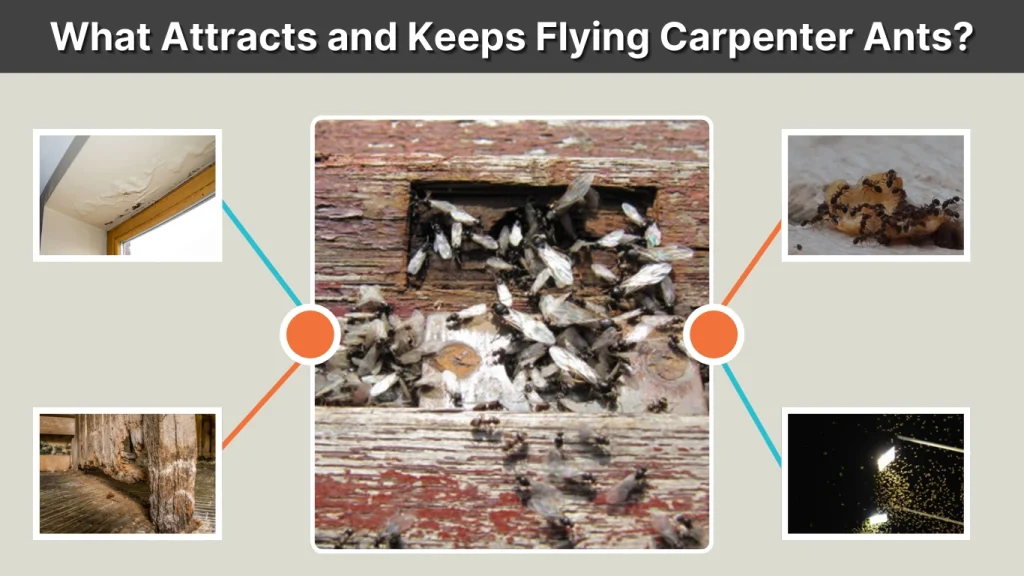
Flying carpenter ants are drawn to:
- Moisture: Leaky roofs, plumbing issues, or condensation.
- Wood: Especially soft, rotting, or water-damaged timber.
- Food Sources: Crumbs, sweets, and other insects.
- Lights: Outdoor lighting at night attracts swarming alates.
Reducing these attractants is a key step in prevention.
Flying Carpenter Ants in Different Areas of the House
Carpenter ants with wings may appear in various locations indoors and outdoors:
- Bathrooms: Damp wood around sinks, tubs, or leaky pipes.
- Kitchens: Near water sources, appliances, or behind cabinets.
- Pools and Gardens: Attracted to standing water and nearby wood.
- Raised Garden Beds: Nesting in moist soil or wooden frames.
- Attics and Basements: Poorly ventilated, damp spaces provide ideal nesting grounds.
Spotting them repeatedly in these areas suggests you should inspect for nests.
Control and Treatment Options
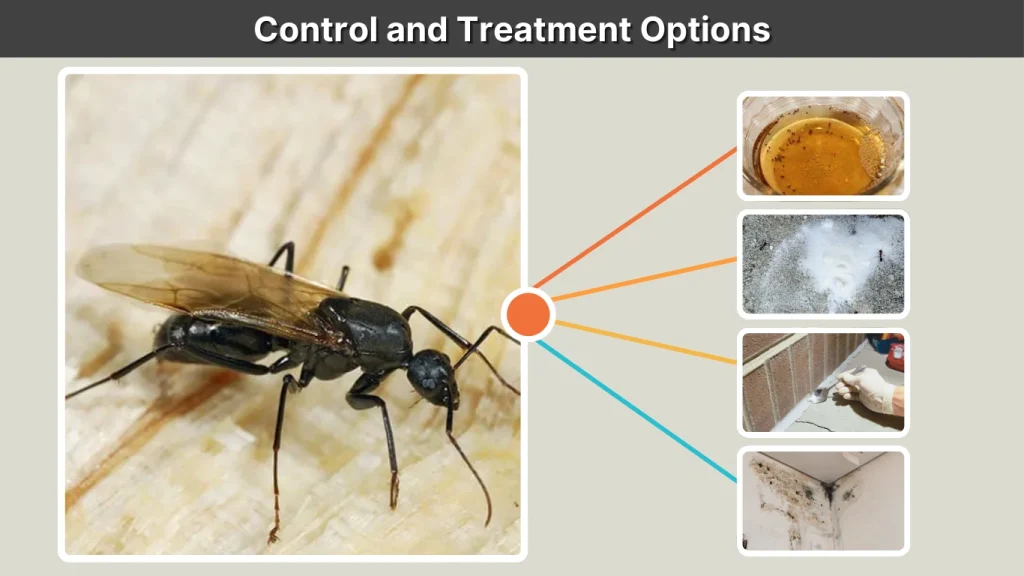
DIY Methods
Homeowners can try several techniques to manage small infestations:
- Vinegar Traps: Vinegar mixed with sugar water attracts and drowns ants.
- Homemade Baits: Borax mixed with sugar can be effective.
- Sealing Entry Points: Caulk cracks and repair gaps in siding or foundations.
- Moisture Control: Fix leaks and use dehumidifiers.
- Outdoor Management: Move firewood and trim back trees touching the house.
Professional Pest Control
For large or recurring infestations, professional treatment is recommended:
- Inspection: Professionals locate parent and satellite nests.
- Chemical Treatments: Residual sprays, dusts, and baits target colonies.
- Costs: Typically range from $250 to $900, depending on infestation severity.
- Long-Term Solutions: Pros also provide advice on sealing vulnerabilities and preventing reinfestation.
How to Kill or Get Rid of Flying Carpenter Ants
To effectively eliminate carpenter ants:
- Identify the Source: Confirm whether the swarm is indoors or outdoors.
- Locate Nests: Check for frass piles and hollow wood sounds.
- Apply Baits or Insecticides: Use ant-specific bait near trails.
- Reduce Attractants: Fix leaks, dry damp areas, and remove decayed wood.
- Call Pest Control: If DIY methods fail, professionals ensure colony elimination.
Remember, killing flying ants alone doesn’t solve the problem—you must target the nest.
Prevention Tips
- Keep all wooden structures dry and well-maintained.
- Store firewood away from the house and off the ground.
- Regularly check for leaks in plumbing and roofs.
- Install dehumidifiers in damp basements or crawlspaces.
- Inspect annually for signs of frass or hollow wood.
- Use yellow-toned outdoor lights to avoid attracting swarms at night.
Preventive measures are often less costly than repairing structural damage later.
FAQs
What do flying carpenter ants look like?
Flying carpenter ants are large, black or reddish ants with bent antennae and two pairs of wings, where the front pair is longer than the back pair.
Do flying carpenter ants eat wood?
No. They excavate wood to create smooth tunnels but do not eat it. They feed on sweets, plant juices, and insects.
How big are flying carpenter ants?
Workers measure 0.25–0.5 inches, while queens may reach up to 1 inch in length, making them among the largest household ants.
Can vinegar traps work on flying carpenter ants?
Yes, vinegar mixed with sugar water can attract them, but it won’t eliminate the colony. It’s best used as a temporary control method.
Are flying carpenter ants more common in summer?
Yes. Swarming typically occurs in spring and summer, especially after rain, when conditions are ideal for reproduction.
