
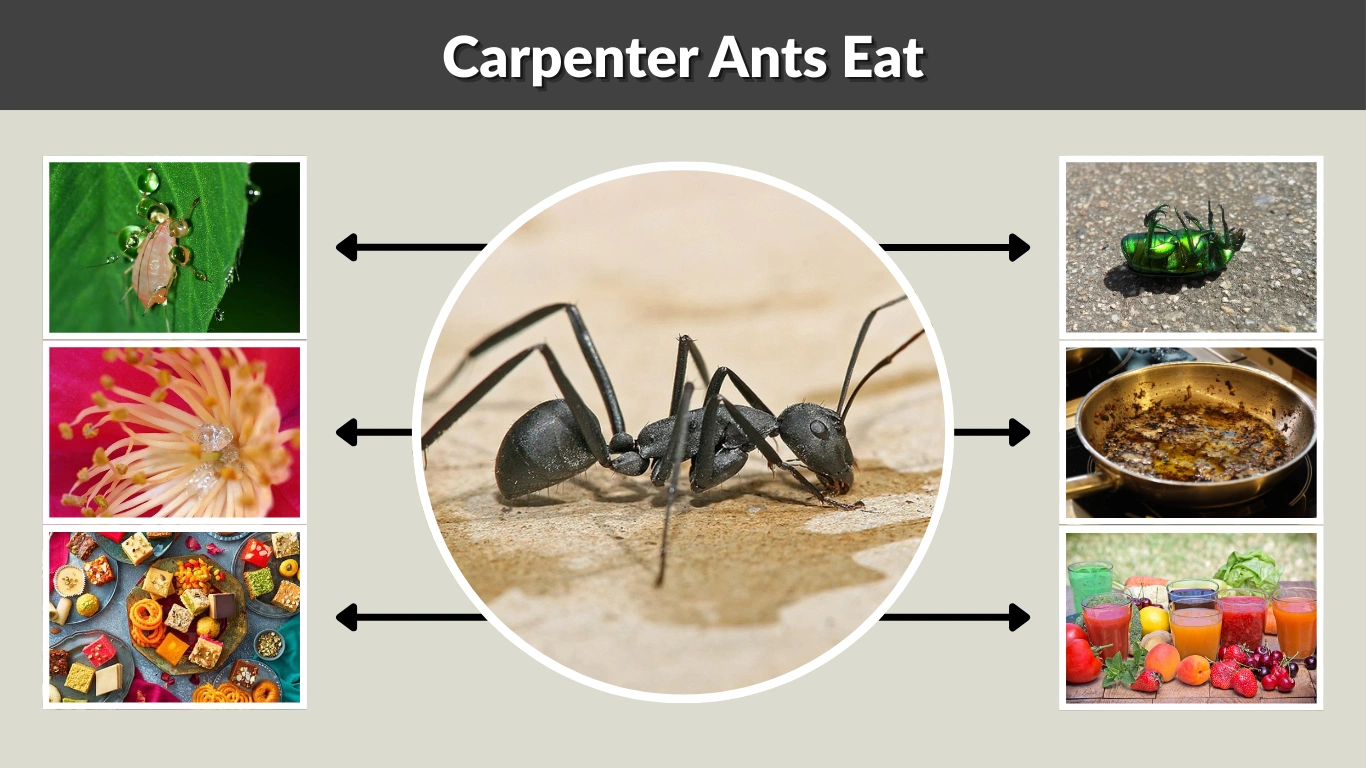
Carpenter ants are fascinating insects often mistaken for termites because both live in wood. However, unlike termites, carpenter ants do not eat wood—they tunnel through it to create nests. Their real diet is surprisingly diverse, ranging from sugary foods to protein-rich meals. Knowing what carpenter ants eat is not only interesting but also useful for preventing infestations in homes. Let’s explore the 10 common foods they consume both indoors and outdoors.
Carpenter Ant Diet Overview
Carpenter ants are omnivorous, which means they can feed on a variety of food sources. Their diet includes sweet substances that provide energy, as well as proteins that support colony growth and larvae development. While outdoors, they rely heavily on nectar, fruits, and insects. Indoors, they are drawn to sugary spills, meat scraps, and pet food. Understanding this balance of diet is key to identifying why they may invade your house.
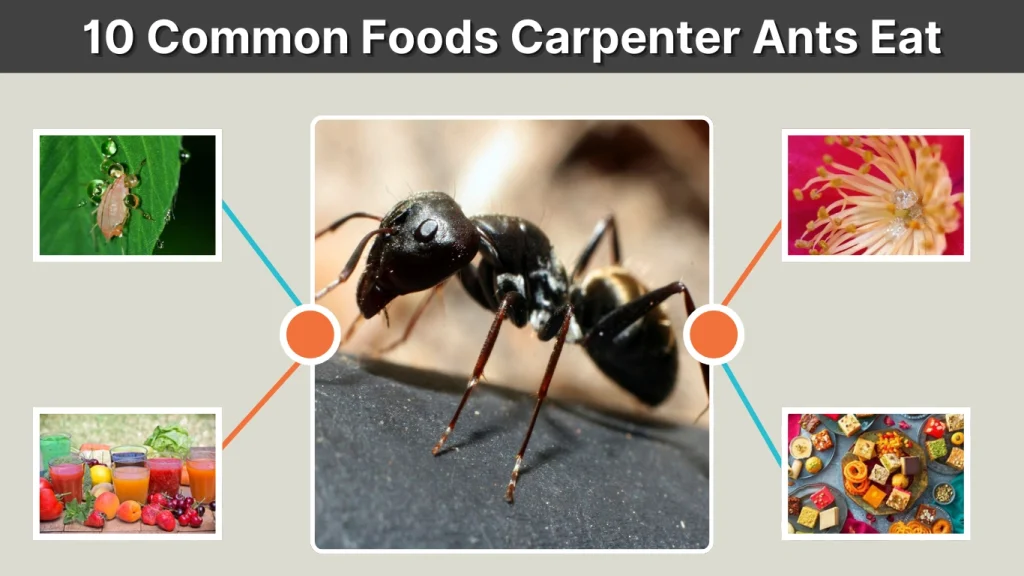
10 Common Foods Carpenter Ants Eat
1. Honeydew from Aphids
One of the carpenter ants’ favorite foods is honeydew, a sugary liquid secreted by aphids and other plant-sucking insects. Carpenter ants even protect aphid colonies from predators to secure a steady honeydew supply. This sweet substance gives them quick energy, especially during warm months when aphids are abundant.
2. Plant Nectar
In natural settings, carpenter ants forage flowers for nectar. The sugar in nectar fuels their daily activities and is especially important for worker ants traveling long distances from the nest. This also explains why you may notice carpenter ants more active in gardens or near flowering plants.
3. Fruits and Sweet Juices
Carpenter ants love ripe fruits, fruit juices, and any sugary liquid. Outdoors, they feed on fallen fruits like apples, pears, and berries. Indoors, a spilled juice box or a slice of watermelon left uncovered can quickly attract them. Sweet foods are a primary reason carpenter ants are considered household pests.
4. Household Sweets
Sugary household items are highly attractive to carpenter ants. Syrups, jams, candies, and even sugar granules on the counter can lure them into kitchens. They are especially active at night, which is why you may discover trails of ants around sweet leftovers in the morning.
5. Insects (Dead and Alive)
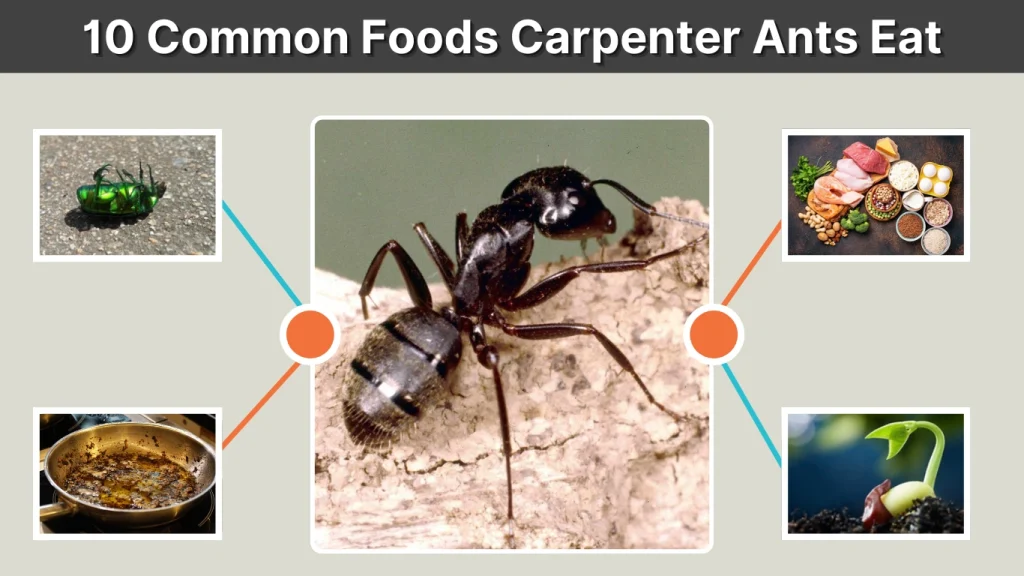
While they love sugar, carpenter ants also require protein. They hunt or scavenge insects like flies, termites, and other small bugs. Protein is essential for colony health and particularly important for feeding larvae. This predatory behavior also makes them part of nature’s clean-up crew, as they recycle dead insects in the wild.
6. Meat and Protein-Rich Foods
Indoors, carpenter ants may be drawn to scraps of meat, pet food, or greasy kitchen waste. These protein-rich foods help nourish the colony and are especially valuable during breeding seasons. If pet food bowls are left out overnight, carpenter ants often take advantage.
7. Grease and Fats
Carpenter ants are not just sugar lovers; they also show interest in fats and oils. Grease left behind from cooking, oily crumbs, or food scraps in the trash can attract them. While not their primary food source, these high-energy substances provide extra nutrition and can keep colonies thriving indoors.
8. Seeds and Plant Matter
Although carpenter ants prefer sweets and proteins, they occasionally nibble on seeds and plant material. Seeds can offer both fat and carbohydrate content. In outdoor environments, this helps them survive when other food sources are scarce. However, seeds and plant matter are only a small portion of their overall diet.
9. Water-Damaged Wood Surfaces
One common misconception is that carpenter ants eat wood. In reality, they chew wood to create nests, especially in damp or water-damaged areas. What they may feed on, however, are the fungi or organic residues found in decaying wood. This is why carpenter ants are often discovered in basements, bathrooms, or structures with moisture problems.
10. Household Leftovers & Crumbs
Carpenter ants are opportunistic feeders. Any leftover food—whether it’s crumbs under the table, spilled soda, or an open bag of chips—can attract them. This explains why sanitation is one of the most important steps in preventing carpenter ant infestations inside homes.
What Do Carpenter Ants Eat in the House?
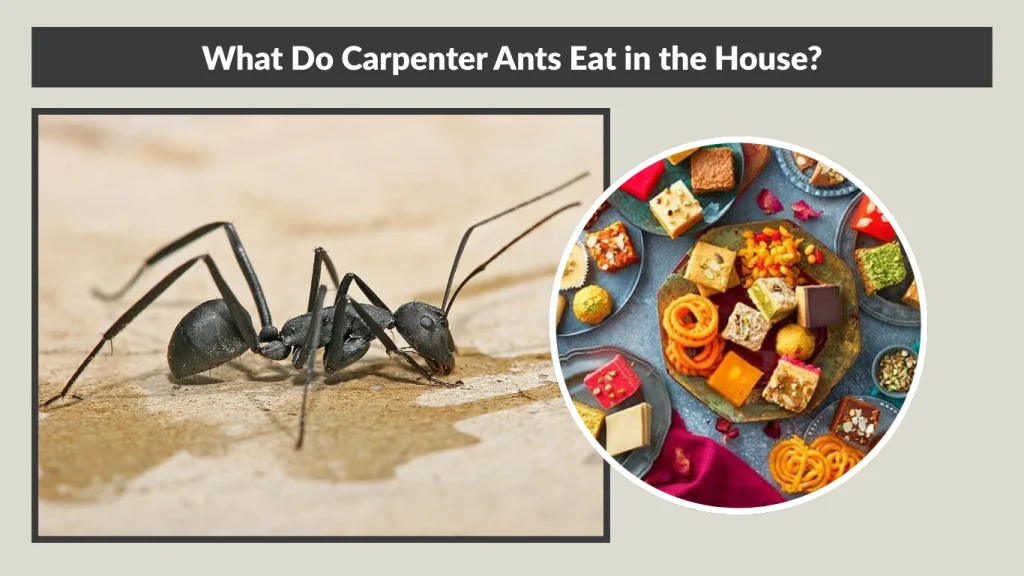
Inside houses, carpenter ants target easily available foods such as sugar, honey, syrups, fruits, and protein sources like meat or pet food. They are nocturnal foragers, meaning they often come out at night. If you spot them indoors, chances are they are following scent trails to a reliable food source in your kitchen or pantry.
What Do Carpenter Ants Eat in the Wild?
In the wild, carpenter ants rely on insects, honeydew, nectar, and fruit juices. Their foraging activities play an important role in ecosystems by helping recycle dead insects and promoting plant pollination. Their diet shifts with seasonal availability, making them highly adaptable.
Seasonal Diet Changes – Winter vs Summer
During summer and spring, carpenter ants actively forage for food, gathering sugars and proteins for the colony. In winter, their activity decreases significantly. Colonies survive by relying on stored food and the fat reserves of worker ants. This seasonal rhythm is why infestations are more noticeable during warmer months.
Do Different Carpenter Ant Species Eat Different Foods?
Although diet preferences are similar across species, small differences exist:
- Black carpenter ants – Often forage on sweets and insects.
- Red carpenter ants – Similar diet but more common in forested areas where honeydew is abundant.
- Florida and Hawaii carpenter ants – Adapt to local fruits, nectar, and tropical plants.
- Queen carpenter ants – Depend on stored food during colony founding, then rely on workers to bring back sugars and proteins.
FAQs
What do carpenter ants mainly eat?
Carpenter ants mainly eat sugary substances like honeydew, nectar, fruit juices, and sweet household foods. They also consume protein-rich sources such as insects, meat scraps, and pet food. Their diet is diverse and depends on what is available in their environment, but they do not digest wood.
Do carpenter ants eat wood?
No, carpenter ants do not eat wood. They tunnel through damp or water-damaged wood to build nests but do not consume it as food. Instead, they feed on sugars and proteins. The confusion comes from termites, which do digest cellulose in wood, unlike carpenter ants.
What do baby carpenter ants eat?
Baby carpenter ants, or larvae, cannot feed themselves. They rely on adult worker ants, which regurgitate food to provide them with proteins from insects or meat. This protein is essential for their growth and development into adult ants, while sugars mostly sustain the workers’ energy.
What do carpenter ants eat in the house?
Inside houses, carpenter ants eat sweet foods such as syrups, sugar, jam, and fruit, along with proteins from meat scraps and pet food. They forage mostly at night, following scent trails to accessible food sources in kitchens, pantries, or garbage bins, making proper sanitation very important.
What do carpenter ants eat in the wild?
In the wild, carpenter ants feed on honeydew from aphids, flower nectar, plant juices, fruits, and dead or live insects. Their outdoor diet is well-balanced between sugars for energy and proteins for colony growth. Seasonal availability influences their food sources, with more active foraging during spring and summer.
