
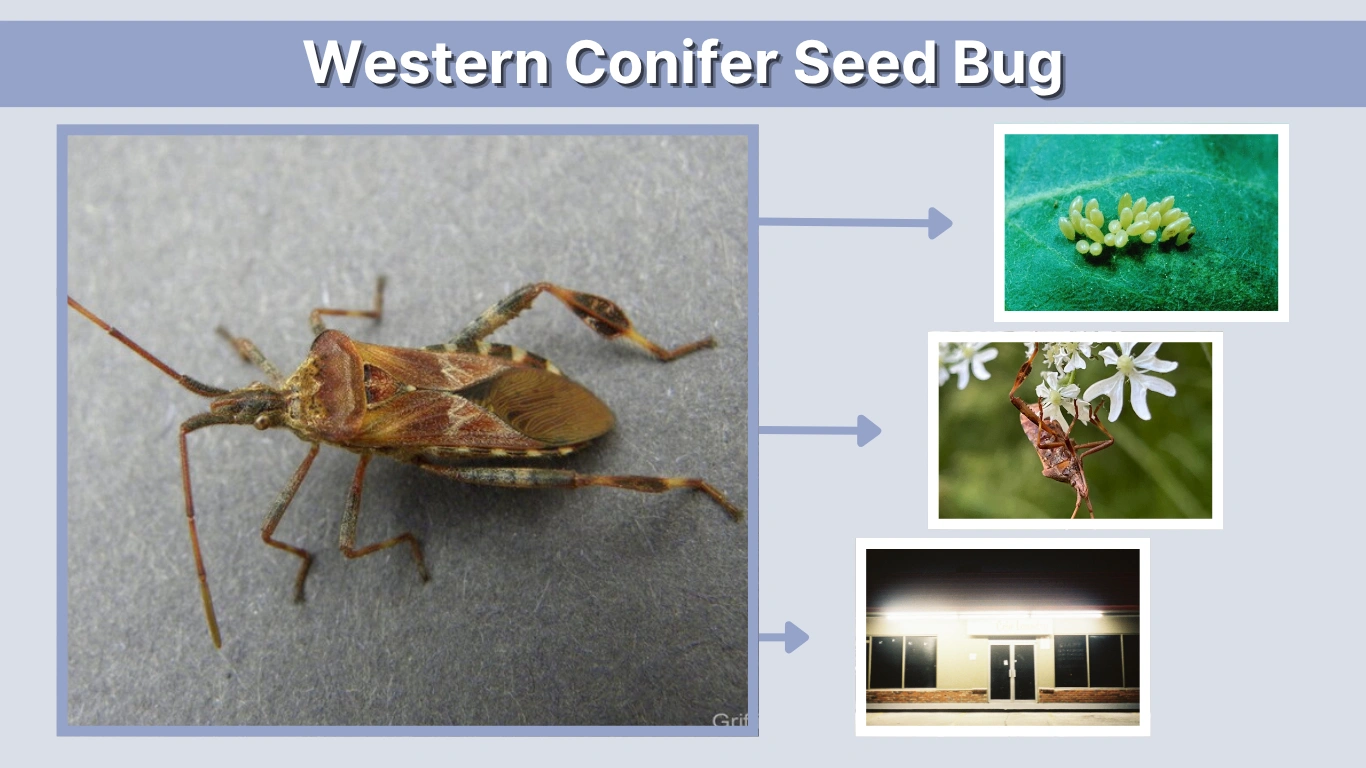
The Western Conifer Seed Bug (Leptoglossus occidentalis) is a widespread insect commonly seen in homes during fall and winter. Often mistaken for a stink bug or assassin bug, it belongs to the family Coreidae and is known for its distinctive hind legs and pine seed-feeding habits. Understanding its features, behavior, and life cycle helps homeowners manage infestations more effectively and recognize that these insects are harmless to humans.
Scientific Identity and Classification
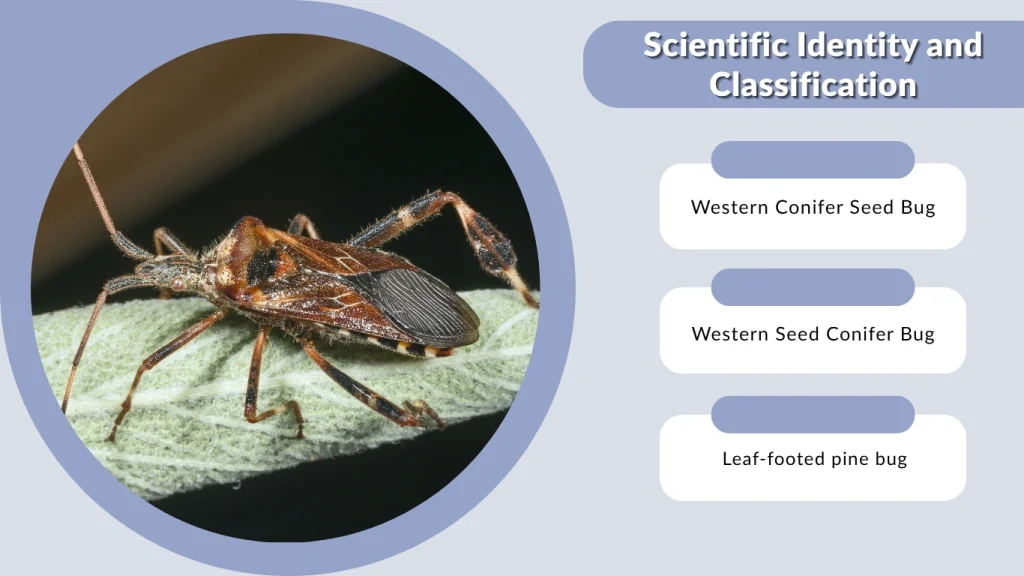
The Western Conifer Seed Bug was first identified in North America and has since spread across Europe and Asia. Scientifically named Leptoglossus occidentalis, it belongs to the Hemiptera order, also known as “true bugs.” Its family, Coreidae, is recognized for leaf-footed insects — named after the flat, leaf-like extensions on their hind legs. This species has adapted to thrive in coniferous regions and occasionally urban areas surrounded by trees.
Common names include:
- Western Conifer Seed Bug
- Western Seed Conifer Bug
- Leaf-footed pine bug
Despite multiple names, they all describe the same insect with similar physical and behavioral characteristics.
Physical Description and Key Traits
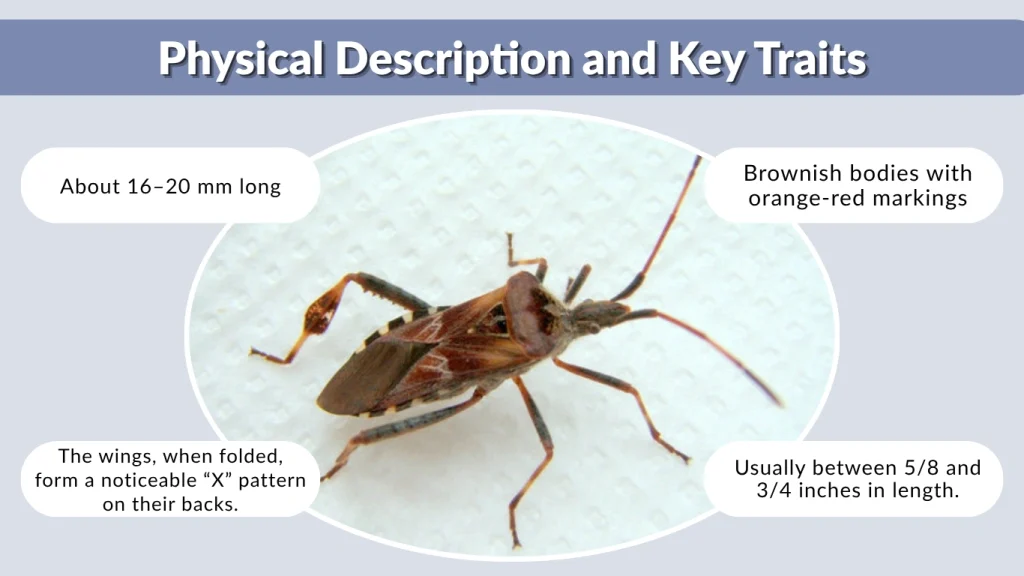
Adult Western Conifer Seed Bugs are about 16–20 mm long and have elongated, brownish bodies with orange-red markings on their legs and abdomen. The wings, when folded, form a noticeable “X” pattern on their backs. Their hind legs are flattened and leaf-shaped — one of the easiest identification features that differentiate them from stink bugs or other garden insects.
When disturbed, they emit a mild pine-like odor as a defensive mechanism. This scent is much weaker than that of true stink bugs, yet noticeable indoors. The insect’s body is built for flight, with strong wings that allow it to glide between trees or into houses seeking warmth.
Size, Underside, and Color Variations
These bugs are moderately sized, usually between 5/8 and 3/4 inches in length. Their coloration varies slightly depending on age and environment. While most are dark brown with reddish hues, others may appear nearly black. The underside is lighter — typically tan or cream-colored — with faint orange spots visible under good lighting. When crushed, their blue-tinted hemolymph (insect blood) may appear, which is harmless but noticeable.
Male vs. Female Differences
Shape and Structure
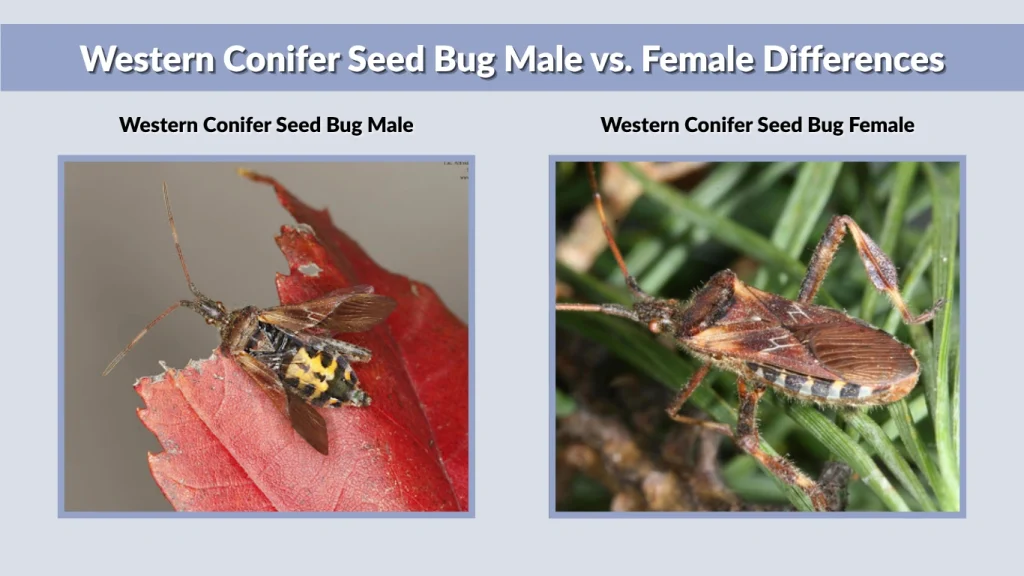
Males are typically narrower and smaller than females. Their abdomens are slightly pointed, while females have broader bodies for egg production. These differences are subtle but become clearer when viewed side-by-side under good lighting.
Behavioral Differences
Females are less active fliers and spend more time near pine cones or branches, where they lay eggs. Males are more mobile, often entering homes in search of warmth or new habitats. Both sexes share the same feeding habits and defense behaviors.
Habitat and Geographic Range
Originally native to the western United States, the Western Conifer Seed Bug is now found across North America, Canada, and parts of Europe and Asia. In the U.S., sightings are frequent in states such as Colorado, Texas, Maine, Michigan, New York, Oregon, and Illinois. In Canada, populations exist in Ontario and Nova Scotia, where conifer forests are abundant.
The insect’s spread is attributed to its ability to survive mild winters and its accidental transportation through vehicles, shipments, and lumber. It prefers pine, spruce, and fir forests, but as temperatures drop, it often seeks shelter in buildings or under bark crevices for warmth.
Diet and Feeding Behavior

Western Conifer Seed Bugs feed primarily on the sap and seeds of conifer trees. Using a piercing-sucking mouthpart, they puncture developing cones to consume the nutrient-rich fluids inside. Their feeding rarely kills the tree but can reduce seed production, particularly in pine nurseries and seed orchards.
Their diet mainly includes:
- Pine and spruce cones
- Fir seeds and developing kernels
- Occasionally ornamental conifers in gardens
They are not harmful to crops or houseplants, which differentiates them from many agricultural pests. However, heavy infestations in forests can slightly affect conifer regeneration rates.
Life Cycle and Reproduction
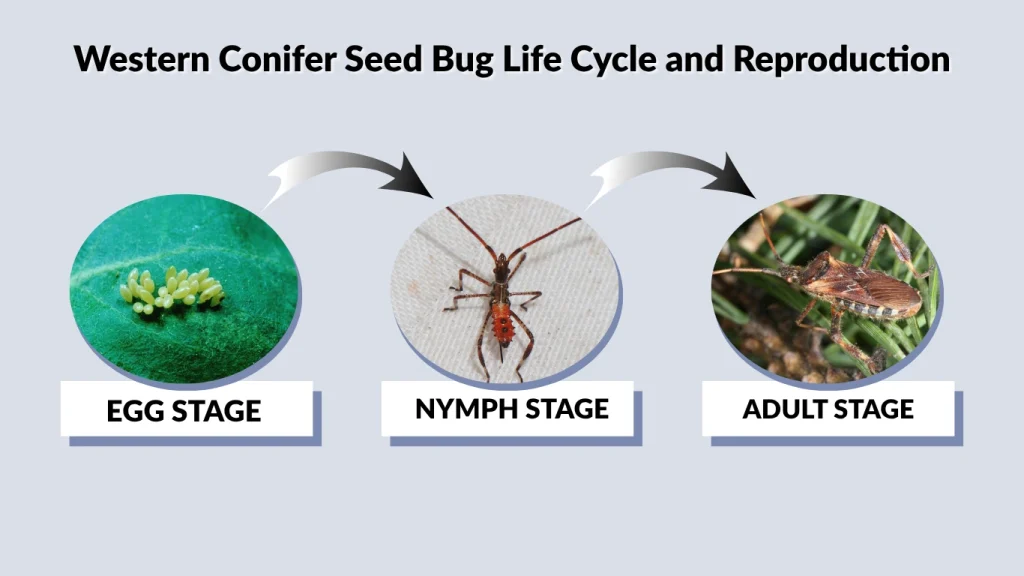
The life cycle of the Western Conifer Seed Bug consists of three main stages: egg, nymph, and adult. Each stage has distinctive features and behaviors that help the species thrive year-round.
- Egg Stage: Females lay rows of oval eggs along pine needles or cones during late spring. Each female may deposit up to 80 eggs in a season.
- Nymph Stage: The young bugs (nymphs) are bright red or orange with dark legs. As they mature, they gradually darken and develop wings.
- Adult Stage: Adults emerge in late summer, feeding on seeds before seeking shelter to overwinter indoors or under tree bark.
Only one generation is produced annually, and adults that survive winter become the next year’s breeders.
Lifespan and Longevity
On average, the Western Conifer Seed Bug lives for 10 to 12 months. Nymphs develop over several weeks during warm months, while adults can survive through cold winters by entering diapause — a resting phase similar to hibernation. Indoors, their life expectancy may increase due to stable temperatures and reduced predation. Once spring arrives, overwintered adults exit buildings to resume feeding and reproduction outdoors.
Behavior and Flight Patterns
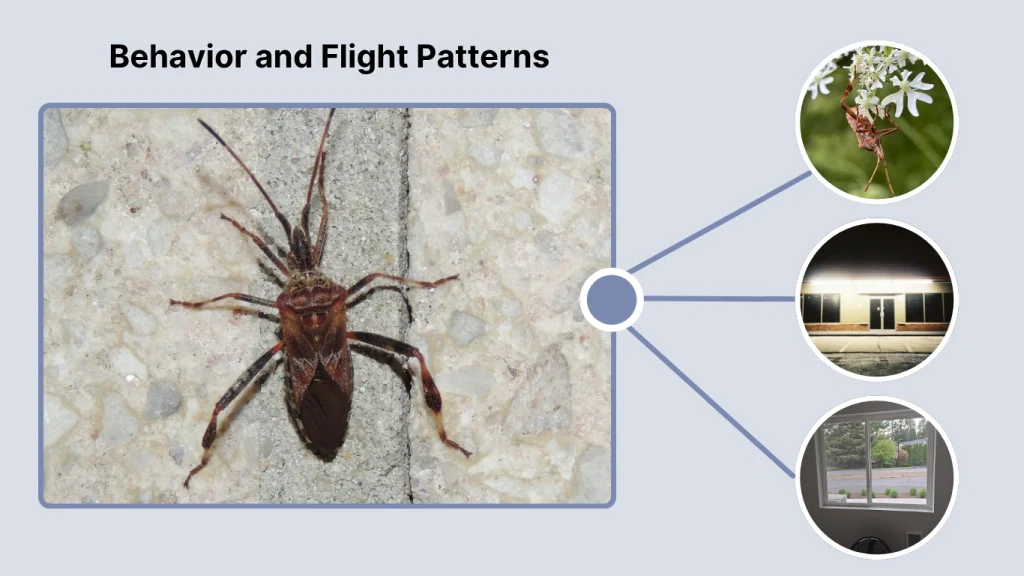
These bugs are strong fliers, often traveling long distances between trees. They are most active during warm daylight hours and are attracted to light sources at night. Their flight produces a soft buzzing sound, sometimes causing alarm when they fly indoors.
During autumn, they begin searching for overwintering spots, which leads them to enter homes through gaps, vents, or open windows. Despite their size and noise, they are not aggressive and do not reproduce indoors — they simply hibernate until spring.
Home Invasion and Indoor Presence
Western Conifer Seed Bugs are notorious for appearing indoors during cooler months. They gather in sunny spots such as windowsills, attics, or curtain edges. These insects prefer warm, quiet areas and can remain dormant for months without feeding.
They are harmless to both humans and property — they do not bite, sting, or cause structural damage. The most effective way to handle them is through gentle removal, either by catching and releasing them outside or vacuuming without crushing to avoid odor.
Biting Myths and Human Interaction
A common myth is that the Western Conifer Seed Bug bites humans. In reality, these insects are not capable of piercing human skin. Their mouthparts are designed specifically for sucking sap from pine cones, not for defense or feeding on animals.
When people report being bitten, it is often due to mistaken identity — confusing this bug with the assassin bug or kissing bug, which can indeed bite and cause irritation. Western Conifer Seed Bugs may occasionally probe exposed skin out of curiosity but cause no pain, allergic reaction, or harm. Therefore, they are considered entirely harmless to humans and pets.
Danger Level and Misconceptions

The Western Conifer Seed Bug poses no threat to health, property, or the environment. They do not spread disease, contaminate food, or damage household materials. Their main nuisance factor is their unexpected indoor appearance and ability to fly toward lights or windows.
They do not sting or inject toxins. Even though their buzzing flight and large size may seem alarming, their behavior is passive. Recognizing them as a seasonal annoyance rather than a danger helps reduce unnecessary panic during infestations in homes or offices.
Odor and Defense Mechanism
Like many true bugs, this species produces a mild scent when disturbed. The odor is not as strong or unpleasant as that of the brown marmorated stink bug, but it can still linger for a short period if the insect is crushed.
The smell, described as pine-like or herbal, is part of their natural defense mechanism used to deter predators such as birds and spiders. To avoid releasing this scent indoors, experts recommend vacuuming rather than squashing them. The odor is harmless, non-toxic, and fades quickly with ventilation.
Natural Predators and Ecological Role
Despite being a nuisance indoors, the Western Conifer Seed Bug plays a role in maintaining forest ecosystems. Its feeding helps regulate seed abundance, indirectly influencing tree regeneration patterns.
Predators include:
- Birds such as sparrows and jays
- Spiders that capture them in webs
- Parasitic wasps and predatory beetles
These natural enemies keep populations balanced in outdoor environments. While the bug is occasionally seen as a pest in seed orchards, it contributes to forest biodiversity and does not cause widespread ecological harm.
Similar and Confused Species
Many people mistake the Western Conifer Seed Bug for other insects due to its size, shape, and coloration. Understanding the differences helps in correct identification.
- Stink Bug vs. Western Conifer Seed Bug – Stink bugs have a shield-shaped body and emit a stronger, unpleasant odor, while seed bugs are longer and leaf-legged.
- Assassin Bug vs. Western Conifer Seed Bug – Assassin bugs are predators that bite humans if handled; seed bugs are plant-feeders and harmless.
- Kissing Bug vs. Western Conifer Seed Bug – Kissing bugs are blood-feeders that can spread disease; seed bugs do not feed on blood.
- Brown Marmorated Stink Bug vs. Western Conifer Seed Bug – Stink bugs are more rounded and compact, while conifer seed bugs are elongated with orange leg markings.
Learning these distinctions prevents unnecessary fear and ensures proper pest management decisions.
Prevention and Control Methods
Managing the Western Conifer Seed Bug relies more on exclusion and prevention than chemical treatment, since they are not true pests. Here are the most effective strategies:
- Seal Entry Points – Use caulking to close cracks around doors, windows, and vents before fall.
- Repair Screens – Make sure window and attic screens are intact to block entry.
- Reduce Outdoor Lighting – Since they are attracted to light, keeping porch lights off at night can reduce their presence.
- Vacuum, Don’t Crush – When found indoors, vacuum gently and release outdoors to avoid odor.
- Apply Insecticidal Barriers – For heavy infestations, use residual sprays near foundations or entry points during late summer.
- Maintain Yard Cleanliness – Remove pinecones and debris close to the home to minimize attraction.
Professional pest control is rarely necessary unless there is a large-scale invasion in seed orchards or timber storage areas. Most infestations resolve naturally once temperatures warm, as adults exit buildings to breed outdoors.
Are They Invasive?
The Western Conifer Seed Bug is considered invasive in parts of Europe and Asia. Originally from the western United States, it has spread globally due to trade and its adaptability. In North America, however, it is native and an integral part of forest ecology.
Although classified as invasive elsewhere, its impact remains mostly nuisance-related rather than destructive. Its expansion highlights how easily insects can travel through human movement, but in balanced environments, it coexists without major disruption.
Ecological Benefits and Drawbacks
Despite being viewed as a pest indoors, this bug contributes positively to its ecosystem. It helps maintain natural balance by reducing excessive seed growth in dense conifer populations. However, in tree farms or seed production facilities, it can reduce germination rates.
In residential areas, its only drawback is occasional indoor infestation. Overall, it is considered more of a beneficial insect outdoors than a harmful one, reinforcing the importance of relocation instead of extermination.
