
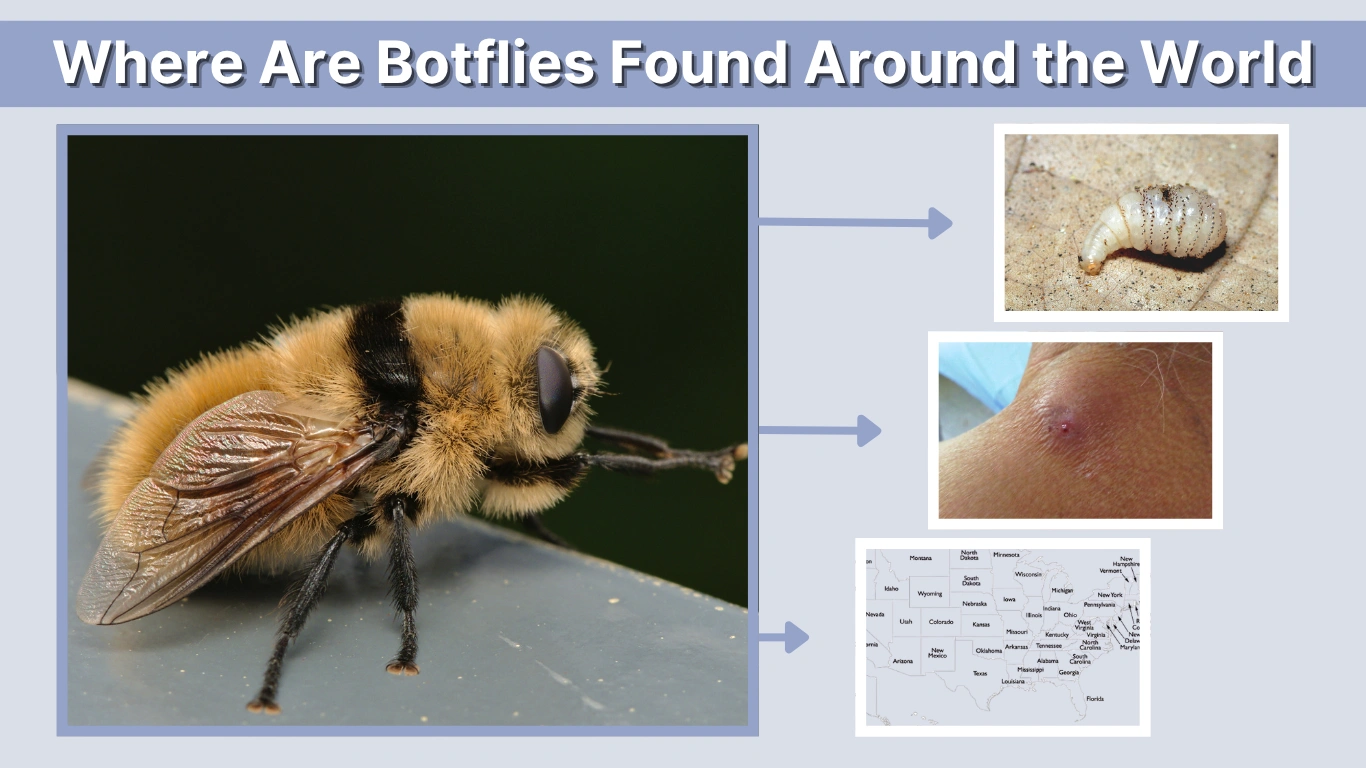
Botflies are parasitic insects that belong to the Oestridae family, known for their unusual reproductive cycle involving the infestation of mammals, including humans. Their larvae develop under the skin, causing painful swellings or boils. These insects thrive in warm, humid environments, which makes tropical and subtropical regions their natural habitat. In this article, you’ll learn where botflies are found globally and across the United States, including details about human and animal infestations.
What Is a Botfly?
A botfly is a parasitic insect that lays its eggs on mosquitoes or other carriers, which then transfer the eggs to a host. Once the eggs hatch, the larvae burrow into the skin, where they feed and grow until maturity. There are many types of botflies, such as the human botfly (Dermatobia hominis) and various animal-specific species that target horses, rodents, or dogs. Their presence largely depends on temperature and host availability.
Where Are Botflies Found in the World

Botflies are mostly found in tropical and subtropical regions. The highest concentration exists in Central and South America, especially in countries like Brazil, Costa Rica, and Panama. These areas provide the warm, moist environments ideal for larvae development. Some species are also found in parts of Africa, Asia, and Mexico, where the climate supports their life cycle. Human encounters typically occur in rural or forested locations where mosquito carriers are common. Travelers visiting these regions are often at risk of exposure.
In tropical forests, botflies attach their eggs to mosquitoes, which then pass them to humans or animals through bites. Once the larvae enter the skin, they remain there for several weeks, developing into mature flies before emerging. This process is why botflies are often linked with jungle regions and humid climates.
Where Are Botflies Found in the United States
While botflies are primarily tropical insects, certain species are found in the United States, especially in the southern and central regions. Animal-specific botflies are more common, including those that target rodents, deer, and livestock. The Cuterebra species, which infects small mammals like rabbits and rodents, is the most prevalent in North America.
Botfly activity in the U.S. is most common during late summer and early fall, when temperatures are higher. They are often found in Texas, Florida, Georgia, and Louisiana, where conditions are warm and humid. Occasionally, cases have been reported in northern states due to animal migration or travel-related exposure.
States Where Botflies Are Found in the U.S.

- Texas: Known for frequent cases of animal botfly infestations due to its climate and wildlife population.
- Florida: The humid environment supports the presence of botflies year-round.
- Georgia and Alabama: Common areas for pet and livestock infestations.
- Midwestern States: Occasionally report cases during warm seasons, particularly among outdoor pets and wild mammals.
Although human botfly infestations in the U.S. are rare, travelers returning from tropical countries sometimes bring larvae back unknowingly. Local botfly species mainly affect animals, but awareness is important for pet owners in warm, rural regions.
Where Are Botflies Found in California
California has recorded occasional botfly activity, particularly in rural and forested areas with abundant wildlife. The state’s warm valleys and woodland regions provide a suitable habitat for species that target animals such as dogs, rabbits, and deer. However, human cases are extremely rare and typically occur only in individuals who have traveled abroad.
Veterinarians in California occasionally treat dogs for Cuterebra infestations, which occur when pets come into contact with wild rodents or burrows containing larvae. Though the climate in California’s deserts and coasts limits their spread, northern and central regions with moderate humidity can sustain botfly populations.
Human Botflies — Where They’re Found
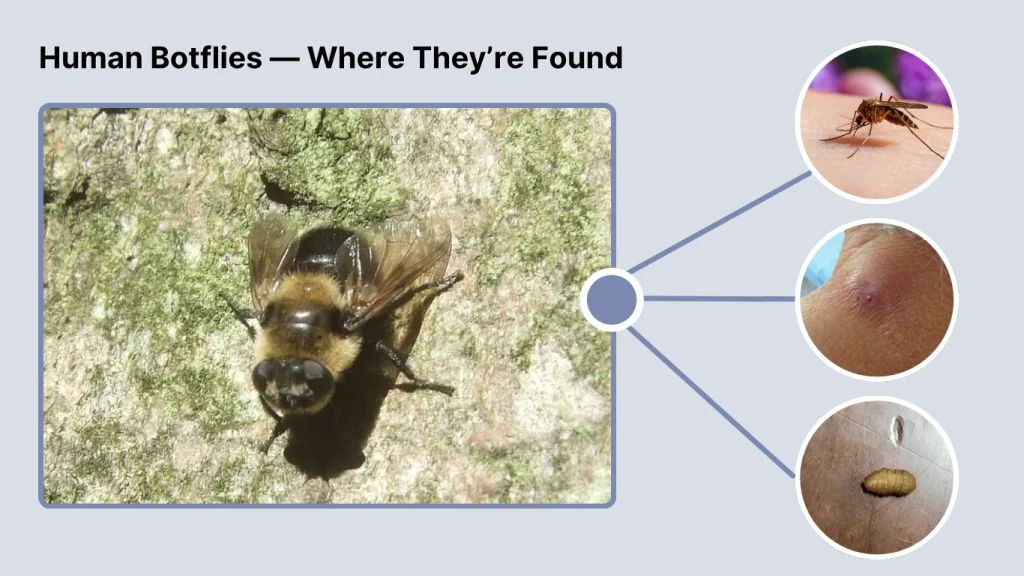
The human botfly (Dermatobia hominis) is primarily found in Central and South America, particularly in countries like Belize, Brazil, Panama, and Costa Rica. These regions provide the perfect warm and humid conditions for the larvae to thrive. Human botflies use mosquitoes as carriers to transport their eggs onto human skin. When a mosquito bites, the larvae enter the skin and grow for several weeks before emerging.
Most human cases in North America occur in travelers returning from tropical regions. While botflies are not native to the U.S., imported cases occasionally appear in hospitals. The infection, though alarming, is typically not life-threatening and can be treated by medical removal of the larvae.
Dog Botflies — Where They’re Found
Dog botflies belong mainly to the Cuterebra genus and are widespread across North America, especially in rural and wooded regions. They typically infest dogs that roam outdoors, particularly near rodent burrows or grassy areas. States like Texas, Oklahoma, and Georgia often see seasonal cases during late summer when botflies are most active.
These botflies lay eggs near animal nests or on grass blades. When a curious dog sniffs or brushes against them, the larvae enter the body through the nose, mouth, or skin wounds. Pet owners in warmer climates should regularly check their animals for swelling or unusual lumps, especially during peak botfly season.
Botfly Larvae and Maggots — Where They Develop
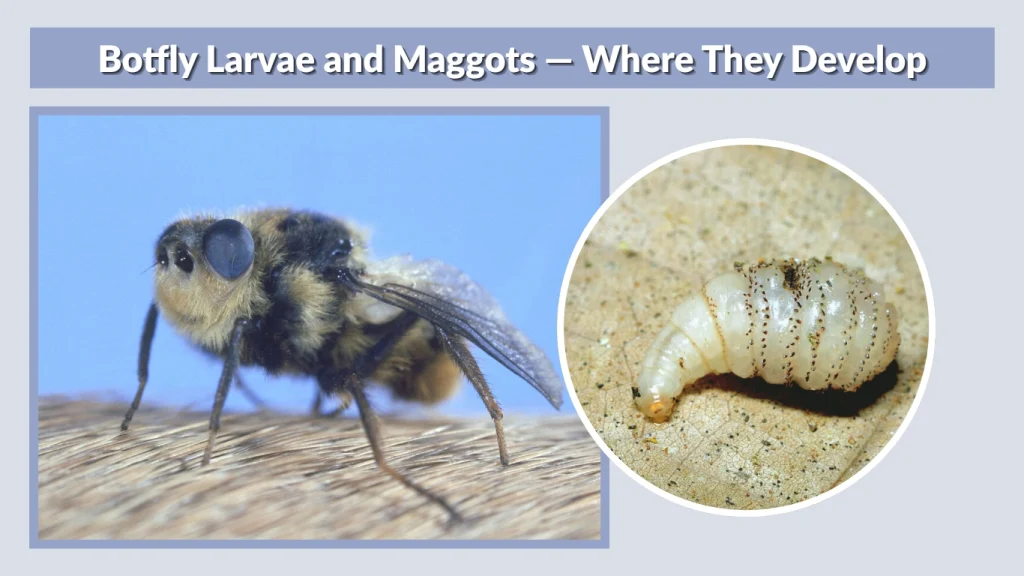
Botfly larvae, also known as maggots, develop beneath the skin of their hosts. The larvae feed on tissue fluids and grow rapidly over several weeks before emerging through a small breathing hole. They then fall to the ground to pupate and later become adult flies.
The larvae can be found in both wild and domestic animals, including rodents, deer, cattle, and pets. Human infestations typically result from Dermatobia hominis, while Cuterebra species are responsible for animal cases. Though they prefer warm environments, botflies can survive in temperate areas during summer months.
Global Map of Botfly Distribution
If visualized on a map, botflies would appear concentrated in tropical belts around the equator — particularly Central and South America, sub-Saharan Africa, and Southeast Asia. Secondary clusters exist in southern North America, where animal botflies adapt to local conditions. This pattern reflects the species’ dependence on warmth, humidity, and host availability.
A global distribution map would show that human botflies dominate in the Americas, while animal-specific botflies extend across multiple continents. The diversity of species in each region corresponds with the variety of mammals that serve as hosts.
Where Are Botflies Found in Africa and Australia
In Africa, botflies exist in several forms, mainly targeting livestock and wild mammals. Countries with tropical and savanna climates — such as Kenya, Uganda, and Tanzania — report cases in cattle and goats. While human botfly infestations are less common in Africa, related fly species can cause similar parasitic infections.
Australia, on the other hand, does not have a native botfly species. However, imported livestock or animals may occasionally carry larvae from other regions. The country’s environmental conditions are less favorable for botflies, making infestations extremely rare.
Common Habitats and Hosts
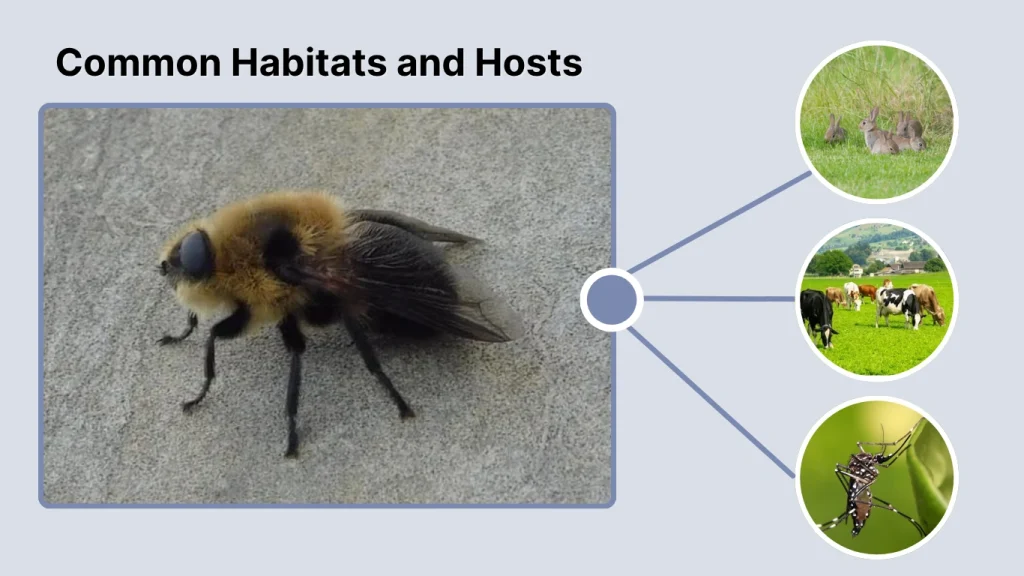
Botflies prefer environments that provide warmth, moisture, and a steady population of host animals. Common habitats include:
- Forests and grasslands where rodents, rabbits, and deer thrive.
- Farms and rural areas with livestock.
- Tropical regions where mosquitoes act as egg carriers.
Hosts vary by species. Human botflies target people, while Cuterebra and Hypoderma species infest animals like dogs, horses, and cattle. Their adaptability allows them to survive across continents with suitable conditions.
FAQs
Are botflies found in the United States?
Yes, several animal botfly species are found in the U.S., mainly in southern and central states such as Texas, Florida, and Georgia. They typically target wildlife and pets rather than humans. Human infestations are extremely rare and usually involve travelers returning from tropical countries.
Can botflies be found in California?
Botflies can be found in certain rural and forested parts of California, especially in regions with moderate humidity and wildlife presence. They most often affect pets and wild mammals. Human cases in California are uncommon and generally linked to travel abroad.
Where are human botflies commonly located?
Human botflies are most commonly found in Central and South America, including countries like Brazil, Panama, and Costa Rica. They thrive in tropical environments where mosquitoes help transfer their eggs onto human skin. Most U.S. cases occur in travelers who visited these regions.
Do botflies live in Africa or Australia?
Yes, African species target animals such as cattle and goats, particularly in warm, tropical zones. In contrast, Australia does not have native botflies, and infestations there are extremely rare, mostly involving imported animals or temporary introductions.
How can humans or pets get botfly infestations?
Botfly larvae reach humans and animals when eggs attached to mosquitoes or surfaces hatch and burrow into the skin. Pets are often exposed near animal burrows, while humans are infected through mosquito bites in tropical areas. Early detection and removal prevent severe discomfort or infection.
