
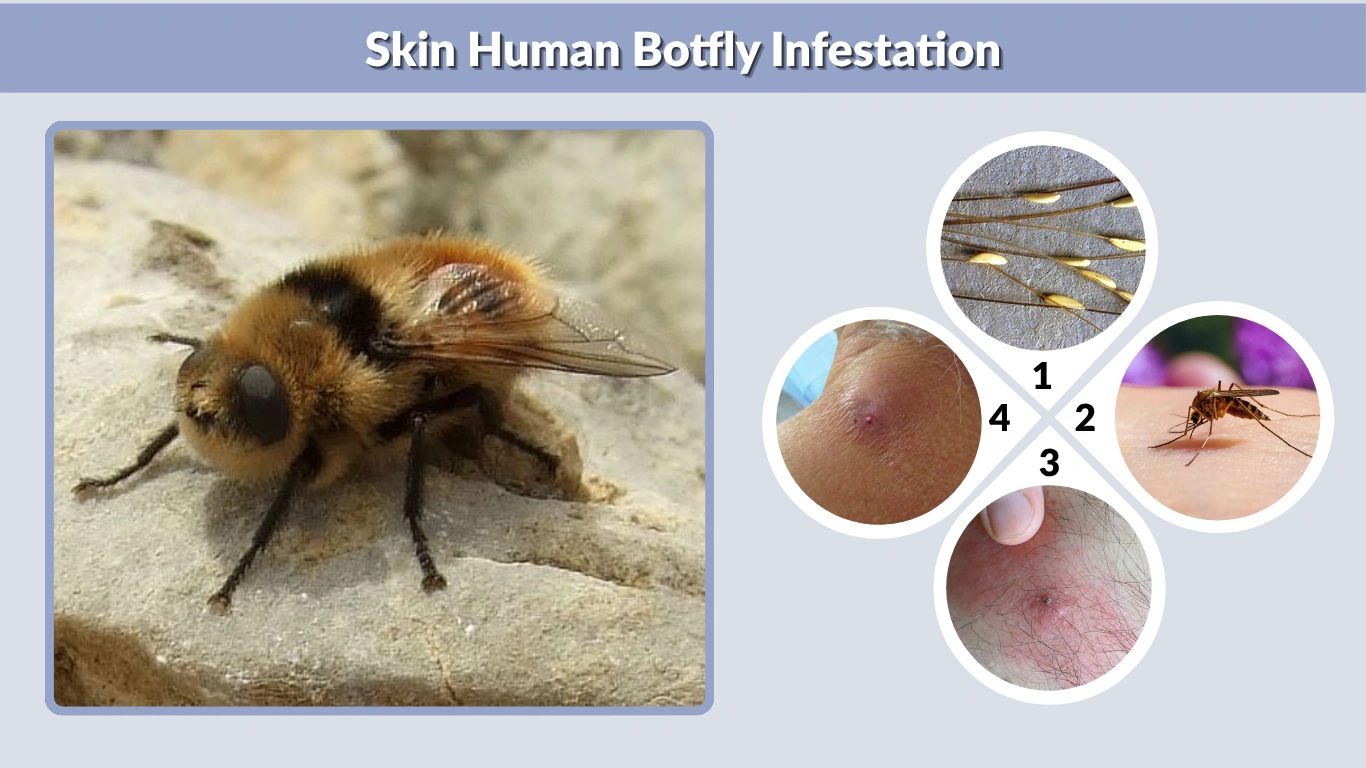
A skin human botfly infestation is a unique parasitic condition caused by the human botfly (Dermatobia hominis), a species native to tropical and subtropical regions. This insect’s larvae develop underneath human skin, feeding on tissue fluids until maturity. While rare in temperate countries, it frequently affects people visiting or living in Central and South America. The infestation can cause pain, inflammation, and visible boils, making early identification and treatment essential.
What Is a Human Botfly?
The human botfly is a parasitic insect that depends on a living host—usually a human—for part of its life cycle. Instead of laying eggs directly on the host, the female botfly uses mosquitoes or other flies as carriers. When the carrier lands on a person and bites, the warmth of the skin triggers the botfly eggs to hatch, allowing larvae to enter the skin through the bite or hair follicles.
Once beneath the skin, the larvae grow by feeding on surrounding tissue. Over time, this causes irritation, swelling, and the characteristic boil-like bump that signifies a botfly infestation. The entire process typically lasts several weeks until the larva emerges as a fully developed fly.
How Botfly Skin Infestation Occurs
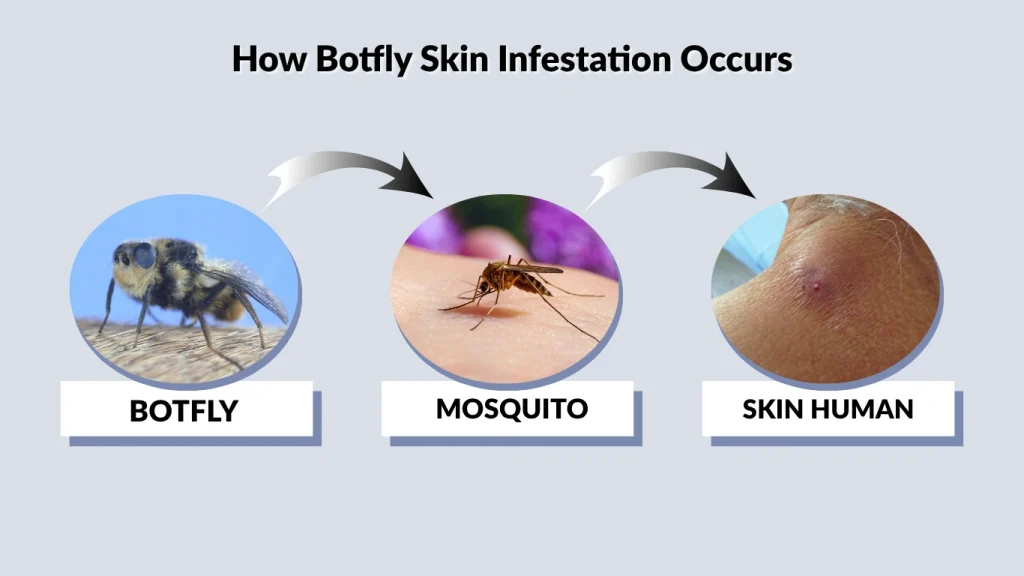
A botfly infestation begins when a mosquito or fly carrying botfly eggs lands on human skin. During the bite, the eggs hatch, and microscopic larvae penetrate the skin. These larvae burrow beneath the surface and create a small air hole to breathe.
Inside the skin, the larva forms a raised, red bump similar to a pimple or cyst. Over days, the bump enlarges as the larva grows. In many cases, individuals feel a crawling or wriggling sensation beneath their skin. The larva typically remains there for 6–10 weeks, developing before it exits the body to pupate in the soil.
Signs and Symptoms of Skin Botfly Infestation
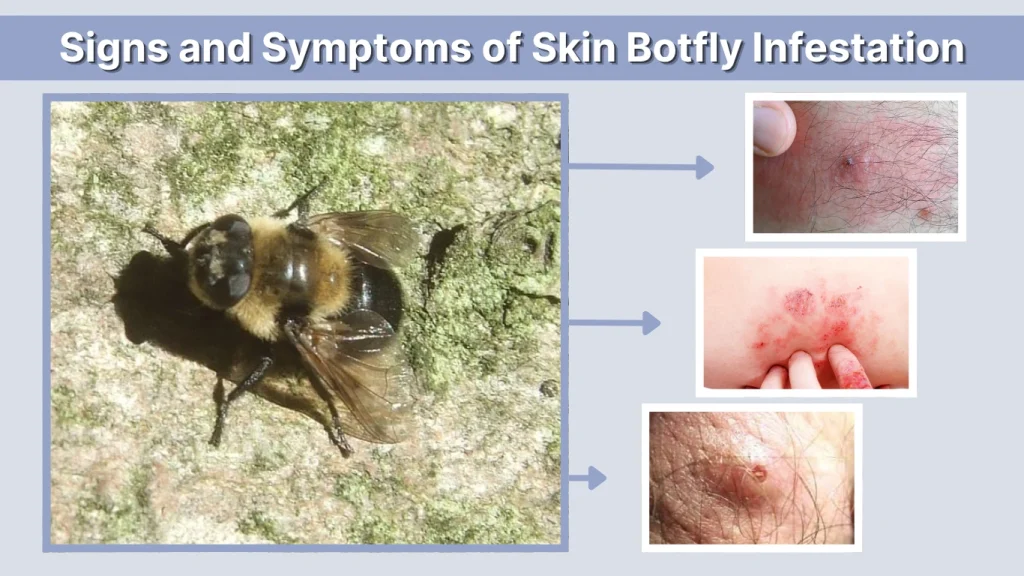
Recognizing botfly infestation early can prevent further discomfort or infection. The symptoms progress gradually as the larva matures beneath the skin.
Early Symptoms
- Redness and mild swelling at the bite site.
- Persistent itching or tenderness.
- Sensation of movement or pressure under the skin.
These early signs are often mistaken for a mosquito bite or small boil, which delays diagnosis.
Advanced Symptoms
- Painful, firm lump that grows over time.
- A central breathing hole at the top of the lesion.
- Fluid or pus discharge around the wound.
- Possible secondary infection or fever if untreated.
The breathing hole is a key indicator, as the larva requires oxygen to survive. Movement or bubbling from this hole may occur, confirming the presence of a botfly larva beneath the skin.
How to Identify a Botfly Larva in the Skin
Identifying a botfly infestation relies on observing specific visual and physical signs. The affected area usually presents as a raised lesion with a small central opening that doesn’t fully heal. Unlike ordinary boils, these lumps feel firmer and may cause a distinct sensation of movement.
When gently pressed, the central hole may release a clear fluid or show air bubbles as the larva breathes. In tropical regions, doctors can often diagnose botfly infestations visually. However, in non-tropical countries, cases are sometimes misdiagnosed as cysts or infected bites until further inspection reveals the true cause.
Treatment and Removal Methods
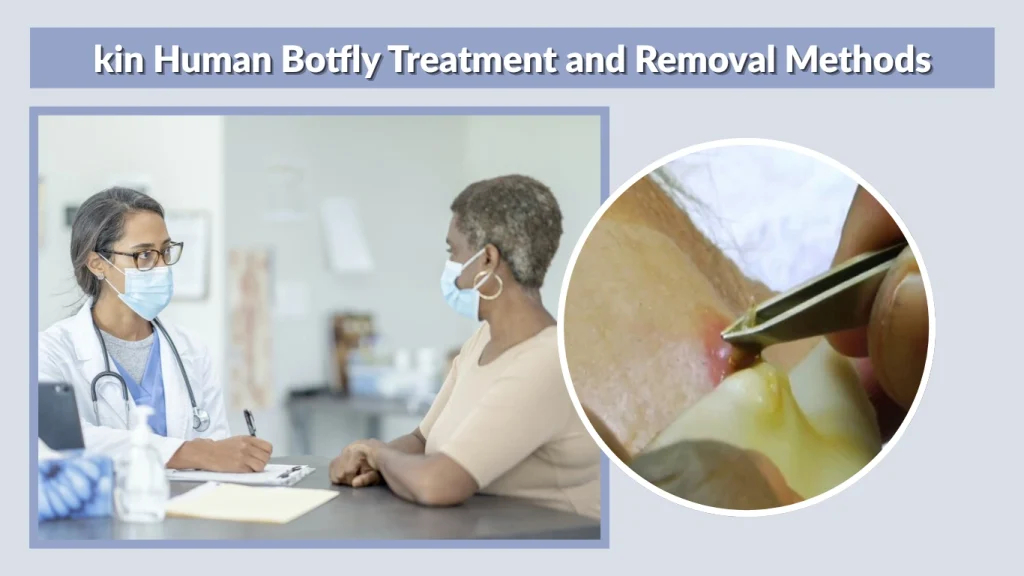
Effective treatment of a human botfly infestation involves the safe removal of the larva without causing further skin damage or infection. Attempting to remove the larva incorrectly can leave parts behind, leading to inflammation or bacterial growth.
Medical Removal
Doctors typically use sterile instruments and local anesthesia to extract the larva through the breathing hole. The process involves widening the opening slightly and carefully pulling the larva out in one piece. After removal, the wound is cleaned, disinfected, and treated with antibiotics to promote healing.
Home Remedies (Temporary Relief)
For those in remote areas without immediate medical access, home methods can provide temporary relief. Applying petroleum jelly, adhesive tape, or bacon fat over the breathing hole can block air access, forcing the larva to surface. Once it moves closer to the surface, it can be extracted more easily. However, self-removal carries infection risks, so medical supervision is always recommended when possible.
Possible Complications
A skin botfly infestation is rarely life-threatening, but complications can occur if the larva isn’t removed properly. One of the most common issues is a secondary bacterial infection, caused by bacteria entering the open wound. Symptoms include increased redness, swelling, warmth, and pus production.
If any part of the larva remains in the skin after removal, the body may react by forming a painful abscess or continuing inflammation. Some individuals develop allergic reactions, experiencing itching or hives near the wound. Scarring can also occur, especially if removal was done improperly or the wound becomes infected. Prompt medical care helps prevent these complications and ensures proper healing.
Where Human Botfly Infestations Commonly Occur

Human botfly infestations are most common in tropical and subtropical regions, where humidity and insect activity are high. Countries such as Belize, Brazil, Costa Rica, Panama, and Honduras report frequent cases. These regions provide the perfect environment for mosquitoes—the primary carriers of botfly eggs.
In North America, human cases are generally seen in travelers returning from tropical vacations. Though the botfly is not native to the U.S. or Canada, imported cases are occasionally treated in hospitals, particularly during summer months. Most people acquire infestations unknowingly through mosquito bites while hiking or camping in rainforest areas.
Prevention of Skin Botfly Infestation
Preventing a botfly infestation begins with minimizing exposure to mosquitoes and other insects that serve as egg carriers. Travelers visiting tropical regions can take the following precautions:
- Wear protective clothing: Long sleeves, pants, and hats reduce skin exposure.
- Use insect repellents: Apply repellents containing DEET or picaridin to deter mosquitoes.
- Avoid dense vegetation: Stay away from forested or shaded areas during dusk and dawn when insects are most active.
- Check for bites daily: Inspect your skin for unusual bumps or lesions while traveling in endemic zones.
- Sleep under mosquito nets: Especially important in rural lodges or outdoor accommodations.
By combining these preventive measures, the likelihood of botfly infestation can be greatly reduced.
Recovery and Aftercare
After a botfly larva is removed, proper wound care ensures full recovery and prevents reinfection. The wound should be cleaned thoroughly with antiseptic and covered with a sterile dressing. Applying antibiotic ointment helps prevent bacterial growth and speeds up healing.
In the days following removal, mild redness or tenderness is normal. However, if swelling increases or pus forms, medical attention is necessary. Once fully healed, a small scar may remain at the infestation site. To minimize scarring, moisturizing creams or vitamin E oil can be applied after the wound closes completely.
FAQs
What causes human botfly infestation in skin?
A botfly infestation occurs when Dermatobia hominis larvae enter the skin through mosquito or fly bites. The eggs hatch upon contact with warm skin, and the larvae burrow beneath the surface, feeding on tissue until they mature and emerge several weeks later.
How long can a botfly live under human skin?
Botfly larvae typically live under the skin for 6 to 10 weeks. During this time, they grow in size and create a small breathing hole at the center of the wound. Once mature, they exit the skin to pupate in soil and develop into adult flies.
Is botfly infestation dangerous to humans?
Botfly infestations are not usually dangerous but can cause significant discomfort, swelling, and pain. The main risk lies in secondary bacterial infections if the larva is not removed completely or the wound becomes contaminated. Proper treatment ensures full recovery.
How do doctors remove botfly larvae safely?
Doctors perform a minor surgical procedure under local anesthesia. They widen the breathing hole slightly and extract the larva with sterile forceps, ensuring it comes out intact. After removal, the wound is cleaned, disinfected, and covered with an antibiotic dressing to prevent infection.
Can I prevent botfly infections while traveling?
Yes. Use mosquito repellents, wear long clothing, and sleep under insect nets when visiting tropical regions. Avoid forested areas at dusk and inspect your skin regularly for unusual bumps or lesions. These precautions help prevent mosquitoes from transferring botfly eggs to your skin.
