
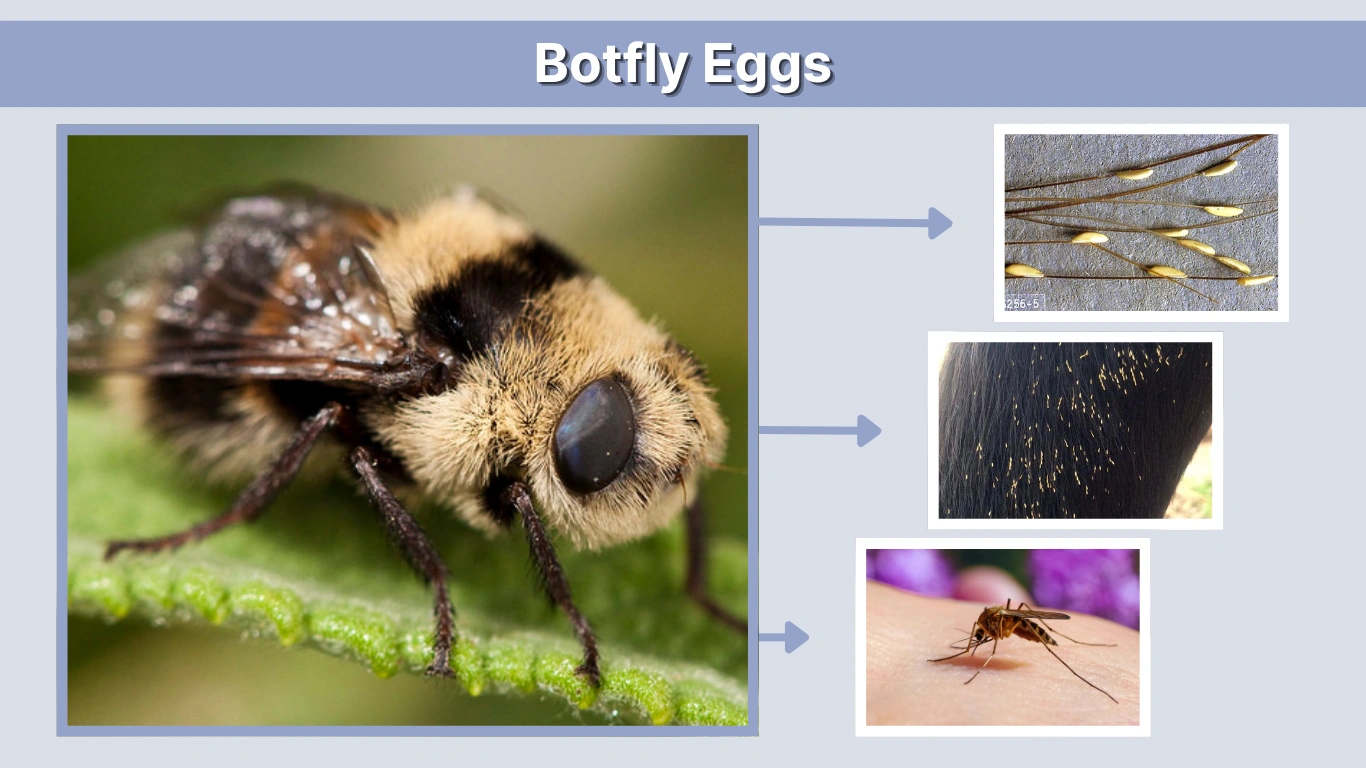
Botflies are parasitic insects known for their disturbing yet fascinating life cycle. Their eggs are laid on hosts like horses, dogs, or even humans. Once hatched, the larvae burrow into the skin, causing discomfort and infection. Understanding their behavior helps prevent infestations and ensures proper treatment.
Appearance and Identification
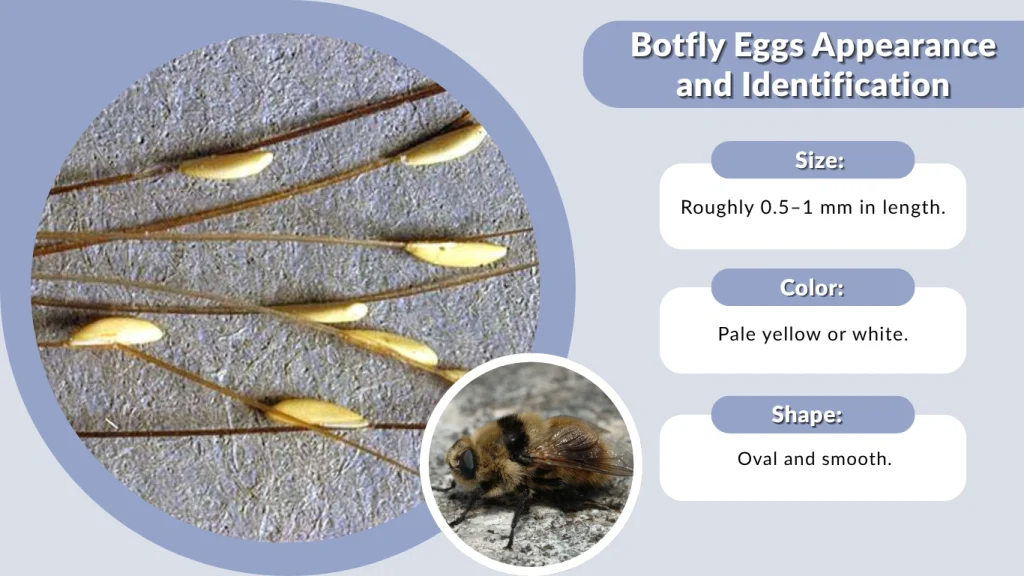
Botfly eggs are tiny but easy to recognize with careful observation.
- Size: Roughly 0.5–1 mm in length.
- Color: Pale yellow or white.
- Shape: Oval and smooth.
- Placement: Found on animal fur, especially on legs and underbellies.
- Texture: Sticky, helping them adhere firmly to hair or skin.
How Botflies Lay Their Eggs
The female botfly doesn’t lay eggs directly on a host. Instead, she attaches them to another insect—commonly a mosquito or housefly. When this carrier lands on a warm-blooded animal or human, the eggs sense the heat and hatch. The larvae then crawl into skin pores or wounds to develop.
Botfly Eggs on Horses

Horses are primary targets for botflies due to their outdoor exposure. Females typically lay eggs on the horse’s legs, mane, or around the mouth area. When horses lick these areas, the larvae enter through the mouth and migrate to the stomach lining, where they attach and feed, causing irritation or ulcers.
Botfly Eggs in Humans
Humans can become accidental hosts when bitten by mosquitoes carrying botfly eggs. Once the larvae hatch, they penetrate the skin, leading to swollen, painful lumps that may move slightly under the surface. A small breathing hole at the center is often visible, which helps identify a botfly infection early.
How to Remove Botfly Eggs

On Horses
- Use a botfly knife or a pumice stone to scrape the eggs.
- Wash the affected area with warm water to loosen them.
- Apply antiseptic shampoo to prevent reinfestation.
On Humans
- Cover the lump with petroleum jelly or similar ointments.
- Once the larva surfaces for air, remove it gently with sterilized tweezers.
- Clean the wound to prevent secondary infection.
Where Botflies Lay Eggs
Botflies choose warm-blooded animals as hosts.
- Common hosts: Horses, dogs, rabbits, and sometimes humans.
- Preferred areas: Legs, neck, lips, and fur.
- Environmental factors: Warm, humid climates promote egg survival.
Their strategy ensures easy access to a host for larvae development and continuation of their life cycle.
Why Botflies Lay Eggs in Humans

Humans are not natural hosts, yet botflies often exploit mosquitoes to deposit their eggs indirectly. When a mosquito bites a person, body warmth triggers the eggs to hatch, allowing larvae to enter the skin. This unique survival method helps botflies reproduce effectively across multiple species.
How Many Eggs Do Botflies Lay
A single female botfly can lay between 300 and 500 eggs in her lifetime. These eggs are usually attached in clusters, ensuring higher chances of host contact. Under ideal conditions, they hatch within a few days, beginning the larvae’s journey beneath the host’s skin.
How to Kill Botfly Eggs
- Apply vinegar or insecticidal shampoos to affected animal fur.
- Use warm water washes to loosen egg adhesive.
- For humans, gently disinfect the skin and avoid scratching.
- Keep pets and livestock clean and groomed regularly to reduce infestation risks.
FAQs
What do botfly eggs look like?
Botfly eggs are small, yellowish dots that cling tightly to hair or fur. They often appear in straight or clustered lines and are slightly reflective. Their firm attachment makes them difficult to remove without scraping or soaking the area in warm water.
Can botflies lay eggs in humans directly?
No, female botflies rarely lay eggs directly on human skin. Instead, they use mosquitoes or other flies to deliver the eggs. When these carriers land on humans, body warmth triggers the eggs to hatch, and larvae burrow under the skin.
How do you remove botfly eggs from horses safely?
Use a botfly knife or pumice stone to gently scrape eggs downward. Warm water helps loosen them, and antiseptic solutions prevent infection. Consistent grooming during summer months keeps horses protected from recurring infestations.
Does vinegar kill botfly eggs?
Yes, vinegar’s acidity weakens the glue-like substance that holds botfly eggs to hair. Applying diluted vinegar makes it easier to wash off the eggs during grooming, offering a natural and safe removal method for mild cases.
Why do botflies target humans and animals?
Botflies rely on warm-blooded hosts for their larvae to mature. Humans and animals provide the ideal warmth and protection for their development. Although unpleasant, this process is essential to the botfly’s complex life cycle.
