

Carpenter bees, also known as wood bees, are large, gentle pollinators often seen hovering near wooden structures. They get their name from their habit of boring holes into wood to build nests. While they resemble bumblebees, their behavior and sting risk differ significantly. Understanding carpenter bee stings, their symptoms, and how to treat them properly ensures you can handle encounters safely and prevent discomfort.
Understanding Carpenter Bees
Carpenter bees are solitary insects that prefer dry, untreated wood to create nesting tunnels. They play an important role in pollination but are often considered pests because of their wood-boring activity. These bees are usually black and yellow, with shiny abdomens that distinguish them from fuzzy bumblebees.
Interestingly, only female carpenter bees can sting. The males, although large and aggressive in appearance, lack stingers. They hover close to humans and act territorial, but their threats are harmless. Females, on the other hand, rarely sting unless provoked or handled roughly.
Do Carpenter Bees Sting?

Yes, female carpenter bees can sting, but it’s uncommon. They are not naturally aggressive and typically sting only when they feel threatened or cornered. Unlike honeybees, which die after stinging, carpenter bees retain their stinger, meaning they can sting multiple times if necessary.
Male carpenter bees are the ones most people notice buzzing aggressively near wooden structures. While intimidating, they pose no danger since they lack a stinger entirely. This distinction helps people identify which bees are safe to approach and which to avoid.
Symptoms of a Carpenter Bee Sting
A carpenter bee sting produces symptoms similar to other bee stings but is generally milder. Common immediate signs include:
- Sharp, localized pain at the sting site
- Redness and mild swelling
- A small raised bump or welt
- A burning or itching sensation
These symptoms typically appear within minutes of being stung and usually subside within 1 to 3 days. Some people experience delayed itching or tenderness for up to five days, especially if they have sensitive skin.
Unlike wasp or hornet stings, carpenter bee venom is less potent, so systemic reactions are rare. However, allergic individuals may still experience significant swelling, hives, or difficulty breathing, which require medical attention.
Typical Reaction to a Carpenter Bee Sting
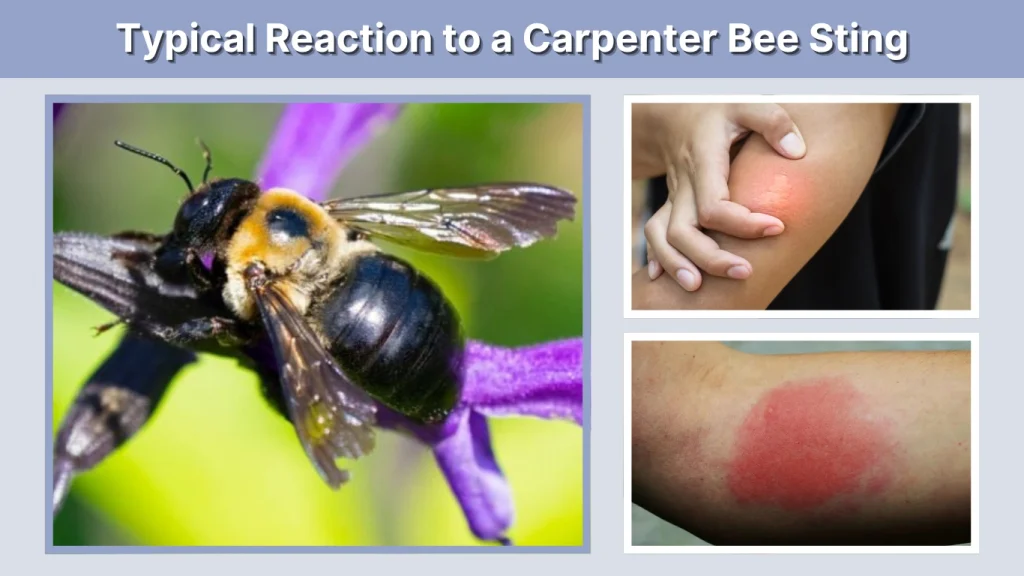
Most reactions to a carpenter bee sting are mild and localized. The area becomes red, swollen, and slightly tender. This is part of the body’s natural immune response to bee venom. Pain and swelling generally peak within a few hours and start fading after a day.
For some people, the reaction can last longer, especially when the sting occurs on the hands, face, or neck, where skin is thinner and more sensitive. Scratching or applying unclean objects can worsen irritation or cause infection.
Applying a cold compress, antihistamine cream, or hydrocortisone ointment helps relieve discomfort quickly. Keeping the area clean also prevents bacterial buildup, reducing recovery time.
Allergic Reactions and Warning Signs
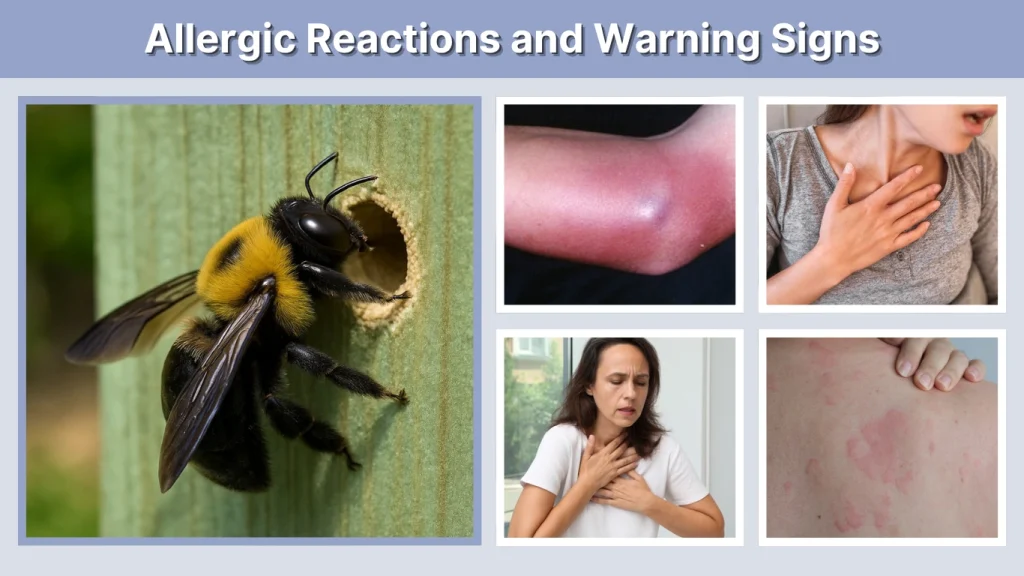
Although rare, allergic reactions to carpenter bee stings can occur. These reactions happen when the immune system overreacts to the venom, causing more severe symptoms. Warning signs include:
- Excessive swelling spreading beyond the sting site
- Difficulty breathing or swallowing
- Rapid heartbeat or dizziness
- Itchy hives over large areas of the body
Severe reactions, known as anaphylaxis, are medical emergencies requiring immediate treatment with epinephrine. Individuals who know they are allergic to bee stings should carry an EpiPen and seek medical help as soon as possible after being stung. Even with mild allergies, antihistamines and cold compresses can ease symptoms and prevent worsening inflammation.
How Long Does a Carpenter Bee Sting Last?
In most cases, pain and swelling from a carpenter bee sting last 24 to 48 hours, while redness and itching can persist for up to 3 days. Those with sensitive skin or mild allergies might notice lingering irritation for about a week.
Healing time also depends on where the sting occurred. Stings on the face, hands, or feet tend to last longer because of thinner skin and frequent movement. If symptoms last more than five days, or if the swelling spreads or becomes warm to the touch, medical attention is advised to rule out infection.
First Aid and Immediate Treatment

Quick and proper treatment of a carpenter bee sting can significantly reduce pain and swelling. Follow these simple steps to manage the sting effectively:
- Clean the area: Wash the sting site thoroughly with soap and water to remove any dirt or bacteria.
- Apply a cold compress: Use ice wrapped in a cloth for 10–15 minutes to minimize swelling and numb the pain.
- Take an antihistamine: Over-the-counter medications like diphenhydramine or cetirizine help reduce itching and inflammation.
- Use topical creams: Apply hydrocortisone or calamine lotion to soothe irritation and prevent scratching.
- Avoid touching the sting site: Scratching or pressing the area can increase swelling and cause infection.
If you notice increasing redness, pus, or persistent pain, the wound may be infected. In such cases, a doctor might prescribe antibiotic ointment or oral medication.
Home Remedies for Carpenter Bee Stings

Several natural remedies can help relieve pain, swelling, and itching caused by carpenter bee stings. These gentle treatments are especially useful for mild reactions:
- Baking Soda Paste: Mix baking soda with a little water to create a paste and apply it to the sting site for 15 minutes. It neutralizes bee venom and eases burning sensations.
- Aloe Vera Gel: Fresh aloe soothes irritation, moisturizes the skin, and speeds healing.
- Honey: Known for its antibacterial properties, honey can help reduce swelling and prevent infection.
- Apple Cider Vinegar: Applying a few drops helps neutralize the venom and reduce redness.
- Tea Tree Oil (diluted): Acts as a natural antiseptic and helps with inflammation.
While home remedies are effective for mild symptoms, they should not replace medical care in cases of allergic reaction or severe pain.
Medical Treatment and When to See a Doctor

Most carpenter bee stings can be treated at home, but professional care is essential if you experience any of the following:
- Worsening swelling or redness beyond the sting area
- Severe pain lasting more than 48 hours
- Signs of infection such as pus or fever
- Breathing difficulties or dizziness
Doctors may prescribe antihistamines, corticosteroids, or antibiotics, depending on the severity. For people with a history of allergic reactions, an epinephrine injection (EpiPen) can be life-saving. Medical professionals can also monitor for delayed allergic responses, which may appear several hours after the sting.
Preventing Carpenter Bee Stings
Avoiding carpenter bee stings begins with reducing their attraction to your home environment. Here are a few preventive measures:
- Seal wooden surfaces: Paint or varnish exposed wood to discourage nesting.
- Use carpenter bee traps: These non-toxic traps help reduce bee presence around structures.
- Avoid sudden movements: If a bee hovers near you, stay calm; swatting increases the chance of being stung.
- Inspect outdoor areas regularly: Check eaves, decks, and fences for fresh boreholes during spring.
- Wear protective clothing: Long sleeves and gloves help prevent accidental stings when working near infested wood.
These steps help minimize encounters while protecting both you and the bees, which are essential for pollination.
Carpenter Bee Stings vs. Other Bee Stings
Carpenter bee stings differ from those of honeybees and wasps in both pain intensity and venom reaction.
- Pain Level: Carpenter bee stings are usually less painful than honeybee or wasp stings.
- Venom Potency: Their venom is milder, causing more localized reactions.
- Healing Time: Swelling and redness typically subside within two to three days, faster than wasp stings.
- Behavior: Unlike honeybees, carpenter bees don’t lose their stinger, but they rarely sting unless provoked.
Understanding these differences helps you manage symptoms confidently without unnecessary worry.
FAQs
Do female carpenter bees sting often?
Female carpenter bees sting only when threatened or handled roughly. They are not naturally aggressive, and most people can observe them closely without being stung. Male carpenter bees, despite their bold behavior, cannot sting at all.
What does a carpenter bee sting feel like?
The sting causes a quick, sharp pain followed by mild redness and itching. Compared to honeybee stings, it’s less intense and usually fades within a day or two. Applying a cold compress right away helps minimize discomfort.
How long does a carpenter bee sting take to heal?
Most carpenter bee stings heal within 2 to 3 days, though mild itching or a small bump may remain for about a week. Keeping the area clean and applying soothing ointments helps speed up recovery.
Can carpenter bee stings cause infections?
Yes, if the sting site is scratched or not cleaned properly, bacteria can enter the wound. Signs of infection include increased pain, pus, or swelling. Applying antibiotic ointment and avoiding touching the area helps prevent this.
What should I do if I’m allergic to bee stings?
If you have a known allergy, carry an EpiPen and seek medical help immediately after a sting. Even a mild carpenter bee sting can trigger severe allergic reactions like swelling, dizziness, or difficulty breathing. Quick treatment is essential.
