
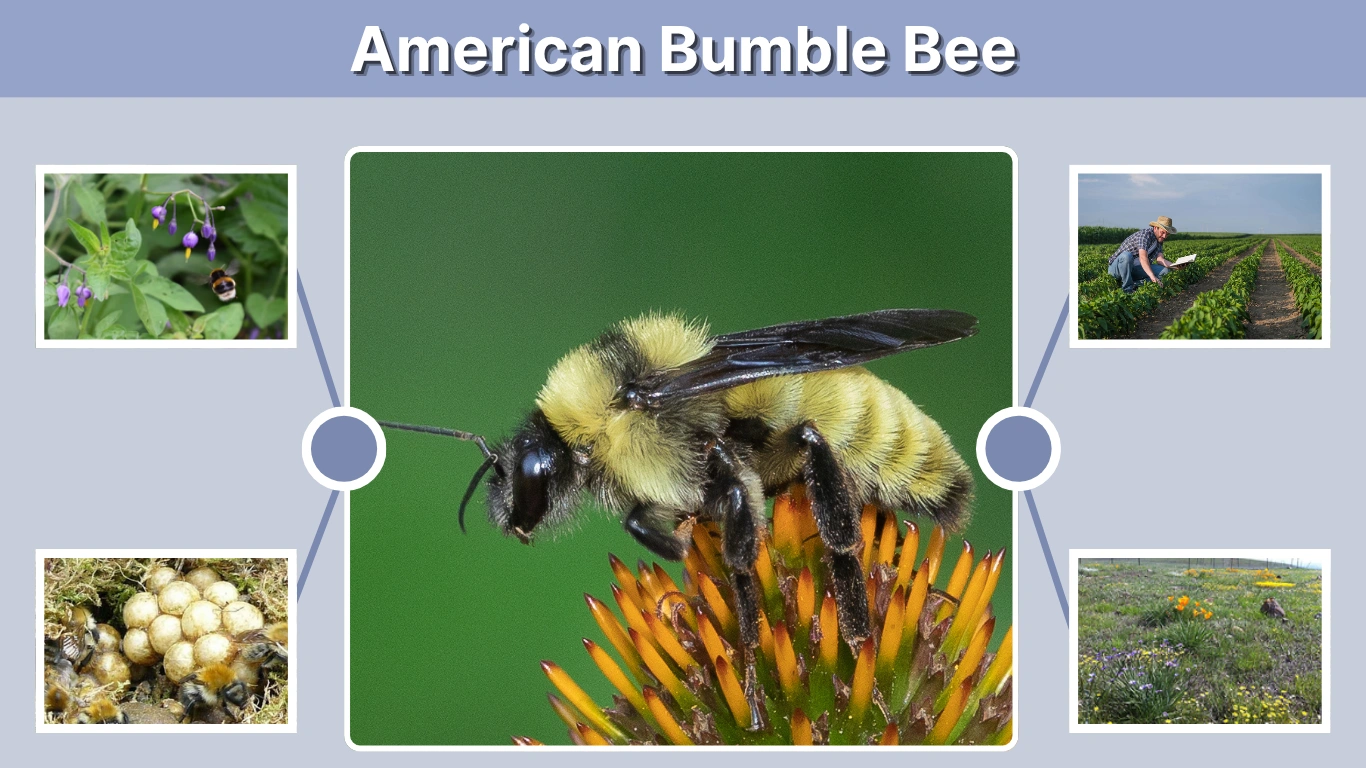
The American bumble bee, scientifically known as Bombus pensylvanicus, is one of the most recognizable pollinators in North America. Once abundant across the United States, this species now faces serious population decline due to habitat destruction and pesticide exposure. Known for its distinctive yellow and black coloring, the American bumble bee plays a vital role in the pollination of both wild plants and agricultural crops, making its conservation critical for ecosystem health.
Overview of the American Bumble Bee
The American bumble bee is a native species found throughout North America, particularly in the eastern and central regions. It is closely related to other bumble bee species within the Bombus genus. Historically, these bees were common in rural and suburban areas, buzzing among wildflowers and crops. However, modern environmental changes have caused their numbers to drop dramatically.
This species is often confused with similar types like the North American bumble bee and transitional bumble bee, though the Bombus pensylvanicus can be identified by its long face, black abdomen, and yellow thorax. Males and queens have slightly different color patterns, which help researchers distinguish them in the field.
Taxonomy and Classification

- Kingdom: Animalia
- Phylum: Arthropoda
- Class: Insecta
- Order: Hymenoptera
- Family: Apidae
- Genus: Bombus
- Species: Bombus pensylvanicus
The American bumble bee belongs to the same family as honey bees but differs in nesting behavior and colony life cycle. It is considered a key species in the Bombus genus because of its wide historical range across the continent. Studies on the evolutionary history of the American bumble bee show that it adapted to open landscapes and prairies, thriving in warmer climates compared to other bumble bee species.
Physical Description and Identification

The American bumble bee is large and fuzzy, with a body length ranging between 13–25 mm. Workers are smaller than queens and males. Their body features include:
- Yellow thorax with a black band between the wings.
- Entirely black abdomen in most individuals.
- Long face and tongue, ideal for accessing deep flowers.
- Dense hair (setae) that helps collect pollen efficiently.
Unlike wasps that mimic their color pattern, the American bumble bee’s body is robust and rounded. This bee can often be mistaken for the giant North American bumble bee, but the latter refers to a regional nickname rather than a distinct species.
Habitat and Range

American bumble bees are primarily found in grasslands, open fields, farmlands, and meadows. They prefer sunny environments with abundant flowering plants. Historically, their range extended from the Great Plains and Midwest down to the southern United States and parts of Canada.
In California’s Central Valley, these bees were once common visitors to orchards and wildflowers. However, agricultural expansion and pesticide use have led to a significant decline in their populations. Habitat fragmentation and competition with non-native bee species have also contributed to this issue.
Behavior and Social Structure
The American bumble bee is eusocial, meaning it lives in colonies with a defined social hierarchy consisting of a queen, workers, and males (drones). Colonies are annual, typically lasting for a single season. The queen emerges from hibernation in early spring, searching for a suitable nesting site such as an abandoned rodent burrow or grassy mound.
Once she establishes a nest, she lays eggs that develop into worker bees. These workers then take over foraging duties, collecting nectar and pollen to feed the colony. Later in the season, new queens and males are produced, ensuring the next generation’s survival.
Nesting and Materials Used

American bumble bees prefer to nest close to the ground. Their nests are made of wax cells constructed by the queen, lined with plant fibers and other natural materials. The typical nest may contain 50 to 500 individuals depending on food availability and climate.
The material used for American bumble bee nests often includes grass, leaves, and fine soil particles, which provide insulation. Unlike honey bees, they do not build large hives or store vast amounts of honey — their colony is designed for seasonal survival rather than overwintering as a group.
Diet and Pollination Role
American bumble bees are generalist foragers, meaning they visit a wide range of flowers. Their long tongues allow them to access deep blooms that other bees cannot reach. They feed primarily on nectar for energy and pollen for protein.
These bees are crucial pollinators for apple, clover, sunflower, and alfalfa crops, as well as many wildflowers. When visiting flowers like the apple blossom, they transfer pollen efficiently due to their body’s dense hair and buzzing vibrations — a behavior known as buzz pollination.
By pollinating native and agricultural plants, the American bumble bee helps maintain biodiversity and supports food production systems.
Mating and Life Cycle
The American bumble bee follows a yearly life cycle:
- Spring: The queen emerges from hibernation and starts a new colony.
- Summer: Workers are produced to gather food and care for larvae.
- Late summer to fall: New queens and males are born for mating.
- Winter: Only mated queens survive by hibernating underground; the rest of the colony dies.
The lifespan of worker bees is about 4–6 weeks, while queens can live for up to one year. Mating usually occurs outside the nest, and after mating, males die shortly afterward.
Threats, Decline, and Conservation

Over the past two decades, scientists have observed an over 85% population decline in American bumble bees. The main threats include:
- Pesticide exposure, particularly neonicotinoids.
- Habitat loss due to urbanization and intensive farming.
- Climate change altering seasonal flowering times.
- Pathogens and parasites shared with managed honey bees.
Conservationists urge habitat restoration, reduced pesticide use, and planting of native wildflowers to support bee recovery. Organizations such as the Xerces Society and U.S. Fish and Wildlife Service actively monitor population data to prevent extinction.
American Bumble Bee and Endangerment Status
The American bumble bee is now one of the most concerning pollinator species in North America. Once found in nearly every U.S. state, its population has decreased by more than 90% in several regions. According to conservation researchers, this decline mirrors that of the rusty-patched bumble bee, which is already listed as endangered. The U.S. Fish and Wildlife Service has considered Bombus pensylvanicus for inclusion on the endangered species list due to its severe population collapse.
Scientists point to multiple overlapping causes, including intensive pesticide application, the reduction of native prairie habitats, and competition with non-native bees. Urban development and the loss of wildflower corridors have particularly affected bee diversity. Without urgent conservation efforts, the American bumble bee could disappear from many of its traditional habitats within the next few decades.
Interesting Facts About the American Bumble Bee
- Powerful Pollinators: American bumble bees are capable of buzz pollination, a method where they vibrate flowers to release pollen — a process vital for crops like tomatoes and blueberries.
- Native Symbolism: In some Native American traditions, bees represent community, persistence, and the harmony of nature.
- Hardworking Nature: A single worker can visit over 2,000 flowers per day, ensuring efficient crop fertilization.
- Diverse Diet: They prefer native plants but adapt well to orchards, gardens, and even urban parks.
- Seasonal Survival: Only queens survive winter; entire colonies naturally die off after the first frost each year.
These fascinating traits make the American bumble bee not only an essential species for biodiversity but also a symbol of balance between nature and human life.
Cultural Symbolism and American Traditional Bumble Bee Tattoos
Beyond their ecological importance, bumble bees have also inspired cultural and artistic expression. The American traditional bumble bee tattoo has become a popular design in classic tattoo art, symbolizing hard work, loyalty, and community spirit.
In American traditional style, tattoos are known for their bold lines, limited color palette, and timeless symbolism. A bumble bee tattoo often represents personal growth, persistence, or the importance of teamwork. Many people also associate it with protecting the environment, reminding wearers of the vital role bees play in sustaining life.
Some designs combine bees with flowers like sunflowers, daisies, or roses, representing harmony between nature and resilience. In modern interpretations, this tattoo style blends natural realism with classic Americana, keeping its cultural significance alive.
Related Species and Common Misconceptions
The North American bumble bee is often mistaken for the American bumble bee, but the former is a general term for multiple native Bombus species across the continent. Another confusion arises with aquatic species such as the South American bumble bee catfish — which shares its name due to color resemblance but belongs to an entirely different biological group.
Additionally, there are several regional variants and hybrids with overlapping traits, such as the Central Valley American bumble bee, which adapted to California’s warm environment. Understanding these distinctions is crucial for proper identification and conservation.
Conservation Efforts and Protection Strategies
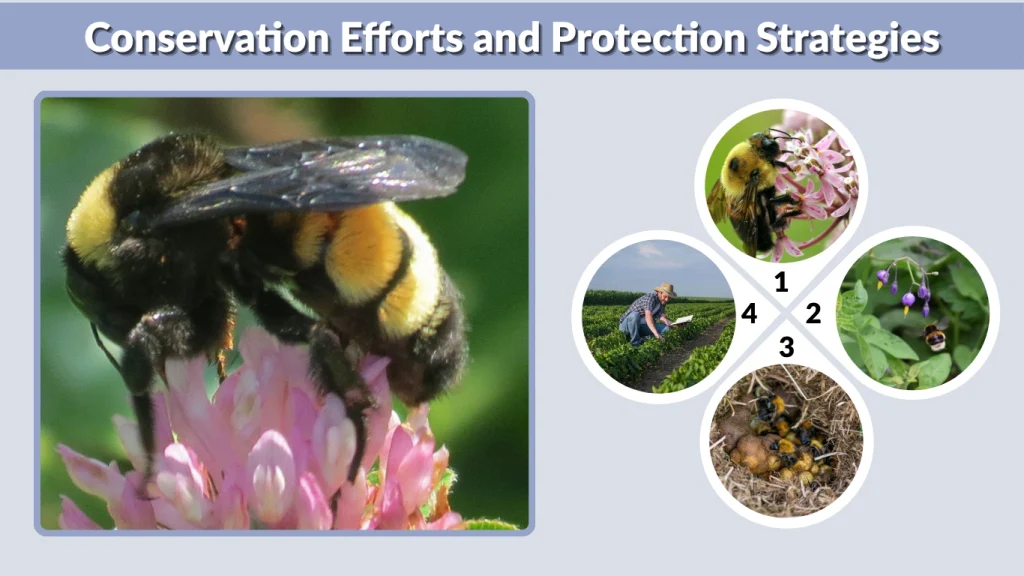
Protecting the American bumble bee involves both local and nationwide initiatives. Conservation organizations, universities, and governmental agencies are working together to restore native habitats and educate the public on bee-friendly practices.
Here are key strategies to help protect this species:
- Plant Native Flowers: Grow wildflowers such as milkweed, goldenrod, and clover to provide bees with nectar sources throughout the season.
- Avoid Pesticides: Especially neonicotinoids, which disrupt bee nervous systems.
- Provide Nesting Spaces: Leave patches of grass or soil undisturbed for queens to nest.
- Support Conservation Programs: Volunteer or donate to organizations like the Xerces Society and Pollinator Partnership.
- Encourage Sustainable Farming: Farmers can adopt pollinator-safe practices that minimize habitat destruction.
By adopting these measures, communities can actively participate in saving one of North America’s most important pollinators.
Role in the Ecosystem
The American bumble bee plays a critical ecological role as a keystone species. Its ability to pollinate large numbers of plants directly supports wildlife food chains and human agriculture. Many fruits, vegetables, and wildflowers rely on their activity for reproduction. Without them, ecosystems would lose both biodiversity and stability.
Furthermore, their interaction with native plants ensures genetic variation within flora, leading to healthier, more resilient ecosystems. This function makes the species’ decline particularly concerning for long-term environmental sustainability.
Native American Meaning and Symbolism
In Native American culture, bees often symbolize unity, dedication, and balance. The bumble bee’s role in maintaining harmony within ecosystems is seen as a reflection of human interdependence with nature. Tribes viewed the bee as a messenger of hard work and community effort — values central to tribal survival and cooperation.
The Native American meaning for bumble bees also includes prosperity and protection, as bees ensure the growth of crops and plants essential for life. This cultural connection emphasizes why protecting bees is not just an ecological duty but also a spiritual and cultural one.
How to Protect the American Bumble Bee
Individual actions can make a real difference. Here are some simple steps anyone can take:
- Plant Pollinator Gardens: Use native species to provide year-round food sources.
- Limit Chemical Use: Switch to organic gardening methods.
- Create Bee Habitats: Leave parts of your yard natural with logs or soil mounds for nesting.
- Educate Others: Raise awareness in schools and communities about bee decline.
- Participate in Citizen Science: Programs like Bumble Bee Watch allow individuals to report sightings and help track populations.
When communities unite under these small actions, the collective impact can significantly slow or even reverse population decline.
FAQs
1. Are American bumble bees endangered?
Yes, they are under review for endangered status due to drastic population loss. Habitat destruction, pesticide use, and disease transmission from managed bees have caused widespread declines.
2. Do American bumble bees sting?
They can sting, but only females (workers and queens) have stingers. They are generally gentle and sting only when handled roughly or when their nests are threatened.
3. What do American bumble bees eat?
Their diet consists mainly of nectar and pollen from a variety of wild and cultivated flowers. These food sources provide energy and nutrients essential for their colony’s survival.
4. Where do American bumble bees live?
They thrive in open areas like grasslands, meadows, and farmlands. Nests are usually built underground or near the surface in abandoned burrows or grassy fields.
5. Why are American bumble bees important?
They are key pollinators for many crops and wild plants. Their decline threatens food production, plant diversity, and ecosystem balance across North America.
