

Paper wasps are one of the most common and recognizable insects across Texas. Known for their slender bodies and umbrella-shaped nests, these wasps are active from early spring through late fall. They thrive in the state’s warm climate, from the humid forests of East Texas to the dry plains of South Texas. Understanding their species, nesting behavior, and role in the ecosystem helps Texans manage them safely while appreciating their ecological benefits.
Overview of Paper Wasps in Texas
Paper wasps belong to the genus Polistes, a group of social wasps known for building papery nests made from chewed wood pulp. These insects are widespread throughout Texas and are often seen around homes, barns, porches, and gardens.
Unlike yellowjackets, paper wasps are not highly aggressive unless their nest is disturbed. They help keep the environment balanced by preying on pest insects such as caterpillars, beetles, and flies. Their presence may be alarming, but they play an important role in pollination and natural pest control, especially in agricultural regions.
Texas’s mild winters and long warm seasons make it an ideal habitat for multiple paper wasp species. While most colonies die off in winter, the fertilized queens find shelter in cracks, tree bark, or attic spaces, emerging again in spring to start new nests.
Types of Paper Wasps Found in Texas
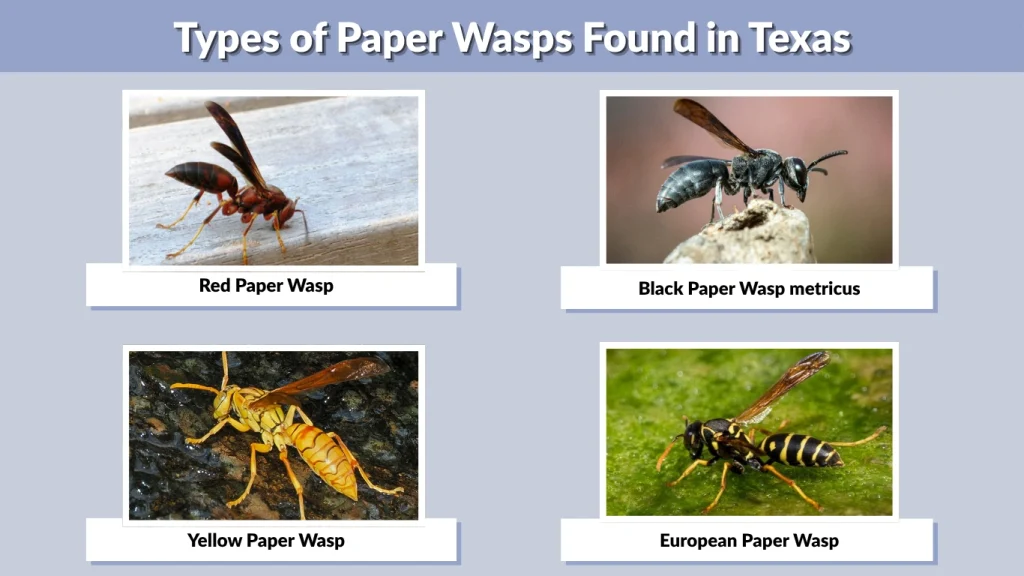
Several species of paper wasps are common in Texas, each with distinct colors and habits. The most familiar ones include red, black, yellow, and European paper wasps.
Red Paper Wasp (Polistes carolina)
The red paper wasp is the most widespread species in Texas. Recognized by its reddish-brown body and dark wings, it builds umbrella-shaped nests under roof eaves, tree branches, and fences. Red paper wasps are often found around rural properties and wooded areas. Though they sting when threatened, they are generally calm and focus on hunting caterpillars to feed their larvae.
Black Paper Wasp (Polistes metricus)
Black paper wasps are darker, with rich brown or nearly black bodies and amber wings. Commonly seen in Central and East Texas, these wasps prefer nesting under decks and in sheds. They can be slightly more defensive than red paper wasps but still play a crucial role in reducing pest populations.
Yellow Paper Wasp (Polistes exclamans)
This species has brownish-yellow markings and black antennae, often confused with yellowjackets due to similar coloring. However, yellow paper wasps are less aggressive and more likely to be found in open fields, gardens, and fences across North and Central Texas.
European Paper Wasp (Polistes dominula)
An invasive species spreading rapidly in Texas, the European paper wasp resembles a yellowjacket but has longer legs and a slimmer body. It adapts easily to human environments, nesting in mailboxes, vents, and outdoor furniture. It competes with native wasps for resources and may become more territorial during nesting season.
Habitat and Nesting Behavior
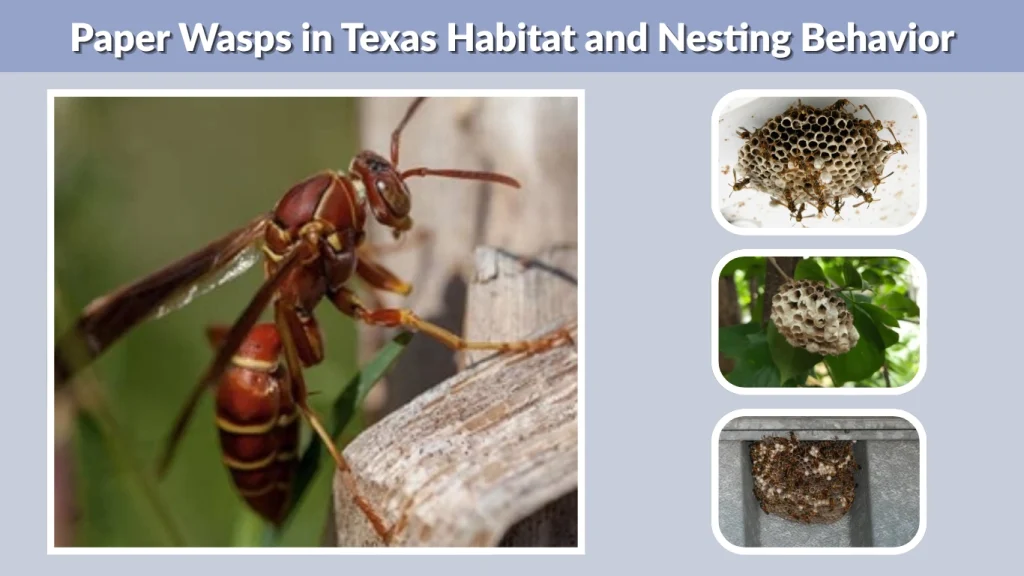
Paper wasps in Texas are skilled builders, using chewed wood fibers mixed with saliva to create a papery material for their nests. These nests are usually suspended from a single stalk called a pedicel and have an open, umbrella-like shape.
Common nesting sites include:
- Roof eaves, porches, and attics
- Tree branches and fence posts
- Barn rafters and shed ceilings
- Outdoor light fixtures and mailboxes
In Central and South Texas, paper wasps often choose shaded areas that stay dry, while in East Texas, where humidity is higher, they prefer sheltered spots with airflow. The nests are typically small in spring but can grow large by late summer as more cells are added for new larvae.
An active nest has wasps flying in and out frequently, while an abandoned nest appears empty and fragile. Because wasps rarely reuse old nests, removing inactive ones in winter is generally safe.
Texas Paper Wasp Stings
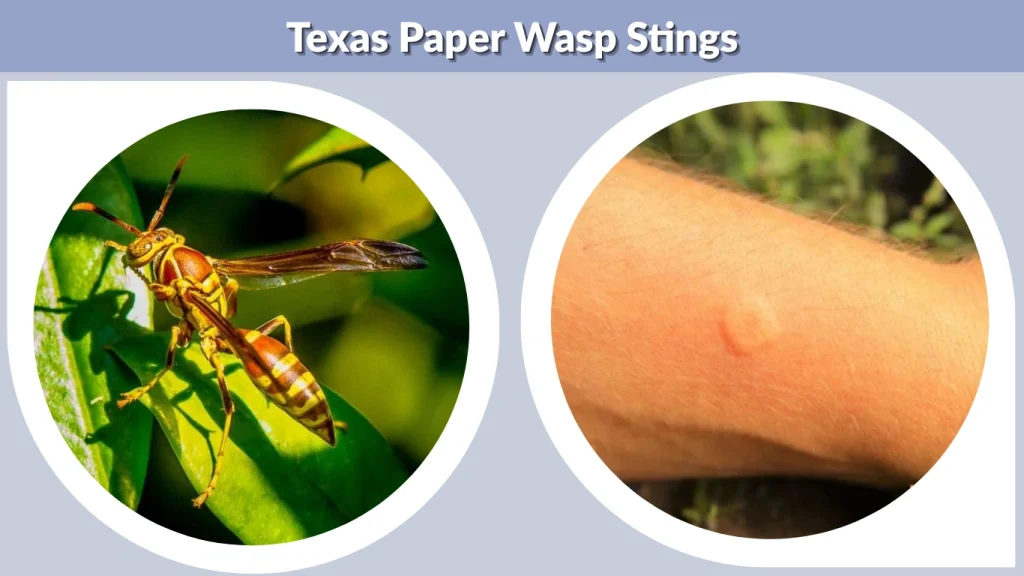
A Texas paper wasp sting can be quite painful, causing a burning sensation, redness, and swelling. The venom contains proteins that trigger inflammation, but for most people, symptoms fade within a few hours. However, individuals with wasp allergies may experience severe reactions, including swelling beyond the sting area or difficulty breathing — in such cases, medical attention is critical.
First-Aid for Stings:
- Wash the sting with soap and water.
- Apply an ice pack to reduce pain and swelling.
- Use an antihistamine cream to ease itching.
- Avoid scratching to prevent infection.
While red paper wasps and black paper wasps deliver similar stings, the reaction can vary depending on sensitivity. Generally, these stings are defensive, not aggressive — wasps attack only when they feel threatened.
Seasonal Activity of Paper Wasps in Texas
The warm Texas climate allows paper wasps to stay active for most of the year. Their behavior changes with the seasons, following a natural life cycle that ensures colony survival.
- Spring: Queens emerge from hibernation and begin building new nests. This is when most colonies start forming. The queen lays eggs, and the first generation of workers soon takes over nest duties.
- Summer: By mid-summer, colonies are at their peak. Hundreds of worker wasps forage for food and defend the nest. This is also when wasps are most visible around homes and gardens.
- Fall: As temperatures drop, food becomes scarce. Worker wasps begin dying off, and new queens prepare to mate and find shelter for the winter. This period often sees wasps fighting or showing territorial behavior near the nest.
- Winter: Only the fertilized queens survive. They hide in sheltered areas such as attics, wood piles, or under bark, remaining inactive until spring.
In warmer regions like South and Central Texas, wasp activity can continue into late November, while in North Texas, cold snaps bring an earlier end to the colony cycle.
Ecological Importance of Paper Wasps in Texas
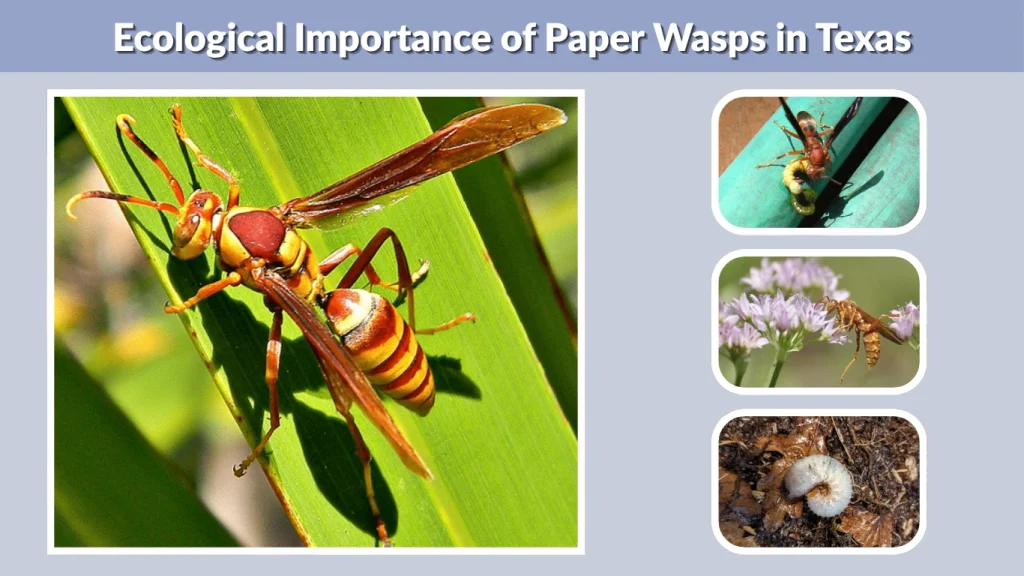
Although paper wasps can be intimidating, they provide many benefits to Texas ecosystems. They are natural pest controllers, pollinators, and vital contributors to biodiversity.
Natural Pest Control
Paper wasps hunt soft-bodied insects such as caterpillars, beetle larvae, and flies. In doing so, they protect crops and gardens from pests that damage leaves and fruit. Farmers in East and Central Texas often appreciate these wasps for reducing the need for chemical pesticides.
Pollination Role
Adult paper wasps feed on nectar, visiting flowers just like bees. While they are not as efficient as honeybees, they still help pollinate wildflowers, fruit trees, and native Texas plants. Their activity supports healthy ecosystems and contributes to natural reproduction cycles.
Balancing Native Species
Native paper wasps such as the red and yellow species play a key role in maintaining ecological balance. However, the European paper wasp, now established in parts of Texas, sometimes disrupts this balance by competing for nesting areas. Efforts to control invasive populations are ongoing to protect local biodiversity.
Controlling and Discouraging Paper Wasps
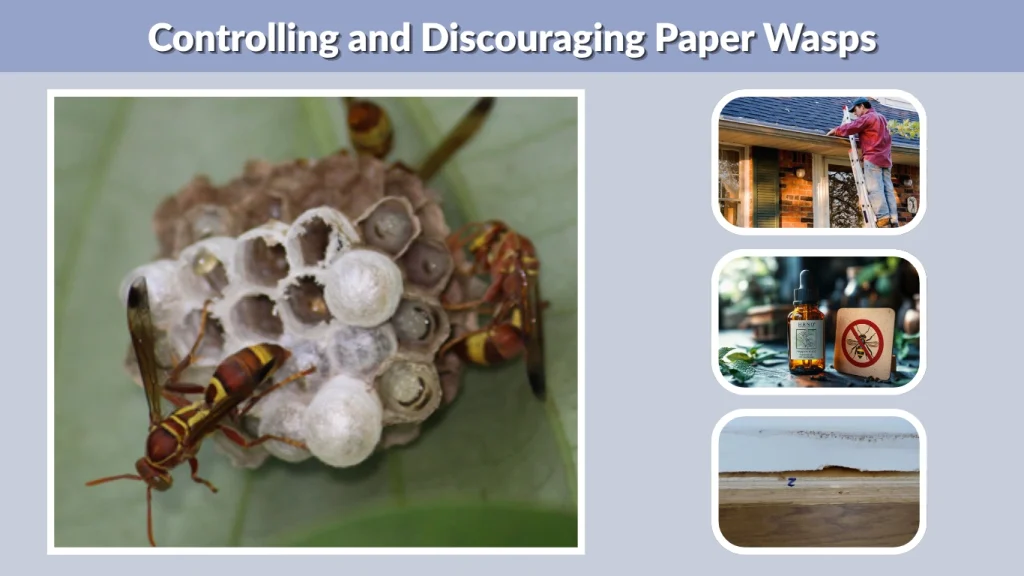
Most paper wasps are beneficial and should only be removed when their nests pose a threat to people or pets. In Texas, controlling paper wasps safely requires a mix of preventive steps and careful timing.
Discouraging Nests
- Keep eaves, porches, and sheds clean and free of debris.
- Use peppermint oil or vinegar sprays — scents that repel wasps naturally.
- Seal gaps and cracks in walls and rooflines where queens might overwinter.
- Hang false decoy nests to discourage new colonies from forming nearby.
Safe Removal
If you discover a nest, observe it first. If the nest is small and newly built, it can often be removed at night when wasps are less active. Wear protective clothing and use a long stick or a wasp spray designed for distance application. For large or high nests, contacting professional pest control is the safest choice.
Avoid swatting or provoking wasps — they release pheromones that alert others to defend the nest, which can result in multiple stings.
How to Coexist with Paper Wasps
In most cases, paper wasps can coexist peacefully with humans. Their nests, if located away from high-traffic areas, can be left undisturbed. Observing them from a distance offers a fascinating glimpse into their social behavior and natural pest management role.
Texas homeowners who garden can even benefit from their presence — paper wasps help reduce caterpillar populations that attack tomatoes, peppers, and ornamental plants. Allowing a few colonies to exist in less-used corners of your property promotes a balanced ecosystem.
Frequently Asked Questions
Are paper wasps common in East Texas?
Yes. The humid environment and dense vegetation of East Texas provide perfect nesting spots. Red and black paper wasps are especially abundant in wooded and rural areas.
Are paper wasps in Texas aggressive?
They are defensive, not aggressive. Most paper wasps will only sting when they feel their nest or queen is threatened. Keeping a safe distance helps avoid confrontation.
What should I do if I get stung by a Texas paper wasp?
Clean the sting site, apply an ice pack, and use an antihistamine cream. If swelling spreads or you have trouble breathing, seek immediate medical help — this may indicate an allergic reaction.
Do paper wasps stay active during Texas winters?
Only fertilized queens survive the winter. They remain hidden in sheltered areas until temperatures rise in spring, when they begin new colonies.
How can I discourage paper wasps around my Texas home?
Keep outdoor spaces clean, seal openings in roofs and walls, and use peppermint or citrus-based repellents. Regular inspections during early spring prevent nests from becoming large later in the season.
