

The paper wasp queen is the central figure of every colony, responsible for building the nest, laying eggs, and ensuring the colony’s survival. Unlike worker wasps, she focuses mainly on reproduction and rarely leaves the nest once her first generation of workers matures. Learning how to identify the queen, recognize her behavior, and understand her life cycle helps explain how these fascinating insects maintain their organized colonies year after year.
Do Paper Wasps Have a Queen?
Yes, paper wasps have a queen, just like bees and hornets. Each colony begins with a single fertilized female who has survived the winter. In early spring, she emerges from hibernation and immediately begins searching for a suitable nesting site. Using chewed wood fibers mixed with saliva, she constructs a small, papery nest and lays her first eggs.
The queen initially performs all duties — building, hunting, and caring for larvae — until the first generation of workers emerges. Once these workers mature, they take over the daily responsibilities of food gathering, nest expansion, and defense. From this point onward, the queen focuses solely on laying eggs, ensuring the colony continues to grow throughout the summer.
By late summer, the queen produces new queens and males that will mate and start future colonies. The cycle then repeats every spring, keeping paper wasp populations stable in gardens, forests, and residential areas.
What Does a Paper Wasp Queen Look Like?
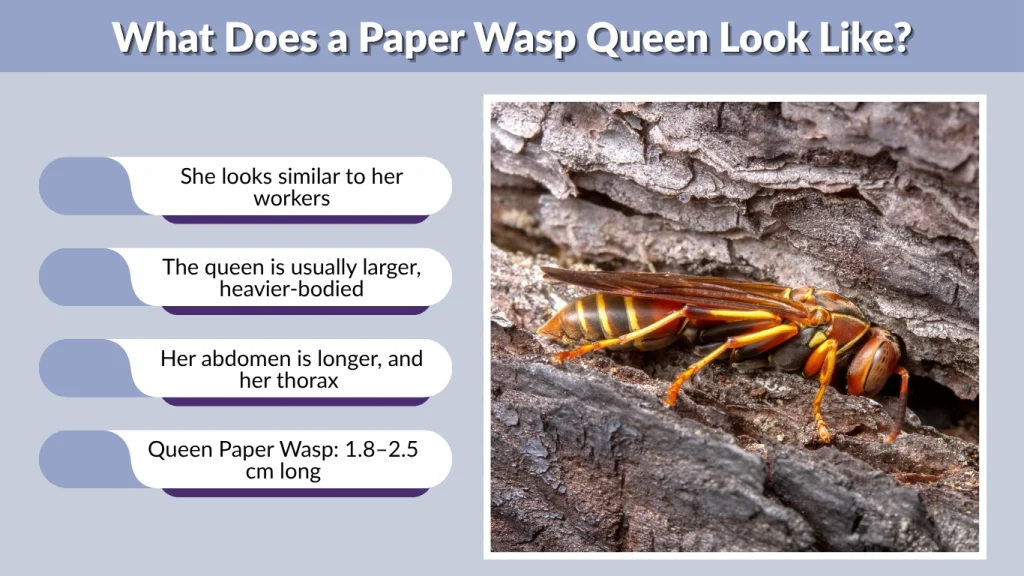
Identifying a queen paper wasp can be tricky since she looks similar to her workers but with some distinct physical differences. The queen is usually larger, heavier-bodied, and more robust. Her abdomen is longer, and her thorax — the middle body section — appears more developed to support egg production.
She often has richer coloration than workers, with deeper shades of red, brown, or yellow depending on the species. Her movements are slower and more deliberate, reflecting her dominant position within the colony. In most cases, the queen remains near or on the nest, rarely flying unless necessary.
Average Size Comparison:
- Queen Paper Wasp: 1.8–2.5 cm long
- Worker Paper Wasp: 1.2–1.8 cm long
While the size difference may seem minor, it’s one of the most reliable ways to tell them apart, especially when observing an active nest closely.
Paper Wasp Queen vs. Worker

Though queens and workers share similar physical traits, their roles within the colony are entirely different. The following table highlights their key differences:
| Feature | Queen Paper Wasp | Worker Paper Wasp |
| Size | Larger, about 2 cm or more | Smaller, 1.5 cm on average |
| Primary Role | Reproduction and egg laying | Foraging, nest building, defense |
| Behavior | Mostly stays in the nest | Flies in and out frequently |
| Aggression Level | Low unless directly threatened | Higher, defends colony aggressively |
| Lifespan | Up to one year | Several weeks to a few months |
This system of cooperation ensures the survival of the colony. The queen provides stability and reproduction, while the workers maintain and protect the structure. Together, they operate as a coordinated unit, balancing reproduction with survival.
Identifying Queen Species
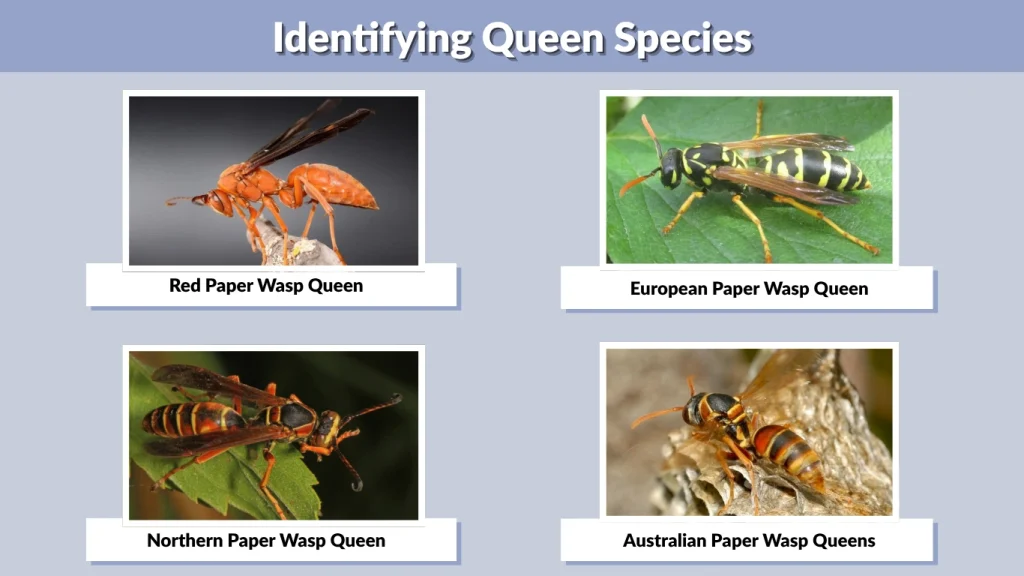
Paper wasps exist in many species across the world, and each has its own unique queen characteristics. Recognizing these species helps in proper identification.
Red Paper Wasp Queen (Polistes carolina)
The red paper wasp queen is strikingly reddish-brown with dark wings. She commonly builds umbrella-shaped nests under roofs, trees, and porch eaves, especially in the southern United States. This species is known for its strong venom and is slightly larger than most others.
European Paper Wasp Queen (Polistes dominula)
The European queen has yellow and black bands resembling a yellow jacket but a slimmer waist and longer legs. This invasive species thrives in urban areas, often nesting in mailboxes, vents, and window frames.
Northern Paper Wasp Queen (Polistes fuscatus)
Dark brown with yellow markings, the northern paper wasp queen is found in cooler regions. She is known for cooperative nesting, where multiple queens sometimes share one nest early in the season before dominance is established.
Asian and Australian Paper Wasp Queens
These queens display vibrant orange, red, or brown coloration. They prefer tropical or warm climates and build nests in open, sunny areas like gardens, fences, and window ledges.
Behavior and Nest Building
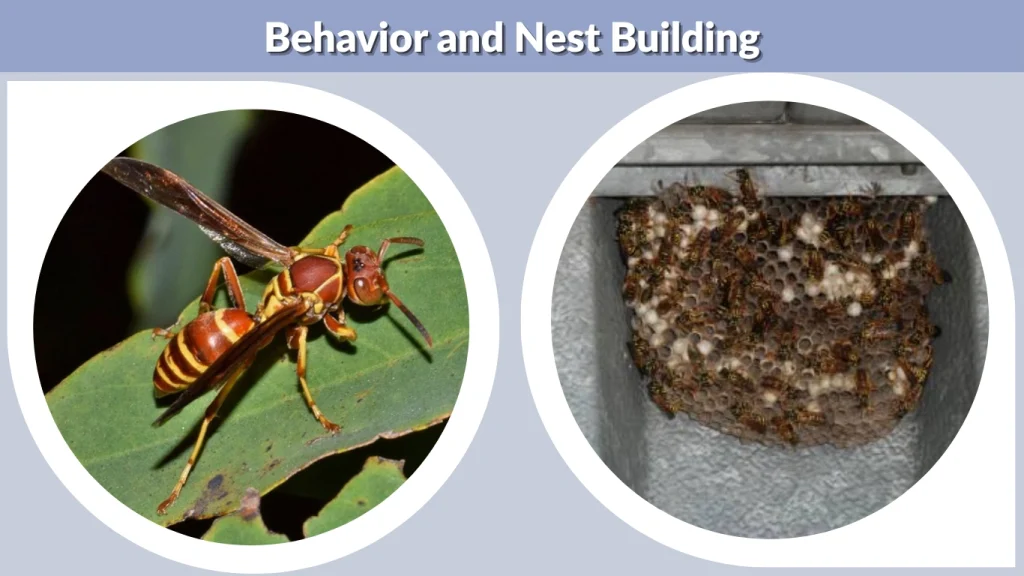
When spring arrives, the paper wasp queen becomes highly active. After emerging from hibernation, she searches for a dry, sheltered location — often under eaves, branches, or beams. Once the site is chosen, she begins building her nest using chewed wood mixed with saliva to form a papery texture. The nest starts small, with just a few hexagonal cells, and gradually expands as new workers join the colony.
The queen lays a single egg in each cell, feeding the larvae herself with chewed-up insects until workers hatch. Once the first workers mature, they take over nest duties, allowing the queen to focus solely on reproduction. By mid-summer, the nest can contain over 150 cells, each housing eggs, larvae, or pupae at various stages.
Does a Queen Paper Wasp Sting?

Yes, the queen paper wasp can sting, but she rarely does. Her sting is primarily a defense mechanism, used only when she or her nest is directly threatened. The venom she injects is similar to that of worker wasps, causing sharp, burning pain followed by mild swelling and redness.
Because the queen spends most of her time on the nest, stings from her are uncommon. The workers are usually the ones responsible for defending the colony and reacting to potential danger. However, if the queen feels cornered or handled, she can sting multiple times since her stinger does not detach after striking.
People who are allergic to wasp venom should exercise extra caution, as even a single sting can cause severe reactions such as swelling, dizziness, or difficulty breathing. In such cases, immediate medical attention is necessary.
The Life Cycle of the Paper Wasp Queen
The queen’s life follows a seasonal rhythm that governs the entire colony’s success. Her annual cycle can be divided into four main stages:
Spring: Nest Building and Egg Laying
In early spring, the fertilized queen emerges from hibernation and begins building a small nest. She lays the first batch of eggs, which hatch into larvae after a few days. During this phase, she works alone — hunting for caterpillars and feeding the larvae.
Summer: Worker Development
By late spring and early summer, the first generation of workers emerges. They immediately take over nest duties, allowing the queen to focus solely on laying eggs. The colony expands rapidly, with new cells added daily.
Autumn: New Queens and Males
As temperatures cool, the colony shifts to producing males and new queens. These young queens will later mate and hibernate through the winter. The original queen’s energy declines during this time, and she may die naturally as the colony’s cycle ends.
Winter: Hibernation and Renewal
Fertilized new queens find shelter under bark, inside logs, attics, or crevices. They remain inactive through the cold months until the next spring, when the process begins again. The average lifespan of a paper wasp queen is about 10 to 12 months, while workers survive for just a few weeks.
Paper Wasp Queen Hibernation

Hibernation is a critical part of the queen’s survival strategy. As winter approaches, she seeks a safe, insulated space protected from freezing temperatures. Common hibernation spots include:
- Beneath loose tree bark or fallen logs
- Inside hollow plant stems
- Under roof shingles or attic insulation
- In woodpiles or debris around homes
During this time, her metabolism slows dramatically, allowing her to survive months without food. When spring warmth returns, she awakens and begins searching for a nesting site, continuing the annual cycle of reproduction and colony establishment.
The Role of the Queen in the Colony
The queen paper wasp serves as the reproductive and social anchor of the entire colony. Without her, the group would quickly collapse. Her responsibilities include:
- Laying and fertilizing eggs throughout the active season
- Maintaining pheromonal control over workers, ensuring order
- Producing future queens and males before winter
- Signaling behavioral cues that guide worker activity
If the queen dies early, workers may attempt to rear a replacement from fertilized eggs, but colonies without a queen often weaken and fail before the end of the season.
Ecological Importance of the Paper Wasp Queen
The queen not only ensures the continuation of her species but also supports the broader ecosystem. Her nesting and reproductive cycles directly benefit both pollination and pest control:
- Queens and workers collect nectar, helping pollinate flowers.
- Their larvae are fed with caterpillars, flies, and beetle larvae, reducing pest populations.
- Colonies naturally regulate garden insect numbers, minimizing the need for chemical pesticides.
Allowing undisturbed nests in quiet corners of gardens can actually promote a healthier environment for local plants.
FAQs
How can you identify a queen paper wasp?
The queen is larger than workers, with a longer abdomen and more pronounced body markings. She usually stays on the nest, while workers are active outside.
Does the paper wasp queen sting?
Yes, she can sting, but it’s rare. Her sting is as painful as that of a worker, producing redness and burning that fade within hours.
How long does a paper wasp queen live?
A queen typically lives up to one year, surviving through winter to start a new colony the following spring.
Where do paper wasp queens hibernate?
They hibernate in sheltered areas such as tree bark, attics, wall crevices, or beneath roofing materials — anywhere warm and dry enough to survive cold temperatures.
What happens if the queen dies?
If the queen dies during summer, the colony loses its ability to reproduce. Workers may continue caring for larvae temporarily, but without a queen, the nest eventually declines.
