
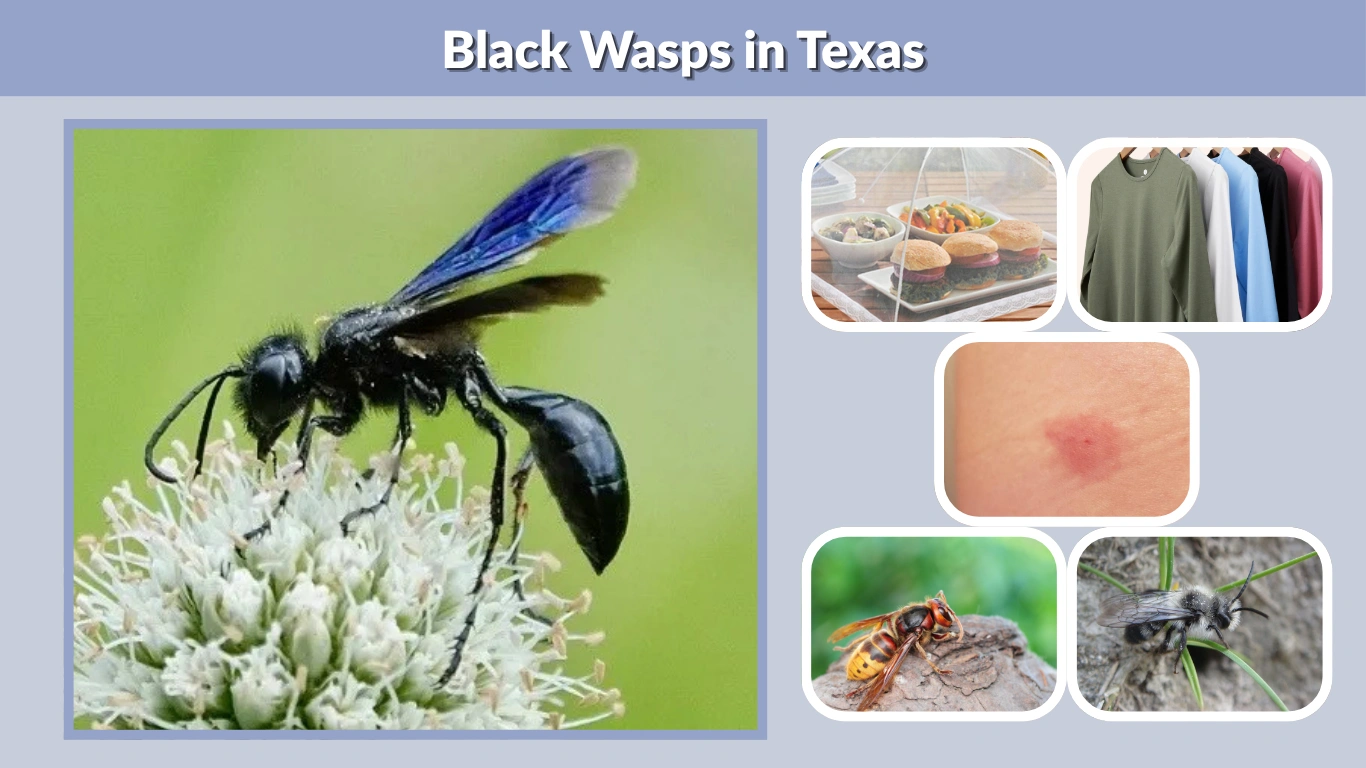
Texas is home to a wide variety of wasp species, including several that are primarily black or dark-colored. These insects range from large, solitary hunters like the great black wasp to smaller paper wasps that build nests under eaves or in sheds. While they may look intimidating, most black wasps in Texas are beneficial predators that help control pests and pollinate flowers. Learning how to identify these wasps and understand their behavior is essential for safety and appreciation of their ecological role.
Common Types of Black Wasps in Texas
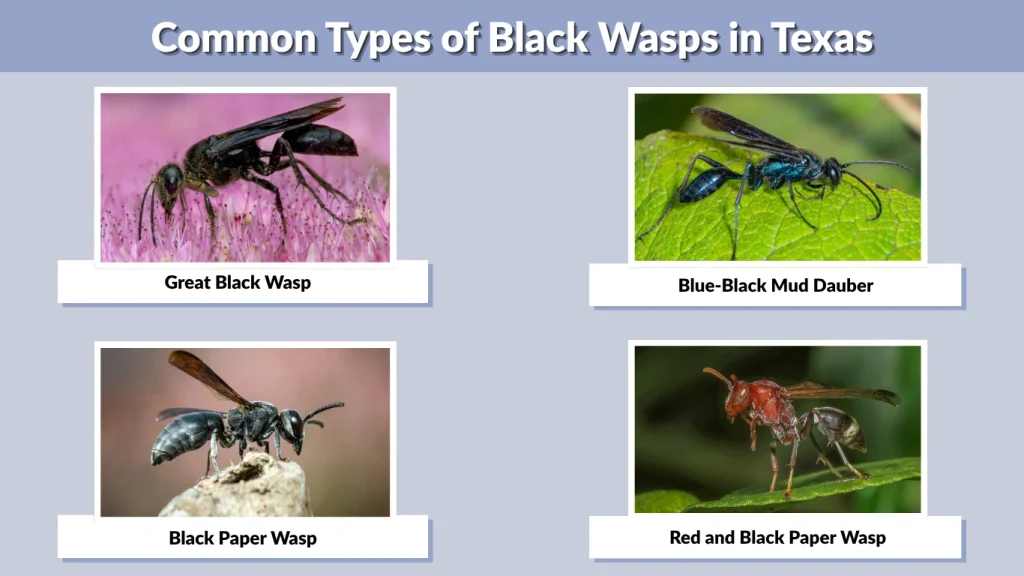
Texas’s warm climate and diverse habitats make it ideal for many black wasp species. The most commonly seen varieties include:
- Great Black Wasp (Sphex pensylvanicus) – A large, shiny black wasp that preys on grasshoppers and katydids. It’s solitary and usually found in open fields or gardens.
- Blue-Black Mud Dauber (Chalybion californicum) – Recognizable by its metallic blue-black sheen, this wasp builds nests from mud and preys on spiders.
- Black Paper Wasp (Polistes fuscatus) – Slightly smaller, this species forms papery umbrella-shaped nests under eaves or branches.
- Red and Black Paper Wasp (Polistes carolina) – With a mix of black and reddish tones, this wasp is common across Texas and often seen around homes.
- Spider Wasp (Anoplius spp.) – Characterized by its dark, velvety body, it hunts spiders, including tarantulas, to feed its larvae.
Each of these wasps plays a vital role in maintaining ecological balance by preying on harmful insects and assisting in pollination.
Identification Guide: How to Recognize a Black Wasp

Color and Size
Most black wasps are around 1 to 1.5 inches long, with sleek, shiny black bodies. Some species feature blue, orange, or reddish wings, giving them a metallic look in sunlight. Their narrow waists, long legs, and strong mandibles help distinguish them from bees and flies.
Behavior and Flight Pattern
Unlike hornets, black wasps tend to be solitary or live in small colonies. They fly gracefully, often hovering near flowers, walls, or nests. You might see them dragging paralyzed prey into burrows or mud nests—a typical hunting behavior.
Regional Distribution Across Texas
Central and North Texas
In these regions, the great black wasp and spider wasp are most common. They thrive in open grasslands, gardens, and rural areas. Their preference for dry, sunny habitats makes them active throughout the summer months.
East and South Texas
The blue-black mud dauber and red-black paper wasp dominate the humid environments of East and South Texas. They often build nests in barns, garages, or attics where moisture levels are ideal for mud construction.
West Texas
Dry and rocky West Texas provides a home for ground-nesting wasps. These wasps dig burrows in sandy soils and are rarely aggressive, making them less likely to interact with humans.
Nesting Habits and Locations
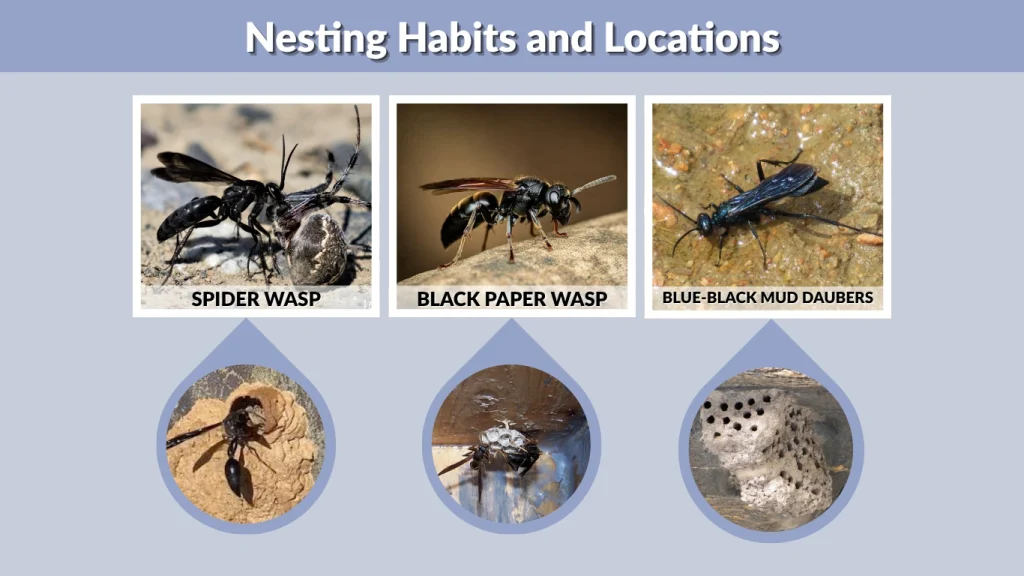
Black wasps in Texas display diverse nesting preferences depending on their species and environment.
- Ground Burrows: Solitary wasps like the great black wasp and spider wasp dig small tunnels in soil or loose sand to lay eggs.
- Wood or Eaves: The black paper wasp constructs open papery nests under roofs, ledges, or tree branches.
- Mud Nests: Blue-black mud daubers build tubular mud nests on walls, sheds, or abandoned structures.
- Indoor Spaces: Occasionally, wasps invade attics, sheds, or garages if entry points are open or clutter provides cover.
Destroying active nests is not advised without protective gear since even calm wasp species will defend their home if disturbed.
Sting and Safety Information
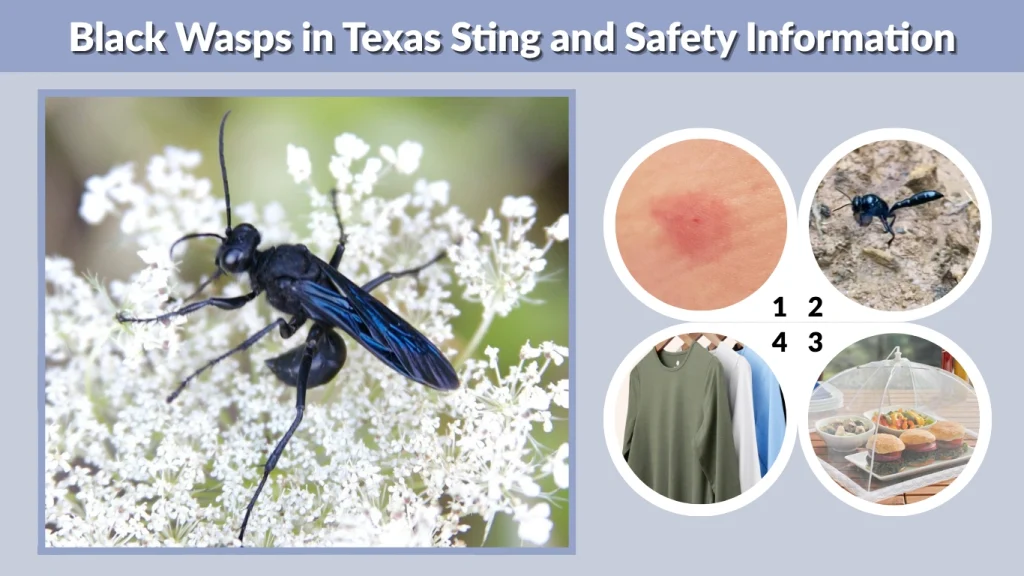
Black wasps can sting, but they are not naturally aggressive toward humans. Their stings are primarily used for hunting prey or defense. For most people, a sting causes temporary pain, redness, and swelling. However, individuals allergic to wasp venom should seek medical attention immediately.
To reduce sting risks:
- Avoid swatting or disturbing flying wasps.
- Keep food and sugary drinks covered outdoors.
- Wear light-colored clothing, as dark colors attract them.
Interestingly, the great black wasp rarely stings humans, even when approached closely. This docile nature makes it one of the least threatening large wasps in Texas.
Are Black Wasps in Texas Dangerous?
Despite their intimidating size and color, most black wasps in Texas are not dangerous. They are beneficial predators that reduce populations of caterpillars, spiders, and other pests. The great black wasp, for example, is crucial for pollination and natural pest control. Only when their nests are disturbed or threatened do they resort to stinging.
However, those with insect venom allergies should remain cautious, as even mild species can trigger severe reactions in sensitive individuals. Keeping distance and avoiding sudden movements around nests ensures safety for both people and wasps.
Differences Between Black Wasps and Hornets
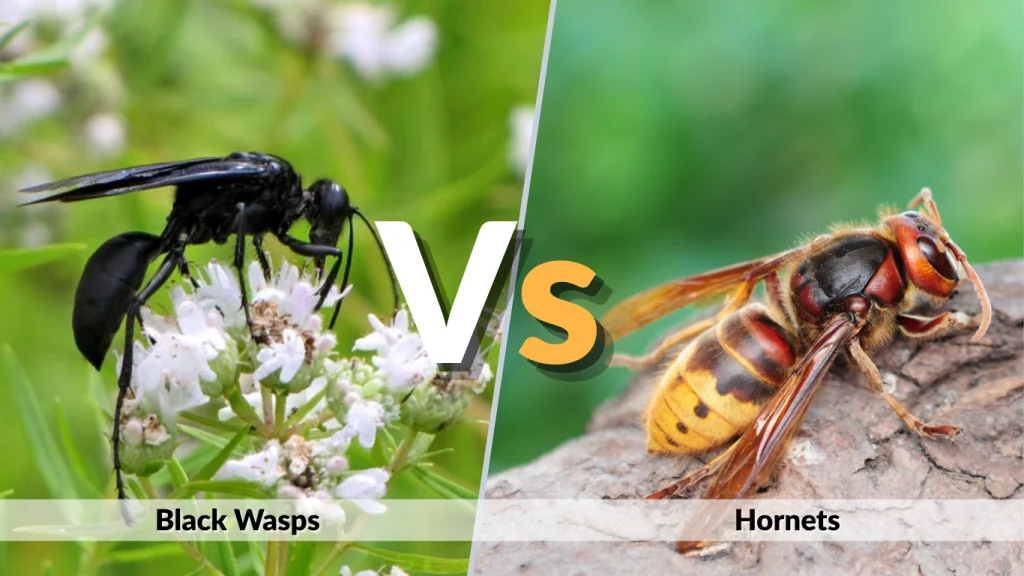
Black wasps and hornets often look similar, but they have distinct features and behaviors. Black wasps are usually solitary, while hornets are social insects that live in large colonies. Hornets are more aggressive, especially near their nests, whereas black wasps rarely sting unless provoked. The table below highlights the main differences:
| Feature | Black Wasps | Hornets |
| Size | 1–1.5 inches | Up to 2 inches |
| Colony Type | Solitary or small colonies | Large colonies |
| Aggression | Non-aggressive | Highly aggressive |
| Nest Material | Mud or paper | Thick layered paper |
| Behavior | Pollinators and hunters | Defensive protectors |
Understanding these differences helps people identify which insect they are dealing with and how to respond safely.
Black Wasps vs. Black Bees
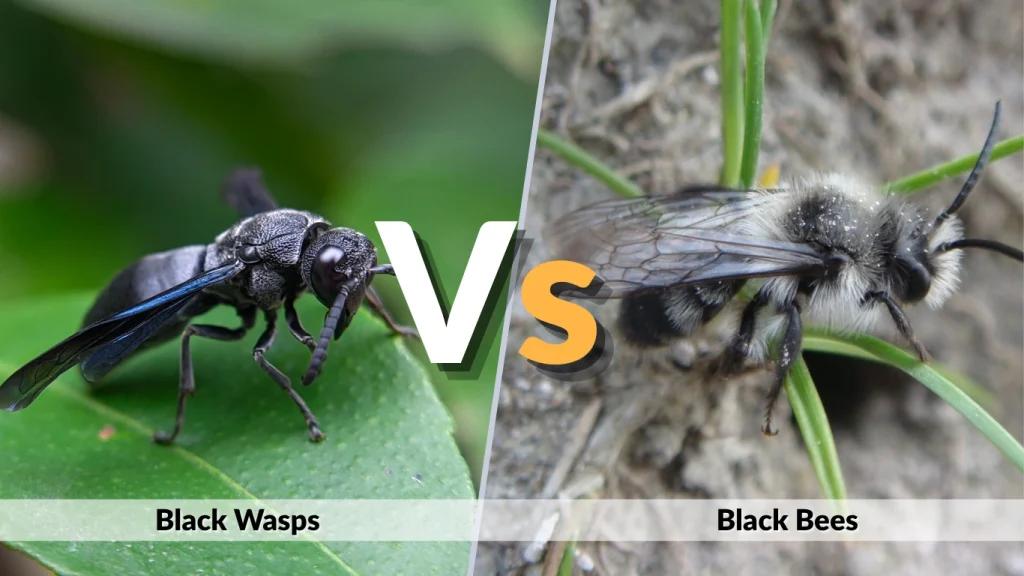
Although both insects are valuable to ecosystems, black wasps and black bees have contrasting characteristics. Wasps have slim bodies, narrow waists, and smooth exoskeletons, while bees are fuzzy and rounder. Wasps feed on other insects, while bees gather pollen and nectar.
A quick way to tell them apart:
- Wasps: Sleek, shiny, and predatory.
- Bees: Fuzzy, gentle pollinators with shorter wings.
Wasps are also more active hunters, using their sting to paralyze prey before feeding their larvae, while bees rarely use their stinger unless threatened.
How to Control or Prevent Black Wasps
While black wasps are beneficial, they can become a nuisance when nesting too close to homes. Prevention is the best approach to control them safely.
Effective Prevention Tips
- Seal cracks and entry points around windows, doors, and rooflines.
- Remove old nests during late fall or winter when they’re inactive.
- Avoid leaving sugary foods or open drinks outdoors.
- Use natural repellents like peppermint or clove oil near entryways.
- Trim vegetation near structures to discourage nesting sites.
If a nest must be removed, it’s best to contact a professional pest control service rather than handling it alone, especially for large or hard-to-reach nests.
Interesting Facts About Texas Black Wasps
Texas black wasps are fascinating creatures with unique behaviors that make them stand out among other insects.
- The great black wasp hunts grasshoppers and katydids, paralyzing them for its larvae.
- Mud daubers build intricate tube-shaped nests from soil and fill them with spiders as food.
- The spider wasp is known for hunting tarantulas and dragging them back to underground burrows.
- Many wasps are natural pollinators, contributing to the reproduction of native Texas wildflowers.
- Despite their fierce appearance, most black wasps avoid human contact and help maintain healthy ecosystems.
These details make black wasps an important part of Texas’s diverse insect life, balancing beauty with functionality.
FAQs
What kind of black wasps are common in Texas?
The most common black wasps in Texas include the great black wasp, blue-black mud dauber, black paper wasp, and spider wasp. They are widespread across the state, thriving in gardens, fields, and wooded areas while helping control pest populations naturally.
Are black wasps in Texas dangerous to humans?
Black wasps are generally harmless unless threatened. They are not naturally aggressive and usually sting only in self-defense. Their venom isn’t lethal for most people, but those allergic to insect stings should exercise caution and avoid disturbing nests.
How can I identify a great black wasp in Texas?
The great black wasp is large, shiny, and all-black with a metallic blue tint on its wings. It grows up to 1.5 inches long and is often seen hovering over flowers or carrying paralyzed insects to its burrow. Its calm temperament makes it easy to observe.
Do black wasps build nests inside houses in Texas?
Yes, some black wasps—particularly mud daubers and paper wasps—can build nests indoors, especially in attics, garages, or sheds. Regular inspection, sealing small openings, and removing inactive nests during winter can prevent infestations.
What attracts black wasps around Texas homes?
Black wasps are attracted to flowers, sugary drinks, and insects. They’re drawn to gardens and areas with nectar-rich plants. Keeping outdoor spaces clean, covering trash bins, and limiting standing water helps reduce wasp activity near your home.
