
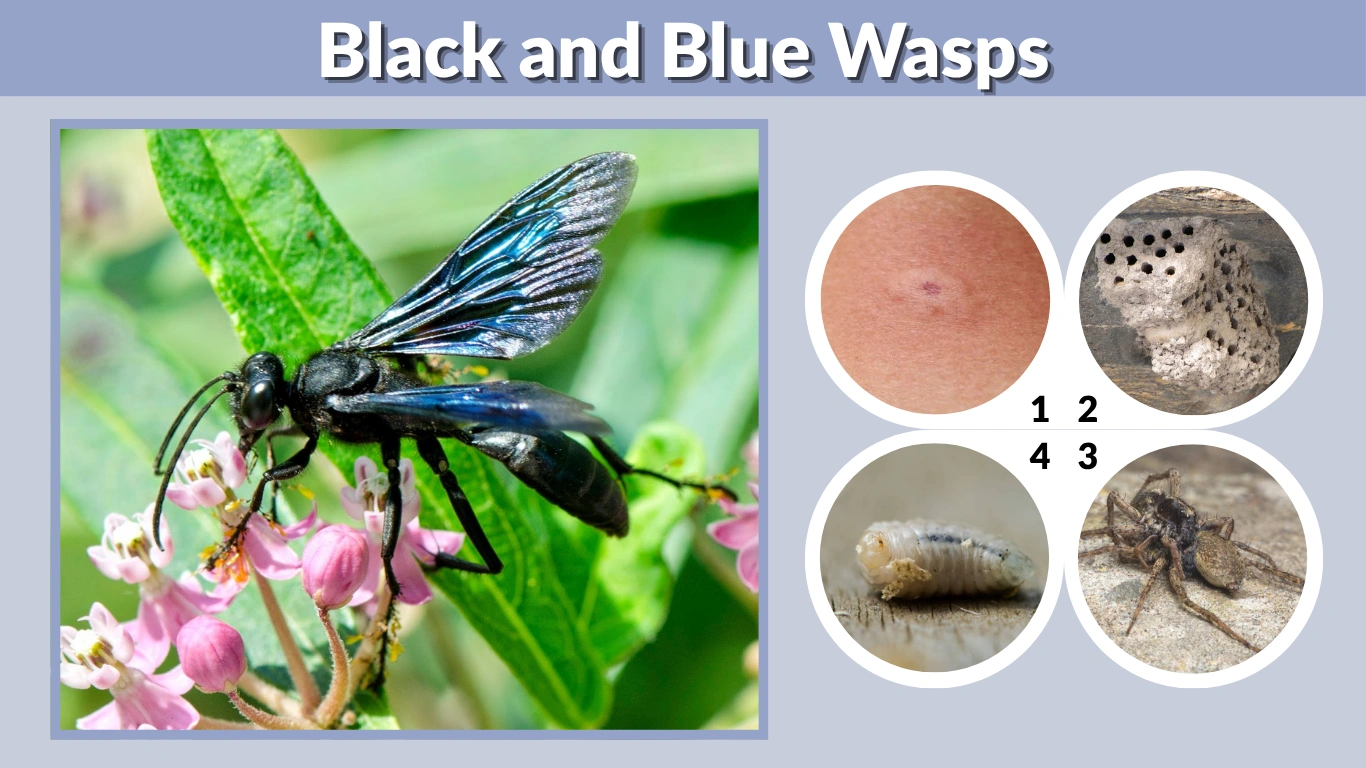
Black and blue wasps are among the most eye-catching insects in North America. Their metallic sheen and sleek, elegant bodies make them easily recognizable, but their appearance often leads to confusion or fear. Despite their intimidating look, most black and blue wasps are harmless and beneficial to the environment. They help control pest populations and serve as important pollinators, particularly during the warm summer months.
Common Types of Black and Blue Wasps

Several wasp species display black and blue coloration, with subtle differences in size, shape, and nesting habits. The most common include:
- Blue Mud Dauber (Chalybion californicum) – This species is known for its metallic blue body and narrow waist. It builds mud nests and preys on spiders, especially black widows.
- Steel Blue Cricket Hunter (Chlorion aerarium) – A large, shiny blue-black wasp that hunts crickets. It prefers dry areas and is often seen around gardens or open fields.
- Blue-Black Spider Wasp (Anoplius spp.) – Recognizable for its dark, iridescent blue body, this wasp paralyzes spiders for its young.
- Great Black Wasp (Sphex pensylvanicus) – Although primarily black, its wings often show a deep blue reflection in sunlight.
- Cuckoo Wasp (Chrysididae family) – Small, shimmering blue-green wasps that lay eggs in other insects’ nests.
These wasps are found throughout the United States, thriving in regions where they can easily find prey and suitable nesting materials.
Physical Appearance and Key Identification Traits
Color and Shine
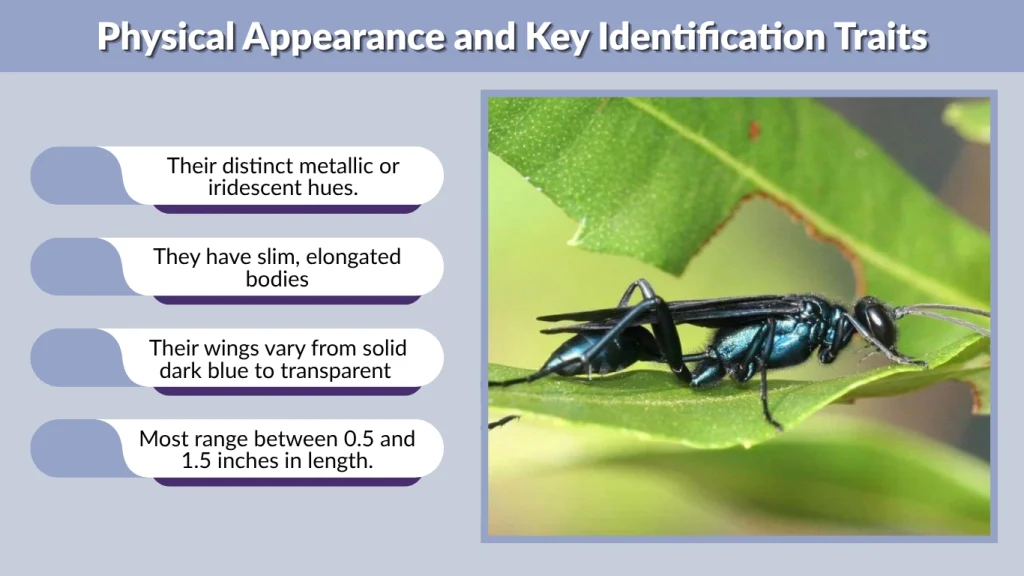
Black and blue wasps are named for their distinct metallic or iridescent hues. Their coloration isn’t from pigment but from light reflecting off microscopic structures in their exoskeletons. This structural color gives them a dazzling, almost mirror-like glow under sunlight.
Body Structure
They have slim, elongated bodies with narrow waists and smooth exoskeletons. Their wings vary from solid dark blue to transparent with blue highlights, depending on the species. The great black wasp, for example, looks jet black but shines cobalt blue when seen at certain angles.
Size
Most range between 0.5 and 1.5 inches in length. The steel blue cricket hunter is one of the largest, while cuckoo wasps are typically under half an inch long.
Geographic Distribution
Across the United States
Black and blue wasps are widespread across Texas, Florida, Georgia, North Carolina, Virginia, and Arizona, and extend into Midwestern states like Illinois, Ohio, and Michigan. They thrive in sunny, open habitats, including fields, meadows, and backyards. During summer, these wasps are commonly seen visiting flowers or hovering near walls and porches.
Outside the U.S.
Species with similar coloration are also found in Australia, Mexico, and southern parts of Canada. The metallic blue body color helps them blend with the environment while signaling predators to stay away.
Nesting Habits

Each species of black and blue wasp has unique nesting behavior suited to its environment and prey.
- Mud Nests: Blue mud daubers use damp soil to create tube-like nests on walls, under eaves, or in sheds. These nests are often reused year after year.
- Ground Burrows: Spider wasps and cricket hunters dig tunnels in loose sand or soil to store paralyzed prey for their larvae.
- Wood Crevices: Some species nest in cracks in wood, hollow stems, or abandoned burrows left by other insects.
- Parasitic Nesting: Cuckoo wasps do not build nests. Instead, they lay their eggs inside the nests of other wasps, allowing their larvae to feed on the host’s offspring.
These nesting behaviors play a crucial ecological role, as they naturally reduce pest populations such as spiders, grasshoppers, and crickets.
Behavior and Diet
Black and blue wasps are solitary insects, unlike hornets or yellowjackets that live in colonies. They do not defend large hives or swarm together. Instead, each female works independently, building her nest, hunting prey, and caring for her young.
Diet
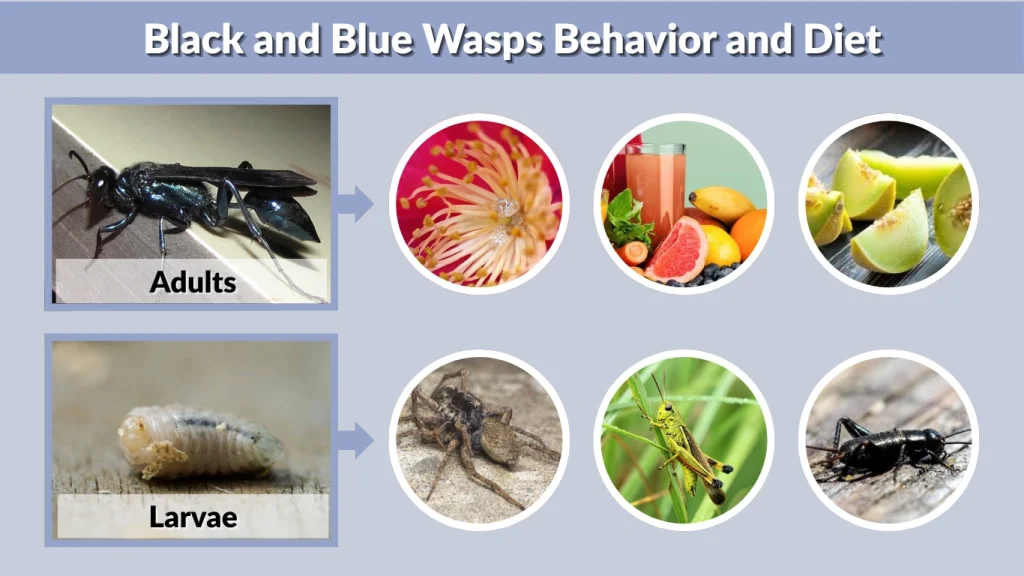
- Adults feed primarily on nectar, fruit juices, and honeydew, making them effective pollinators.
- Larvae are carnivorous and consume spiders, grasshoppers, or crickets that the mother paralyzes and stores in the nest.
These wasps are active during the warmer months, particularly June through September, when prey and flowers are abundant.
Sting and Safety Concerns
The thought of a large, shiny blue wasp can be alarming, but these insects are remarkably gentle. Most black and blue wasps, such as the blue mud dauber, rarely sting humans. Their stinger is primarily used to paralyze prey, not for defense.
Sting Reactions
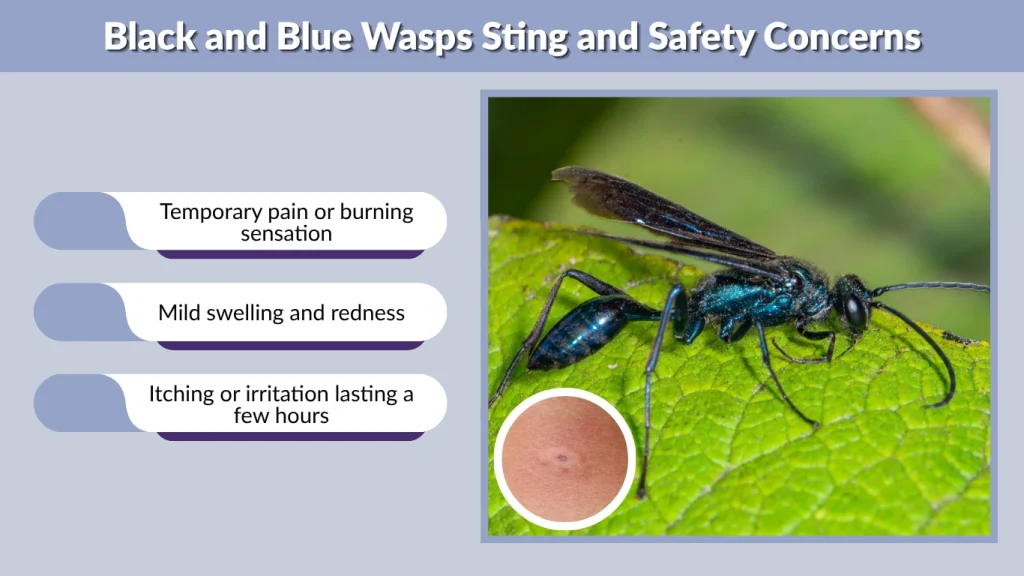
When stings do occur, the pain is mild to moderate, similar to a bee sting. Symptoms include:
- Temporary pain or burning sensation
- Mild swelling and redness
- Itching or irritation lasting a few hours
For those allergic to insect venom, however, a sting can cause more serious reactions requiring medical attention. Avoiding sudden movements and not disturbing their nests minimizes the risk of being stung.
Important Note
Among all species, the blue mud dauber is known to be the most docile. Many people observe them up close without incident, as they prefer to flee rather than attack.
Role in Nature
Black and blue wasps play a vital role in maintaining balance within ecosystems. These insects are both pollinators and predators, helping plants reproduce and keeping pest populations under control. As they move from flower to flower feeding on nectar, they inadvertently carry pollen, benefiting a wide variety of native plants and wildflowers.
Their hunting behavior is equally important. Species like the blue-black spider wasp and steel blue cricket hunter prey on spiders, grasshoppers, and other insects that could otherwise damage crops and gardens. By naturally controlling these pests, black and blue wasps reduce the need for harmful chemical pesticides.
Differences Between Black and Blue Wasps and Other Insects
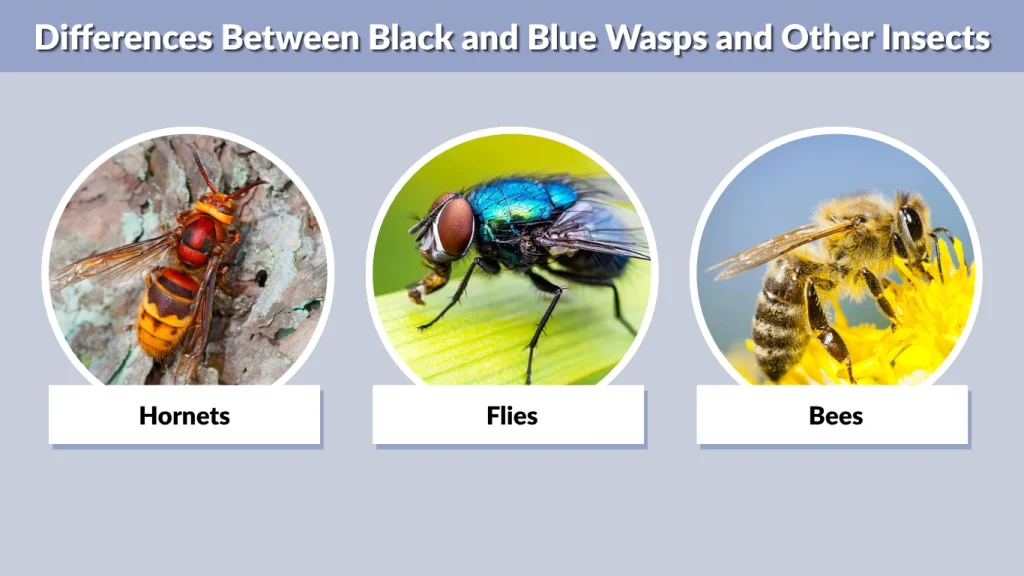
Many insects share similar coloring or flight patterns, but careful observation reveals clear differences.
Vs. Hornets
Hornets are larger, more aggressive, and live in social colonies, while black and blue wasps are solitary. Hornet nests are large, papery structures, whereas black and blue wasps build mud tubes or small burrows. Hornets also have a duller appearance compared to the metallic sheen of blue wasps.
Vs. Flies or Beetles
Black and blue wasps have straight antennae, narrow waists, and longer legs. Flies have short, bent antennae and only two wings, while wasps have four. Beetles are rounder and covered in a harder shell, unlike the smooth, flexible body of a wasp.
Vs. Bees
Bees are fuzzy and round, covered in fine hairs that help with pollen collection. Wasps, on the other hand, are sleek, shiny, and more streamlined. Bees focus solely on pollination, while wasps are both hunters and pollinators.
How to Prevent Black and Blue Wasps Around Homes
Although beneficial, black and blue wasps can sometimes become unwelcome guests when nesting near homes or porches. Fortunately, prevention is simple and safe.
Practical Prevention Tips
- Seal cracks and crevices: Close openings around windows, roof edges, vents, and siding to prevent nesting.
- Remove old nests: During late fall or winter, scrape away inactive mud tubes and fill holes where wasps might return.
- Keep outdoor areas clean: Avoid leaving sugary drinks or fruit outside, as these attract adult wasps.
- Use natural deterrents: Scents like peppermint, citronella, or clove oil can help repel them from common nesting spots.
- Trim plants near structures: Overgrown vegetation can offer shelter for wasps searching for nesting sites.
If a nest is active or large, it’s best to contact a pest control specialist rather than removing it by hand. Attempting removal during daytime hours—when wasps are most active—can lead to defensive stings.
Interesting Facts About Black and Blue Wasps
- Structural color: Their metallic blue hue isn’t pigment-based; it’s caused by microscopic light-reflecting layers in their exoskeleton.
- Spider hunters: The blue-black spider wasp can paralyze spiders much larger than itself and drag them to its nest.
- Natural recyclers: Blue mud daubers often reuse old nests left by black mud daubers instead of building new ones.
- Peaceful nature: Despite their fearsome look, most black and blue wasps avoid confrontation and rarely sting.
- Environmental indicators: A healthy wasp population often signals a balanced ecosystem with plenty of prey and native vegetation.
These fascinating characteristics show how misunderstood these insects are—strong, beautiful, and incredibly useful to the natural world.
FAQs
What kind of wasp is black and blue?
The most common black and blue wasp is the blue mud dauber, known for its shiny metallic body and habit of building mud nests. Other similar species include the steel blue cricket hunter and blue-black spider wasp, all of which are solitary and beneficial.
Are black and blue wasps dangerous?
No, black and blue wasps are not dangerous. They are calm, non-aggressive insects that sting only when handled or threatened. Their main focus is hunting other insects and pollinating flowers, making them more helpful than harmful.
Where do black and blue wasps build their nests?
They build nests in sheltered areas like walls, eaves, attics, and soil burrows. Mud daubers use wet soil to craft cylindrical nests, while spider wasps prefer underground tunnels where they can store prey for their young.
Do black and blue wasps sting humans?
They can sting if provoked, but it’s uncommon. Their stings cause mild pain similar to a bee’s and usually subside within a few hours. The blue mud dauber, in particular, is so docile that it rarely stings even when approached closely.
What attracts black and blue wasps to my home?
They’re drawn to spiders, nectar-rich flowers, and shaded areas suitable for nesting. Standing water, food scraps, and open garbage can also attract them. Keeping outdoor spaces clean and sealing small openings helps prevent wasp activity near homes.
