

The dark red wasp is a visually striking insect known for its deep reddish-brown body and smooth, narrow shape. Commonly found across the United States, particularly in Texas, New England, and New Jersey, these wasps are often mistaken for hornets due to their bold color and large size. Despite their intimidating appearance, dark red wasps play a valuable ecological role as pollinators and natural pest controllers. However, their sting can be painful and occasionally dangerous, especially for allergic individuals.
Identifying the Dark Red Wasp

Physical Description
Dark red wasps have a sleek, elongated body with a distinctive mahogany or dark reddish-brown hue. Their wings are often black or smoky-colored, giving them an even darker appearance when flying. Adults measure about 1 to 1.5 inches in length, though some southern species may grow larger. Their long legs, which dangle in flight, and their smooth, shiny exoskeleton make them easy to spot.
Their narrow waist connects the thorax and abdomen, a characteristic trait of all paper wasps. Unlike yellow jackets, they move more slowly and gracefully, usually avoiding confrontation unless provoked.
Common Species
Several species fall under the “dark red wasp” description:
- Dark Red Paper Wasp (Polistes rubiginosus) – The most widespread species in the southern U.S., including Texas, with an orange-red body and dark wings.
- Dark Red and Black Mason Wasp (Pachodynerus erynnis) – Solitary, shiny-bodied wasp with a red abdomen and black head.
- Dark Red Short-Tailed Ichneumon Wasp – A parasitic species found in New England, known for its short abdomen and long ovipositor.
Each species differs slightly in nesting behavior, but all share the same bold, dark red coloration that makes them stand out.
Habitat and Distribution
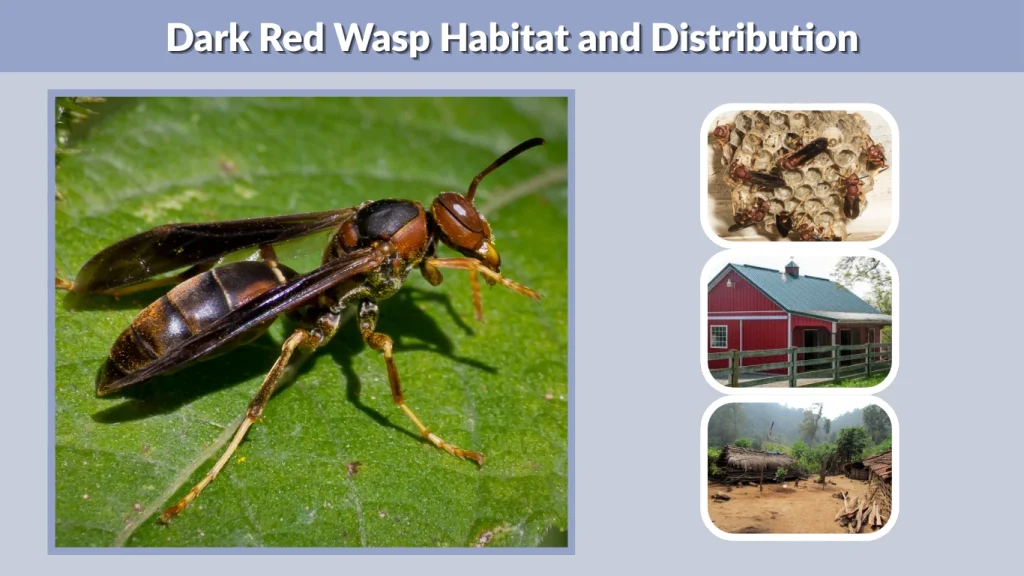
Where They Live
Dark red wasps prefer warm, sheltered areas where they can safely build nests. They are most commonly seen in:
- Texas and the southern states: thriving under eaves, decks, and barns.
- New England and New Jersey: active during the warmer months of spring and summer.
- Wooded areas and rural regions: nesting in hollow trees or wooden structures.
They are especially common near homes, gardens, and porches, where they can find both shelter and food sources.
Nesting Habits
Dark red wasps are paper nest builders, creating umbrella-shaped structures from chewed wood fibers mixed with saliva. These nests contain open hexagonal cells and are typically found:
- Under roof edges, porches, and attic overhangs
- Inside sheds, garages, and mailboxes
- On tree branches or wooden fences
A single queen starts the nest in early spring, laying eggs that hatch into larvae. By midsummer, the colony may host 20–40 adult wasps, with workers foraging for insects and nectar.
Behavior and Temperament
Dark red wasps are non-aggressive by nature but will defend their nests if threatened. They are territorial and quick to react when disturbed, delivering multiple stings in defense. However, away from the nest, they are typically calm and uninterested in humans.
These wasps are diurnal, meaning they are active during the day and rest at night. They spend much of their time hunting caterpillars, flies, and other insects to feed their young, while also sipping nectar from flowers for energy.
Compared to hornets or yellow jackets, dark red wasps are less aggressive and rarely swarm. Their presence is usually beneficial, as they reduce pest populations in gardens and farms.
Dark Red Wasp Sting
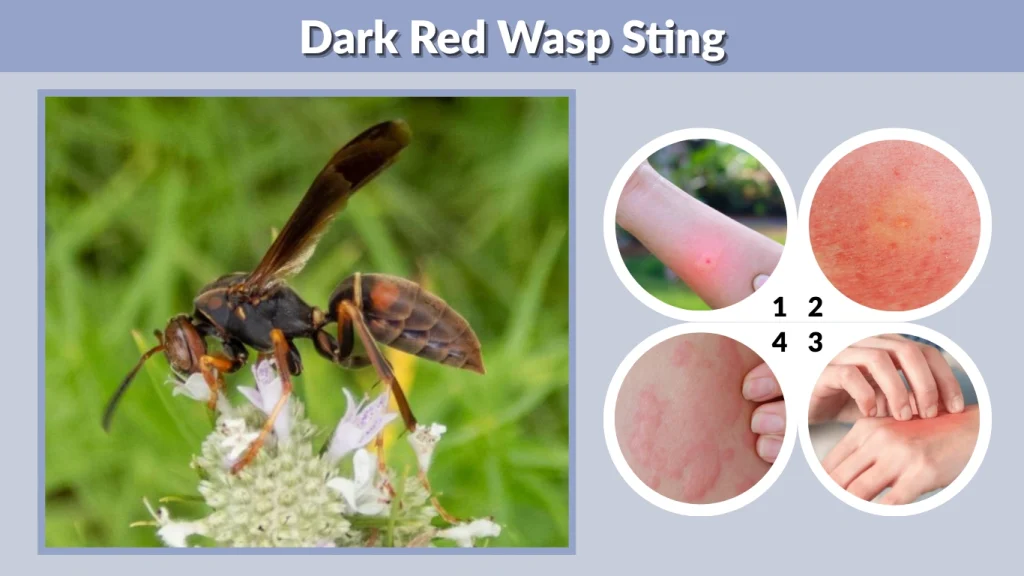
Pain Level
A dark red wasp sting is powerful, rated around 3.0 on the Schmidt Pain Index — similar to a red paper wasp or yellow jacket sting. Victims describe it as a “burning, electric pain that throbs for several minutes.” Although the pain fades within an hour, redness, swelling, and itching can last for up to two days.
Symptoms
- Immediate sharp pain followed by redness
- Localized swelling and warmth
- Mild itching or tenderness
- Occasional hives or extended redness in sensitive skin
In most cases, these symptoms are mild and subside naturally, but for individuals allergic to wasp venom, even one sting can lead to more severe reactions.
How to Treat a Dark Red Wasp Sting
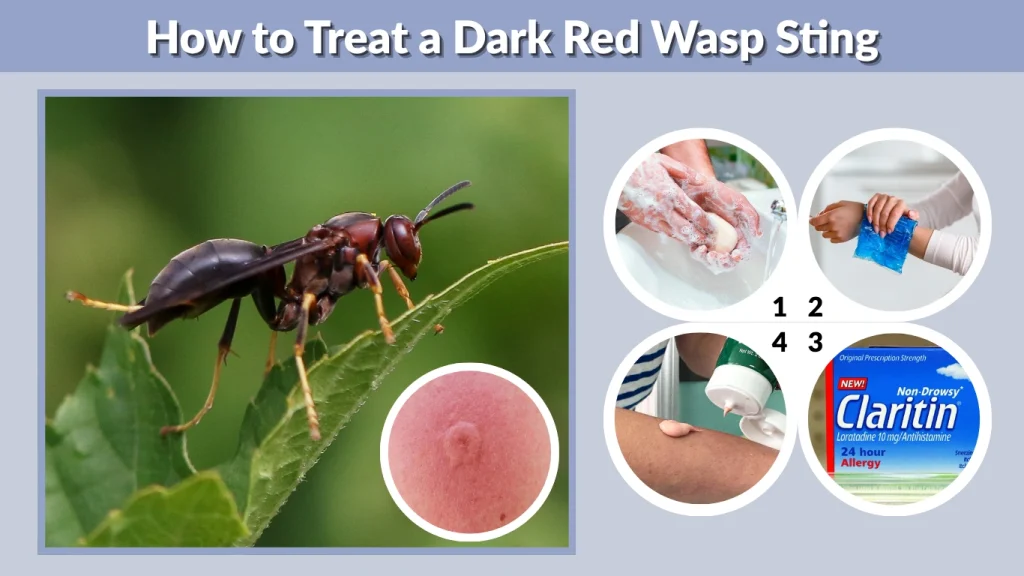
Immediate First Aid
If you are stung by a dark red wasp, act quickly to minimize pain and prevent swelling:
- Move away from the nest to avoid more stings.
- Wash the sting site gently with soap and cool water.
- Apply ice or a cold compress for 10–15 minutes to reduce inflammation.
- Take an oral antihistamine such as diphenhydramine (Benadryl) for itching.
- Use a topical cream like hydrocortisone or calamine lotion to ease irritation.
Avoid scratching the sting, as it can worsen swelling and lead to infection.
Home Remedies for Relief
- Baking soda paste: Mix one part baking soda with two parts water and apply to the sting. It helps neutralize venom acidity.
- Aloe vera gel: Soothes the burning sensation and promotes healing.
- Honey: Has antibacterial properties that reduce infection risk.
- Apple cider vinegar: Helps break down venom and calm redness.
- Cold cucumber slices: Provide instant cooling relief for sensitive skin.
If symptoms persist for more than 48 hours or spread beyond the sting site, seek medical attention.
Why Do Dark Red Wasp Stings Hurt More?
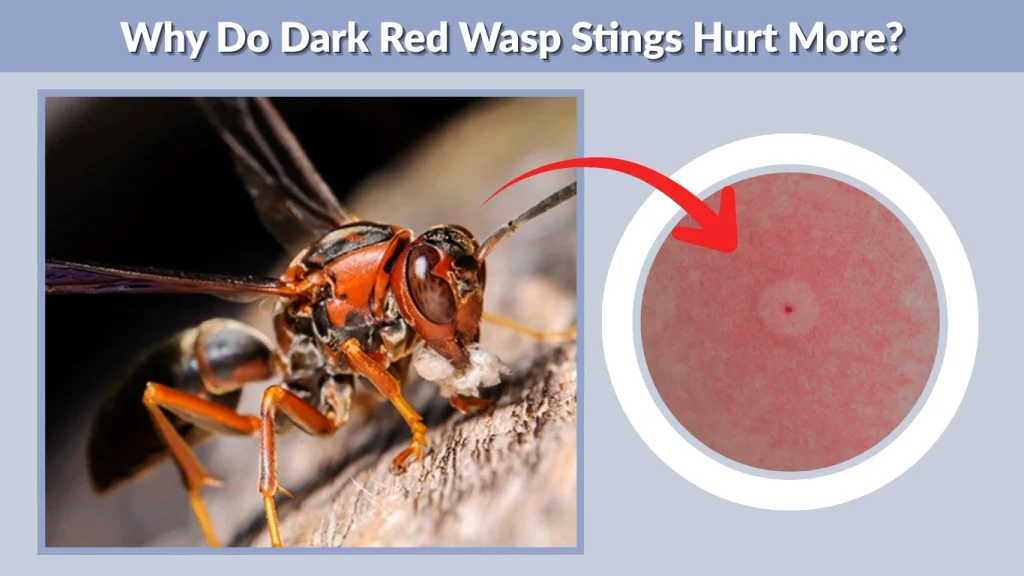
Dark red wasps have venom rich in proteins, peptides, and enzymes such as phospholipase and mastoparan, which cause strong pain and inflammation. Their sting is often described as sharper and more “electrical” than that of smaller wasps.
The sting may feel worse if:
- You’re stung multiple times.
- The sting occurs on sensitive areas (neck, face, or joints).
- You have mild venom sensitivity.
Although painful, the sting is rarely dangerous for healthy adults.
Dark Red Wasps in Texas
Distribution and Behavior
In Texas, dark red wasps—especially the Polistes rubiginosus species—are widespread in both rural and urban settings. They are commonly spotted under porches, barns, and roof eaves, where they build papery nests. The warm Texas climate supports large colonies that remain active from March through late October.
Regional Hotspots
- Central and East Texas: High activity in Austin, Houston, and surrounding areas.
- North Texas: Frequent near Fort Worth and Dallas suburbs.
- South Texas: Populations thrive year-round due to mild winters.
While they may look intimidating, they are beneficial predators that keep caterpillars and flies in check.
Ecological Role and Predators
Dark red wasps are essential to local ecosystems. They help control pests by hunting caterpillars, beetles, and other soft-bodied insects. As adults, they feed on nectar and contribute to flower pollination.
Predators include:
- Birds (like sparrows and mockingbirds)
- Praying mantises
- Spiders and lizards that ambush larvae or adults
Although humans often remove nests for safety reasons, these wasps are valuable allies in maintaining garden balance.
Prevention and Safety Tips
- Inspect eaves, sheds, and porches in spring for early nest formation.
- Seal small cracks and gaps in attics or siding.
- Avoid bright clothing and floral perfumes when outdoors.
- Keep trash cans covered and food sealed during picnics.
- Use peppermint or citronella oil sprays as natural deterrents.
- Hang decoy nests to discourage new colonies near your home.
Regular monitoring helps prevent large infestations later in the summer.
FAQs
What does a dark red wasp look like?
It has a deep reddish-brown body, black-tinted wings, and long legs. Some species appear darker or more mahogany depending on lighting and region.
Where are dark red wasps most common?
They are most abundant in Texas, New Jersey, and New England, where warm climates and wooden structures provide ideal nesting sites.
Do dark red wasps sting humans?
Yes, but only when threatened or defending their nest. They are not naturally aggressive and usually avoid human contact.
How painful is a dark red wasp sting?
It scores about 3.0 on the Schmidt Pain Index, producing a fiery sting that fades within an hour but may cause swelling or itching for a day or two.
How can I safely get rid of dark red wasps?
Spray nests at dusk with a wasp-specific insecticide, or use natural repellents like peppermint oil. For large nests, call professional pest control to avoid injury.
