
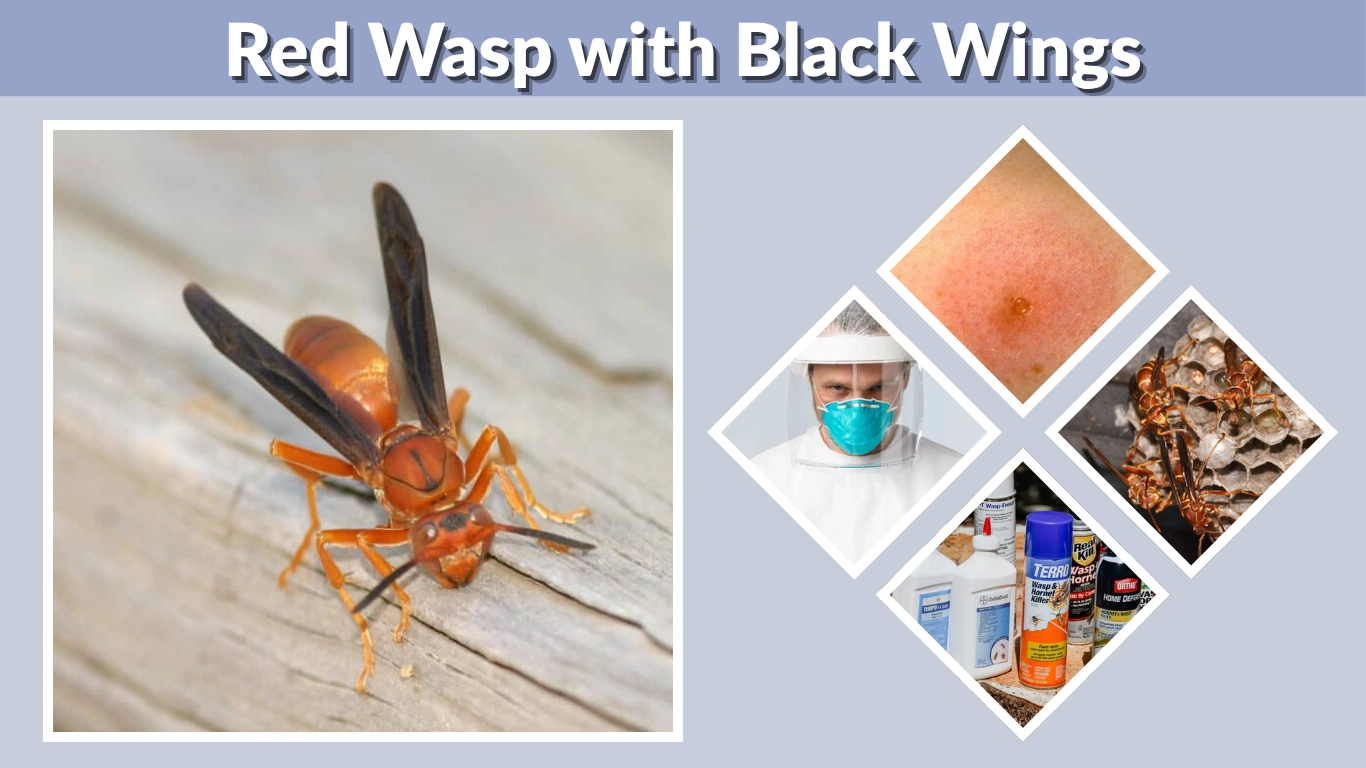
A red wasp with black wings is one of the most eye-catching insects found across the southern and western United States. Known for its striking color contrast and intimidating presence, this wasp is often mistaken for hornets or spider wasps. While their bold appearance may cause alarm, most species are beneficial pollinators and natural pest controllers. Understanding how to identify, handle, and safely coexist with them is essential.
Identifying Red Wasps with Black Wings

Physical Appearance
Red wasps with black wings display vivid coloration that makes them easy to recognize. They typically have a reddish-orange thorax and abdomen combined with shiny black wings that shimmer in sunlight. The body length ranges between 1 and 1.5 inches, depending on the species. These wasps have a narrow waist, long dangling legs, and a smooth exoskeleton that differentiates them from fuzzy bees.
Their coloration acts as a natural warning signal to predators — bright red and black tones indicate potential danger, discouraging attacks from birds and other insects. This coloration, called aposematic coloration, is common among stinging insects that rely on venom for defense.
Common Species
Several wasp species share the red-and-black color pattern, and they vary in size, habitat, and sting intensity.
- Red Paper Wasp (Polistes carolina) – The most common species, featuring a bright red body with dark brown or black wings. It builds umbrella-shaped paper nests under roofs, eaves, or tree branches.
- Pepsis Wasp (Tarantula Hawk) – A large, solitary wasp with a metallic black body and orange-red wings. It’s famous for its extremely painful sting but rarely attacks humans unless handled.
- Spider Wasp (Anoplius spp.) – Smaller, ground-dwelling wasps with red abdomens and black wings. They paralyze spiders to feed their larvae and are typically non-aggressive.
Each species serves an ecological role, from controlling spider populations to aiding in pollination.
Regional Variations Across the U.S.
Texas and the Southern States
In Texas, red paper wasps and tarantula hawks are both common. The Texas Red Wasp (a variant of Polistes carolina) frequently builds nests under decks, porches, and barn ceilings. They are social insects, living in small colonies. In contrast, the Pepsis grossa is a solitary wasp found in arid regions of the Southwest, recognized for its glossy black body and fiery red wings.
Both species prefer warm climates and open spaces for nesting. Their populations typically rise in late spring and peak during summer, when they actively hunt insects and spiders to feed their young.
Florida and the Southeast
Florida hosts several red-bodied wasps with black wings, often spotted near flowering plants and wooded areas. They play a major role in controlling garden pests. The humid climate allows them to build nests on porches, window frames, and tree limbs. Residents should check for nests early in the season, as colonies grow rapidly in warm weather.
California and the Western States
In California and neighboring regions, the Pepsis formosa — also known as the Tarantula Hawk Wasp — stands out as the largest species of its kind. It has black legs and a body with blazing orange-red wings. Despite its terrifying appearance, it’s generally non-aggressive and only stings when threatened. The sting, however, ranks among the most painful in the insect world, though it subsides quickly without lasting harm.
Behavior and Nesting Habits
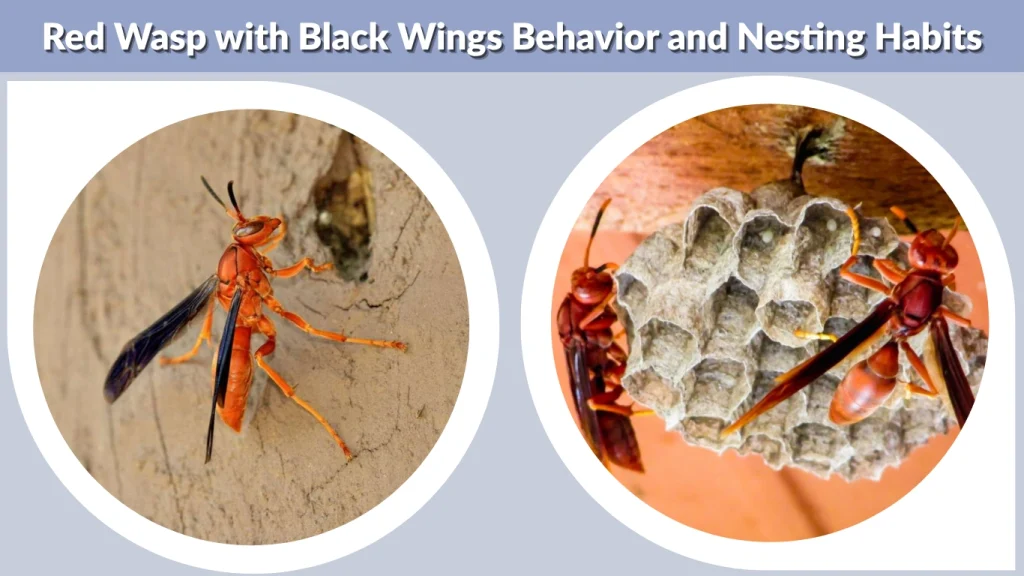
Nesting Preferences
Different red-and-black wasps exhibit varying nesting behaviors:
- Paper Wasps: Build visible paper-like nests from chewed wood fibers mixed with saliva.
- Spider Wasps: Prefer sandy soil or cracks in the ground to create burrows for their eggs.
- Tarantula Hawks: Construct small burrows or use abandoned holes, often paralyzing spiders as live food for their larvae.
They prefer sunny, sheltered areas, making attics, sheds, and eaves ideal nesting spots. Observing their nest style can help identify the species and determine the best removal method if necessary.
Diet and Role in Nature
Adult red wasps feed primarily on nectar, fruit sap, and honeydew from plants. They act as pollinators while searching for food. Their larvae, however, consume protein-rich prey — mainly spiders, caterpillars, and flies — supplied by adult females. This natural pest control behavior makes them beneficial to gardens and ecosystems.
Activity Patterns
These wasps are diurnal, meaning they’re active during the day and return to their nests at night. They’re most active from spring through early fall, coinciding with warm temperatures and abundant food sources. Red wasps are typically not aggressive unless they feel their nest is threatened, but disturbing one can provoke defensive swarming.
Danger and Sting Information
Are Red Wasps with Black Wings Dangerous?
Although their vivid red bodies and black wings look intimidating, most of these wasps are not aggressive toward humans unless provoked. Social species like paper wasps may defend their nests aggressively, while solitary species such as tarantula hawks usually avoid contact. However, their stings can cause intense, burning pain due to potent venom.
Sting Pain and Reactions
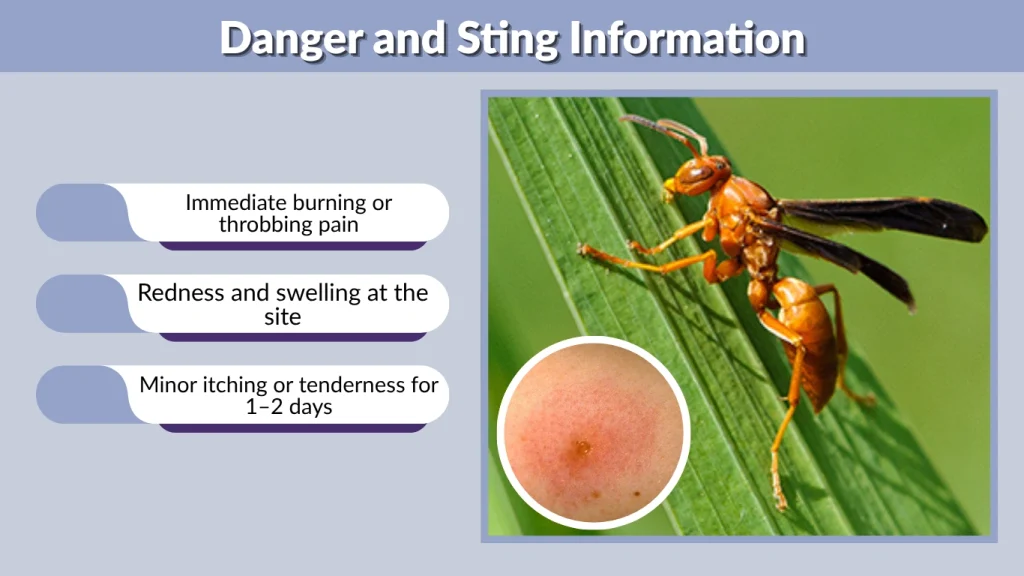
The sting of a red paper wasp typically produces localized swelling, redness, and a sharp pain lasting several minutes. The tarantula hawk’s sting, on the other hand, ranks among the most painful in the insect world but rarely causes serious injury.
Common symptoms include:
- Immediate burning or throbbing pain
- Redness and swelling at the site
- Minor itching or tenderness for 1–2 days
If multiple stings occur or you experience dizziness, facial swelling, or shortness of breath, seek emergency medical help—these are signs of a severe allergic reaction.
First Aid for a Sting
- Wash the affected area with soap and cool water.
- Apply ice for 10 minutes to reduce swelling.
- Use baking-soda paste or calamine lotion to soothe irritation.
- Take an oral antihistamine for mild itching or redness.
- Avoid scratching, which can lead to infection.
For individuals with known allergies, carrying an epinephrine auto-injector (EpiPen) is vital when spending time outdoors.
How to Handle a Red Wasp Infestation
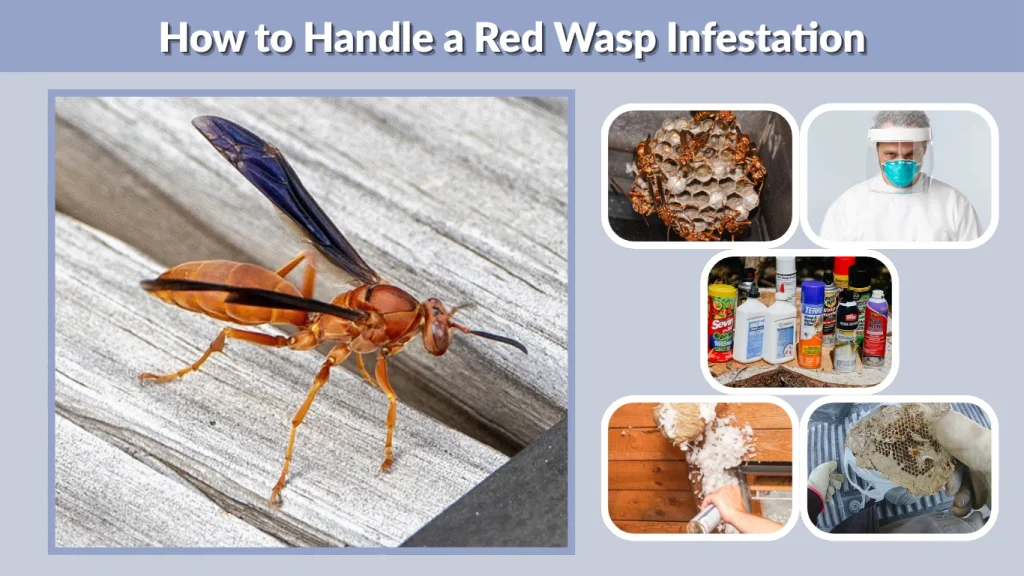
Red-winged wasps can build nests in attics, barns, and under patio roofs. Removing them safely requires patience and proper timing.
Inspection
Regularly check roof eaves, vent openings, and deck undersides—these shaded, protected spots attract paper wasps early in spring. Identifying nests early prevents full colony development.
Removal Steps
- Approach nests only after dusk when wasps are dormant.
- Wear thick clothing, gloves, and a face shield.
- Use a long-range wasp spray or dust insecticide rated for paper wasps.
- Wait overnight before removing the nest with a pole or broom.
- Dispose of it in a sealed bag and clean the surface with soapy water.
If the nest is large, near wiring, or inside the attic, contact a professional pest-control service to avoid injury.
Preventive Measures
- Seal wall gaps, attic vents, and cracks in siding.
- Keep garbage tightly covered and remove fallen fruit from the yard.
- Hang fake wasp nests to discourage new colonies.
- Spray peppermint-oil repellent monthly during summer.
- Maintain trimmed trees and bushes to reduce nesting areas.
Similar Insects Often Mistaken for Red Wasps
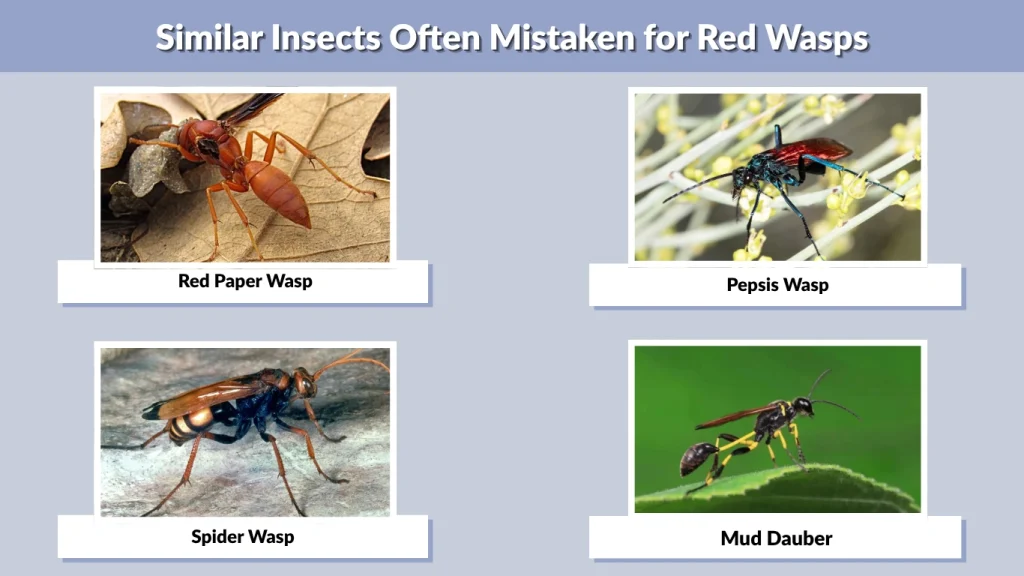
| Insect | Appearance | Behavior | Sting Level |
| Red Paper Wasp | Red body, dark wings | Social nest-builder | Moderate–painful |
| Pepsis Wasp (Tarantula Hawk) | Black body, orange-red wings | Solitary, hunts spiders | Extremely painful |
| Spider Wasp | Black body, red abdomen | Ground-dwelling | Mild |
| Mud Dauber | Shiny black-blue body, narrow waist | Solitary, harmless | Rarely stings |
Recognizing differences helps you respond correctly—mud daubers and spider wasps usually pose little threat, while paper wasps should be treated with caution.
Ecological Importance
Despite their fearsome look, these wasps benefit the environment. They pollinate flowers while feeding on nectar and control spider and caterpillar populations, maintaining balance in gardens and forests. Destroying every wasp you see can disrupt this balance; instead, focus on relocating or deterring colonies near living spaces.
FAQs
What kind of wasp is red with black wings?
It’s usually the Red Paper Wasp (Polistes carolina) or a Spider Wasp, depending on size. Large specimens with orange-red wings are Tarantula Hawks, famous for their painful sting yet mostly non-aggressive nature.
Are red wasps with black wings dangerous?
They can sting painfully but seldom attack without reason. Only when their nest or territory is disturbed do they become defensive. Treat them with caution, but they play an important ecological role.
Where are these wasps commonly found?
They thrive in Texas, Florida, California, and other southern U.S. states, preferring warm climates and dry shelters such as sheds, barns, and attics. Some species also occur in desert regions and grasslands.
How do I remove red wasps safely?
Remove nests at night using protective gear and long-distance wasp spray. For large or hard-to-reach nests, hire a pest-control expert to ensure safe elimination without provoking a swarm.
Do red wasps with black wings serve any purpose?
Yes. They help pollinate plants and naturally reduce pest populations by hunting spiders and caterpillars. Keeping their activity under control—rather than eradicating them entirely—benefits local ecosystems.
