

A fascinating example of interdependence in nature, the fig tree and fig wasp relationship illustrates the beauty of coevolution. Each species has evolved to rely on the other for survival — the wasp pollinates the fig, while the fig provides a safe habitat for the wasp to reproduce. This complex bond has existed for over 60 million years, symbolizing a delicate balance between plant and insect life.
Identification

Fig Tree
The fig tree, belonging to the Ficus genus, includes over 800 known species. These trees are found mainly in tropical and subtropical regions, producing a unique fruit called a syconium — an enclosed structure that holds tiny flowers inside. Famous examples include the common fig (Ficus carica), sacred fig (Ficus religiosa), and sycamore fig (Ficus sycomorus). Each species has a distinct wasp partner responsible for pollination.
Fig Wasp
Fig wasps belong to the Agaonidae family and are incredibly small, usually less than 2 millimeters long. The females are winged and responsible for entering the fig to lay eggs and transfer pollen. Males, however, are wingless and live their entire lives inside the fig, mating with females before dying — a sacrifice that continues the cycle of life and pollination.
Coevolution and Mutualism
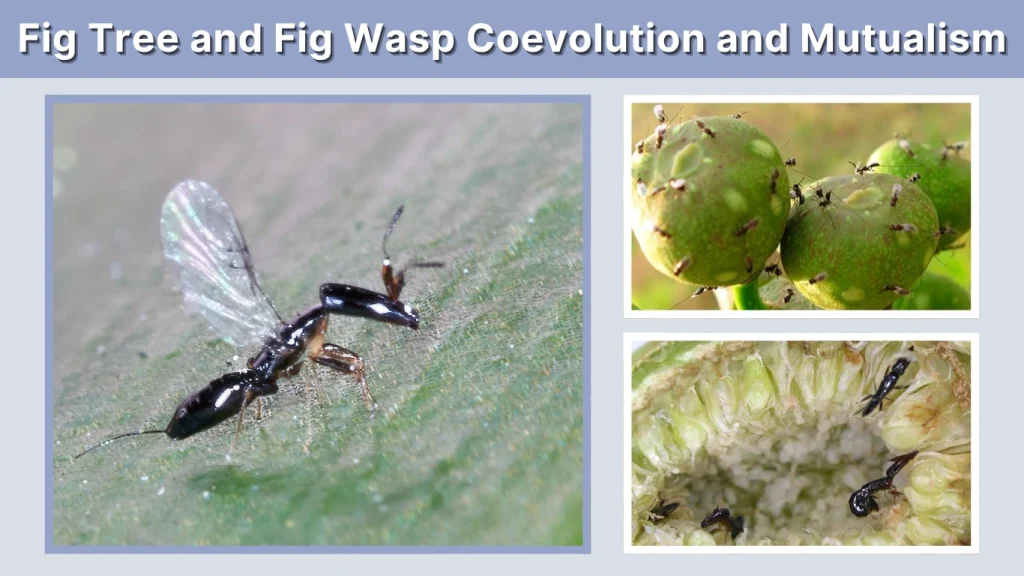
A Perfect Match
The relationship between the fig tree and the fig wasp is a classic example of coevolution — where two species evolve traits in direct response to each other. Most fig species rely on a single wasp species for pollination, and vice versa. This exclusivity ensures that pollination is precise and efficient, maintaining biodiversity in tropical ecosystems.
Mutual Benefits
Both species gain significant advantages:
- For the fig tree, wasps carry pollen from one fig to another, allowing fertilization and fruit production.
- For the fig wasp, the fig offers a protected chamber where females can lay eggs and larvae can develop safely.
This relationship ensures mutual survival, making it a perfect example of biological cooperation.
Pollination Process
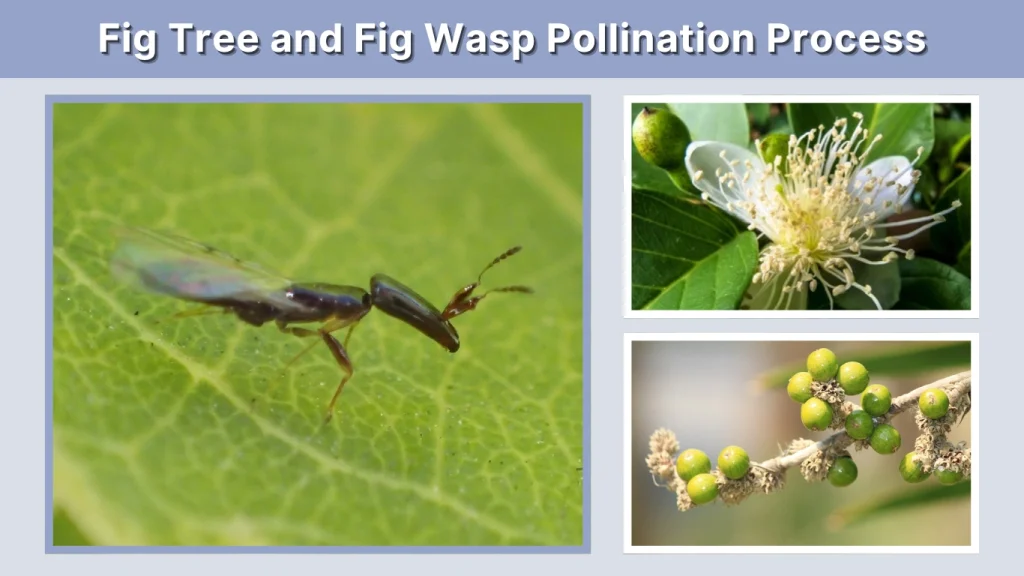
Entry and Egg Laying
The pollination process begins when a female wasp, carrying pollen from another fig, enters a new fig through a small opening called the ostiole. The journey is perilous — she often loses her wings and antennae in the process. Once inside, she lays her eggs in some of the fig’s tiny flowers and deposits pollen onto others, unintentionally fertilizing them.
Development and Exit
After the eggs hatch, male wasps emerge first, mate with females, and dig exit tunnels before dying inside the fig. The fertilized females then collect pollen from mature flowers and leave the fig through the tunnels to find a new syconium. This cycle continues endlessly, ensuring both the tree’s reproduction and the wasp’s survival.
Adaptations
Over millions of years, both fig trees and wasps have developed special adaptations that strengthen their bond:
- Chemical Signals: Figs emit specific scents to attract their designated wasp species, ensuring only compatible pollinators visit.
- Structural Fit: The fig’s inner cavity and ostiole evolved to match the size and shape of its wasp partner.
- Behavioral Adaptation: Female wasps instinctively seek figs at the right developmental stage for successful pollination and egg laying.
- Digestive Enzymes: Figs produce enzymes that naturally break down dead wasps trapped inside the fruit, leaving no trace.
These adaptations reflect the deep level of specialization that defines their mutualism.
Misconceptions and Human Interaction
A common myth suggests that eating figs means consuming wasps — but this is far from true. In most cases, the fig completely dissolves the dead wasp using natural enzymes called ficin, leaving only plant-based material behind. Additionally, many cultivated figs, such as the popular Ficus carica, reproduce without wasps through a process known as parthenocarpy, meaning they develop fruit without pollination.
For gardeners, wasps near fig trees are usually harmless. To deter nuisance species, it helps to:
- Remove overripe fruits regularly.
- Cover young fruits with mesh.
- Encourage pollinating wasps while keeping aggressive wasps away with natural repellents.
Fig Tree and Fig Wasp Relationship

The bond between the fig tree and fig wasp is one of nature’s most enduring partnerships. This mutualistic relationship ensures that each partner depends on the other for survival. The fig’s enclosed flowers cannot be pollinated by wind or bees, so the wasp plays a crucial role as the sole pollinator. In return, the fig provides a secure habitat where the wasp’s offspring can grow safely.
This process highlights how symbiosis functions in nature — both species benefit equally, maintaining ecological harmony. Without the wasp, many fig species couldn’t reproduce, and without the fig, the wasp would have nowhere to complete its life cycle.
Ecological Importance
Figs are considered keystone species in many tropical forests because they provide food for countless animals, including birds, monkeys, and bats. Their ability to fruit year-round makes them an essential food source during scarce seasons. Because of their dependence on wasps for pollination, protecting both species is vital for the stability of entire ecosystems.
Moreover, fig trees help maintain biodiversity, ensuring continuous seed dispersal and supporting other plant and animal species. The survival of numerous forest creatures depends on this intricate connection between fig and wasp.
Do All Fig Trees Need Wasps?
Not all fig trees depend on wasps. Some commercial species like Ficus carica can produce fruit without pollination through parthenocarpy. These are the figs most commonly found in grocery stores. However, wild fig trees absolutely rely on their specific fig wasps for pollination. If their pollinators disappear, those fig species face reproductive failure.
This balance showcases how tightly evolution has bound the fate of these two organisms together — a single missing piece can disrupt the entire chain.
Fig Tree and Wasp Coevolution
Over millions of years, fig trees and wasps have evolved specialized traits that make their partnership possible. The wasps have developed long ovipositors (egg-laying organs) suited to the fig’s unique flower structure. In turn, the fig’s flowers have evolved in size, shape, and scent to match their pollinator’s abilities.
This mutual evolution also includes timing — figs release chemical cues precisely when female wasps are ready to lay eggs. It’s a delicate synchronization between plant and insect behavior that ensures both thrive simultaneously.
Fig Trees and Wasps in Human Culture
Figs have been revered since ancient times, symbolizing fertility, abundance, and enlightenment. Yet few realize that the small wasp is behind every wild fig fruit. Farmers cultivating non-pollinated fig species have learned to manage wasp populations carefully, as some species can affect fruit quality or attract unwanted insects.
In regions like Africa and Southeast Asia, understanding fig-wasp ecology helps in conservation and agricultural sustainability, maintaining biodiversity while ensuring reliable fruit production.
FAQs
Do all fig trees need wasps?
No. Some cultivated fig trees can develop fruit without pollination through parthenocarpy. However, most wild fig trees rely entirely on specific fig wasps for pollination and seed production, maintaining the mutualistic relationship that sustains tropical biodiversity.
Do fig trees attract wasps?
Yes, but primarily fig wasps — their natural pollinators. Figs release scent compounds that specifically attract the right wasp species. Occasionally, other wasps may visit ripe or damaged fruit, but these are not essential for pollination.
Do fig trees eat wasps?
Figs do not eat wasps. The pollinating wasp dies inside the fruit after completing its role, and the fig’s enzymes naturally break down its body. The final ripe fig contains no insect parts, only plant tissue — making it completely safe to eat.
What kind of relationship exists between fig trees and wasps?
The fig tree and fig wasp share a mutualistic relationship, meaning both species benefit. The wasp gains a safe breeding site inside the fig, and the fig tree receives pollination, allowing it to produce seeds and continue its species.
Can you grow a fig tree without wasps?
Yes, many domestic or commercial fig varieties, such as the common fig, can bear fruit without wasps through self-pollination. However, wild figs absolutely need wasps for reproduction, emphasizing the ecological interdependence of these two species.
