
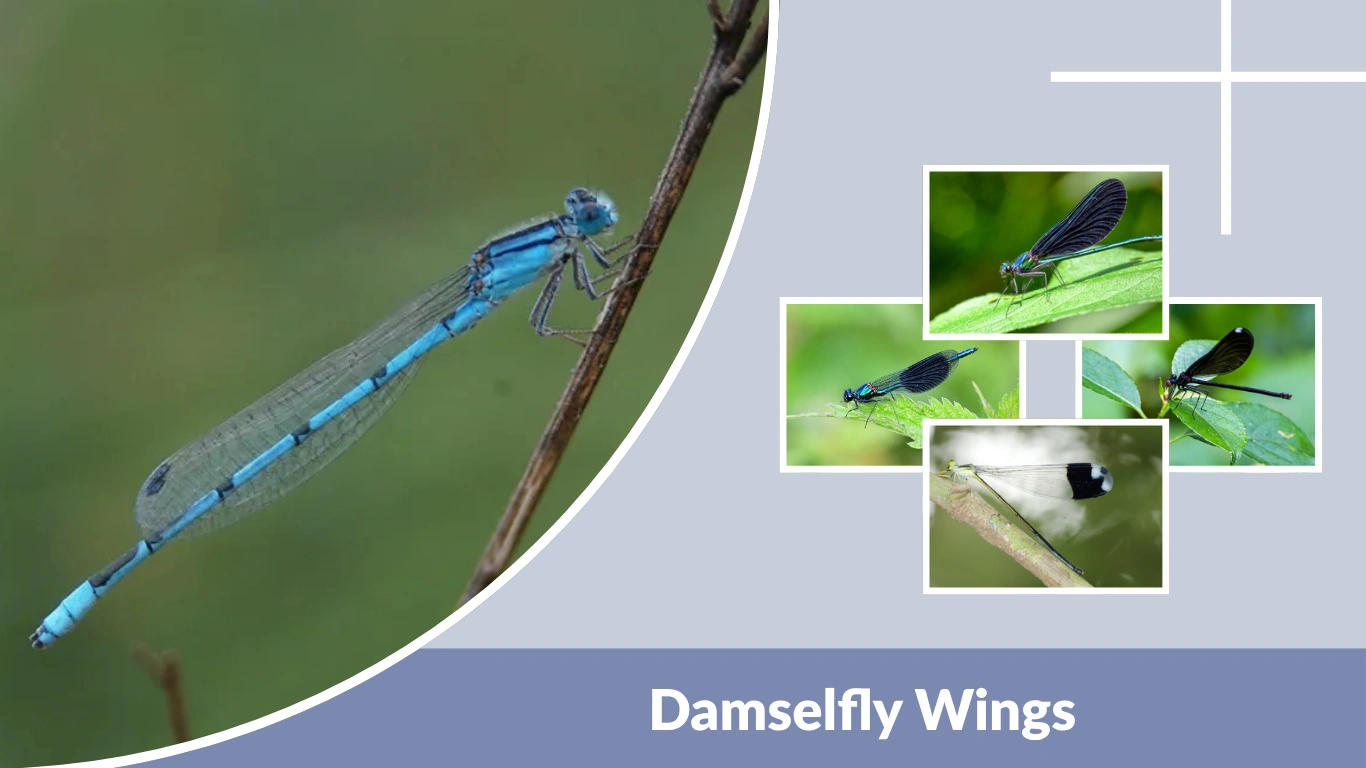
Damselflies are among nature’s most graceful fliers, admired for their delicate wings that shimmer in the sunlight. Though often mistaken for dragonflies, their wing structure and flight style set them apart. These slender insects glide effortlessly over ponds and rivers, their transparent wings reflecting shades of blue, black, or even red. Understanding their wing anatomy and types helps reveal how they’ve mastered the art of flight and adaptation in aquatic ecosystems.
Understanding Damselfly Wings
How Many Wings Do Damselflies Have
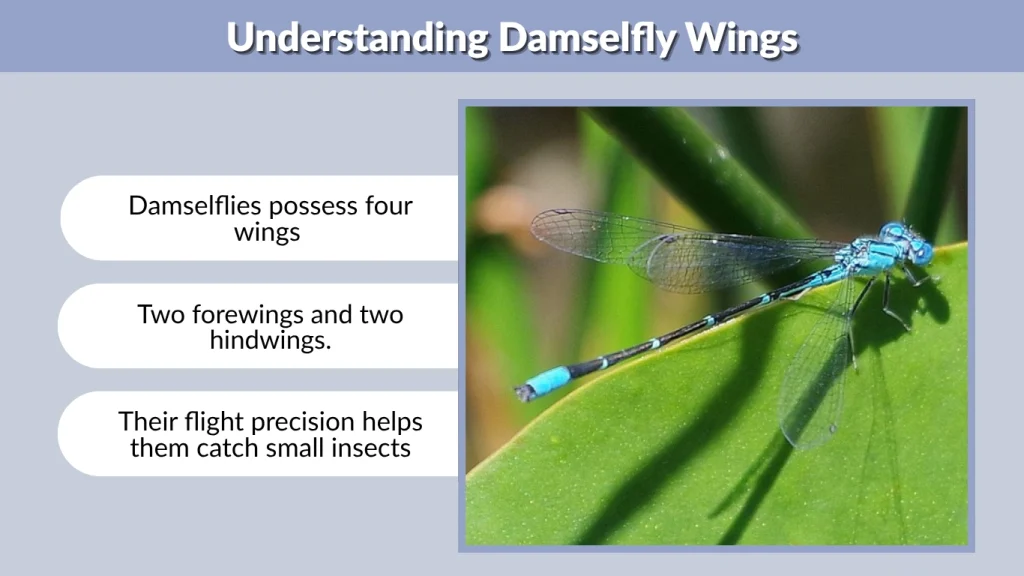
Damselflies possess four wings — two forewings and two hindwings. Each pair operates independently, giving them superior maneuverability in flight. This allows them to hover, glide backward, and pivot midair with ease. Their flight precision helps them catch small insects like mosquitoes and midges, playing a crucial role in maintaining ecological balance.
Wing Structure and Anatomy
A damselfly’s wings are composed of thin, transparent membranes supported by a lattice of veins that provide both flexibility and strength. The radius and tibia sections control movement, while wing pads develop during the nymph stage. The veins act as lightweight supports, allowing stability without sacrificing mobility. When not in flight, damselflies fold their wings neatly along their abdomen — a defining difference from dragonflies, which rest with wings open.
Physical Traits and Function
Wing Movement and Flexibility
Damselfly wings are designed for precision and agility. Their ability to move each wing independently allows slow hovering or sudden darts forward. They can even fly backward or sideways, feats few insects achieve. The hinge joints and muscles near the thorax enable controlled wing angles for aerodynamic efficiency. This flexibility gives them an advantage when navigating through dense vegetation near ponds and streams.
Why Wing Design Matters
The streamlined design of damselfly wings ensures swift, silent flight. These wings aren’t just tools for mobility — they also play vital roles in mating displays, territory defense, and camouflage. During courtship, males often flash their brightly colored wings to attract females. Additionally, certain wing shapes help them blend into water reflections or foliage, reducing the risk of predation.
Wing Colors and Patterns
Black-Winged Damselflies
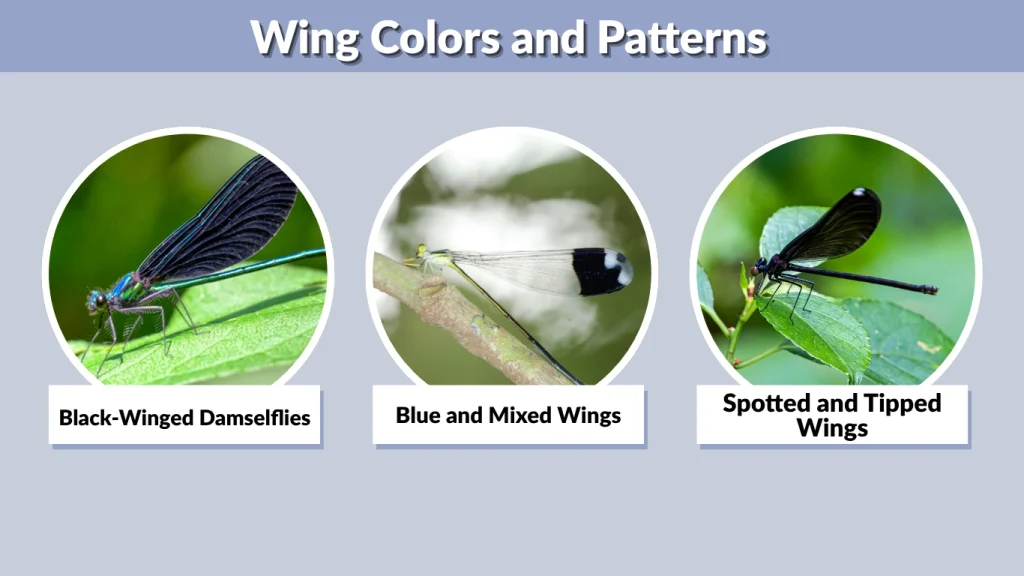
The black-winged damselfly, including species like the Ebony Jewelwing (Calopteryx maculata), is renowned for its velvety dark wings that contrast beautifully with a metallic green or blue body. These wings can appear iridescent under sunlight. Females often have brown-tinted or smoky wings, while males display deep black shades for courtship. In the UK and North America, these damselflies thrive near clean, shaded streams.
Blue and Mixed Wings
Blue-winged species such as the Blue-Winged Helicopter Damselfly are striking examples of color adaptation. Their luminous blue wings reflect sunlight, creating a mirror effect that confuses predators. In tropical regions, the blue-black winged damselfly showcases bold color contrast, helping males assert dominance during territorial displays. Blue-winged species are common across Central America, Asia, and the Pacific islands.
Spotted and Tipped Wings
Some damselflies feature white or black-tipped wings — distinctive markings that aid in mate recognition. The black-winged damselfly (UK variant), for example, has small white spots near the wing edges. These markings can indicate maturity or gender. In others, such as the black damselfly with white spot, the patterns help reflect light and act as visual signals during flight interactions.
Types of Winged Damselflies
Narrow-Winged Damselflies
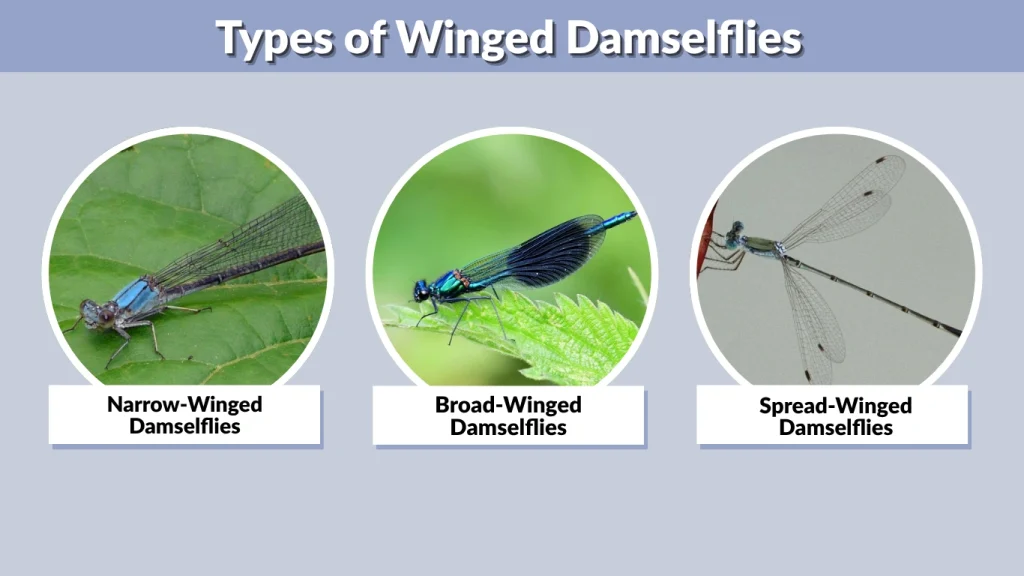
Narrow-winged species have slim, elongated wings perfectly adapted for quick, darting flight. Their streamlined bodies and narrow wings reduce air resistance, allowing swift movement over open ponds and meadows. Species like the Narrow-Winged Bluet or Spreadwing are common in warm, open environments. However, some narrow-winged damselflies face threats due to habitat loss and pollution, as they rely on clean water bodies for breeding.
Broad-Winged Damselflies
Broad-winged damselflies, belonging to the Calopterygidae family, possess wider wings with a more pronounced shape. These wings enable smoother gliding and slower, more graceful flight patterns. They are often found near forest streams, where dense vegetation requires controlled hovering. Their broad wings also serve as display tools during mating rituals, often shimmering in deep metallic hues.
Spread-Winged Damselflies
Unlike most damselflies, spread-winged species rest with their wings partially open, similar to dragonflies. This unique resting position helps them take off quickly when disturbed. Found in both temperate and tropical regions, these damselflies balance between speed and agility. Their wings are moderately broad and sturdy, enabling longer flights across open landscapes.
Species with Distinct Wing Traits
Ebony and Jewelwing Damselflies
The Ebony Jewelwing and related species are admired for their metallic green or blue bodies paired with black, velvety wings. Found in shaded rivers across North America and Asia, these damselflies are highly territorial. Males perform a fluttering dance to attract females, spreading their dark wings in rhythmic patterns — a behavior that inspired their common name, “jewelwing.”
Helicopter and Dancer Damselflies
The Blue-Winged Helicopter Damselfly is among the largest of its kind, boasting broad, rounded wings that resemble a helicopter rotor in motion. Its flight is slower but more elegant, typical of rainforest and tropical habitats. The Dancer Damselflies, on the other hand, are smaller, exhibiting rhythmic “dancing” flight movements near water surfaces. Both types display vivid color patterns that aid in identification.
Damselfly vs. Dragonfly Wings
Structural Differences
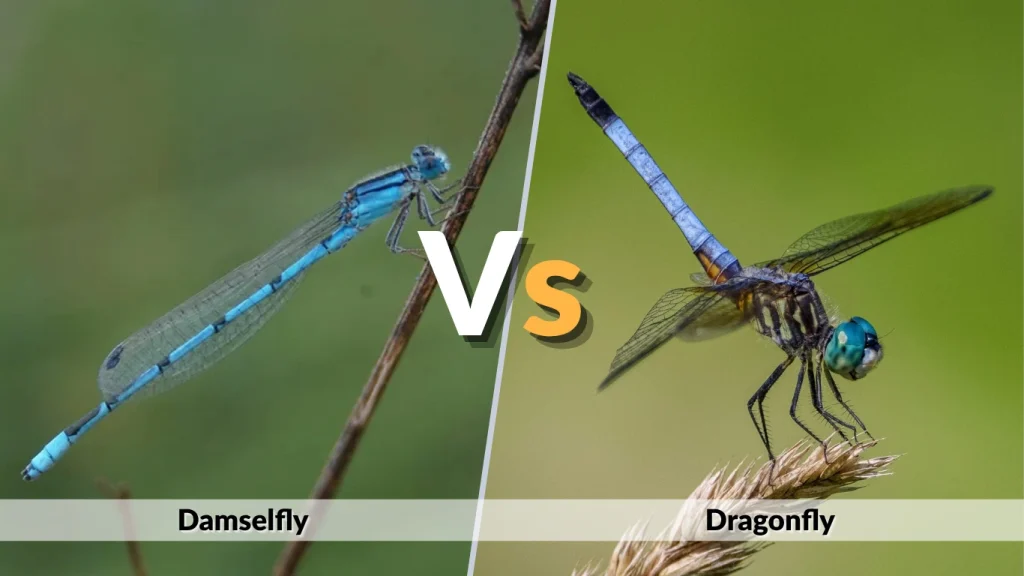
While damselflies and dragonflies belong to the same order (Odonata), their wing structures differ significantly. Damselflies have wings of equal size and shape, which fold neatly along the body. In contrast, dragonflies have broader hindwings that remain open at rest. This structural variation gives dragonflies stronger lift for faster, direct flight, while damselflies excel in precision and agility.
Flight and Behavior
Damselflies rely on light, flexible wingbeats to navigate tight spaces among reeds and grasses. Their movement is deliberate and silent, suited for stalking prey in confined areas. Dragonflies, by contrast, have a powerful, high-speed flight ideal for long chases. This difference in wing dynamics also affects their ecological niches — damselflies dominate calmer habitats, while dragonflies thrive in open water zones.
Color Variations and Adaptations
Environmental Influence
Wing coloration in damselflies often reflects their surrounding habitat. In sunny regions, lighter or transparent wings help reflect heat and prevent overheating, while darker wings absorb warmth in cooler climates. The shimmering blues and greens mimic the reflections of water, camouflaging damselflies from predators like birds and frogs. Environmental changes, such as pollution or rising temperatures, can even dull their colors, affecting their mating success.
Sexual Selection and Signaling
Wing colors aren’t merely decorative—they’re crucial in communication. Males use bright or iridescent wings to signal strength and attract females. Some species flick or spread their wings in rhythmic displays, while others flash color in short bursts during flight. Ultraviolet reflection, invisible to humans but visible to damselflies, plays a key role in these mating rituals, helping individuals recognize members of their own species.
Life Cycle and Wing Development
From Nymph to Adult
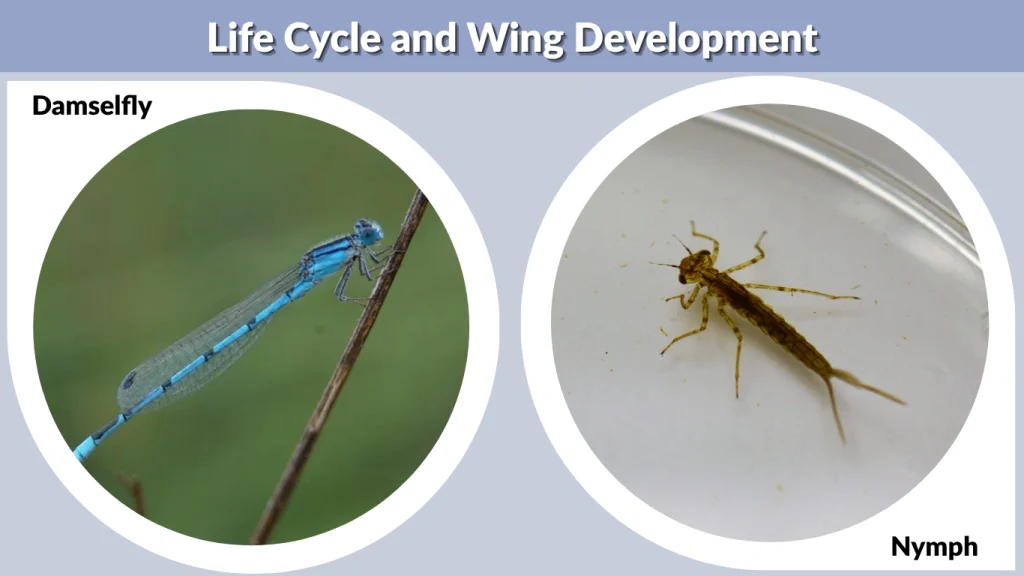
A damselfly’s wings begin forming during its aquatic nymph stage. Hidden beneath protective wing pads, they slowly develop as the nymph matures underwater. When the adult emerges, it climbs onto a plant stem and sheds its outer shell in a process called eclosion. Within minutes, the soft wings expand and harden, filled with hemolymph—a fluid similar to blood. This transformation marks its transition from water to air, ready for flight.
Wing Longevity and Damage
Adult damselflies live for only a few weeks, during which their wings endure continuous use. Over time, wings can fray, tear, or lose their sheen due to wind, predation, or aging. While they cannot regenerate wings once damaged, damselflies are remarkably resilient and continue to fly even with minor tears. Their short but vibrant lives are a reminder of nature’s fleeting beauty and precision engineering.
Conservation and Ecological Significance
Wing Morphology and Habitat Health
The health and coloration of damselfly wings serve as natural indicators of environmental quality. Clear, undamaged wings often signify clean, oxygen-rich water, while deformed or dull wings can indicate pollution. Ecologists use damselfly populations to monitor freshwater ecosystems since these insects are highly sensitive to habitat changes. Healthy wings, therefore, are not just aesthetic—they’re symbols of a thriving environment.
Threats to Winged Species
Many damselfly species, especially narrow-winged and broad-winged varieties, face growing threats from habitat loss, agricultural runoff, and pesticide use. Destruction of wetlands and riversides reduces breeding areas, directly impacting populations. Climate change also alters flight seasons and wing pigmentation, disturbing natural cycles. Conservation efforts focused on wetland restoration and clean water protection are essential for their continued survival.
Observation and Photography Tips
Best Conditions for Viewing
Damselflies are most active on warm, calm days, typically between late morning and mid-afternoon. Early mornings offer the best chances to photograph them, as their wings glisten with dew and they move slowly while warming up. Look near ponds, lakes, and slow-moving streams where aquatic plants grow densely—these are their favorite resting and breeding spots.
Photography Advice
Photographing damselflies requires patience and precision. Use a macro lens to capture wing veins, colors, and patterns in fine detail. Approach slowly from behind to avoid startling them. Soft, natural lighting works best to highlight the transparency and iridescence of their wings. Avoid disturbing vegetation or shadows that could disrupt their behavior. With practice, you can capture the delicate geometry and colors that make their wings so extraordinary.
FAQs
How many wings does a damselfly have?
A damselfly has four wings—two forewings and two hindwings. Each wing can move independently, allowing them to hover, glide, and turn sharply in flight. This flexible wing design makes damselflies expert aerial hunters.
What are the main types of damselfly wings?
The three main types are narrow-winged, broad-winged, and spread-winged damselflies. Narrow-winged types are fast and slender, broad-winged species glide gracefully, and spread-wings rest with their wings half-open, ready to take off instantly.
Why do some damselflies have black or colored wings?
Wing colors serve multiple purposes—camouflage, mate attraction, and temperature regulation. Dark wings absorb heat, while bright or reflective wings confuse predators and help during courtship displays.
How do damselfly wings differ from dragonfly wings?
Damselflies fold their wings along the body when resting, unlike dragonflies, which keep them open. Damselfly wings are slimmer and of equal size, making them more flexible but less powerful than those of dragonflies.
Are damselflies with black wings rare?
Black-winged species like the Ebony Jewelwing are not rare but are often localized to specific habitats, such as shaded forest streams. Their dark wings absorb sunlight efficiently and are vital for courtship and temperature control.
