
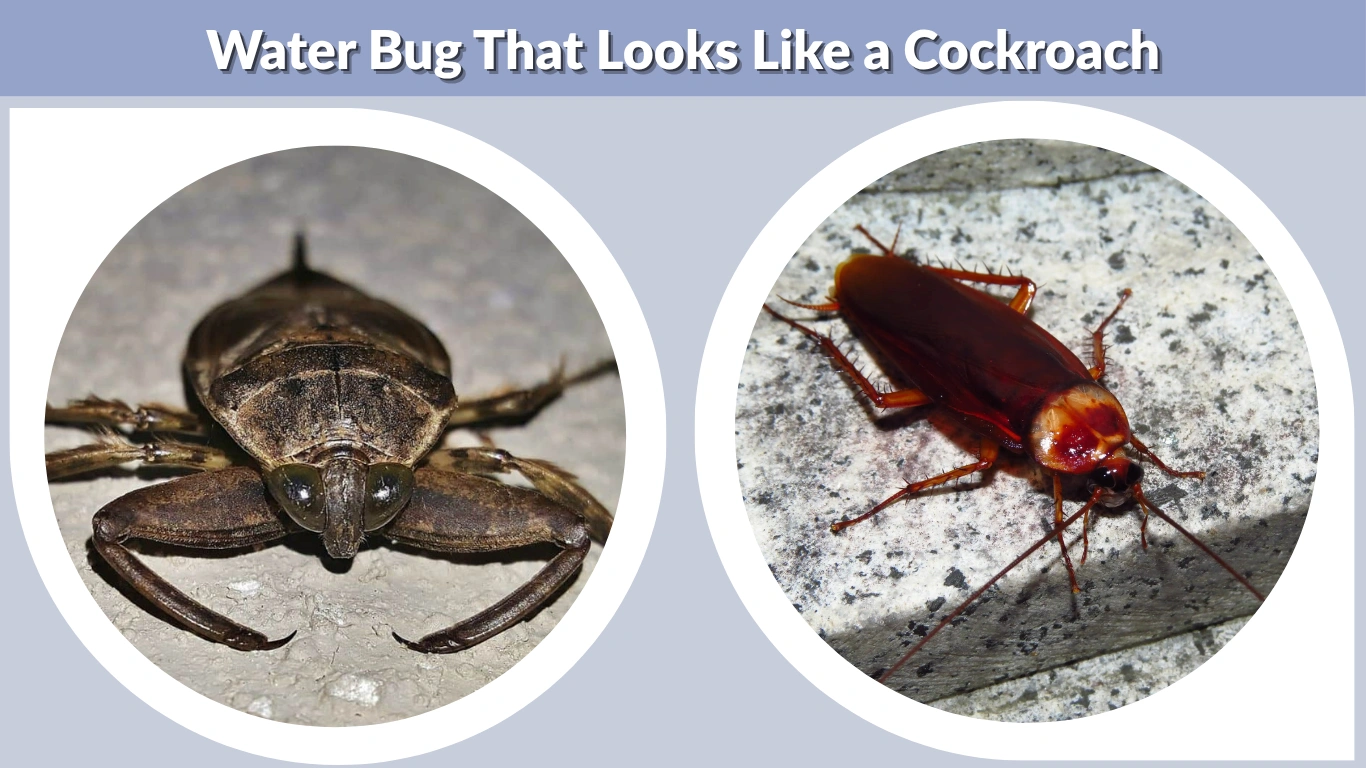
Many people confuse water bugs with cockroaches because both share similar brown coloring, flat bodies, and quick movements. However, despite their resemblance, these insects belong to different groups and behave quite differently. This guide explains how to identify a water bug, distinguish it from a cockroach, and understand its habits, habitat, and appearance in homes.
Understanding Water Bugs
What Is a Water Bug?
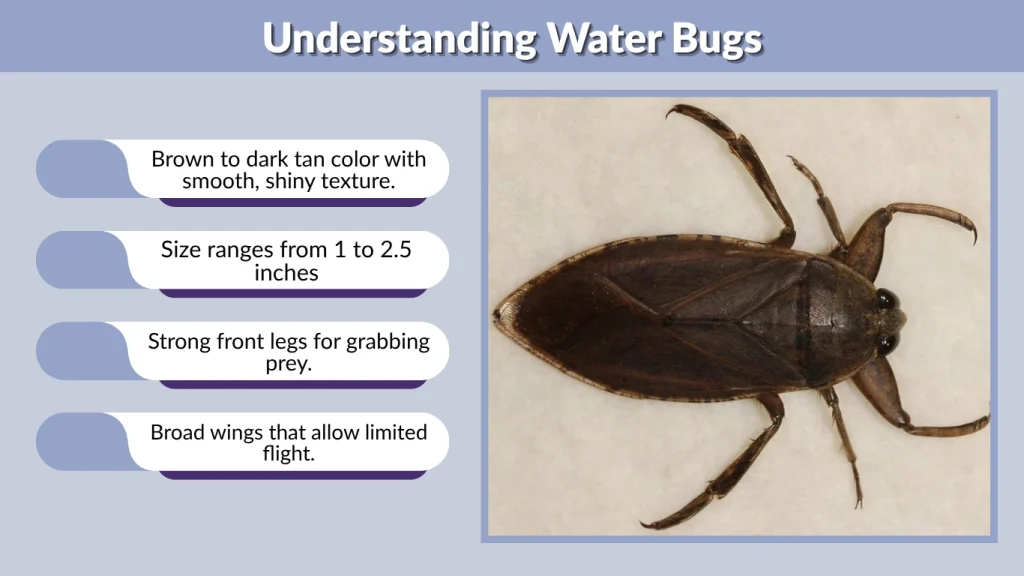
A water bug is a member of the Belostomatidae family, commonly known as the “giant water bug” or “toe-biter.” Unlike cockroaches, water bugs are aquatic insects that live in freshwater ponds, lakes, and slow-moving streams. They’re predatory by nature, using their strong front legs to capture prey such as insects, tadpoles, and small fish. While cockroaches scavenge for food, water bugs actively hunt, making them true predators of the insect world.
Physical Characteristics
- Flat, oval-shaped body built for swimming.
- Brown to dark tan color with smooth, shiny texture.
- Size ranges from 1 to 2.5 inches, depending on species.
- Short, thick antennae (unlike long cockroach antennae).
- Strong front legs for grabbing prey.
- Paddle-shaped hind legs adapted for swimming.
- Broad wings that allow limited flight.
- Prominent eyes positioned on top of the head.
- Piercing mouthpart for feeding on insects or small fish.
- Hard exoskeleton that protects against water pressure.
Water Bug vs Cockroach
Appearance and Size
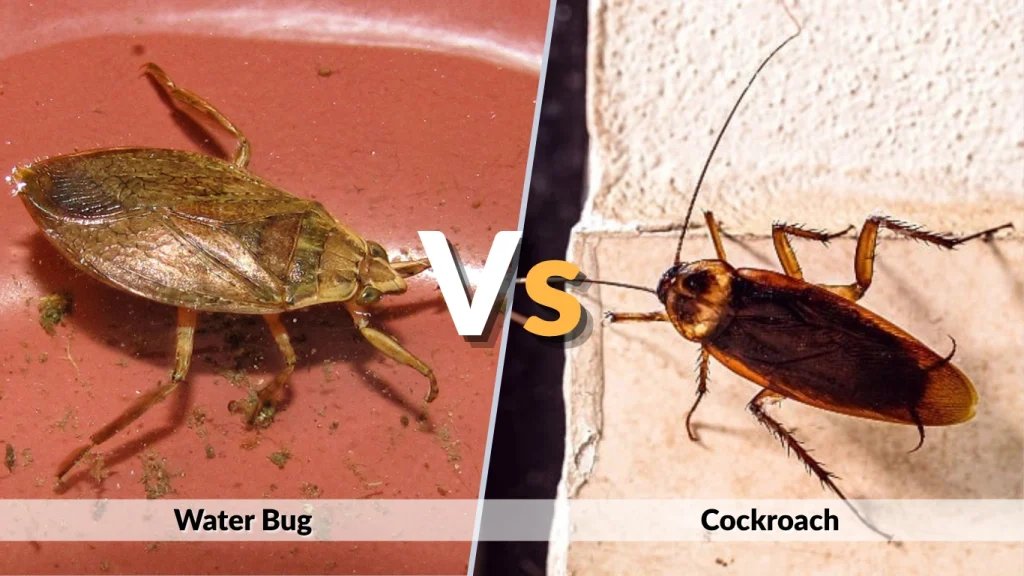
The most obvious difference between the two lies in their body shape and size. Water bugs are wider and more flattened than cockroaches. The American cockroach, which people often confuse with water bugs, has a reddish-brown color and measures about 1.5 inches long—slightly smaller than most water bugs. Additionally, water bugs have a piercing mouthpart used to suck juices from their prey, while cockroaches have chewing mouthparts for eating organic debris.
Behavioral Differences
Water bugs prefer damp, outdoor habitats and can usually be found near ponds, drains, or under stones close to water sources. Cockroaches, on the other hand, are domestic scavengers that thrive indoors—especially in kitchens, bathrooms, and garbage areas. Water bugs are solitary and only enter homes accidentally, whereas cockroaches live in colonies and reproduce rapidly, becoming household pests.
Flight and Movement
Both water bugs and cockroaches are capable of flying, but water bugs are stronger swimmers. Water bugs use their hind legs as paddles to glide smoothly through water, while cockroaches are land-based runners that move quickly across floors. If you see an insect scurrying near your drain or sink, it’s likely a cockroach rather than a water bug.
Common Places You Might See Them
In Homes
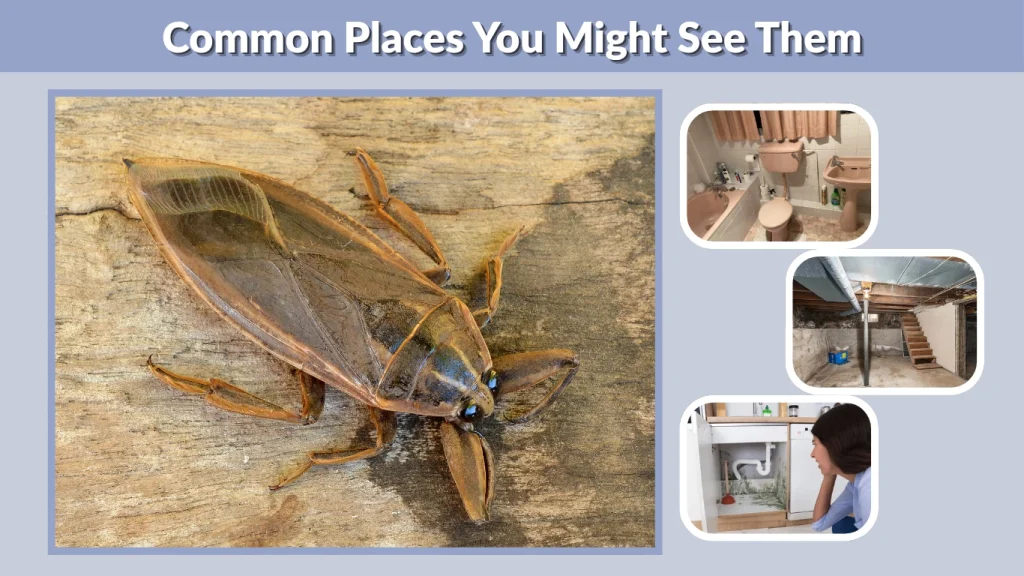
Water bugs occasionally enter houses through drains, windows, or doors near outdoor lighting. They’re often spotted in bathrooms, basements, or kitchens where moisture is present. These intrusions usually occur by accident, especially during hot or rainy weather when they’re attracted to cool, damp environments. If you find one indoors, it doesn’t mean an infestation—it’s likely an isolated incident.
Outdoors
In their natural habitat, water bugs thrive in ponds, stagnant water, and marshy areas. They often rest beneath floating leaves or rocks during the day and become more active at night. Attracted by bright lights, they sometimes fly toward porch lamps or pool areas. Their ability to survive both in and out of water makes them common in suburban and rural regions with nearby water sources.
Water Bugs That Look Like Other Insects
Cockroach Look-Alikes
Many people use the term “water bug” to describe large roaches found in damp areas like basements or bathrooms. The American cockroach and Oriental cockroach are the two species most often mistaken for true water bugs. However, the key difference is that water bugs bite if handled, while cockroaches do not. True water bugs also have short antennae, while cockroaches have long, thin ones extending beyond their bodies.
Other Similar Species
Some aquatic insects mimic the shape of water bugs. Certain species resemble spiders, ticks, or centipedes, especially when viewed from above. Others, like the “stick water bug,” have elongated bodies and legs that make them look like twigs floating on the water’s surface. These insects use camouflage to blend with aquatic plants and avoid predators.
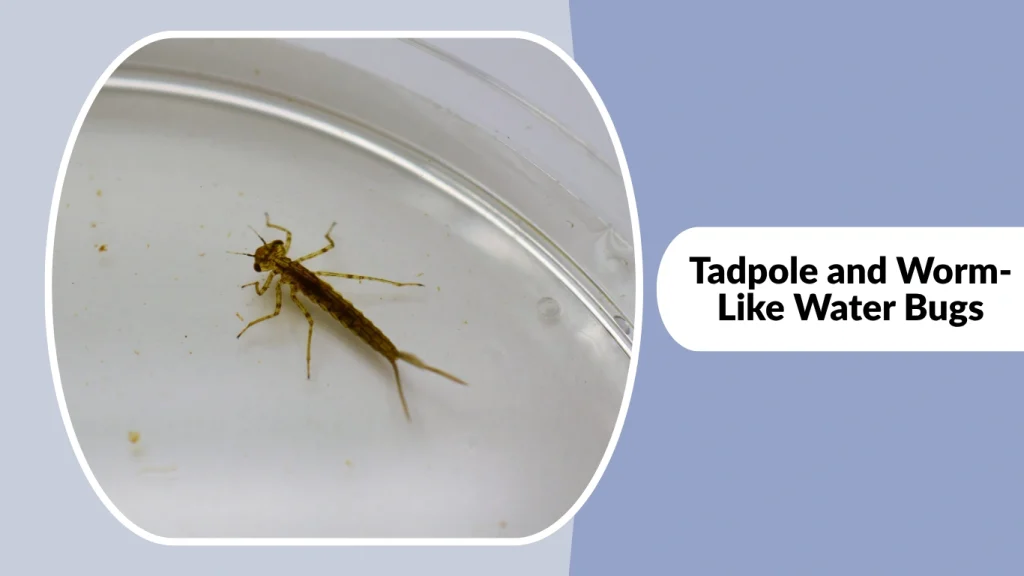
Tadpole and Worm-Like Water Bugs
Juvenile Stages
Young water bugs, called nymphs, are smaller and lighter in color than adults. They resemble tiny tadpoles or worms when seen in water. These nymphs grow through multiple molts, gradually developing wings and adult features. Because of their shape and movement, they’re often mistaken for small aquatic worms or larvae.
Stagnant Water Varieties
If you notice small tadpole-like creatures wriggling in standing water around your home, they may not be water bugs at all. Mosquito larvae, for instance, are common in stagnant water and resemble miniature tadpoles. True water bugs are much larger and swim with more control. Draining or treating standing water helps prevent both mosquito larvae and accidental water bug visits.
Water Bug Bites and Safety
Do Water Bugs Bite Humans?
Yes, giant water bugs can bite if they feel threatened or are mishandled. Their bite is delivered through a needle-like beak that injects digestive enzymes into prey. For humans, the bite is painful but not dangerous. It’s often compared to a bee sting and may cause redness or mild swelling.
What Do Water Bug Bites Look Like?
Water bug bites appear as small, red bumps or welts, sometimes with a blister-like center. They’re typically found on fingers or toes—areas exposed near ponds or pools. The swelling usually subsides within a day or two. Applying an ice pack and an over-the-counter antihistamine can help reduce pain and inflammation.
Eggs, Nests, and Droppings
Egg Appearance
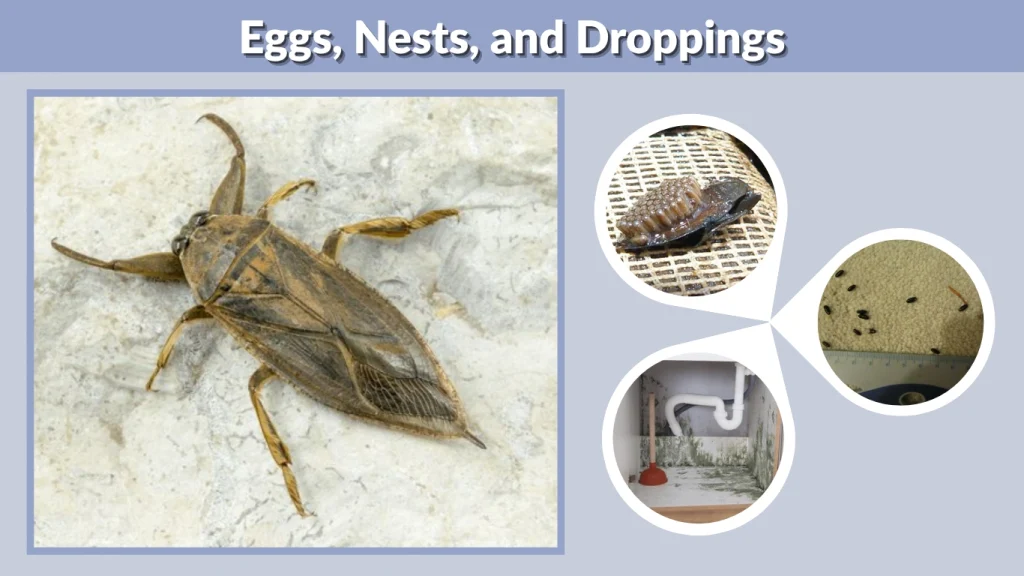
Water bug eggs are oval-shaped and beige to white in color. Unlike cockroaches, which lay eggs in small capsules called oothecae, female water bugs attach their eggs to aquatic plants, stones, or sometimes the male’s back for protection. Each cluster contains 100 or more eggs that hatch into nymphs within a few weeks.
Droppings
Water bug droppings are dark and resemble small specks or stains near water sources. They’re often mistaken for cockroach feces, but their placement differs—water bug droppings are usually found near drains, under sinks, or close to wet floors rather than around food storage areas. Cleaning these areas regularly helps identify whether you’re dealing with roaches or true water bugs.
Water Bug Life Cycle
Stages of Development
Water bugs undergo three main stages: egg, nymph, and adult. After hatching, nymphs resemble miniature adults but without wings. They molt several times as they grow, eventually reaching full size in one to two months. Unlike cockroaches, water bugs don’t reproduce rapidly, so an indoor sighting is rarely a sign of infestation.
Breeding Habits
Water bugs breed in still or slow-moving freshwater. Males sometimes guard eggs until they hatch, ensuring higher survival rates. Indoors, they rarely reproduce since dry environments lack suitable conditions for egg laying. Eliminating moisture and standing water prevents accidental breeding in basements or bathrooms.
What Do Water Bugs Like and Dislike?
Preferred Conditions
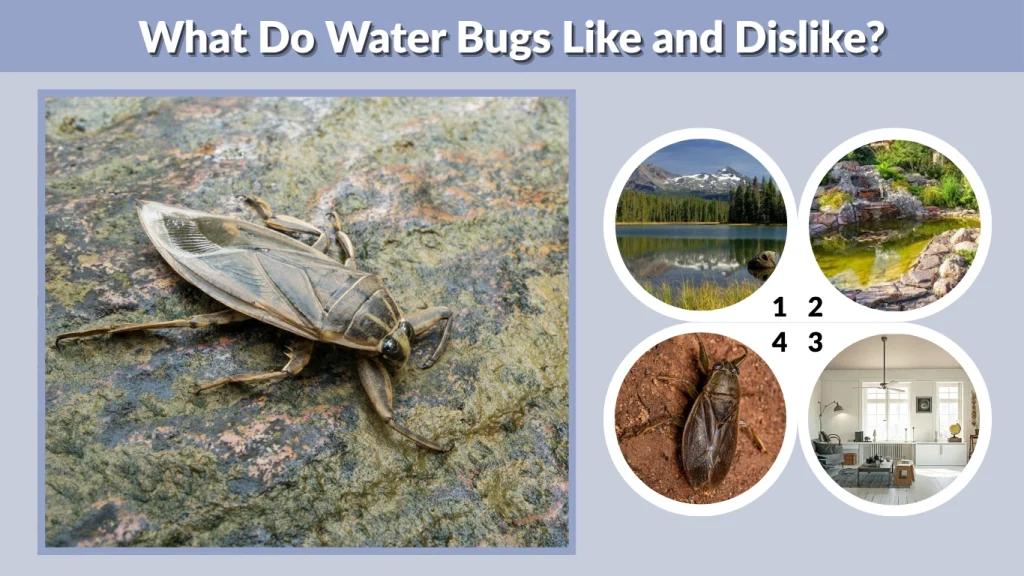
Water bugs prefer dark, moist, and cool environments. They thrive near lakes, ponds, and stagnant water. Warm, humid weather brings them closer to residential areas, where they may enter homes through open drains or gaps near foundations. They’re nocturnal, most active at night, and drawn to artificial lights.
What They Dislike
Water bugs dislike dry, clean, and well-lit areas. Regular cleaning, bright lighting, and ventilation discourage them from entering. They also avoid strong-smelling natural repellents such as peppermint oil, vinegar, or citrus sprays. Keeping drains sealed and removing puddles or leaks greatly reduces the chance of encounters.
Prevention and Control Tips
How to Keep Them Away
- Fix leaky faucets, pipes, and standing water outdoors.
- Seal cracks around windows, doors, and basement walls.
- Cover drains with fine mesh screens to block entry.
- Empty plant saucers, buckets, and outdoor containers that hold rainwater.
- Use dehumidifiers in damp areas to make your home less inviting.
Natural Remedies
Home remedies work well for repelling occasional visitors. Spray a mix of vinegar and water near sinks or drains, or place peppermint oil–soaked cotton balls around problem areas. Keep exterior lighting dim or use yellow bulbs, which attract fewer flying insects like water bugs.
Interesting Facts About Water Bugs
- Giant water bugs are nicknamed “toe-biters” because their painful bite often occurs when swimmers accidentally step on them.
- In parts of Southeast Asia, water bugs are considered a delicacy. They’re roasted or fried and said to taste similar to shrimp.
- Water bugs play an important ecological role by preying on mosquito larvae and keeping aquatic insect populations balanced.
- Some species can trap air under their wings, allowing them to breathe underwater for up to 30 minutes.
- Male water bugs exhibit rare parental behavior—guarding eggs and ensuring they remain moist until hatching.
FAQs
Do water bugs look like cockroaches?
Yes. They have a similar brown color and oval shape, but water bugs are broader and flatter. Cockroaches have long antennae and are more likely to infest kitchens, while water bugs live near ponds or drains and only enter homes accidentally.
Can water bugs infest your home?
Not typically. Water bugs don’t form colonies or reproduce indoors. If you spot one inside, it likely wandered in searching for moisture. Keeping your home dry and sealed usually prevents future sightings.
Do water bugs bite people?
They can, but only when handled or cornered. The bite can feel like a bee sting but isn’t dangerous. To avoid bites, use a container or tissue to catch and release the insect outdoors rather than touching it.
What do water bug eggs look like?
Water bug eggs are oval and cream-colored, attached to submerged plants or stones. Unlike cockroach egg cases, they’re rarely found indoors. Removing stagnant water around your property prevents them from breeding nearby.
How can I tell if I have roaches or water bugs?
Cockroaches are smaller, faster, and typically appear near food and garbage. Water bugs are larger, move slower, and stay close to water. If the insect swims or you found it near a drain, it’s more likely a water bug.
