

Black grasshoppers are among the most striking insects found in warm regions, especially across the southern United States. Their shiny black bodies, decorated with red, yellow, or orange stripes, make them stand out in the wild. These eye-catching grasshoppers often raise questions about their identity, behavior, and whether they’re dangerous. This guide explores their appearance, species variations, habitats, and what their vivid coloration means in nature.
Identification and Physical Features

Black grasshoppers differ greatly from the typical green or brown species most people recognize. Their bold colors serve as a warning, not camouflage. The glossy black body, thick build, and slow movement distinguish them from agile flying types.
General Appearance
- Shiny black or dark brown body with colored stripes
- Large, sturdy body and strong hind legs
- Often wingless or with very short wings
- Slow, crawling movement instead of long jumps
These features help them survive in sunny, open environments where bright colors signal predators to stay away.
Identification Table
| Feature | Description |
| Color | Jet black with yellow, orange, or red markings |
| Size | 1–3 inches (some reach over 3 inches) |
| Antennae | Short and thick, suited for close detection |
| Wings | Reduced or hidden beneath the shell |
| Legs | Large hind legs for hopping short distances |
| Active Time | Daytime (diurnal) |
| Common Species | Eastern Lubber Grasshopper (Romalea microptera) |
Species and Color Variations
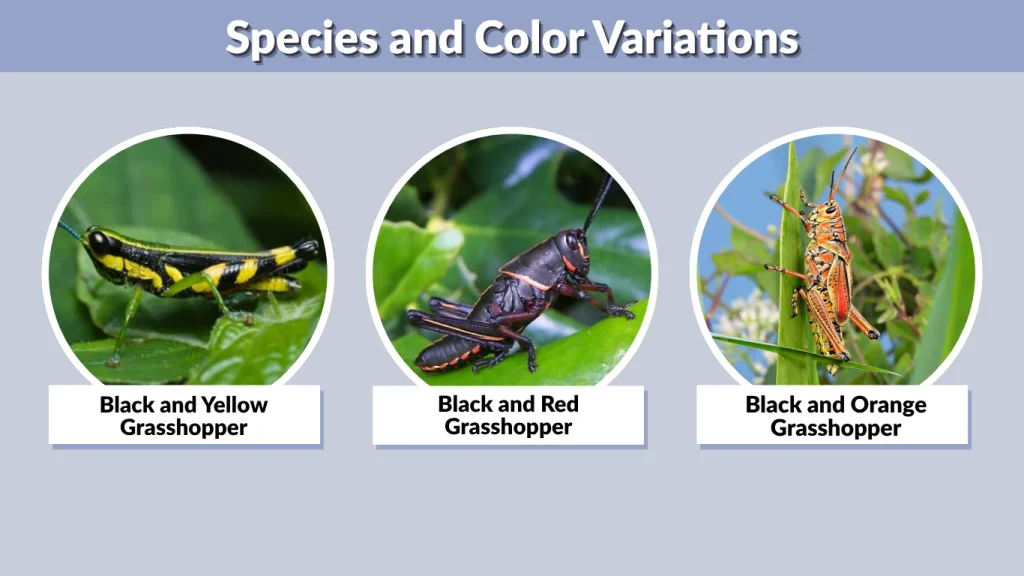
Black and Yellow Grasshopper
One of the most common and visually recognizable varieties is the Eastern Lubber Grasshopper. Found mostly in Florida, Texas, and Louisiana, this species features a glossy black body lined with yellow or orange stripes along its sides and legs. It’s large, slow-moving, and highly visible during the summer months.
Its bold colors aren’t just for beauty — they serve as a defense mechanism to warn predators of its toxicity.
Black and Red Grasshopper
This variation features deep black coloration with bright red markings or underwings. It’s often seen in southern wetlands and forest edges. The red color becomes more prominent when the insect spreads its short wings to deter threats. Many juvenile lubbers display red or orange bands that gradually fade as they mature.
Black and Orange Grasshopper
Young lubber grasshoppers (nymphs) are often black with vivid orange or red stripes. These small insects are frequently spotted in groups on grass or leaves. As they molt and grow, their coloration may shift to include yellow or faded orange bands.
This stage is one of the most colorful, making it easy to spot them in gardens and fields.
Other Color Variations
- Black and Green Grasshopper: Seen in transitional or mixed-color forms.
- Black and White Grasshopper: Rare, possibly molting or albino phases.
- Black and Orange Lubber: A common immature form of the Eastern Lubber species.
Behavior and Habitat
Preferred Environments
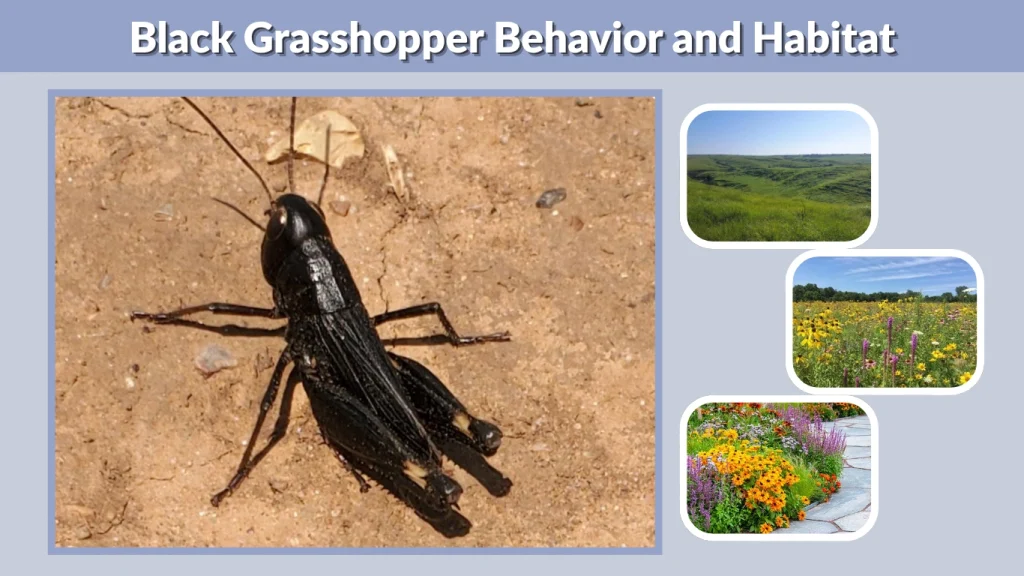
Black grasshoppers thrive in warm, humid climates with plenty of vegetation. They are most active during daylight hours, preferring open fields, meadows, and gardens. Their large bodies make them slow but well-defended. The combination of color and chemical protection makes them almost invulnerable to most predators.
Regional Occurrence
- Florida: The heartland of black and yellow lubbers; highly visible during summer.
- Louisiana: Hosts red and orange-marked grasshoppers in wet areas.
- Texas: Home to darker varieties adapted to dry, hot conditions.
- Colorado: Smaller, darker grasshoppers suited for cooler mountain environments.
Their adaptability allows them to survive in a range of climates, though they prefer warm southern regions.
Seasonal Activity
These grasshoppers are typically seen from May through September, peaking in midsummer. They hatch from eggs in early spring, mature by summer, and begin reproducing before cooler months arrive. In colder areas, eggs overwinter underground, hatching again when temperatures rise.
Are Black Grasshoppers Poisonous?
Toxic Defense Mechanism
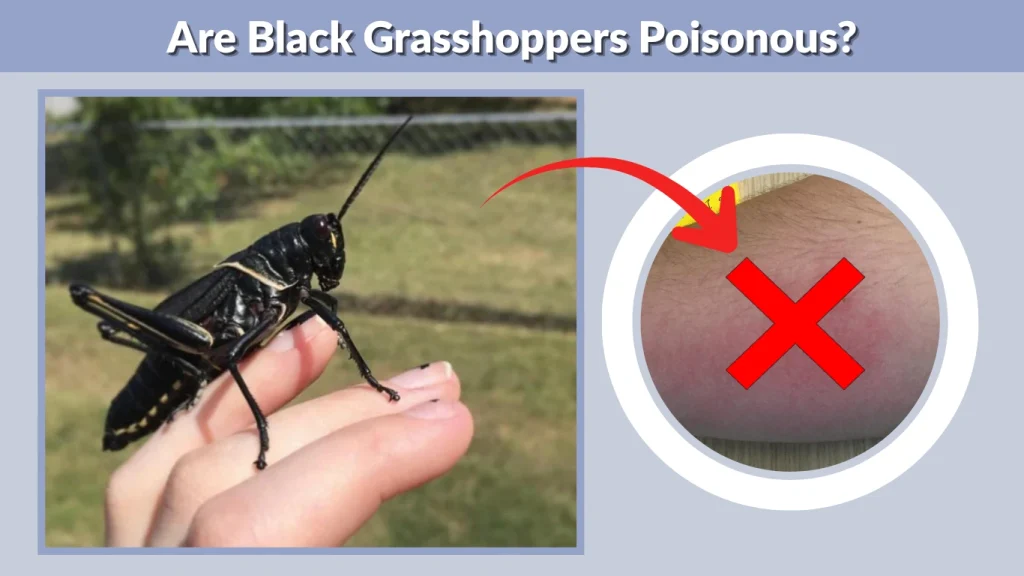
Black grasshoppers, especially the Eastern Lubber, use a unique chemical defense. When threatened, they secrete a foul-smelling foamy liquid that contains toxins unpleasant to predators. Though not harmful to humans, it can irritate sensitive skin and is deadly to smaller creatures like birds and lizards.
Their striking black, red, and yellow colors are an example of aposematic coloring, warning predators that they are not safe to eat.
Are All Black Grasshoppers Dangerous?
Not every black grasshopper is toxic, but those with bright, contrasting stripes usually are. The more vivid the colors, the stronger the warning. Their slow movements and lack of flight are compensated by this defensive strategy.
| Type | Toxic Level | Risk to Humans | Defense Behavior |
| Eastern Lubber | Moderate | None | Secretes toxic foam, emits odor |
| Black & Red Variant | Mild | None | Displays red wings, exudes odor |
| Small Black Grasshopper | Low | None | Quick jumps, avoids confrontation |
These traits make them fascinating examples of how color and chemistry work together for survival in nature.
Life Cycle and Growth
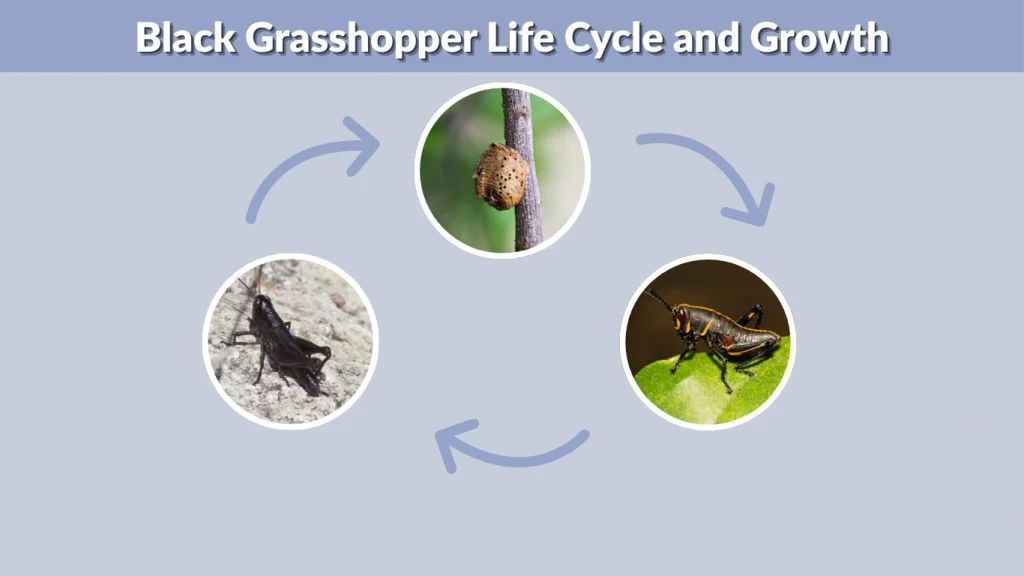
The life cycle of a black grasshopper follows a simple pattern of growth called incomplete metamorphosis. This means it goes through three stages — egg, nymph, and adult — without a pupal stage. Each phase shows noticeable color and size changes, especially in species like the Eastern Lubber.
Nymph Stage
The eggs hatch in spring, releasing small, wingless nymphs. These young grasshoppers are usually black with red or orange stripes and travel in groups. They molt several times, growing larger and developing more distinct colors as they mature. At this stage, they rely heavily on vegetation and are highly visible due to their bright markings.
Adult Stage
By late summer, they become fully grown adults with thicker bodies and short, non-functional wings. Unlike other grasshoppers, black lubbers can’t fly — they crawl or hop short distances. Their lifespan typically lasts four to six months, ending before colder seasons. During their adulthood, they reproduce, lay eggs in soil clusters, and the cycle repeats annually.
Size and Regional Differences
Black grasshoppers vary in size and appearance depending on their habitat. Warmer, humid regions tend to produce larger, more colorful specimens, while those in cooler or drier areas are smaller and darker.
| Region | Average Size | Description |
| Florida | 2.5–3 inches | Giant black lubbers with bright yellow stripes |
| Louisiana | 2 inches | Red or orange-banded varieties common in wetlands |
| Texas | 1.5–2 inches | Leaner, darker types suited for heat |
| Colorado | 1–1.5 inches | Mountain-adapted, darker coloration |
Large and Giant Black Grasshoppers
The giant black grasshopper refers to mature Eastern Lubbers, often seen crawling slowly in southern gardens. Despite their intimidating size, they are harmless to humans. Their heavy bodies and vivid stripes act as their only form of defense. When handled, they may hiss softly or release a foul odor to deter predators.
Spiritual and Symbolic Meaning
Black grasshoppers carry symbolic meaning in many cultures. While typical green grasshoppers represent luck and progress, black ones symbolize mystery, transformation, and strength. Their dark color reflects the idea of hidden energy and resilience through difficult changes.
Cultural Symbolism
In some traditions, encountering a black grasshopper is a sign of renewal or inner awakening. It encourages adaptability and persistence. The combination of black with bright colors such as red or yellow symbolizes balance — warning and beauty coexisting in nature.
Modern Interpretations
In modern art and media, the black grasshopper appears as a symbol of uniqueness and power. References like Black Myth Wukong Grasshopper connect the insect to themes of evolution, patience, and transformation. Spiritually, it reminds people to stay grounded yet open to change.
Black Grasshopper in Homes and Gardens

When Found Indoors
Black grasshoppers occasionally wander into houses, especially after heavy rain or during dry spells. They are drawn to shelter and warmth but pose no harm. Removing them gently or guiding them outdoors is sufficient.
In the Garden
In gardens, they feed on tender leaves, flowers, and vegetable plants. However, infestations are rare. Their large size makes them easy to spot and remove by hand. Small populations don’t cause serious damage compared to typical green grasshoppers.
Prevention and Control
- Keep grass and weeds trimmed short.
- Remove piles of leaves or debris.
- Use neem oil or diatomaceous earth as eco-friendly deterrents.
- Install mesh coverings during heavy breeding seasons.
These steps maintain a healthy balance between natural biodiversity and garden protection.
Interesting Facts
- Eastern Lubber Grasshoppers cannot fly due to their short wings and heavy bodies.
- Their bright colors act as a visual warning to predators.
- Juveniles are often more colorful than adults.
- They secrete a strong-smelling foam when threatened.
- Despite their size, they are harmless to humans and pets.
- The red-winged lubber variation is one of the most photographed grasshoppers in Florida.
FAQs
What is the black grasshopper called?
The most common species is the Eastern Lubber Grasshopper (Romalea microptera), found mainly in the southeastern U.S. It’s large, slow-moving, and easily recognized by its glossy black body with yellow or orange stripes.
Are black and yellow grasshoppers poisonous?
Yes, they release a mildly toxic secretion that deters predators. While not dangerous to humans, their bright colors act as a warning sign to avoid being eaten.
Why do some grasshoppers have red or orange stripes?
These colors serve as aposematic signals, warning predators of toxicity. Juvenile grasshoppers often display brighter stripes that fade as they mature.
Where do black grasshoppers live?
They thrive in warm, humid regions such as Florida, Louisiana, and Texas. You’ll often find them in gardens, grassy fields, or near forest edges.
How can I get rid of black grasshoppers naturally?
Use neem oil sprays, reduce overgrown vegetation, and maintain dry soil conditions. For small infestations, manual removal is the best eco-friendly solution.
