

Grasshoppers are harmless-looking insects often found in gardens, meadows, and fields. Their long legs, quick hops, and clicking sounds make them easy to recognize. Yet, many people wonder whether these plant-eating creatures can bite humans or animals. While grasshoppers have strong jaws for chewing leaves, bites on humans are very rare. Let’s explore how grasshoppers eat, why they might bite, and what you can do if one pinches you.
Understanding Grasshopper Mouthparts
Grasshoppers are herbivorous insects with specially designed mouthparts that allow them to chew through tough plant material. Their jaws are known as mandibles, which move side to side rather than up and down like human jaws. These mandibles can easily shred stems, seeds, and leaves — giving grasshoppers the strength to feed efficiently in grassy environments.
How Grasshoppers Eat
Grasshoppers use their mandibles to cut and grind vegetation, not flesh. Their diet is made up almost entirely of plants, making them vital decomposers and food sources in the ecosystem. Although their jaws are strong, they’re not adapted for biting animals or humans.
Biting vs. Chewing
Unlike mosquitoes or wasps, grasshoppers don’t pierce skin or inject venom. If a grasshopper seems to “bite,” it’s more of a defensive nip rather than an attack. These nips are harmless and extremely uncommon.
Do Grasshoppers Bite Humans?

Grasshoppers are not aggressive toward humans. In fact, they prefer to flee or jump away when approached. However, when handled roughly or cornered, they might deliver a quick pinch using their mandibles.
Can They Bite People?
In rare cases, a grasshopper may nibble on human skin out of curiosity or defense. Such bites don’t break the skin or draw blood. The feeling is similar to a light pinch and often surprises people more than it hurts.
Does It Hurt?
A grasshopper bite is not painful. Most people describe it as a quick squeeze or scratch that disappears within minutes. There’s no venom or toxin involved, so the area heals naturally without irritation. Even if you’re bitten, there’s no reason for alarm.
Why Would a Grasshopper Bite?
Grasshoppers might bite for a few simple reasons:
- Defense: When caught or squeezed by hand
- Confusion: Mistaking salty human skin for food
- Hunger or stress: In rare situations of limited vegetation
These bites aren’t aggressive acts but instinctive reactions to protect themselves.
Species That May Bite

While most grasshoppers never bite, a few larger or more colorful species might give a defensive pinch. These include the Eastern Lubber Grasshopper, black grasshoppers, and green grasshoppers found in warm regions.
Eastern Lubber Grasshopper
The Eastern Lubber Grasshopper (Romalea microptera) is common in Florida and the southeastern United States. It’s large, slow-moving, and brilliantly colored with black, orange, and yellow markings.
Though intimidating in size, lubbers are mostly harmless. When threatened, they may release a foul-smelling foam or make hissing sounds. Occasionally, they’ll nip as a last defense, but their bite doesn’t puncture skin or cause pain.
Black or Giant Grasshoppers
Black or giant grasshoppers are also lubber varieties. They have strong jaws but rarely use them against humans. These insects rely more on bright warning colors and chemical secretions to deter predators than on biting.
Even if they pinch when handled, it’s mild and short-lived. Their bite is weaker than a typical ant bite.
Green Grasshoppers
Common green grasshoppers, often seen in gardens and fields, are gentle and harmless. Some people mistake the pointed tip on a female’s abdomen for a stinger, but it’s actually an ovipositor, used for laying eggs. Green grasshoppers don’t bite humans and are among the most peaceful insect species.
Do Grasshoppers Bite Animals or Pets?

Dogs, Cats, and Reptiles
Grasshoppers do not attack or harm animals. However, curious pets — like dogs or bearded dragons — may chase or eat them.
If a grasshopper feels trapped in a pet’s mouth, it might deliver a small defensive pinch. This isn’t harmful, and most pets simply spit the insect out. Grasshoppers are even safe for reptiles to eat in moderation, as they provide a good source of protein and fiber.
Wild Predators
Birds, frogs, and lizards naturally prey on grasshoppers. The insects defend themselves using jumping, camouflage, or secreted toxins, not bites. Their defensive fluid can taste bitter, but it’s harmless to larger animals.
Do Grasshoppers Sting or Inject Venom?
Despite common myths, grasshoppers do not sting or inject venom. Their anatomy lacks a stinger or venom sac. The sharp-looking point at the rear of some grasshoppers is an ovipositor, not a stinger.
If a grasshopper does “bite,” it’s purely mechanical — just a pinch from its mouthparts. No venom, no poison, and no allergic risk.
Grasshopper Bites on Humans

What They Look Like
A grasshopper bite is nearly invisible. At most, you might notice:
- A tiny red dot or faint scratch
- Slight itching or warmth at the site
- No puncture wound, swelling, or pain
The mark fades within minutes to a few hours without any treatment.
What to Do If Bitten
If you’re ever bitten by a grasshopper:
- Wash the area gently with soap and water.
- Apply an antiseptic or aloe vera to reduce irritation.
- Avoid scratching the skin.
Medical attention is almost never needed unless you develop a rash or allergic reaction, which is extremely rare.
Do All Grasshoppers Bite?
Grasshoppers belong to a large order of insects (Orthoptera) that includes over 11,000 species, but only a few ever show biting behavior. Most are timid and avoid contact with humans altogether. When handled or startled, they may defend themselves with a quick pinch, yet this is the exception rather than the rule.
General Behavior
Most grasshoppers spend their lives quietly feeding on grass and leaves. Their powerful hind legs make jumping and escaping their primary defense, not biting.
Even large species like the Eastern Lubber or giant black grasshopper rely on chemical defenses and bright warning colors instead of aggression. Smaller green and brown species are completely harmless and never attempt to bite.
Nymphs and Conehead Grasshoppers
Baby grasshoppers (called nymphs) are even less likely to bite since their mandibles are softer and weaker.
Some conehead grasshoppers, known for their pointed heads, might pinch slightly harder due to sharper jaws, but the sensation is still no worse than a light nip.
Crickets, Locusts, and Other Comparisons
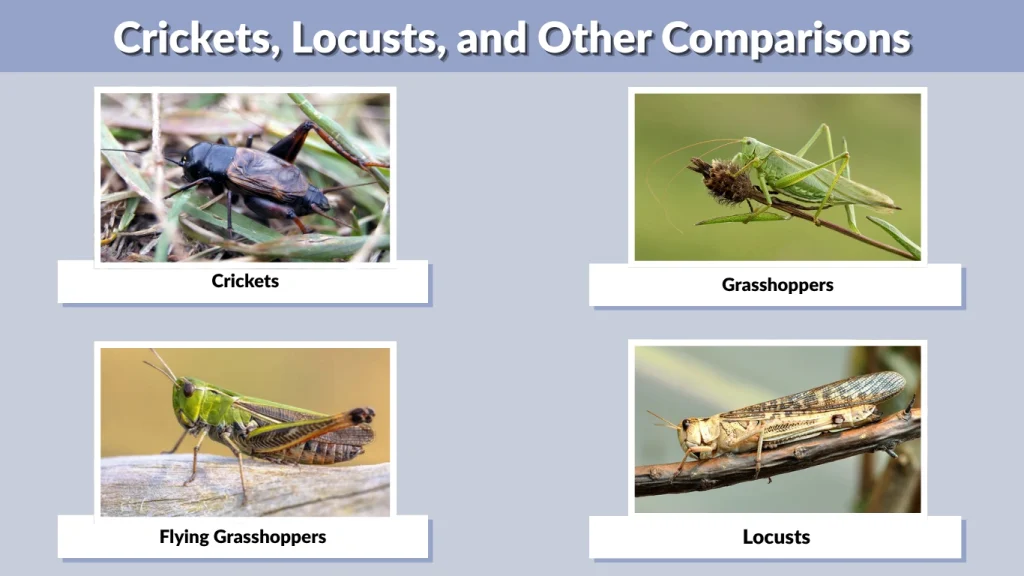
Crickets vs. Grasshoppers
Crickets and grasshoppers are close relatives, but crickets tend to bite a bit more often. Crickets are scavengers that sometimes nibble soft skin if handled or trapped, especially around fingernails or calluses. Grasshoppers, in contrast, stick to vegetation and avoid contact with humans.
Flying Grasshoppers
Flying grasshoppers can appear intimidating, especially when they take off suddenly, but their wings are only for movement — not attack. They don’t become more aggressive when flying and are more likely to escape than to bite.
Locusts and Related Insects
Locusts, which are swarming grasshoppers, also have the same harmless mouthparts. Despite their ability to devastate crops, they don’t bite humans intentionally. Their damage is purely agricultural, not physical.
Why Do Grasshoppers Bite?
Instinct and Defense
If a grasshopper does bite, it’s usually out of fear or stress. Being held tightly or touched repeatedly may trigger a defensive reaction. It’s not personal aggression — just instinctive self-protection.
Environmental Factors
Hunger, dehydration, or limited food availability can cause rare cases of mistaken nibbling. A grasshopper may confuse salty skin for plant minerals, leading to a harmless but surprising pinch. Still, these cases are extremely uncommon.
Public Myths and Online Curiosity
Common Internet Misconceptions
Many online posts — on Reddit, Yahoo Answers, or social media — exaggerate the risk of grasshopper bites. In reality, these insects are not dangerous and do not seek to harm people. The confusion often arises from their strong jaws and intimidating appearance when magnified up close.
Mistaken Identity
Sometimes, people confuse beetles, locusts, or katydids for grasshoppers. Certain beetles can bite more sharply, and cicadas make loud noises that frighten observers, leading to false assumptions about grasshopper aggression.
FAQs
Can grasshoppers actually bite humans?
Yes, but very rarely. Most grasshoppers avoid contact and will only pinch if they feel threatened or trapped. Their bites are harmless and non-toxic.
Do grasshopper bites hurt?
Barely. The sensation is similar to a small pinch and fades within minutes. There’s no swelling or bleeding afterward.
Why would a grasshopper bite someone?
Usually by mistake or as a reflex. If you handle one roughly, it might nip in self-defense but won’t cause injury.
Do grasshoppers bite pets?
They don’t attack pets like dogs or reptiles. Occasionally, a defensive nip may happen if a pet tries to eat one, but it’s not harmful.
What should I do after a grasshopper bite?
Clean the spot with soap and water, apply an antiseptic, and avoid scratching. The area should heal quickly without any treatment.
