

Grasshoppers are often seen hopping through fields and gardens, but many people wonder if they can actually fly. While these insects are famous for their incredible jumping ability, several species are also skilled fliers. Their wings, hidden beneath tough outer covers, allow them to soar short or long distances depending on the species. Understanding how grasshoppers fly reveals fascinating details about their anatomy, movement, and survival instincts.
Grasshopper Flight Basics
Do Grasshoppers Really Fly?
Yes, most grasshoppers can fly, though not all do so often. They primarily rely on their powerful hind legs for jumping, which helps them leap into the air before spreading their wings for flight. Once airborne, they can glide or beat their wings rapidly to stay aloft. Some species fly only to escape predators or move between feeding sites, while others can travel significant distances when necessary.
Do All Grasshoppers Fly?
Not all grasshoppers possess equal flying abilities. Certain species have long, strong wings designed for sustained flight, while others have shorter wings that make them poor fliers. For example, lubber grasshoppers found in the southern United States are large and colorful but cannot fly well because their wings are too small for their heavy bodies. Most grasshoppers, however, can at least glide short distances after jumping, especially during warm, dry days.
How Grasshoppers Fly

Wing Structure and Function
Grasshoppers have two pairs of wings. The front pair, called tegmina, are tough and narrow, acting as protective covers. The hind wings are broad and flexible, built for flight. When taking off, a grasshopper unfolds its hind wings rapidly, pushing against the air to lift off. These wings beat several times per second, allowing smooth and controlled movement through the air. Their strong thoracic muscles provide the power needed to stay airborne.
How High and Far Can They Fly?
Grasshoppers are not high-altitude fliers, but they can reach a few feet above the ground and glide for several meters. In rare cases, aided by wind currents, they can rise higher and travel much farther than expected. Some migratory grasshoppers, like those found in tropical regions, have been known to cover several miles when conditions are favorable. Generally, they fly low to stay close to vegetation and avoid predators such as birds.
Grasshopper Movement: Jumping, Hopping, and Gliding

Do Grasshoppers Fly or Jump?
Grasshoppers are exceptional jumpers first and fliers second. They launch themselves using their hind legs, which act like spring-loaded levers. Once in the air, they open their wings to catch air and glide forward. This combination of jumping and flying allows them to move quickly and efficiently between plants. The leap provides the momentum, while the wings help with steering and controlled landings.
Do Grasshoppers Fly or Glide?
Most grasshoppers don’t flap their wings continuously like birds or butterflies. Instead, they glide for short distances, using their wings to slow their descent or change direction. This gliding technique conserves energy and helps them travel silently through tall grasses. Some species, especially larger ones, use short bursts of wingbeats to extend their glide before landing safely on the next plant or patch of grass.
Why Grasshoppers Fly
Reasons Behind Flight
Grasshoppers fly for practical reasons—mostly to survive. They take flight to escape predators such as lizards, birds, and frogs. They may also fly to search for food or mates, especially during the summer when vegetation is plentiful. In dry or overcrowded areas, flying helps them relocate to greener regions. While they don’t migrate long distances like locusts, flight gives them an important mobility advantage in changing environments.
When and Where They Fly
Grasshoppers are typically daytime fliers, preferring warm, sunny hours when air currents help them stay aloft. Their body temperature plays a big role; cooler mornings or evenings make them sluggish. They are rarely active at night since they rely heavily on vision for navigation. In some regions like the UK or Long Island, grasshoppers can be seen flying short distances between shrubs or open fields, especially during late summer. In tropical areas, species such as the bird grasshopper can remain airborne longer, sometimes traveling between trees or crops.
Sound and Behavior in Flight
Do Grasshoppers Click When They Fly?
Yes, many grasshoppers make clicking sounds as they fly. These noises are not vocal but mechanical, produced by the friction of their wings or legs. When a grasshopper takes off, it snaps its hind legs or rubs them against its wing veins, creating a distinctive “click” or “crackling” sound. This may serve as a warning signal to predators or as communication between potential mates.
Why Do Grasshoppers Make Noise When Flying?
The clicking sound often intensifies during flight. In some species, like the meadow grasshopper, males use the sound to attract females. The noise can also confuse or startle predators, giving the insect extra time to escape. Each species produces its own rhythm and pitch, helping entomologists identify them in the wild. The sound is a unique combination of defense and courtship behavior, making it both functional and fascinating.
Types and Flight Abilities
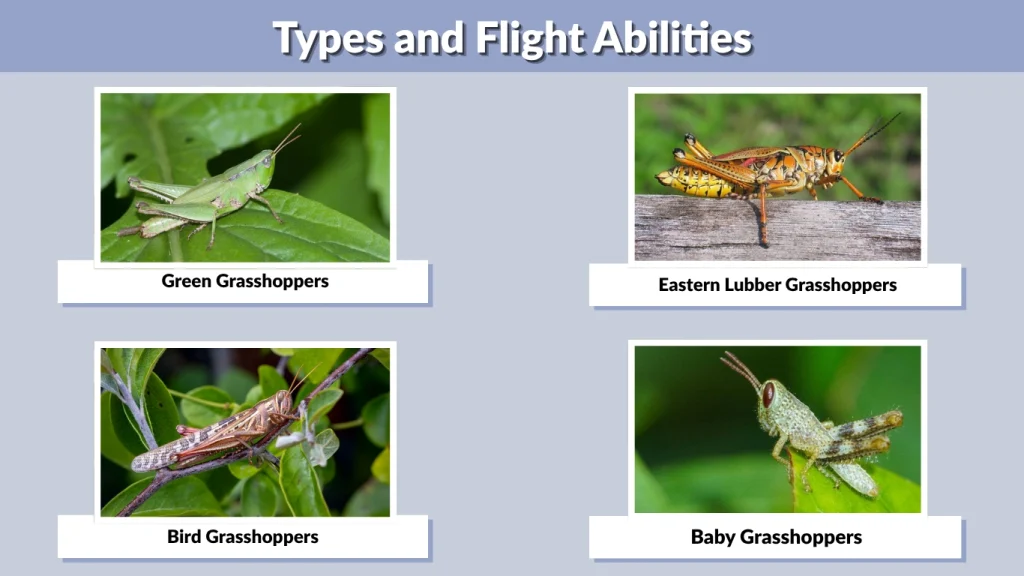
Green Grasshoppers
Green grasshoppers are among the most common fliers seen during summer months. Their slender bodies and strong hind wings allow smooth gliding from plant to plant. They often fly low over meadows, using their green coloration as camouflage against predators. These grasshoppers are also agile, capable of both long jumps and short flights when disturbed.
Lubber and Eastern Lubber Grasshoppers
Lubber grasshoppers, especially the Eastern Lubber Grasshopper (Romalea microptera), are heavy-bodied and brightly colored. Despite having wings, they can rarely achieve true flight. Their wings are too short to lift their weight, so they depend on crawling or hopping to move. Instead of flying, lubbers rely on their vivid colors and chemical defenses to deter predators.
Bird Grasshoppers
The bird grasshopper (Schistocerca americana) is one of the strongest fliers in the grasshopper family. Its long wings enable it to cover large distances in search of food or mates. Bird grasshoppers are capable of controlled, sustained flight similar to that of locusts. They are often mistaken for small locusts because of their size and ability to glide long stretches through warm air currents.
Female and Baby Grasshoppers
Female grasshoppers can fly, though they are typically heavier than males due to egg development, which makes their flight shorter and slower. Baby grasshoppers, called nymphs, cannot fly because their wings are undeveloped. They move by jumping until their final molt, when the wings expand fully and harden, enabling flight for the first time.
Flying Grasshoppers and Their Diet

What Do Flying Grasshoppers Eat?
Flying grasshoppers have a diet identical to non-flying species. They feed mainly on fresh grass, crops, and leaves. Some also nibble on flowers or grains, depending on availability. Before or after flying, they consume large amounts of vegetation to store energy. Their strong jaws can chew through thick plant material, making them both efficient grazers and potential agricultural pests.
Do Grasshoppers Eat Flies or Fruit Flies?
No, grasshoppers do not eat flies or any other insects. They are strict herbivores, meaning their digestive systems are designed to process plant matter only. Occasionally, they may accidentally chew decaying organic material, but it’s not a regular part of their diet. Conversely, flies—especially fruit flies—may feed on decaying plants or even on dead grasshoppers.
Do Flies Eat Grasshoppers?
In nature’s food chain, certain species of flies, such as bot flies or tachinid flies, can parasitize grasshoppers. These flies lay eggs on or near the grasshopper’s body, and when the larvae hatch, they feed on the host. Though unpleasant, this interaction helps keep grasshopper populations in check within ecosystems.
Do Flying Grasshoppers Bite or Attack People?
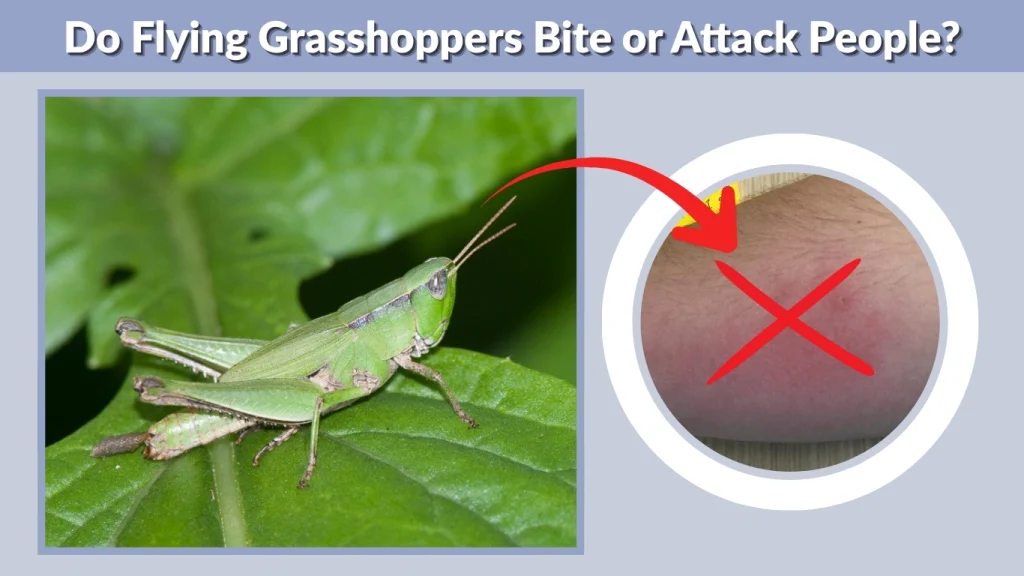
Grasshoppers do not intentionally attack humans. They may fly toward people by accident, especially when startled, but their goal is escape, not aggression. While they have strong jaws capable of biting through plant stems, they rarely bite people unless handled roughly. Even then, the bite is harmless and doesn’t pierce deeply. Their primary defense remains flight, camouflage, or hiding in dense vegetation.
Flight Behavior Across Regions
Grasshoppers in Different Environments
Grasshoppers inhabit almost every continent, adapting their flight to local conditions.
- In the UK, grasshoppers are moderate fliers, often gliding between low grass patches in meadows.
- On Long Island and other coastal regions, grasshoppers can be seen flying between dunes and shrubs during summer heat.
- In arid regions or prairies, such as the American Midwest, larger bird grasshoppers soar higher to escape the hot ground surface.
Their flight distance and duration increase with warmth and sunlight, as these insects depend on body temperature for energy.
Climate and Seasonal Influence
Grasshoppers fly most actively from late spring to early autumn. During colder months, adults die off, and eggs remain dormant underground. Rising temperatures awaken nymphs in spring, and by summer, adults fill the fields, buzzing and gliding in search of food. Warm air currents and dry weather create ideal conditions for flight, helping grasshoppers expand into new feeding territories.
Comparison with Other Flying Insects
Crickets and Grasshoppers
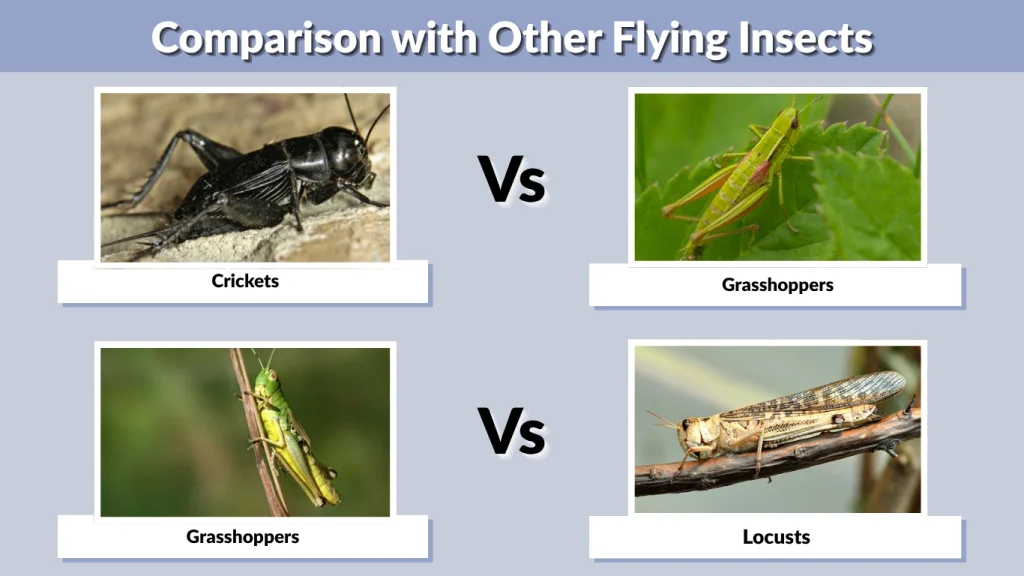
Crickets and grasshoppers both belong to the order Orthoptera, but their flight behavior differs. Crickets have flatter bodies and prefer walking or hopping rather than flying. Their wings are better suited for chirping than sustained flight. Grasshoppers, however, possess larger hind wings for lift and gliding. Both produce sounds, but crickets create continuous chirps using their wings, while grasshoppers make intermittent clicks using legs and wings.
Grasshoppers and Locusts
Locusts are actually a type of grasshopper that develops swarming behavior under specific environmental conditions. When populations become dense, their brain chemistry changes, making them social and migratory. Locusts can fly great distances collectively, covering hundreds of miles. Ordinary grasshoppers, on the other hand, remain solitary and usually travel shorter distances. Their flight serves local movement rather than mass migration.
Interesting Facts About Grasshopper Flight
- Grasshoppers have been capable of flight for over 250 million years, making them one of the oldest flying insects on Earth.
- Their average flight speed ranges from 8 to 10 miles per hour.
- They navigate primarily by vision and air-pressure sensitivity, using antennae to sense wind direction.
- Some species can control their descent precisely, landing feet-first on stalks or leaves.
- When startled, certain species intentionally produce louder clicks to confuse predators mid-flight.
FAQs
Do grasshoppers actually fly or just jump?
Grasshoppers do both. They use their strong hind legs to jump into the air, then spread their wings to glide or fly short distances. Some species can sustain longer flight, especially during warm, windy days, while others rely mostly on hopping.
Why do grasshoppers click when they fly?
The clicking sound comes from the friction of wings and legs as they move. It’s part of their natural communication and can serve as a defense signal. Males often click to attract females or warn rivals, while others use it to startle predators.
Can all grasshoppers fly long distances?
No. Only species with large, well-developed hind wings can fly long distances. Smaller grasshoppers or heavier types, such as lubbers, can only hop or glide short spans. Environmental factors like wind and temperature also affect how far they can travel.
Do grasshoppers fly at night?
Most grasshoppers are daytime fliers. They rely on sunlight to warm their bodies and guide their movements. At night, they become inactive and rest among grasses or shrubs. Only a few tropical species have been observed flying during twilight.
Do grasshoppers bite or attack when flying?
Grasshoppers don’t attack humans. If one flies toward you, it’s usually escaping danger or moving with the wind. They can nibble plants fiercely but rarely bite people, and even if they do, it causes no real harm.
