

Pink grasshoppers are among nature’s most astonishing and rare sights. While most people are familiar with green or brown grasshoppers, the pink variation stands out as something almost magical. These insects are real, not imaginary, and their bright color comes from a rare genetic mutation called erythrism. Found in gardens, meadows, and fields, the pink grasshopper continues to fascinate scientists, photographers, and nature lovers around the world.
What Is a Pink Grasshopper?

Description and Overview
A pink grasshopper looks much like its green or brown relatives but with an unmistakable pink or reddish hue. This rare coloration can cover its entire body or appear in patches across the wings, legs, or thorax. Despite their unusual color, pink grasshoppers behave just like normal ones — hopping through tall grass, feeding on vegetation, and blending into nature (though not as effectively).
These grasshoppers belong to the same family as common meadow grasshoppers and short-horned species. Their bright pink shells make them easy to spot, especially against green backgrounds, making each sighting a remarkable experience.
Scientific Explanation
The color comes from a genetic mutation called erythrism, a condition similar to albinism or melanism. In erythrism, an imbalance of pigments leads to excess red or pink tones and a reduction of green coloration. This pigment variation affects the outer layer of the exoskeleton, giving the grasshopper a vibrant pink or magenta appearance.
Importantly, this mutation doesn’t harm the insect or alter its basic behavior. It’s purely cosmetic — a genetic quirk that results in a dazzling color display seldom seen in the wild.
Why Are Some Grasshoppers Pink?
The Role of Erythrism
Erythrism occurs when genes responsible for pigmentation malfunction, creating a reddish tint instead of the usual green or brown tones. This mutation has been observed in other animals too, including snakes, birds, and mammals. In grasshoppers, it appears at random, and there’s no evidence that it can be inherited directly.
Scientists believe that environmental factors like humidity, light exposure, and diet may slightly influence pigment development, but the pink coloration is primarily genetic. It’s not the result of food, weather, or soil — it’s simply nature’s rare stroke of color.
Environmental and Evolutionary Factors
While a pink grasshopper may be beautiful to human eyes, its bright color can be a disadvantage in the wild. Green and brown grasshoppers can easily camouflage among plants and soil, while pink ones stand out sharply against their environment. This makes them far more visible to predators like birds, frogs, and lizards.
Because of this, most pink grasshoppers rarely survive long enough to reproduce, which keeps their population extremely low. Their rarity is a direct result of natural selection — only a few manage to evade predators long enough to be noticed by people or researchers.
How Rare Is a Pink Grasshopper?
Rarity Statistics
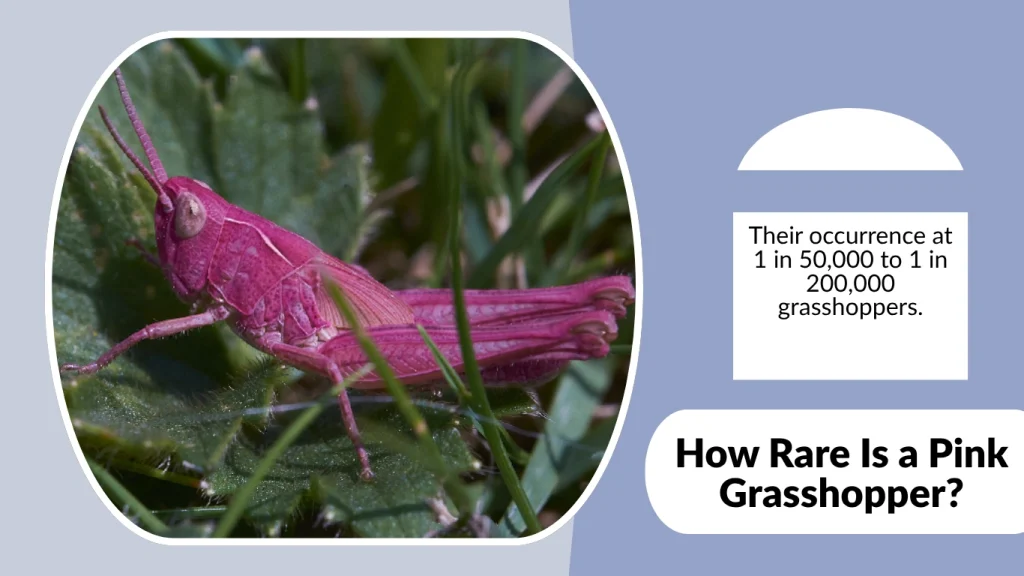
Pink grasshoppers are incredibly rare — experts estimate their occurrence at 1 in 50,000 to 1 in 200,000 grasshoppers. In some regions, years can pass without a single recorded sighting. Most observations happen by chance when someone spots one in a garden or field.
They’re most often found among meadow grasshoppers (Chorthippus parallelus), a species common across Europe and North America. Their short wings, light frame, and adaptable diet make them perfect hosts for this genetic surprise.
Why So Few Survive
The same color that makes them unique also makes them vulnerable. A pink body offers no camouflage, making them easy prey in open grasslands. Predators can detect them almost instantly, which significantly lowers their survival rate. Only a handful reach adulthood, which explains why photos of pink grasshoppers are so rare and cherished.
However, in areas with colorful flowers or reddish soil, their pink hue might offer partial concealment. This could explain why occasional populations appear in specific regions like Texas, Louisiana, and the UK, where conditions happen to provide a slight advantage for these extraordinary insects.
Appearance and Identification
Physical Traits
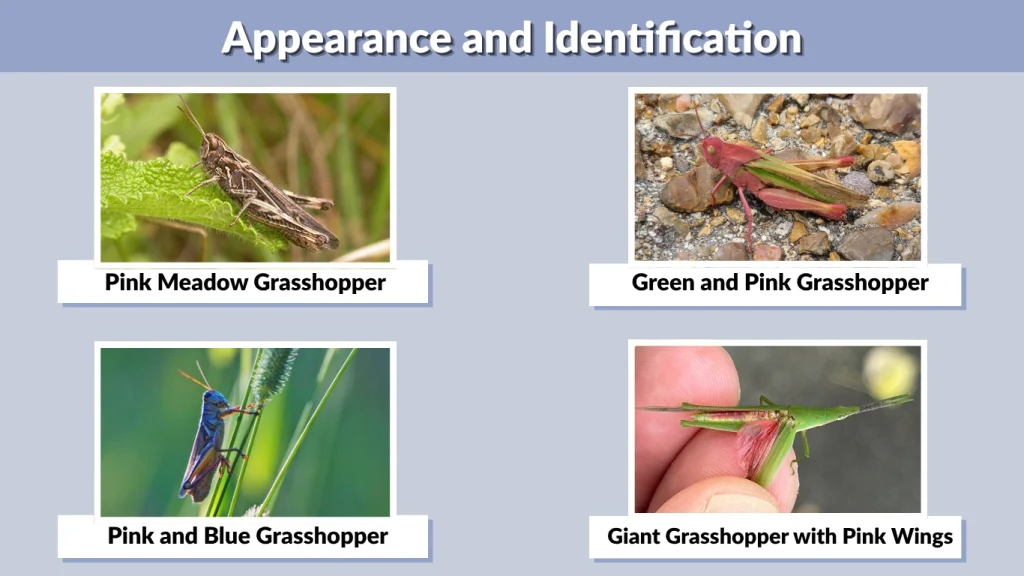
Pink grasshoppers can vary in shade from pale blush to deep magenta. Some display bright pink legs or wings, while others have entirely pink bodies with faint white or brown markings. Their eyes are typically dark or reddish, giving them a striking contrast against their vibrant shell.
Many pink grasshoppers are actually nymphs — young grasshoppers that have not yet reached adulthood. As they molt and grow, some may fade to brown or green, while others retain their pink color throughout life. Despite the unusual pigment, they share the same body structure: short antennae, strong hind legs, and folded wings.
Variants
- Pink Meadow Grasshopper: The most common pink morph, typically found in the UK and Europe.
- Green and Pink Grasshopper: A mix of colors caused by partial pigmentation.
- Pink and Blue Grasshopper: An exceptionally rare dual-color mutation seen in tropical species.
- Giant Grasshopper with Pink Wings: Found occasionally in arid regions or deserts, featuring pink-tinted hindwings visible in flight.
Each variation highlights the incredible diversity and adaptability of grasshoppers, even within a single species.
Where Do Pink Grasshoppers Live?
Global Distribution
Pink grasshoppers have been recorded in several parts of the world, but they remain rare everywhere. Confirmed sightings include:
- United Kingdom: Frequent reports in gardens and meadows, especially during warm summers.
- United States: Notably in Texas, Arkansas, Louisiana, and Oregon.
- Europe: Found across France, Ireland, and Germany, particularly in rural areas.
- Australia: Occasional discoveries of pink meadow species.
Many sightings come from gardens or farmlands, where people can easily spot them among green plants. In wild grasslands, they are more likely to go unnoticed or be eaten before reaching adulthood.
Preferred Habitat
Pink grasshoppers thrive in open fields, grassy meadows, and overgrown gardens — the same habitats favored by their green relatives. Warm, humid climates increase the chances of spotting them since they promote more active breeding and growth cycles. They are most visible during late summer when grasshopper populations peak.
Behavior and Survival
Feeding Habits
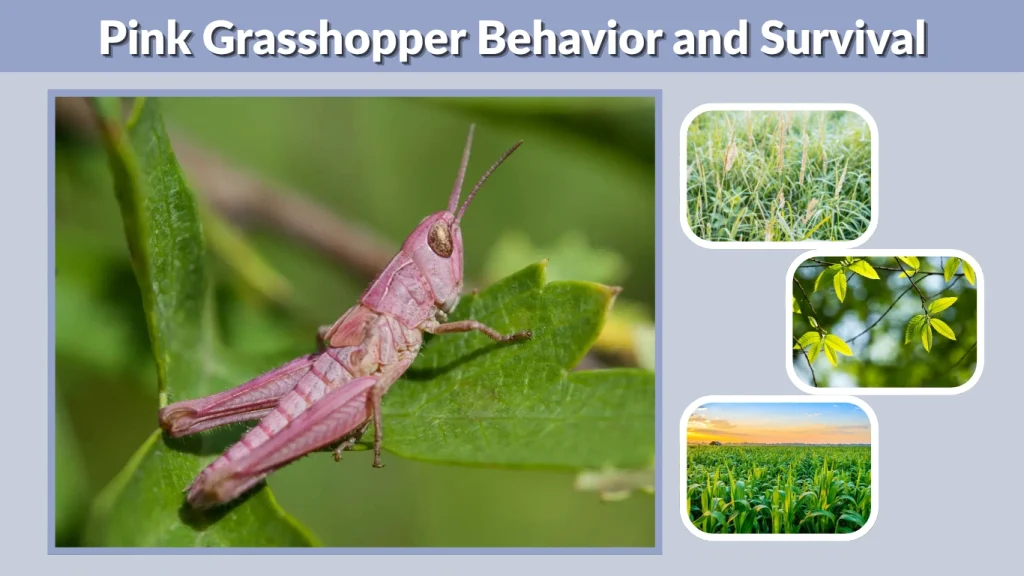
Pink grasshoppers eat the same diet as any other grasshopper: grasses, leaves, and crops. They use their strong mandibles to chew plant fibers efficiently. While they might stand out visually, their feeding habits remain identical — herbivorous, simple, and essential to maintaining plant balance in ecosystems.
Flight and Movement
Most pink grasshoppers can jump up to 20 times their body length, using their powerful hind legs. Some can glide short distances or spread their pink wings when startled. Because of their visibility, they often stay low to the ground or hide under vegetation to avoid predators.
Lifespan and Threats
The typical lifespan of a grasshopper is about 3 to 6 months, but pink morphs often live shorter lives. Their vivid color makes them easier targets for birds, reptiles, and even larger insects. Only a lucky few survive long enough to reproduce, which explains why sightings are so rare. Despite this, their existence demonstrates the resilience of genetic variation in nature.
Are Pink Grasshoppers Poisonous or Dangerous?

Fact vs Myth
Pink grasshoppers are completely harmless. Their color is purely the result of pigment imbalance and has nothing to do with toxicity or venom. They don’t sting or bite humans, and their mouthparts are designed only for chewing vegetation.
The myth that bright-colored insects are poisonous doesn’t apply here. While many insects use bright colors as a warning signal, pink grasshoppers rely solely on luck and concealment to survive. Their only defense mechanism is a harmless brown or yellow fluid they may secrete when threatened — a normal reaction shared by other grasshopper species.
Meaning and Symbolism
Spiritual and Cultural Interpretations
In symbolism, the pink grasshopper represents uniqueness, creativity, and transformation. Its color sets it apart from the ordinary, symbolizing individuality and courage to stand out. Spiritually, it’s often viewed as a sign of positive change or personal growth — a reminder to embrace your differences rather than hide them.
Culturally, grasshoppers in general represent progress, intuition, and freedom. When colored pink, these meanings take on a softer, more emotional tone, connecting with love, compassion, and inner joy.
In Dreams or Encounters
Seeing a pink grasshopper in your dreams or in real life is considered a symbol of rare luck. It might indicate that something unexpected and positive is coming your way. Dream interpreters often associate it with renewal, hope, and creativity, as the pink hue reflects new energy and inspiration.
Famous Sightings and Reports
Recent Discoveries
Over the years, numerous reports have confirmed the existence of pink grasshoppers:
- In the UK, a pink meadow grasshopper was photographed in a backyard, earning coverage on the BBC.
- In Texas and Louisiana, rare pink nymphs have been spotted during humid summers.
- In Ireland, photographers captured a vivid pink adult grasshopper in a flower patch.
- Social media platforms like Reddit frequently showcase new sightings from curious gardeners.
Each discovery reminds people of the extraordinary diversity of life and how even common creatures can surprise us.
Scientific and Genetic Insights
Understanding Erythrism
Erythrism is caused by a mutation in pigment-producing cells, which leads to red or pink coloration in place of green. Similar mutations have been recorded in katydids, crickets, and even frogs. Unlike albinism (a total lack of pigment), erythrism simply changes pigment balance, adding a reddish tone.
Research suggests that pink morphs are random genetic occurrences — not linked to diet or environment. While chlorine, temperature, or stress may influence appearance slightly, genetics remain the key factor.
Research and Observation
Scientists continue to study pink grasshoppers to understand population genetics, mutation frequency, and survival patterns. Each sighting contributes to biological databases tracking color anomalies in insects. Although they rarely breed true, pink morphs are invaluable for studying evolutionary diversity and adaptation in ecosystems.
Interesting Facts About Pink Grasshoppers
- Estimated frequency: 1 in 50,000 to 1 in 200,000 individuals.
- More common among young nymphs than adults.
- Their color may fade slightly after each molt.
- Harmless to humans — no venom, stingers, or toxins.
- Bright color increases predation risk.
- Frequently spotted in gardens, meadows, and flower-rich areas.
- Their rarity has inspired jewelry, art, and even fashion brands named “Pink Grasshopper.”
FAQs
Are pink grasshoppers real?
Yes. They’re genuine grasshoppers with a rare color mutation called erythrism, which gives them pink pigment instead of green or brown.
How rare is a pink grasshopper?
Very rare — about one in every 50,000 to 200,000 grasshoppers. Their rarity is due to the survival disadvantage of being easily spotted by predators.
Where do pink grasshoppers live?
They are found worldwide but most commonly in Europe, the UK, and North America. Warm, grassy habitats increase the chance of spotting one.
Are pink grasshoppers poisonous or harmful?
No, they’re completely harmless and non-toxic. Their pink color is not a form of defense; it’s simply a genetic anomaly.
What does a pink grasshopper symbolize?
It symbolizes uniqueness, transformation, and creativity — a reminder that being different is something to celebrate, not hide.
